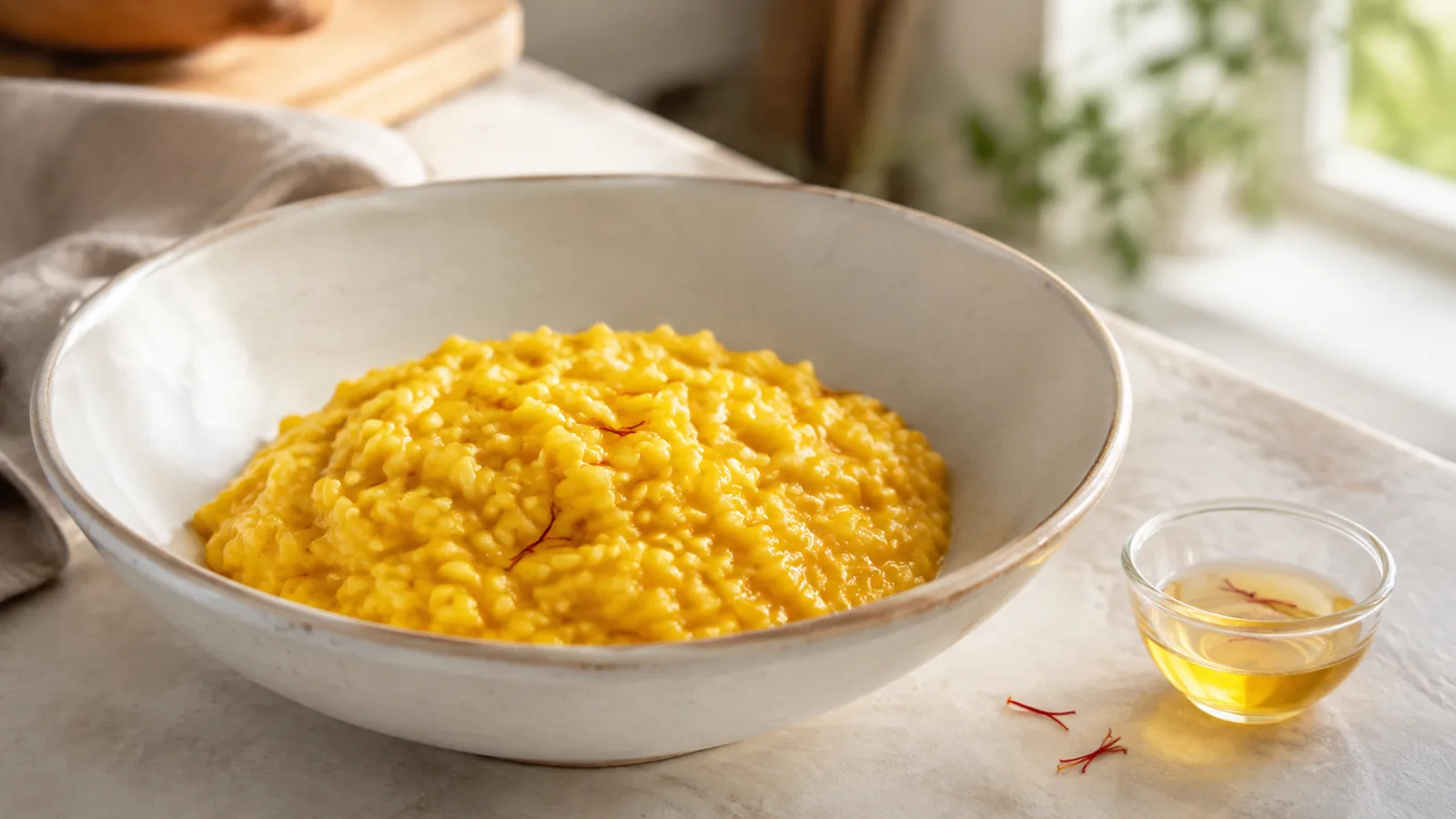
There is no universal list of ingredients that must never be mixed with saffron. The real risks are using so much of a forceful ingredient that saffron disappears, boiling it for too long, or combining several dominant flavours without a clear plan. Safely pairing saffron is mostly a matter of proportion and timing.
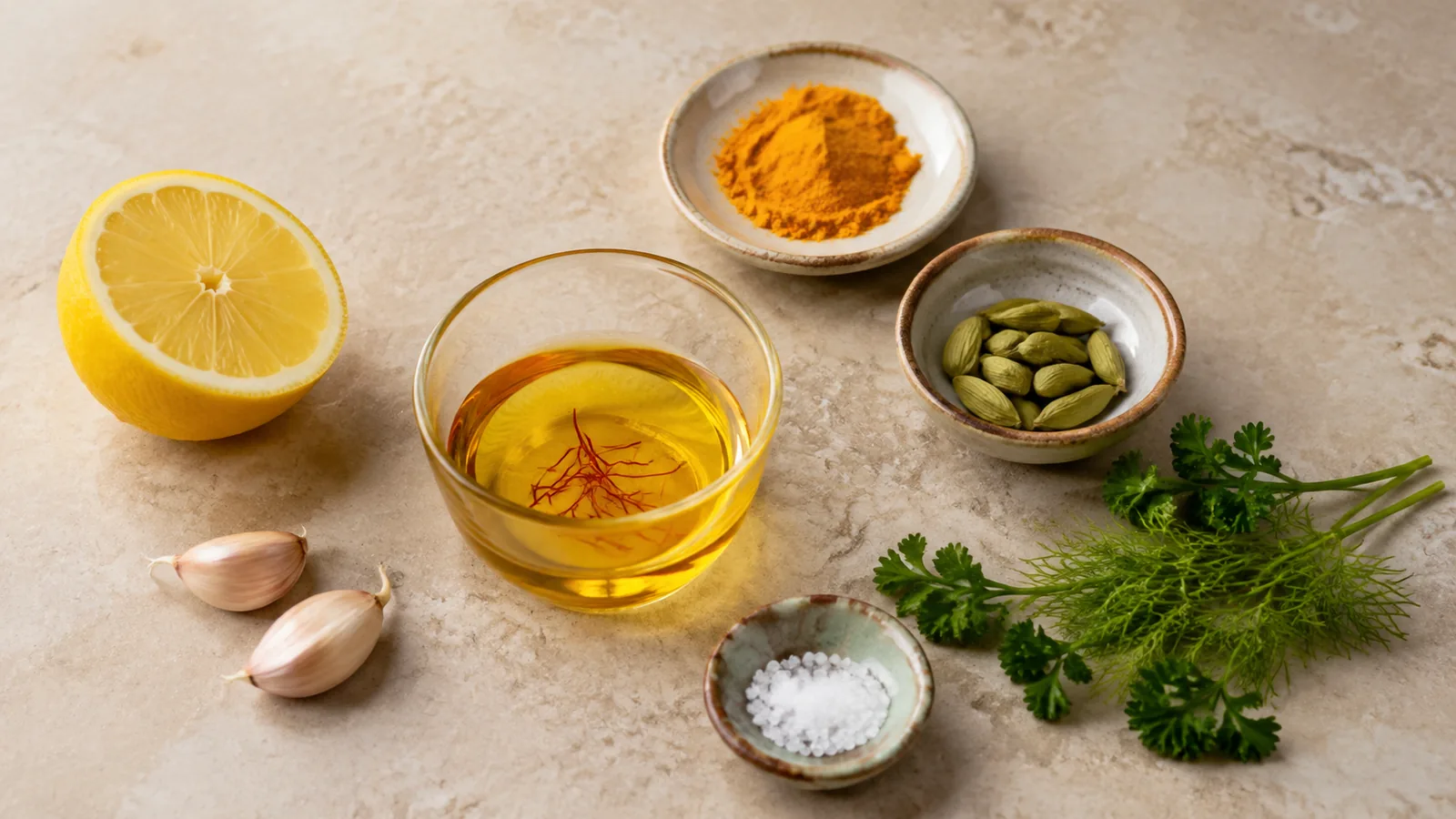
What not to mix with saffron in large amounts
Saffron has a warm, hay-like aroma, a gentle bitterness and a clear golden colour. It can stand beside assertive ingredients, but a small quantity cannot compete with everything at once. The following ingredients are not forbidden; they simply need a lighter hand.
Very hot chilli and heavily smoked seasonings
A large dose of chilli can dominate the palate, while smoked paprika, liquid smoke or strongly charred ingredients can cover saffron’s aroma. If heat or smoke is central to the dish, begin with less than usual and taste before adding more. Saffron can still contribute colour and depth, but it may no longer be a flavour the diner can identify.
Several powerful spices at the same time
Cumin, cloves, star anise, cinnamon and black cardamom can all work in a saffron dish. Trouble starts when several are used heavily together. Choose one or two leading flavours and let the others support them. Green cardamom is usually easier to balance with saffron than smoky black cardamom, especially in rice, milk desserts and tea.
Too much turmeric or artificial colouring
Turmeric and saffron are sometimes used together, and that combination is not unsafe. However, a large amount of turmeric brings an earthy bitterness and a strong yellow colour that can make it difficult to judge what the saffron is contributing. Artificial colouring creates the same visual problem. If saffron’s colour and aroma matter, add only enough of the other ingredient to serve the recipe.
Excessive salt, sugar or floral flavouring
Salt does not automatically damage saffron, nor does sugar. Either can flatten its nuance when the balance is extreme. Rose water and orange-blossom water also pair beautifully with saffron, but a few drops too many can make a dessert or drink taste perfumed. Add these ingredients gradually and taste between additions.
Garlic, onion and acid are not blanket exclusions
Advice to avoid garlic, onion, lemon or vinegar altogether is too rigid. Garlic and onion appear in many successful saffron dishes, including rice, seafood and stews. Cook them until their raw sharpness softens, then use saffron as part of the dish’s aromatic layer rather than expecting it to overpower them.
Lemon can brighten saffron with fish, chicken and rice. Vinegar can also work in a dressing or marinade. The practical rule is to add strong acid with restraint, often near the end, then taste. A very sour dish may make saffron harder to notice, but that is a question of flavour balance rather than a universal chemical incompatibility.
The cooking method can matter more than the pairing
Prolonged high heat is one of the easiest ways to lose saffron’s character. A controlled study of saffron cooked in boiling water found that heat treatment reduced crocins and safranal, compounds associated with its colour and aroma, while picrocrocin was more stable. More recent work also found that extraction changes with temperature, time and whether the cooking medium contains water or oil. These findings do not mean saffron can never boil; they explain why a long, hard boil is rarely the best way to protect its aroma.
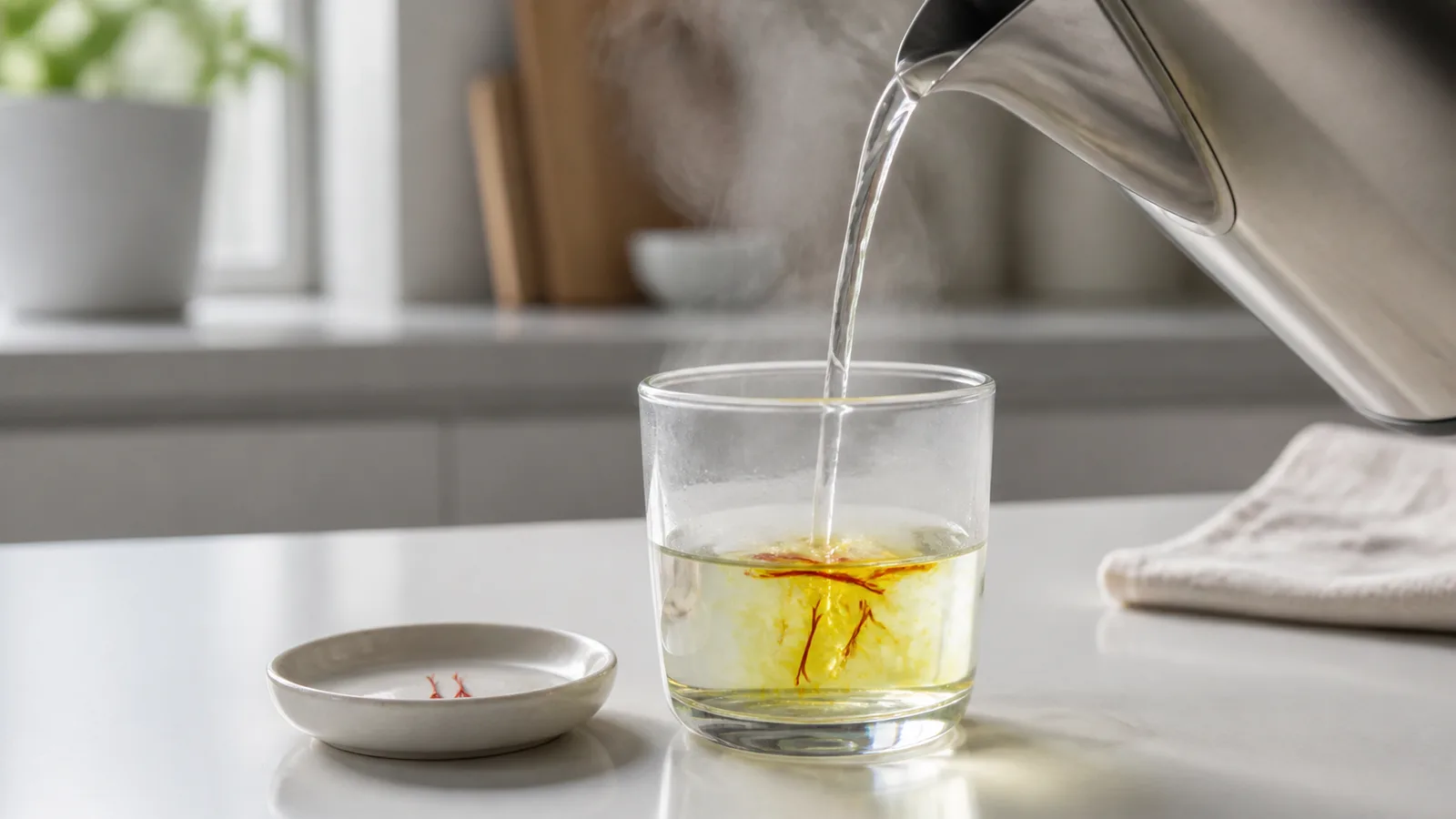
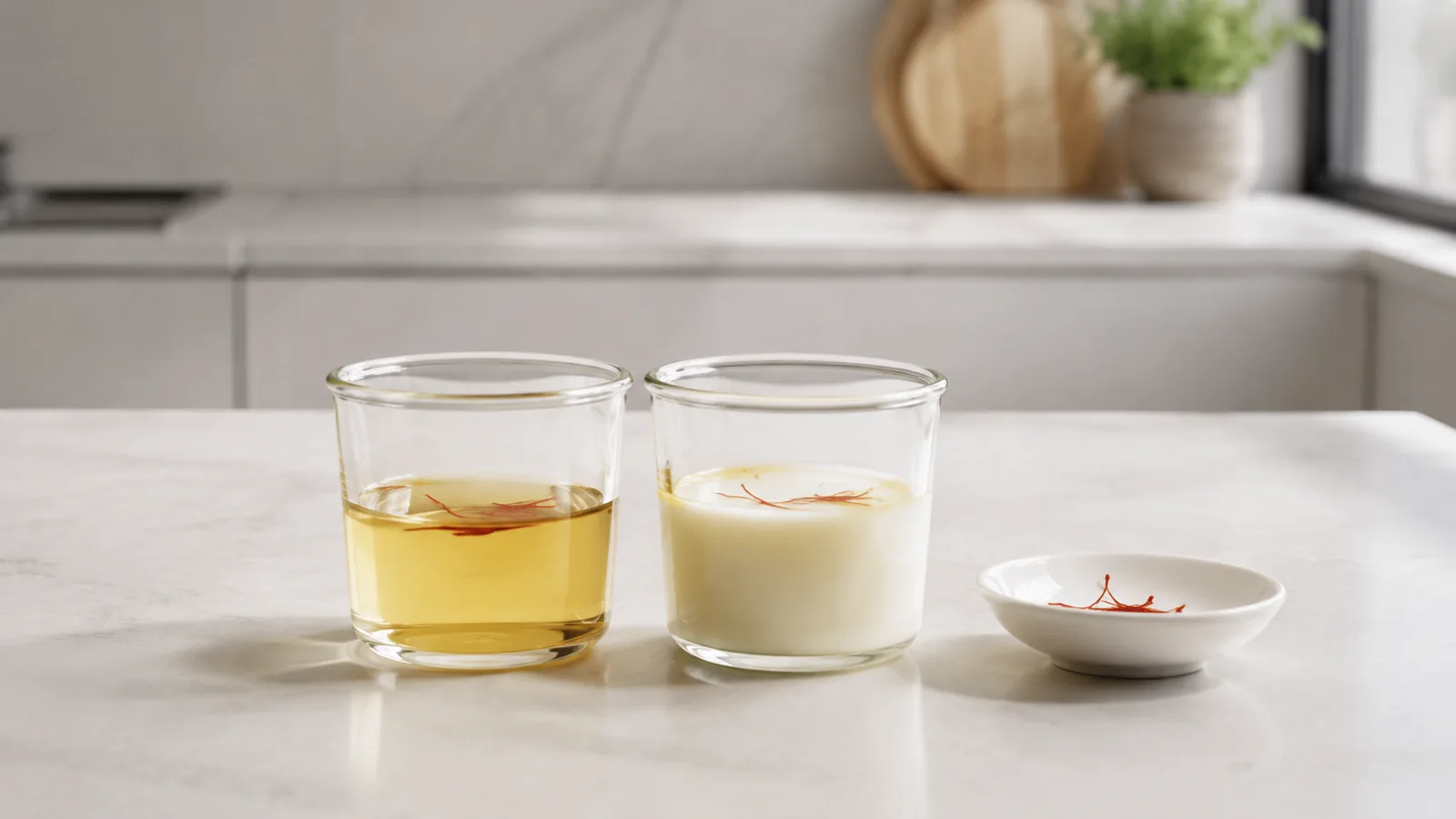
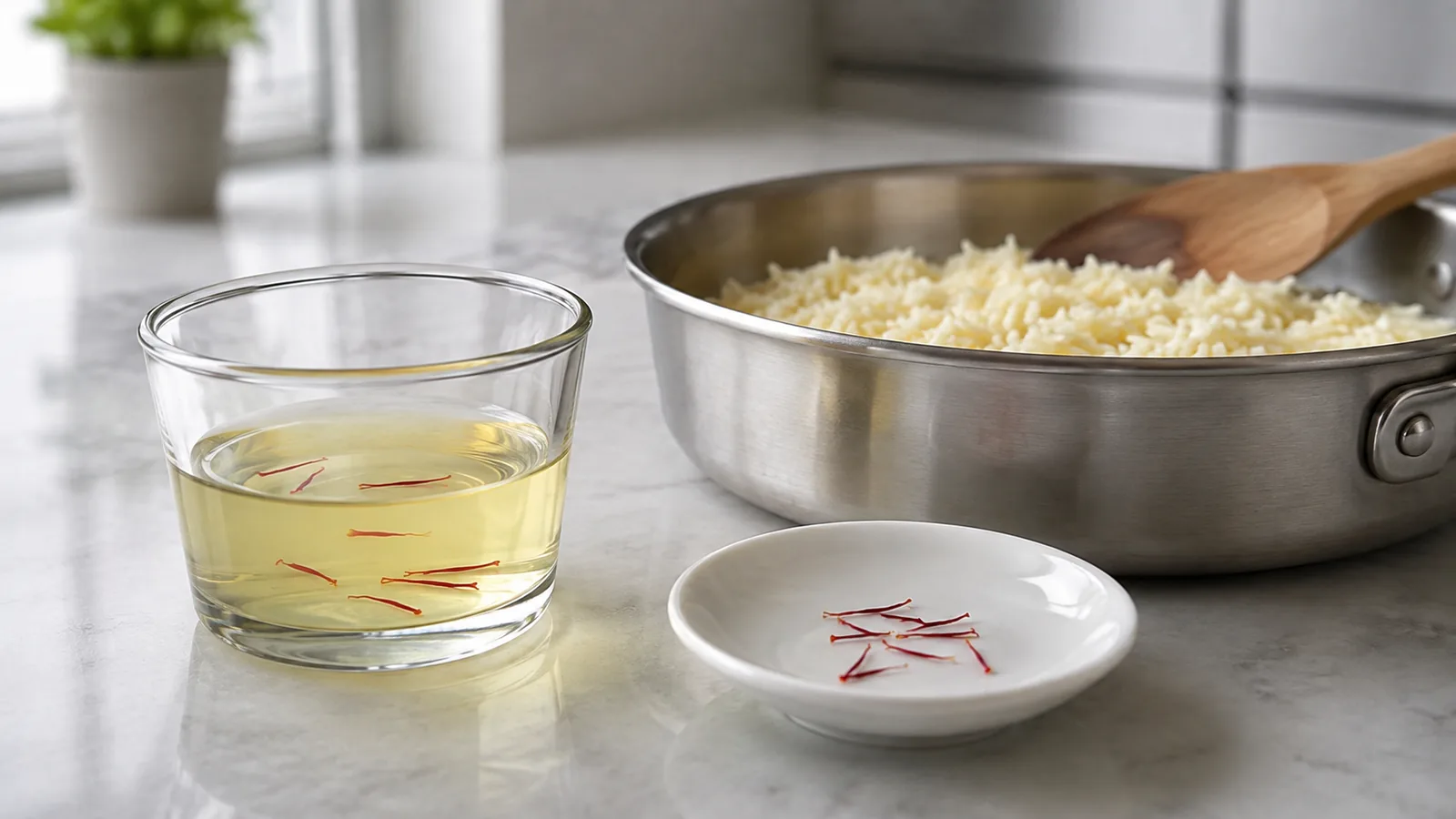
For most dishes, crush the threads lightly and steep them in a small amount of warm water or milk. Add that infusion when it has time to spread through the food without spending the entire cooking period at maximum heat. Our guide to brewing saffron before cooking gives a practical method. The underlying food-science evidence is available in the peer-reviewed study on culinary processing time and saffron compounds.
Pairings that usually give saffron room to work
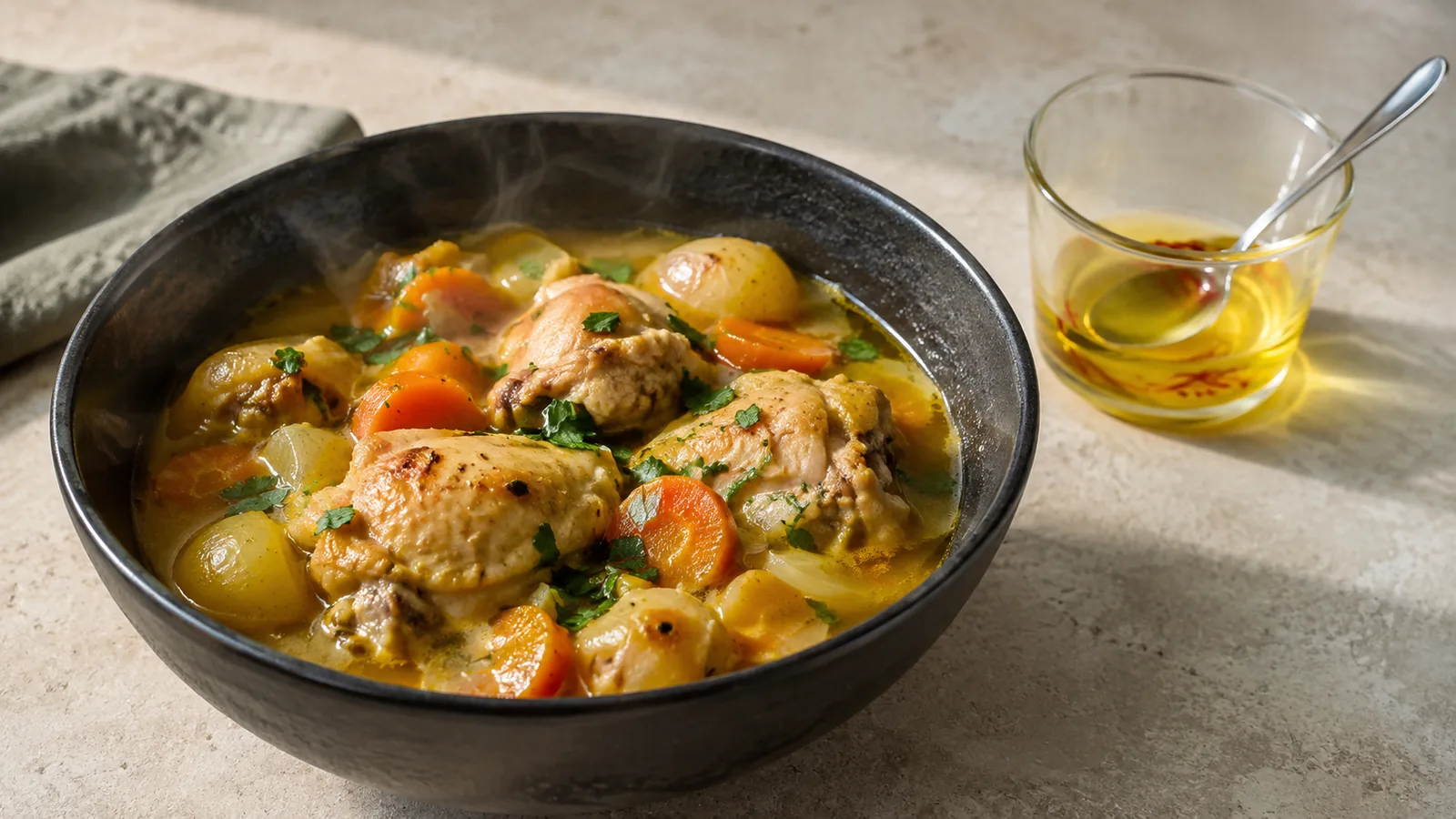
Neutral or gently flavoured ingredients make saffron easier to recognise. Rice, potatoes, bread dough, milk, cream, eggs and mild broths all carry its colour well. Chicken, white fish and shellfish can take stronger seasoning, yet still leave space for saffron when chilli, smoke and heavy sauces are controlled.
For sweet dishes, vanilla, cardamom, pistachio, almond, citrus zest and modest amounts of floral water are natural partners. In savoury cooking, parsley, fennel, leek, tomato and sweet onion can build a fuller dish without turning it into a spice contest. Fat is useful too: butter, olive oil or dairy rounds out the flavour, while water helps distribute saffron’s colour.
A simple way to balance a saffron dish
- Decide what saffron should do. Is it the main aroma, a golden colour, or one layer in a complex spice blend?
- Bloom a small measured amount. This spreads the colour and makes it easier to judge the flavour.
- Build the base first. Soften onion or garlic and cook raw spices before adding the saffron infusion.
- Add dominant flavours gradually. Chilli, smoke, acid, salt and floral waters are much easier to increase than remove.
- Taste near the finish. If saffron is missing, first ask whether another flavour is too loud before adding more of an expensive spice.
Cooking advice is different from supplement safety
This guidance is about ordinary culinary use, not concentrated extracts or saffron supplements. If “what not to mix” means medicines, other supplements, pregnancy or a medical condition, use the product label and ask a doctor or pharmacist. The FDA’s guidance on medicines and dietary supplements explains why interactions need individual professional advice.
The best rule in the kitchen is therefore not a blacklist. Protect saffron from excess: too many strong spices, too much heat, or too much of any single competing flavour. With measured additions and a final taste check, garlic, onion, lemon, dairy and many other ingredients can all belong in a well-balanced saffron dish.