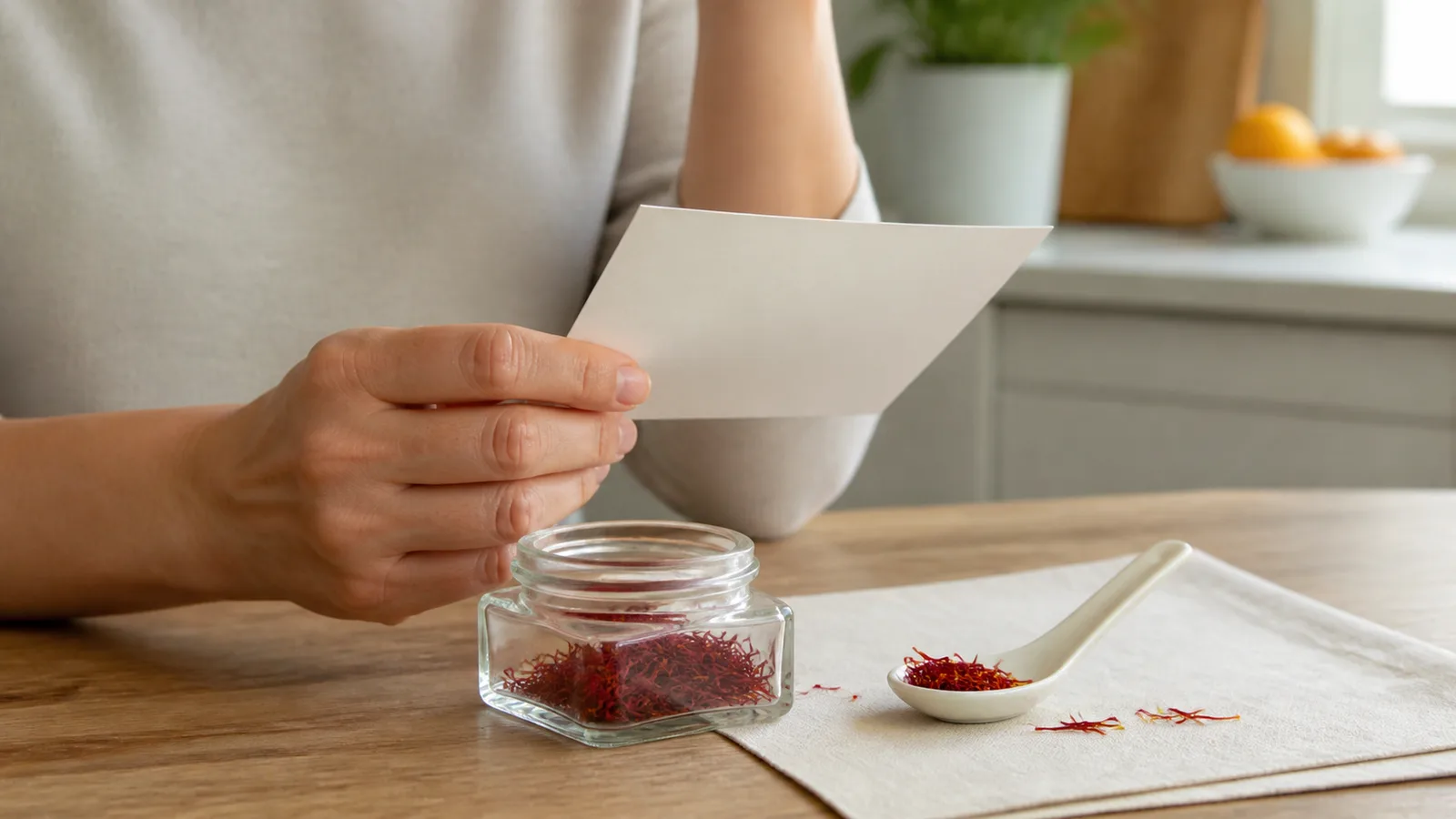
Who shouldn’t take saffron? Anyone with a known saffron allergy should avoid it. Pregnant or breastfeeding people, those taking medicines, people with low blood pressure or bleeding problems, and anyone preparing for surgery should ask a doctor or pharmacist before using a concentrated saffron extract.
A pinch used to flavour a shared meal is not the same exposure as a capsule, daily infusion or large amount. Most cautions concern repeated or concentrated use, but an allergy can matter even at food level.
Who Should Avoid Saffron?
The safest answer depends on the product and the person. Food-grade threads, powders and standardised supplements can differ greatly in strength. A label that says “natural” does not rule out adverse effects or medicine interactions.
Pregnant Women
Normal spice amounts in food should not be confused with medicinal use. Human safety evidence for repeated high or concentrated saffron exposure in pregnancy is limited, and a review of saffron toxicology discusses dose-related and pregnancy concerns.
The NHS guidance on medicines in pregnancy also warns that not every natural remedy is safe and advises discussing herbal products with a midwife, doctor or pharmacist. Do not start a saffron supplement during pregnancy or while trying to conceive without that advice. Breastfeeding calls for the same caution because reliable product-specific data are sparse.
People with a Saffron Allergy
Can you be allergic to saffron? Yes. An allergic reaction to saffron may include hives, rash, itching in the mouth, swelling, vomiting, wheezing, dizziness or difficulty breathing. The FDA’s food-allergy guidance explains that a severe saffron allergic reaction can become life-threatening and requires urgent action.
If you develop saffron allergy symptoms, stop eating it. Seek emergency help for throat, tongue or facial swelling, breathing difficulty, fainting or a rapidly worsening reaction, and use prescribed epinephrine if your allergy plan tells you to. Do not perform a home skin “patch test” with food to decide whether eating it is safe; proper diagnosis belongs with a healthcare professional.
People with Low Blood Pressure
Saffron preparations have been studied for possible blood-pressure effects, but results and products vary. Someone who already has hypotension, faints easily or uses blood-pressure medicine should not assume a concentrated extract is harmless. Ask a clinician, particularly if dizziness or fainting is already a problem.
People on Blood Thinning Medication
Evidence for a clinically important saffron–anticoagulant interaction is limited, so it should not be presented as a certainty. The possible consequence—bleeding—is serious enough that people taking warfarin or another anticoagulant, those with a bleeding disorder, or those facing surgery should check before concentrated use.
Never stop, reduce or reschedule prescribed medicine to make room for a supplement. Bring the exact saffron product and ingredient list to a doctor or pharmacist, because strength and added ingredients can change the answer.
People with Certain Health Conditions
Professional advice is sensible before regular extracts if you have a significant heart, liver or kidney condition; take several medicines; have a seizure disorder; or are receiving treatment for a serious illness. The concern is incomplete safety and interaction information, not a proven blanket ban for every diagnosis.
Children should not be given a concentrated adult saffron product. Anyone who has had an adverse reaction, bought an untraceable powder or cannot confirm the serving size should pause rather than experiment.
When Culinary Saffron Is Usually Different
For most adults without an allergy, a small recipe amount of genuine saffron is ordinary food use. Keep portions modest, avoid spoonfuls of powder, and do not combine kitchen saffron with capsules on the assumption that both are negligible.
In short, who should not take saffron as a supplement? People with a known allergy should avoid it, while pregnancy, breastfeeding, medicines, surgery and relevant health conditions call for product-specific professional advice.
For related precautions in a common drink, see who should not drink saffron milk. You can also browse our food-grade saffron.