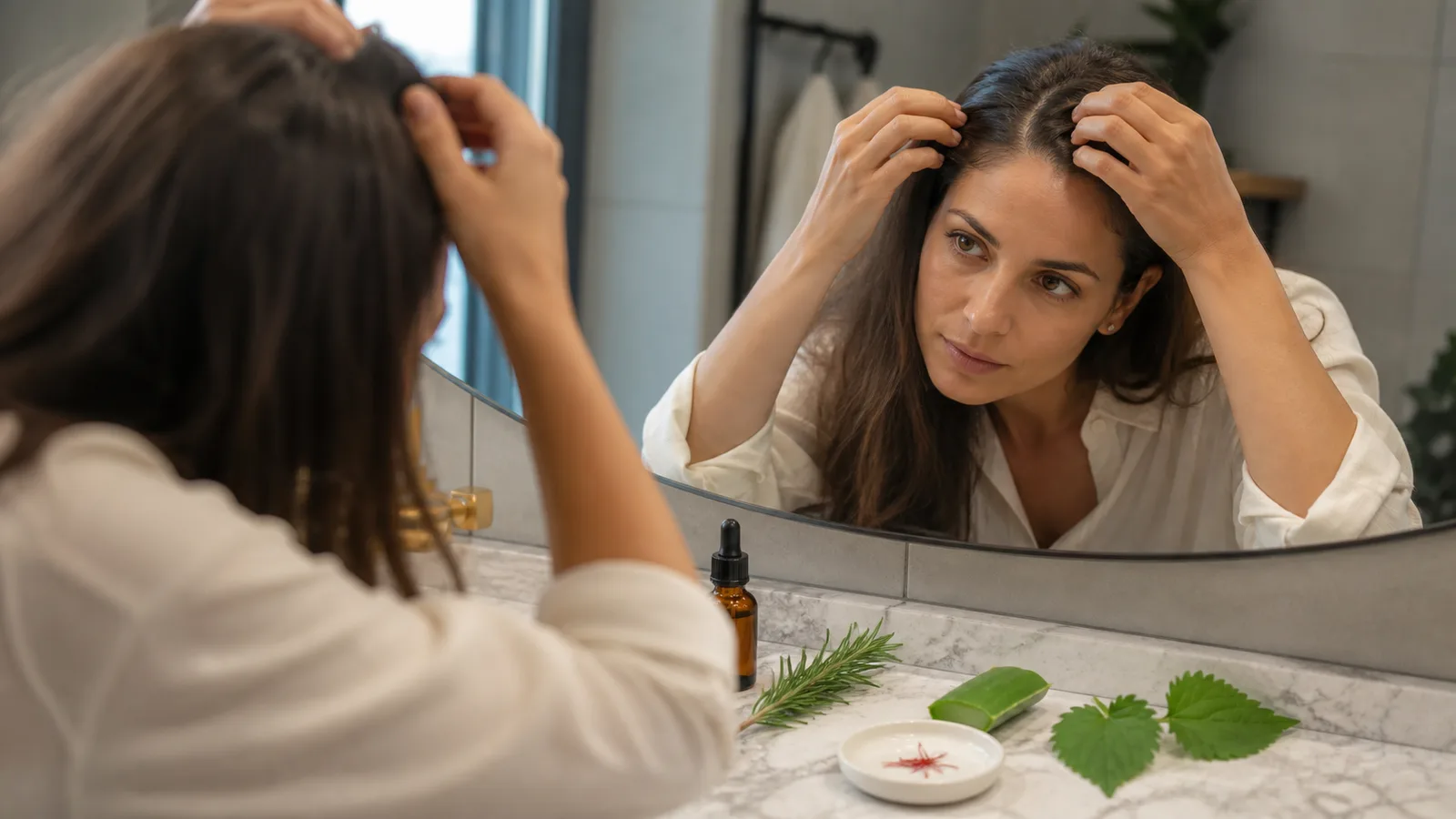
There is no single “most powerful” herb for hair growth. Hair loss has many causes, and no herb works across pattern hair loss, autoimmune alopecia, post-illness shedding, nutritional deficiency and hair-shaft breakage. Among commonly promoted options, rosemary oil has some direct human evidence, but it is not proven to be the best and it can irritate the scalp.
Saffron, bhringraj, aloe vera and nettle are also discussed online. Their traditional use or laboratory activity should not be confused with reliable regrowth in people.
What is the best herb for hair growth?
A 2025 systematic review of controlled clinical trials found promising results for selected herbal preparations, including rosemary, green tea, ginseng, aloe vera, olive and saw palmetto. The studies varied in design, condition, formulation and outcome, so the authors called for larger, standardised trials.
That makes “best herb for hair growth” too broad a claim. The useful question is whether a defined preparation has evidence for the particular type of hair loss you have, at a safe concentration, compared with an appropriate treatment.
Rosemary has evidence, but not a crown
In a six-month randomised comparative trial, 100 men with androgenetic alopecia were assigned rosemary oil or 2% minoxidil. Neither group had a significant hair-count change at three months; both increased from baseline at six months, with no significant difference between groups. Scalp itching increased in both groups.
This single trial makes rosemary more evidence-based than many folklore claims, but it does not establish rosemary as the most powerful herb. It tested one population and schedule, and did not include a placebo group. General references to antioxidants do not prove regrowth, and rosemary has not been shown to prevent dandruff, stop greying or work for every cause of hair fall.
Essential oil should never be applied neat or swallowed. A properly formulated scalp product is safer than guessing a dilution at home. Patch-test first and stop if you develop burning, rash or worsening itch.
What do we know about bhringraj?
Bhringraj (Eclipta prostrata, often sold as Eclipta alba) is called the “king of herbs” in traditional hair care. That title is cultural, not a clinical ranking. Laboratory and animal work does not prove that bhringraj oil stimulates human follicles, improves scalp circulation, reverses thinning or prevents premature greying.
Statements that the herb supplies iron, magnesium or vitamin E directly to hair follicles also oversimplify nutrition. A topical oil cannot correct a blood nutrient deficiency. Oral supplements need a clear ingredient list and safety review rather than an assumption that more nutrients mean more growth.
Aloe vera may soothe, but regrowth evidence is thin
Aloe vera gel may feel cooling on some scalps, and selected aloe preparations appear in herbal hair research. It has not been established as a way to balance scalp pH, unblock follicles, activate regenerative enzymes or strengthen hair “from root to tip.” Those phrases sound biological but do not describe validated clinical outcomes.
Fresh leaf gel can contain irritating components and commercial gels vary. A person with a sore, scaly or inflamed scalp needs the cause identified rather than repeatedly covering it with a mask.
Nettle leaf is not a proven regrowth treatment
Nettle contains plant nutrients, including minerals, but evidence does not show that its silica, sulphur, vitamins A or C, or iron produce new scalp hair when taken as tea, swallowed as an extract or applied topically. Hair thickness and shedding are not reliable indicators of a product’s mineral content.
Nettle products can also interact with medicines or cause unwanted effects. Do not use concentrated oral preparations as a substitute for testing a suspected deficiency.
Is saffron good for hair growth?
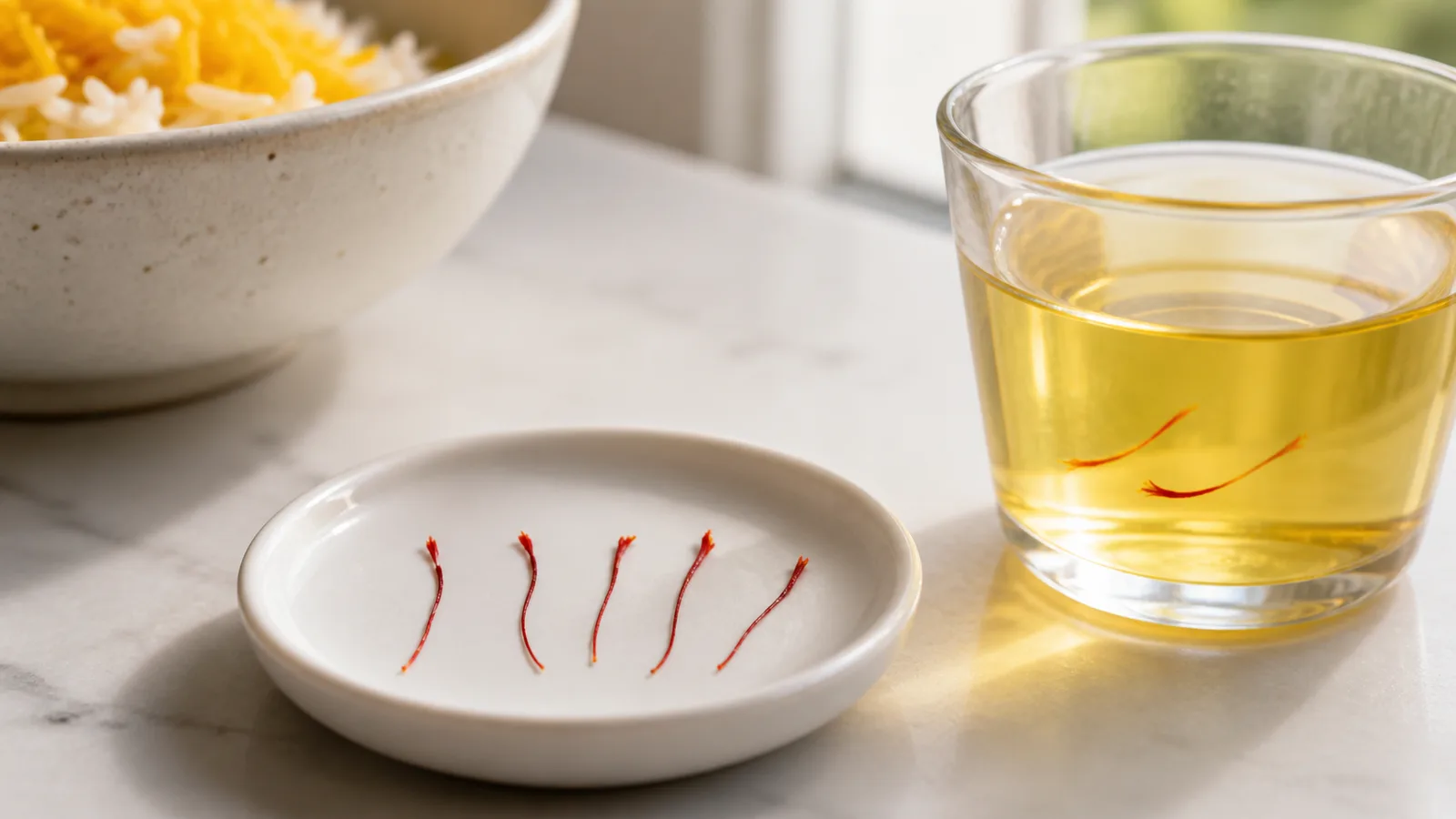
There is not enough human clinical evidence to recommend saffron for hair growth. Saffron contains crocin, crocetin and safranal, and researchers study their antioxidant and anti-inflammatory activity. No robust trial shows that culinary saffron or saffron oil stimulates scalp follicles, increases hair density, treats dandruff or slows greying.
Putting a saffron-and-milk mixture on the scalp may stain hair or skin and can introduce irritation or allergens. Drinking saffron tea does not deliver its compounds selectively to follicles. Use culinary saffron for food rather than treating it as a hair-growth medicine.
Herbal masks, oils, teas and supplements
These forms are not interchangeable. An essential oil is concentrated; an infused hair oil has another carrier; a cosmetic extract has a defined formulation; herbal teas are consumed; and a supplement can create systemic exposure. A positive study on one cannot validate all the others.
Hair masks and conditioner may reduce friction or breakage, making hair look fuller without changing follicle growth. That can still be useful, but it should be described as hair care rather than regrowth.
Start with the cause of hair loss
The American Academy of Dermatology advises seeing a dermatologist because hair loss has many causes and early diagnosis can improve the chance of a useful result. A clinician may look for pattern hair loss, alopecia areata, scalp disease, medication effects, recent illness, major weight change, tight hairstyles or a nutritional problem.
The AAD also cautions that taking too much of some nutrients, including selenium and vitamins A and E, can worsen hair loss. Seek prompt assessment for sudden shedding, round bald patches, scalp pain or scale, scarring, eyebrow loss or progressive thinning.
The practical answer
Rosemary oil has more direct human data than saffron, bhringraj, aloe vera or nettle for common pattern hair loss, but evidence is still limited and it is not universally “most powerful.” A diagnosis comes first. Then compare the evidence, safety and expected timeline of any herbal option with established treatments for that condition.