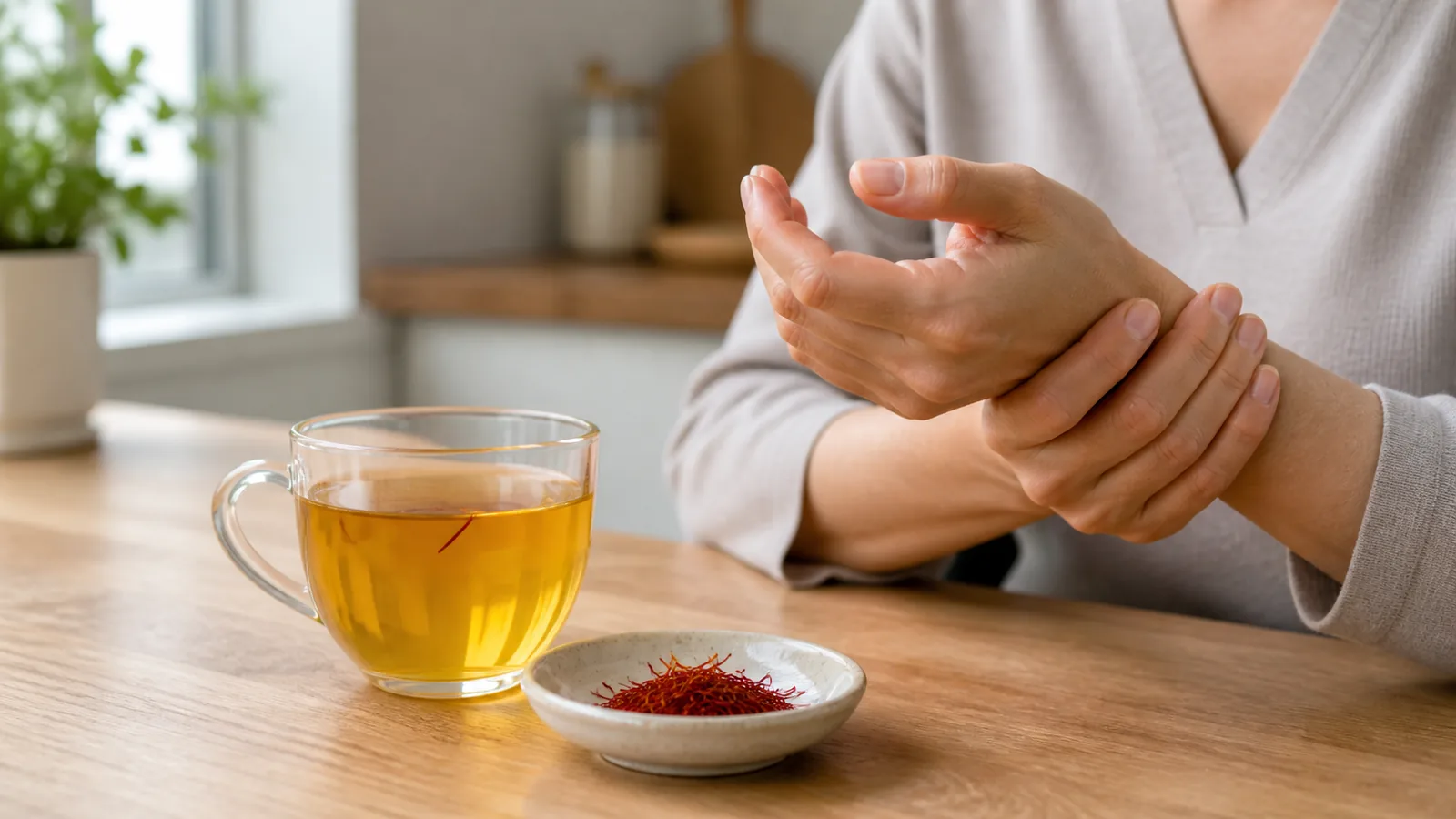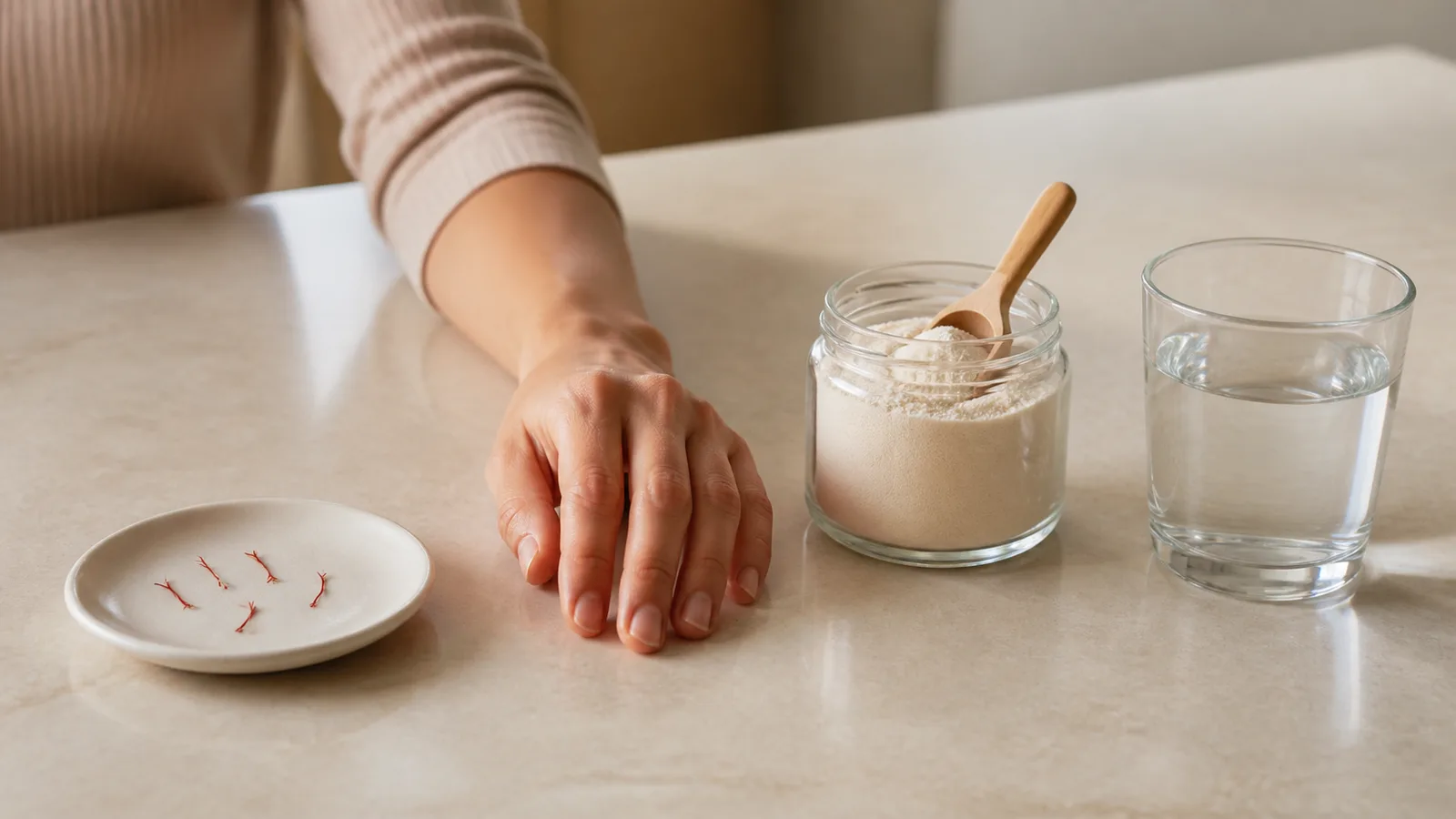
No. Saffron does not contain collagen. Collagen is an animal protein, while saffron is the dried stigma of the plant Crocus sativus. The spice also has not been shown to make the body produce more collagen in a clinically meaningful way.
Saffron and collagen are sometimes connected in beauty marketing because saffron contains antioxidant compounds. That is a possible research mechanism, not proof that eating the spice or putting saffron water on your face increases collagen, firmness or elasticity.
Does saffron have collagen?
Neither saffron threads nor pure saffron powder provide collagen. Plants do not make this structural animal protein. A product labelled “saffron collagen” may contain two separate ingredients, such as saffron extract plus bovine, marine or another source of collagen. Read the ingredient and allergen statements to see what is actually in it.
The same distinction applies to vegan wording. Saffron is plant-derived; conventional collagen is not. A product marketed as a vegan “collagen booster” generally contains nutrients or plant compounds rather than collagen itself.
What collagen does in the skin
Collagen is part of the connective-tissue framework that gives skin structure. Its organisation and quantity change with age and ultraviolet exposure, contributing to changes in texture, firmness and wrinkles. The body builds collagen from amino acids through a complex process; it does not move whole collagen directly from a spice into facial skin.
Vitamin C is required for normal collagen biosynthesis, as the US National Institutes of Health explains in its vitamin C fact sheet. That does not mean every food associated with antioxidants stimulates extra collagen. Saffron is used in such small culinary quantities that it should not be described as a rich source of vitamins A or C.
Does saffron stimulate collagen production?
There is no strong human evidence that ordinary saffron intake stimulates collagen production. Crocin, crocetin and safranal have antioxidant or anti-inflammatory activity in laboratory models, but discussion of oxidative stress and free radicals is not the same as measuring new collagen or skin regeneration in people.
A 2026 randomised placebo-controlled trial tested an oral saffron extract for 12 weeks in women aged 50–70. It found no significant group difference in self-rated physical appearance or facial skin age estimated by an imaging application. The study did not directly measure collagen, but it offers no basis for promising a visible anti-ageing result.
What about saffron creams and face masks?
One small 12-week study in 20 volunteers reported improvements with a cream containing saffron extract and avocado oil. Because it tested a complete multi-ingredient formula without a saffron-only comparison, the result does not show that raw saffron boosted collagen or caused the changes by itself.
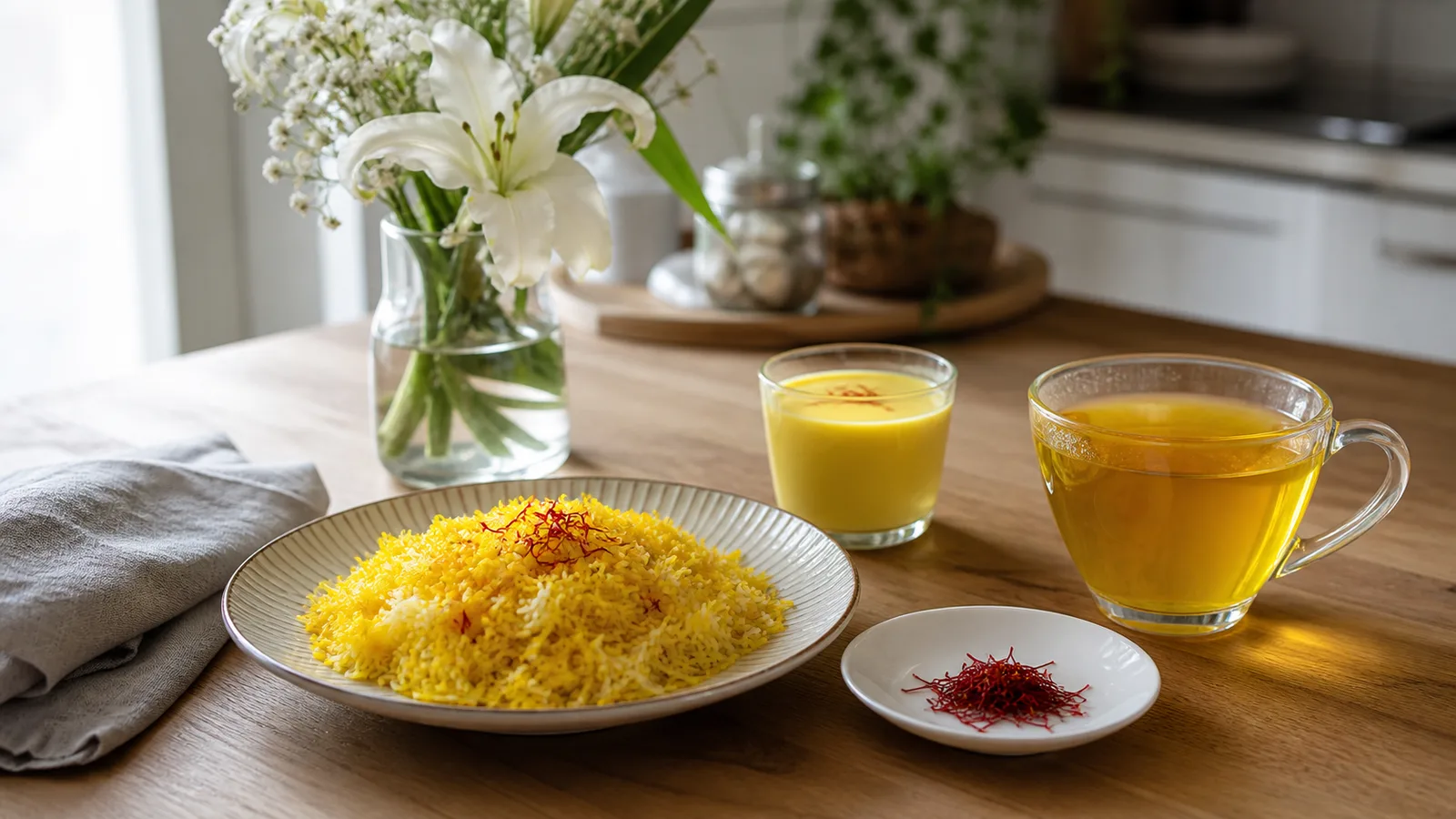
A homemade mask made by soaking a few threads in warm milk or water for 10–15 minutes has not been shown to improve collagen. Leaving it on for 20 minutes does not create a tested dose. Milk can add allergens or residue, while saffron can stain and any new ingredient can irritate sensitive skin.
If you try a properly labelled saffron cosmetic, follow its directions and patch-test it before applying it widely. Stop if it causes burning, itching, swelling or a rash. Do not use a spice preparation to treat acne, eczema, pigmentation or a wound.
Can saffron still support skin health?
Saffron may be an interesting antioxidant ingredient in a well-designed formula, and it can be part of a varied diet as a flavouring. Those are narrower statements than saying it improves skin elasticity, prevents sagging, erases fine lines or guarantees a smooth, glowing face.
For visible skin ageing, consistent sun protection has a clearer role than a saffron mask. A dermatologist can recommend options for wrinkles, pigmentation, dryness or loss of elasticity based on the person’s skin and medical history.
Eating saffron versus taking collagen
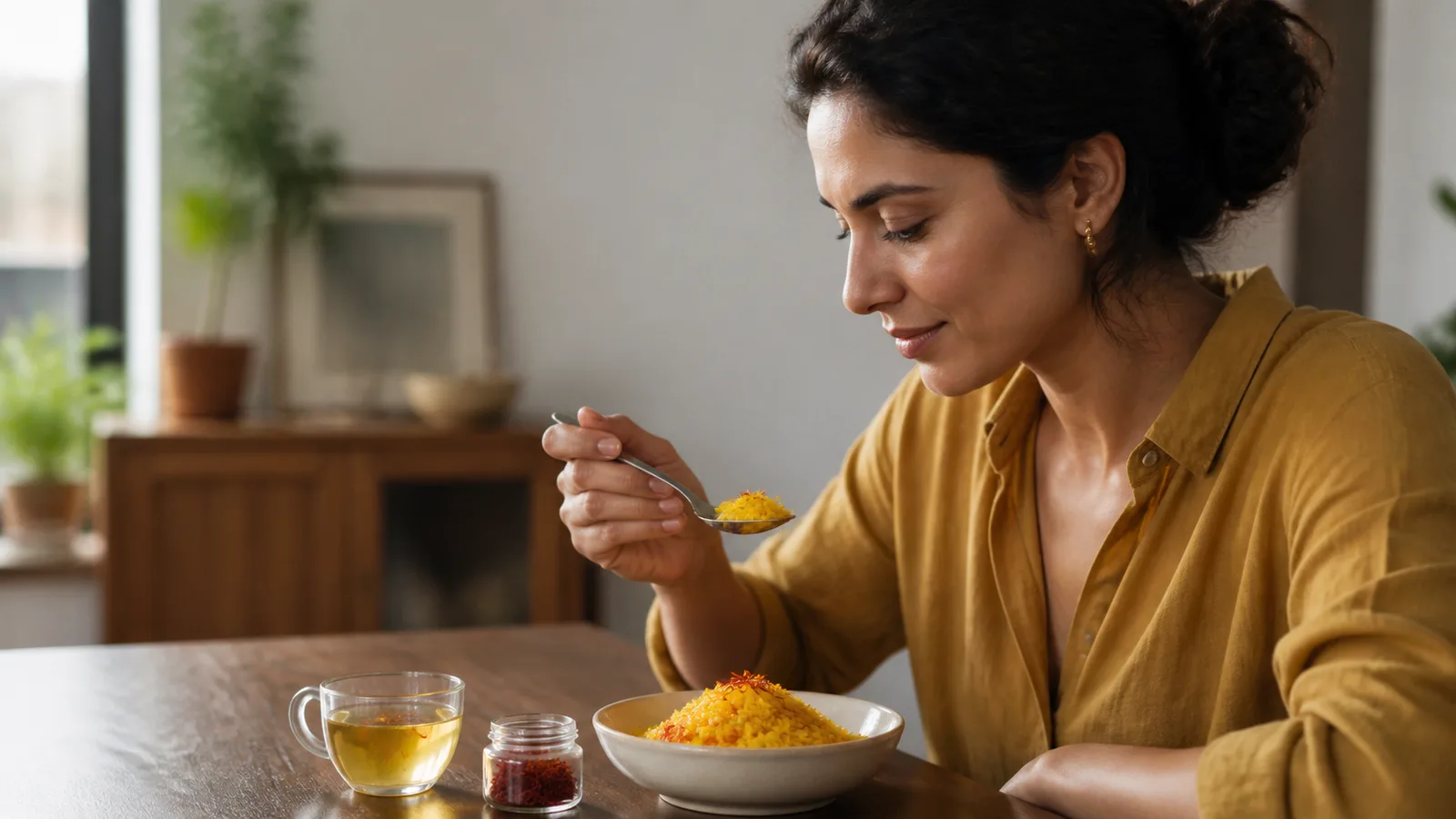
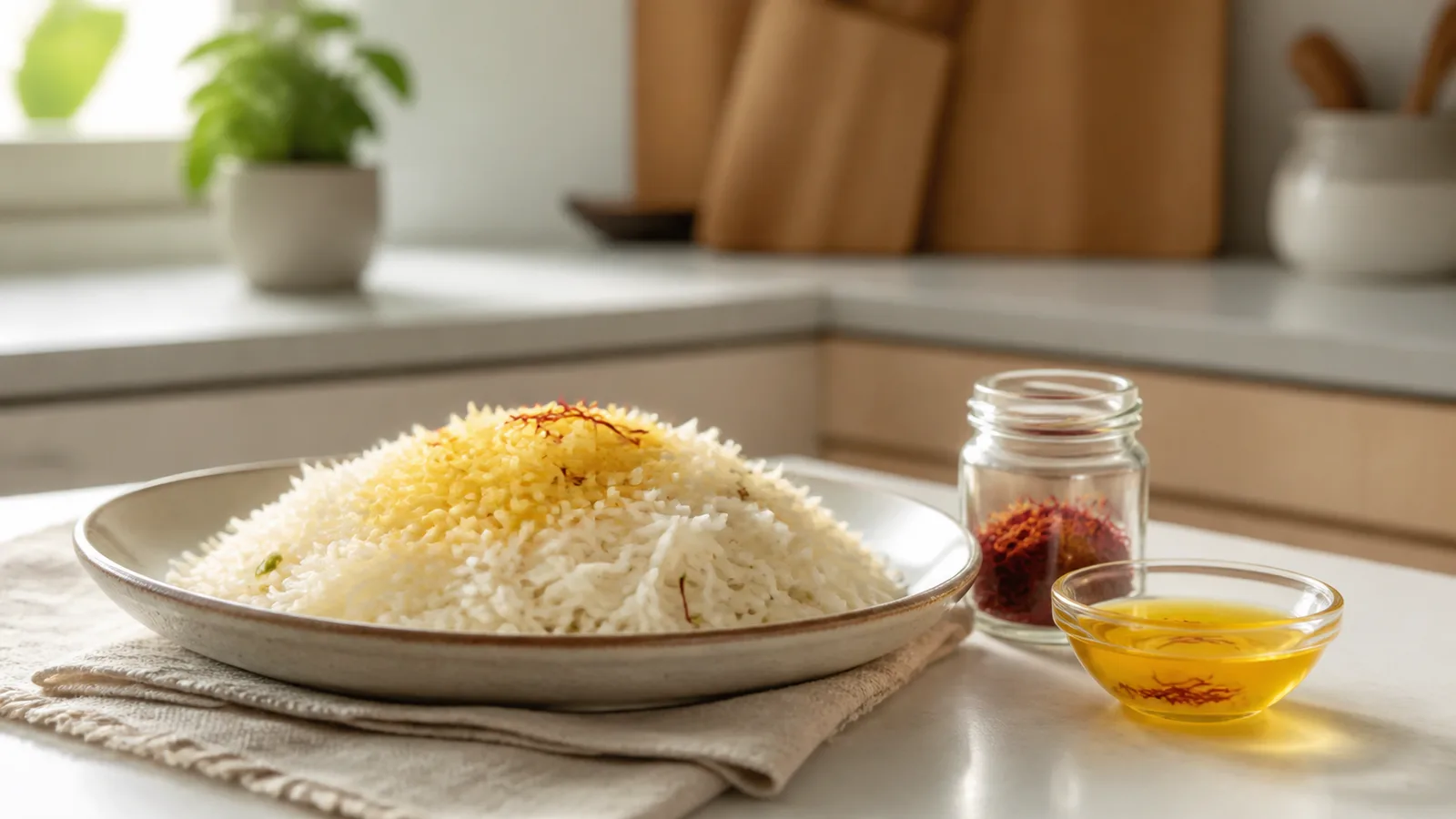
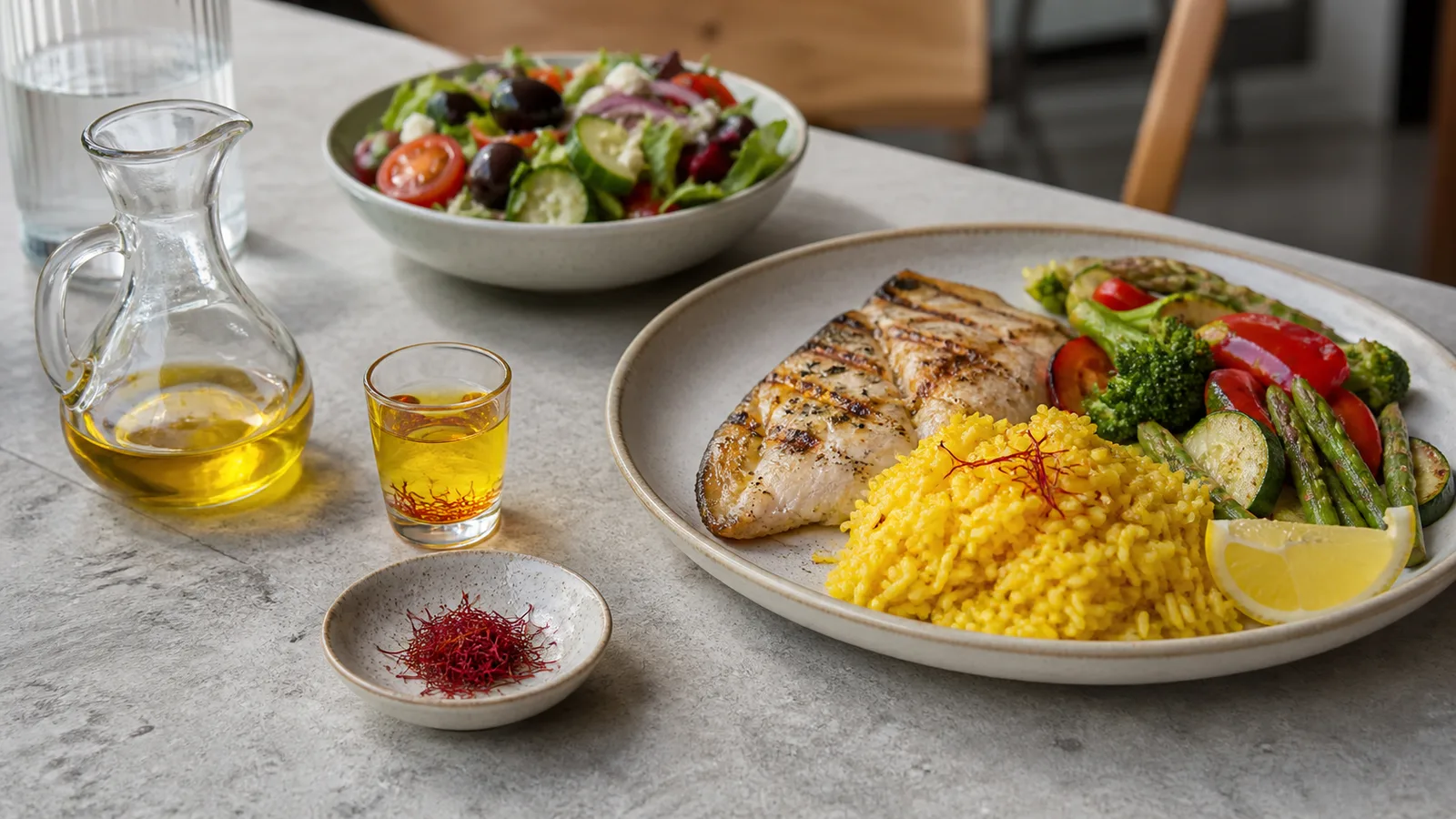
Culinary saffron and collagen supplements are different products with different evidence and safety questions. Adding a few saffron threads to rice, milk or tea provides flavour, aroma and colour; it does not turn the dish into a collagen source.
Even claims for collagen supplements require scrutiny. A 2025 meta-analysis of 23 randomised trials found apparent benefits across all studies, but no effect in non-industry-funded or higher-quality subgroups, leading the authors to conclude that current clinical evidence did not support collagen supplements for preventing or treating skin ageing.
The clear answer
Does saffron have collagen? No, and current evidence does not establish it as a collagen booster. It contains compounds worth studying, but antioxidant activity should not be turned into a guarantee of firmer, younger-looking skin.
Use authentic saffron for its culinary qualities. For a saffron cosmetic or combined supplement, judge the whole formulation, source, evidence and safety directions rather than assuming the word saffron proves a collagen benefit.