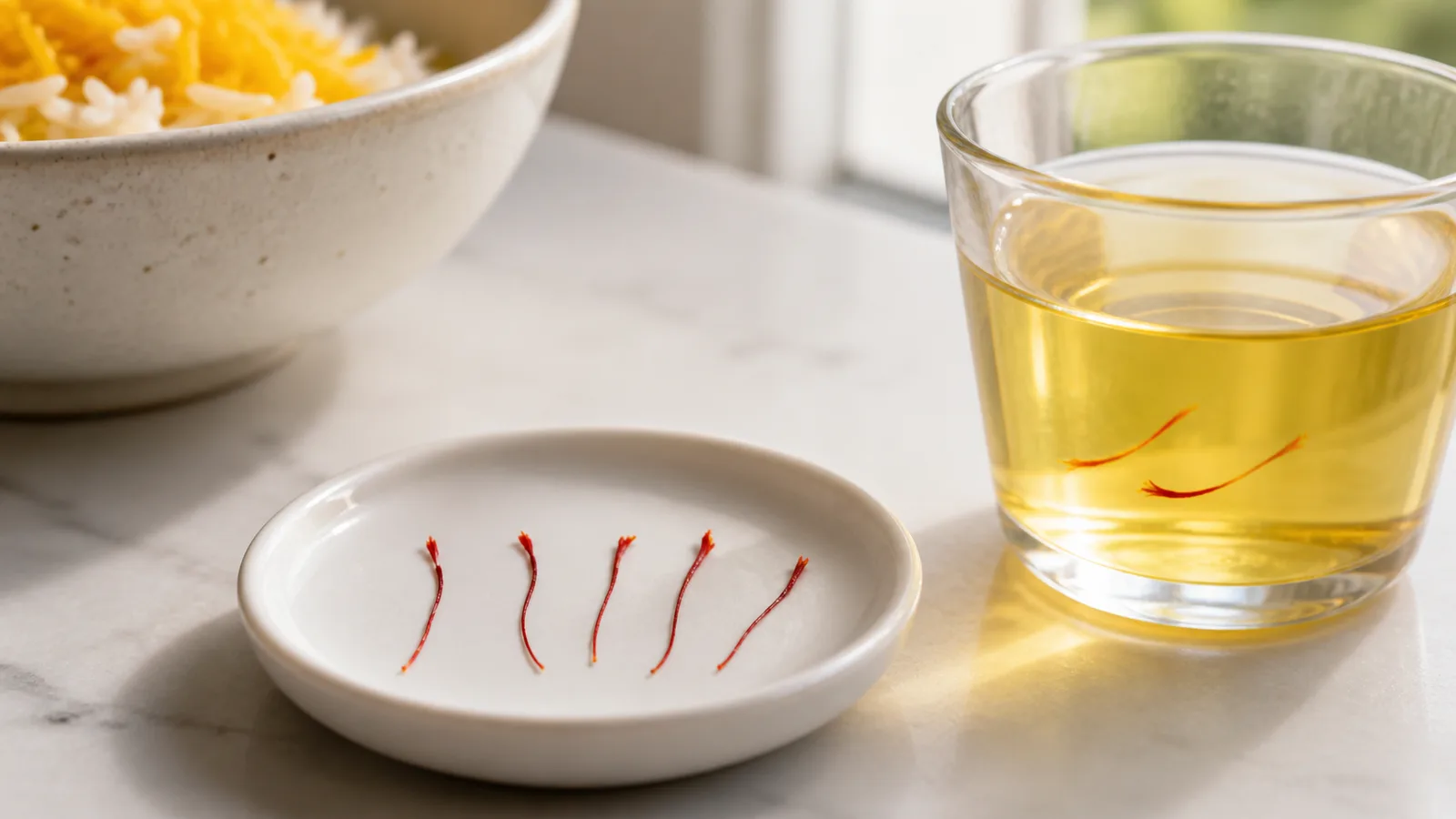
Saffron can add antioxidant compounds and colour to a cosmetic formula, but it is not a proven treatment for acne, dark spots or wrinkles. What it does to your face depends on the extract, concentration and finished product. A few spice threads soaked in milk are not equivalent to a tested cream.
If your aim is brighter, calmer or more hydrated skin, look at the evidence for the complete product and its other ingredients. Saffron for skin care is a formulation question, not a promise attached to the raw spice. “Natural” does not guarantee that something will suit sensitive facial skin.
Is saffron good for skin?
Saffron contains crocin, crocetin and safranal, compounds studied for antioxidant and anti-inflammatory activity. A review of saffron and skin research describes laboratory findings and its use in moisturisers, sunscreens, anti-spot and anti-ageing formulations. However, laboratory activity is not the same as clear clinical proof that ordinary saffron threads will improve a person’s face.
Human research is still small and product-specific. This is why the benefits of saffron on face care should be described as possible formulation benefits, not guaranteed results from a homemade mask.
Does saffron brighten the face or fade dark spots?
Saffron releases a strong golden pigment, so a homemade preparation can temporarily colour the surface of the skin. That is not the same as changing melanin or treating hyperpigmentation. Research into saffron extracts and pigment pathways is interesting, but it does not establish that saffron water, milk or powder reliably removes dark spots or corrects uneven skin tone.
Persistent or changing pigmentation deserves a proper diagnosis. The US Food and Drug Administration’s skin-product safety guidance also warns that some products sold for brightening or lightening contain unsafe or undeclared ingredients. Read the complete label rather than buying on a “saffron” claim alone.
What does saffron do for acne and redness?
Antimicrobial or anti-inflammatory results in a laboratory do not prove that saffron treats acne on human skin. Acne involves blocked pores, oil, inflammation, bacteria and several individual factors. Saffron has not been established as a pore cleanser, a way to prevent breakouts or a replacement for evidence-based acne care.
A fragranced or homemade mixture may itself sting or irritate inflamed skin. See a dermatologist if acne is painful, scarring, persistent or leaving dark marks. Treating inflammation early can also reduce the chance of post-acne pigmentation.
Can saffron moisturise dry skin?
Moisture usually comes from the full formulation: humectants attract water, emollients soften the surface and occlusive ingredients reduce water loss. A study comparing saffron lotions with the same base found no significant difference in short-term skin moisture. That makes it misleading to credit saffron alone for hydration from a cream or mask.
For dry or sensitive skin, a simple fragrance-free moisturiser with a clear ingredient list is easier to assess than food ingredients mixed at home. Saffron’s aroma and colour do not show that it strengthens the skin barrier.
Does saffron reduce fine lines or increase collagen?
Antioxidants can help researchers explore protection from oxidative stress, but that broad mechanism does not prove that saffron regenerates facial skin or increases collagen, firmness or elasticity. One small 12-week study in 20 volunteers reported improvements with a formulated cream containing both saffron extract and avocado oil. It cannot tell us how much either ingredient contributed, and it did not test a kitchen-made saffron mask.
Daily broad-spectrum sunscreen, avoiding tobacco and using established ingredients with suitable professional guidance have a stronger role in managing visible photoageing. No cosmetic can promise to restore youthful skin permanently.
How to use saffron on your face more safely
The lowest-risk option is a properly labelled cosmetic made for facial use. Check the complete ingredient list, directions, expiry information and manufacturer rather than judging by the colour or the word saffron on the front.
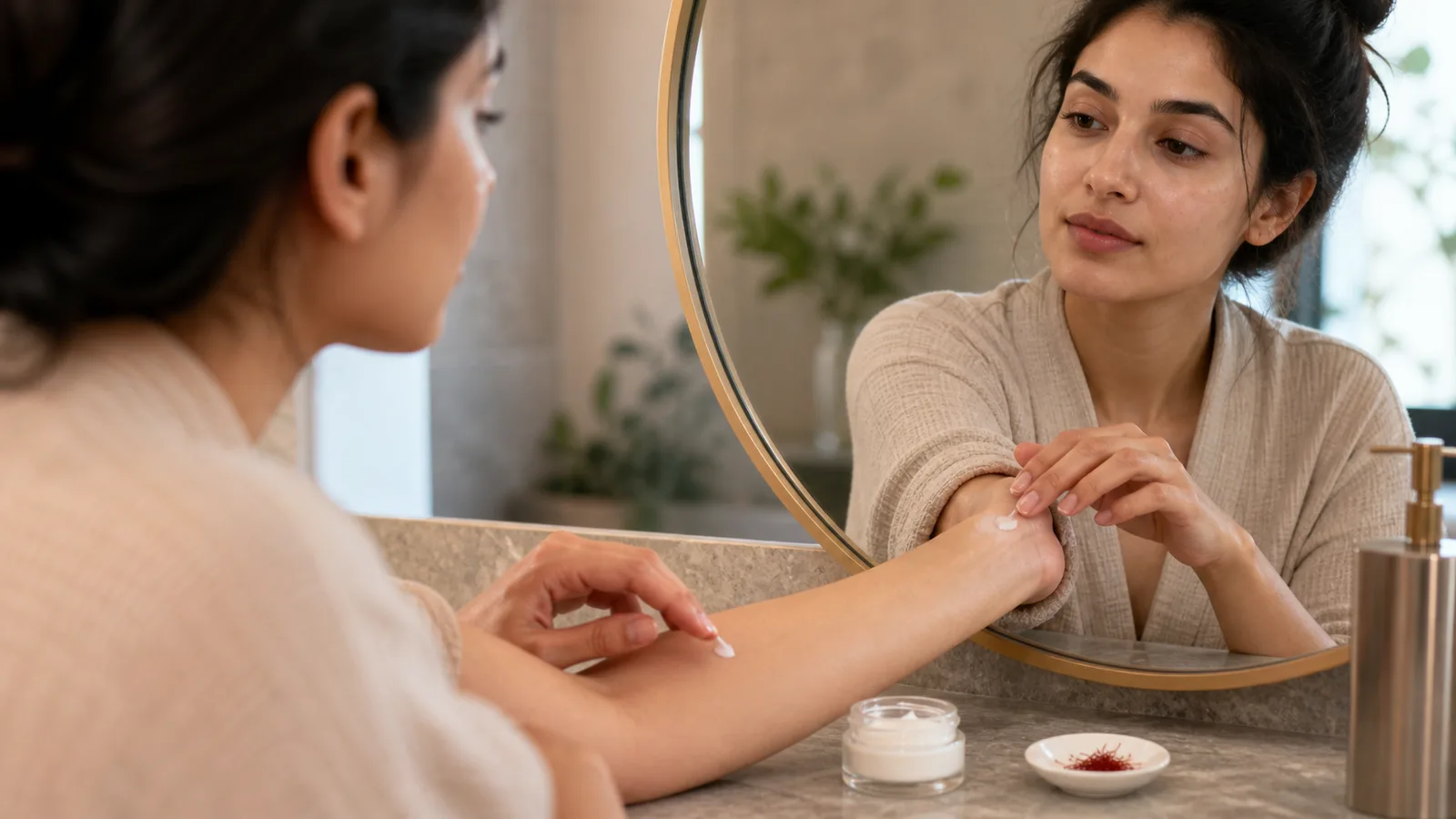
Before putting a new cosmetic over your face, test it on a small area. The American Academy of Dermatology advises applying a new skin-care product to a small test spot daily for seven to ten days before wider use, particularly for eczema-prone skin. Stop if you develop burning, swelling, itching or a rash.
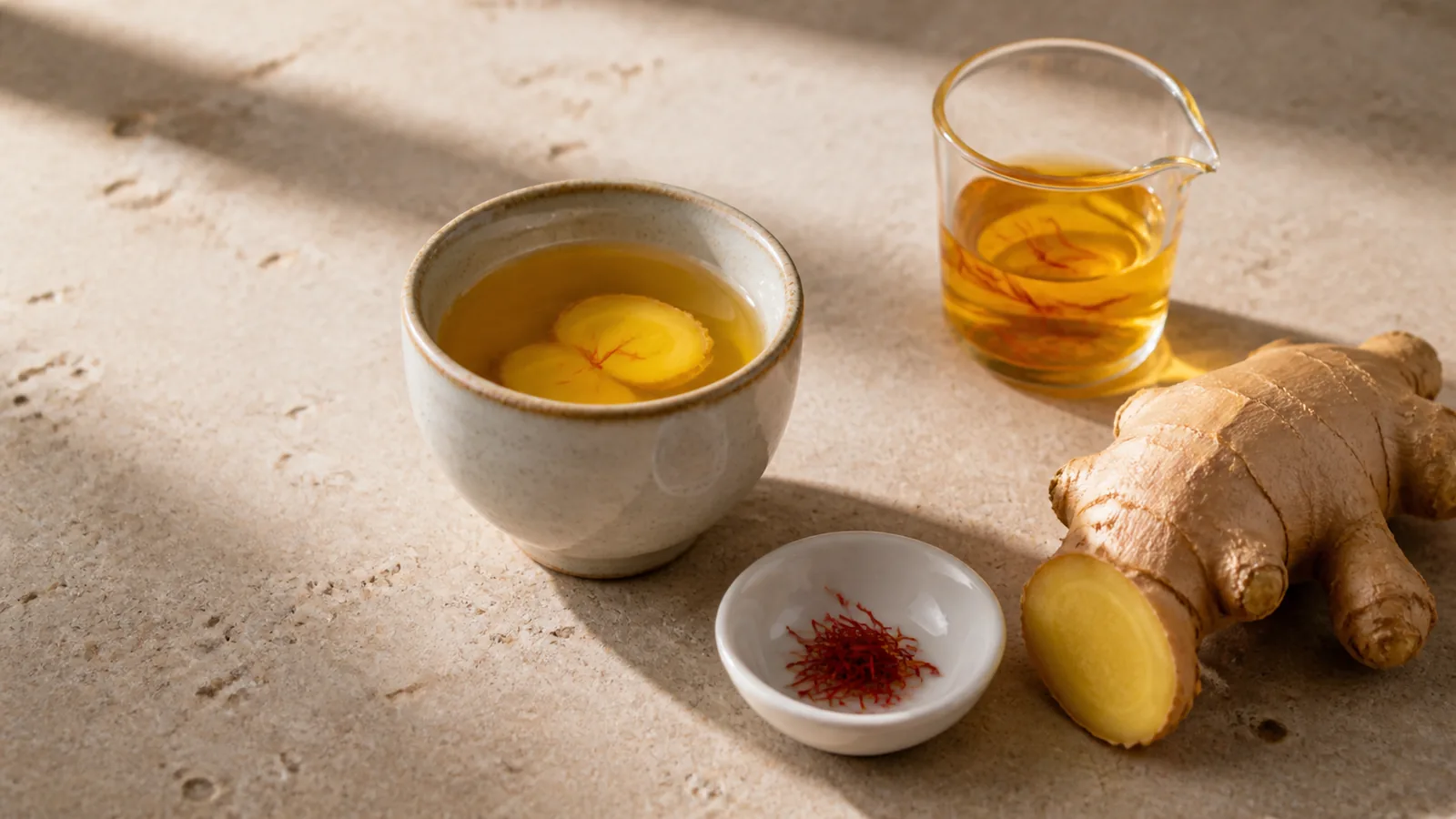
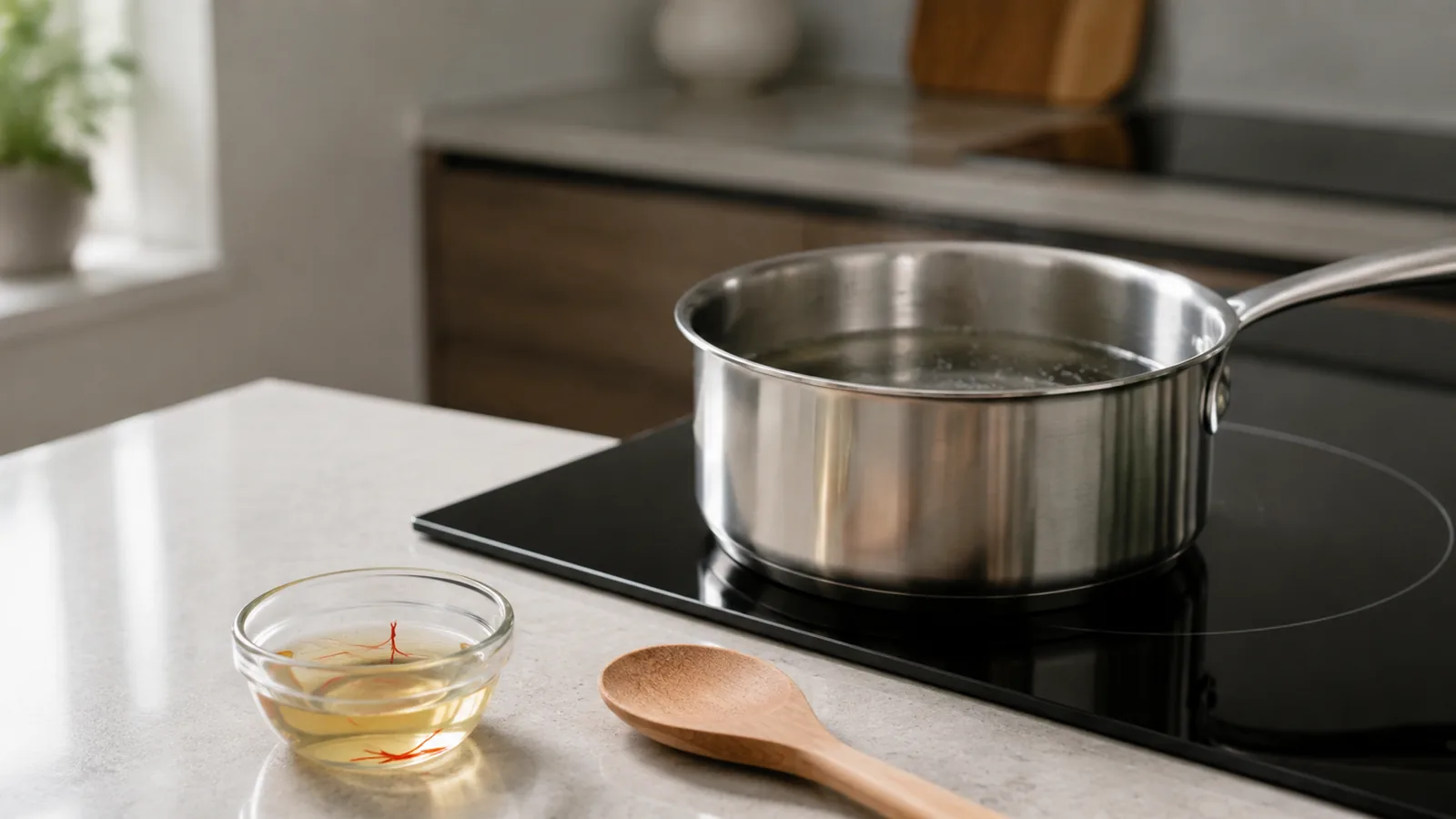
A traditional mask made by soaking a few saffron strands in water or milk for 10–15 minutes has not been clinically validated. Leaving it on for 20 minutes does not create a proven dose. Milk can introduce its own allergens and residue, while concentrated saffron colour may stain skin or fabric. Avoid broken skin and the eye area, and do not use a home mixture to treat acne, eczema or pigmentation.
A practical answer for your face
What does saffron do to your face? In a well-designed cosmetic, a defined saffron extract may contribute antioxidant compounds and colour. Evidence for brightening, acne control, hydration, wrinkle reduction and collagen production remains limited or belongs to a specific multi-ingredient formula.
Choose facial products for their full formulation and safety information. Keep culinary saffron primarily for food, and ask a dermatologist about a persistent skin concern rather than relying on a spice-based remedy.