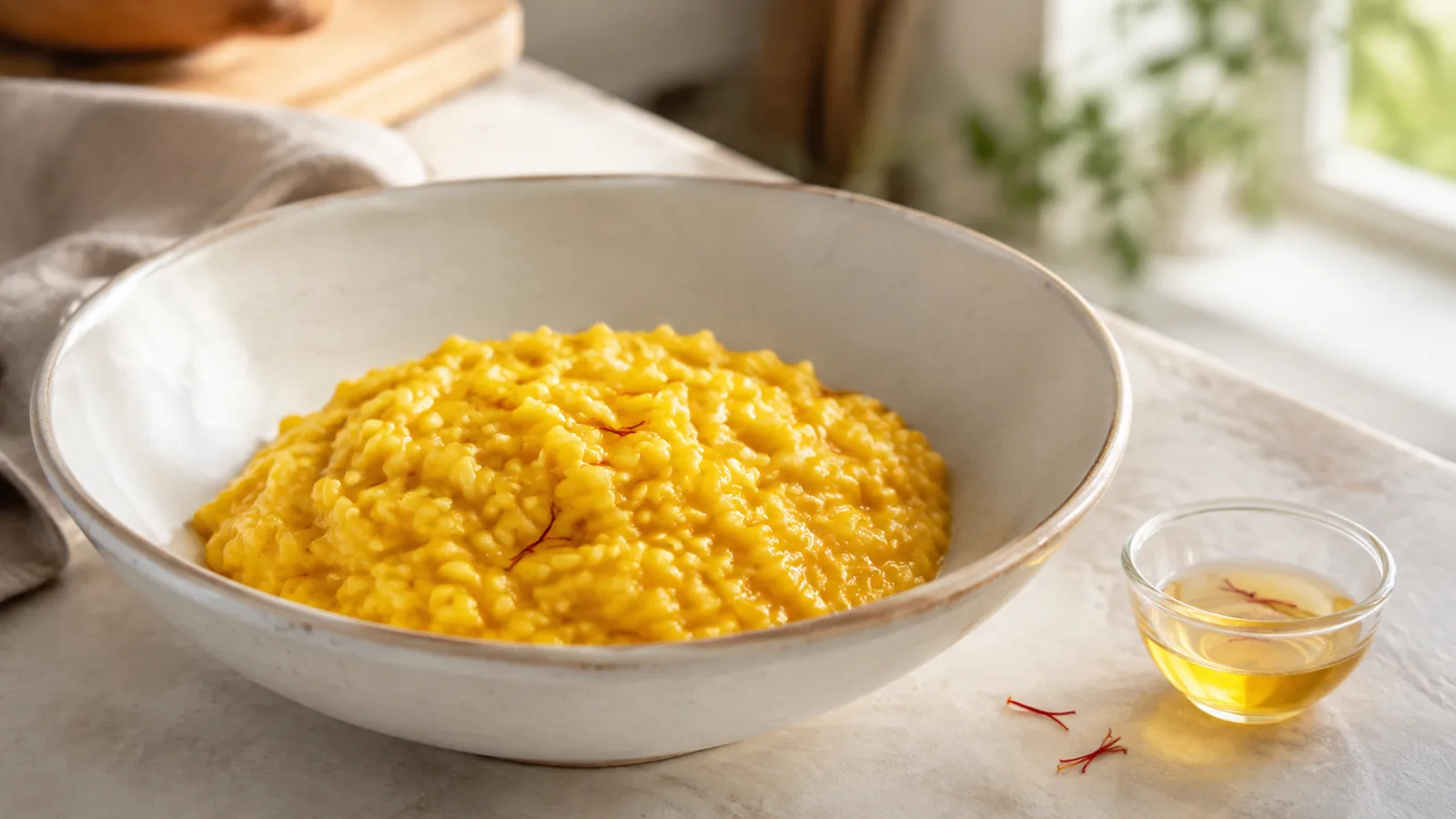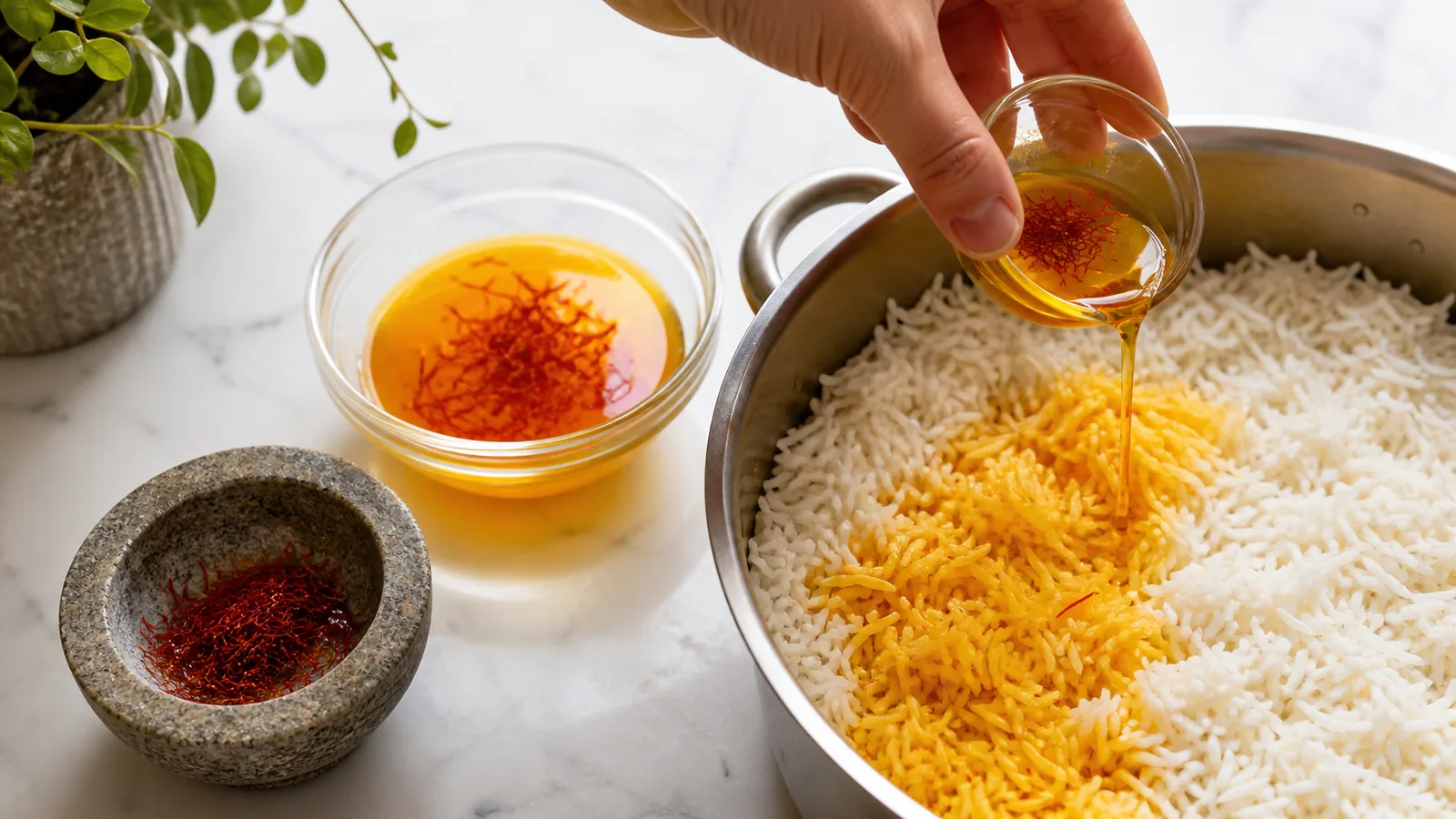
The best way to use saffron is to crush a small amount of genuine threads gently, steep them in warm water, milk, or stock for 10 to 15 minutes, and add both the liquid and softened threads to the dish. This spreads the colour and aroma far more evenly than dropping a dry bundle into one corner of a pan.
The details change with the recipe. Rice needs even distribution, a stew needs good timing, and a dairy dessert benefits from an infusion made with milk or cream. Saffron is concentrated, so start modestly and let it support the food rather than dominate it.
Best Way to Use Saffron: Tips for Maximum Flavor and Benefits
How to use saffron effectively comes down to four choices: use sound threads, crush only what you need, choose a liquid that suits the dish, and avoid cooking away the aroma. Kesar is another name for saffron, so instructions for how to use kesar are the same.
Whole threads are useful because you can inspect their structure and control the amount. Powder disperses quickly but is harder to assess visually and loses aroma faster once exposed to air. Whichever form you buy, traceability and storage matter more than elaborate packaging.
Infuse Saffron for Maximum Flavor
Place a small pinch of threads in a completely dry mortar. Press and rub lightly with the pestle until the threads break into shorter pieces. You do not need an ultra-fine powder, and the old advice to add sugar or salt to help grinding is optional rather than essential.
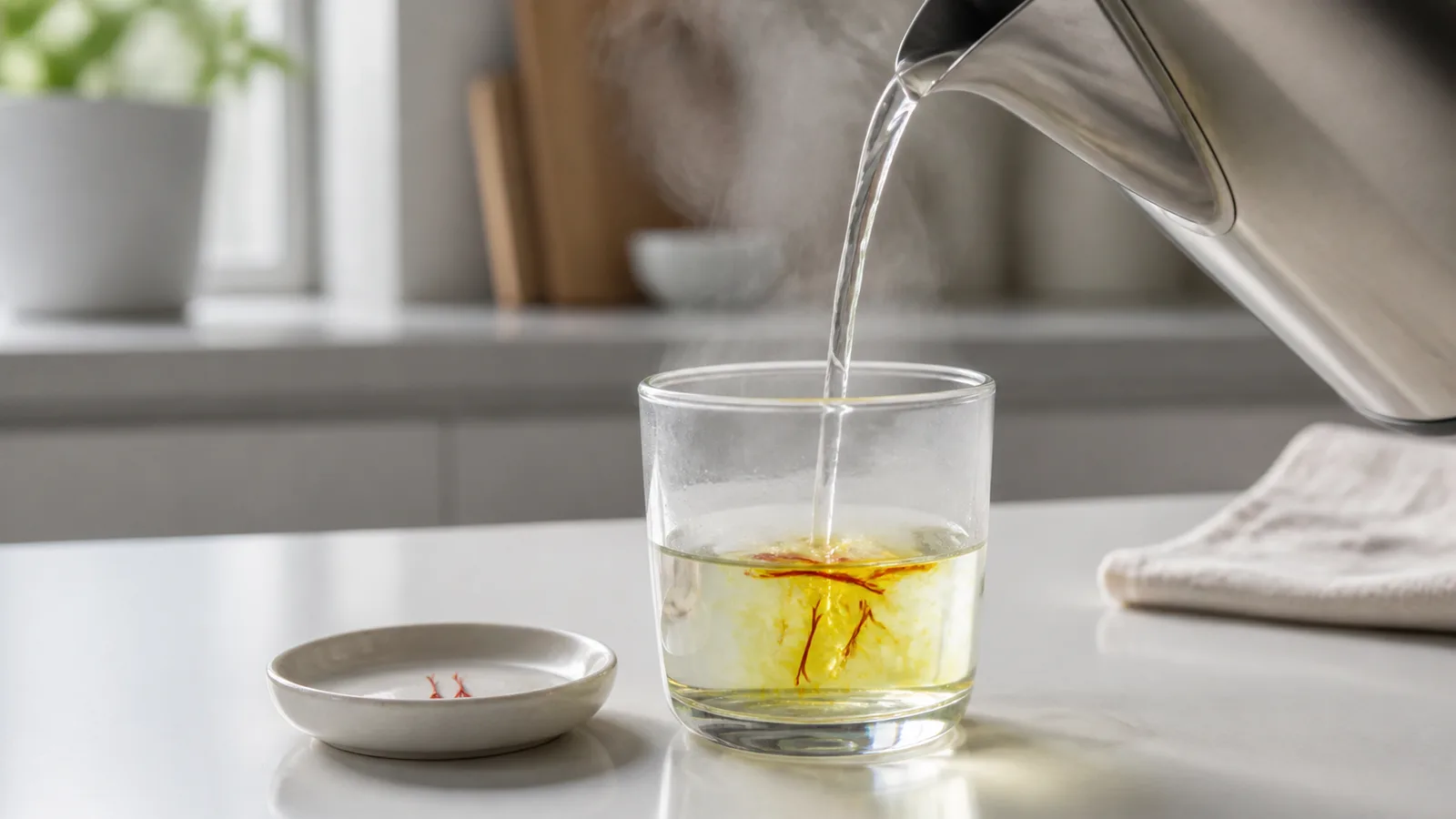
Add one or two tablespoons of warm liquid for a small recipe, or enough to distribute the spice through a larger dish. The liquid should feel warm, not violently boiling. Leave it for about 10 to 15 minutes. It will turn golden and become aromatic; pour in the threads as well as the liquid.
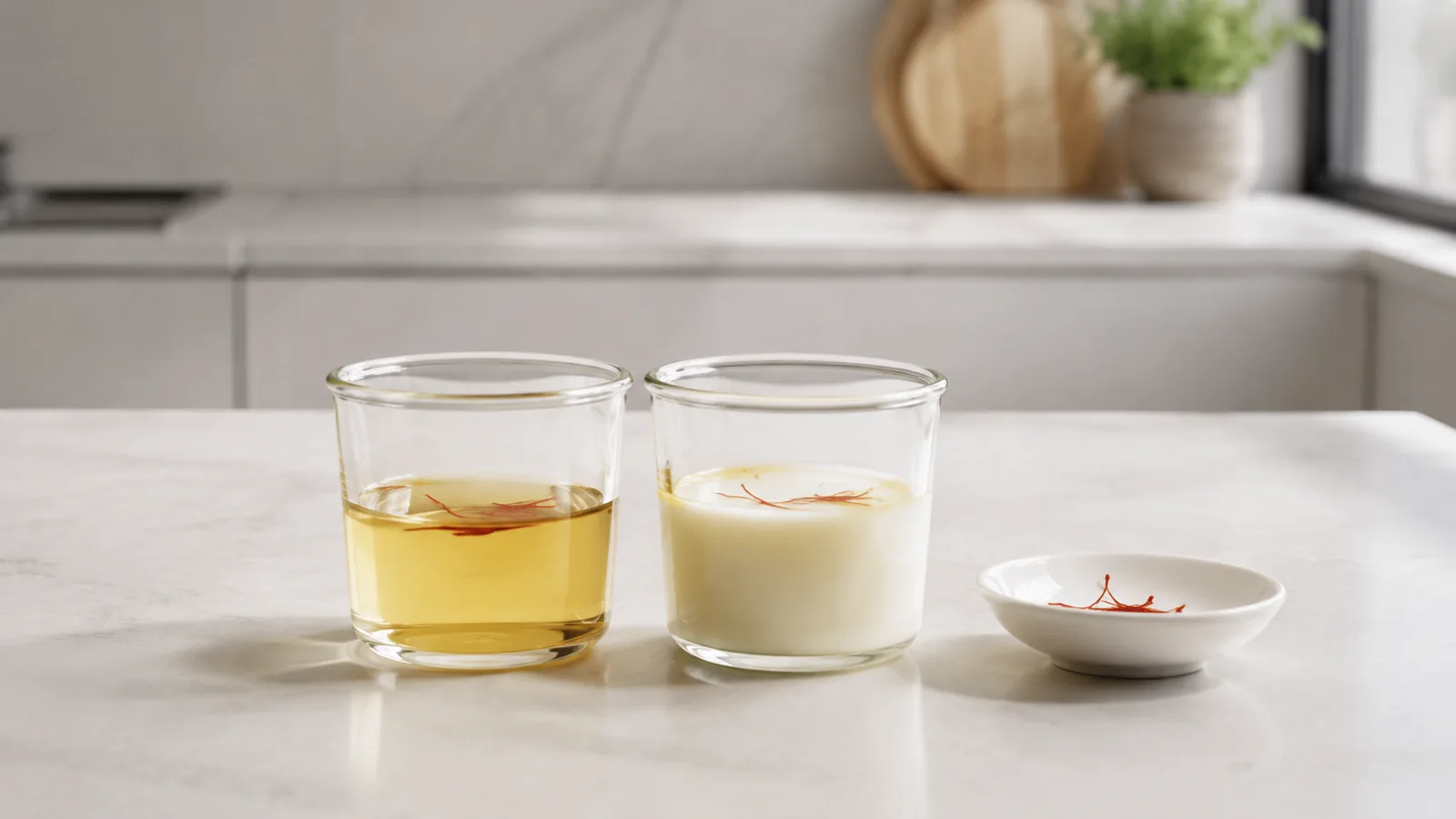
Water is the most neutral choice. Stock works well for savoury dishes, while milk or cream suits drinks and desserts. If a recipe contains alcohol, acid, or a high proportion of fat, a separate water or milk infusion still gives reliable initial extraction before it meets the rest of the ingredients.
Some cooks scatter threads over ice and wait for it to melt. The method can work, but it is slower and is not inherently superior to a warm infusion. Dry-toasting can intensify aroma briefly, yet fine threads burn quickly. For most home cooks, gentle crushing and warm blooming are the forgiving option.
Use Saffron in Rice and Stews
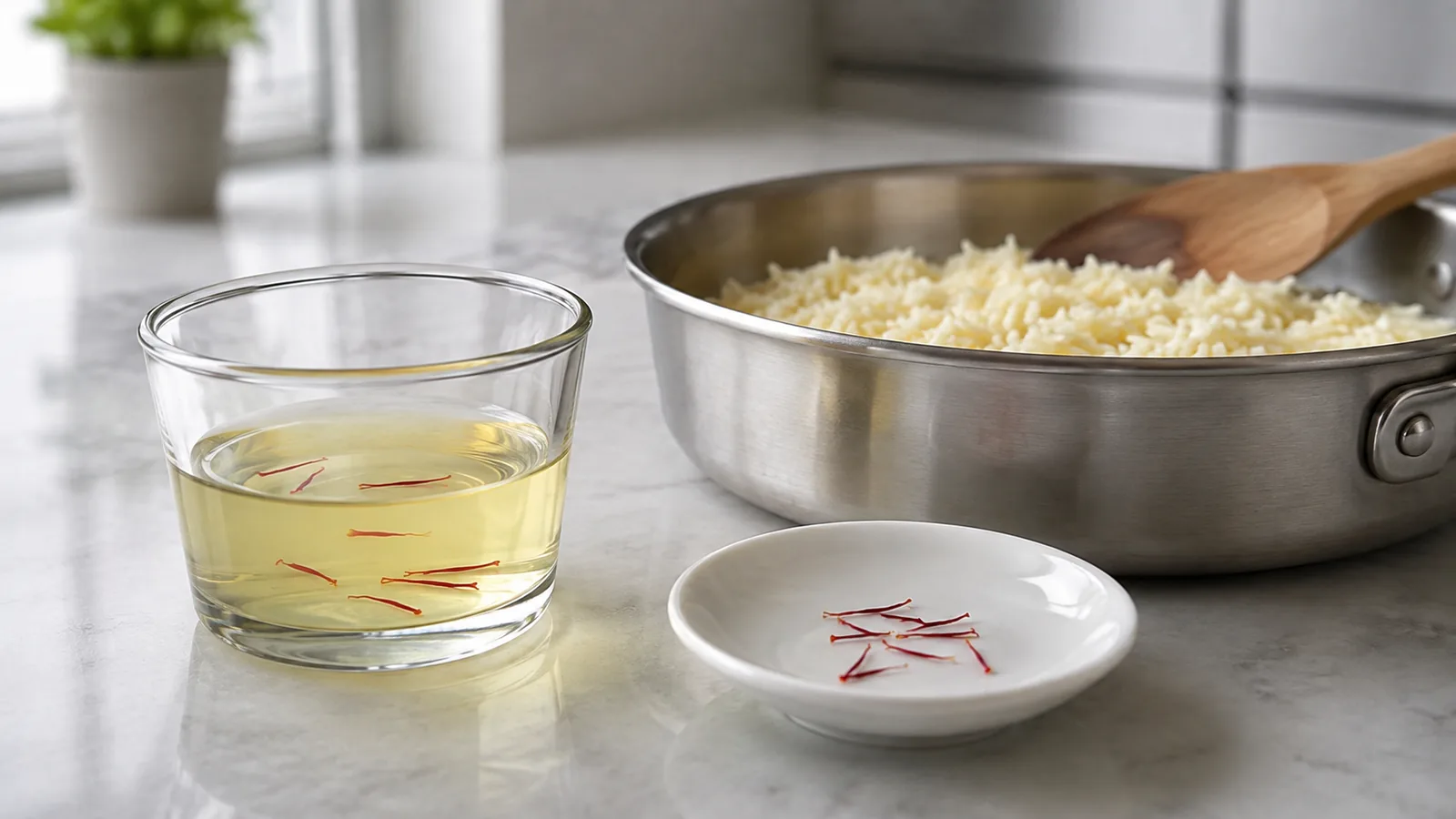
For Persian rice, mix a strong infusion with a portion of the cooked rice to create distinct golden sections, or drizzle it before the final steaming. For biryani, add a concentrated infusion between layers so the grains keep varied colour. In paella or risotto, distribute the liquid through the cooking medium rather than placing dry threads on the finished surface.
Rice recipes differ in volume, absorption, and other spices, so one fixed thread count cannot suit them all. Begin with a recipe written for your pan and serving size. If saffron disappears behind chilli, smoked paprika, or a heavily reduced stock, adding more may be less effective than adjusting the competing flavours.
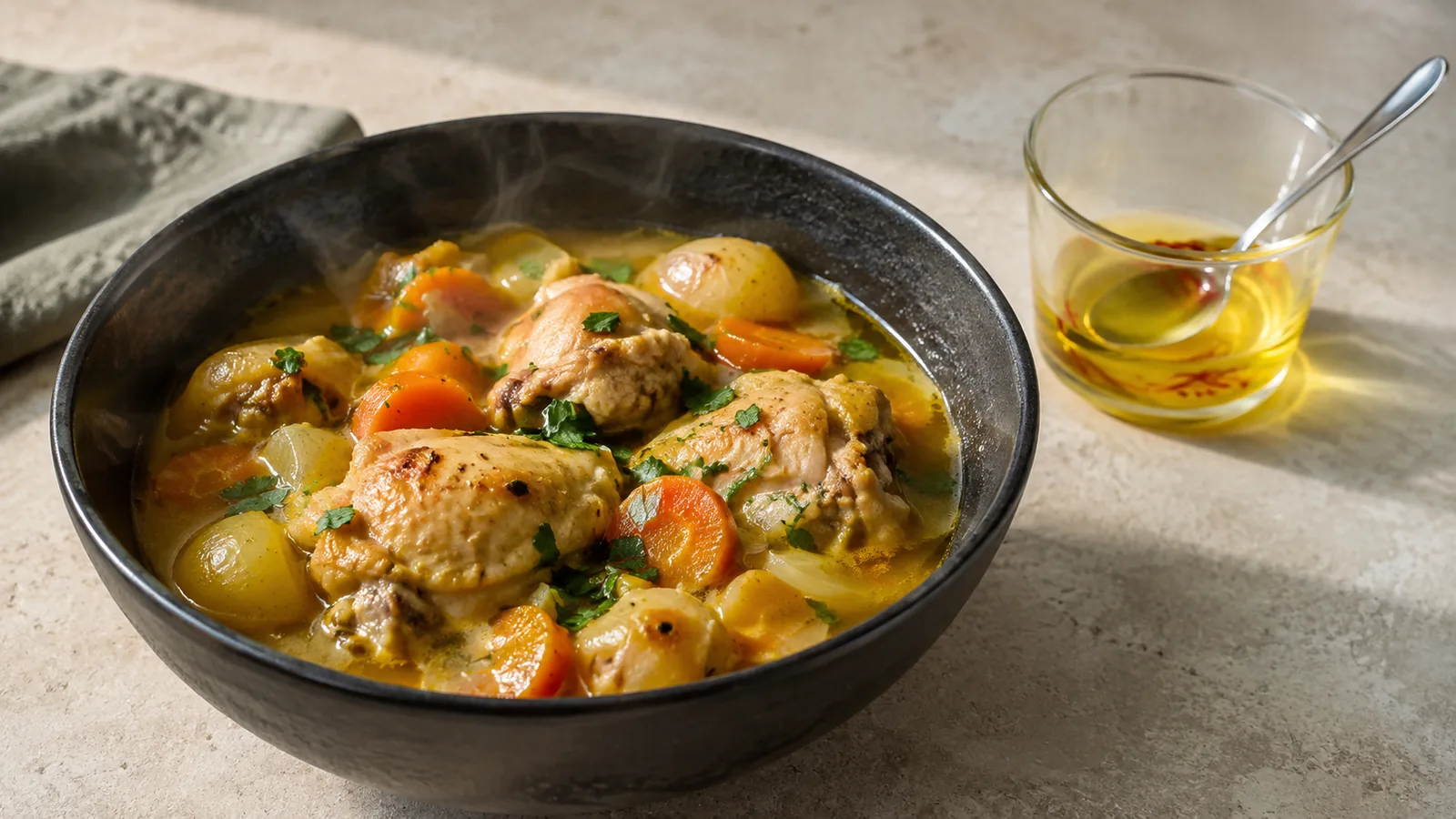
In soup, stew, or sauce, add the infusion early enough to blend but not so early that it boils hard for hours. During a long braise, reserve the saffron until the later part of cooking. Taste after it has dispersed. The goal is a clear aromatic lift, not bitterness.
Saffron pairs naturally with rice, onion, garlic, tomato, seafood, chicken, lamb, legumes, citrus, cardamom, rose, pistachio, and dairy. Compatibility is not a quota: choose the ingredients that belong in the dish.
Incorporate Saffron in Desserts
Bloom saffron in warm milk or cream for kheer, rice pudding, custard, ice cream, panna cotta, and many baked sweets. If the base must be reduced for a long time, add the infusion later so the aroma remains noticeable. A few intact threads can be reserved for garnish once the flavour is already in the dessert.
Sweetness softens saffron’s bitterness, but too much sugar can flatten its character. Cardamom, rose water, vanilla, nuts, and citrus can all work with saffron; use them with restraint. In a frozen dessert, make the liquid base slightly more aromatic than you want the final result, because cold temperatures mute flavour.
For bread, cake, or biscuits, add the infusion with the recipe’s wet ingredients. Distributing saffron in liquid helps prevent isolated red strands and uneven yellow patches. Account for the small amount of added liquid when precision matters.
Saffron for Health Benefits
People also ask how to consume saffron, how to drink saffron, or how to eat saffron for health. Culinary methods can make the spice pleasant and evenly distributed; they do not create a treatment. Saffron contains studied compounds including crocins, crocetin, picrocrocin, and safranal, but antioxidant activity alone does not prove a human health outcome.
A review of saffron meta-analyses reported promising results across several areas while also concluding that the scientific quality of published reviews needed improvement. Trials often use defined preparations and measured doses. Their findings should not be applied automatically to tea, smoothies, water, or every retail supplement.
Use saffron in food because it improves the food. If you are considering a concentrated extract for a symptom or daily regimen, discuss the exact product with a clinician or pharmacist, especially if you take medicine or have a health condition.
Storage Tips for Saffron
Keep saffron tightly closed in a cool, dry, dark cupboard. Light, moisture, heat, air, and strong surrounding odours reduce its quality. A small opaque or dark glass container with a sound seal is more useful than a large decorative box that is opened frequently.
Use dry utensils, and return the lid promptly. Do not store saffron above the stove or next to a kettle. Whole threads generally hold their aroma better than pre-ground spice, so grind only what the recipe needs.
Before use, look and smell. Threads should be dry, distinctive, and free from mustiness or visible moisture. Instant neon colour, an anonymous powder, an implausibly low price, or strong medical promises are reasons for closer scrutiny rather than signs of potency.
Our saffron collection shows current forms and pack sizes. For product questions, contact us. If you prefer to eat the threads directly, our guide to eating saffron raw explains why blooming is usually more effective for flavour.
What is the best way to use saffron? Crush a modest amount, infuse it in a suitable warm liquid, add it at the right point for the recipe, and store the remaining threads carefully. That simple process makes saffron easier to taste, easier to distribute, and harder to waste.