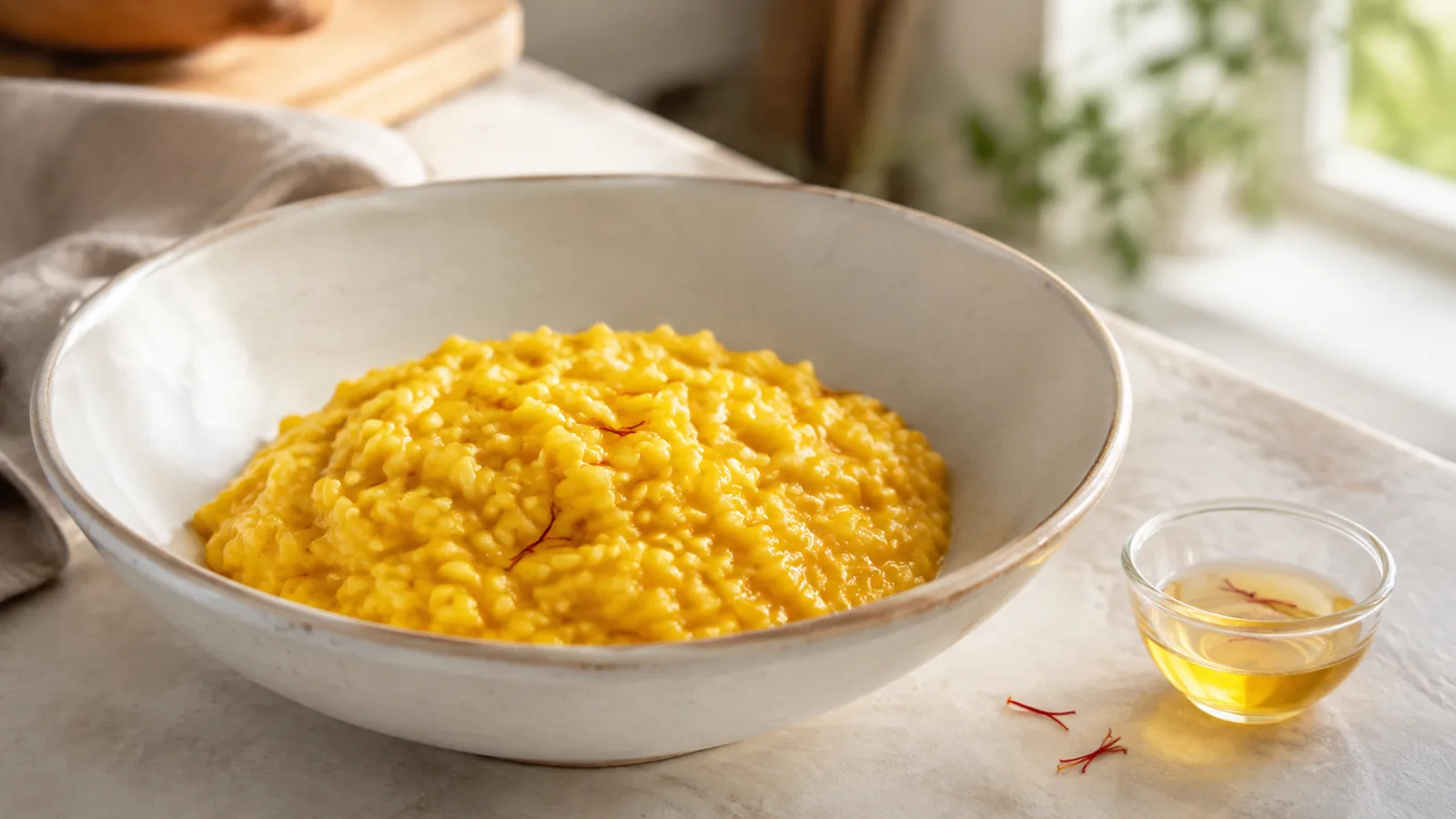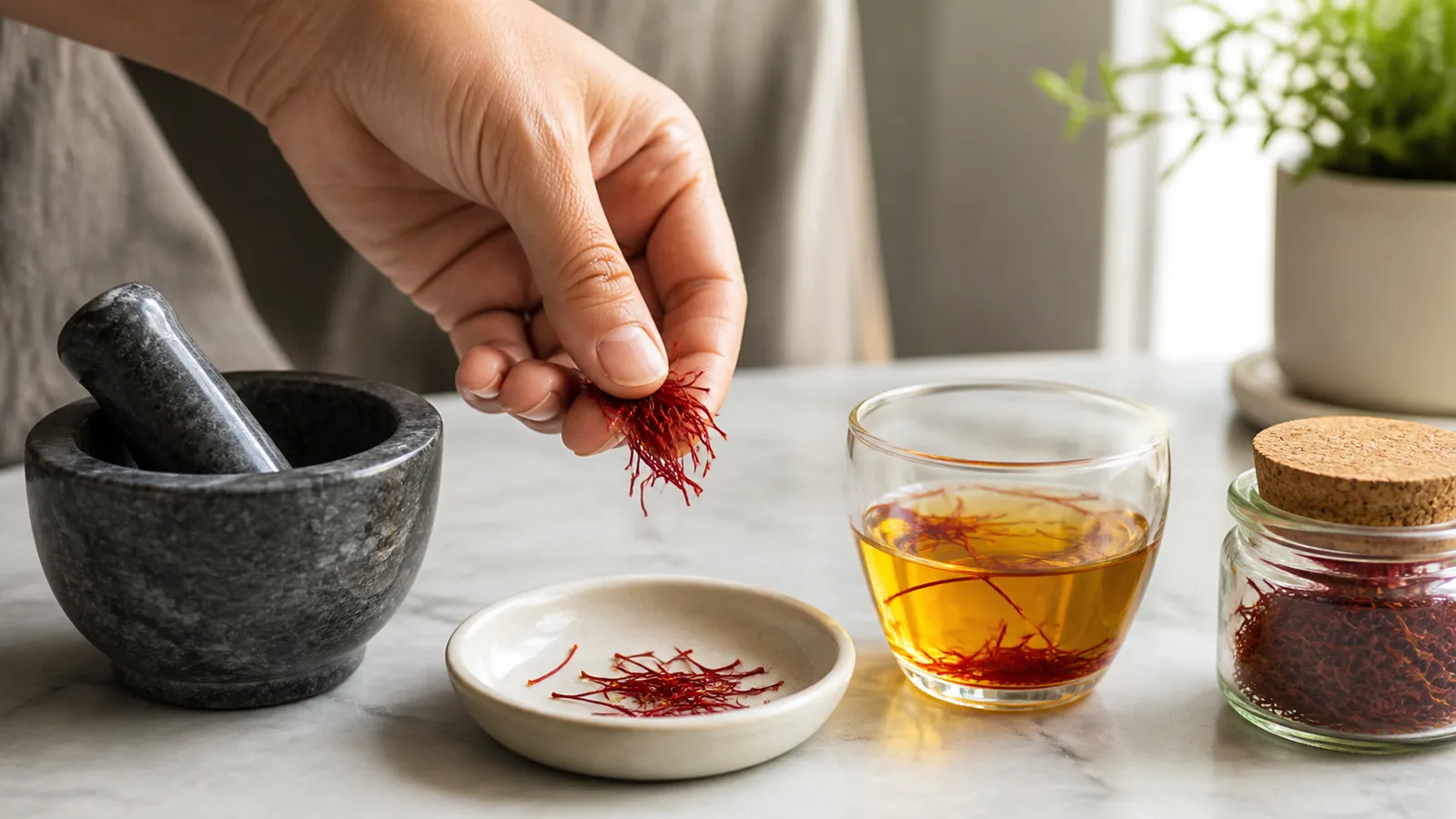
Yes, you can eat saffron raw. Genuine saffron threads are edible, so swallowing or chewing a few threads is not inherently a problem for most adults. It is rarely the best way to use the spice, however. Dry threads release their colour, aroma, and flavour more evenly after they are crushed gently and infused in warm liquid.
That is the useful distinction behind questions such as “can I eat saffron raw?” and “can you eat raw saffron threads?” Raw saffron is edible; steeping it usually gives a better culinary result. Neither method turns a normal serving into a medicine.
Do You Eat Saffron Raw?
You may eat a few dry threads directly, leave the softened threads in a drink, or consume them with the finished dish. There is no need to strain genuine saffron out. The threads can feel slightly dry or fibrous when chewed, and their concentrated taste may seem bitter on its own.
“Raw” can also mean different things. Dried saffron is the familiar spice sold in jars and packets; it has already been harvested and dried. Fresh stigmas straight from a flower are not the ordinary retail product. Most people asking how to eat saffron are deciding whether to chew dried strands, swallow them, or infuse them before eating.
Can You Eat Saffron Raw?
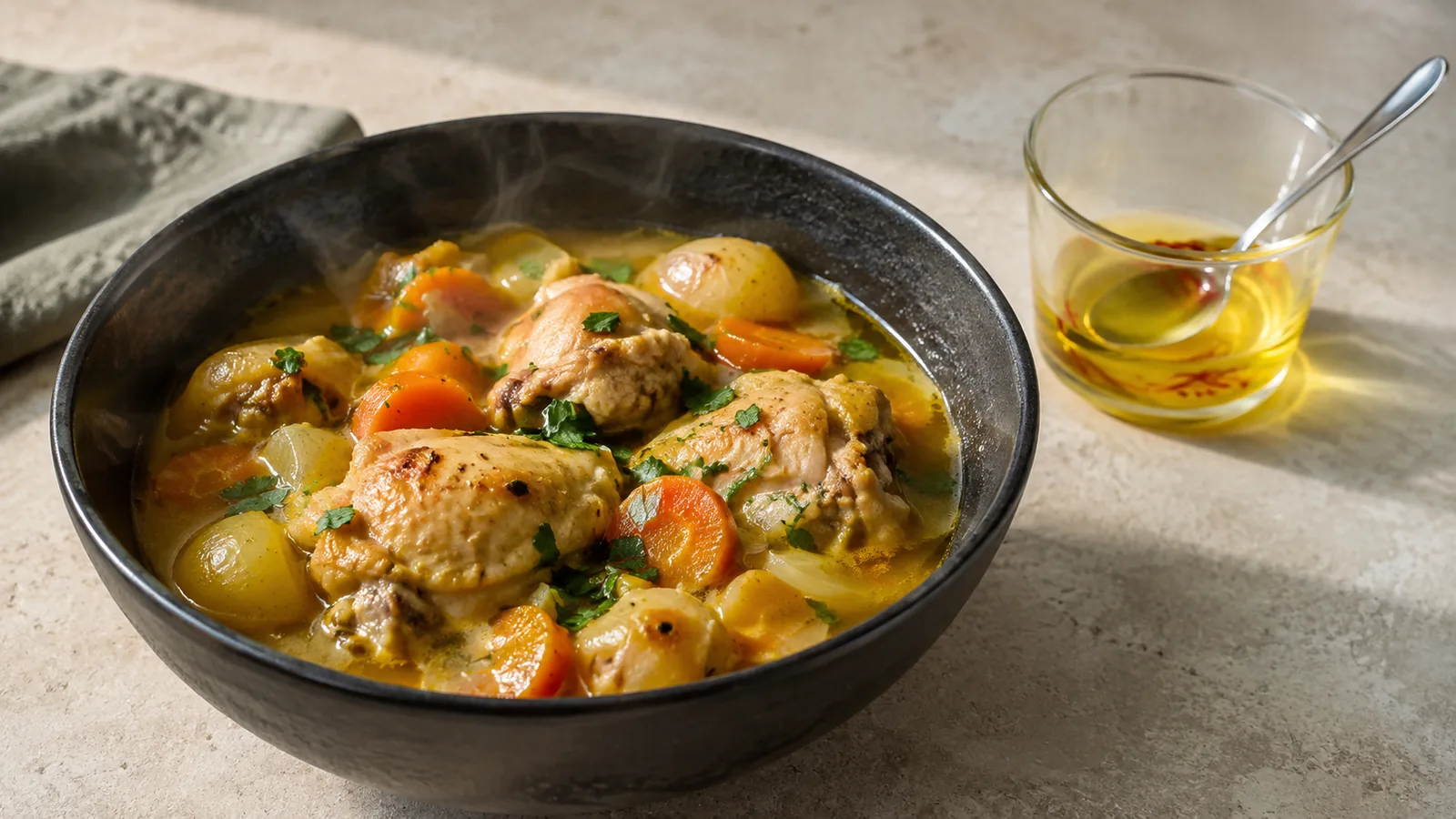
Can saffron be eaten raw? Yes. If your question is “can you eat saffron threads raw?”, the same answer applies. Saffron threads are the dried stigmas of Crocus sativus, and they are used as food. You can eat saffron strands, chew them, or swallow the softened threads after making tea or an infusion. A few strands left in rice, milk, or a dessert are meant to be eaten with the food.
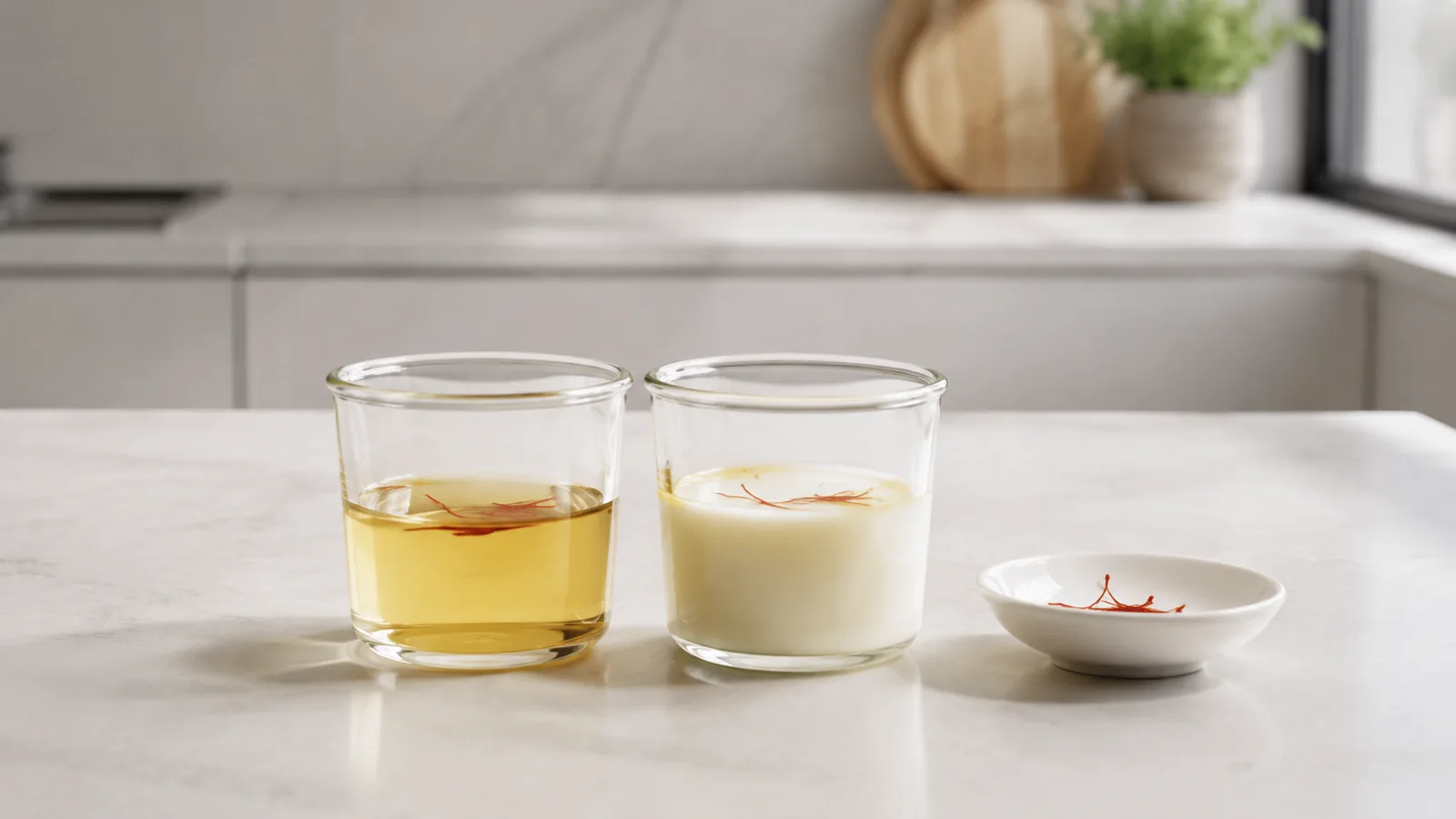
Eating saffron threads directly does not necessarily deliver more flavour or make their constituents “more potent.” A dry strand has limited contact with the rest of a dish. Warm water, milk, stock, or another suitable liquid helps spread the water-soluble colour and aromatic character, so a small quantity works throughout the recipe.
Whole threads are also easier to inspect than an anonymous powder. Genuine appearance alone cannot certify purity, but intact red stigmas give a buyer more information than a uniformly coloured powder. If a product smells musty, appears damp, or comes from an untraceable source, eating it raw is not the issue; product quality is.
Benefits of Eating Raw Saffron
Saffron contains crocins, crocetin, picrocrocin, safranal, and other compounds studied for biological activity. That does not establish a special benefit from chewing the threads rather than infusing or cooking them. Claims that raw saffron automatically boosts immunity, repairs skin, treats depression, or improves digestion go beyond what this simple method of consumption can prove.
Clinical studies generally use a defined saffron preparation or extract, a measured dose, and a particular schedule. Their results cannot be transferred automatically to a few retail threads, and one trial does not make saffron a replacement for medical care. A review of saffron meta-analyses found some promising health outcomes but also concluded that the quality of the reviews and underlying evidence needed improvement.
The practical benefit of eating the threads is simpler: nothing is wasted after infusion, and the spice remains part of the meal. Saffron can add aroma, colour, and a gently bitter-honeyed note without requiring a large quantity.
Safety Considerations
A small culinary amount is different from a concentrated supplement or an unusually large amount of spice. A 2026 systematic review of adverse events in human saffron studies found that saffron preparations were generally well tolerated, while gastrointestinal problems were the most commonly reported unwanted effects. The authors advised clinical monitoring for higher-dose or prolonged medicinal use.
Do not use “a few strands” as though it were an exact medical dose: thread size and weight vary. For cooking, start with a small pinch that suits the recipe. More can make food bitter and wastes an expensive ingredient. Products sold as extracts or capsules should be judged by their labelled dose and formulation, not by comparing them with a cup of saffron tea.
Anyone who is pregnant or breastfeeding, takes regular medicines, has a health condition, is preparing for surgery, or has reacted to saffron or related plants should ask a qualified clinician before using concentrated saffron. Children should not be given a medicinal-dose product on the assumption that a spice is automatically risk-free. If eating saffron causes troublesome symptoms, stop and seek advice.
How to Consume Saffron Raw
If you want to eat saffron raw, use a few clean, genuine threads from a traceable food product. You can place them on a finished dish or chew them, but expect a concentrated taste. Do not smoke saffron or copy an unverified online “challenge”; smoke exposure is not a food use and offers no culinary advantage.
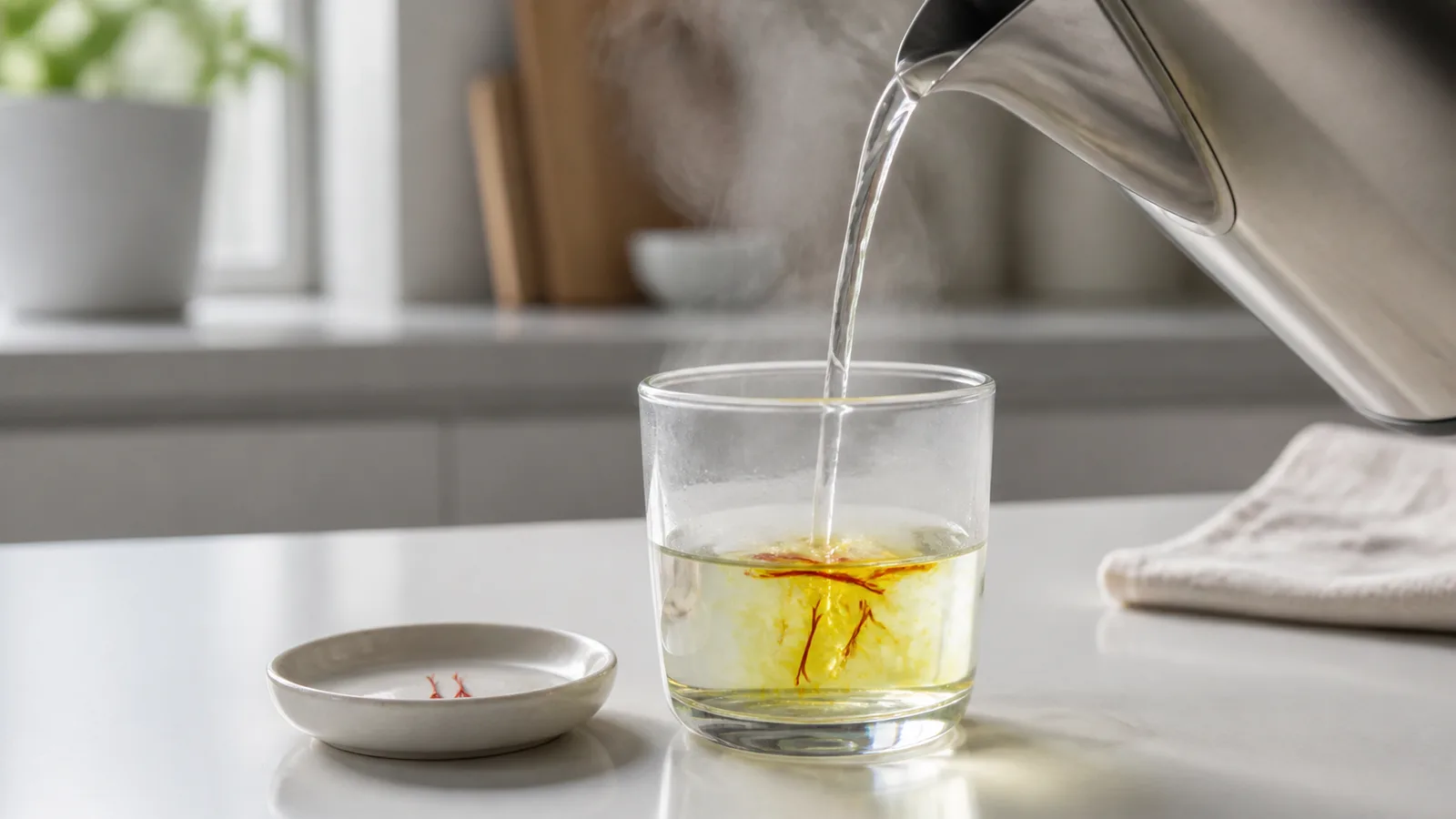
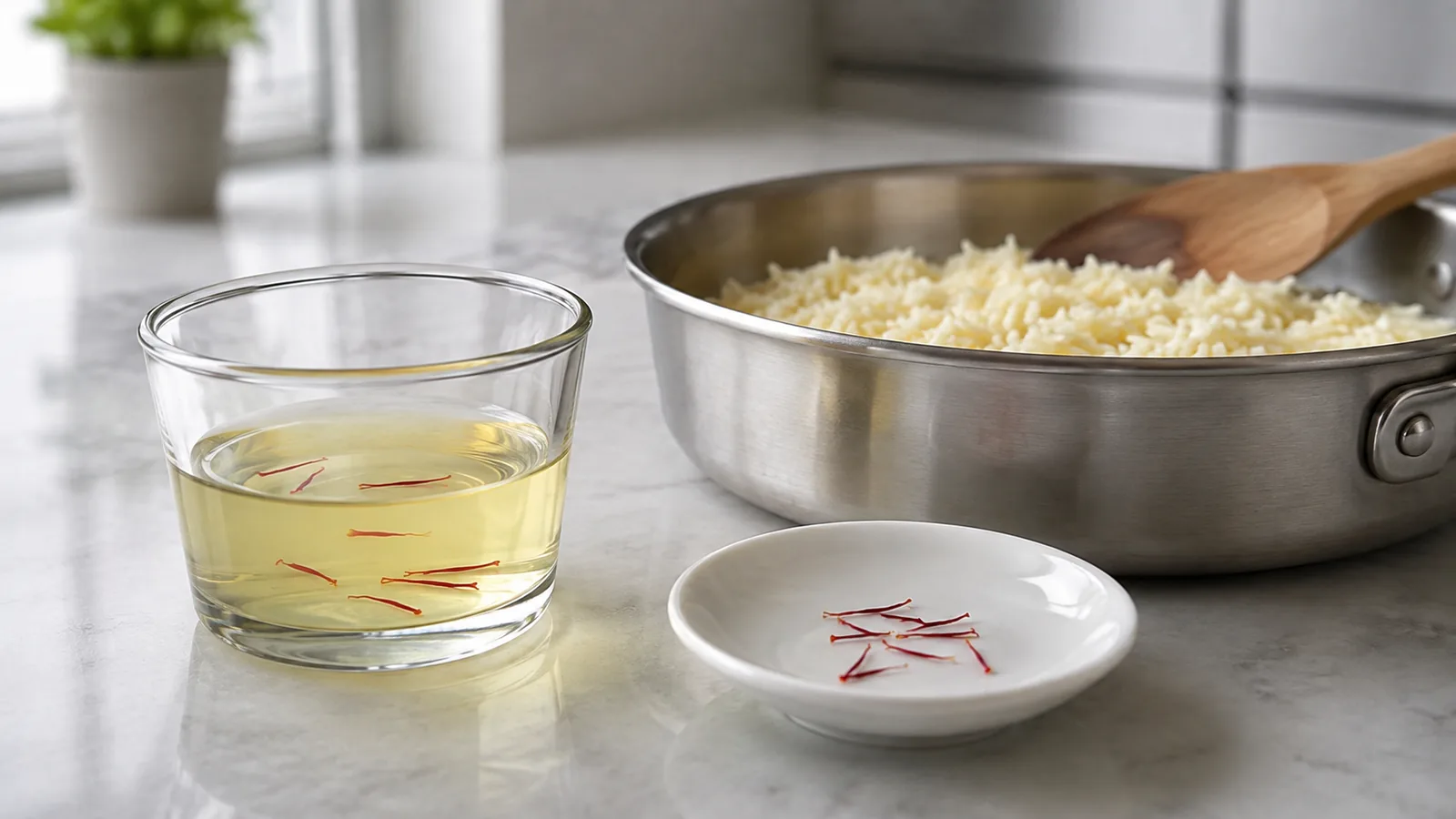
For better flavour distribution, put the threads in a dry mortar and press them gently. That is how to crush saffron threads without grinding them into a cloud of powder. Add a small amount of warm water, milk, or stock and leave it for about 10 to 15 minutes. Pour both the liquid and softened threads into the recipe. Warm liquid is enough; vigorous boiling at the start is unnecessary and can flatten delicate aroma.
Saffron works especially well when the infusion is mixed into rice, soups, sauces, milk drinks, tea, bread dough, or desserts. Sprinkle dry threads on top only when the garnish will be pleasant to eat and the dish already contains enough saffron flavour. Our guide to the best way to use saffron covers grinding, blooming, timing, and storage in more detail.
Choose whole threads in protective packaging, check the net weight and seller information, and keep the jar tightly closed in a cool, dry, dark place. Our saffron collection shows the forms and pack sizes currently available; for product questions, contact us.
So, do you eat saffron threads? You can. The threads are edible whether dry or softened. For most dishes, crushing and infusing a modest amount gives a more even result than eating saffron raw, while leaving the infused threads in the food means you still consume the whole spice.