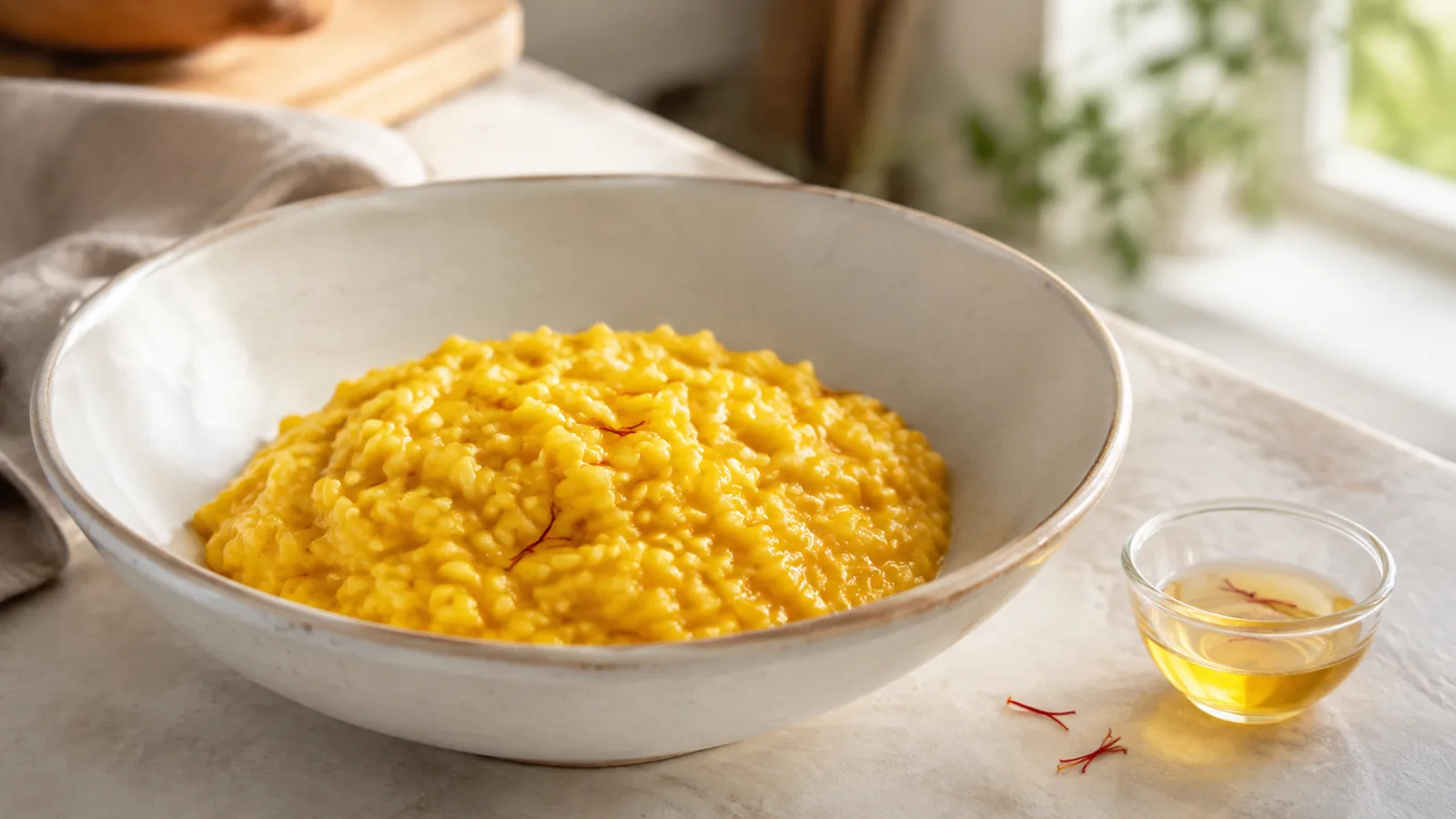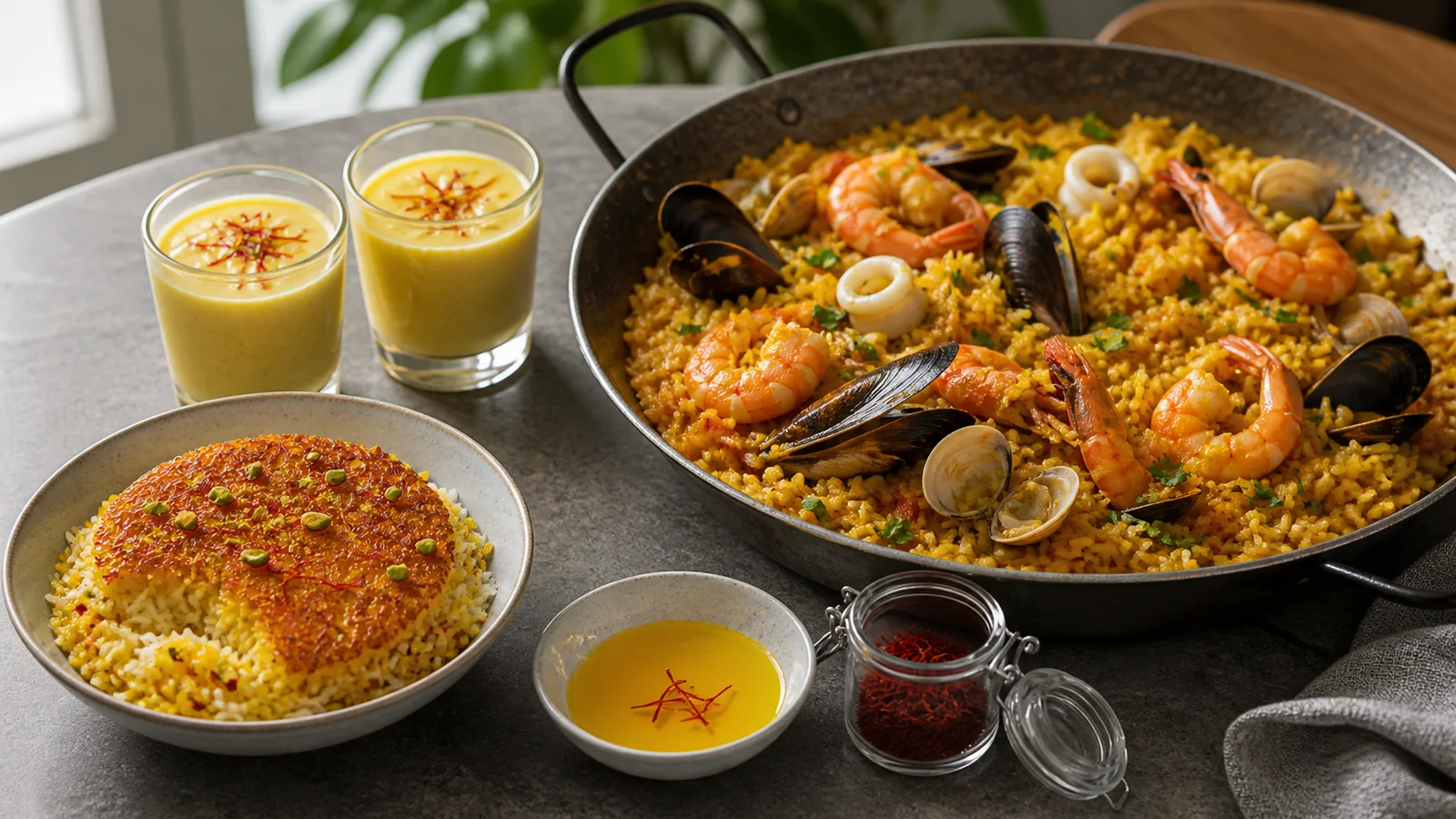
What is saffron most commonly used for? Cooking. Put more simply, what is saffron used for in daily life? A small amount colours and perfumes rice, seafood, soups, breads, drinks and desserts. Saffron also appears in supplements, cosmetics, fragrance, dyes and ceremonies, but those are secondary uses and do not all carry the same evidence.
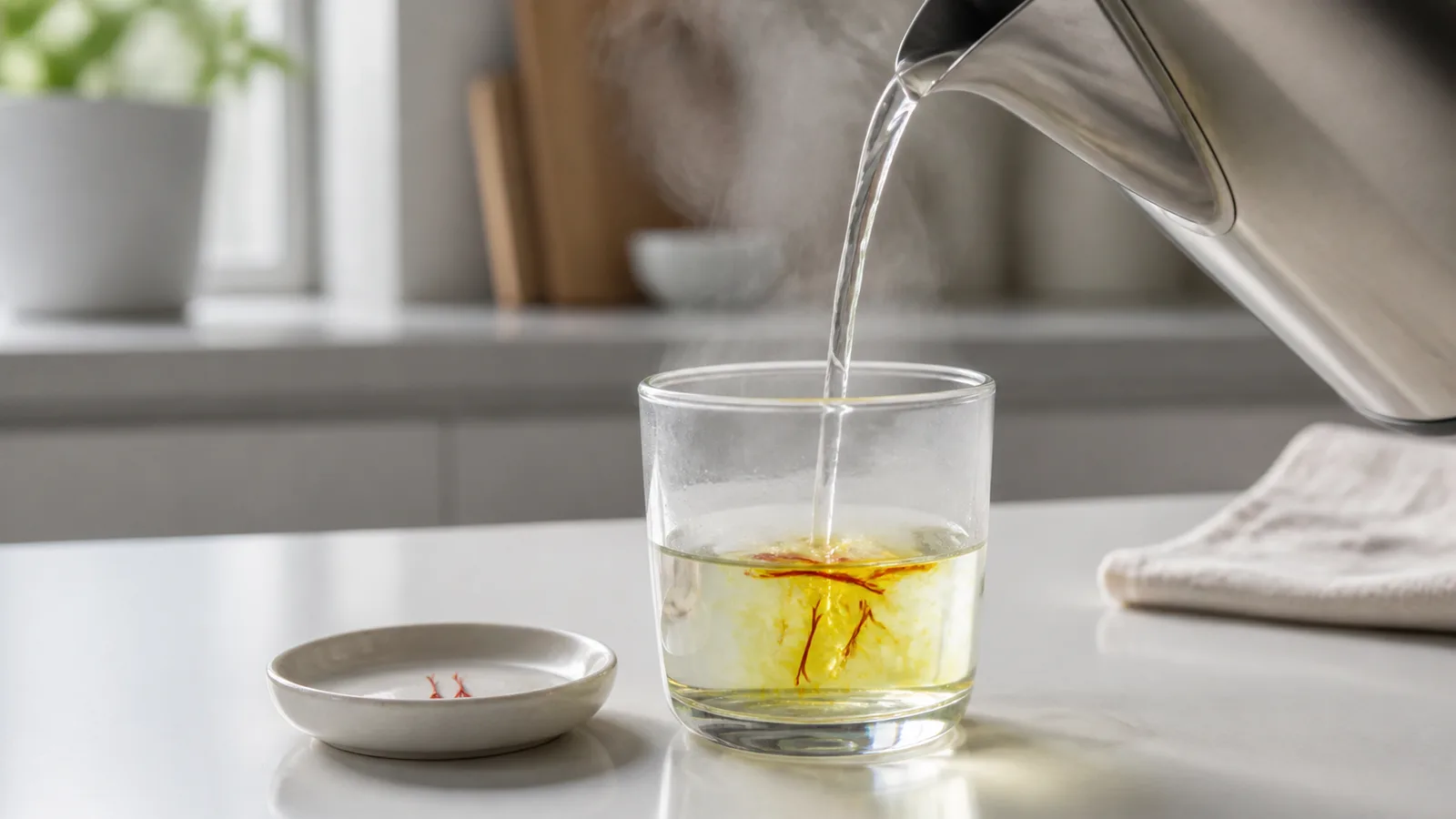
Knowing why saffron is used helps you handle it properly. Its red stigmas contain compounds responsible for golden colour, characteristic bitterness and aroma. Blooming the threads in warm liquid spreads those qualities through a dish more evenly than scattering them dry.
What is Saffron Most Commonly Used For?
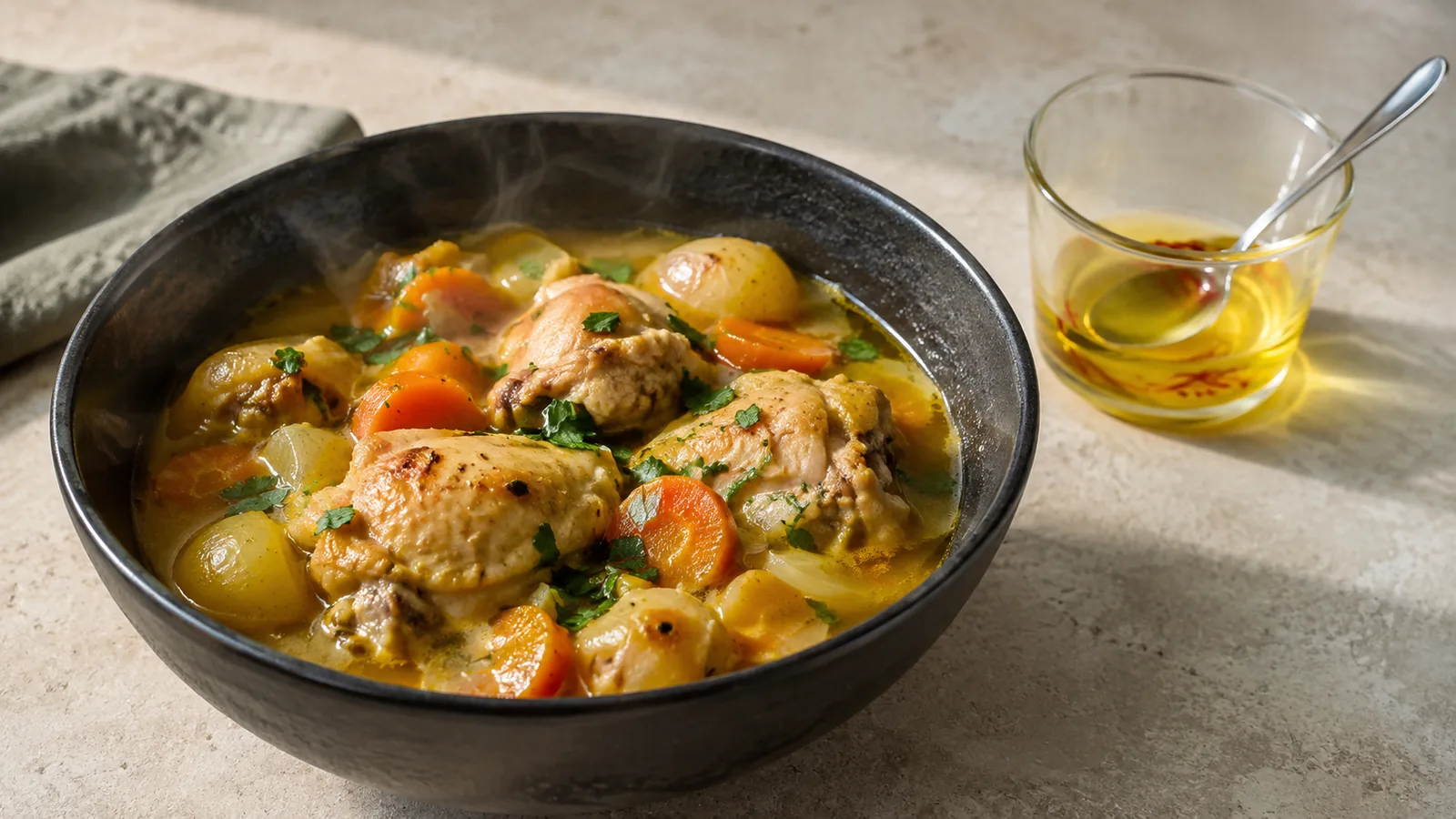
Across producing and trading regions, saffron is first a culinary spice. Persian cooking uses it in steamed rice, tahdig, stews, kebab marinades, sherbets and ice cream. Spanish cooks associate it with paella and other rice dishes; northern Italian cooking with risotto alla Milanese; South Asian kitchens with biryani, pulao, milk sweets and kesar drinks.
Its role is not simply to turn food yellow. Turmeric and colouring can do that more cheaply. Real saffron contributes a layered aroma that can seem floral, honeyed, grassy and faintly metallic, plus a gentle bitterness that balances rich ingredients.
Culinary Uses of Saffron
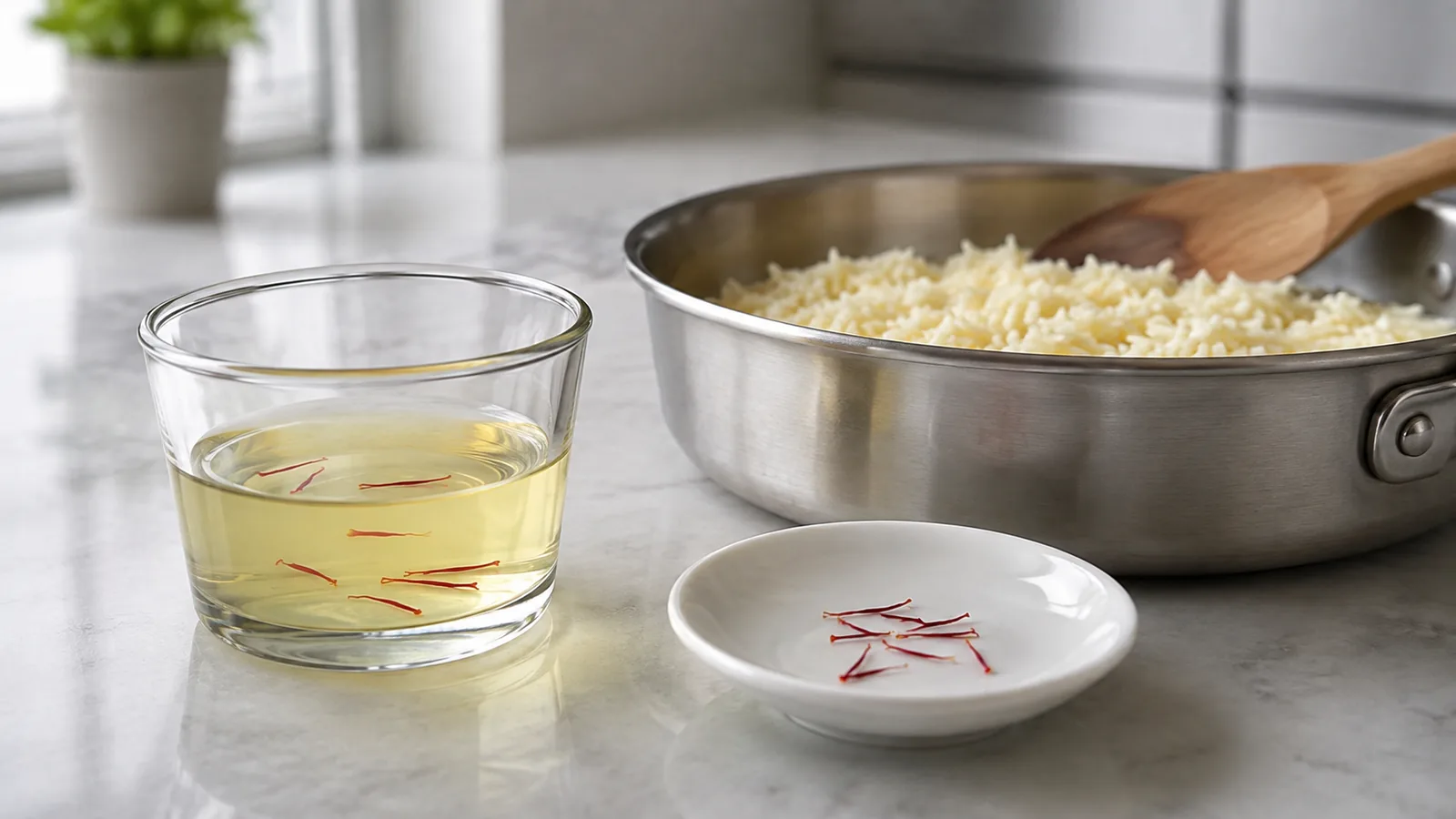
Rice is probably saffron’s most recognisable home. The spice also suits fish and shellfish, chicken, lamb, tomato or cream sauces, lentil and vegetable soups, and slow-cooked broths. In baking it flavours buns, enriched breads, cakes and biscuits; in desserts it works with milk, yoghurt, pistachio, almond, pear, citrus and rose.
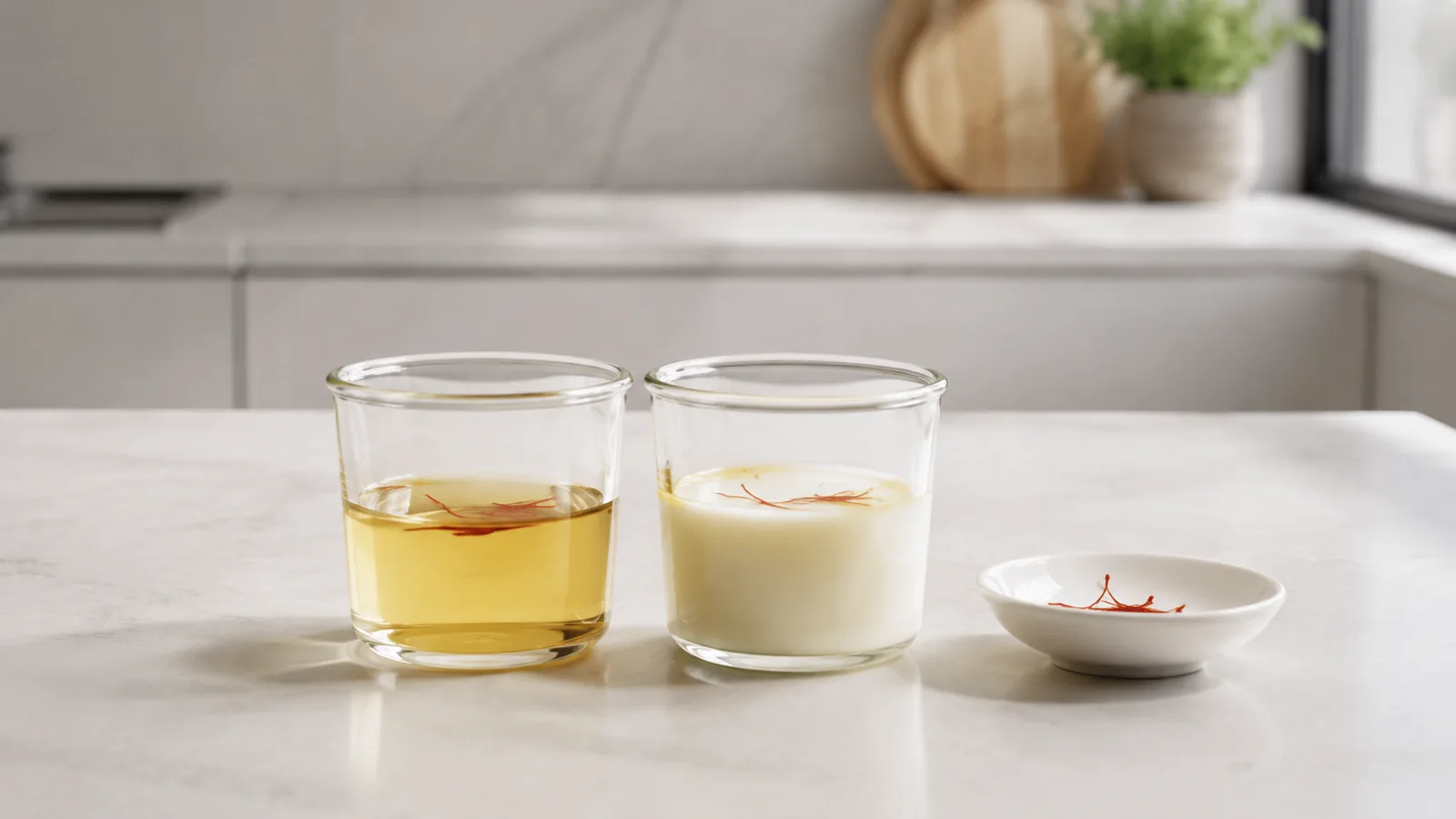
For most recipes, lightly crush a small culinary pinch and soak it in warm water, milk or stock for 15 to 20 minutes. Add both the infusion and softened threads. Avoid prolonged hard boiling, and keep powerful spices restrained so the saffron remains noticeable.
Where is saffron used in drinks? It appears in tea, warm milk, lassi, sharbat and contemporary cocktails or alcohol-free serves. The liquid should support its aroma rather than bury it under sugar.
Medicinal and Health Benefits
Saffron has a long history in traditional systems of medicine, and modern research has tested defined extracts for mood, sleep and other outcomes. That history explains why it is sold in teas and supplements; it does not prove every traditional claim or make a culinary recipe a treatment.
A review of reviews on saffron health evidence reported promising findings alongside important problems in study quality and reporting. Products, doses and populations differ. Saffron in food can be enjoyed as part of a varied diet, but it should not be described as preventing heart disease, improving memory or treating depression and anxiety without much more specific evidence.
Beauty and Skin Care
Saffron extracts and colour are used in some soaps, creams, oils and masks. In traditional beauty preparations the spice may be mixed with milk, yoghurt or botanical ingredients. Commercial formulas can also use saffron as a story, fragrance note or premium visual cue.
That does not mean kitchen saffron reliably lightens skin, removes dark spots, treats acne or reverses ageing. A finished cosmetic depends on its formulation, concentration, stability and safety testing. Patch-test a new product as directed and seek dermatological advice for a persistent skin concern.
Other Uses
Historically, saffron produced a valued yellow-to-orange dye for textiles, manuscripts and decorative work. The colour can be beautiful but is costly and vulnerable to light compared with many modern dyes, so it is now a specialist choice rather than an everyday industrial colourant.
Its aroma has inspired perfumery, although a perfume may use an interpretation or other aromatic materials instead of substantial natural saffron. Saffron and saffron-coloured materials also appear in religious and cultural traditions. Meanings vary by community, so purity, status or celebration should be described as context, not as one universal symbolism.
Conclusion
The common uses of saffron begin in the kitchen: flavouring, colouring and perfuming food. Research, cosmetics, fragrance, dyeing and ceremony are real additional contexts, but they should not overshadow its primary role or be turned into health promises. Buy genuine threads, keep them dry and dark, and use a little with care.
See foods that use saffron for more examples, or browse our culinary saffron.