Why Saffron Is So Expensive: What Makes Saffron Costly?
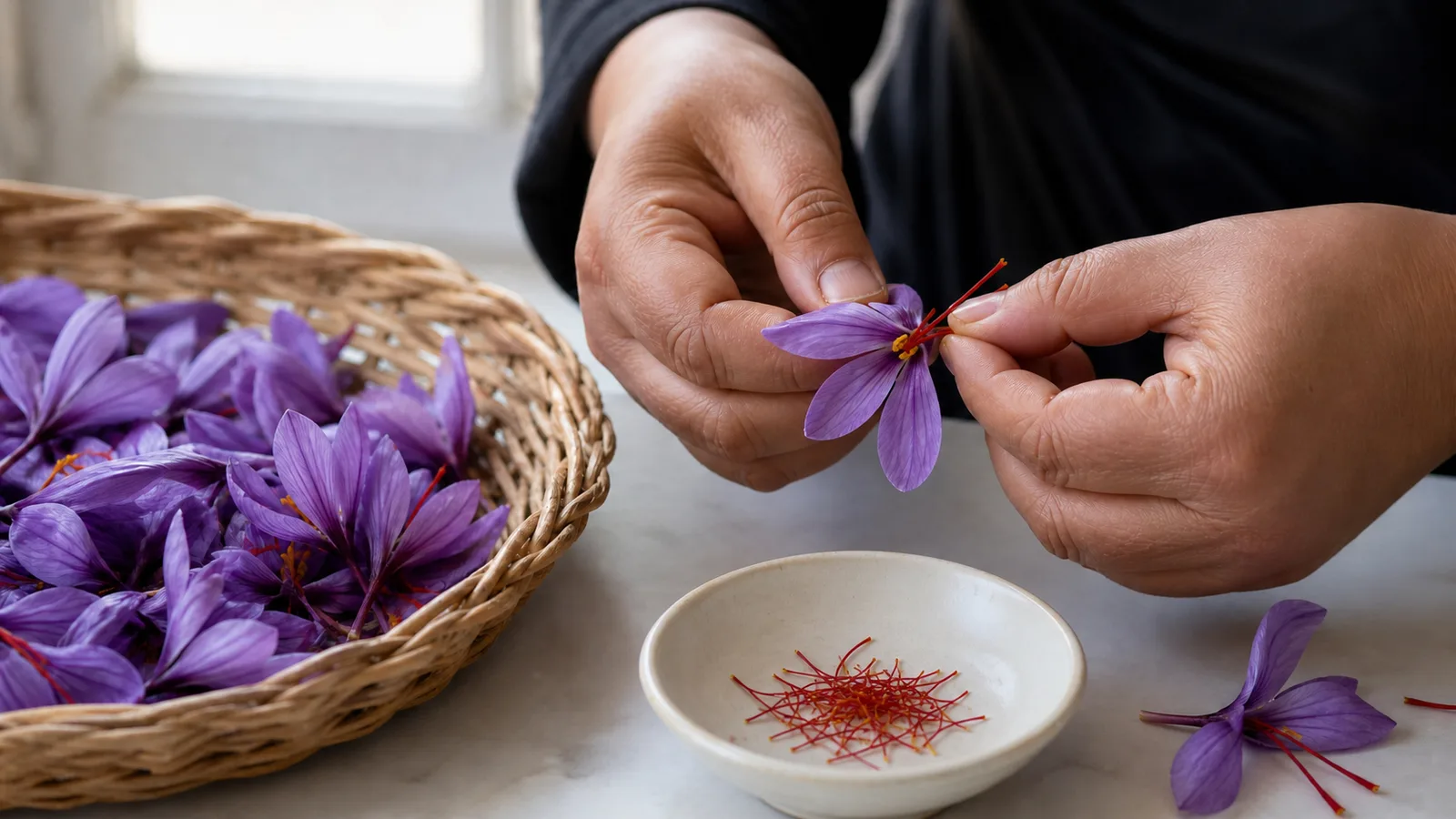
Saffron is expensive because each flower yields only three usable red stigmas, and those delicate threads must be picked, separated and dried in a short harvest window. A finished gram represents a remarkable number of flowers and many careful hand movements. Low dry yield, skilled labour, crop risk and quality control all remain in the price.
That is the short answer to why saffron costs so much. It is often called the world’s most expensive spice, but it is not expensive because the flower is mythical or because every seller chooses an arbitrary luxury price. The economics begin in the field and continue through drying, grading, testing and packing.
What is saffron?
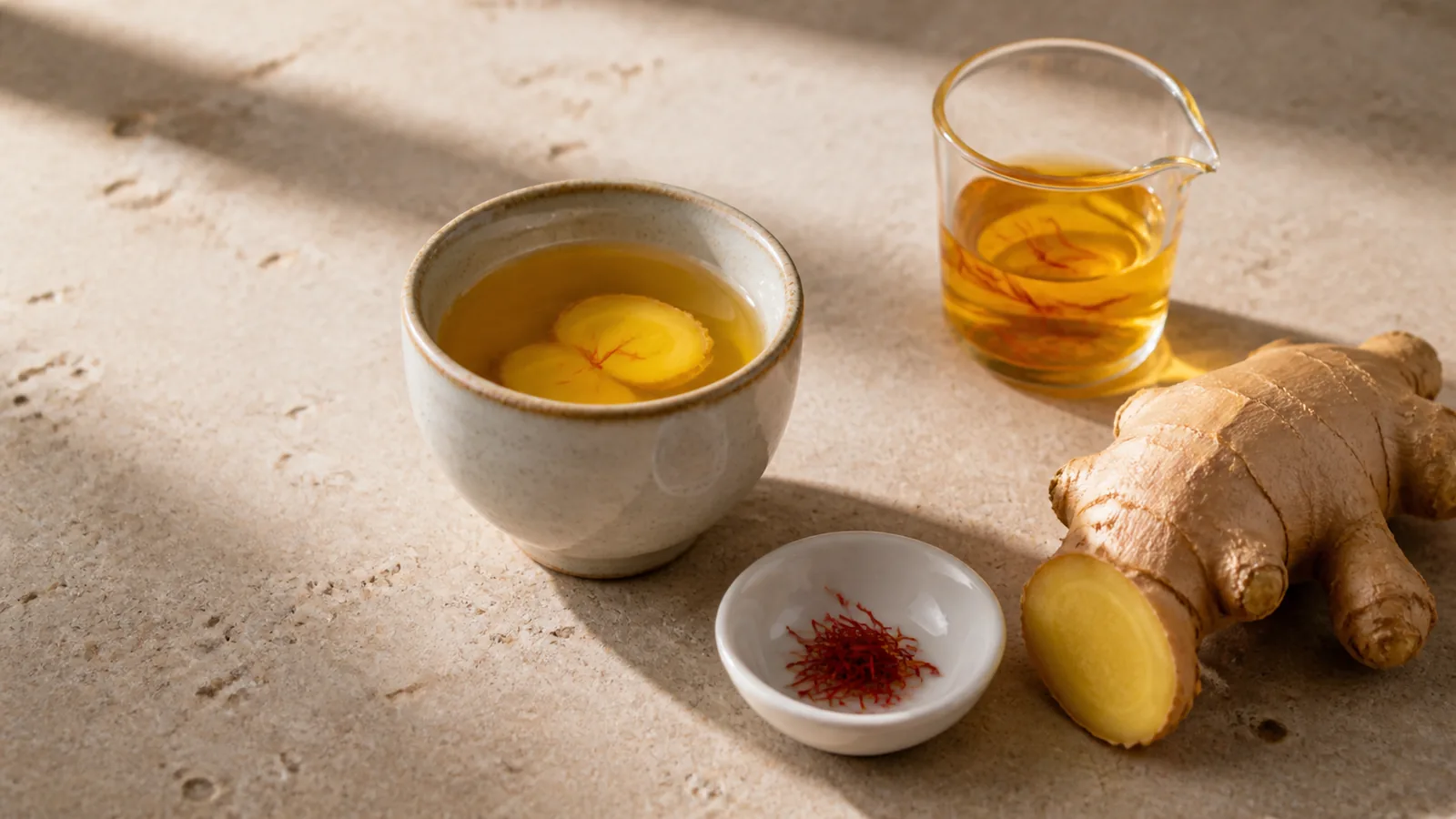
Saffron is the dried red stigma of Crocus sativus. Each purple flower normally has three of these thread-like stigmas. They are separated from the rest of the flower and dried to create the spice used for colour, aroma and a gently bitter taste.
The familiar sensory qualities come mainly from crocins, picrocrocin and safranal. Crocins contribute colour, picrocrocin is associated with taste, and safranal is important to aroma. A review of saffron’s commercial quality explains that these compounds are central to laboratory quality assessment and that harvest and post-harvest conditions can change them.
Those properties explain saffron’s distinctive role in cooking. It also has a long history of medicinal use, but traditional use is not proof that saffron treats disease and should not be used to inflate its value.
One kilogram starts with an enormous number of flowers
Published estimates vary with flower size, stigma yield, moisture and production method. A Food and Agriculture Organization cultivation guide gives a range of roughly 150,000–170,000 flowers for one kilogram of dried spice; other agricultural sources report figures below or above it. A recent study of saffron by-products used an estimate of about 230,000 flowers per kilogram. The honest lesson is the scale, not one universal number.
Fresh flowers and stigmas contain water, so drying reduces their weight further. The petals and most of the flower do not become the red spice. This is why a field full of crocuses produces a surprisingly small output of saleable saffron.
Harvesting is concentrated and labour-intensive
Crocus sativus flowers during a limited season. Growers need to collect blooms promptly, then separate the fragile stigmas while the crop is fresh. Machines can assist some farming tasks, but the selection and separation of intact threads still depend heavily on skilled hand work.
The job is not only picking. Corms must be planted and managed, fields weeded and monitored, flowers transported without crushing, and each small yield processed quickly. Labour is concentrated into a brief period, which makes staffing and timing more demanding than for a crop harvested gradually.
Drying can preserve or destroy value
Fresh stigmas are not finished saffron. They need controlled drying to develop a stable spice while retaining desirable colour, aroma and taste. Too much heat, poor storage, moisture, light and rough handling can all reduce quality.
After drying, producers may sort out yellow style material, broken pieces and foreign matter. Whole, clean red threads usually require more careful selection than a mixed or powdered product. Testing, food-safe packing and traceability add cost, but they also help a buyer know what is in the container.
Climate, growing conditions and crop risk matter
Saffron is grown in Iran, India, Spain, Afghanistan, Greece, Morocco and other regions. It needs suitable soil, drainage, temperature and seasonal conditions; this does not mean it can grow in only three countries. Yield and quality differ by site, corm size, planting density, rain and temperature.
A two-year field study found that cultivation site and climate were associated with both dried-stigma yield and measured quality traits. Weather during flowering can shorten an already tight harvest, while poor corm material or disease affects future crops. Those risks are part of production cost even in a good year.
Why is kesar so expensive?
Kesar is a widely used name for saffron, so the answer is the same: low dry yield, three stigmas per flower, manual separation and careful processing. Kashmiri kesar may also carry value connected to its place of origin, limited production and buyer demand. Origin alone, however, does not guarantee that every sample is fresh, pure or well handled.
When people ask why kesar is so expensive or why saffron is so valuable, it helps to separate genuine production cost from branding. A decorative box, a very small package or a long chain of distributors can raise the retail price without improving the spice inside.
What changes the price at the shop?
- Thread composition: mostly red stigma versus a larger share of yellow style.
- Measured quality: colour, aroma, taste, moisture and purity.
- Form: whole threads are easier to inspect; powder is convenient but easier to dilute or substitute.
- Harvest and storage: age, heat, light and moisture affect what reaches the customer.
- Origin and traceability: documented production and testing cost more than an anonymous supply chain.
- Pack size and market conditions: tiny retail packs cost more per gram, while harvest size, currency, freight and demand change over time.
This is why there is no single permanent “correct” price. A current quote needs a date, currency, weight, grade and seller. Comparing containers without comparing grams and quality can make one offer look cheaper than it is.
Is saffron expensive to cook with?
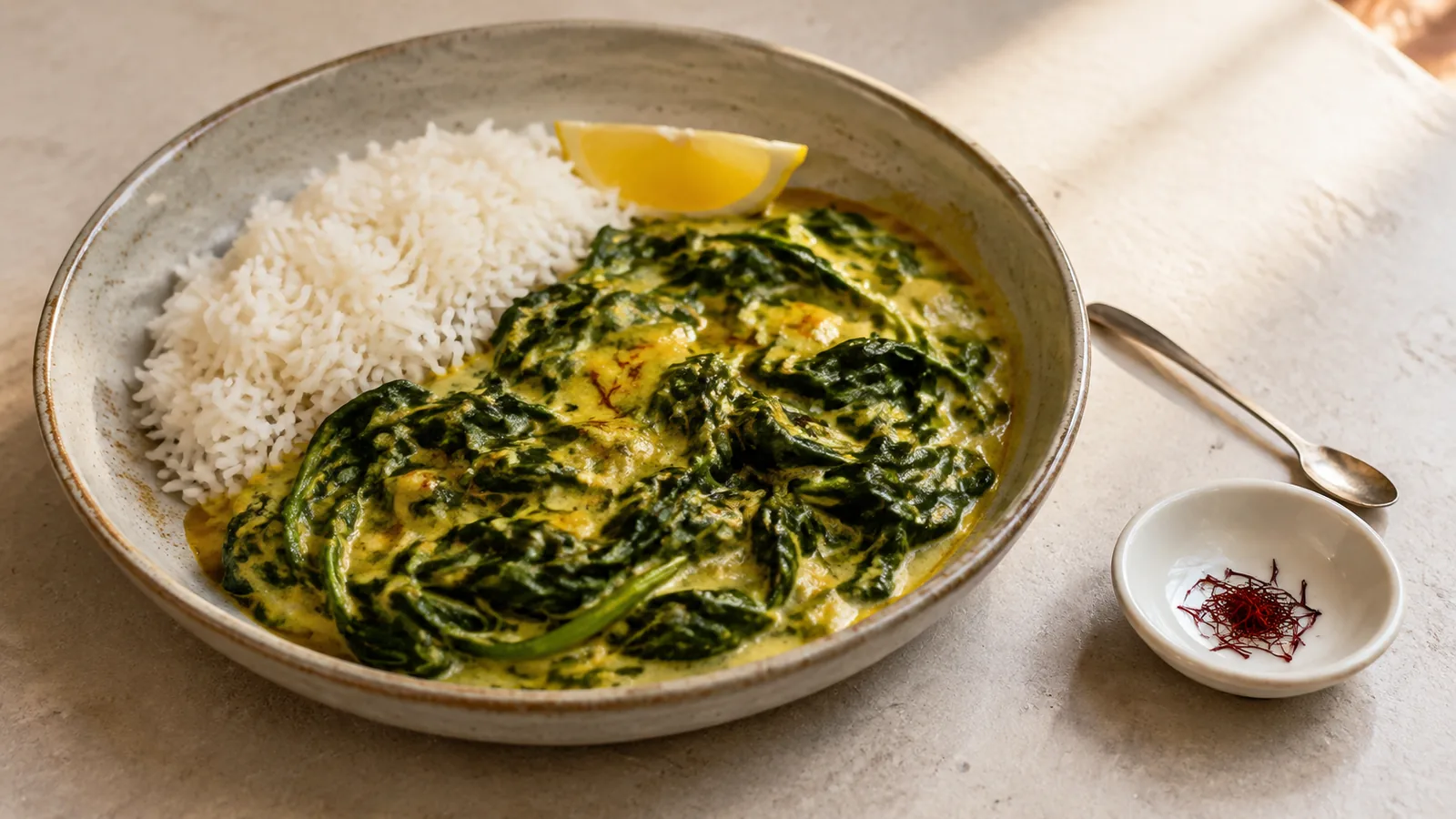
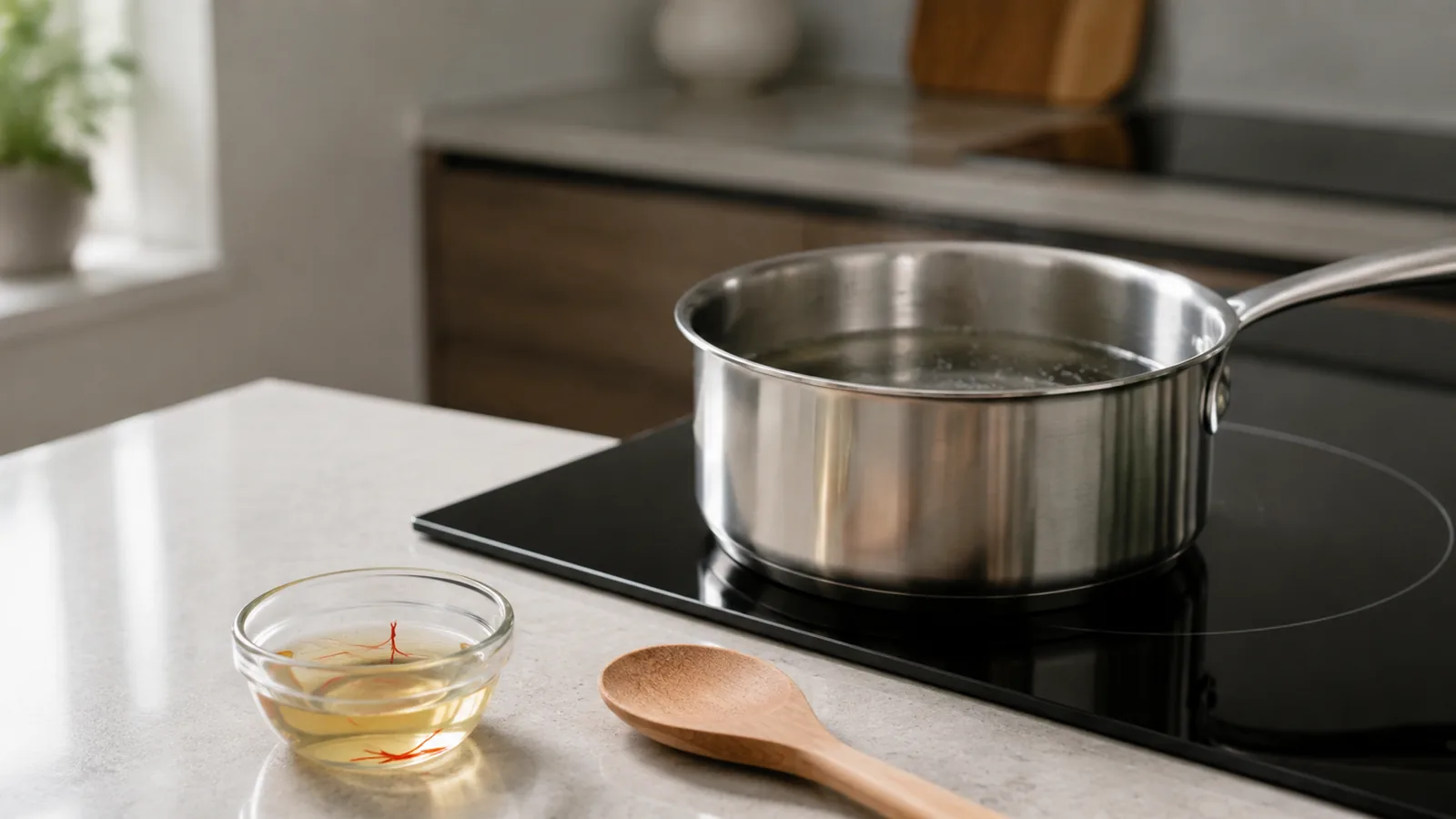
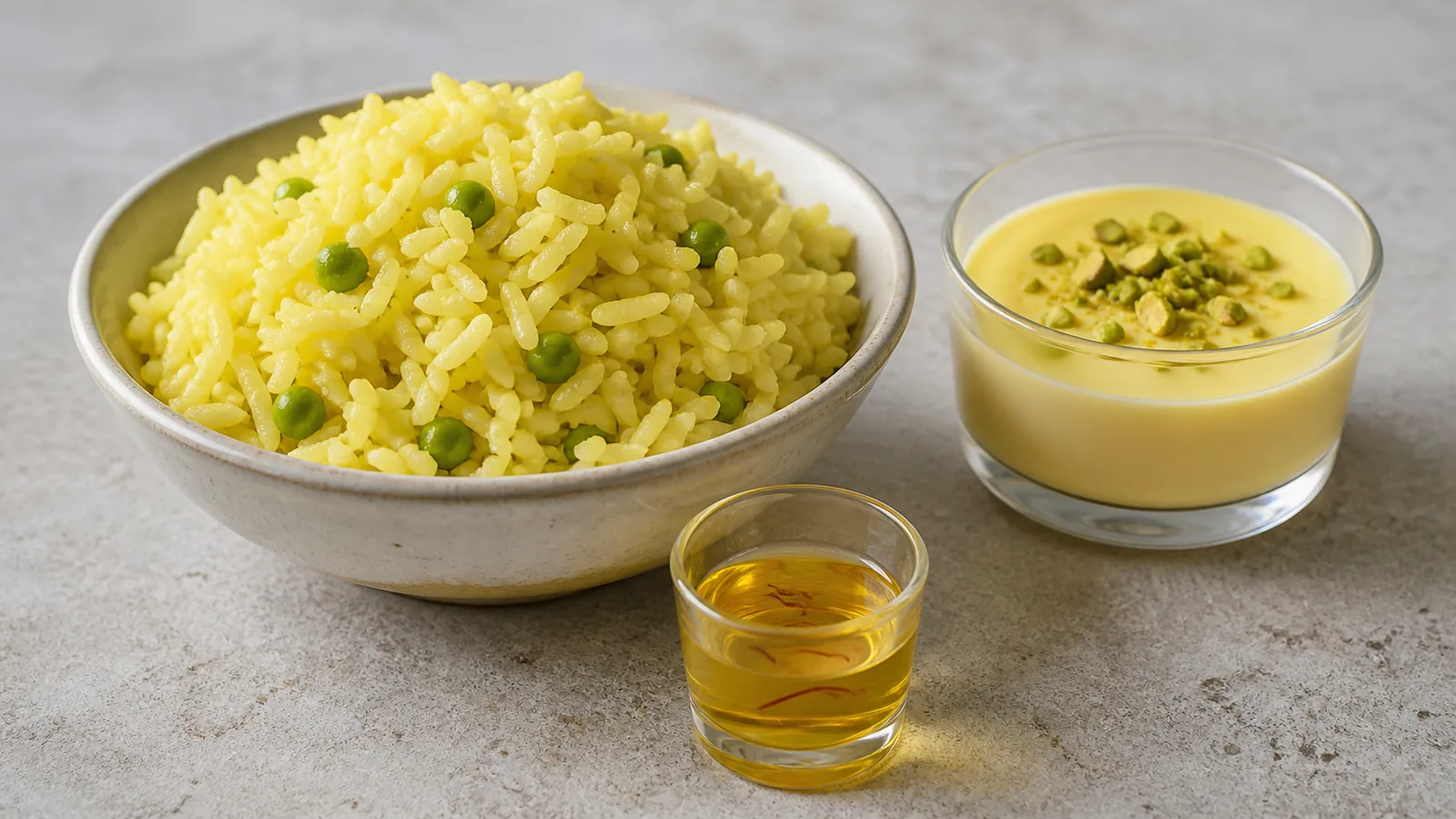
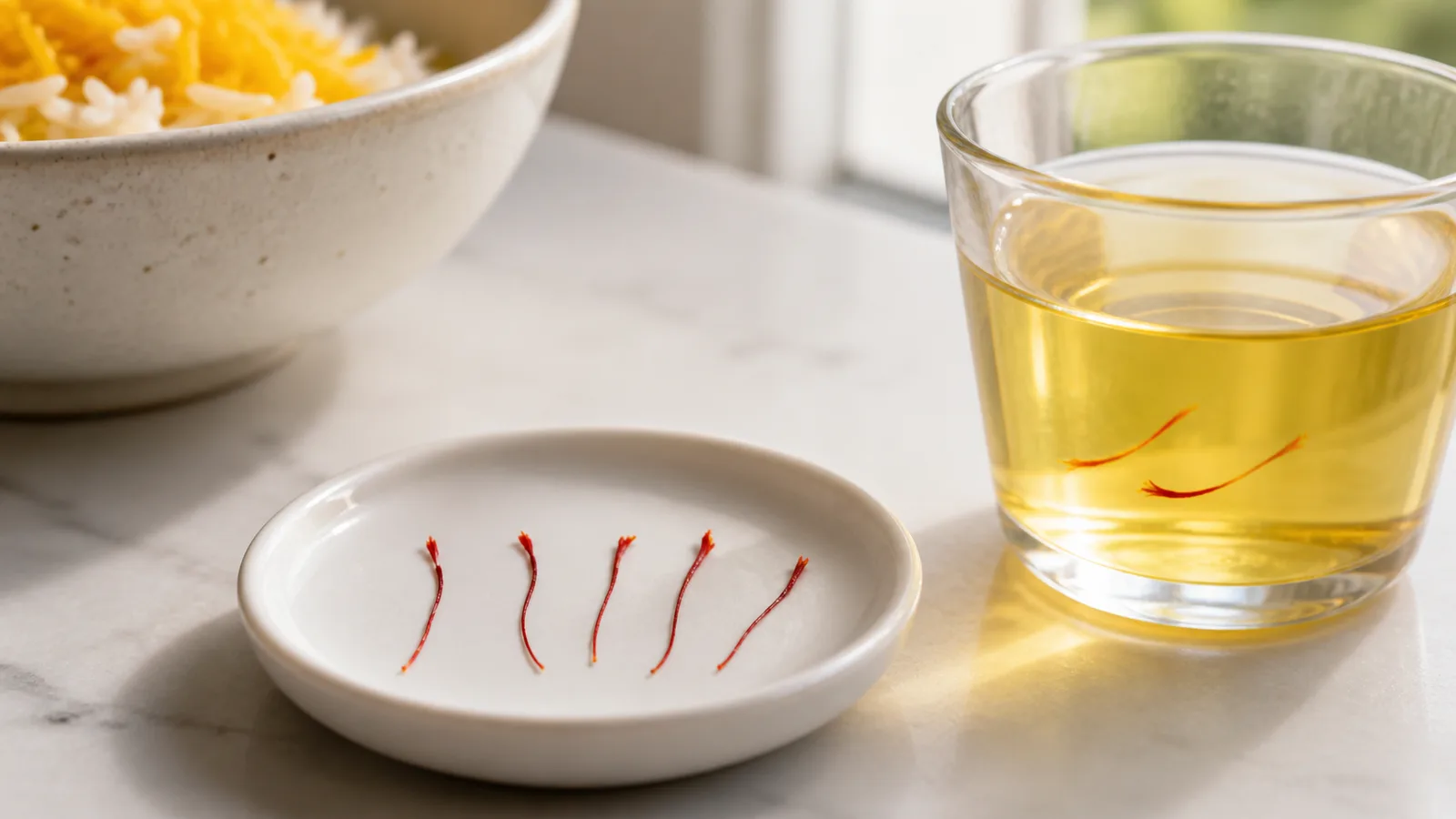
Its price per kilogram is high, but recipes use a small quantity. A few properly bloomed threads can colour and perfume an entire dish. Buying a modest pack that stays fresh may give better value than buying more than you will use.
Look for identifiable dry red threads, a clean aroma, sensible origin information and a seller who states the net weight. Be cautious with impossibly cheap powder or dramatic home “purity tests”; serious authenticity work uses documented supply chains and analytical methods, not one trick with a glass of water.
The practical answer
Why is saffron so expensive? The spice concentrates a large crop and a short season into a tiny amount of delicate dried stigma. Hand harvesting, careful separation, drying, sorting, testing and crop risk explain why saffron spice is so costly and valuable. Its unit price is exceptional, but its strong colour and aroma mean a cook needs very little at a time.