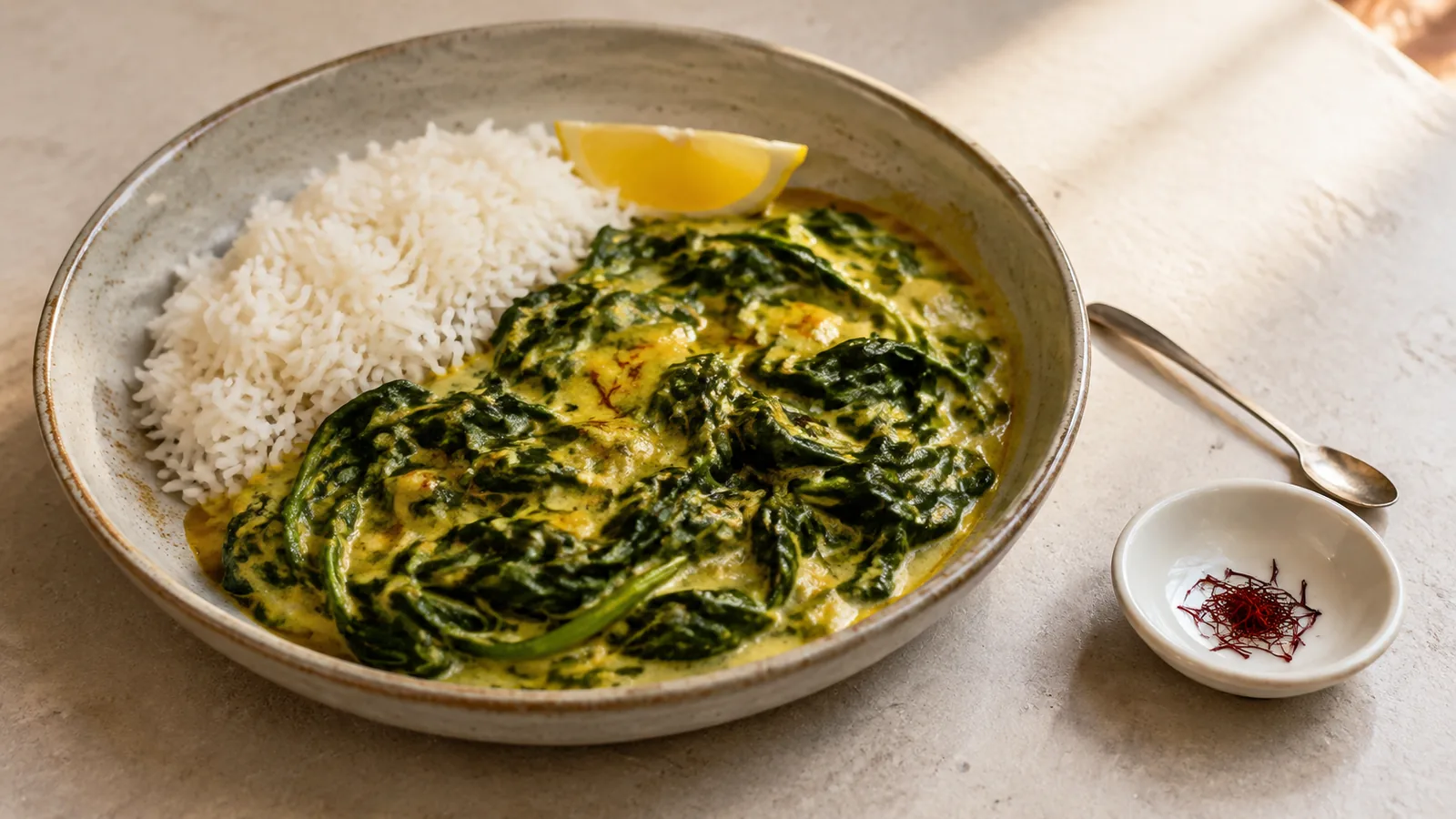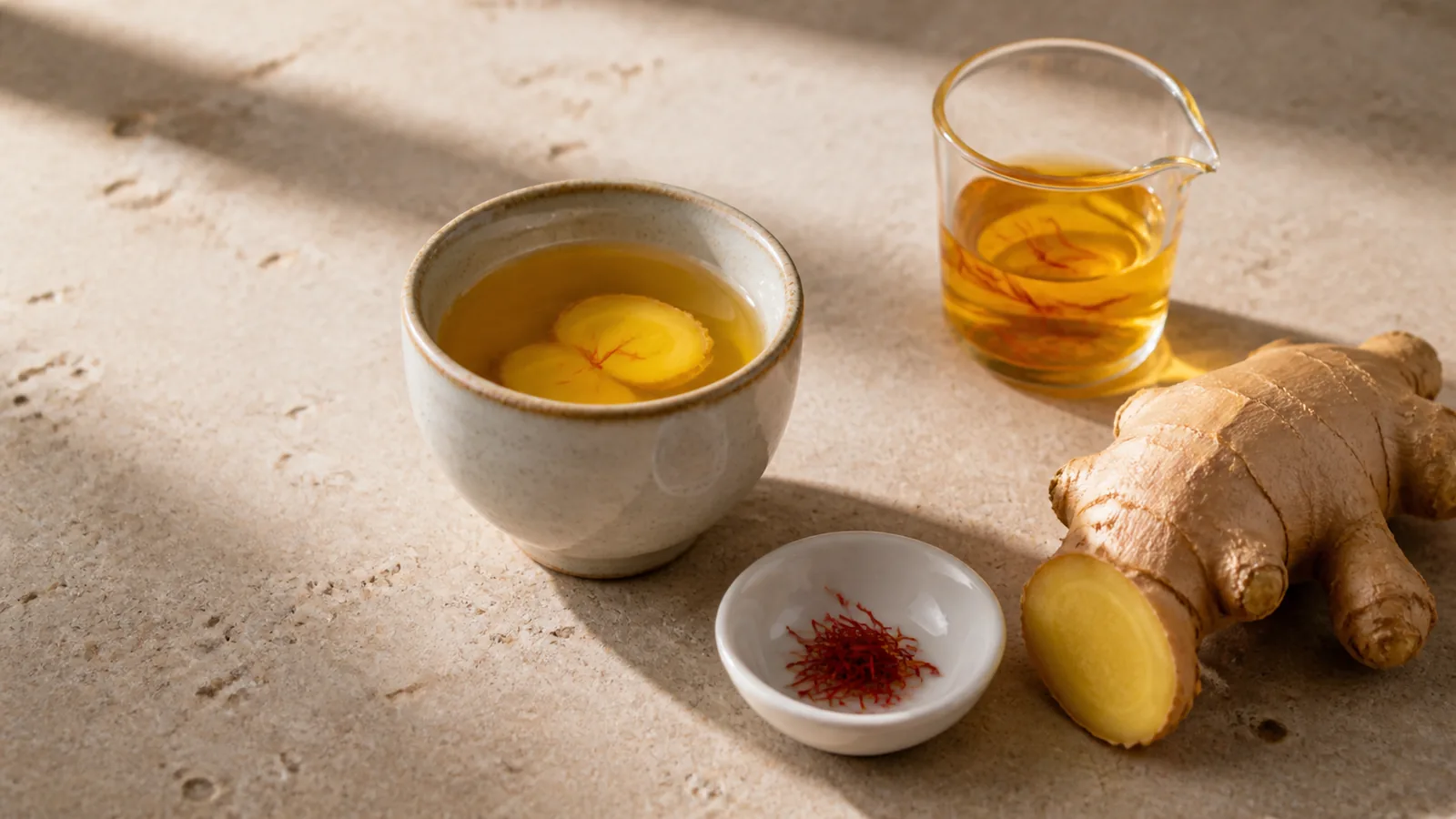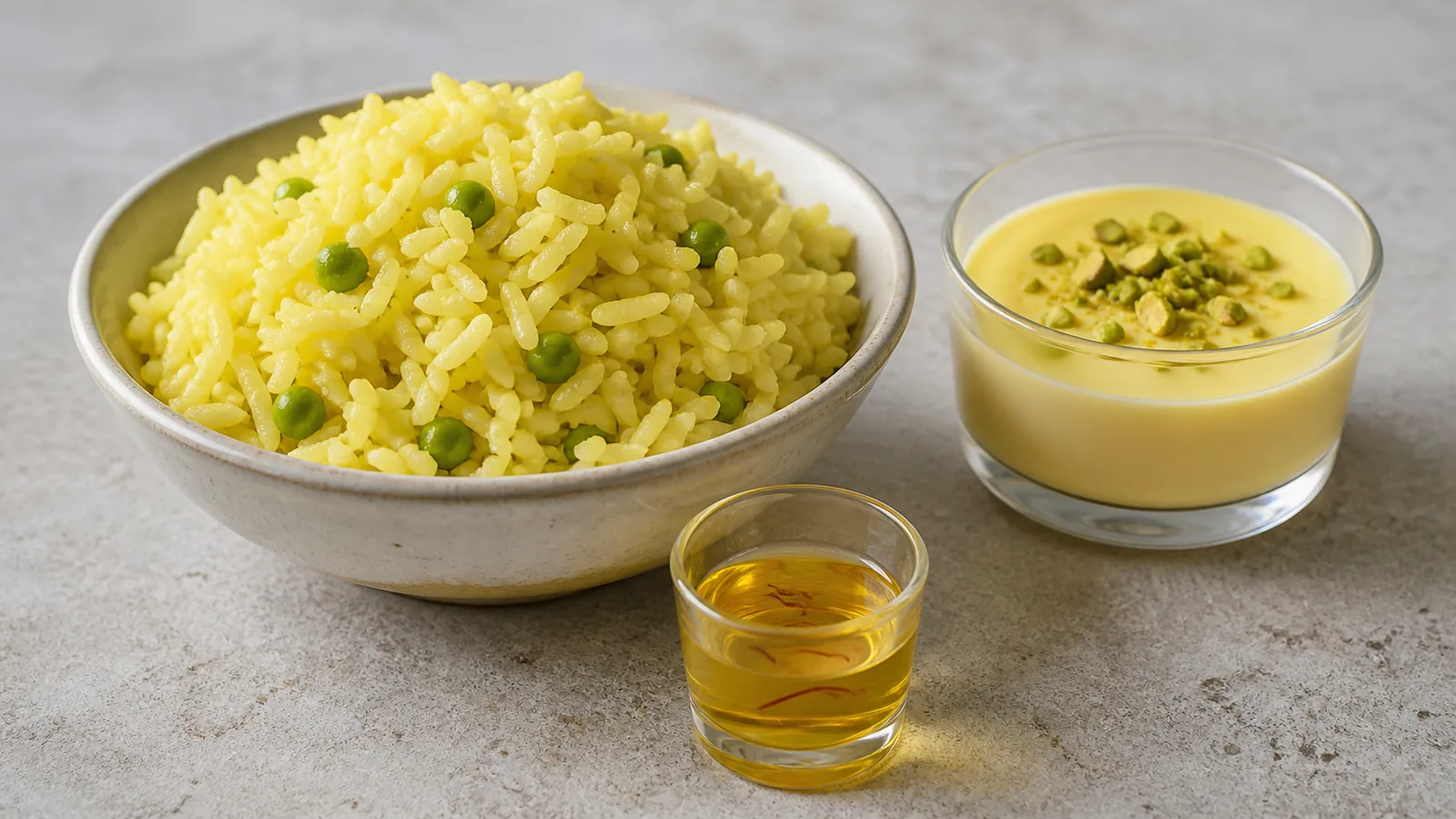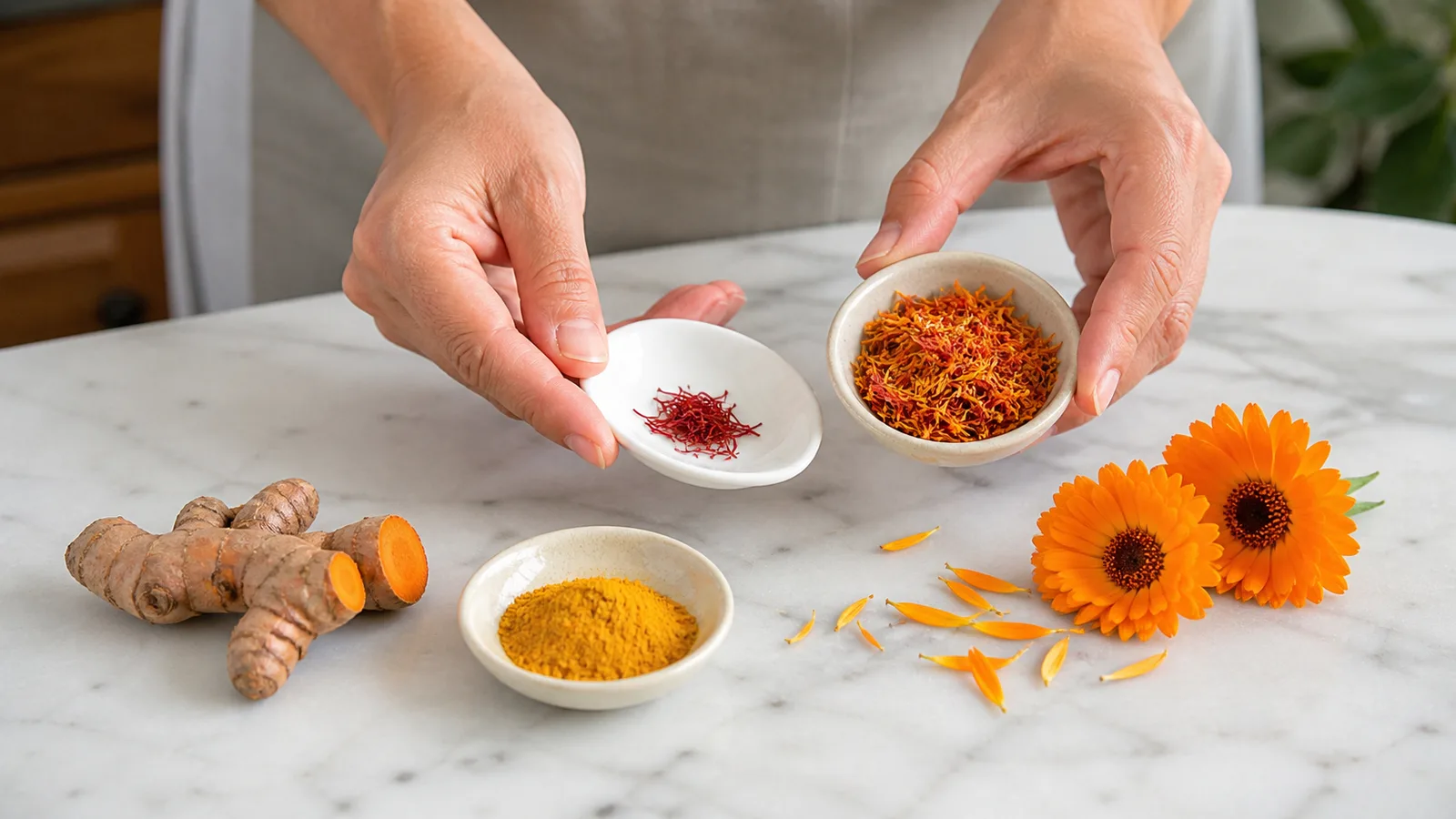
“Poor man’s saffron” is an informal name, not one specific spice. It most often refers to safflower, whose orange-red petals can add colour at a much lower price. Turmeric, calendula and some edible marigold petals also carry the nickname in different places.
None of them is true saffron. They come from different plants and do not reproduce saffron’s distinctive aroma, flavour or chemistry. The nickname describes an inexpensive colouring substitute, not an equivalent ingredient.
Why does poor man saffron mean different plants?
Common names travel through languages, markets and local cooking traditions. “Poor man saffron,” “poor man’s saffron” and “poor mans saffron” can therefore point to different yellow or orange ingredients. The scientific name on the package is the reliable way to tell which one you have.
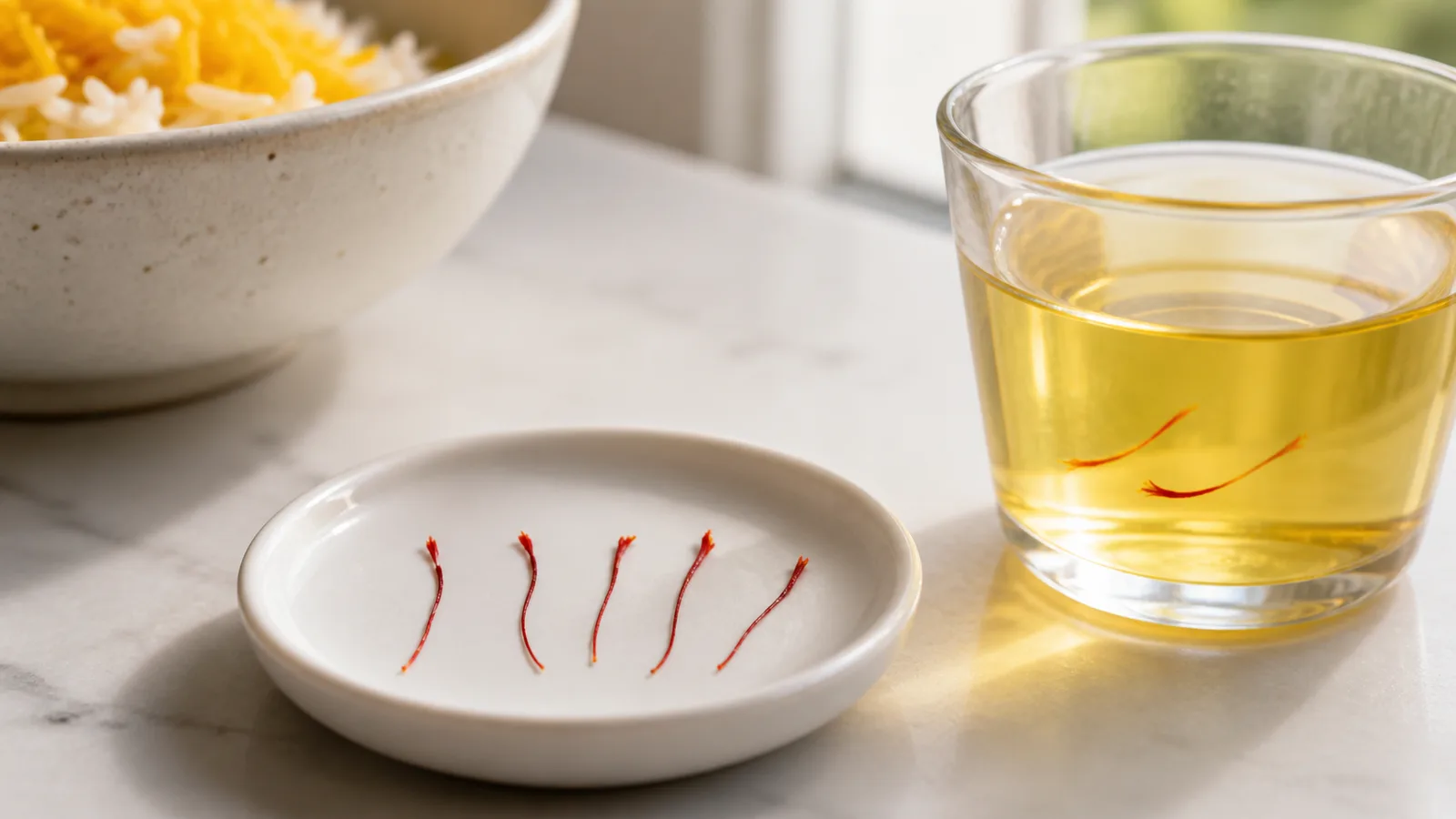
True saffron is Crocus sativus. The spice consists of the flower’s dried red stigmas, each collected by hand. Its colour comes largely from crocins, while picrocrocin and safranal help create the taste and aroma that a colour substitute cannot copy.
Safflower: the most common “false saffron”
Safflower is Carthamus tinctorius, a thistle-like member of the daisy family. The Royal Botanic Gardens, Kew describes it as an ancient dye crop and notes that its flowers were used as a cheaper substitute for saffron in traditional recipes. “False saffron” is another common name.
Dried safflower petals can contribute a yellow-orange tint and visual flecks. Their flavour is much milder and less complex than saffron, so they work better when colour matters more than fragrance. Safflower seed oil is a separate product; it is not the dried flower seasoning.
Why turmeric is also called poor man’s saffron
Turmeric is the powdered rhizome of Curcuma longa. It is inexpensive, intensely yellow and widely available, which explains the comparison. Georgia Tech’s plant collection notes that turmeric is sometimes given the nickname because of its lower-cost colour.
In flavour, the resemblance ends. Turmeric is earthy, warm and slightly bitter. It also turns food yellow much faster than saffron. If you use it as a colour substitute, begin with a very small pinch; a one-for-one swap will dominate the dish.
Calendula and marigold petals
Calendula (Calendula officinalis) is also called poor man’s saffron in some garden and culinary sources. University of California Master Gardeners describes its edible orange and yellow petals as a seasoning or garnish with a complex, spicy flavour.
Some edible marigold petals receive the same nickname. Plant identity matters because not every ornamental flower or plant part is intended for eating. Use petals sold or grown specifically as edible food, and confirm the species rather than relying on colour alone.
Can you substitute these ingredients for saffron?
They can stand in for one job: colour. They cannot replace the full experience of saffron.
- For yellow-orange colour: use a small amount of turmeric, safflower or edible calendula according to the dish.
- For decorative petals: safflower or a confirmed edible flower may add visual interest.
- For saffron aroma and flavour: use genuine Crocus sativus threads. There is no direct substitute.
- For a traditional saffron recipe: decide whether colour alone is enough. Paella, risotto, Persian rice and saffron milk depend on aroma as well as appearance.
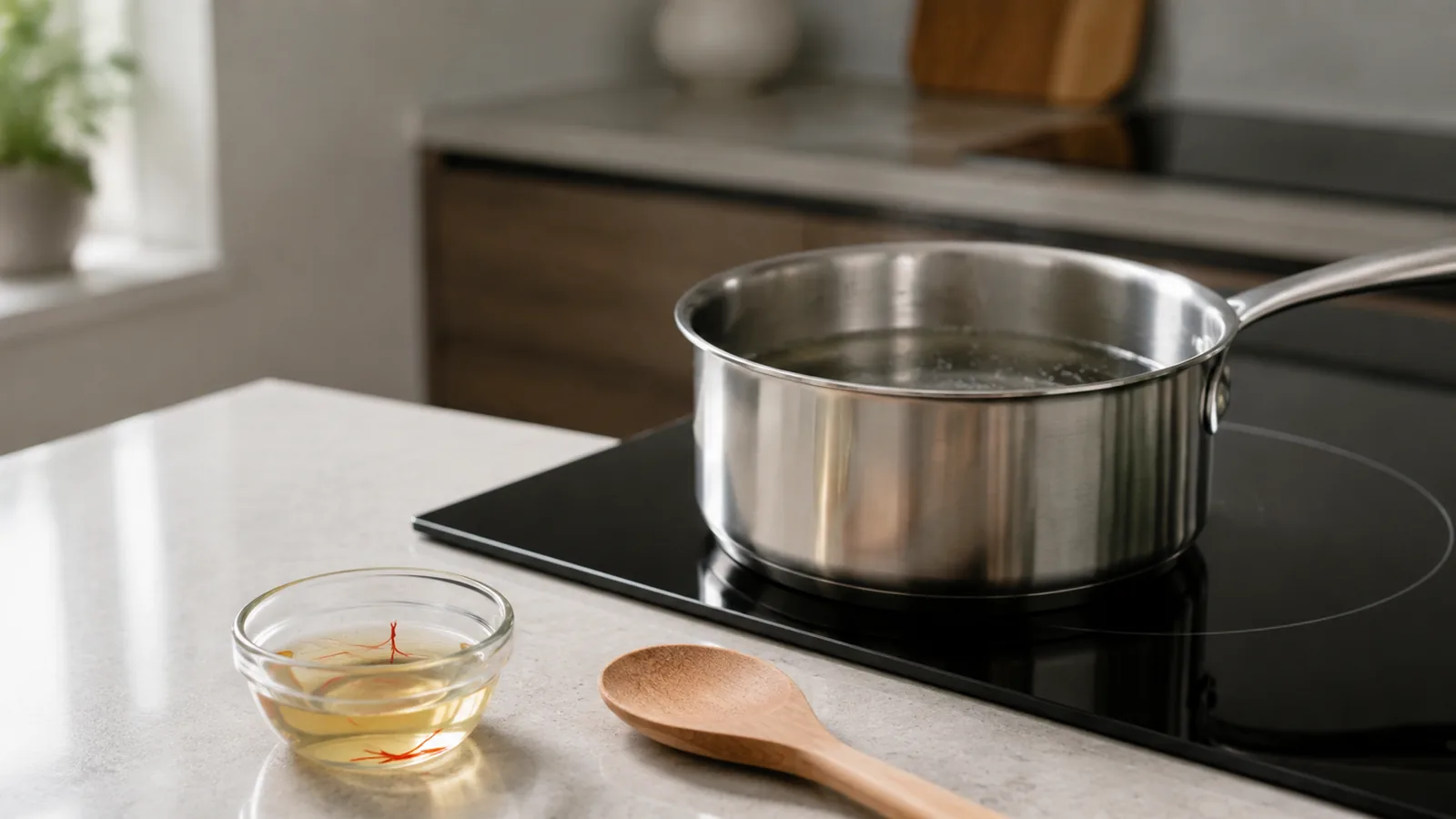
A useful compromise is to use less genuine saffron well. Lightly crush the threads and steep them in a small amount of warm water or milk for 10–15 minutes before adding the whole infusion. Better extraction can give a modest quantity more reach.
Do substitutes have the same daily uses or benefits?
No. A safflower petal, turmeric powder and saffron thread have different compounds and safety considerations. A routine described for saffron water, kesar doodh, tea, smoothies, soups, stews or baked goods should not be copied to another plant on the assumption that the nickname makes them interchangeable.
Nor does a substitute inherit claims about saffron improving metabolism, digestion, energy, mood, sleep, skin or inflammation. Those health promises require evidence for the exact plant, preparation and outcome. For daily use or a concentrated supplement, read the actual ingredient label and discuss relevant medicines, pregnancy or health conditions with a professional.
How to avoid buying a substitute as genuine saffron
Poor man’s saffron is useful when it is sold honestly under its own name. It becomes a problem when safflower petals, coloured fibres or turmeric are passed off as expensive saffron.
Buy from a seller that identifies Crocus sativus, the plant part and country of origin. Intact threads are easier to inspect than powder: genuine stigmas are fine, trumpet-shaped at one end and deep red rather than uniformly cut orange petals. Home water tests and viral “instant tests” are not definitive, so provenance and documented quality control matter more than a single trick.
The short answer
What is poor man’s saffron? Usually safflower, sometimes turmeric, calendula or edible marigold, depending on context. All can provide inexpensive colour. None provides the same botanical identity or sensory profile as genuine saffron threads.