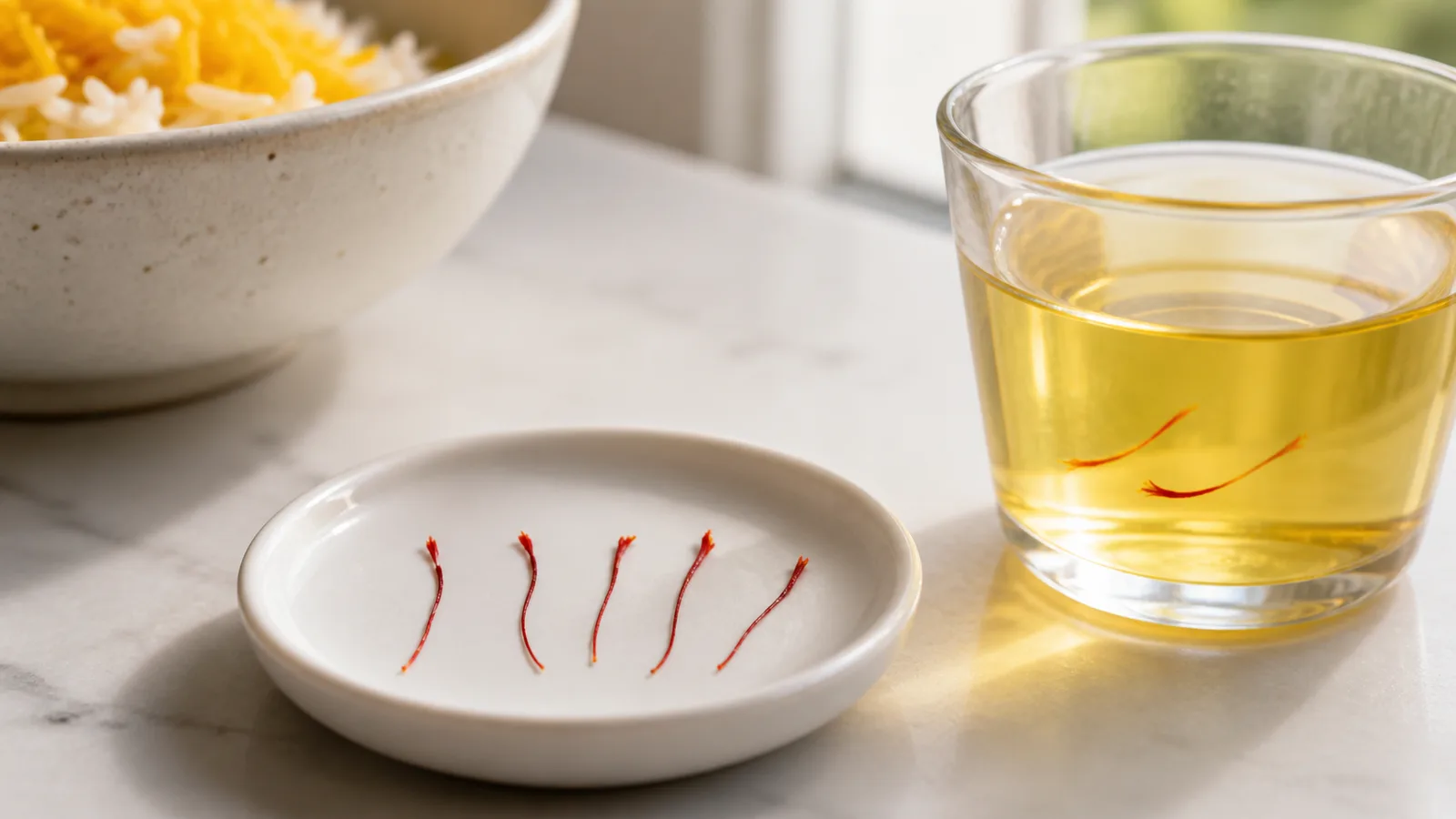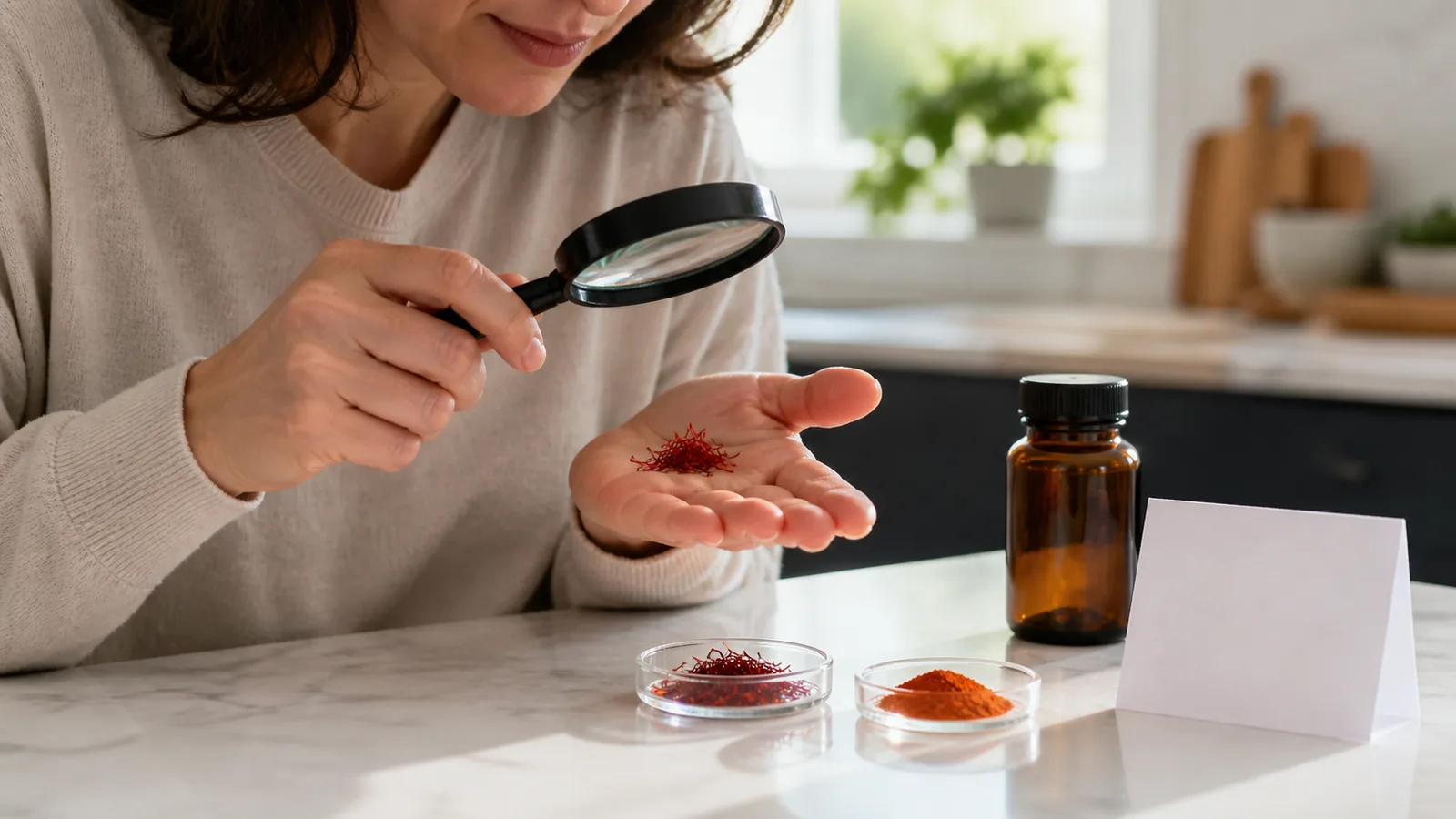
The main disadvantages of saffron are its high price, uneven product quality and the uncertainty that comes with concentrated supplements. Culinary amounts are generally well tolerated, but a supplement can cause side effects, interact with a person’s treatment plan or encourage claims that run ahead of the evidence.
In practice, saffron disadvantages depend on the form and amount. A few threads divided across a meal are not equivalent to powder swallowed by the spoonful, a standardised capsule or a multi-ingredient “wellness” blend. Lists of the dangers of saffron often miss that distinction.
What are the potential side effects of saffron?
A 2026 systematic review of 102 saffron trials found the spice and studied preparations generally well tolerated. Gastrointestinal problems were the most frequently reported adverse events and were usually minor and self-limiting. Nausea, dry mouth, reduced appetite and headache appear across the clinical literature; dizziness has also been reported.
The review estimated adverse events from the included human evidence, but that figure is not the chance that any shopper will have a reaction. Trials used different preparations, doses, participants and reporting methods. Safety data were also incomplete in some studies.
Stop a new supplement and seek advice if a symptom appears after you start it. These symptoms alone do not prove liver or kidney damage. Severe vomiting, fainting, unusual bleeding, facial or throat swelling, trouble breathing or other rapidly worsening symptoms need urgent care.
Kesar side effects and saffron side effects mean the same thing
Kesar is a common name for saffron, not a safer or different ingredient. Searches for “kesar side effects” and “side effects of kesar” therefore need the same answer: check the plant name, amount and full ingredient list. A product labelled with a familiar cultural name may still contain a concentrated extract or additional herbs.
Saffron side effects on the face and skin
People looking for saffron side effects on face or skin are usually asking about irritation or allergic reactions. Possible signs include skin rashes, itching, burning, hives or swelling.
Skin reactions are possible, although they are not among the most common effects in supplement trials. Research in saffron workers has documented occupational contact dermatitis from handling parts of the plant. That setting involves repeated exposure and does not tell us how often an occasional consumer will react.
A DIY face paste can also irritate because of lemon juice, fragrance, essential oils or another ingredient mixed with the saffron. If redness, itching, burning, hives or swelling begins, wash the product off and stop using it. Do not keep applying it in the hope that irritation means the treatment is working.
Can high doses be toxic?
Too much saffron can be harmful, but popular charts that name one exact toxic or lethal dose are not a sound guide for home use. They often repeat old reports without explaining the preparation, person or source. Amounts measured in grams are far beyond normal seasoning and should never be treated as a self-test.
Clinical studies commonly use defined amounts measured in milligrams for limited periods. That does not make 30 mg a universal treatment dose, prove that 200–400 mg is safe for everyone, or establish a safe ceiling just below one gram. Product composition and personal health still matter.
Is saffron a blood thinner?
Saffron is not an approved anticoagulant. A small placebo-controlled trial found no significant change in the coagulation measures tested after healthy volunteers took 200 or 400 mg daily for one week. That result argues against presenting saffron as a clinically meaningful blood thinner, but it does not settle every possible interaction during longer use.
People who take warfarin, apixaban, rivaroxaban, clopidogrel, aspirin or another product that affects bleeding should ask their prescriber or pharmacist before adding a concentrated saffron supplement. Tell the surgical team about it before a procedure. The FDA advises discussing supplement and medicine combinations because interactions can be serious.
Pregnancy and medication uncertainty
Pregnancy safety evidence is limited and inconclusive. Culinary exposure and a medicinal dose are different decisions. Anyone who is pregnant, breastfeeding or trying to conceive should review a concentrated saffron product with their healthcare professional rather than relying on a claim that a small amount is automatically safe.
Interaction data for saffron are not comprehensive. Blood-pressure, diabetes, psychiatric and other medicines deserve a product-specific review, but it is also wrong to state that a significant interaction definitely occurs when human evidence has not shown it. Bring the bottle, dose and ingredient panel to the conversation.
Other practical disadvantages of saffron
- Cost: genuine saffron is labour-intensive to produce, so using more than a recipe needs wastes an expensive ingredient.
- Adulteration: powder is harder to inspect than intact threads and may contain colouring or cheaper plant material.
- Bitterness: excess saffron can make a dish harsh rather than more aromatic.
- Staining: concentrated infusion can mark fabric and porous surfaces.
- Evidence limits: a promising small trial does not prove broad benefits or long-term safety for every extract.
How to reduce avoidable risk
For cooking, buy identifiable saffron threads, store them dry and protected from light, and use the recipe amount. For a supplement, check the exact species, plant part, extract, milligrams, other ingredients and independent quality information. Avoid products that promise to cure disease.
The balanced answer is that saffron has drawbacks without being inherently dangerous. Culinary use and concentrated daily supplementation belong in different risk categories. Keep the amount proportional to the purpose, and get clinical advice when medicines, pregnancy, surgery, a health condition or a previous reaction changes the calculation.