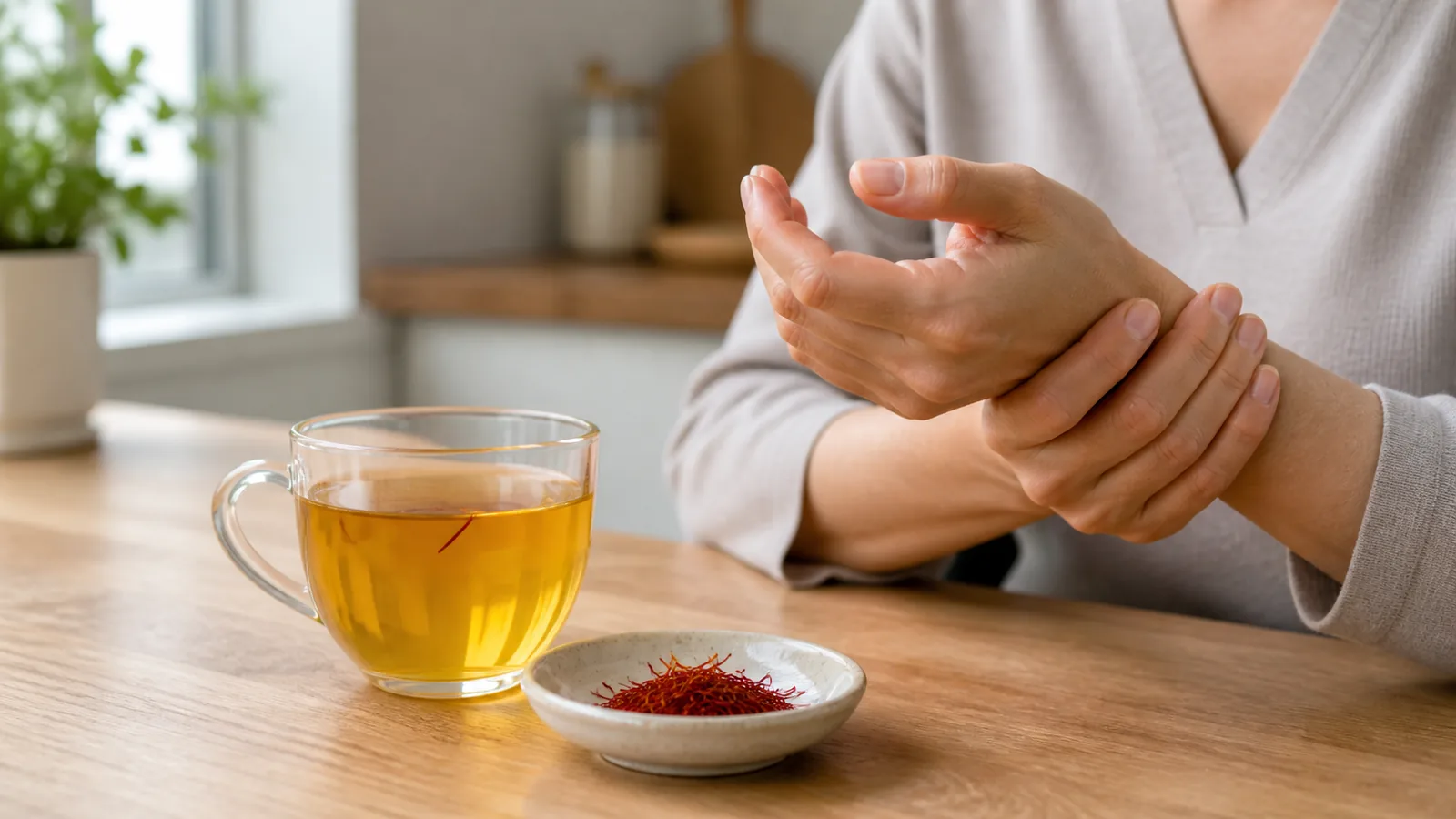
Saffron benefits for women are often described as if the spice balances hormones, regulates periods and treats several unrelated conditions at once. Human research supports a much narrower picture. Small trials have reported possible benefits for premenstrual symptoms, period pain, mood and some aspects of sexual function. They do not show that saffron raises estrogen, cures a reproductive disorder or works as a general women’s tonic.
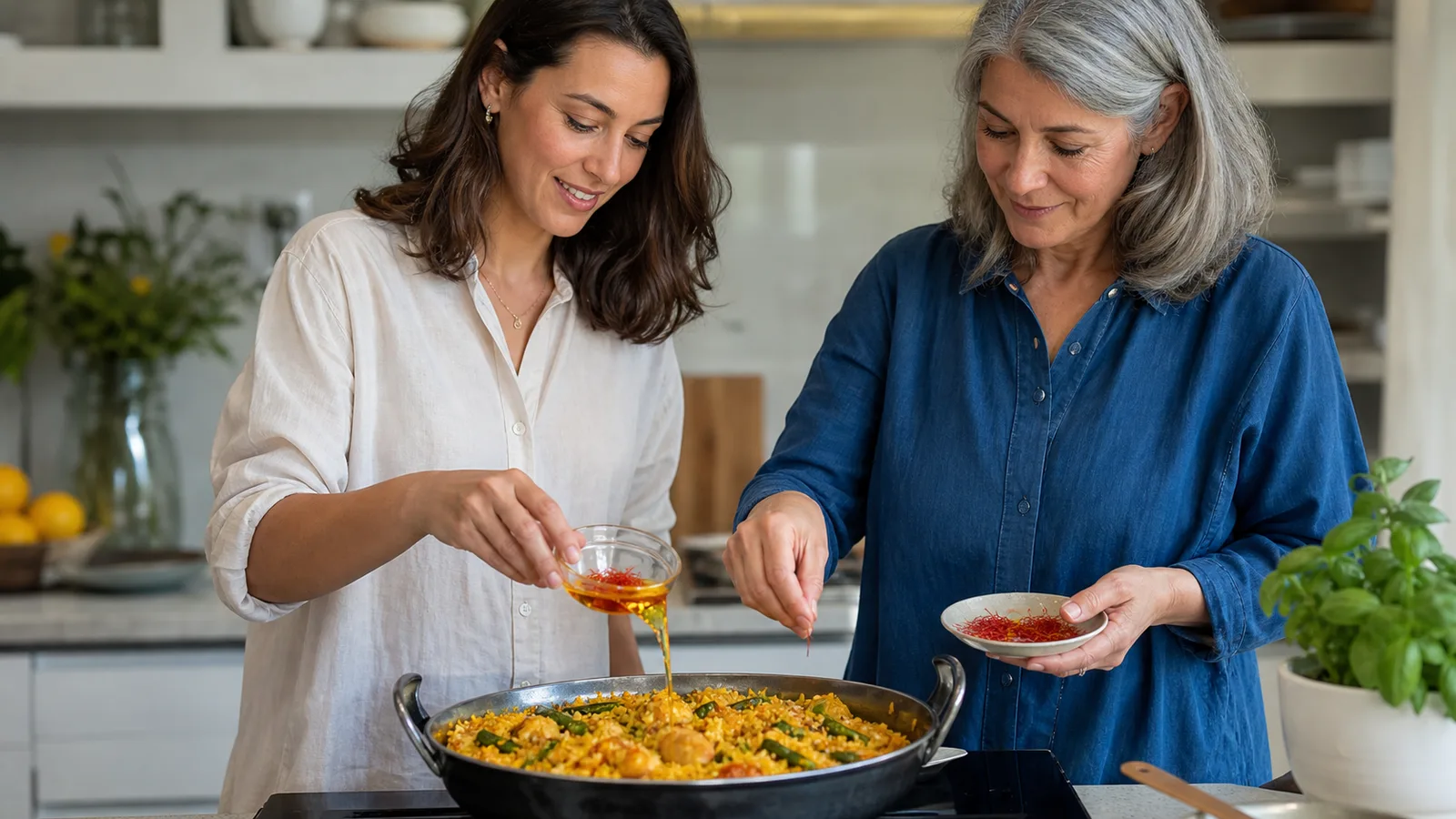
Most studies used standardized capsules or extracts for a few weeks. That is different from adding a pinch of saffron to food, drinking saffron tea or applying a homemade mask. Keeping those forms separate makes the evidence easier to understand and the safety advice more useful.
Saffron benefits for women: where is the evidence strongest?
Premenstrual symptoms have the clearest women-specific research. A 2026 systematic review and meta-analysis found that saffron interventions reduced pooled scores for premenstrual syndrome (PMS) and dysmenorrhea, the medical term for painful periods. The result is encouraging, but the underlying trials were small, short and used different preparations. It does not establish saffron as first-line treatment or tell every reader which product would reproduce the effect.
One early randomized trial in 50 women with PMS compared a measured saffron capsule with placebo over two treatment cycles and reported an improvement in daily symptom scores. A later trial in 120 women with premenstrual dysphoric disorder also found better symptom scores than placebo. Two trials do not make an everyday spice a substitute for diagnosis, especially when symptoms are severe or changing.
Does saffron help with periods?
Searches for saffron for periods often combine three different questions: PMS symptoms before bleeding starts, cramps during a period, and an irregular or late cycle. Research on saffron for PMS and menstrual pain offers a possible benefit for the first two, based on the limited trials above. It has not shown that saffron “cleans” the uterus, corrects every painful period or treats the conditions that can sit behind the pain. The American College of Obstetricians and Gynecologists’ guidance on painful periods explains that endometriosis, adenomyosis, fibroids, ovarian cysts and other conditions can cause secondary dysmenorrhea.
New pain, pain that worsens over time, bleeding between periods, very heavy bleeding or symptoms that disrupt ordinary life deserve medical attention. Heat and appropriate pain relief may help uncomplicated cramps, while persistent symptoms need a cause-specific plan. A saffron supplement should not delay that assessment.
Does saffron increase menstrual flow or regulate a cycle?
There is no reliable clinical evidence that saffron safely brings on a late period, regulates an irregular cycle or should be used to increase menstrual flow. PMS symptom trials were not tests of those claims. A late period can have many explanations, including pregnancy, and unusually heavy bleeding can lead to anemia. Both questions need the right check rather than a stronger saffron drink.
Saffron, estrogen and menopause
Does saffron increase estrogen?
Human research has not established saffron as a way to raise estrogen or “balance” female hormones. Those phrases should not be inferred from an antioxidant mechanism or from a change in a mood questionnaire. Someone with an estrogen-sensitive condition should not assume a supplement is harmless because it is plant-based; the exact product should be reviewed with the treating clinician.
A 12-week trial in 86 perimenopausal women found greater improvement in psychological symptom scores with a branded saffron extract than with placebo. It did not find greater improvement in hot flashes and other vasomotor symptoms, physical symptoms or overall quality-of-life measures. The manufacturer funded the study, and the authors called for more trials. This is preliminary mood evidence, not proof of an estrogen effect or a complete menopause treatment.
The ACOG menopause guide notes that herbal products vary in content and have limited safety and effectiveness evidence. Menopause treatment should match the symptom, medical history and personal priorities instead of relying on a broad hormonal-balance claim.
Saffron for libido and sexual wellbeing
Research on saffron for libido in women is small but more specific than the usual aphrodisiac claim. In a six-week trial of 74 women with severe sexual dysfunction, standardized saffron capsules produced greater changes than placebo in desire, lubrication and satisfaction scores. Sixty-eight participants completed the trial, so the finding needs confirmation in larger and longer studies.
A separate four-week study in women taking fluoxetine found improvement in arousal, lubrication and pain, but not in desire, orgasm or satisfaction. That distinction matters. Low desire, pain or dryness may relate to medicines, menopause, pelvic conditions, relationship factors or mental health. Saffron should not be used to mask persistent pain or replace a medicine review.
Mood, stress and anxiety
Saffron has been studied for depressive and anxiety symptoms, including the PMS and perimenopause groups above. That does not make it an immediate calming remedy, and a score change in a controlled trial is not evidence that saffron lowers a person’s “stress hormones.” Extracts also vary, and the effect of a trial capsule cannot be transferred automatically to tea or a meal.
Low mood that persists, interferes with daily life or comes with thoughts of self-harm needs professional care. Anyone taking an antidepressant should discuss a saffron supplement with the prescriber rather than using it to change, reduce or counteract the medicine.
Uterine health and ovarian cysts
No good clinical evidence shows that saffron treats a uterine infection, pelvic inflammatory disease or an ovarian cyst. Antioxidant and antibacterial activity in a laboratory does not demonstrate that swallowing saffron reaches and cures an infection in the reproductive tract. The Centers for Disease Control and Prevention’s PID guidance stresses prompt examination and antibiotic treatment when an infection is diagnosed because delay can lead to lasting harm.
Ovarian cyst care depends on the type, size, symptoms and ultrasound findings. Many cysts resolve without treatment; others need monitoring or surgery. Saffron has not been shown to shrink them. Sudden severe one-sided pelvic pain, especially with nausea, needs urgent assessment rather than an antispasmodic home remedy.
Skin claims and homemade saffron masks
Brightening, spot removal, hydration and anti-ageing claims often come from ingredient marketing or very small cosmetic studies. They do not establish that a kitchen mixture of saffron, milk or honey treats pigmentation, acne or skin ageing. A 2026 oral-supplement trial in women aged 50 to 70 found no significant difference from placebo in self-rated appearance or an exploratory estimate of facial skin age.
Skin can also react to botanical ingredients. Do not put a homemade mask close to the eyes or on broken skin, and stop using a product that causes burning, swelling or a rash. A persistent or changing patch of pigmentation is a dermatology question, not a cue to use more spice.
Can saffron improve anemia in women?
Saffron is not an established anemia treatment and is not a meaningful source of iron in the tiny amount normally used for cooking. The NIH iron fact sheet lists heavy periods and pregnancy among the reasons women are more vulnerable to iron deficiency. A blood test helps identify whether fatigue or weakness is anemia and what is causing it.
Treatment depends on the diagnosis. Iron deficiency, vitamin deficiency, chronic disease and blood loss are not interchangeable, and taking saffron cannot replace the missing nutrient or stop ongoing bleeding.
Saffron use during pregnancy
Pregnancy is not the time to experiment with medicinal saffron amounts, concentrated extracts or a product promoted to start contractions. Evidence on pregnancy safety is limited, and a small term-pregnancy study examined saffron in relation to cervical readiness. That is a reason for clinical caution, not a home method for bringing on labour.
The NHS guidance on medicines in pregnancy emphasizes that natural remedies are not automatically safe and asks pregnant people to tell a doctor, midwife or pharmacist about herbal products. Ordinary food use and a concentrated supplement are different exposures, but individual advice still matters. Saffron has not been shown to improve a baby’s complexion or replace recommended prenatal nutrients and care.
Using saffron without turning it into a treatment
A few threads can be bloomed and used for flavour in rice, soup, vegetables or a drink. Our guide to using saffron explains the culinary method. Food use does not reproduce a standardized research extract, but it also does not need to make a medical promise.
- Do not use saffron to bring on a period, increase bleeding or start labour.
- Do not replace treatment for PMS, PMDD, depression, anemia, infection, cysts or menopause symptoms.
- Ask a pharmacist or clinician to review concentrated products if you take medicines, are pregnant or breastfeeding, or have an ongoing health condition.
- Stop a new supplement and seek advice if it causes an allergic reaction, unusual bleeding, persistent digestive symptoms or another concerning change.
The most credible benefits of saffron for women are specific and still developing: possible relief of some premenstrual symptoms, preliminary effects on mood around perimenopause, and limited findings in sexual-function trials. The broader promises about estrogen, uterine cleansing, cysts, anemia and flawless skin go beyond the evidence. Saffron can remain a valued food while healthcare decisions stay tied to the symptom and its real cause.