Saffron for heart health is an active research topic, but the useful answer is narrower than many headlines suggest. Trials of measured saffron supplements have found small changes in some blood-pressure and metabolic markers. They have not shown that saffron prevents a heart attack or stroke, clears arterial plaque, corrects an abnormal rhythm or replaces cardiovascular treatment.
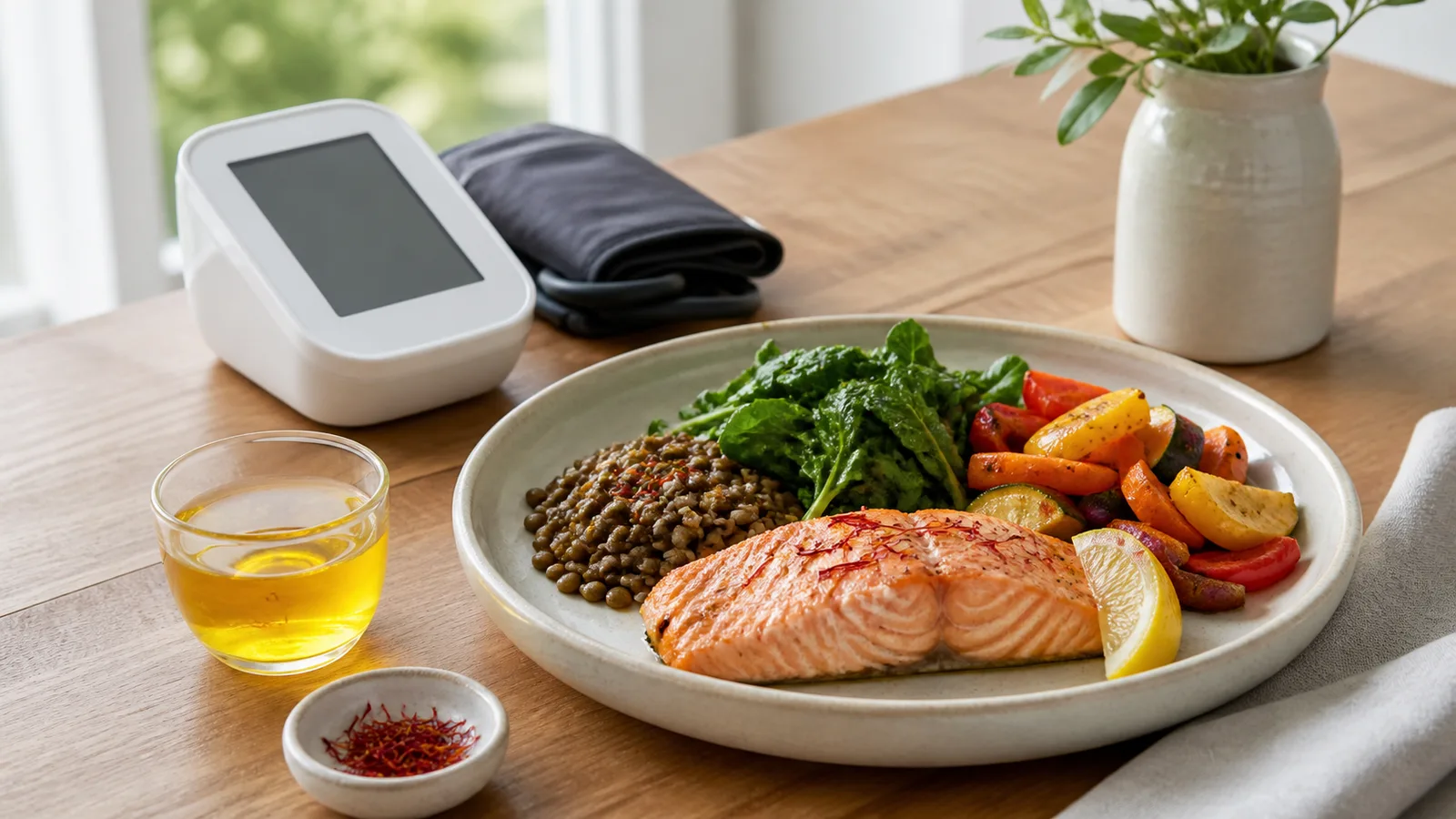
As a spice, saffron can still fit comfortably into a heart-conscious way of eating. A few threads bring aroma and colour without needing a salty sauce or sugary syrup. That culinary role is different from taking an extract in the hope of changing blood pressure or cholesterol.
Saffron for heart health: what does the spice actually do?
Saffron contains crocin-related pigments, crocetin and safranal. Researchers study these compounds for antioxidant, vascular and metabolic effects. A mechanism in cells or animals is not proof that eating saffron protects a human heart. Heart health is measured through outcomes such as blood pressure, lipid levels, symptoms and cardiovascular events—not by antioxidant language alone.
Clinical research has mostly tested powders, extracts or isolated constituents for a limited time. Preparation, dose and study population vary. A cup of saffron tea or a pinch in dinner cannot be assumed to deliver the intervention used in a trial.
Saffron and blood pressure
Does saffron lower blood pressure? A meta-analysis of eight randomized trials found average reductions of about 0.65 mmHg systolic and 1.23 mmHg diastolic with supplementation. The authors explicitly noted that these effects were small and might not be clinically important.
A broader 2025 review of 25 trials in people with metabolic syndrome and related disorders also found small average changes—about 1.15 mmHg systolic and 1.61 mmHg diastolic—while calling for better, more diverse trials. These pooled results do not make saffron a treatment for high blood pressure.
Can saffron raise or increase blood pressure?
Controlled trials do not establish culinary saffron as a usual cause of high blood pressure. Individual reactions, product blends and medicine combinations are less predictable, however. If a reading changes after starting a supplement, repeat it correctly, record the product and speak with the clinician rather than using more saffron to push the number in either direction.
Someone already taking blood-pressure medicine should not reduce, skip or “balance” a dose with saffron. Dizziness, fainting or unusually low readings after a new supplement deserve prompt advice.
Saffron and cholesterol
Is saffron good for cholesterol? Results vary by review and outcome. A 2019 analysis of 14 trials found small average reductions in total cholesterol and triglycerides but no significant change in LDL cholesterol. The authors said larger, better trials with meaningful clinical outcomes were needed.
The 2025 metabolic review found an average total-cholesterol reduction of about 4.8 mg/dL, with no significant change in LDL, HDL or triglycerides. That is not evidence that saffron removes arterial plaque, prevents a blockage or reduces heart-attack risk. Those claims require clinical-outcome trials, not a modest shift in one laboratory marker.
Circulation and “blood production” claims
Descriptions such as “improves circulation,” “dilates vessels” and “supports blood production” sound precise but often combine laboratory mechanisms with assumptions about people. Existing trials do not show that culinary saffron corrects poor circulation or anemia. Cold hands, leg pain on walking, swelling, unusual breathlessness or persistent fatigue needs assessment aimed at the cause.
Saffron also has not been shown to shield the heart from harmful factors or prevent stroke. It can be part of food; it is not a substitute for controlling blood pressure, cholesterol, diabetes, smoking exposure or other established risks.
Saffron and heart palpitations
No clinical evidence shows that saffron balances the heartbeat or treats an arrhythmia. Palpitations describe the sensation of pounding, racing, fluttering or missed beats; they do not identify the cause. Stress and caffeine are possible triggers, but thyroid disorders, anemia, electrolyte problems and heart-rhythm conditions can also be involved.
The MedlinePlus palpitations guidance recommends urgent help when palpitations come with chest pain, shortness of breath, fainting, unusual sweating or marked dizziness. New, prolonged or changing episodes need evaluation rather than saffron tea.
Is saffron good for a heart patient?
Culinary saffron may be acceptable for many people with heart disease, but “heart patient” covers very different diagnoses and medicines. Supplements deserve a medication review, particularly with anticoagulants, antiplatelet drugs, blood-pressure treatment or several medicines together. Direct saffron interaction data are incomplete, so the exact product and full medicine list matter.
The American Heart Association’s patient messages for chronic coronary disease advise discussing over-the-counter supplements with a healthcare professional and do not recommend supplements as a general heart-health strategy. A prescribed statin, antihypertensive or antithrombotic medicine should not be changed because of a spice study.
Risks of using saffron for the heart
“Thin blood” is not a diagnosis, and there is no universal saffron dose for people who bruise or bleed easily. Concentrated products may cause adverse effects and may contain other ingredients. A 2026 systematic review of human safety evidence found saffron preparations were generally tolerated, but adverse effects occurred and higher or prolonged medicinal use may warrant monitoring.
- Keep prescribed heart medicines unchanged unless the prescriber adjusts them.
- Show a pharmacist the full supplement label, not only the word “saffron” on the front.
- Stop a new supplement and seek advice for fainting, persistent dizziness, an allergic reaction, unusual bleeding or a new symptom.
- Do not use a supplement to respond to chest pain, severe breathlessness or signs of stroke; seek emergency care.
How to use saffron in a heart-conscious diet
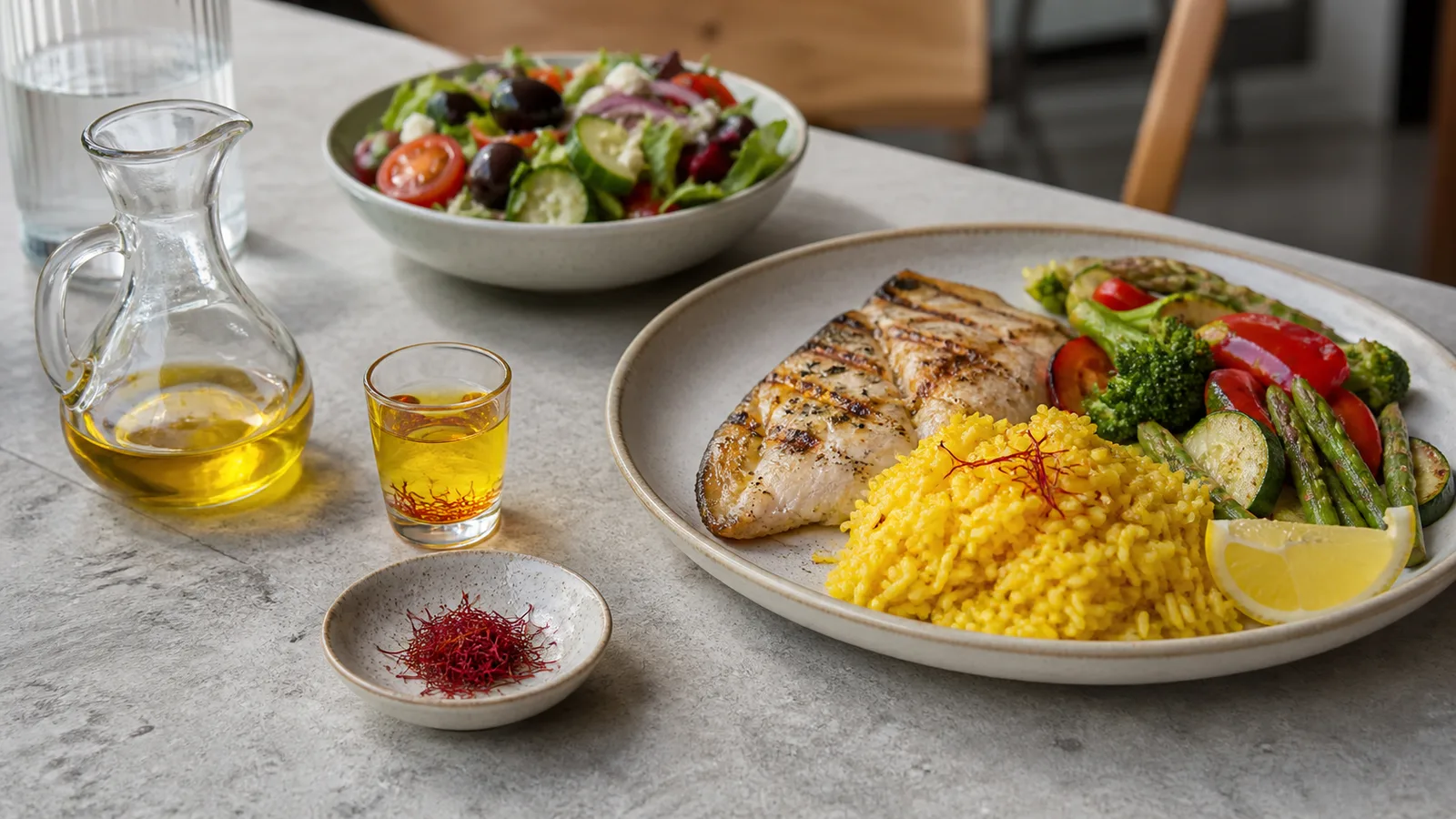
Use a modest pinch as seasoning. Bloom the threads in warm water and stir the infusion into vegetables, beans, fish, chicken, soup or a whole-grain dish. Saffron’s strong aroma can help a simple meal feel complete without relying on extra salt. Our cooking guide explains the blooming method.
Tea can be served unsweetened. Saffron syrup, sweetened beverages and desserts remain sources of added sugar, and honey is an added sugar too—not a natural cholesterol remedy. The American Heart Association’s diet guidance emphasizes the overall pattern: vegetables and fruit, whole grains, healthy proteins, unsaturated fats, less sodium, less saturated fat and minimal added sugar.
The evidence-based conclusion
Understanding the impact of saffron on heart health means keeping scale in view. Supplements have produced small average changes in some blood-pressure and cholesterol measures, with inconsistent results across outcomes. They have not proved protection from heart attack, stroke, plaque or arrhythmia.
Saffron benefits the plate most reliably: it gives ordinary heart-conscious food a distinctive aroma and colour. Use it for that, measure cardiovascular risks directly, and let proven treatment—not a supplement claim—carry the medical work.