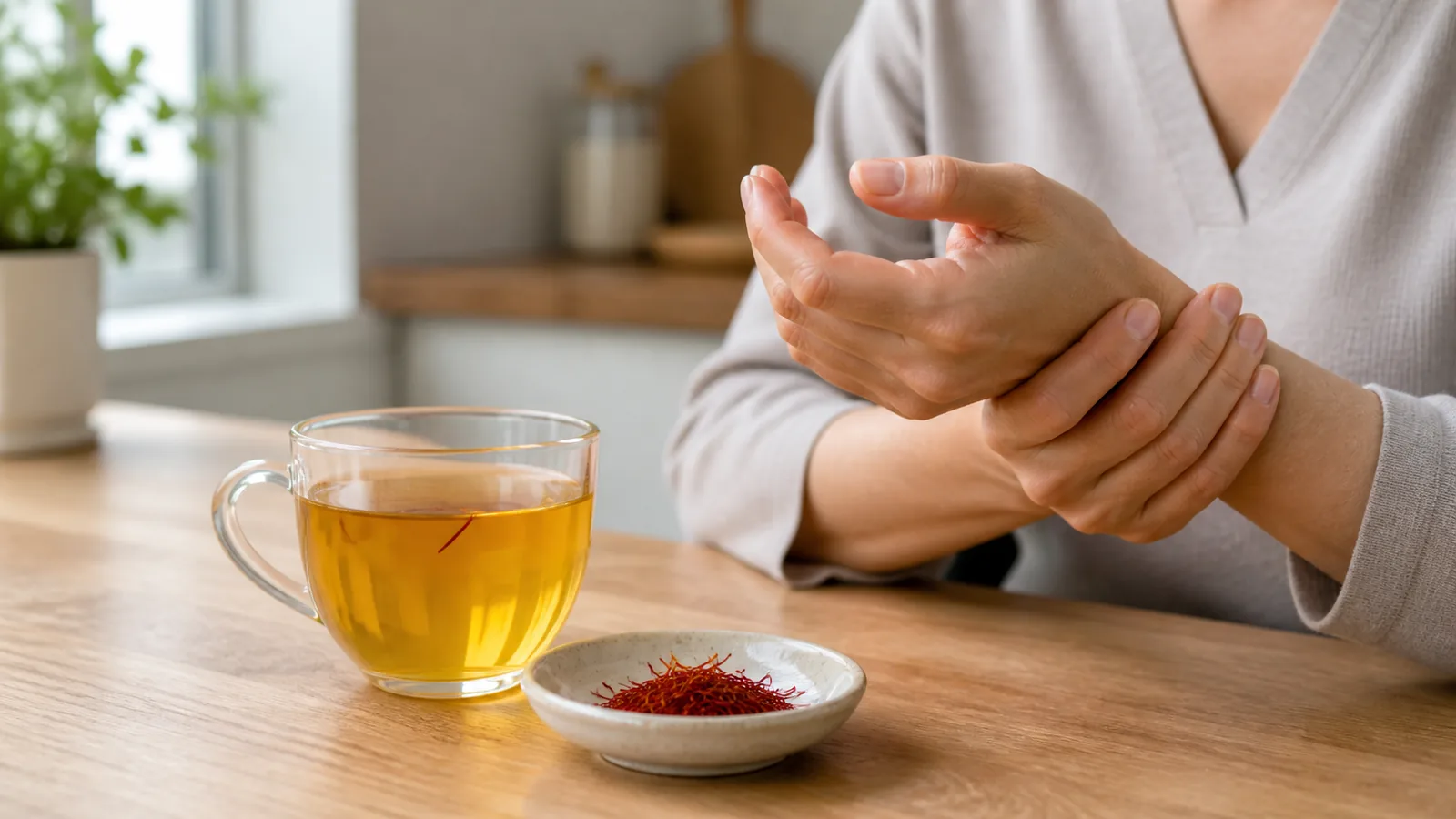
Pregnant women should not use saffron supplements, extracts or medicinal amounts without guidance from their maternity clinician. A few saffron threads already present in a normal meal are a very different exposure from a capsule, concentrated drink or large amount of spice. Even so, pregnancy-specific safety data are too limited to set one universal “safe” amount, especially in the first trimester.
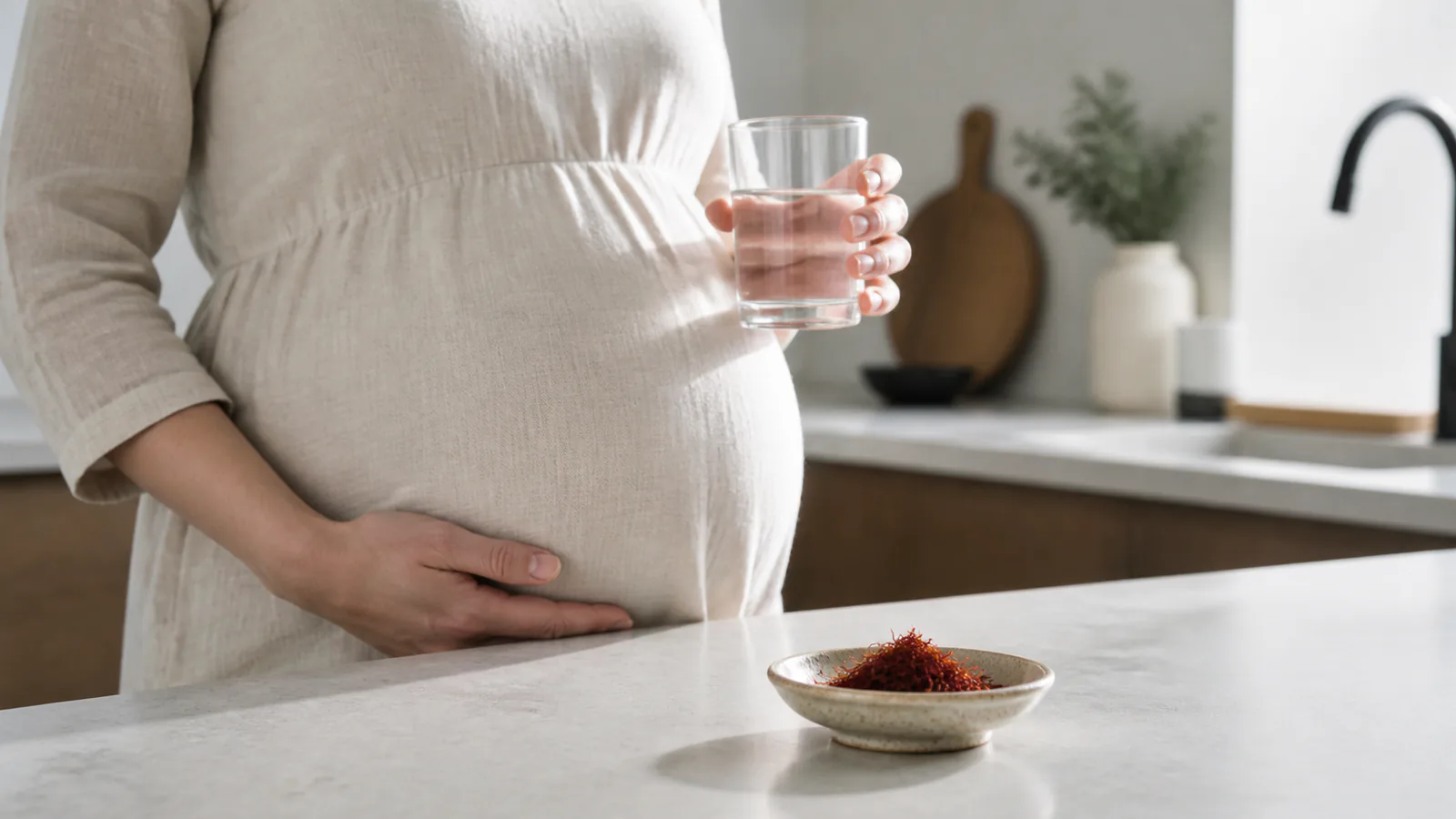
If you have already eaten a food containing saffron, do not panic. Note what you consumed and speak with your midwife, obstetrician, pharmacist or poison service if the amount was more than ordinary food use or if you are unsure. Vaginal bleeding, strong or persistent cramps, fainting, severe vomiting, breathing difficulty or a marked allergic reaction needs prompt medical assessment.
Can saffron cause miscarriage?
Large or medicinal exposures have long been associated with uterine stimulation and bleeding, and animal research raises developmental-safety concerns at high experimental doses. Occupational studies of people who handle substantial amounts of saffron have also prompted concern about miscarriage risk.
That evidence supports caution; it does not tell us that a small culinary amount causes miscarriage. A 2026 integrative review of saffron and pregnancy found that the human safety evidence remains limited and inconclusive. It reported a possible association between higher exposure or occupational contact and uterine stimulation or miscarriage, while emphasizing the need for standardized products and better long-term data.
Miscarriage is common and usually cannot be attributed to one food without evidence. Anyone with bleeding or pain in pregnancy should be assessed rather than assuming saffron is—or is not—the cause.
Why the first trimester deserves extra caution
The first trimester is a period of major fetal development, and most saffron trials were not designed to establish safety during early pregnancy. Supplements can also vary in identity, purity and concentration. A label that says “natural” does not provide pregnancy-safety data.
Avoid self-treating nausea, mood symptoms, pain or sleep problems with saffron. A maternity clinician can suggest options with evidence appropriate to the stage of pregnancy and check whether another condition needs attention.
Food use and medicinal use are not the same
These exposures should not be collapsed into one rule:
- Culinary use: a small number of threads dispersed through a dish shared by several people.
- Concentrated drink: an unknown or measured quantity steeped for deliberate consumption.
- Supplement or extract: a manufactured product that may concentrate selected compounds.
- Large raw amount: direct ingestion far beyond normal seasoning.
Research on one form cannot establish safety for all the others. Product adulteration and inaccurate labels add more uncertainty, particularly with powders and unverified supplements.
What term-pregnancy studies do—and do not—show
Small clinical studies have deliberately tested saffron near the end of pregnancy. For example, a placebo-controlled trial in 50 women at 39–41 weeks examined whether saffron affected cervical readiness for labour.
That study cannot be applied to the first or second trimester. It involved carefully selected participants already at term, under research supervision, for a purpose connected with labour. It is not evidence that pregnant people should take saffron at home or that a tested amount is safe earlier in pregnancy.
Saffron side effects during pregnancy
Possible adverse effects reported in saffron studies include nausea, vomiting, diarrhoea, dizziness, drowsiness, headache, appetite changes and lower blood pressure. Very large exposures have been associated with unusual bleeding and yellow discolouration of the skin or eyes.
A 2026 systematic review of human adverse events found that saffron preparations were generally tolerated in clinical trials, with digestive symptoms most often reported. Those trials mostly did not study early pregnancy, so their average safety result cannot fill that evidence gap.
What to do if you used saffron while pregnant
- Stop any saffron supplement or concentrated preparation until you receive advice.
- Keep the package and ingredient list; photograph them if needed.
- Write down the form, approximate amount, time, symptoms and any medicines taken.
- Contact your maternity team, pharmacist or local poison centre for product-specific guidance.
- Seek urgent care for heavy bleeding, severe pain, fainting, trouble breathing or collapse.
Do not induce vomiting or try another herb to counteract the exposure. For a detailed toxicity overview, see the effects of a saffron overdose.
Common myths about saffron in pregnancy
Saffron does not determine a baby’s complexion
Claims that saffron changes a baby’s skin tone are cultural beliefs, not biological evidence. Skin colour is largely shaped by genetics and cannot be safely altered by eating a spice.
Iranian saffron is not automatically safer
The old version of this article claimed that Iranian saffron contains less safranal and is therefore less toxic than saffron from elsewhere. We found no reliable evidence for that blanket conclusion. Composition varies with cultivar, processing, storage and testing; origin alone does not make an unmeasured dose safe in pregnancy.
“Used traditionally” is not a safety test
Traditional practice can identify questions worth studying, but it cannot reveal uncommon fetal effects or establish a safe amount. Pregnancy decisions need evidence for the exact product, exposure and stage of pregnancy.
The practical conclusion
Pregnant women should avoid self-prescribed saffron supplements and medicinal amounts. Normal food exposure is not equivalent to a high dose, so accidental consumption in a meal is not a reason to assume harm. When the amount is concentrated, large or uncertain—or symptoms occur—get individualized advice promptly.