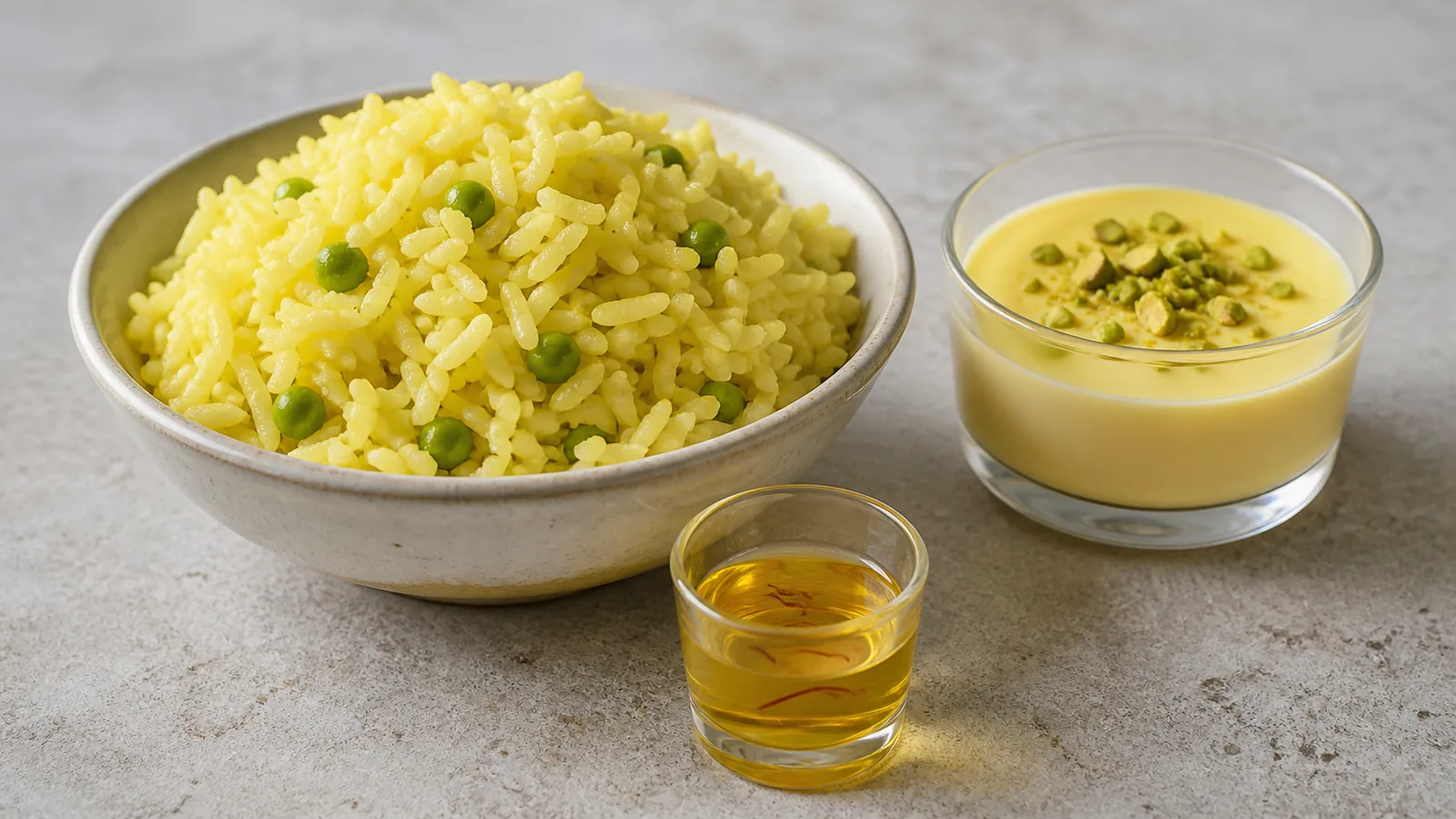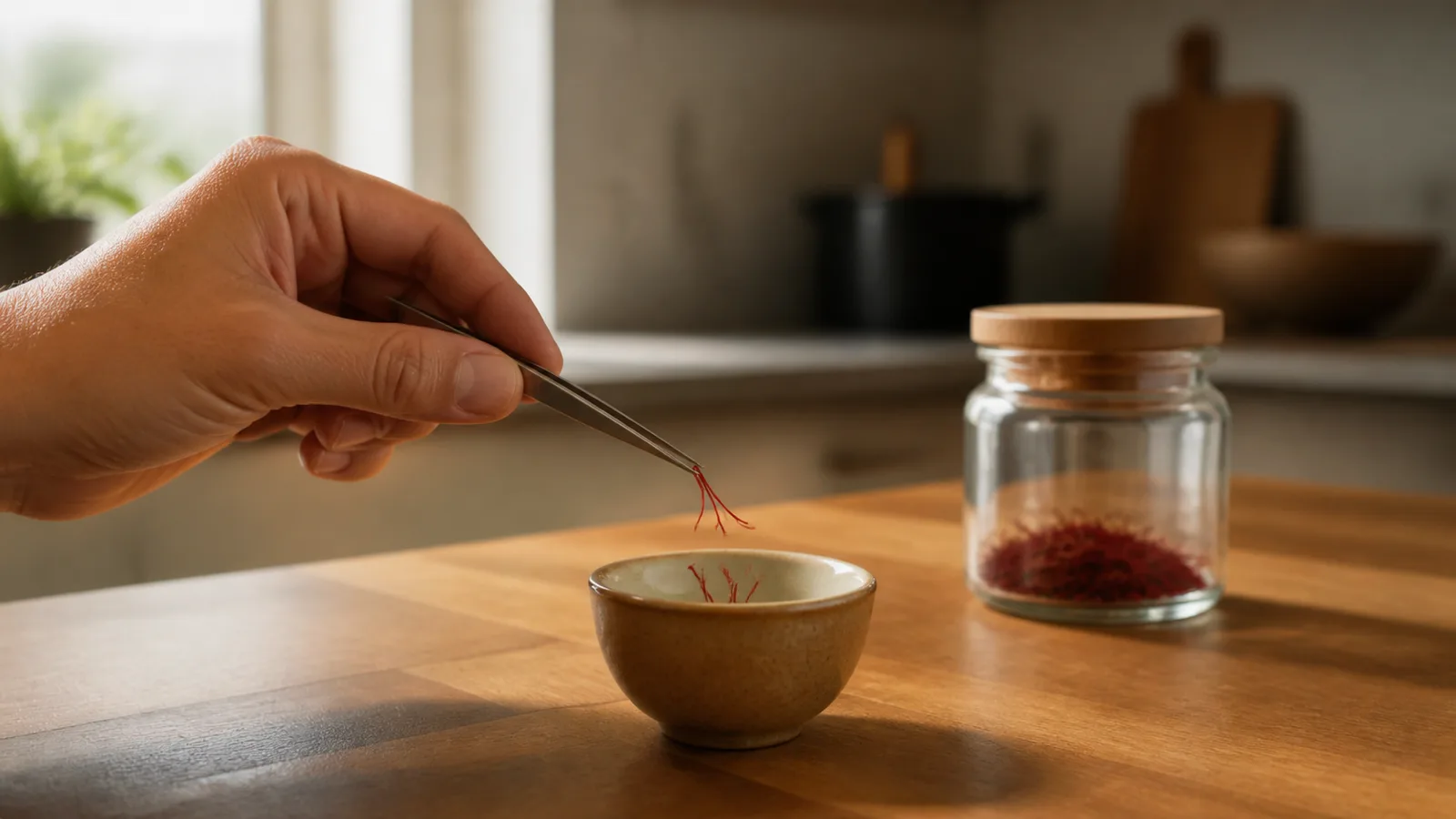
The possible bad effects of saffron include nausea, vomiting, diarrhoea, headache, dizziness and allergic reactions. These risks of saffron use depend heavily on the amount and form: a few threads used in food are not the same exposure as a strong infusion, extract or supplement.
Most people use saffron as a spice without a problem. Trouble is more likely when someone takes a concentrated product, uses more than directed, combines it with medicines without advice, or has an individual sensitivity. “Natural” and “premium” do not mean side-effect-free.
Does saffron have side effects?
It can. Human studies and case reports do not show that every symptom will occur, nor do they establish one universal dose at which a reaction begins. Product strength, frequency, other ingredients and the person’s health all matter.
A 2026 systematic review of adverse events reported in human saffron studies examined monopreparations including stigma powder and extracts. That kind of evidence is more useful than treating a culinary recipe, a capsule and a concentrated tea as interchangeable.
Digestive effects
Can saffron cause diarrhoea? Digestive reactions reported with larger or concentrated use include nausea, vomiting, stomach discomfort and diarrhoea. So the related question “can saffron give you diarrhoea?” has a qualified answer: it is possible, but a symptom alone does not prove saffron caused it.
Stop the product if symptoms begin after taking it. Persistent vomiting or diarrhoea can cause dehydration, and severe pain, blood, faintness or worsening symptoms need prompt medical advice. Do not try to “balance” a reaction by taking another supplement.
Saffron allergy symptoms
Can you be allergic to saffron? Yes. A saffron allergy may involve itching, hives, rash or swelling. Wheezing, difficulty breathing, throat or tongue swelling, faintness or rapidly worsening symptoms can signal a serious allergic reaction and require emergency care.
If you have had an allergic reaction to saffron, do not test yourself with another serving. Stop using it and seek professional assessment. Being allergic to saffron is different from finding a strong cup bitter or developing indigestion after a large amount.
Headache, dizziness and changes in how you feel
Headache and dizziness are among the complaints discussed around concentrated saffron use. They are nonspecific symptoms with many possible causes. Sit or lie down if you feel faint, avoid driving, and seek advice if the symptom is severe, recurrent or accompanied by breathing difficulty, confusion, chest pain or collapse.
Pregnancy and breastfeeding
Pregnant people should not experiment with concentrated saffron drinks, extracts or supplements. A 2026 review of saffron use in pregnancy describes limited and inconclusive safety evidence and dose-related concerns; it does not support a universal do-it-yourself dose. Culinary seasoning is a different context, but personal advice should come from a midwife, pharmacist or doctor.
Evidence for concentrated use while breastfeeding is also insufficient for casual certainty. Ask a qualified professional before going beyond food quantities.
Medicines, medical conditions and surgery
Anyone taking anticoagulants, medicines that affect blood pressure or mood, or treatment with a narrow safety margin should show the exact saffron product to a pharmacist or prescriber before regular concentrated use. The same caution applies to people with a bleeding disorder, unstable blood pressure or a planned operation.
This does not prove that a few culinary threads interact with every medicine. It recognises that extracts and supplement doses may be substantially different from food and that interaction evidence is incomplete. The US Food and Drug Administration advises discussing supplements with a healthcare professional because they can interact with medicines, affect tests or create problems around surgery.
What saffron overdose symptoms mean
There is no safe way to diagnose a saffron overdose from an online checklist. The product may contain other ingredients, the amount may be uncertain and early symptoms can resemble many conditions. If someone has swallowed a large or unknown amount, taken an extract incorrectly, or has severe symptoms, contact your local poison service or emergency medical service now. Do not wait for every possible symptom to appear and do not induce vomiting unless a professional tells you to.
Keep the package or product available so responders can see the ingredient list and stated strength. In the United States, Poison Control provides 24-hour guidance online and by phone at 1-800-222-1222; elsewhere, use the local poison-information service.
Reducing saffron health risks
- Use saffron as a flavouring in small, measured culinary amounts.
- Do not convert a research dose into threads, teaspoons or homemade extract.
- Follow the label for any supplement and never exceed it to chase a faster effect.
- Tell your clinician or pharmacist about all supplements and herbal products.
- Introduce only one new product at a time, so a reaction is easier to identify.
- Stop after an adverse reaction and seek advice suited to its severity.
Authentic whole threads make identity and culinary measurement easier, but quality does not cancel allergy, dose or interaction risk. The Rowhani Saffron products page lists whole-thread formats for cooking; it is not a substitute for medical advice about concentrated use.