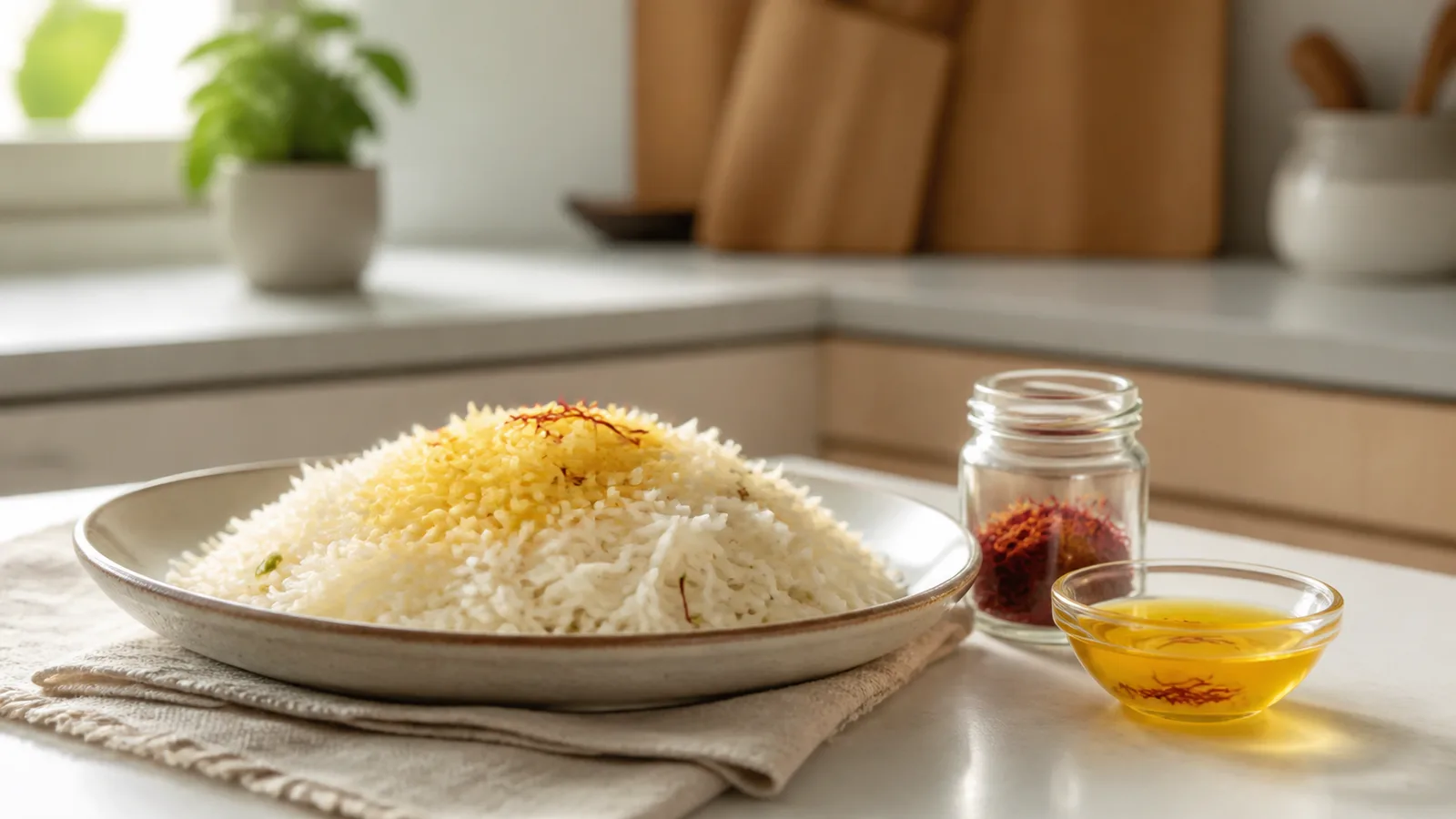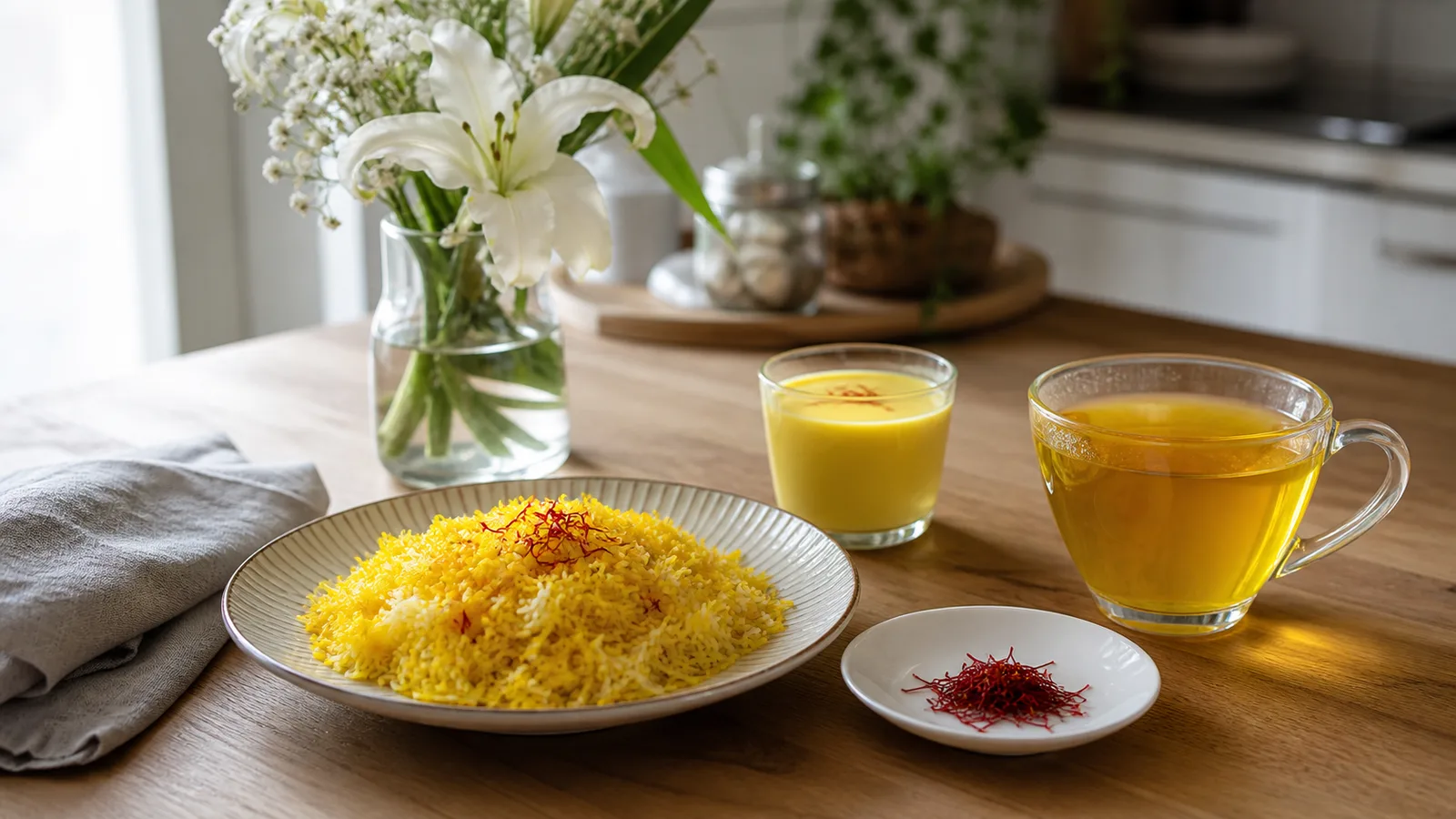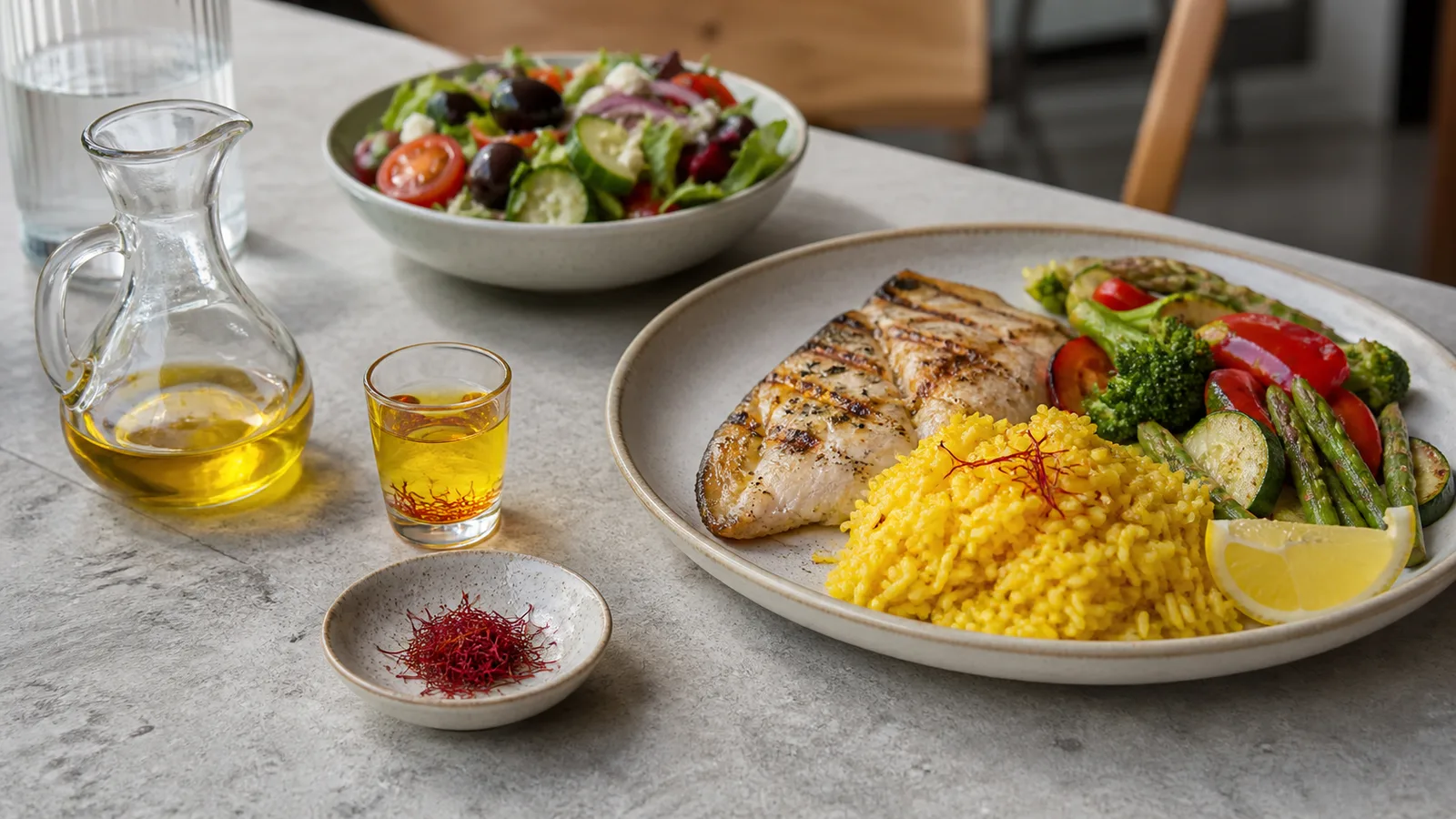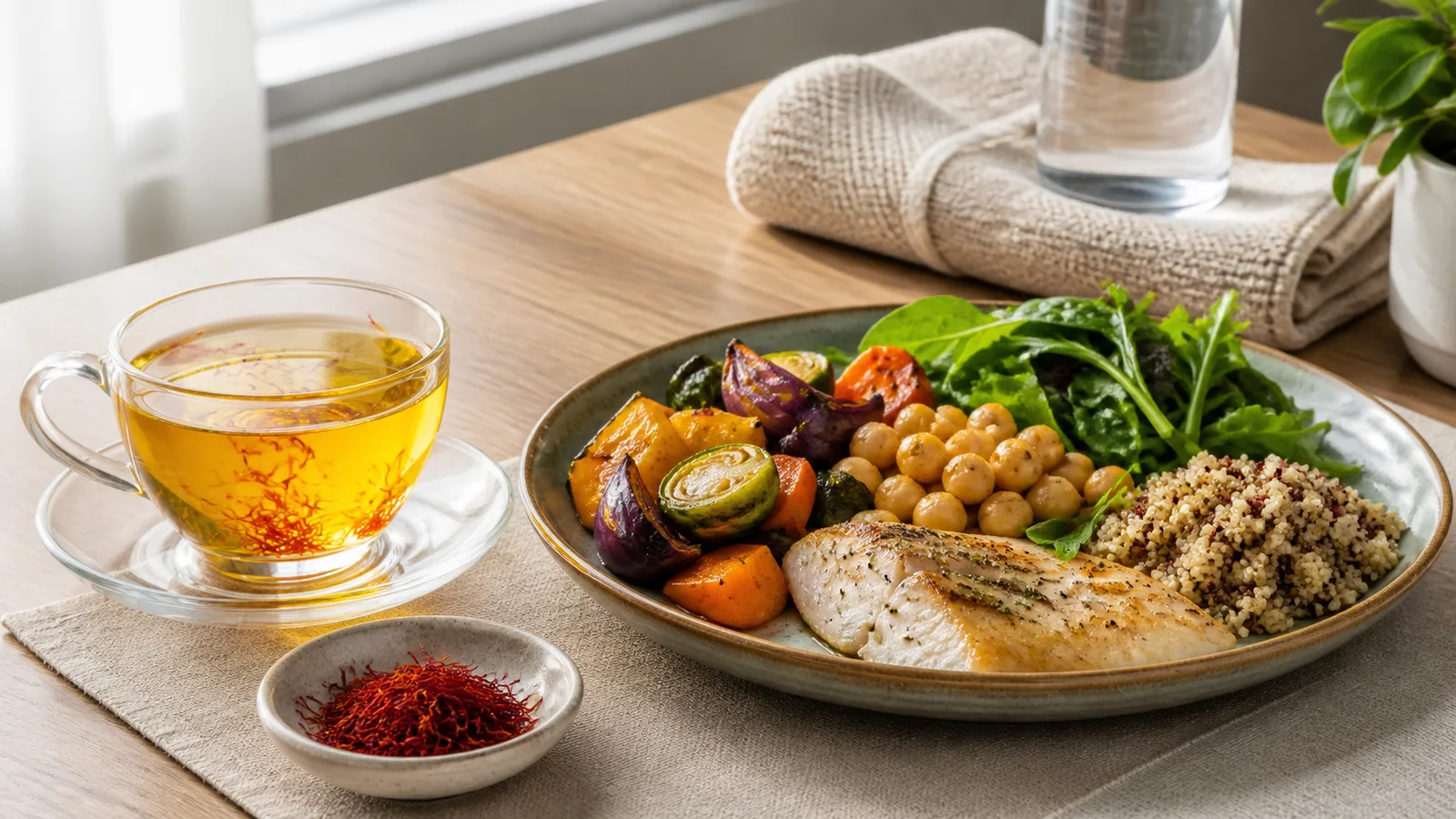
Saffron is not a proven stand-alone weight-loss treatment. Trials of measured saffron preparations have explored appetite, snacking, waist size, and body weight, but results are mixed and do not support promises of rapid slimming. A 2019 meta-analysis of randomized trials found no significant effect on body weight.
That does not make saffron useless in a weight-management plan. Its strong aroma and color can make unsweetened tea, vegetables, grains, fish, or a modest serving of milk more satisfying. The benefit comes from how it fits into a realistic eating pattern, not from melting fat or speeding metabolism.
Can saffron help you lose weight?
When people search for saffron for weight loss, they often encounter three claims: that it suppresses appetite, boosts metabolism, or blocks dietary fat. None is established strongly enough to promise weight loss from culinary saffron.
Small trials have tested standardized extracts for appetite and snacking. Some reported favorable changes, but those products had measured formulations and were studied under controlled conditions. They are not equivalent to a pinch of saffron in tea, and a change in reported snacking does not automatically produce meaningful or lasting weight loss.
Evidence is especially weak for claims that saffron prevents fat digestion, burns stored fat, or raises daily energy expenditure. It should not be described as a metabolism booster.
Saffron and appetite suppression
Emotional stress can influence eating for some people, and saffron has also been studied in relation to mood. However, it is too simple to say that saffron increases serotonin and therefore stops emotional eating. Appetite and body weight are shaped by sleep, stress, medications, health conditions, food environment, and many biological and social factors.
Is saffron an appetite suppressant? The careful answer is that preliminary supplement research exists, but culinary saffron has not been shown to reliably curb appetite. If tea helps replace a sugar-heavy drink or creates a pause before a meal, that can be useful as a habit. It is not proof of a drug-like appetite effect.
What research says about saffron weight loss
A systematic review and meta-analysis of 14 randomized trials evaluated saffron in relation to weight and blood lipids. It reported small changes in some lipid measurements but no significant effect on body weight. The authors called for larger, better trials before firm recommendations could be made.
A broader evidence-mapping review later found some potentially favorable outcomes across saffron research, including waist circumference in pooled analyses, while also identifying weaknesses in the quality of existing reviews. These findings do not justify a claim that someone can lose up to 2 kilograms in a week from saffron; that statement in the previous article was unsupported and has been removed.
Most research also uses extracts or powders in measured amounts. Results from those studies should not be transferred directly to saffron tea, saffron water, or saffron milk.
How to use saffron for weight loss goals
The safest practical approach is to treat saffron as a flavoring within an eating plan you can maintain. It can add interest without much energy of its own, but the ingredients served with it still determine the meal’s calories and nutritional balance.
Saffron tea for weight loss
For a simple unsweetened drink, gently crush 6 to 10 threads, add 240 ml (1 cup) of hot water, cover, and steep for 8 to 10 minutes. Lemon or mint can add flavor. Honey and sugar add calories, so include them deliberately rather than assuming a “natural” sweetener is free.
There is no evidence-based rule that saffron tea must be taken 20 minutes before a meal. Drink it when it suits you. It can replace a sweetened beverage, but it does not guarantee lower hunger at the next meal.
Saffron water for weight loss
Saffron water is simply a lighter infusion. Bloom a small pinch in a little warm water, then dilute it to taste. It does not detoxify the body or burn fat. Its practical value is hydration and flavor without the added sugar found in many soft drinks.
Saffron milk
Milk can be filling because it supplies protein, but it is not automatically a low-calorie drink. Choose a portion and milk type that fit your overall diet, and account for honey, sugar, nuts, or syrups. Our saffron milk recipe explains how to infuse it without excessive heat.
Saffron in meals
Use a bloomed pinch to season vegetables, beans, lentils, whole grains, fish, chicken, soups, or stews. Saffron makes a dish aromatic; it does not cancel the energy in oil, butter, cream, refined grains, or large portions.
How to eat saffron for weight loss
There is no special food combination required. Saffron, rose water, and honey is a traditional mixture, but evidence does not show that it suppresses hunger, and honey contributes added sugar. The same applies to “kesar for weight loss” recipes: the regional name changes, but the evidence does not.
A more dependable plate centers vegetables, whole fruit, whole grains, and a suitable protein source. Physical activity helps with energy use and maintaining weight loss. Sleep, medication review, and support for stress or emotional eating may also matter.
What about saffron extract to lose weight?
A supplement is not simply stronger tea. Extracts vary in composition, concentration, testing, and purity. A dose used in one clinical trial cannot be assumed effective for another product, and there is no universally established saffron dosage for weight loss.
Be cautious with any capsule, powder, tea, or blend that promises fast fat loss, dramatic appetite suppression, or results without changes to diet and activity. The FDA warns that some products marketed for weight loss contain hidden drug ingredients. “Natural” on the front of a package is not proof of safety or effectiveness.
Ask a physician or pharmacist before taking an extract if you use prescription medicine, are pregnant or breastfeeding, have low blood pressure or a bleeding condition, or are preparing for surgery. Stop and seek advice if you develop an adverse reaction.
Can saffron cause weight gain?
Saffron itself contributes very little energy in normal culinary amounts and is unlikely to cause weight gain. The recipe around it can. Sweetened saffron milk, desserts, syrups, and large servings of saffron rice may be energy-dense even though saffron is one ingredient.
Body weight also fluctuates from water, digestion, hormones, and other factors. A short-term scale change after one meal is not evidence that saffron caused fat gain or loss.
A realistic weight-management plan
- Choose an eating pattern that is nutritionally balanced and sustainable.
- Use saffron to add aroma and color, especially when it helps replace a heavily sweetened drink or sauce.
- Build regular physical activity gradually and appropriately for your health.
- Track trends over time instead of expecting daily scale changes to move in one direction.
- Ask a qualified healthcare professional for help with rapid weight change, binge eating, medication-related gain, or a condition affecting weight.
Saffron and weight loss can fit in the same routine, but the relationship should stay honest. Enjoy the spice for flavor. Base slimming or weight-management decisions on a sustainable calorie-aware diet, activity, sleep, and professional care when needed—not on promises of a quick result from tea or extract.