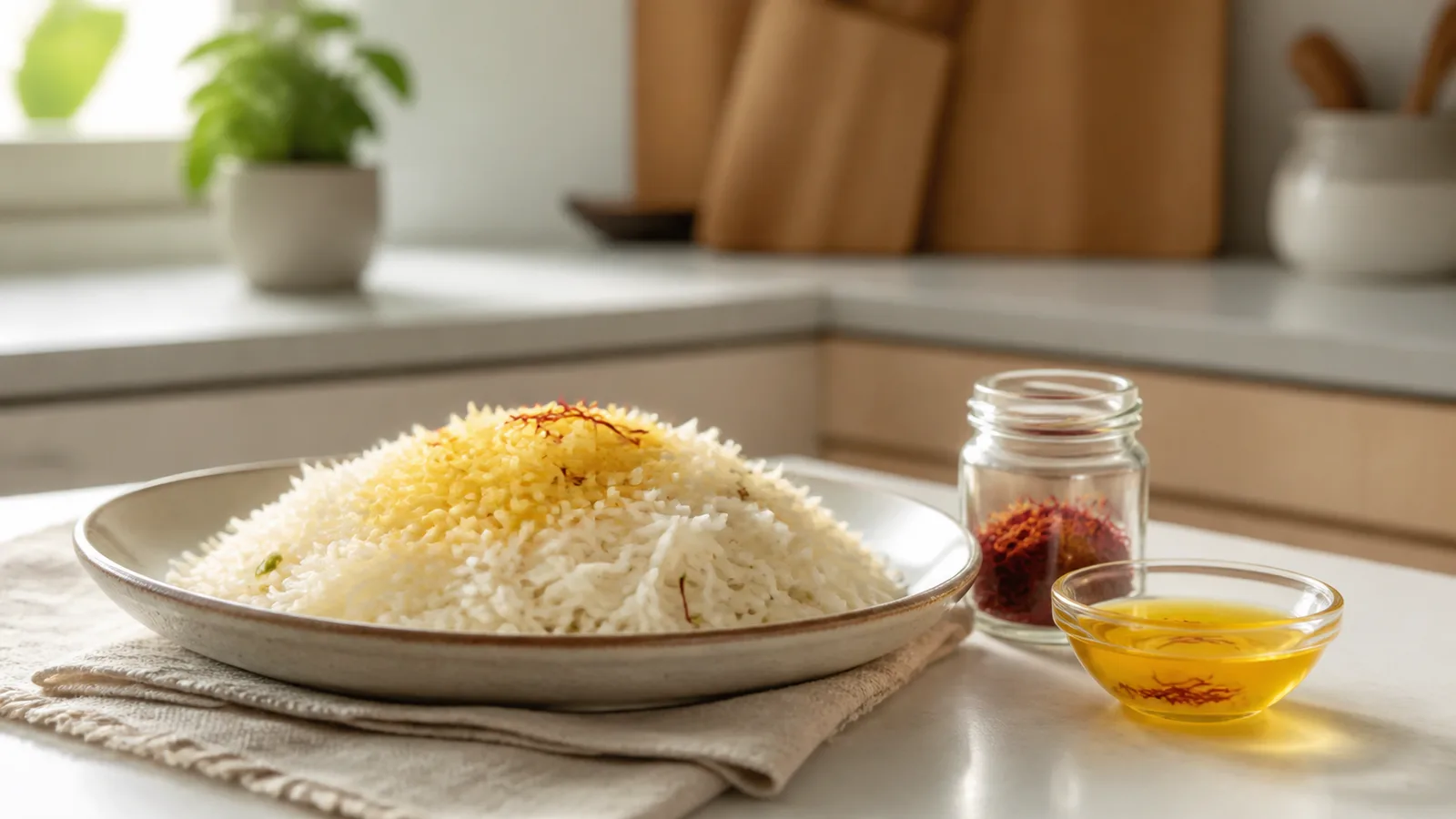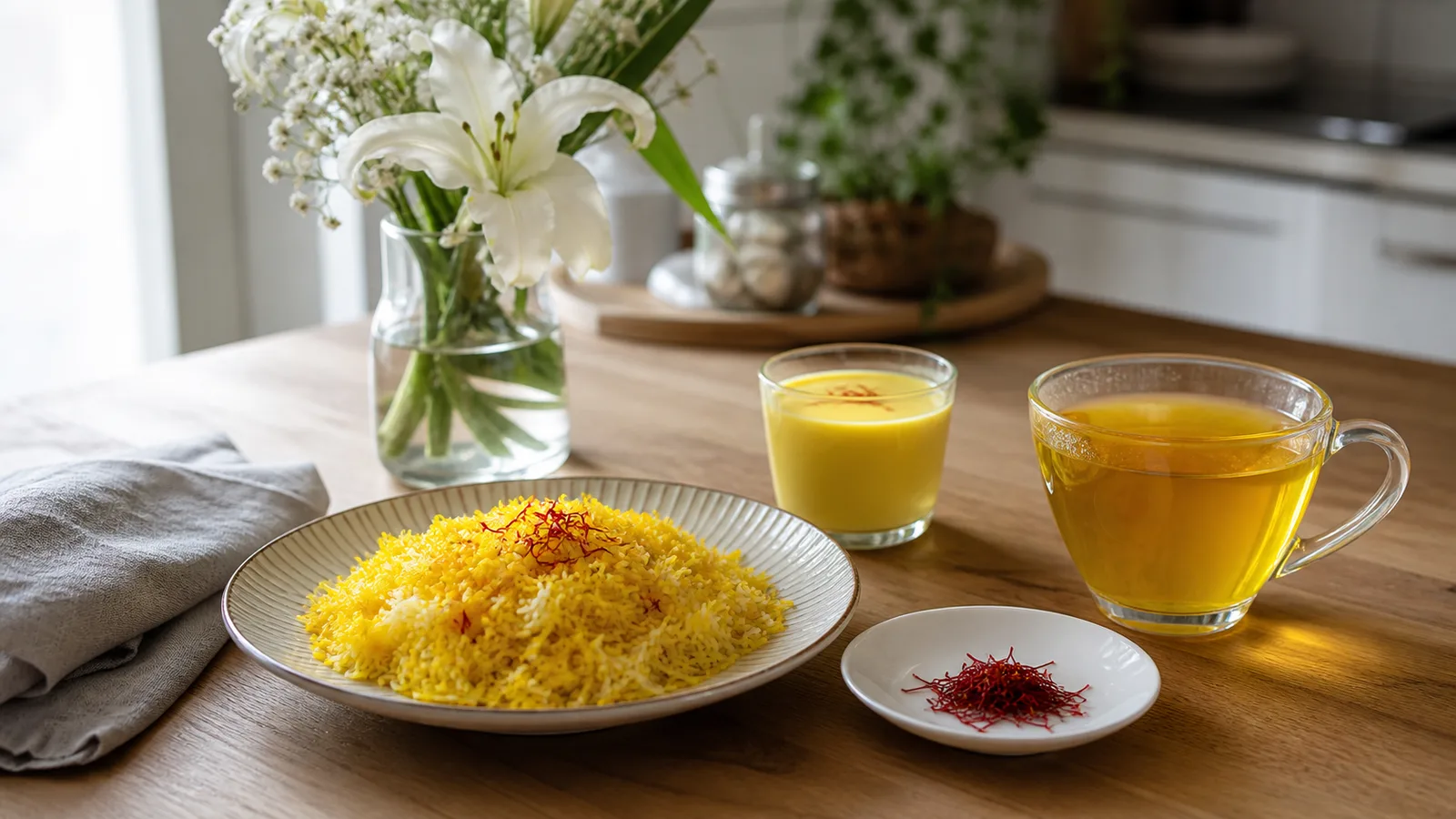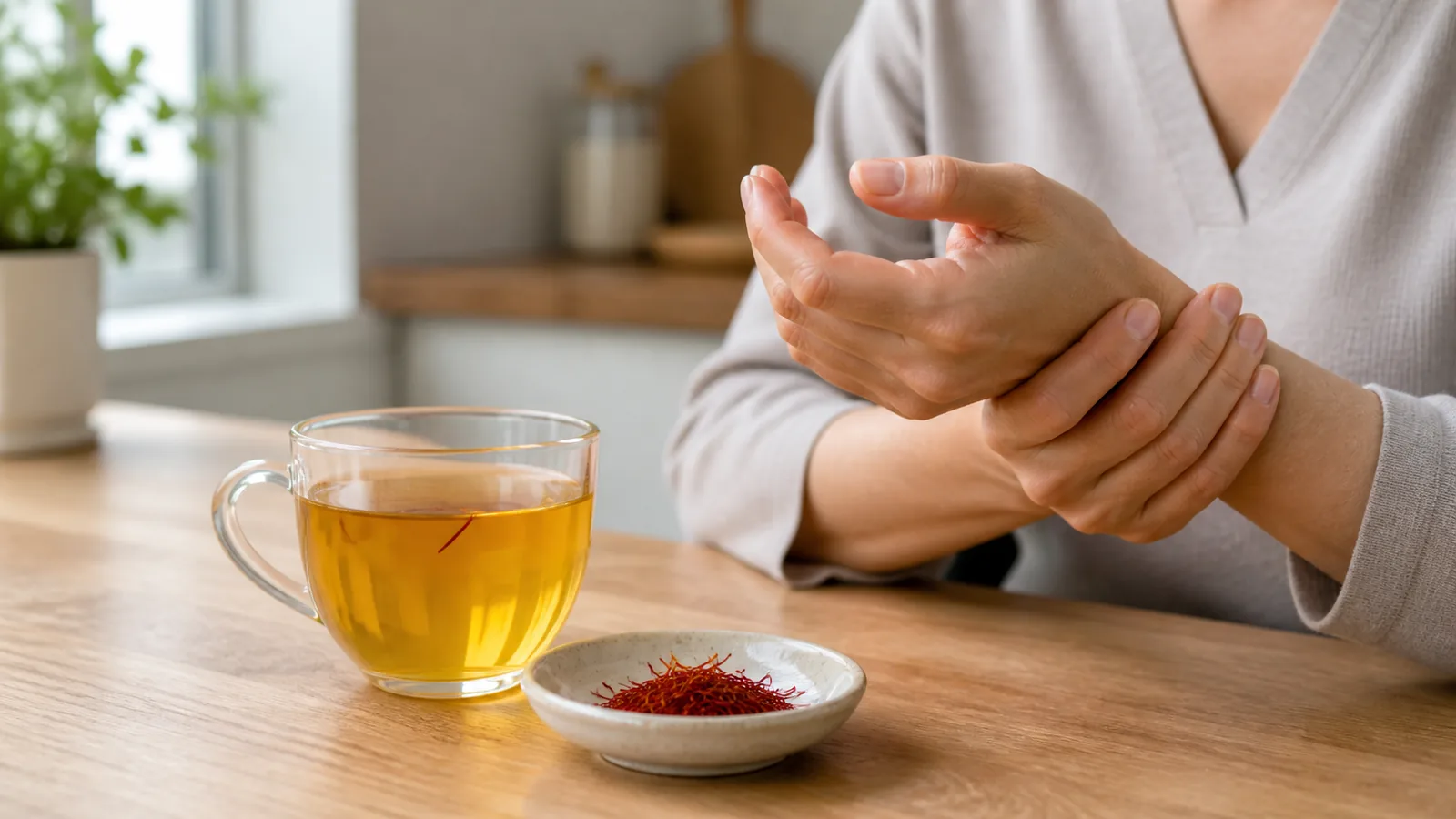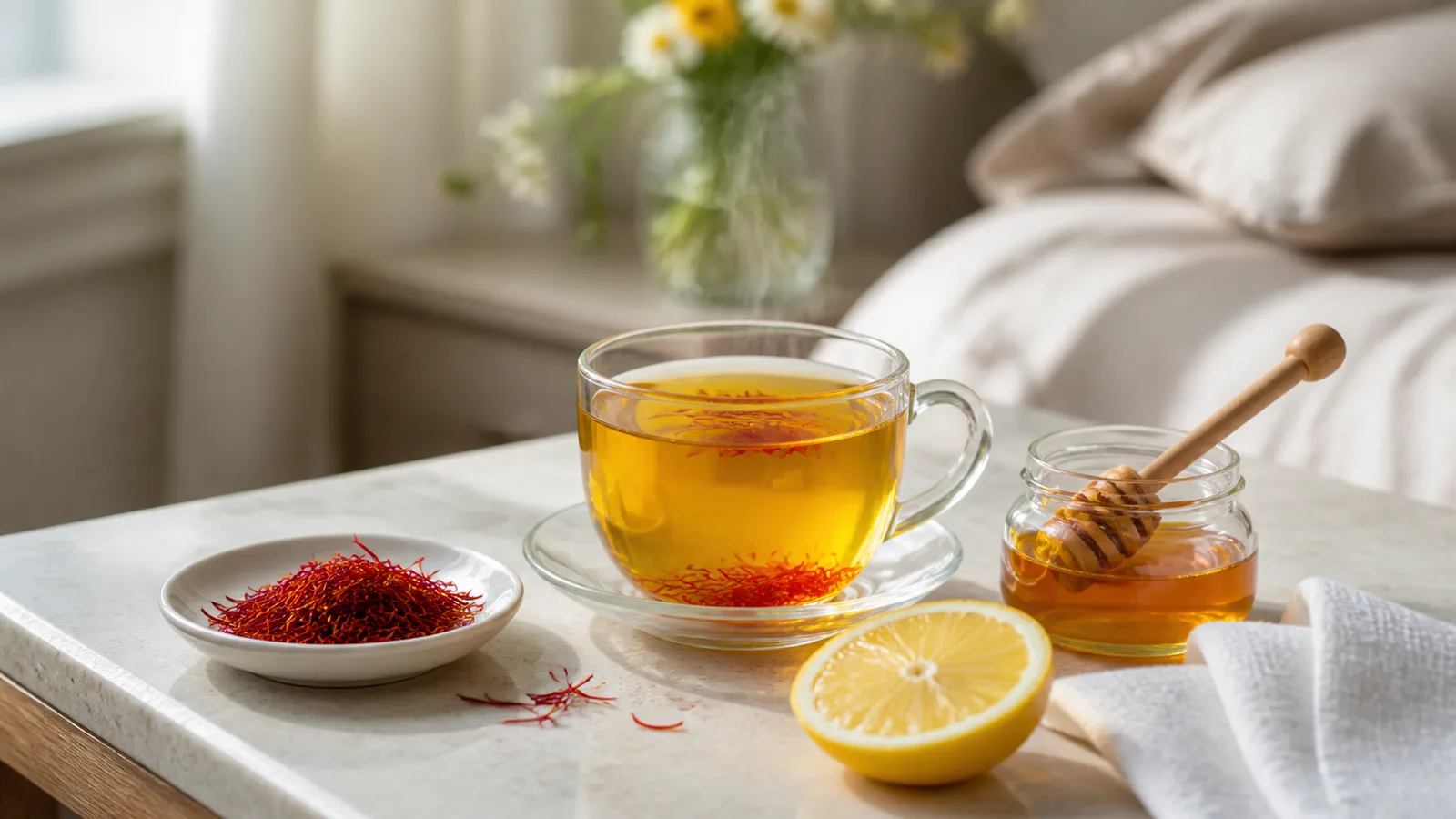
Saffron has not been shown to cure a cold, lower a fever, or stop a cough. A lightly infused saffron tea or saffron milk can still be a pleasant warm drink while you recover. The useful parts are comfort and hydration; honey may soothe a cough in adults and children over one year old.
That distinction matters. Laboratory research on saffron compounds does not prove that a few threads “boost immunity” or make a respiratory infection end sooner. Use saffron as food, follow evidence-based symptom care, and do not let a drink delay testing or medical treatment when it is needed.
Is saffron good for cold and cough?
There is no reliable human clinical evidence that saffron treats the common cold or flu. A cold is a viral upper-respiratory infection that usually improves on its own. Cough, congestion, sore throat, mild body aches, and sometimes a low-grade fever can all occur.
People asking whether saffron is good for cold and cough may be looking for one of two things: a cure or a soothing drink. It is not a cure. As a drink, saffron adds aroma and color to warm water, milk, broth, or soup. Warm liquid can feel comfortable, and staying hydrated is sensible during an illness.
Antioxidant and anti-inflammatory activity seen in laboratory studies should not be translated into claims that saffron clears viruses, reduces airway inflammation, eliminates free radicals during an infection, or strengthens immune defenses in a clinically meaningful way. Those outcomes have not been established for saffron tea or culinary saffron.
Does saffron help a fever?
No good evidence shows that saffron naturally lowers fever. “Saffron fever” searches sometimes lead to traditional-remedy claims, but fever relief should not be promised on that basis. Rest and fluids can support comfort. Ask a clinician or pharmacist whether an over-the-counter fever reducer is appropriate for you, and use it exactly as directed.
A high temperature can occur with flu, COVID-19, or another infection rather than an ordinary cold. If you are at higher risk of serious illness and develop respiratory symptoms, contact a healthcare professional promptly. Prescription antiviral treatment for flu or COVID-19 works best when started early for eligible patients.
Is saffron good for cough or a sore throat?
Saffron itself is not a proven cough suppressant or sore-throat treatment. The warmth of a drink may feel soothing. Honey can relieve cough for adults and children aged at least one year, according to the CDC; never give honey to a baby younger than 12 months.
Using saffron for cough is therefore a matter of flavor and comfort, not treatment. If you are asking “is saffron good for sore throat?”, the same limit applies: a warm infusion may feel pleasant, but saffron has not been shown to heal the cause.
Lemon can add flavor and may encourage someone to drink, but neither lemon nor saffron cures the infection. Skip lemon if acid irritates your throat or causes reflux. A persistent, worsening, or unusually severe sore throat needs appropriate assessment rather than repeated home remedies.
How to make saffron tea during a cold
- Gently crush 6 to 10 genuine saffron threads.
- Put them in a mug and add about 240 ml (1 cup) of hot water.
- Cover and steep for 8 to 10 minutes.
- Add a little honey after the drink has cooled enough to sip, if suitable for you.
- Add lemon only if you enjoy it and it does not irritate your throat.
This is a culinary serving, not a medical dose. More saffron will not make the drink a stronger cold remedy; it is more likely to taste bitter and add avoidable exposure.
Saffron milk for cough
Saffron milk for cough is another comfort drink, not a cough medicine. Bloom a small pinch of threads in a tablespoon of warm water, stir it into a cup of gently heated milk, and sweeten lightly if desired. Our complete saffron milk recipe explains the method and dairy-free alternatives.
Milk does not create extra mucus, although its texture can temporarily make saliva and mucus feel thicker. Choose water or tea if milk feels unpleasant, and avoid dairy when you have an allergy. Honey should still be excluded for babies under one year.
Other ways to use saffron while recovering
- Soup or broth: bloom a few threads and stir the liquid in near the end for aroma and color.
- Warm stew: add a modest infusion as a flavoring, not as a treatment.
- Honey mixture: use honey only as a throat-soothing food for someone over one year old; saffron does not make it antiviral.
Rest, fluids, a clean humidifier or cool-mist vaporizer, saline nasal spray, and suitable lozenges are among the practical measures the CDC lists for symptom comfort. Antibiotics do not work against viruses and should not be used for a cold unless a clinician diagnoses a bacterial infection that needs them.
Is saffron hot or cold in nature?
In some Persian and South Asian traditional frameworks, saffron—or kesar—is described as “hot” in nature and a cold illness as “cold,” particularly in remedies discussed during winter. These are traditional classifications, not measurements of body temperature and not evidence that saffron treats a viral infection.
So, when someone asks “is saffron hot or cold?” or “is kesar hot or cold?”, the cultural answer is usually “hot.” The biomedical answer is that this label does not establish an effect on fever, immunity, congestion, flu, or cough. Traditional use can be discussed respectfully without turning it into a clinical promise.
Cold, flu, and COVID-19 are not interchangeable
Cold-like symptoms can come from several respiratory viruses. Flu often starts more abruptly and may cause stronger fever, aches, and fatigue, but symptoms alone do not always identify the infection. Testing can matter, especially for someone at higher risk, because approved antiviral medicines for flu and COVID-19 need to be started soon after symptoms begin.
Saffron tea, saffron milk, honey, and lemon do not replace an antiviral prescription, vaccination, or clinical advice. They also do not prevent transmission. Follow current local public-health guidance when you are ill.
When to seek medical care
Seek urgent care for trouble breathing, fast breathing, persistent chest pain or pressure, confusion, severe weakness, blue or pale lips, or signs of dehydration. For a young infant, fever requires prompt professional advice.
Contact a healthcare professional if fever lasts longer than four days, symptoms last more than ten days without improvement, a fever or cough improves and then returns or worsens, or a chronic condition becomes worse. People who are pregnant, immunocompromised, older, very young, or living with certain heart, lung, kidney, or metabolic conditions should ask early about testing and treatment.
Saffron safety during illness
Normal culinary amounts are different from extracts, capsules, or intentionally high doses. Do not combine several saffron products on the assumption that natural means risk-free. Concentrated use can cause adverse effects and may interact with medicines or be unsuitable in pregnancy.
Ask a clinician before using more than food amounts if you are pregnant or breastfeeding, take prescription medicine, have a bleeding disorder or low blood pressure, or are treating a child. Stop using it and seek help if you develop signs of an allergic reaction. Saffron should never be used to bring on labor or replace care for fever or breathing symptoms.
The balanced answer is simple: saffron can make tea, milk, soup, or stew more enjoyable during a cold, but the evidence does not support calling it a cure, fever reducer, immune booster, or respiratory treatment.