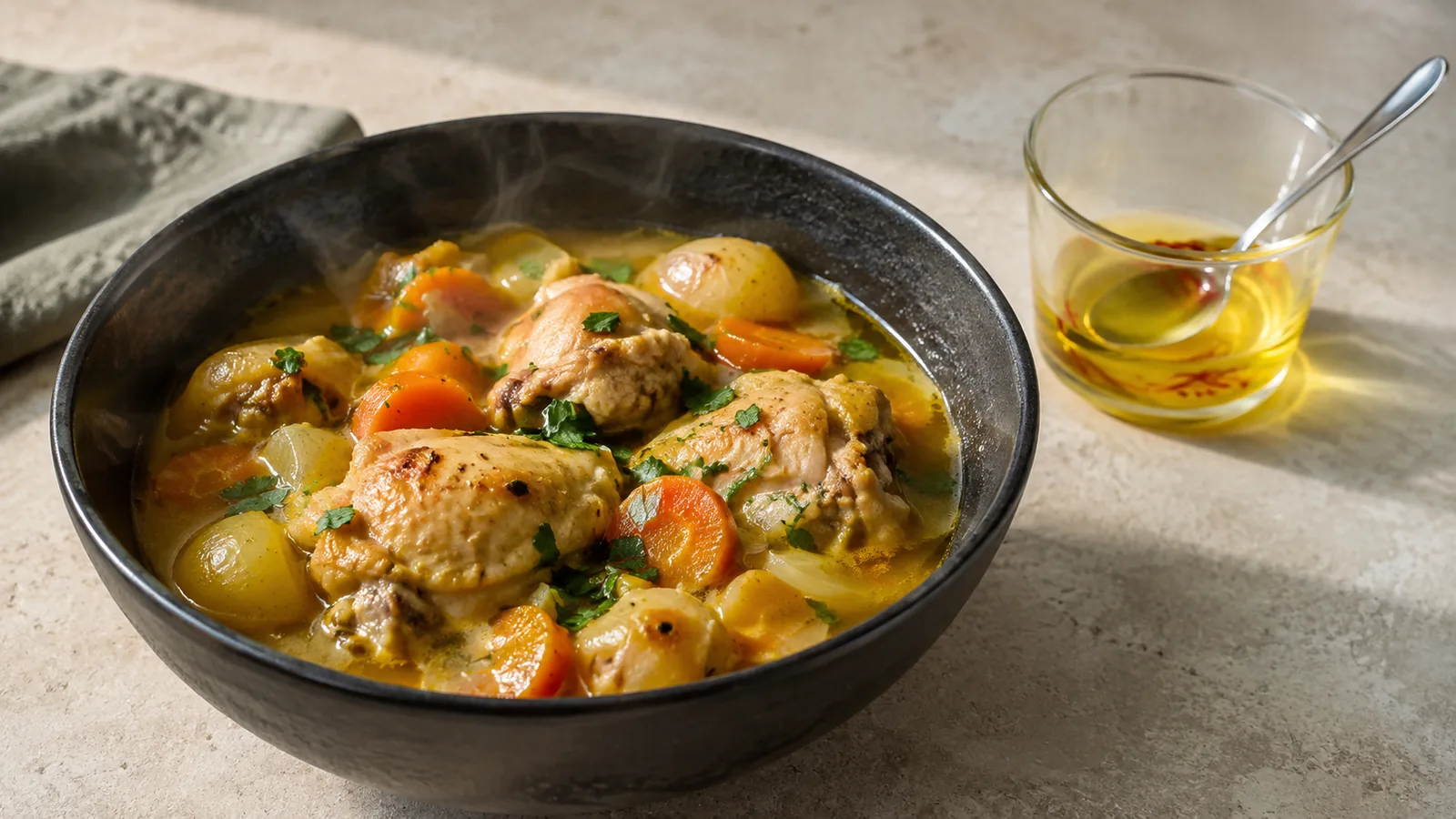
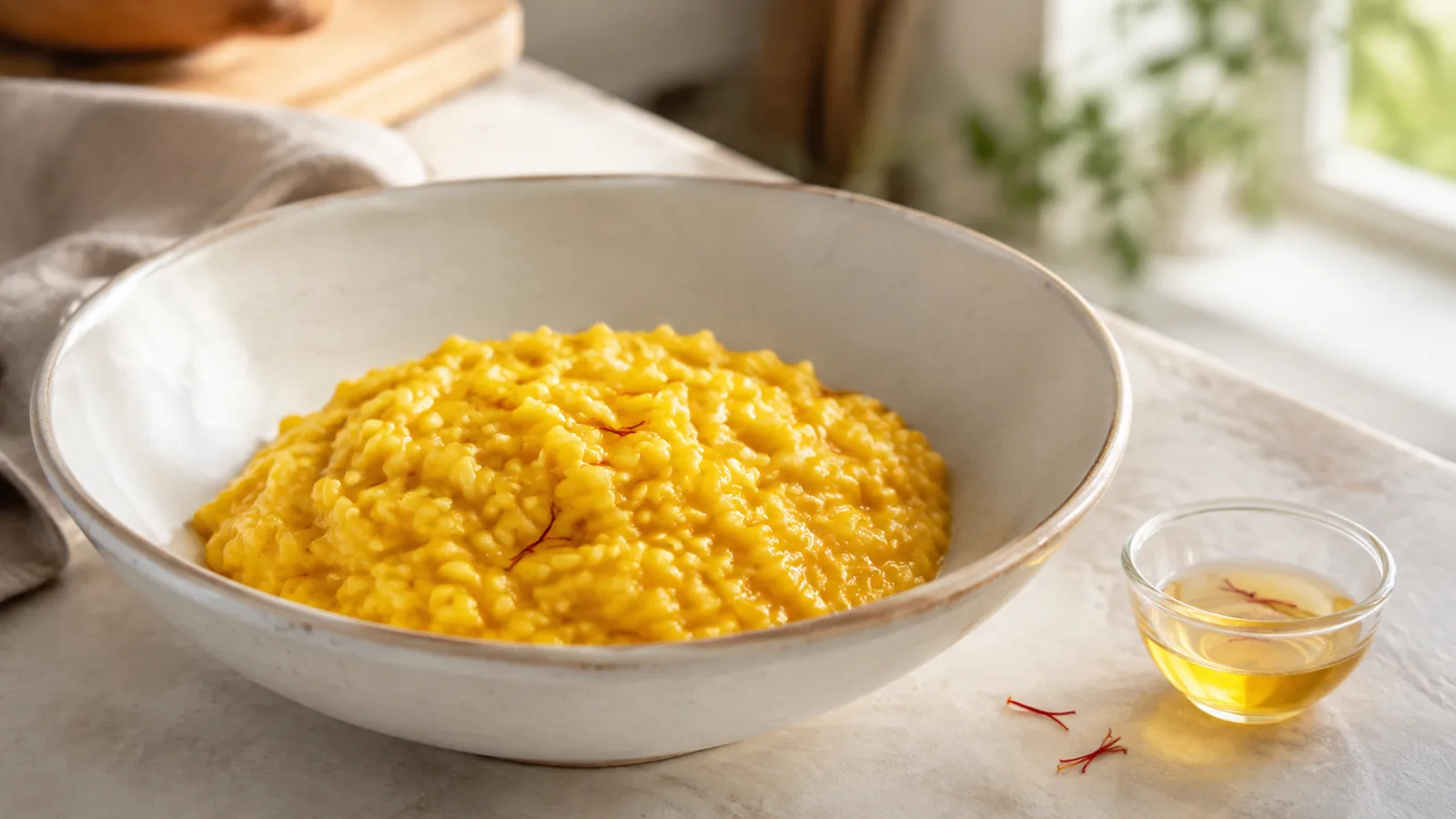
Saffron chicken tahchin is a Persian rice dish with a crisp golden crust, a tender yoghurt-and-saffron rice centre, and a layer of seasoned chicken. This recipe gives a dependable stovetop method and an oven option, then shows how to scale it for 2 to 20 people without crowding one enormous pot. Prepare the chicken and saffron first; once the rice is parboiled, the dish comes together quickly.
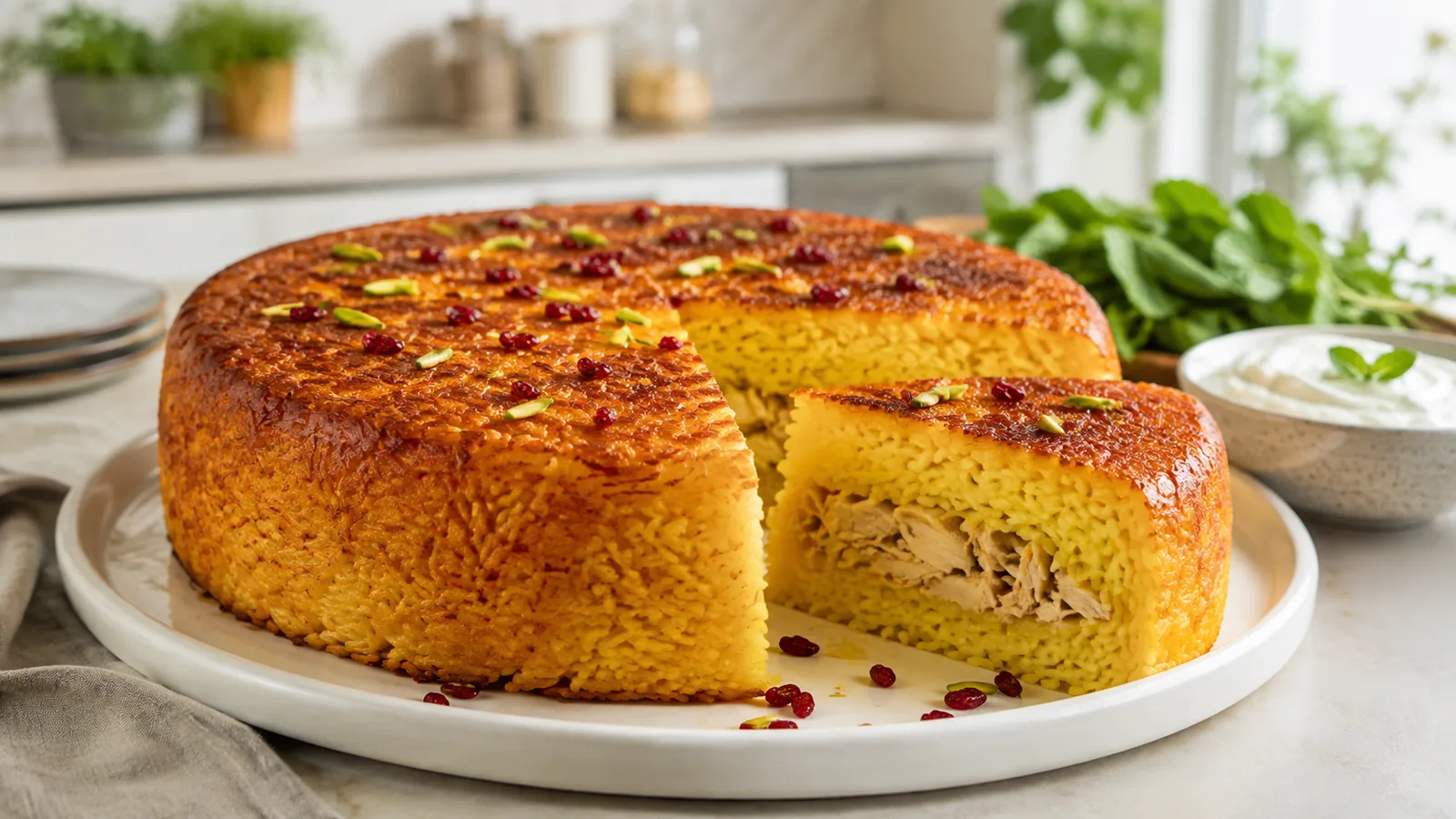
Saffron chicken tahchin ingredients for 4
- 2 cups basmati rice, about 370 g
- 400 g boneless chicken thigh or breast
- 1 medium onion, sliced
- 1 teaspoon salt for the chicken, plus salt for the rice water
- 1/2 teaspoon black pepper
- 1/4 teaspoon ground turmeric
- 1/4 teaspoon ground cinnamon, optional
- 1/4 teaspoon saffron threads
- 3 tablespoons hot water
- 1 cup thick plain yoghurt
- 2 large egg yolks
- 3 tablespoons neutral oil or melted butter, plus more for the pot
- 2 tablespoons dried barberries and 2 tablespoons slivered almonds or pistachios, optional
Use a thick, unsweetened yoghurt. Greek-style yoghurt is convenient, but ordinary plain yoghurt can be strained until it no longer looks watery. Chicken thighs stay succulent during the second cooking stage; breast works too if it is not overcooked at the start.
How to scale this tahchin chicken recipe
The four-person quantities are the easiest working batch. For another number of guests, multiply every ingredient by the same factor. The practical amounts are:
- For 2 people: 1 cup rice, 200 g chicken, 1/2 onion, 1/2 cup yoghurt, 1 egg yolk, 1/8 teaspoon saffron and 1 1/2 tablespoons oil or butter.
- For 4 people: use the base recipe above.
- For 6 people: 3 cups rice, 600 g chicken, 1 1/2 onions, 1 1/2 cups yoghurt, 3 egg yolks, 3/8 teaspoon saffron and 4 1/2 tablespoons oil or butter.
- For 10 people: 5 cups rice, 1 kg chicken, 2 1/2 onions, 2 1/2 cups yoghurt, 5 egg yolks, 5/8 teaspoon saffron and 7 1/2 tablespoons oil or butter.
- For 20 people: make two separate ten-person batches rather than forcing 10 cups of uncooked rice into one pot.
Rice volume and pan width affect the crust, so scaling time is not as simple as scaling ingredients. Two medium pots produce more crisp tahdig and cook more evenly than one deep, overloaded vessel. If your pans are small, divide the mixture again. Fill each pot only to a depth that you can press firmly and turn out safely.
Prepare the saffron
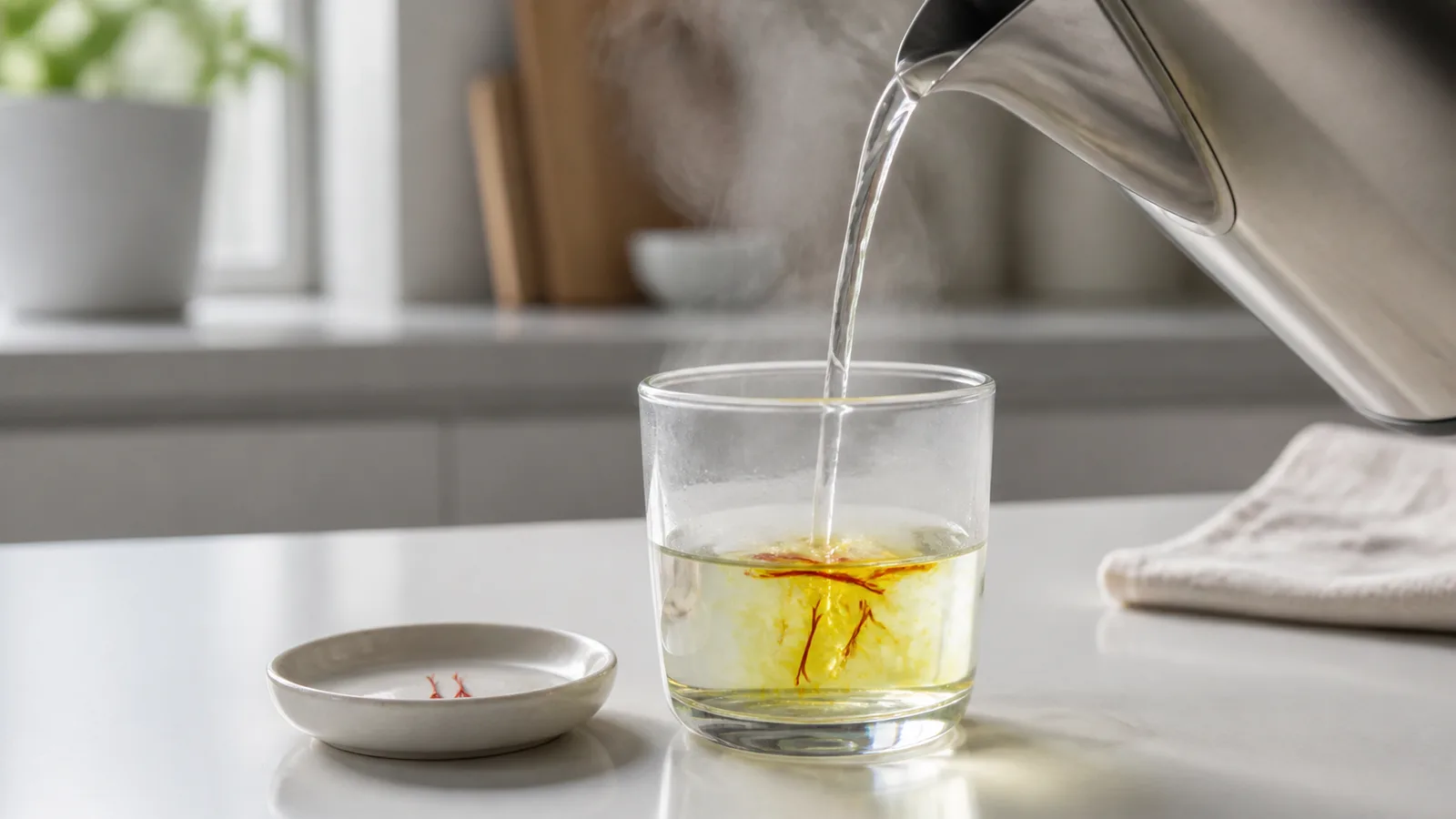
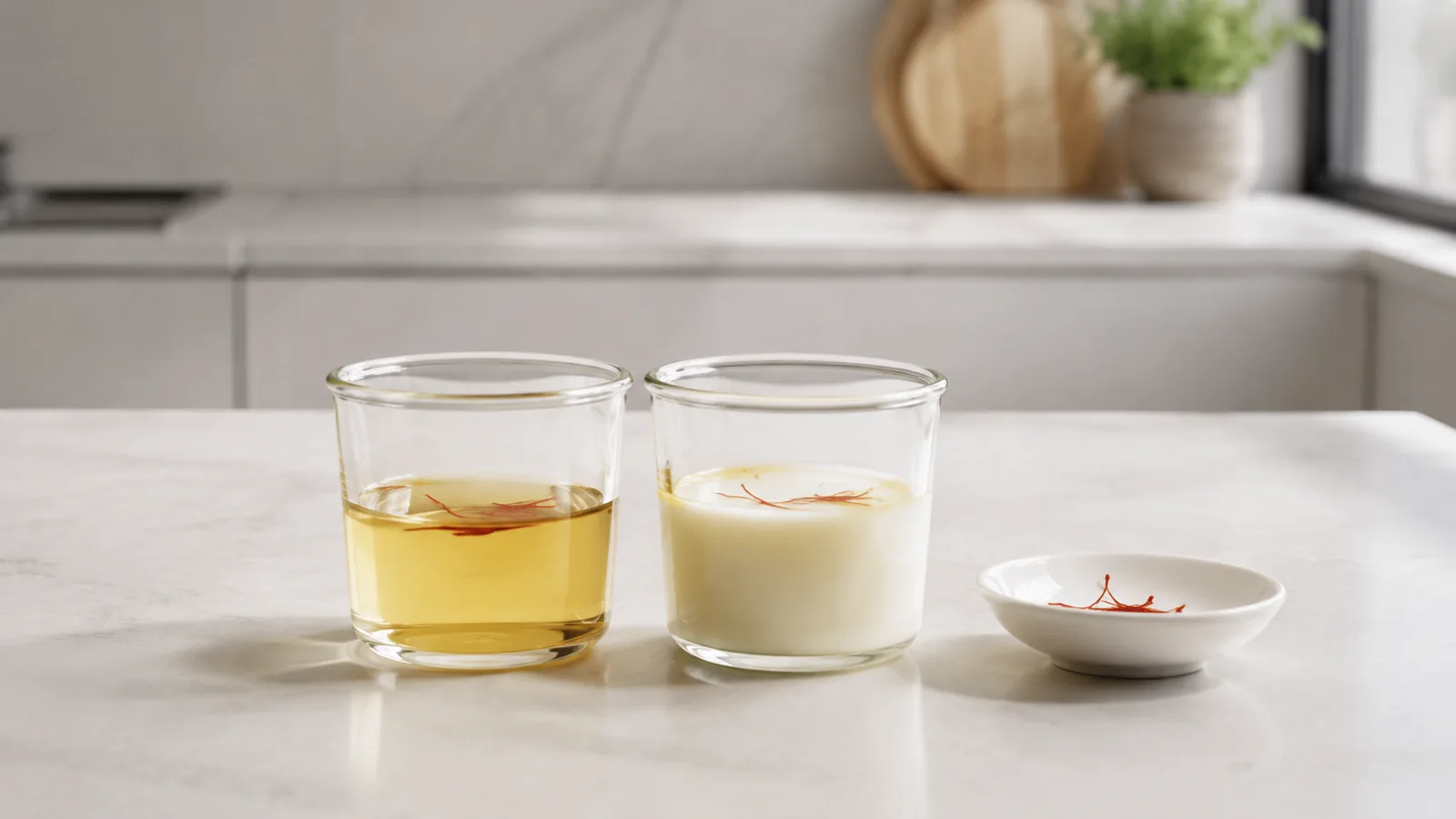
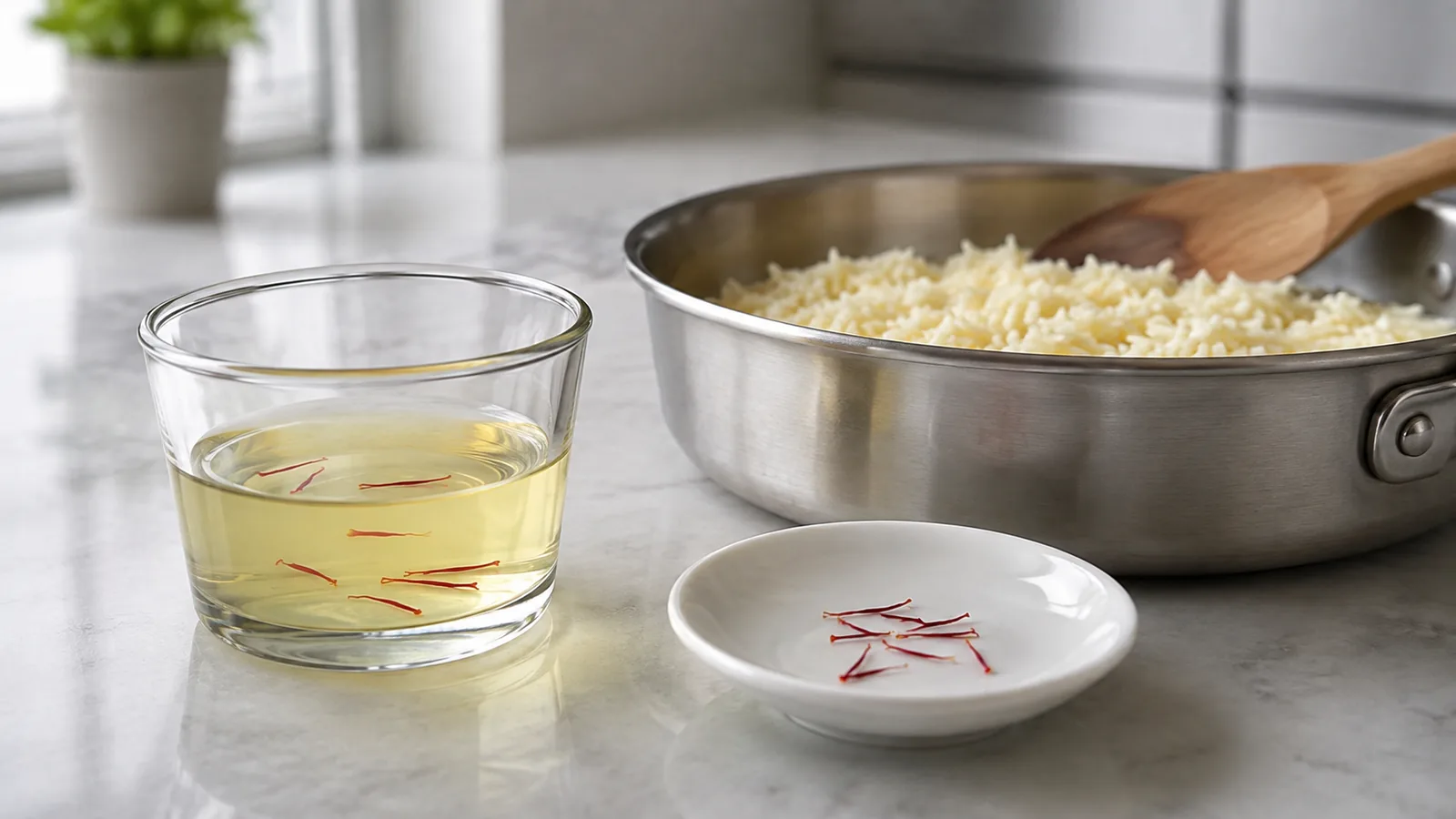
Grind the threads just before use. Pour over three tablespoons of hot water, cover and leave for 10–15 minutes. The liquid should become deeply golden and fragrant. Keep the fine saffron particles in the infusion; there is no need to strain them.
For a larger batch, increase the water only enough to distribute the saffron. Too much infusion makes the rice mixture loose. The site’s guide to brewing saffron for cooking explains the warm-water and storage methods in more detail.
Cook the chicken filling
- Put the chicken, onion, salt, pepper and turmeric in a saucepan. Add about 1 cup of water, or enough to come partway up the chicken.
- Bring to a gentle simmer, cover and cook until the chicken is done and tender, usually 20–30 minutes depending on the cut and thickness.
- Check the thickest piece with a clean food thermometer. Poultry should reach a safe internal temperature; the Food Standards Agency’s cooking guidance explains safe time-and-temperature combinations.
- Move the chicken to a plate and let it cool enough to handle. Slice or pull it into bite-size pieces rather than very fine shreds.
- Reduce the cooking liquid to a few spoonfuls. Toss the chicken with that concentrated liquid and, if using it, the cinnamon. Let it cool before layering.
Do not mix steaming-hot chicken into yoghurt and egg. Cooling it briefly keeps the tahchin mixture stable and avoids starting the egg cooking before the pot is assembled.
Parboil the basmati rice
- Rinse the rice in several changes of cool water until the water is much clearer.
- Soak it for 30 minutes in generously salted water, then drain.
- Bring a large pot of water to a rolling boil. Add the rice and stir once so the grains do not settle together.
- Boil for about 5–7 minutes. Begin checking early: the outside should be soft, while the centre still offers a little resistance.
- Drain immediately and rinse briefly with lukewarm water to stop the surface cooking. Let it drain thoroughly.
Rice that is fully soft at this point is likely to become heavy after another hour in the pot. Rice that is chalky throughout may remain hard. The right point is flexible but still clearly underdone at the centre.
Make the yoghurt and saffron mixture
Whisk the yoghurt and egg yolks in a large bowl until smooth. Add the brewed saffron and two tablespoons of the oil or melted butter. Fold in the drained rice gently so the grains are evenly coated without being crushed.
Taste the chicken and the edge of one rice grain for seasoning before combining the dish. Raw egg makes the rice mixture unsuitable for tasting. If the yoghurt is particularly tart, do not hide it with sugar; use a milder yoghurt next time.
Stovetop saffron chicken tahchin in a pot
- Choose a heavy non-stick pot about 22–24 cm wide for the four-person batch. Brush the base and lower sides generously with the remaining oil or butter.
- Press half of the saffron rice mixture into an even layer. Compact it firmly enough to remove large gaps, but do not mash the grains.
- Spread the chicken over the centre, leaving a narrow border around the edge. Keeping filling away from the sides helps the rice layers join and release cleanly.
- Add the remaining rice and press the surface flat. Poke four or five shallow steam channels with the handle of a spoon without reaching the bottom.
- Cover the lid with a clean tea towel, tying the corners above the flame, or use a close-fitting lid that does not drip condensation onto the rice.
- Cook over medium heat for 7–10 minutes, just until steam builds. Turn the heat to its lowest steady setting and cook for 45–60 minutes.
- Remove the pot from the heat and rest it for 10 minutes. Run a flexible spatula around the edge, place a wide platter over the pot and turn both over in one confident movement.
Stoves and pans differ. If your burner creates a hot central spot, use a heat diffuser and rotate the pot once during the low-heat stage. Do not repeatedly lift the lid; escaped steam slows the cooking and condensation can disturb the crust.
Oven method
Heat the oven to 180°C/350°F. Grease a 23 cm round or similarly sized baking dish for four servings. Layer and press the rice and chicken as described above, then cover the dish tightly with foil.
Bake for 55–70 minutes, until the edges look deeply golden and the centre is hot. Remove the foil for the final 10 minutes if the surface still appears wet. Rest for 10 minutes before loosening and turning out. A glass dish lets you monitor browning, but set hot glass only on a dry heatproof surface and follow its manufacturer’s temperature limits.
For ten servings, two ordinary dishes are safer and more predictable than one very deep pan. Put them on separate racks and exchange their positions halfway through if the oven browns unevenly.
Prepare barberries and nuts without burning them
Optional barberries add a sharp contrast to the rich rice. Rinse them quickly, drain well, then warm them in a teaspoon of butter or oil over low heat for 30–60 seconds. Remove them as soon as they brighten; they scorch easily. A pinch of sugar is optional rather than required.
Toast almonds or pistachios separately so each ingredient can be taken off the heat at the right moment. Scatter the garnish over the turned-out tahchin instead of putting it under the crust. If you enjoy that sweet-tart combination, the site’s saffron rice with barberries gives another complete method.
How to tell when tahchin is ready
The sides should be golden, the rice should smell toasted rather than burnt, and the centre should feel set when the pot is moved gently. A pale crust needs more time; a sharp burnt smell means the heat is too high. Because the cooked chicken was prepared before assembly, the final stage is mainly setting the yoghurt-and-egg rice and forming the crust.
If you are unsure, slide a thin spatula down one edge to inspect the colour. Return the lid promptly. On the next attempt, note the pot, burner setting and time—those three details make a repeatable recipe more reliably than a universal minute count.
Common tahchin problems
The crust sticks
Use an undamaged non-stick pot, grease it fully and let the tahchin rest before turning it out. A cold wet cloth wrapped briefly around the outside of the pot can help release the crust, but keep water away from the food and never place a hot glass dish on it.
The centre is wet or heavy
The rice may have been boiled too long, the yoghurt too thin or the filling too wet. Drain the rice well, reduce the chicken liquid and use thick yoghurt. Pressing is useful; compressing a very deep layer makes even heating harder.
The rice is dry
Very lean chicken, too little fat or a lid that leaks steam can dry the dish. Use the measured yoghurt and oil, keep the filling moist rather than watery, and cover closely. Breast meat should be removed from its first cooking stage as soon as it is safely done.
The saffron tastes bitter
More saffron is not always better. Measure the threads, grind them shortly before brewing and avoid burning saffron directly in the fat. If the finished dish tastes harsh, check whether excessive turmeric or scorched barberries are contributing too.
Serving and storing
Let the tahchin stand long enough to hold its shape, then cut it into wedges with a sharp knife. Serve it with a crisp salad, herbs, plain yoghurt or roasted vegetables. Rich stews can overwhelm the crust, so keep accompaniments relatively simple.
Refrigerate leftovers promptly in shallow covered containers. Reheat only the portion needed until it is steaming hot throughout; an oven or covered frying pan helps the crust regain some texture. Do not leave a large pot of rice and chicken cooling slowly at room temperature.
This tahchin recipe with chicken is forgiving once the rice, moisture and heat are balanced. Work from the four-person batch, divide quantities between sensible pots as the guest list grows, and keep notes on your own cookware. The result should have distinct saffron-scented grains, tender chicken and a crisp crust that lifts cleanly onto the platter.