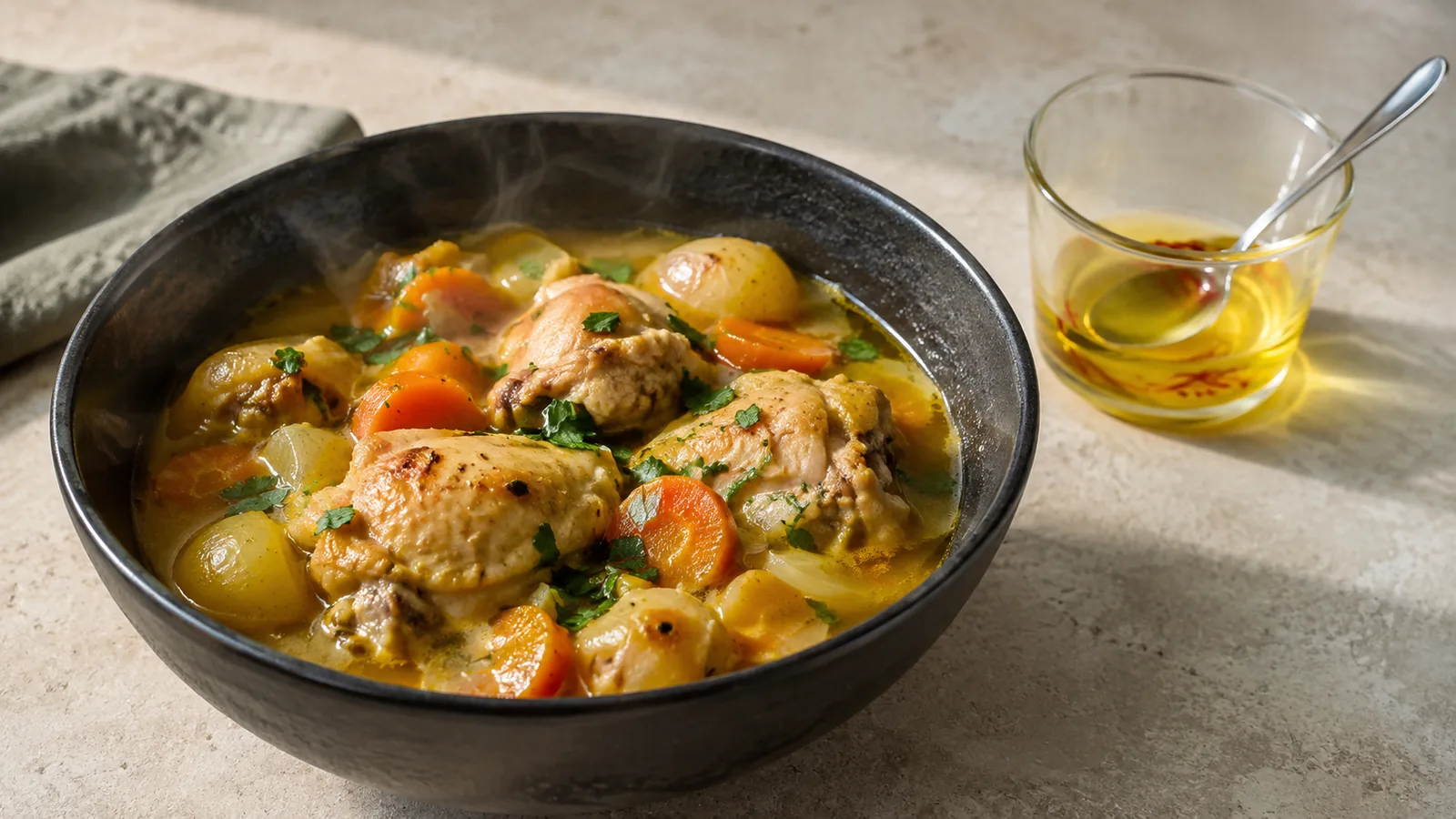
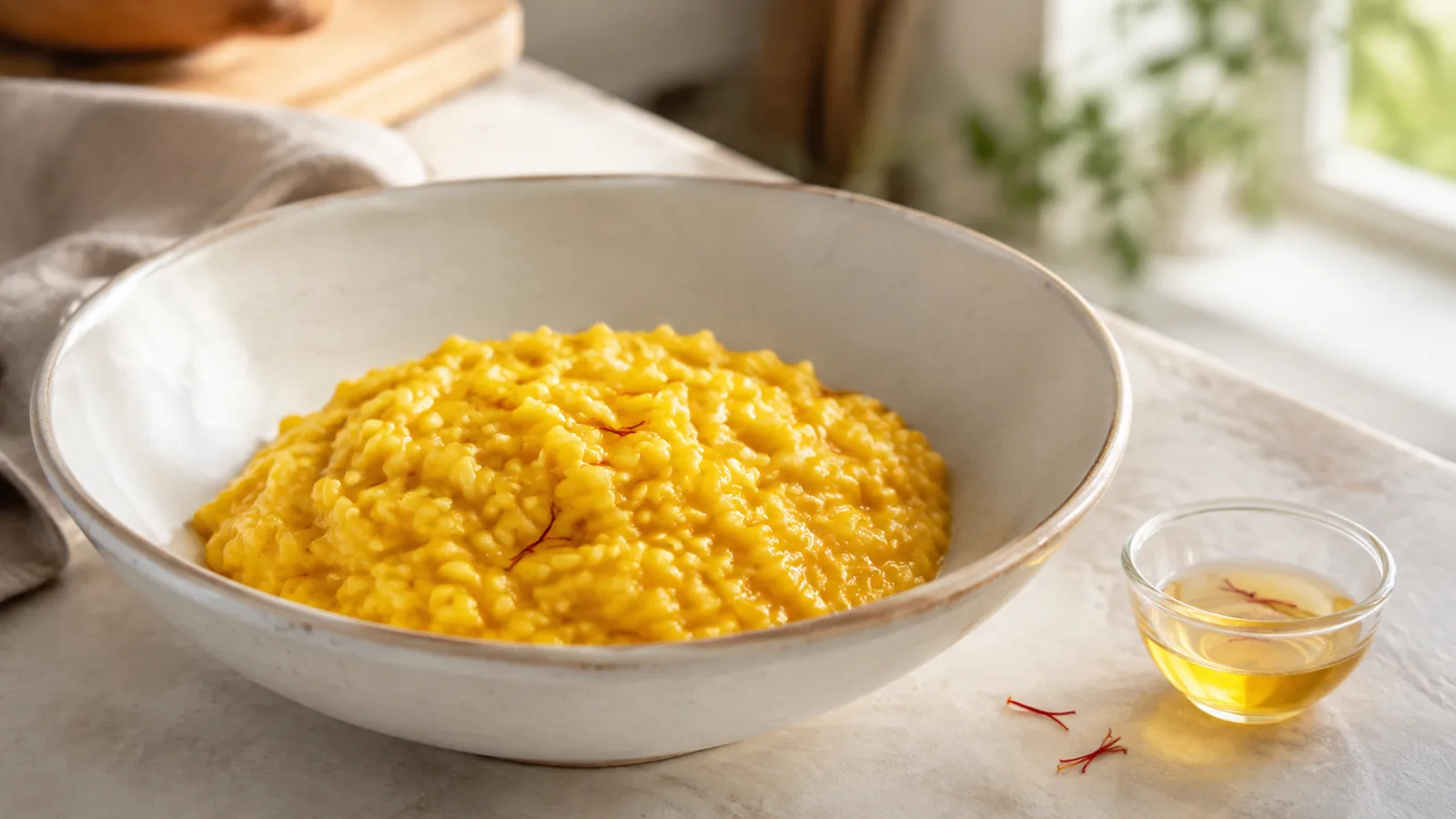
Tahchin olives is a meat-free saffron rice dish with green and black olives arranged beneath the rice so they appear on top when the tahchin is turned out.
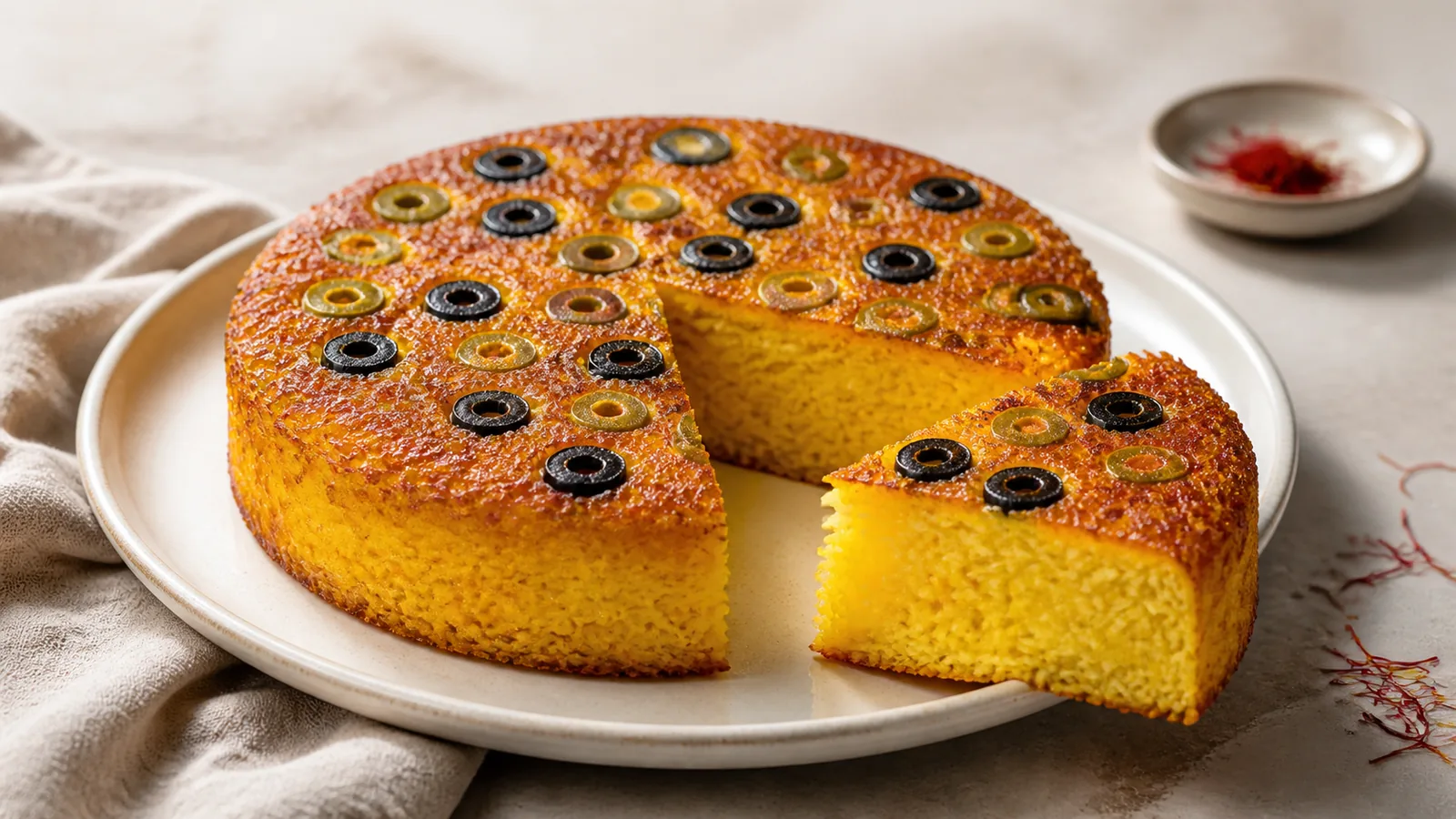
The rice can be cooked slowly on the stovetop or baked in a covered dish. In either version, the yogurt-and-egg mixture binds the grains while saffron gives the tahchin its color and aroma.
Ingredients for Tahchin olives
- 3 cups rice
- 2 eggs
- 5 tablespoons yogurt
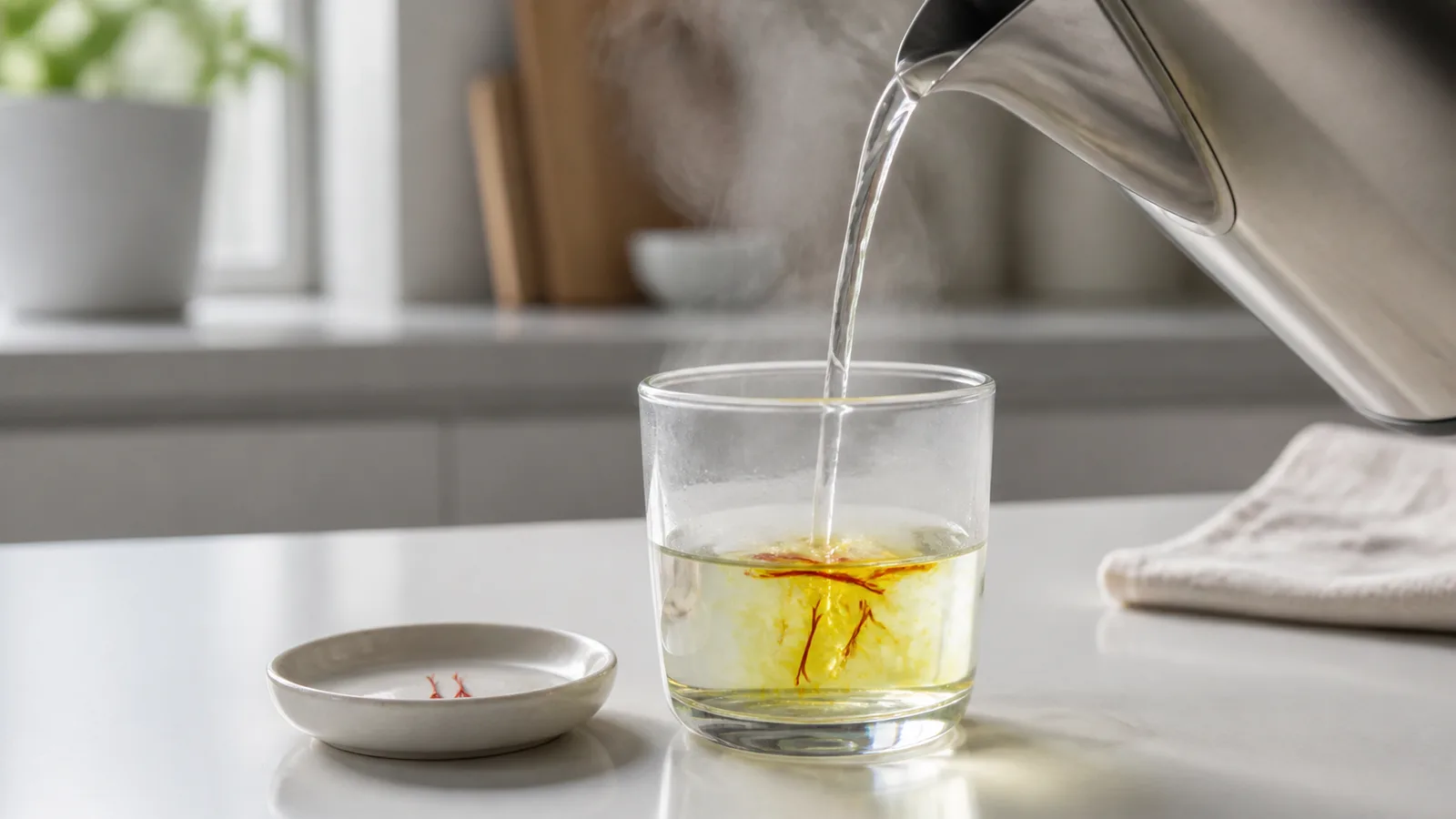
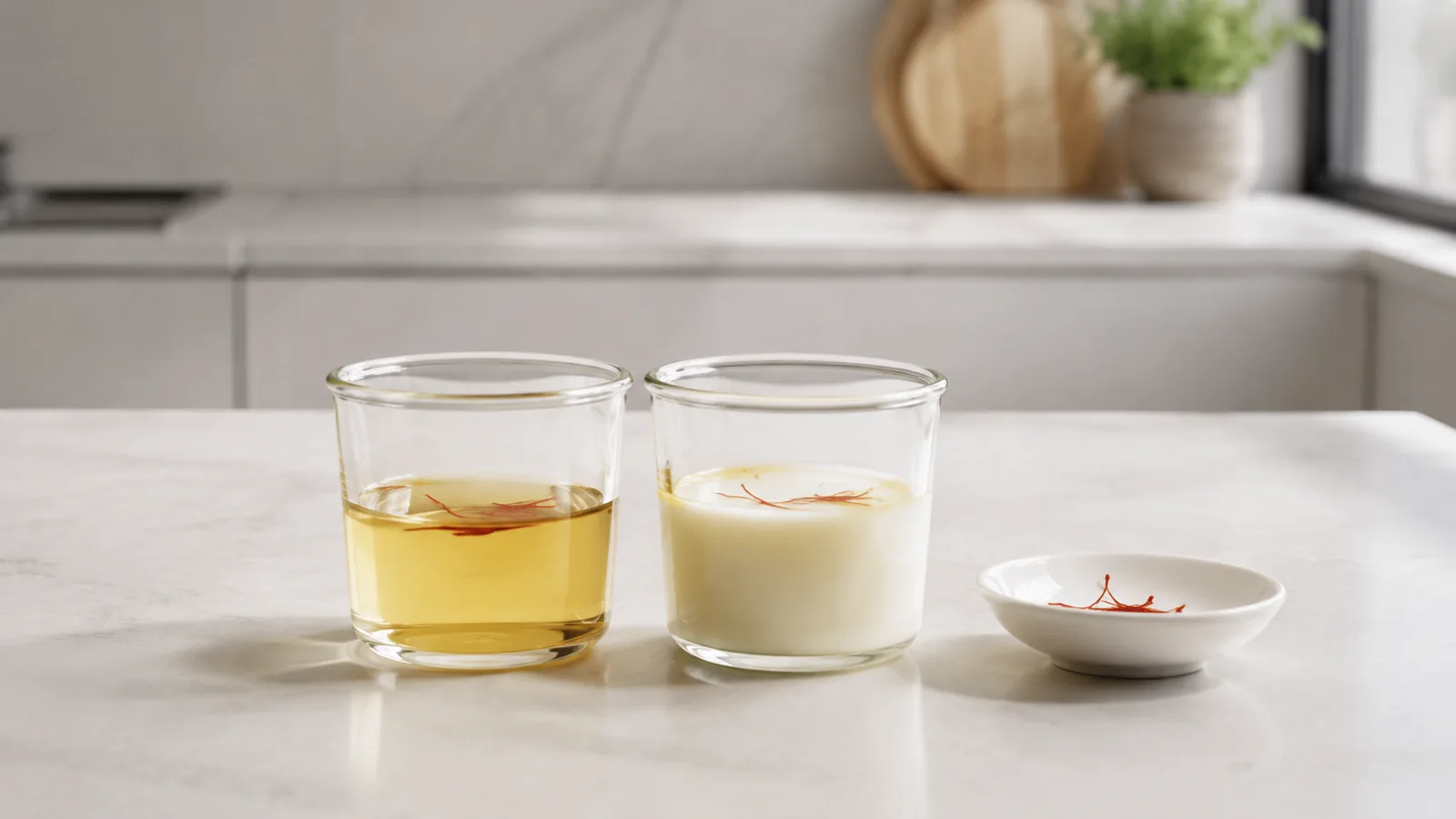
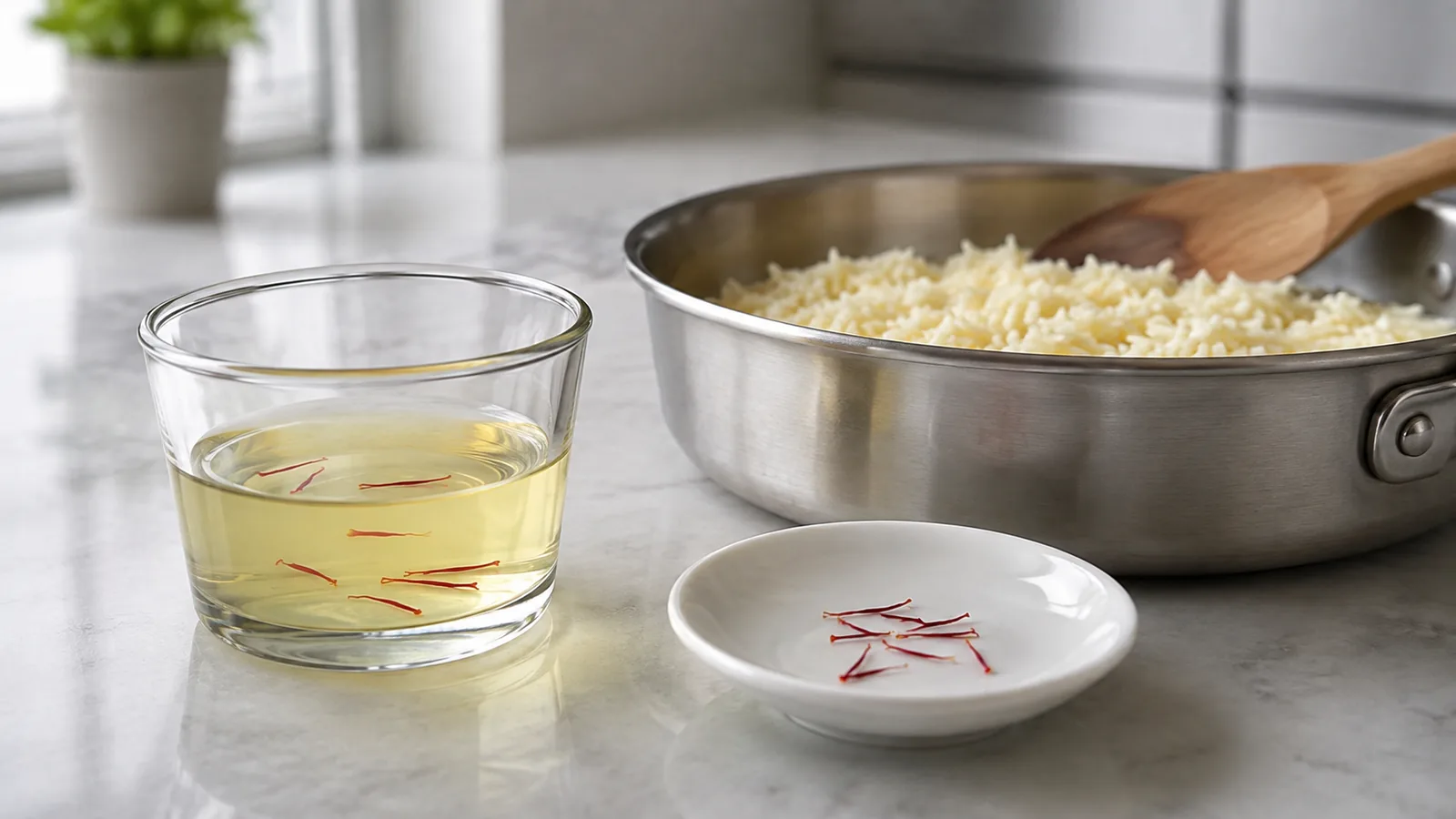
- 3 tablespoons bloomed saffron
- 1 dessertspoon baking powder
- ½ cup liquid oil, divided
- Green olives, as needed
- Black olives, as needed
- Salt, as needed
The original measurement translated literally as a “jam spoon” of baking powder; a dessertspoon is the intended kitchen measure. Choose pitted olives so the finished tahchin can be sliced safely, and drain them well before arranging them in the pan.
Prepare the rice
Rinse the rice until the water is mostly clear. You can prepare it by the drained-rice method or as kateh, following the original recipe.
For the drained method, boil the rice in salted water until the surface of each grain is tender but the center remains firm, then drain it. For kateh, cook the rinsed rice with measured water, a little salt and a little oil until the water has been absorbed. In both cases, stop before the rice is fully soft because it will continue cooking in the tahchin.
Make the saffron yogurt mixture
Break the two eggs into a large bowl and beat them until they gain a little volume. Add the yogurt, baking powder, three tablespoons of bloomed saffron and a small portion of the oil.
Whisk until smooth. Add the prepared rice and fold gently so the grains are evenly coated without being crushed.
Arrange the green and black olives
Lightly grease the base and lower sides of a nonstick pot or ovenproof dish. Arrange the green and black olives in a single row or simple pattern over the bottom.
You may leave small spaces between them so the saffron crust shows through, or cover the entire base for a more olive-forward top. Keep the olives in one level layer; piled olives make it harder for the rice to settle around them.
Spoon the saffron rice over the olives in several additions. Press each addition gently enough to close large gaps, taking care not to move the pattern. Level the top, then pour the remaining oil evenly over the rice.
Stovetop method
Cover the pot and set it over low heat. Cook for about 60 minutes, as in the original method, until the rice has set and the base has formed a crust.
Low, steady heat is important. If the edges color or smell toasted before the center has steamed through, move the pot to a smaller burner or use a heat diffuser rather than increasing the oil.
Oven method
Alternatively, preheat the oven to 180°C. Cover the prepared dish securely with foil and bake for 30 minutes.
Remove the foil and return the dish to the oven for about 10 minutes, allowing the surface to dry and the tahchin to finish setting. A deeper or narrower dish may need longer than a shallow one, so check that the center is firm before turning it out.
Turn out and serve
Rest the cooked tahchin off the heat for a few minutes. Loosen the edge with a flexible spatula, place a serving platter over the pot or dish, and invert them together.
The green and black olives should now sit visibly across the golden saffron surface. Serve warm. If you like, spoon or pipe a little yogurt around the platter, keeping the top clear enough for the olive pattern to remain visible.
Checks for a clean olive tahchin
- Use pitted, drained olives: they are easier to slice and do not add unnecessary liquid.
- Keep the rice slightly firm: it finishes cooking as the egg-and-yogurt mixture sets.
- Arrange one olive layer: a flat pattern holds its shape better when the dish is inverted.
- Press gently: the rice needs contact without becoming dense.
- Rest before turning: a short pause helps the crust release in one piece.