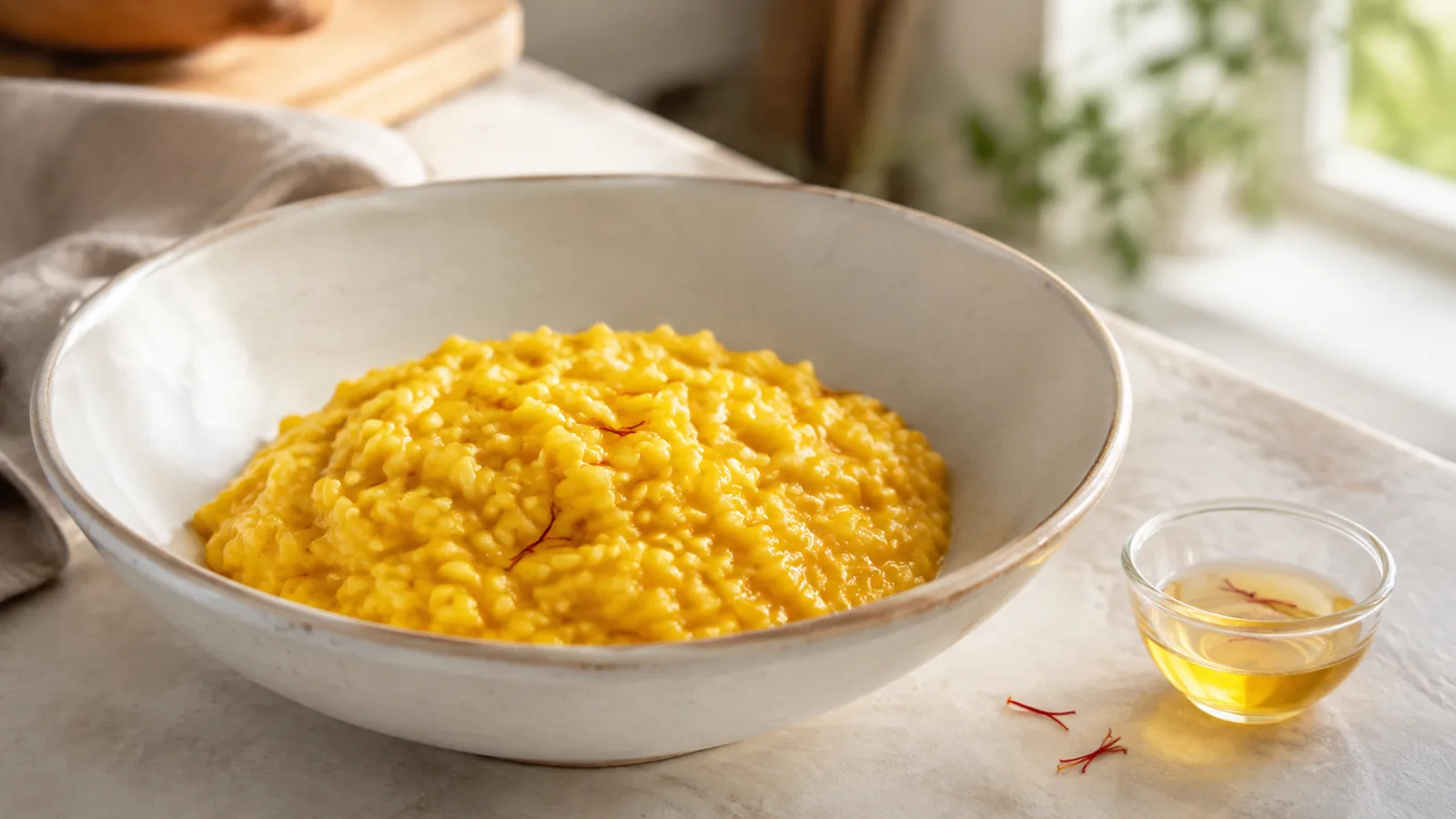
This recipe for cooking kuku onion with Iranian saffron combines grated onion, eggs, walnuts and saffron in a simple pan-fried Iranian kuku.
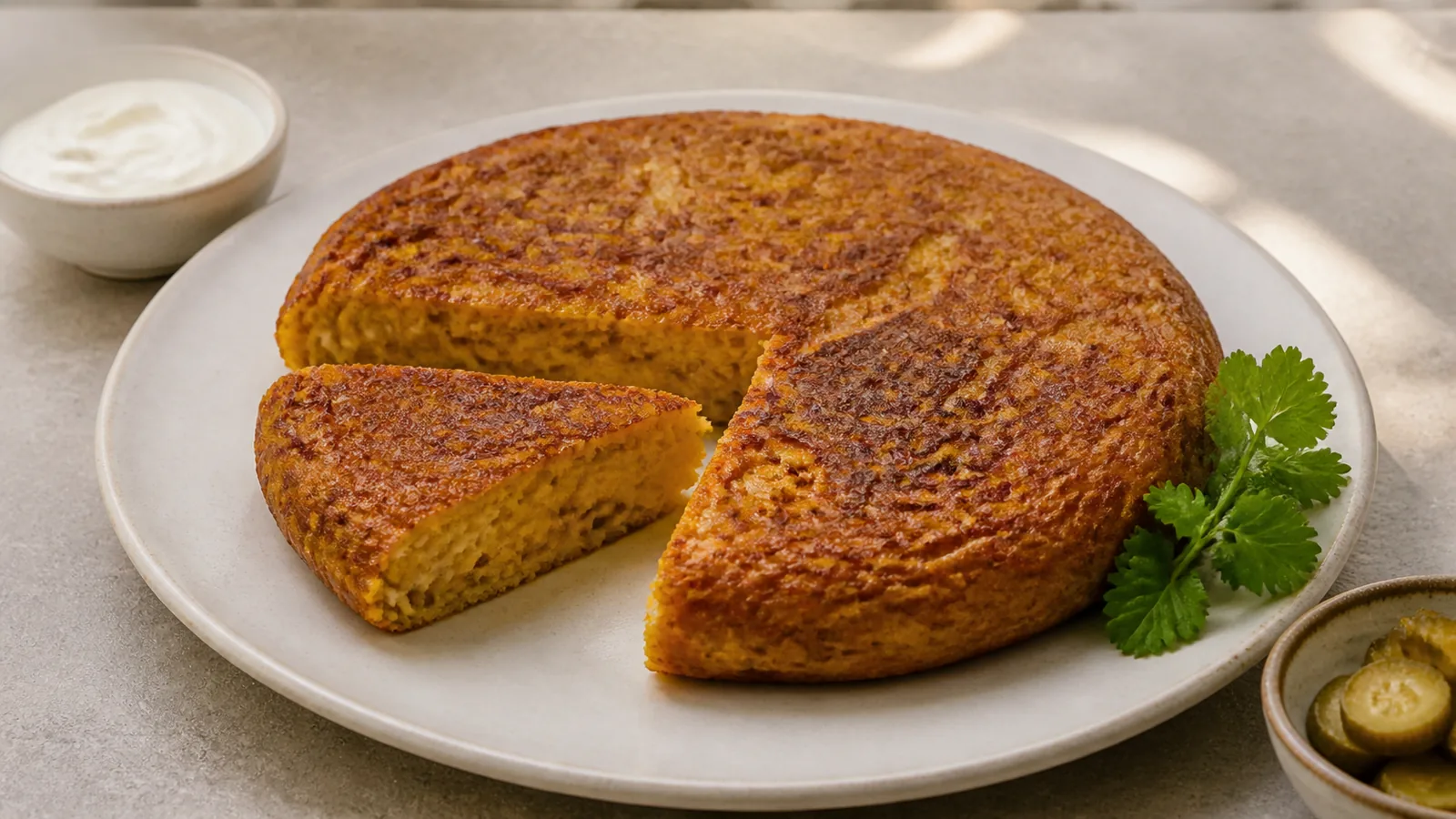
The ingredient list is short, but the texture depends on removing excess onion liquid and mixing the eggs gently. The finished kuku onion should hold together when cut while remaining tender inside.
Ingredients for kuku onion
- 250 g onion, peeled and grated
- 4 to 5 eggs
- 1 cup walnuts, roughly chopped
- 2 tablespoons flour
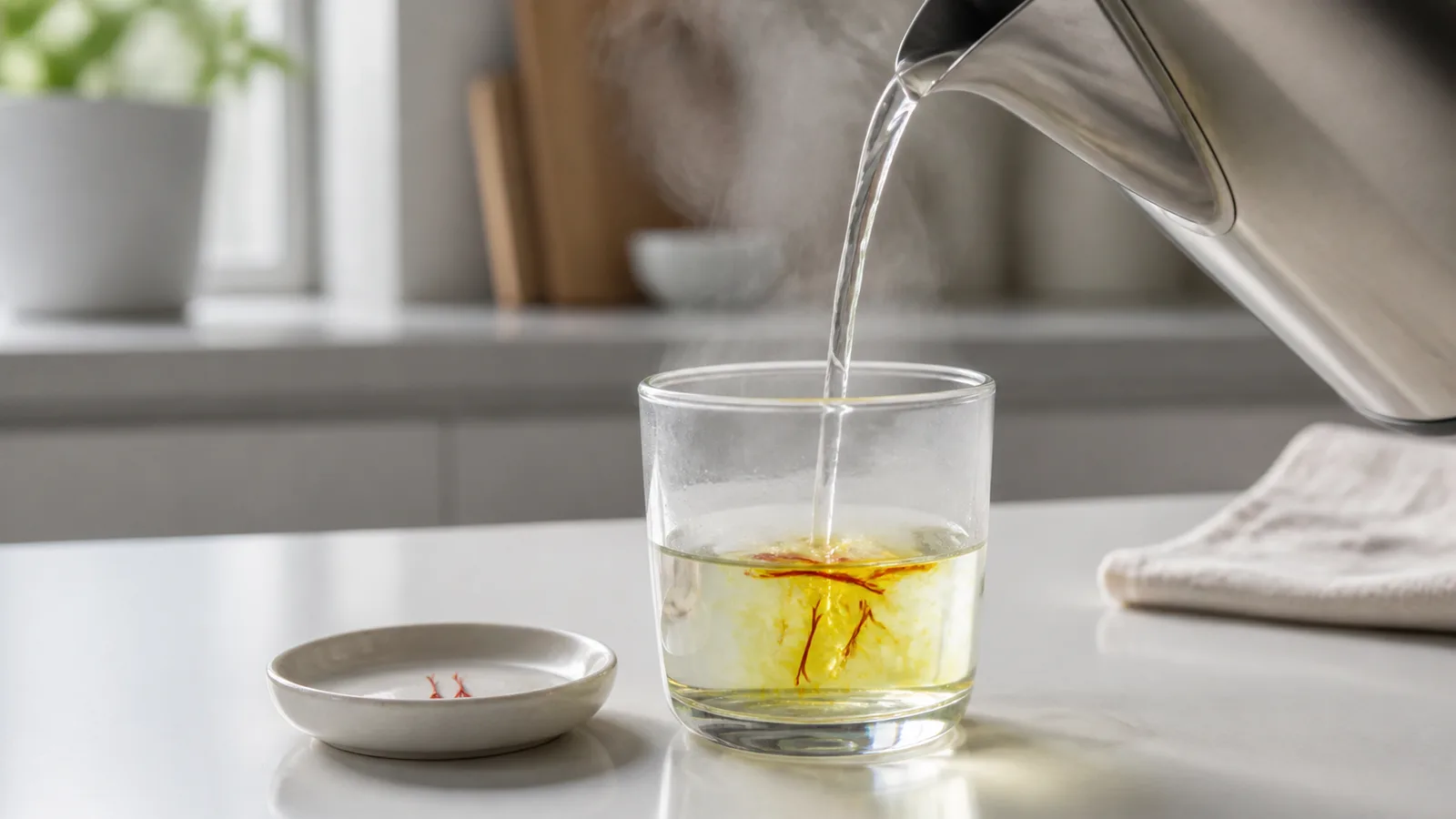
- Bloomed Iranian saffron, as needed
- ¼ teaspoon black pepper
- Salt, as needed
- Neutral cooking oil, for the pan
Begin with four eggs. Add the fifth only if the mixture is too dry to spread; onion size and the amount of liquid removed will affect the consistency.
Grate and drain the onion
Grate the onion into a bowl using the large holes of a box grater. Transfer it to a clean kitchen towel or a fine sieve and press out most of the liquid.
The onion should remain moist rather than completely dry. Removing the excess prevents the center from becoming watery and helps the kuku brown instead of steam.
Mix the kuku batter gently
Crack four eggs into a mixing bowl and stir only until the whites and yolks are combined. Vigorous or prolonged beating can make the egg separate more noticeably from the other ingredients during cooking.
Add the drained onion, chopped walnuts, two tablespoons flour, bloomed saffron, black pepper and salt. Fold everything together until the flour disappears and the walnuts are evenly distributed.
The batter should fall slowly from a spoon. If it is too stiff to spread, stir in the fifth egg. If it looks loose, let it stand for five minutes so the flour can absorb moisture before deciding whether it needs adjustment.
Heat the pan
Choose a nonstick frying pan about 24 cm wide. Add enough oil to coat the base and warm it over medium heat.
Test the pan with a small drop of batter. It should begin to sizzle gently on contact without darkening at once.
Cook the first side
Pour in the kuku mixture and spread it into an even layer. Smooth the top lightly, then reduce the heat to medium-low and cover the pan.
Cook until the edges are set, the underside is golden and the surface no longer looks liquid. Gentle heat gives the center time to cook without burning the onion against the pan.
Turn and cook the second side
Cut the kuku into four wedges with a spatula. Turn each wedge carefully, adding a small amount of oil around the edges if the pan is dry.
Cook uncovered until the second side is golden and the egg is completely set. Alternatively, slide the whole kuku onto a flat plate, invert the pan over it and turn both together, but wedges are easier to handle.
Rest and serve
Transfer the cooked kuku onion to a plate lined briefly with paper towels, then let it rest for five minutes before serving. The short rest makes the slices cleaner.
Serve warm or at room temperature with bread, fresh herbs, yogurt or pickles. The walnuts should add texture without hiding the saffron and sweet cooked onion.
Useful texture checks
- Drain the onion: excess juice is the main cause of a soft, wet center.
- Stir eggs briefly: combine them without whipping in unnecessary air.
- Add the fifth egg only if needed: the batter should spread but not pour like a thin sauce.
- Use medium-low heat: onion and saffron color quickly before a thick kuku is cooked through.
- Turn in sections: wedges are less likely to break than one large round.