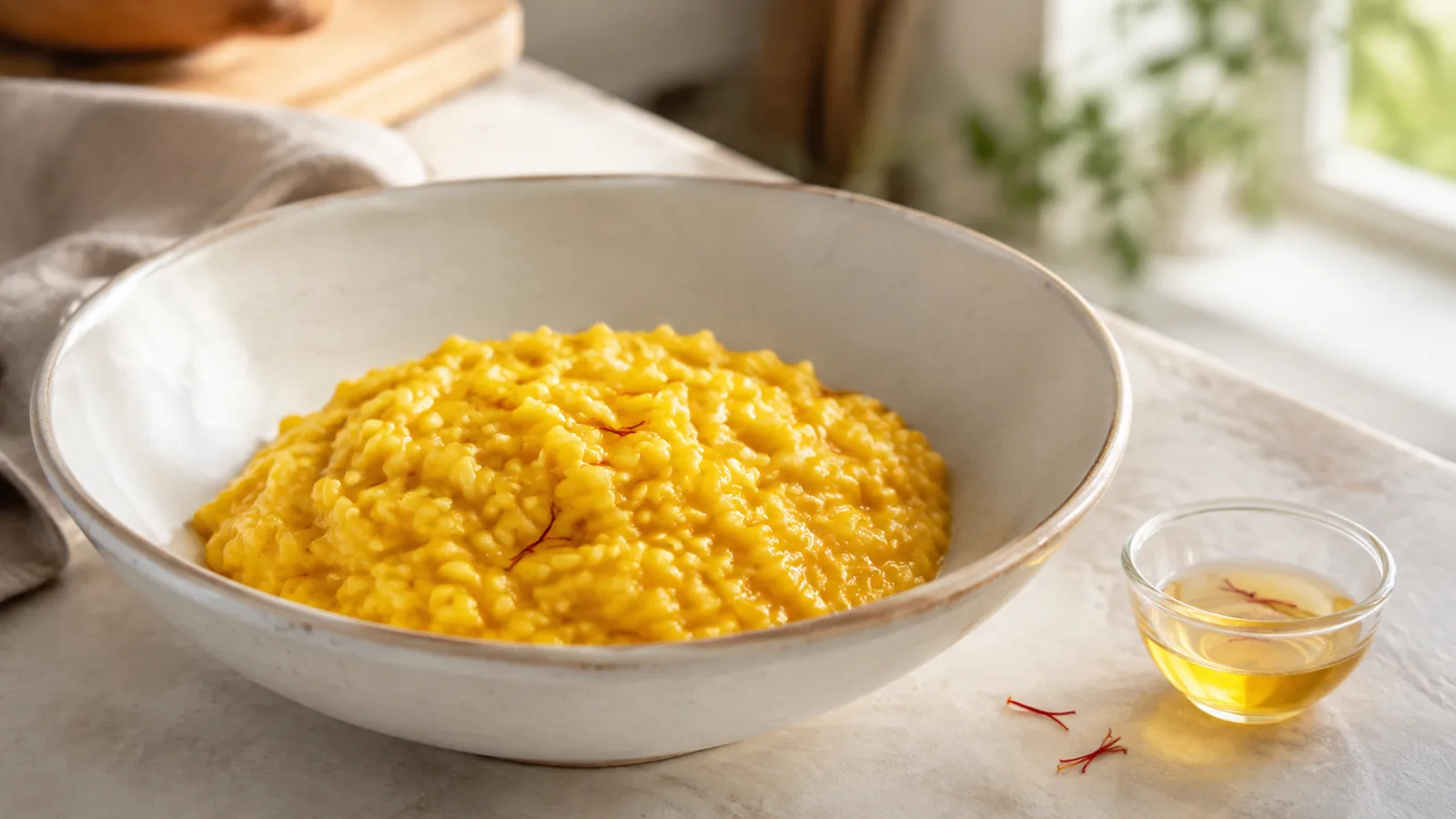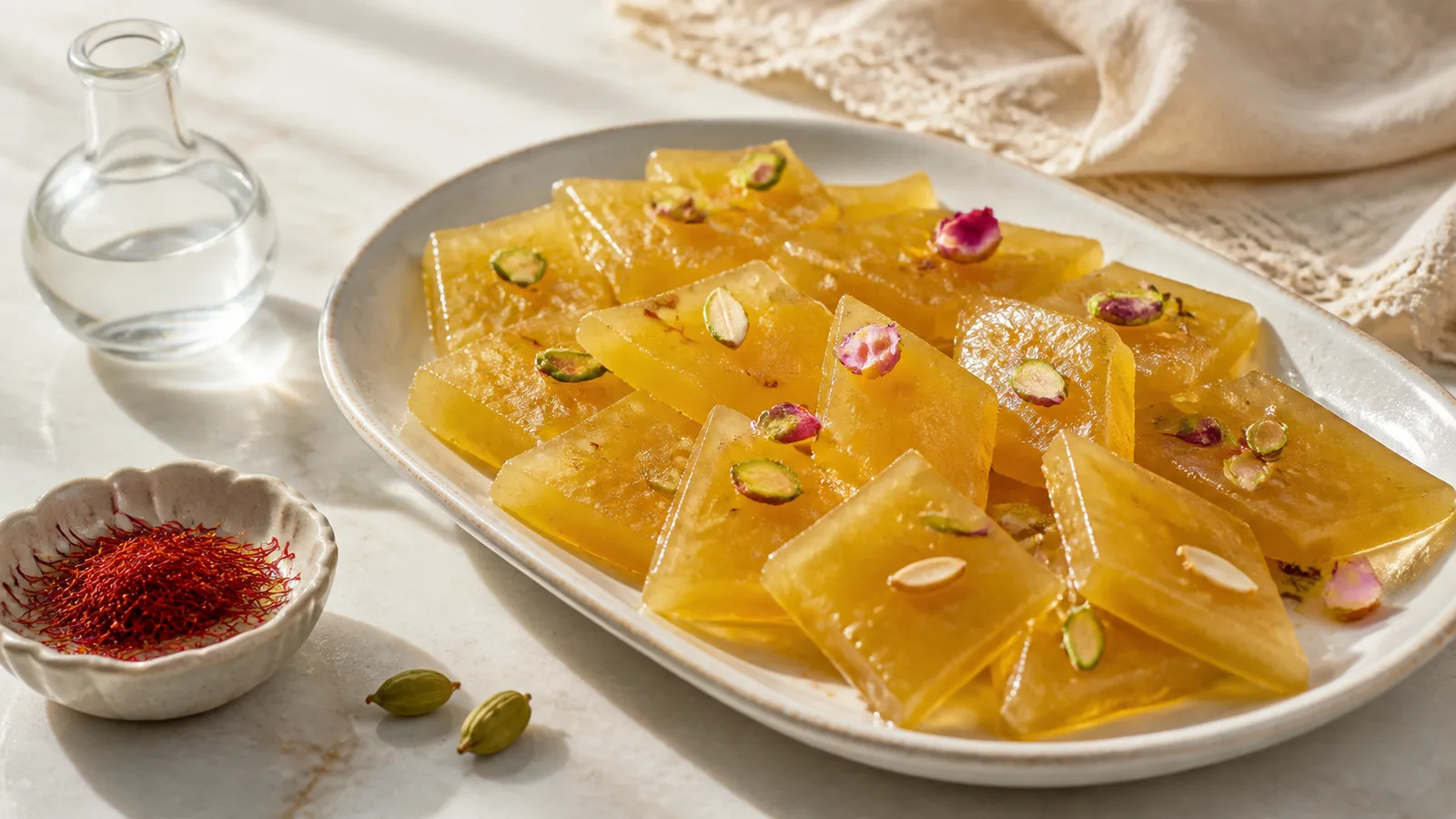
Saffron Muscati is a soft, glossy starch dessert scented with rosewater, cardamom, and saffron. The texture sits between a tender jelly and a soft confection: it should hold a neat cut, bend slightly, and look translucent rather than cloudy. The secret is not extra saffron. It is cold-water starch mixing, low heat, patient stirring, and adding the butter and aromatics at the right time.
This saffron dessert recipe keeps the original proportions—150 grams of starch, 300 grams of sugar, four cups of water, and 125 grams of butter—but explains the visual cues that matter more than a rigid cooking time.
What is saffron Muscati?
Muscati, also written as masqati or muscati, is associated with southern Iran, especially Bandar Abbas and Bushehr. Families and regions prepare it differently. Some versions are spoon-soft, while others are cooked longer, set in a tray, and cut into diamonds or squares.
Saffron supplies the golden color and floral aroma. Rosewater and cardamom build the familiar Persian dessert profile, and pistachio or almond slivers add contrast. Starch creates the body; sugar and liquid glucose help produce a clear, flexible texture.
Saffron dessert ingredients
Use a standard 240 ml cup for the water and rosewater. This batch fills one lightly greased 20 cm (8-inch) square dish and makes about 24 small pieces.
- 150 g wheat starch or cornstarch
- 4 cups (960 ml) cold water, divided
- 300 g granulated sugar
- 3 tablespoons clear liquid glucose
- 125 g unsalted butter, cut into pieces
- 1/2 cup (120 ml) food-grade rosewater
- 1/4 teaspoon ground cardamom, or to taste
- 1/4 teaspoon loosely packed saffron threads
- 2 tablespoons hot water for blooming the saffron
- 2 to 4 tablespoons slivered pistachios or almonds, optional
- A small amount of neutral oil or butter for the dish
Which starch should you use?
Traditional recipes may use wheat starch, while cornstarch is easier to find in many countries. Both can work, but they do not behave identically. Wheat starch tends to give a softer, more elastic bite; cornstarch sets a little more firmly. Use one type consistently and do not substitute flour, which will make the dessert opaque and pasty.
How to bloom the saffron
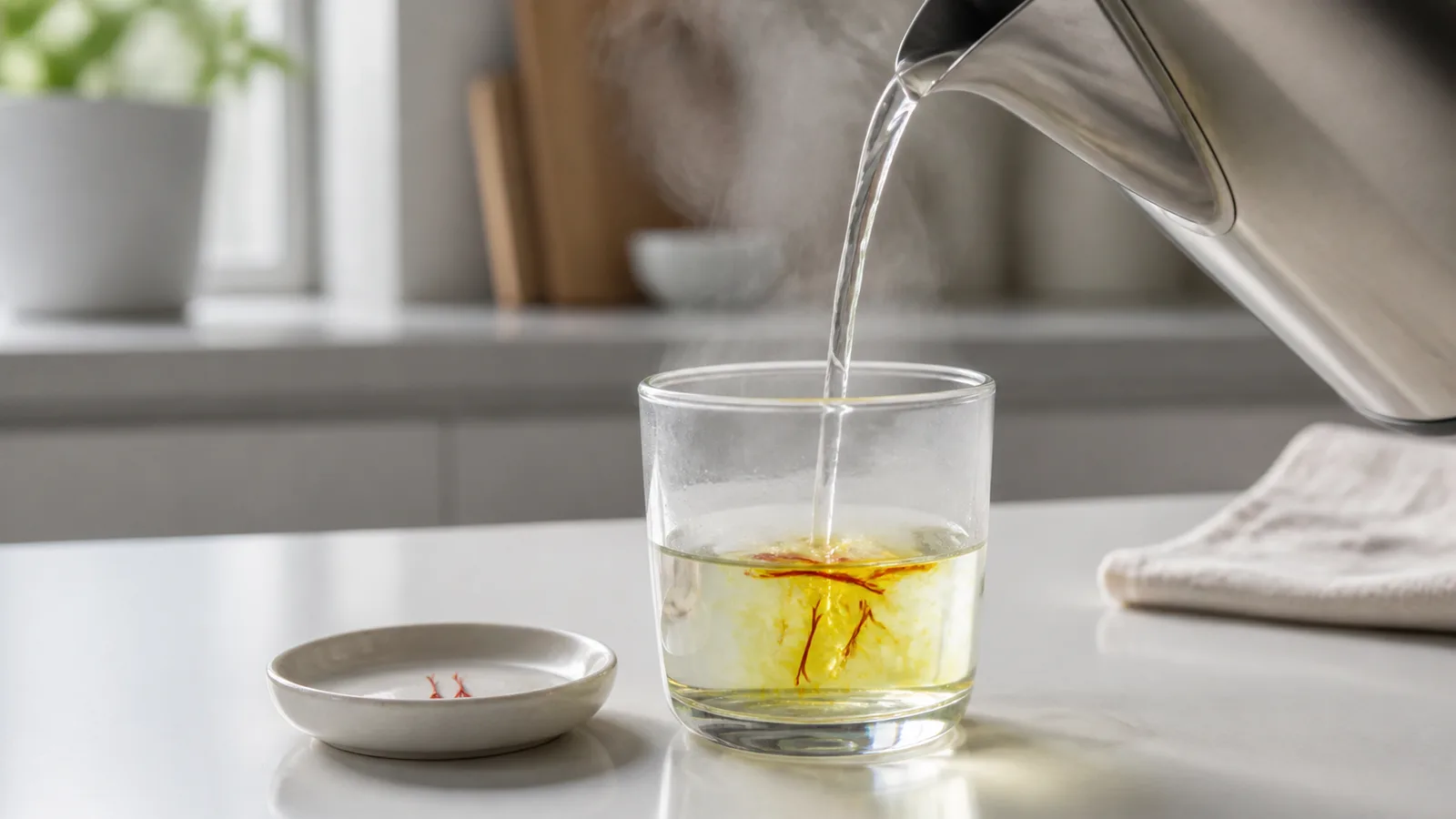
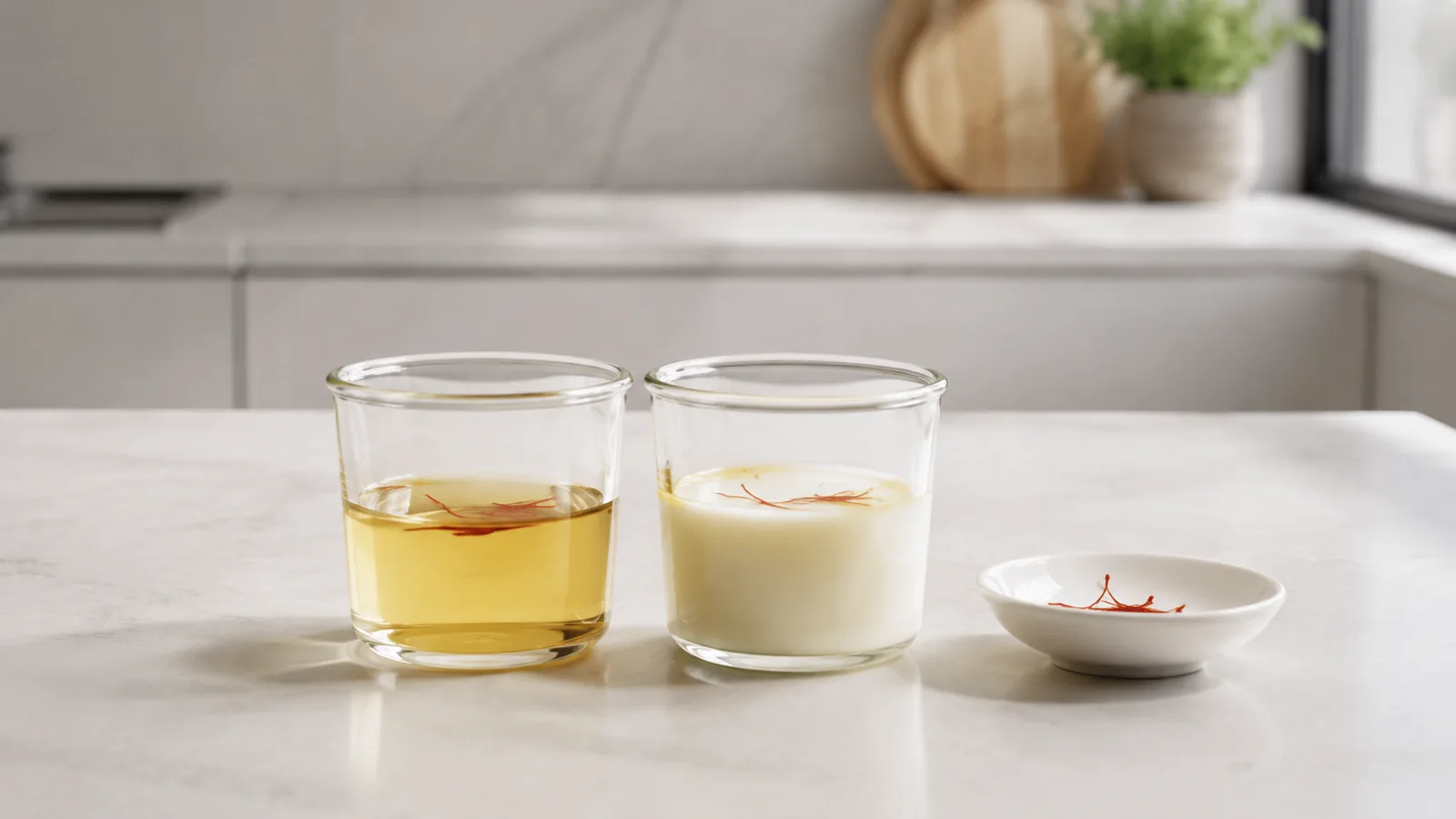
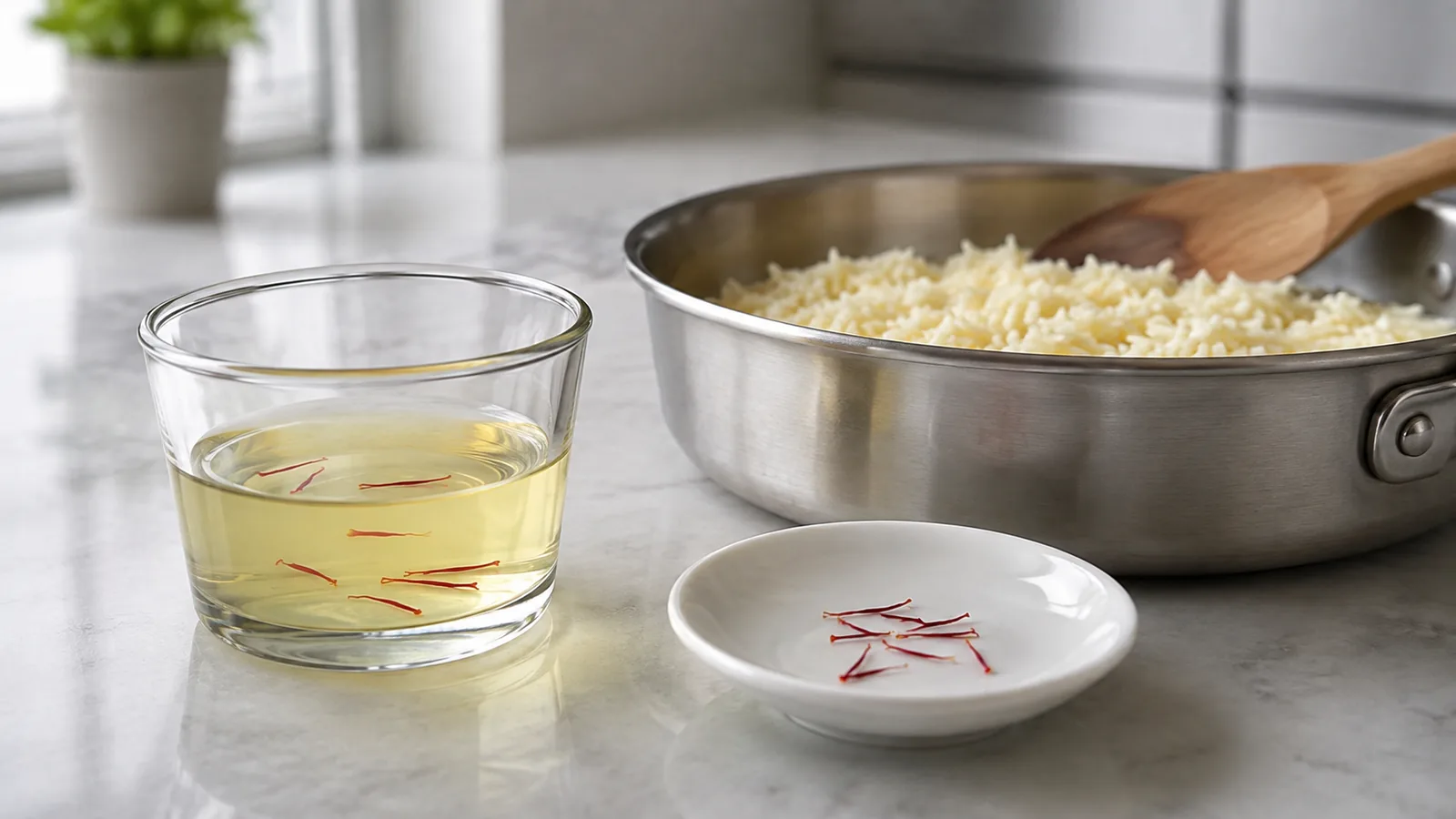
Gently grind the threads and cover them with two tablespoons of hot water. Leave the infusion for 10 to 15 minutes. You want a concentrated golden liquid without a dry clump of threads in the finished dessert.
How to prepare transparent and stretchy saffron Muscati
- Prepare the dish. Lightly grease the base and sides of a 20 cm square dish. Keep it near the stove.
- Dissolve the starch. Whisk the starch into two cups of cold water until no dry pockets remain. Let it stand for five minutes, whisk again, then pour it through a fine sieve. Cold water is important: hot water can set the outside of the starch into lumps.
- Make the syrup. Put the sugar, liquid glucose, and remaining two cups of water in a wide, heavy saucepan. Heat gently, stirring until the sugar dissolves. Bring it just to a light simmer; there is no need to caramelize it.
- Add the starch mixture. Whisk the starch once more because it settles quickly. Pour it into the simmering syrup in a slow stream while stirring continuously.
- Cook slowly. Reduce the heat to low. Stir with a heatproof spatula, scraping the base, corners, and sides. The mixture will move from milky and thin to thick, glossy, and increasingly translucent.
- Add the saffron and cardamom. When the mixture is thick but still easy to stir, add the bloomed saffron and cardamom. Mix until the color is even.
- Work in the butter. Add the butter a few pieces at a time. Wait until each addition is absorbed before adding more. If a greasy layer forms, lower the heat and keep stirring rather than adding extra starch.
- Add rosewater and nuts. Once the mixture is cohesive and glossy, stir in the rosewater and optional almond or pistachio slivers. Adding rosewater late protects more of its aroma.
- Cook to the final texture. Continue on low heat until the mixture pulls cleanly from the sides, gathers around the spatula, and a dragged line across the pan closes slowly. It should stretch without running like a sauce.
- Set and cut. Transfer it immediately to the prepared dish and smooth the surface with a lightly greased spatula. Cool at room temperature, then refrigerate until fully set. Cut with a lightly oiled knife.
How long should Muscati cook?
Pan width, burner strength, starch type, and water evaporation all affect the time. In a wide heavy pan, expect roughly 90 minutes to two hours after combining the starch and syrup. A narrow pot or very low heat may take longer.
The old recipe suggested that stirring for up to five hours automatically makes the dessert clearer and stretchier. Time alone is not the goal. Excessive cooking can flatten the saffron and rosewater aromas, darken the sugar, and make the finished sweet tough. Follow the texture cues rather than the clock.
How to make the saffron dessert transparent
- Start with cold water. It disperses the starch before heat activates it.
- Strain the starch mixture. This removes stubborn lumps and stray particles.
- Use a heavy, clean pan. Scorched residue creates brown flecks and a cooked flavor.
- Keep the heat low. A hard boil can cook the mixture unevenly and make it catch.
- Stir the whole pan. Scrape the corners and base, not only the center.
- Use clear glucose. It supports elasticity and reduces sugar crystallization without muddying the color.
- Add aromatics late. Saffron needs time to color the mixture, but rosewater is most fragrant near the end.
How to get a stretchy texture
Stretch comes from full starch cooking and correct moisture reduction. If the mixture pours freely, it is not ready. If it becomes a dry lump or releases visible butter, it has probably been cooked too hard or too long.
Liquid glucose is useful, but it cannot compensate for undercooked starch. Conversely, adding too much glucose may leave the dessert sticky and difficult to cut. Keep the original three-tablespoon amount for the first batch, then adjust only after seeing how your chosen starch behaves.
Troubleshooting this saffron dessert recipe
The mixture has lumps
Take the pan off the heat and whisk firmly while it is still loose. If small lumps remain, press the warm mixture through a fine sieve, return it to a clean pan, and continue over low heat. Prevention is easier: cold water, a smooth slurry, and slow pouring work best.
The dessert is cloudy
It may need more slow cooking, or the starch may not have dispersed fully. Flour, milk, unfiltered nut particles, or scorched spots will also reduce clarity. A pale translucent dessert is realistic; it will not be as clear as plain gelatin once saffron and nuts are added.
It did not set
Return the mixture to the pan and cook it longer if it is still spoonable after chilling. Do not scatter dry starch into it. If extra starch is essential, dissolve a small amount in cold water first, then add it gradually and cook thoroughly.
It is tough or rubbery
The mixture lost too much water or was overcooked. Serve it in smaller pieces and reduce the final cooking time in the next batch. Changing from cornstarch to wheat starch may also give a softer result.
Butter is separating
Lower the heat and stir steadily until the fat is absorbed. Adding cold butter all at once or cooking over high heat can cause separation.
Flavor variations
- More saffron-forward: use fresh, genuine threads and a longer bloom rather than a much larger amount.
- Citrus: add a small strip of orange zest while the syrup heats, then remove it before adding starch.
- Nut-free: omit the slivers and garnish with a few dried rose petals if suitable.
- Softer spoon dessert: stop cooking earlier and serve in small bowls instead of cutting it.
Among saffron dessert recipes, Muscati stands apart because starch concentration and extended stirring create its elastic texture. Other saffron desserts—cake, pudding, rice pudding, and ice cream—set in different ways. If you are baking with saffron, bloom the threads first but follow the cake recipe’s liquid balance; this starch-based saffron preparation cannot be transferred directly to batter.
Many desserts with saffron use the spice only for aroma and color. In this saffron sweet, it also needs to remain visible through a translucent base. That is why a dessert with saffron can tolerate less stirring than Muscati, while saffron in desserts made from starch must be balanced against clarity and cooking time.
Serving and storage
Serve small pieces at cool room temperature with tea or coffee. Store the dessert covered in the refrigerator for up to four days. Separate layers with parchment so the cut surfaces do not stick together. Freezing is not recommended because thawing can make the starch release water.
This is an energy-dense sweet containing substantial sugar and butter. Saffron adds flavor and color, but the dessert has not been shown to relieve chest pain or cough. Enjoy it as a traditional confection in a portion that suits you, not as a medicinal food.