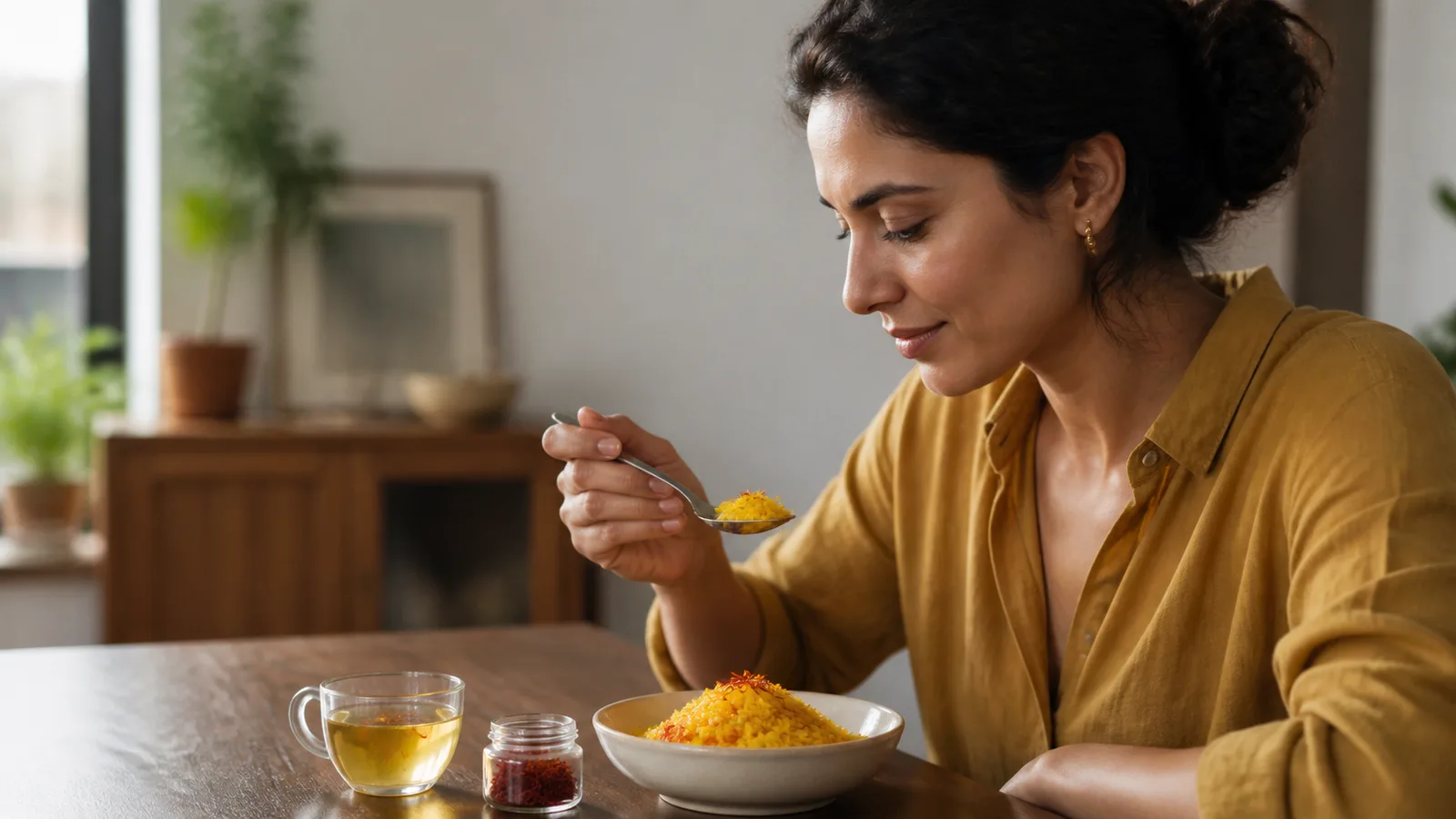
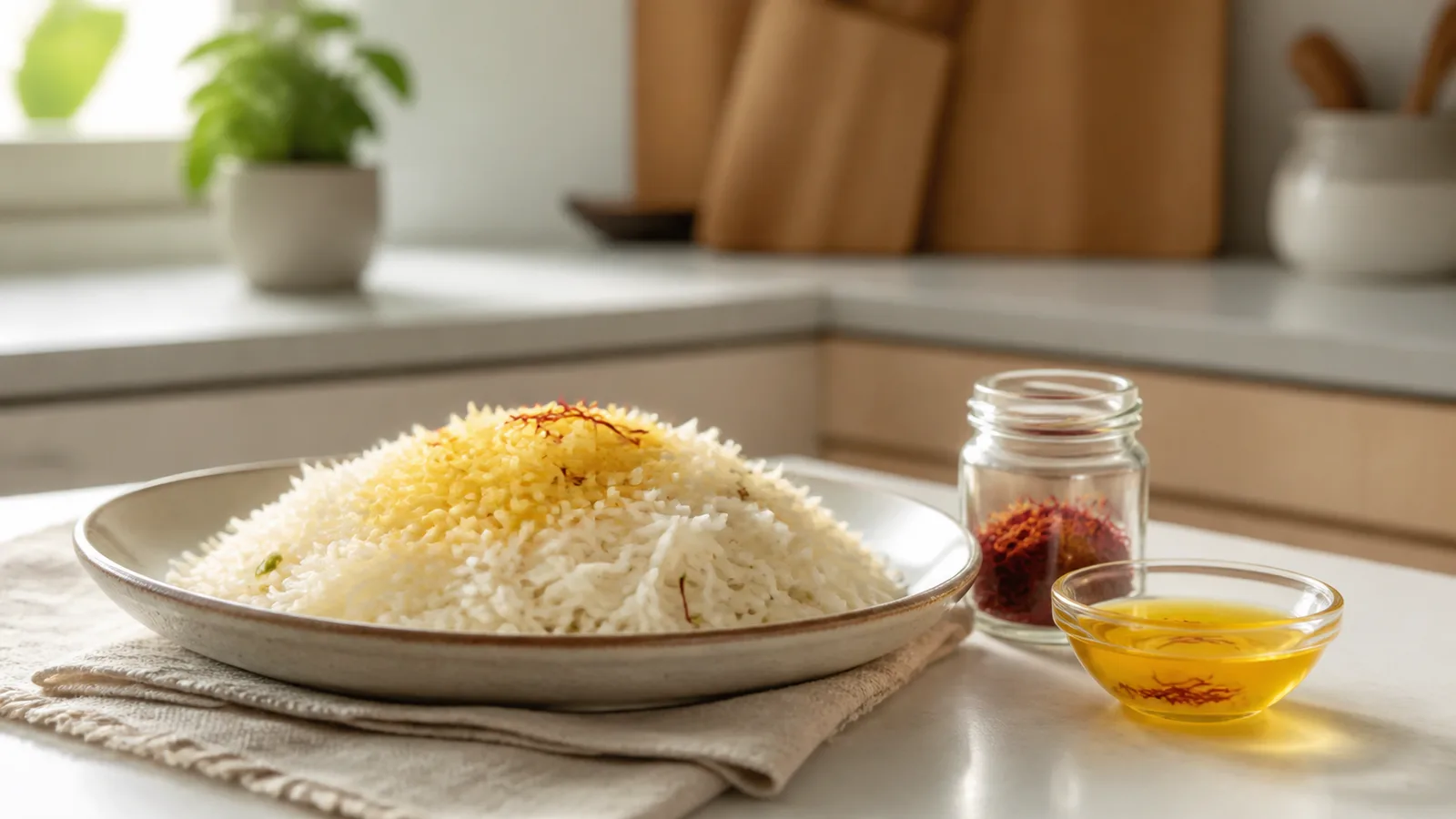
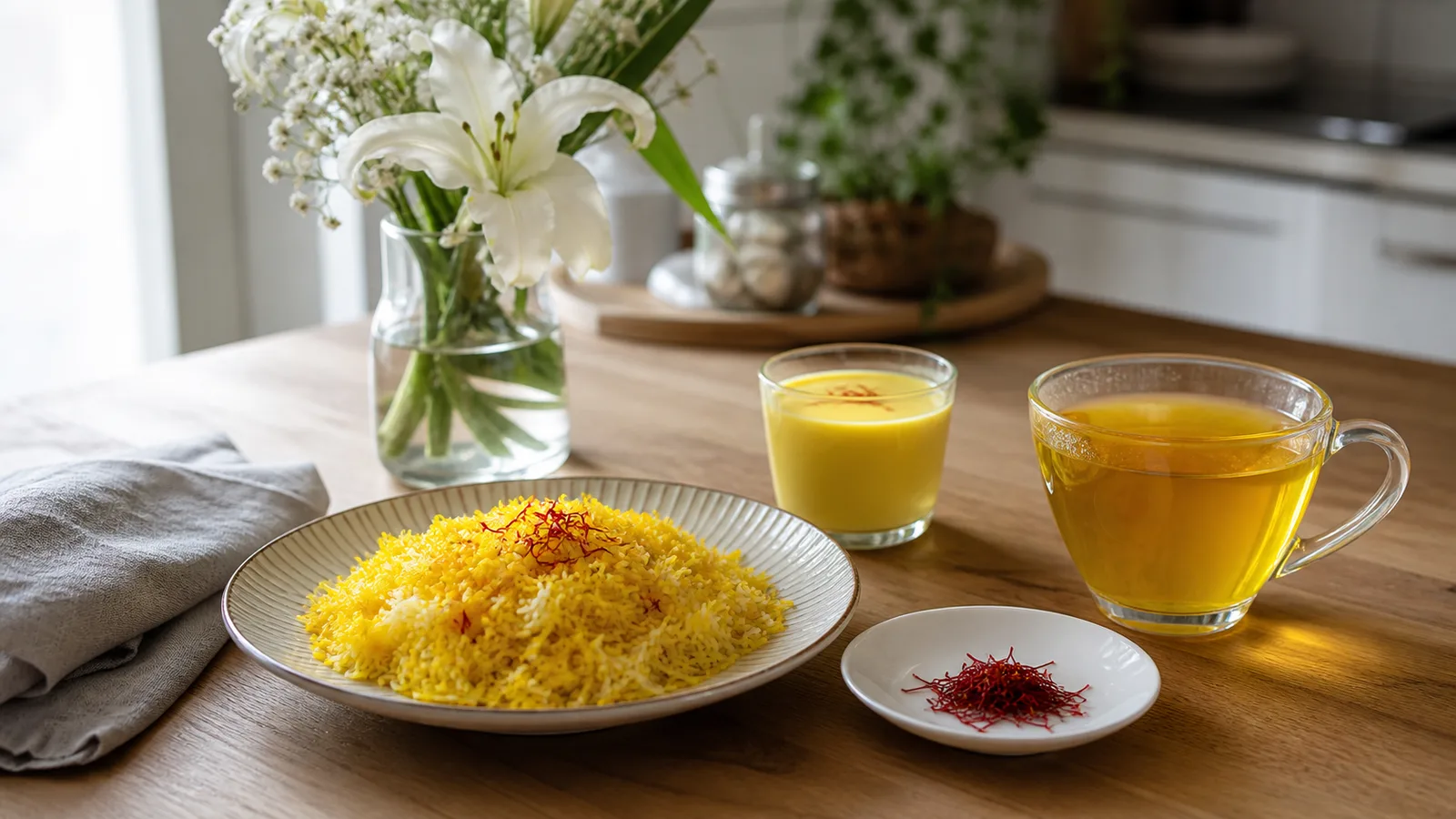
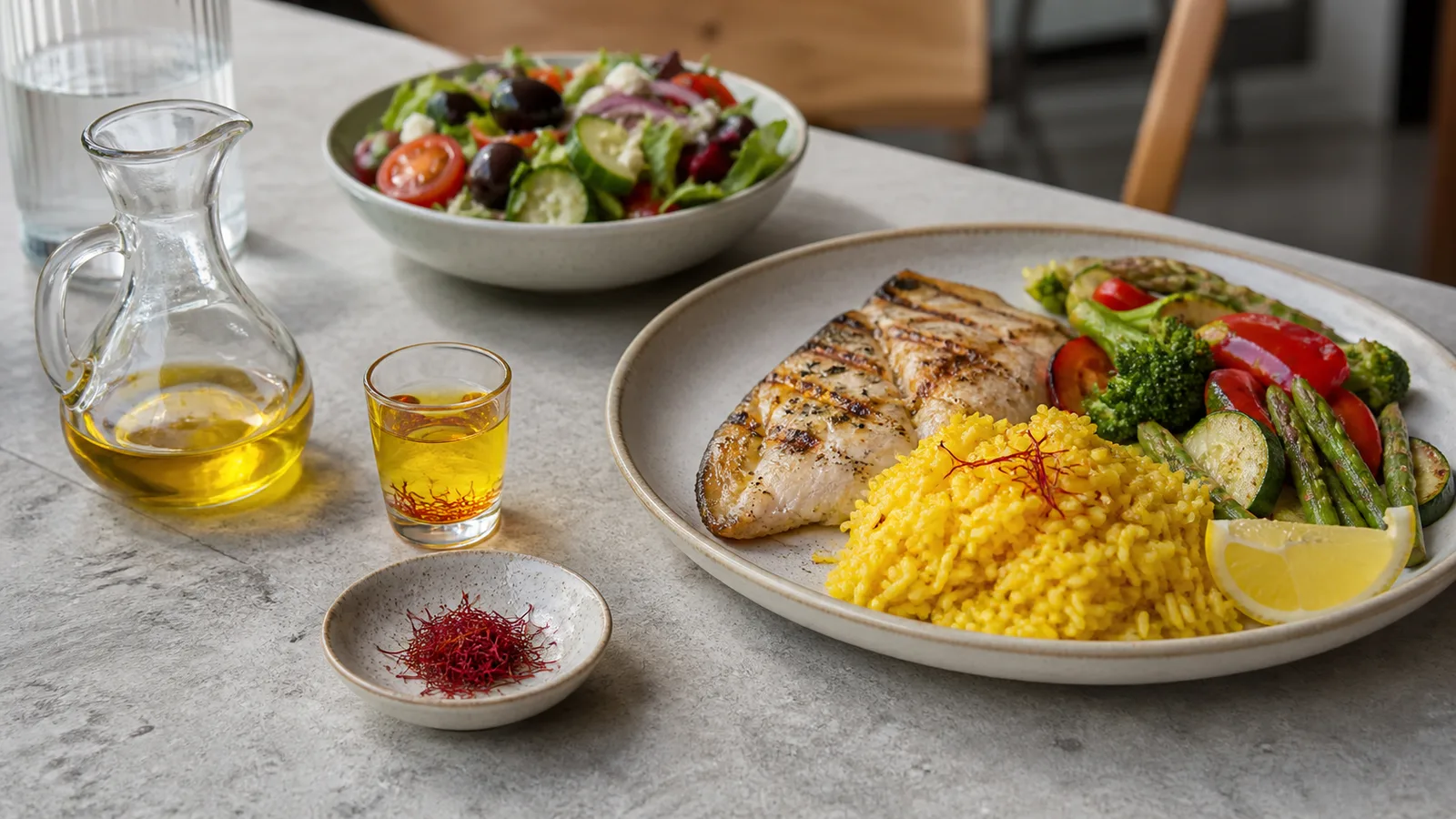
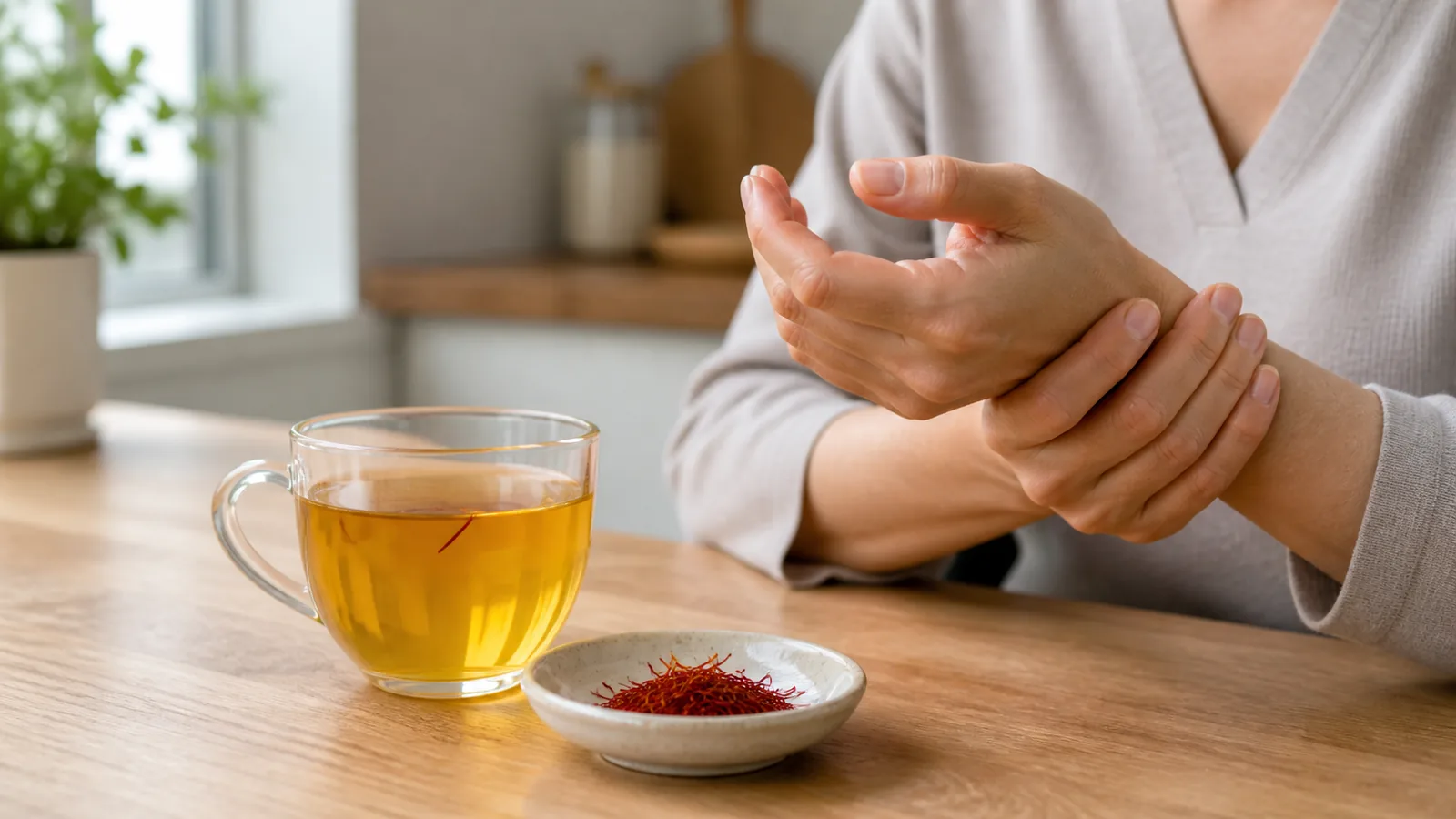
Saffron tea amazing properties begin with its color, aroma and ritual—not a promise to treat disease. A few saffron threads can turn hot water golden and add a distinctive floral, honeyed scent. Saffron extracts have also been studied in clinical trials, especially for mood, but a home-brewed cup is not equivalent to a standardized research supplement.
What saffron tea contains
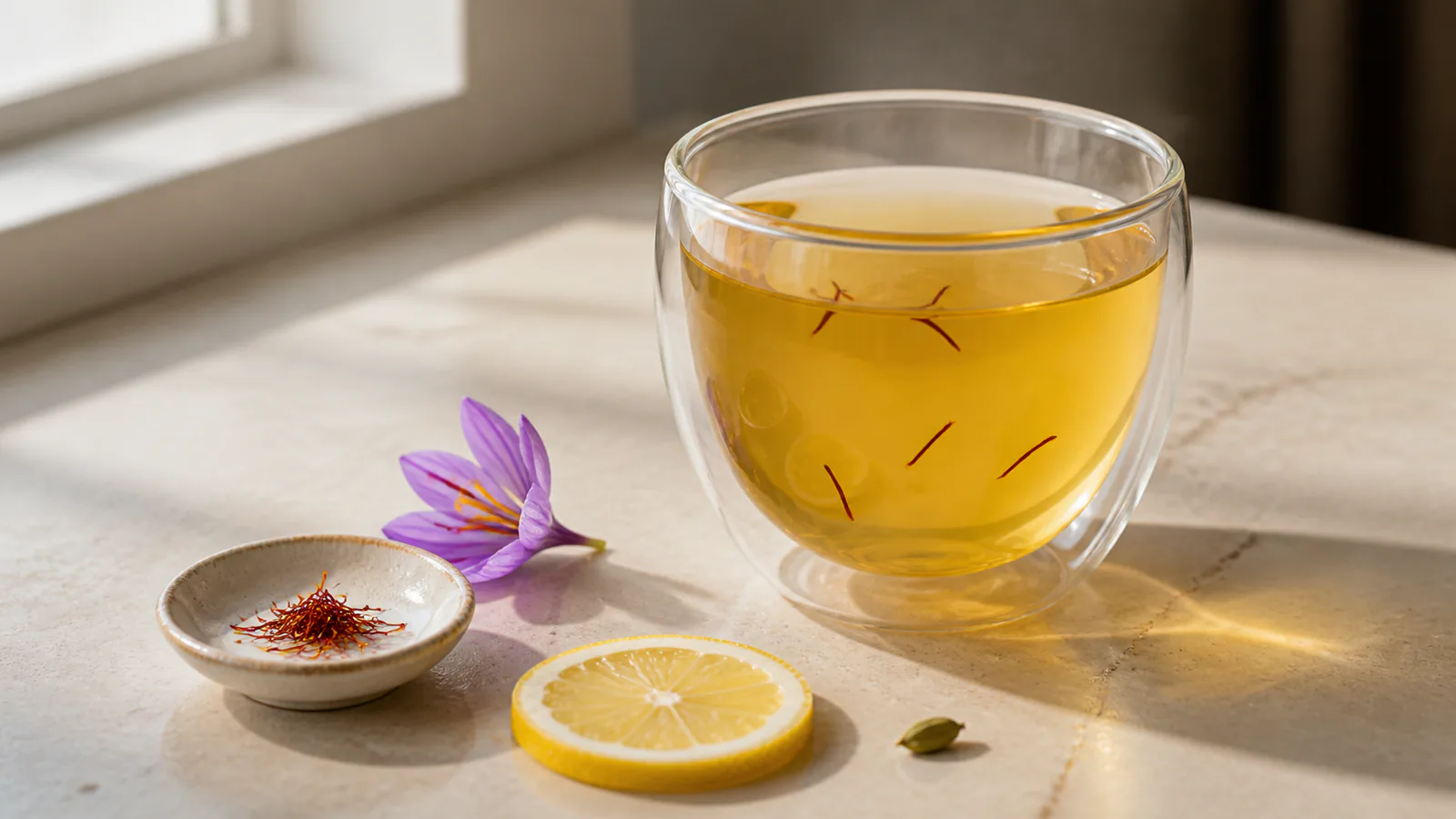
Saffron is the dried red stigma of Crocus sativus. Its best-known compounds include crocins, which contribute color; picrocrocin, associated with taste; and safranal, a major aroma compound. Hot water extracts some of these water-soluble constituents while releasing the spice’s flavor.
The original article said around 400,000 stigmas were needed for one kilogram of saffron. Because each flower has three stigmas, that would represent roughly 133,000 flowers. Counts vary with flower size, trimming, moisture and grade, but the scale explains why genuine saffron is expensive.
This concentrated labor does not make tea a medicine. It makes a small amount of the spice visually and aromatically powerful.
Mood research is promising but does not describe a cup of tea
Randomized trials and systematic reviews have studied saffron for depressive and anxiety symptoms. A 2026 GRADE-assessed review of 34 trials found improvement on some self-reported scales, but not on every mood measure; heterogeneity was high and the certainty of evidence was rated moderate.
Most trials used a defined extract or supplement for several weeks. They did not test an unspecified “large amount” of saffron tea, and they do not justify using tea in place of mental-health care. Anyone with persistent low mood, loss of interest or thoughts of self-harm needs qualified help. Do not stop or replace an antidepressant without the prescriber’s guidance.
Saffron tea has not been shown to prevent cancer
Saffron contains carotenoid-derived compounds that researchers have tested in cells and animals. Those experiments can identify mechanisms worth studying; they cannot show that drinking saffron tea prevents leukemia, sarcoma or any other cancer in people.
The US National Cancer Institute’s review of antioxidants and cancer prevention explains the wider evidence problem: laboratory findings do not automatically become preventive benefits in human trials. Saffron tea should be enjoyed as a beverage, not sold or consumed as cancer prevention or treatment.
Blood pressure and heart claims need scale
The old article said saffron tea prevented cholesterol from collecting in arteries and therefore prevented heart disease. That claim was not supported. Cardiovascular disease is affected by many factors, and no cup of tea can substitute for prescribed treatment, blood-pressure monitoring, smoking cessation, movement and an appropriate diet.
A meta-analysis of eight randomized trials found small reductions in blood pressure with saffron supplementation. The authors said the size of the effect might not be clinically important. Again, those data concern studied supplements, not a household infusion of unknown strength.
People taking blood-pressure medicine should not use concentrated saffron products to chase a lower reading. Combining interventions can produce unwanted effects, and treatment changes belong with a clinician.
Abdominal and menstrual pain were overstated
Traditional use includes saffron infusions for digestive or menstrual discomfort. The original post went much further, claiming effectiveness for moderate to severe abdominal pain, upper-abdominal pain, bowel pain and uterine bleeding. Those symptoms can signal conditions that need diagnosis; tea should not delay care.
Seek urgent medical advice for severe or persistent abdominal pain, fainting, fever, repeated vomiting, black or bloody stool, pregnancy-related pain or unusually heavy bleeding. A warm drink may feel soothing, but comfort is not evidence that the cause is harmless.
The old claim that saffron should stimulate vomiting or coughing to clear mucus was also unsafe. Deliberately provoking vomiting or coughing can cause harm and is not a recommended use of saffron tea.
Pregnancy and supplement safety
The original article warned pregnant readers about saffron tea but presented miscarriage as a settled result. The safer statement is broader and better supported: pregnancy is not the time to experiment with concentrated herbs or supplements without professional advice.
The US Food and Drug Administration advises pregnant people to speak with a healthcare provider, nurse or pharmacist before taking medicines, vitamins or herbs. Culinary amounts used normally in food are different from strong infusions, extracts and supplements. If pregnant, trying to conceive or breastfeeding, ask the relevant clinician about saffron rather than relying on an online dose.
How to enjoy saffron tea without turning it into a remedy
Use genuine threads from a traceable source, not an unknown bright-red powder. A small pinch is enough for a culinary cup. Crush the threads lightly, add hot water and allow time for the color and aroma to open. Lemon, honey, ginger, cardamom or a mild tea can be added according to taste.
Our full saffron tea recipe covers the preparation in detail. More saffron is not automatically better. Avoid repeated concentrated use, and discuss supplements or medicinal-strength preparations with a healthcare professional—especially if you take medication, have a health condition or are preparing for surgery.
The genuinely amazing properties
Saffron tea needs no exaggerated cure list to be special. A tiny amount produces intense color, a complex aroma and a calm preparation ritual. The spice also connects a cup with the careful work of growing flowers, picking them by hand and separating three stigmas from each bloom.
Clinical research on standardized saffron products deserves careful attention, but it should be described in its own terms. For the tea in your cup, the honest promise is simple: fragrance, color, warmth and flavor.