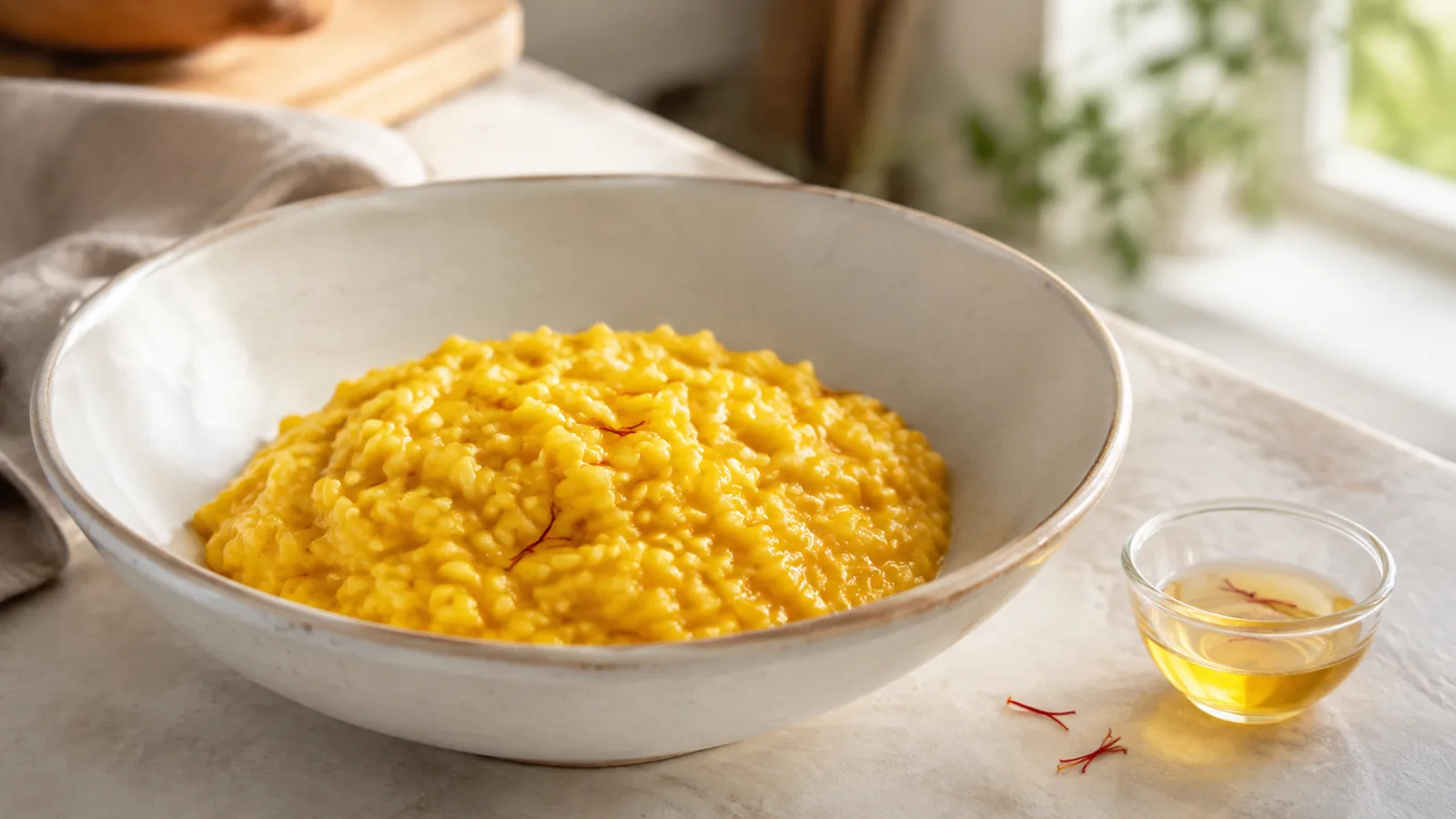
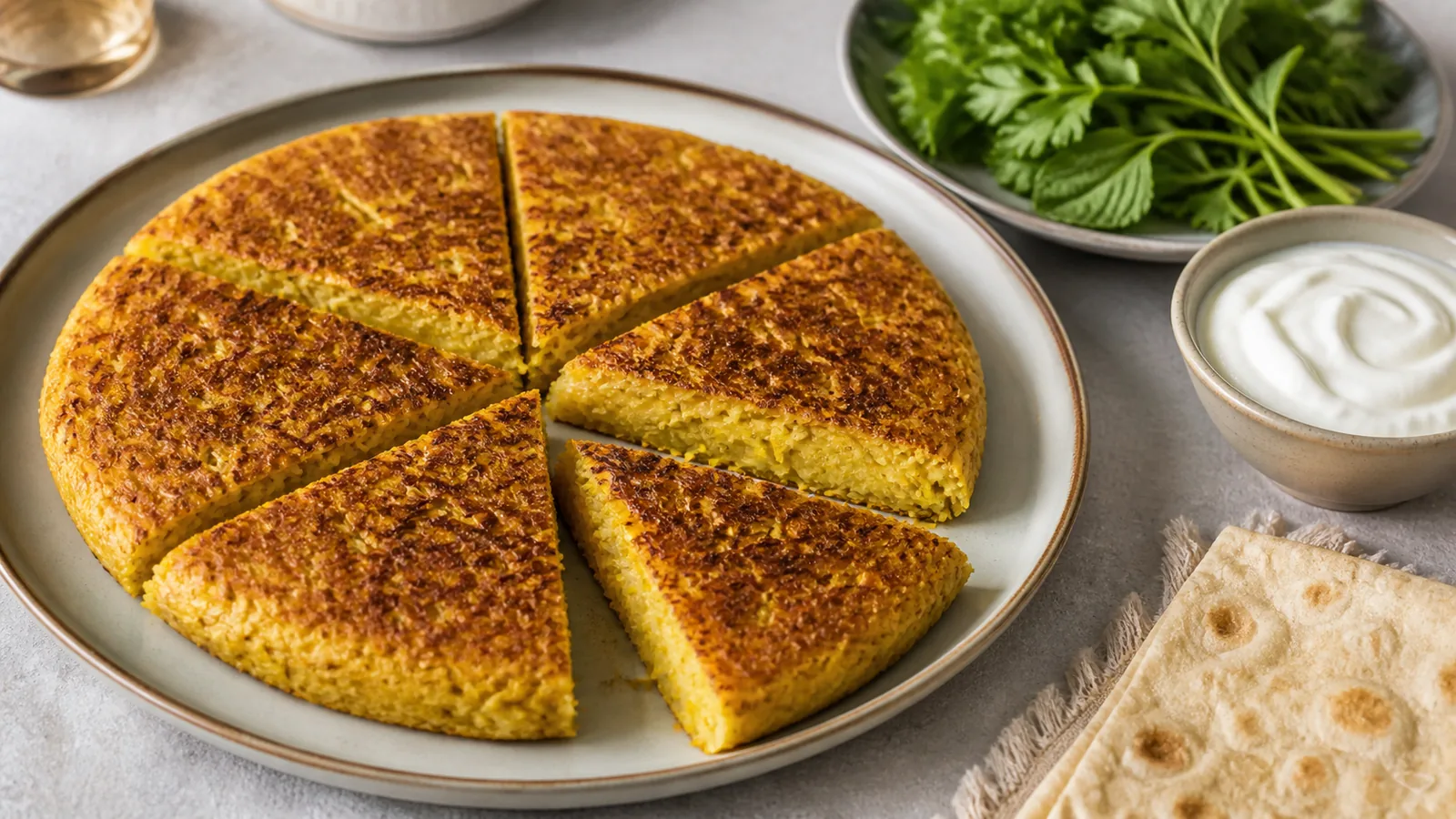
This Saffron Quince Kuku recipe turns grated quince, eggs and rice flour into a tender Persian-style pan omelette with a gently sweet edge. Low heat gives the fruit time to soften while the saffron colours the centre and the base becomes golden.
Ingredients
- 2 medium quinces
- 3 large eggs
- 2 tablespoons rice flour
- 1 tablespoon concentrated saffron infusion
- 1 tablespoon sugar, or to taste
- 1/4 teaspoon salt
- 2 to 3 tablespoons neutral oil, for the pan
Quinces vary considerably in size. After peeling and removing the hard cores, you should have roughly 400 to 450 g of fruit. If you have much more, save the extra rather than making a loose mixture that the eggs cannot hold together.
Prepare the quince
Wash and dry the quinces. Peel them, cut each one into quarters and remove the core carefully; it is firmer than an apple core. Grate the flesh on the coarse side of a box grater into a wide bowl.
Quince begins to darken after cutting, but there is no need to soak it. Mix the batter promptly and the saffron will give the cooked kuku its warm colour.
Mix the kuku batter
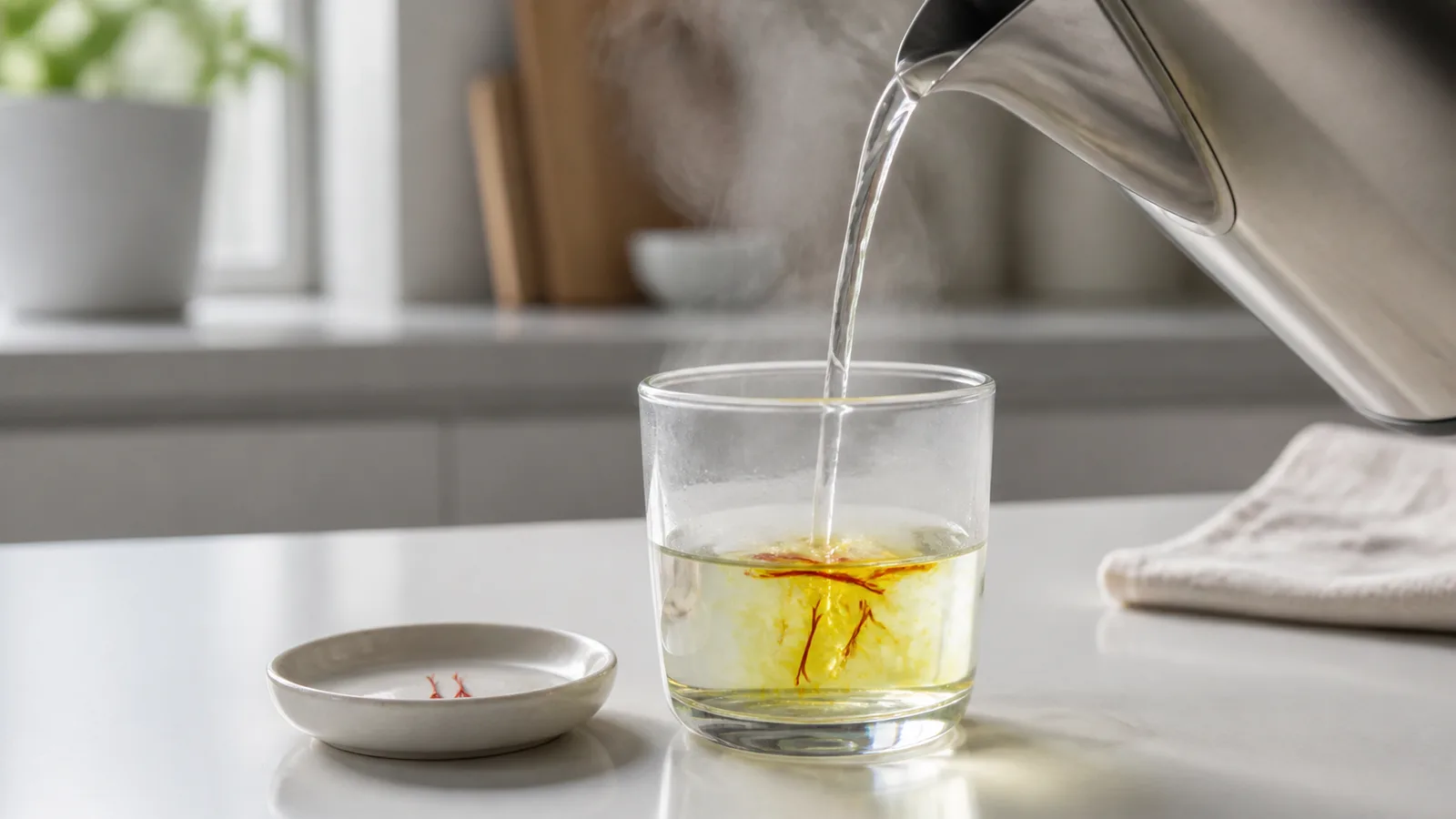
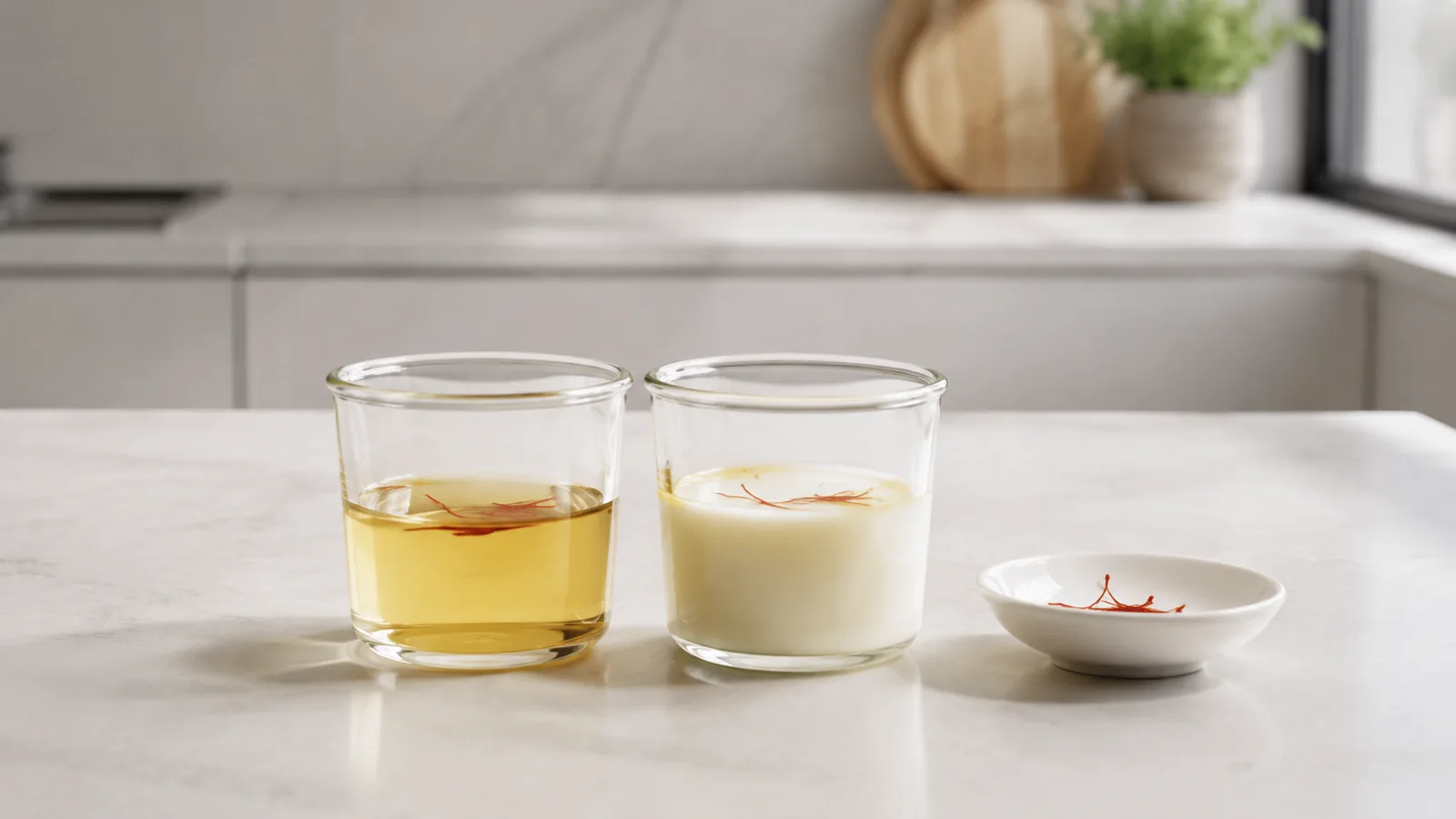
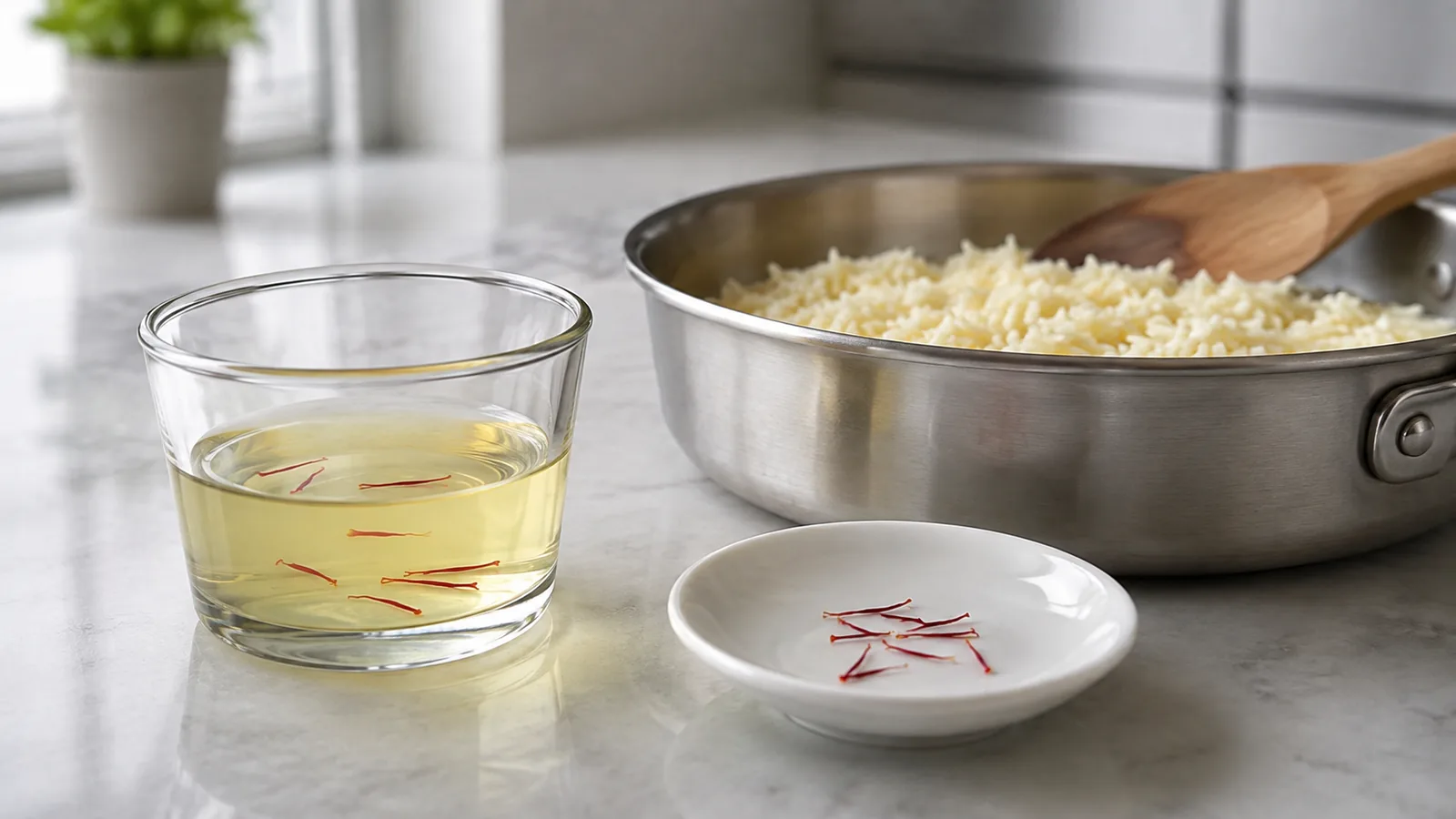
Crack the eggs into a separate bowl and whisk until the whites and yolks are fully combined. Stir in the saffron infusion, sugar and salt. Our saffron-brewing guide explains how to make a concentrated infusion without adding too much water.
Pour the egg mixture over the grated quince. Sprinkle in the rice flour and fold until no dry pockets remain. The mixture should be moist but spoonable, with the fruit evenly coated rather than floating in egg.
Cook saffron quince kuku in a pan
Choose a 24 cm non-stick or well-seasoned frying pan with a lid. Add 2 tablespoons oil and warm it over medium-low heat. Swirl the pan so the base and lower sides are coated.
Add the quince mixture and spread it to an even thickness. Cover and cook over low heat for 10 to 12 minutes. The top should lose its wet shine and the edges should feel set before you try to turn it.
Cut the kuku into four or six wedges in the pan. Slide a broad spatula underneath each piece and turn it gently. Add the remaining oil around the edge if the pan looks dry, then cook uncovered for another 6 to 8 minutes.
Quince contains natural sugar and catches quickly, so resist raising the heat to speed up browning. A deep golden surface is enough; a dark crust can taste bitter before the fruit inside has softened.
Oven method
Heat the oven to 180°C/350°F. Oil a 20 cm round baking dish or line its base with baking paper, then spread the mixture evenly.
Bake for 22 to 28 minutes, until the centre is set and springs back lightly. For more colour, brush the surface with a little oil and place it under the grill for 1 to 2 minutes, watching continuously.
The oven version uses less frying oil, but it should still remain moist. Remove it when the eggs are set rather than waiting for the centre to become firm and dry.
Adjust the sweetness
One tablespoon of sugar gives a mild sweet-savoury balance. If the quince is especially tart, use up to 2 tablespoons. For a more savoury kuku, reduce the sugar to 1 teaspoon rather than omitting it entirely; a little softens the fruit’s sharpness.
Taste preferences differ, but do not sprinkle dry sugar over the cooked surface. Mixing it into the eggs lets it dissolve and brown evenly.
How to serve it
Rest the kuku for 5 minutes before lifting it from the pan. Serve warm or at room temperature with flatbread, fresh herbs and plain yogurt.
For clean portions, let it cool slightly and follow the cuts already made in the pan. The wedges firm as they rest without losing their tender centre.
Common problems
- Kuku falls apart: check the fruit quantity, mix the rice flour evenly and wait until the first side is set before turning.
- Centre stays raw: keep the layer even, cover the pan during the first stage and cook over low heat.
- Base burns: use a heavy pan and reduce the heat; quince browns faster than herb or potato kuku.
- Texture is watery: use a concentrated saffron infusion and avoid rinsing the grated fruit.
Storage
Cool leftovers promptly and refrigerate them in a covered container for up to 2 days. Reheat wedges in a covered pan over low heat, or let them return to room temperature before serving.