


The Saffron Supplementary Fund is set up reported a plan for a saffron support or development fund in Iran. “Supplementary” is an awkward translation: Ali Hosseini, a member of the National Saffron Council, described pooled capital intended to support export working finance, production quality and a stronger saffron market.
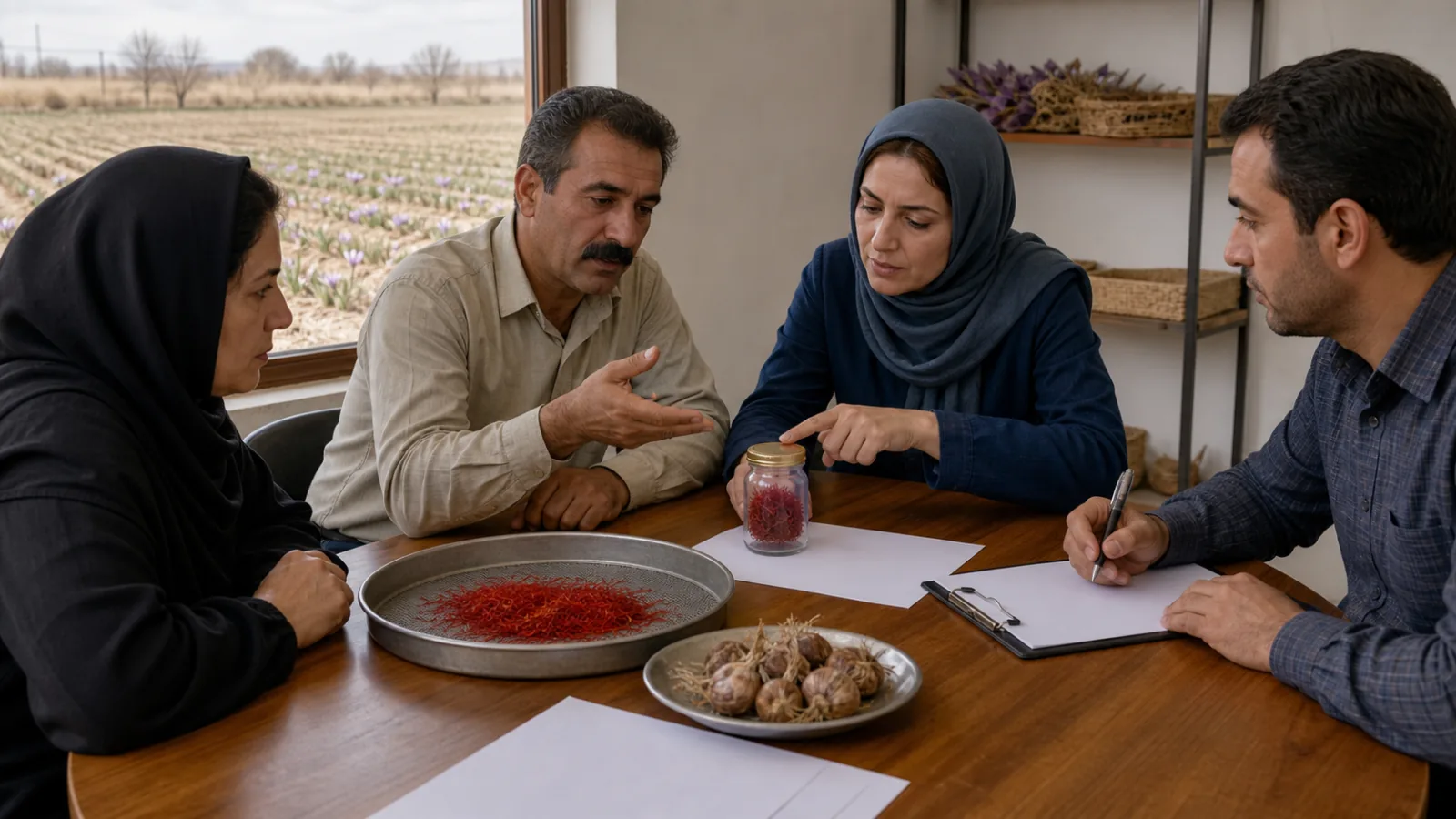
The announcement also covered licensed exporters, market stability and a ten-month export figure of more than 211 tonnes. These were policy statements from the 1397–1398 Iranian reporting period, not current rules or current trade statistics.
What the fund was expected to support
Hosseini said the fund could finance work across the saffron chain: better processing, improved product quality, higher farm productivity, new fields and farmer training. Export finance was part of the proposal because a sale can require working capital long before the exporter is paid.
Those aims are related, but they should not be combined into one vague promise. New acreage, better yield, clean processing, laboratory testing, market development and export credit each need a budget, eligible applicant, repayment or grant terms, and a measurable result.
A fund is a mechanism, not evidence of success
The historical article did not state the fund’s legal form, initial capital, contributors, governance, application rules or audited results. Its title says the fund was being set up, while the body mainly explains what its capital was meant to do.
That difference matters. A programme should be described as operational only when its governing documents, funding, decision process and first transactions can be verified. Later use of another agricultural support fund does not prove the original saffron-specific proposal was implemented exactly as described.
For context, a later official IANA report on agricultural support-fund finance for saffron exporters shows how a disclosed facility can name its purpose and approximate rate. It concerns a later programme in North Khorasan and should not be treated as the same fund.
Quality improvement starts before export
Funding can help growers obtain suitable corms, field advice and training, but spending is not the result. Productivity should be measured as verified dry saffron from bearing hectares, alongside water use, corm health, labour and the quality distribution of the crop.
Processing support should concentrate on clean flower handling, prompt stigma separation, controlled drying, protection from contamination, suitable packaging and traceable lots. The ISO 3632-1 saffron specification defines recognised categories and requirements; a programme still needs a disclosed sampling and laboratory process to show that funded lots meet the intended standard.
Our guide to saffron quality explains the characteristics buyers assess after harvest. Training is most useful when those practices are demonstrated in the field and processing room, then checked in the finished product.
Why the council wanted identified exporters
The old translation said exports should be allowed only to people who were “residents.” The more credible reading is identified or licensed exporters: businesses with a traceable record and continuing responsibility in the market.
Hosseini argued that this would reduce opportunistic participation by traders interested in one transaction but not the long-term reputation of Iranian saffron. The concern was brand and market damage from inconsistent pricing, quality or commitments.
Licensing alone is not enough. A sound system needs clear entry requirements, published enforcement, product traceability and proportionate sanctions, without allowing established firms to exclude capable smaller exporters unfairly.
The market-stability claim was time-specific
Hosseini said the export market had recovered and that, from October, reduced direct government intervention and greater private-sector responsibility coincided with more stable prices. In his view, stability allowed buyers and sellers to plan without fear of sudden price movements that could halt trade.
That was an observation about one period. The article did not supply a price series, intervention dates, exchange-rate controls or a comparison group, so it cannot prove that the policy change alone caused the recovery. Weather, harvest size, currency conditions and overseas demand may also have mattered.
The closing warning about certain buyers was badly translated. Its safe meaning is that opportunistic purchasing and unpredictable government intervention could put the following year’s export performance at risk.
How to read the 211-tonne export figure
The report said saffron exports exceeded 211 tonnes by the end of January. Contemporary accounts identify this as the first ten months of Iranian year 1397, so the figure belongs to a defined historical period rather than a full current year.
It should also be identified as customs export weight. Weight alone does not show the price received, return to farmers, branded versus bulk share, re-exports, destination concentration or payment risk.
Hosseini said Iran was the world’s largest saffron producer and claimed other countries together produced less than 10% at the time. That historical share is not a permanent ratio. Production and export leadership must be dated and supported by comparable data whenever the claim is updated.
What an accountable saffron fund would publish
A credible follow-up would disclose capital committed and deployed, who received support, financing terms, defaults, training participation, hectares affected, verified quality changes and export outcomes. It should separate loans, guarantees, grants and technical assistance rather than report them as one total.
Most importantly, it should show who benefited. Higher export tonnage is not enough if farmers receive late payment, grading remains inconsistent or public support mainly reduces risk for intermediaries.
The fund proposal joined sensible needs—working finance, skills, quality and market continuity. Its value depends on transparent governance and evidence that those tools improve producer outcomes and buyer confidence, not on the existence of a fund name alone.

![Exporting Saffron to Turkey + Price Guide [Complete 0 to 100]](https://img.rowhanisaffron.com/20260827003933/saffron-export-turkey-quality-inspection.webp)



