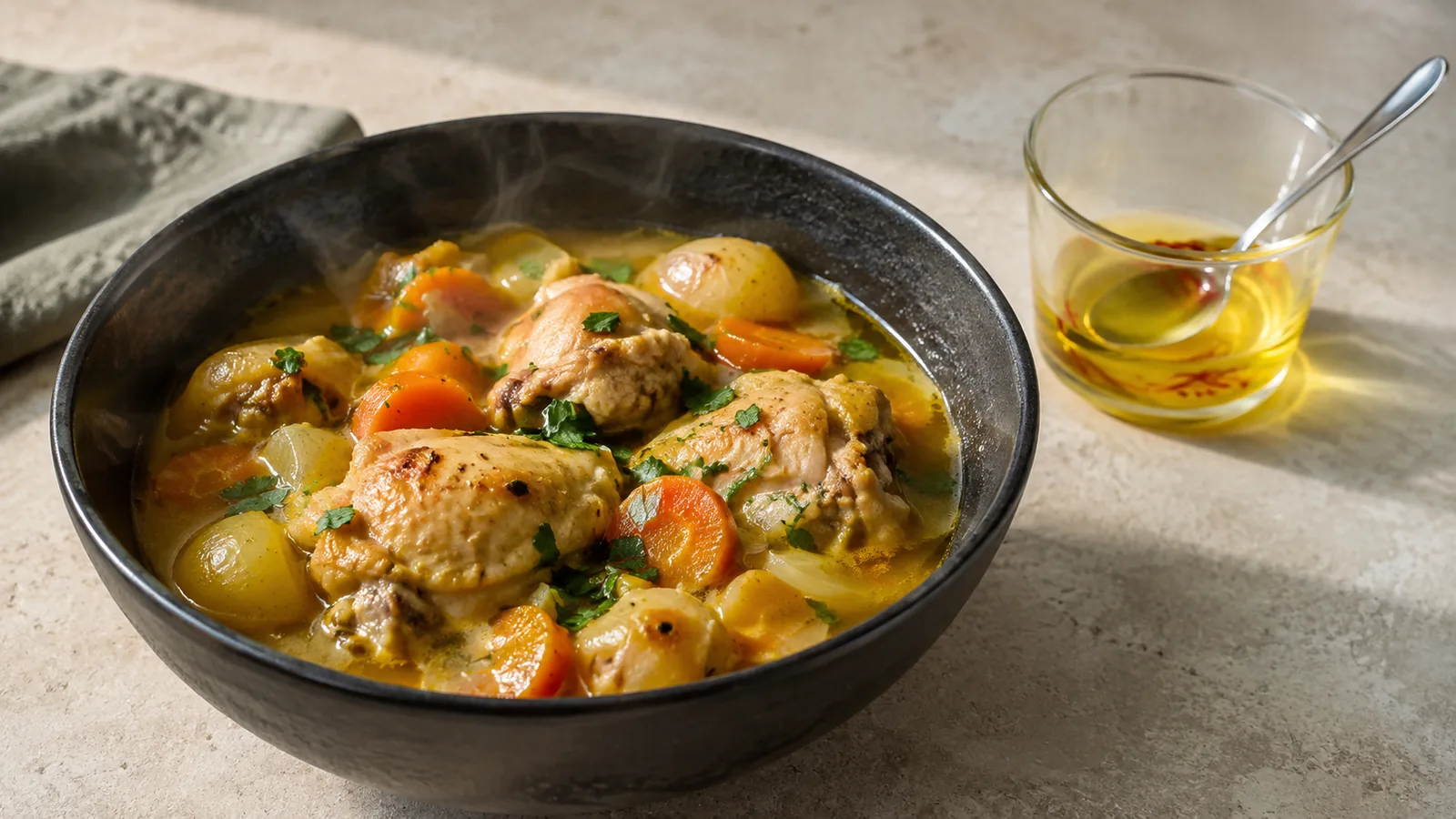
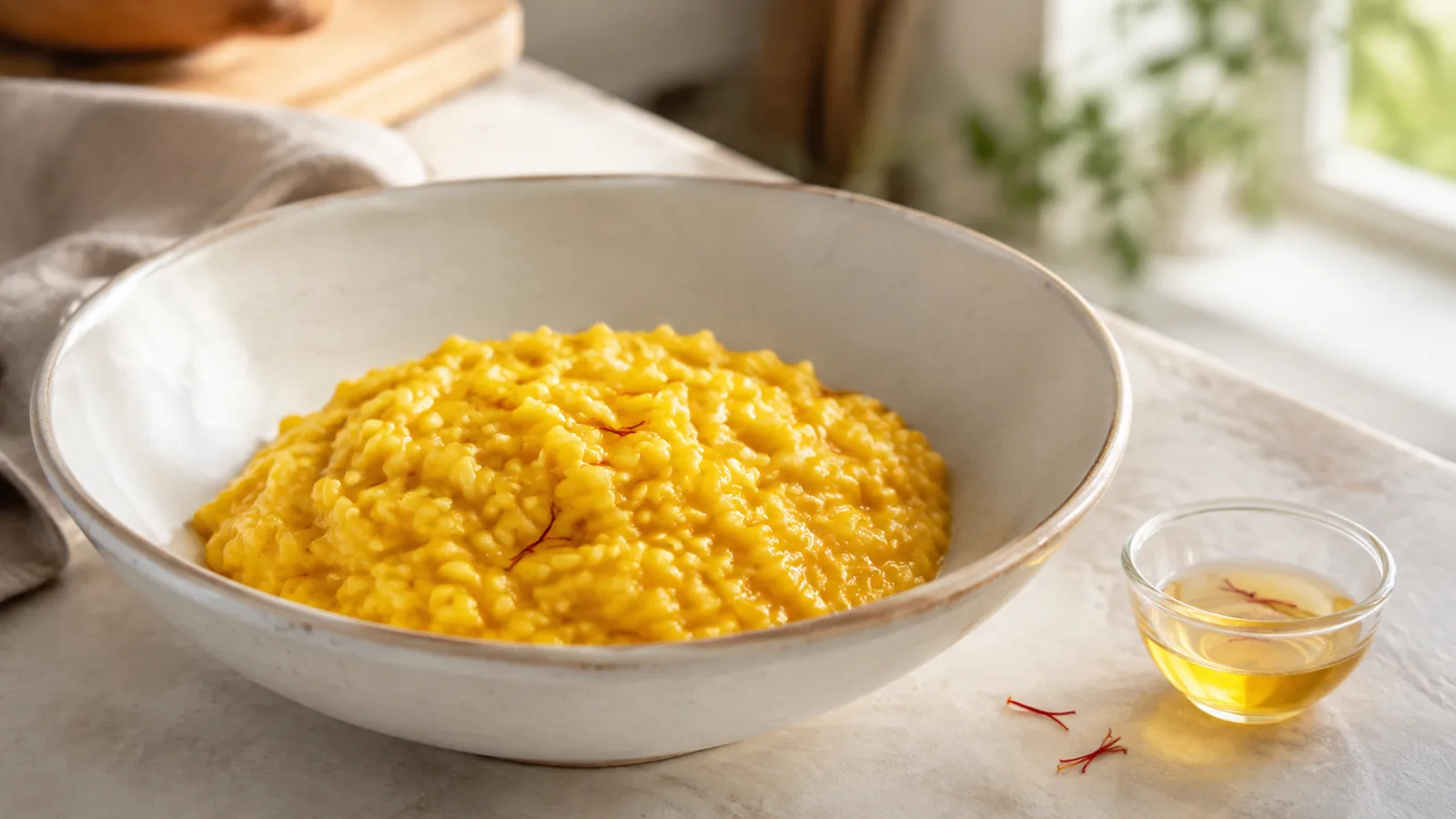
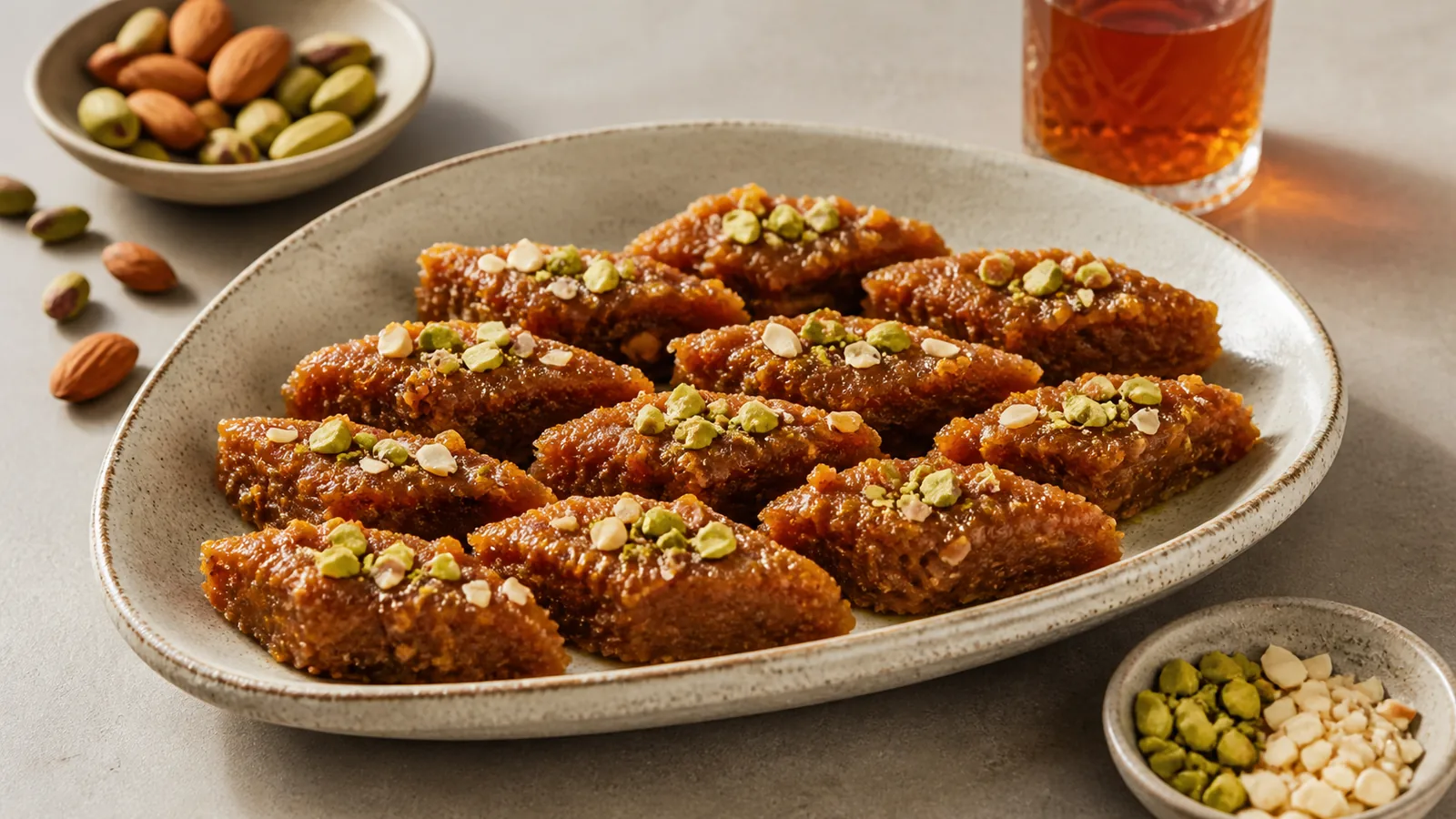
This halva dates Saffron Recipe makes a soft, mouldable sweet from roasted wheat flour, date paste, rosewater and saffron. It needs no added sugar: the dates provide the sweetness, while pistachio and almond bring a little contrast.
Ingredients
- 150 g plain wheat flour
- 500 g soft dates, weighed before pitting
- 120 g neutral oil
- 2 tablespoons rosewater
- 1 teaspoon concentrated saffron infusion
- 1 tablespoon ground or finely chopped pistachios
- 1 tablespoon ground or finely chopped almonds
Choose soft dates with a caramel-like texture. If yours are dry, put the pitted fruit in a covered bowl with 1 tablespoon hot water for 10 minutes, then drain before mashing.
Prepare the dates and saffron
Open every date and remove the stone. Check the inside before it goes into the bowl, then mash the fruit with a fork or pulse it briefly in a food processor until it forms a thick paste.
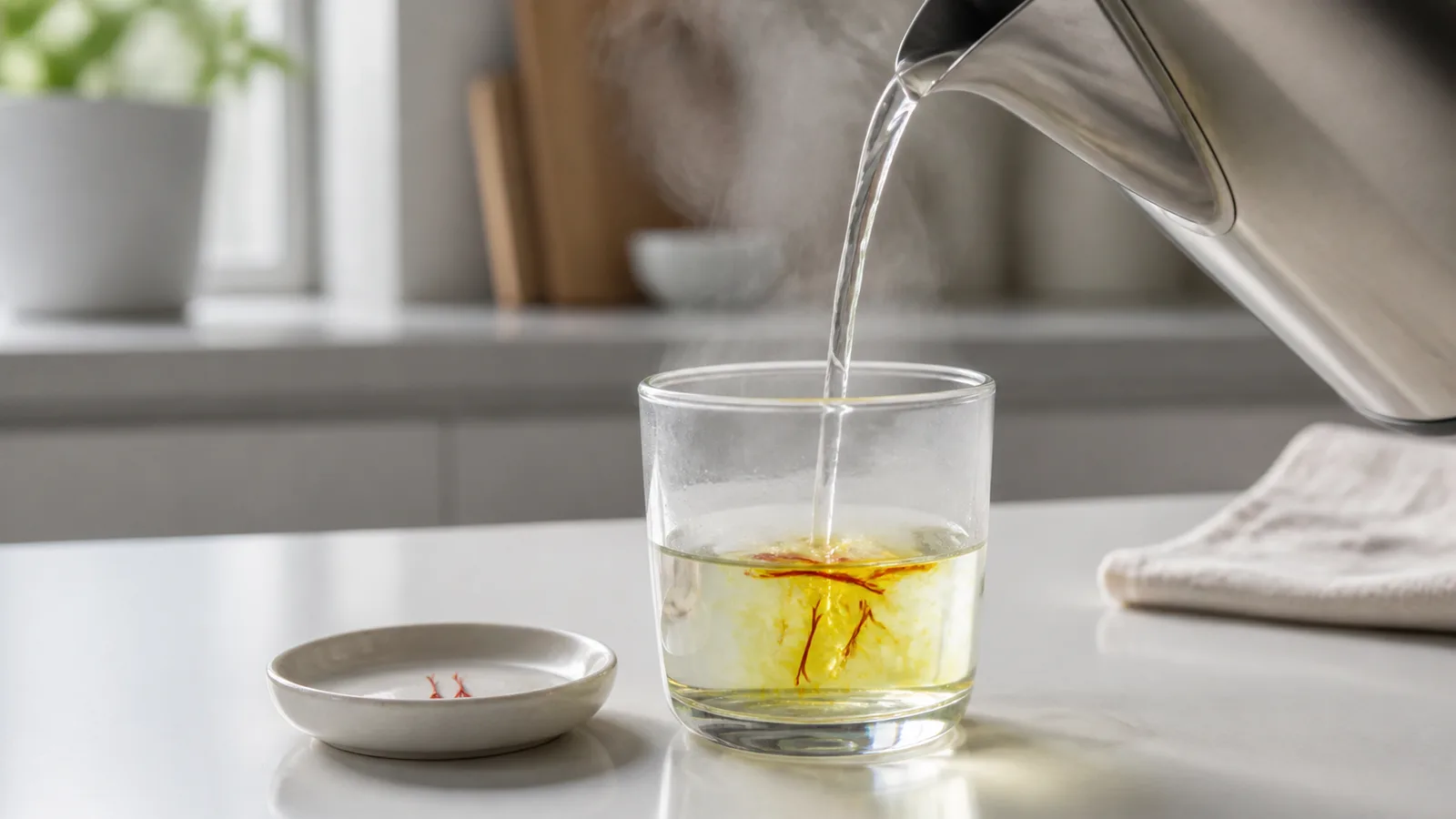
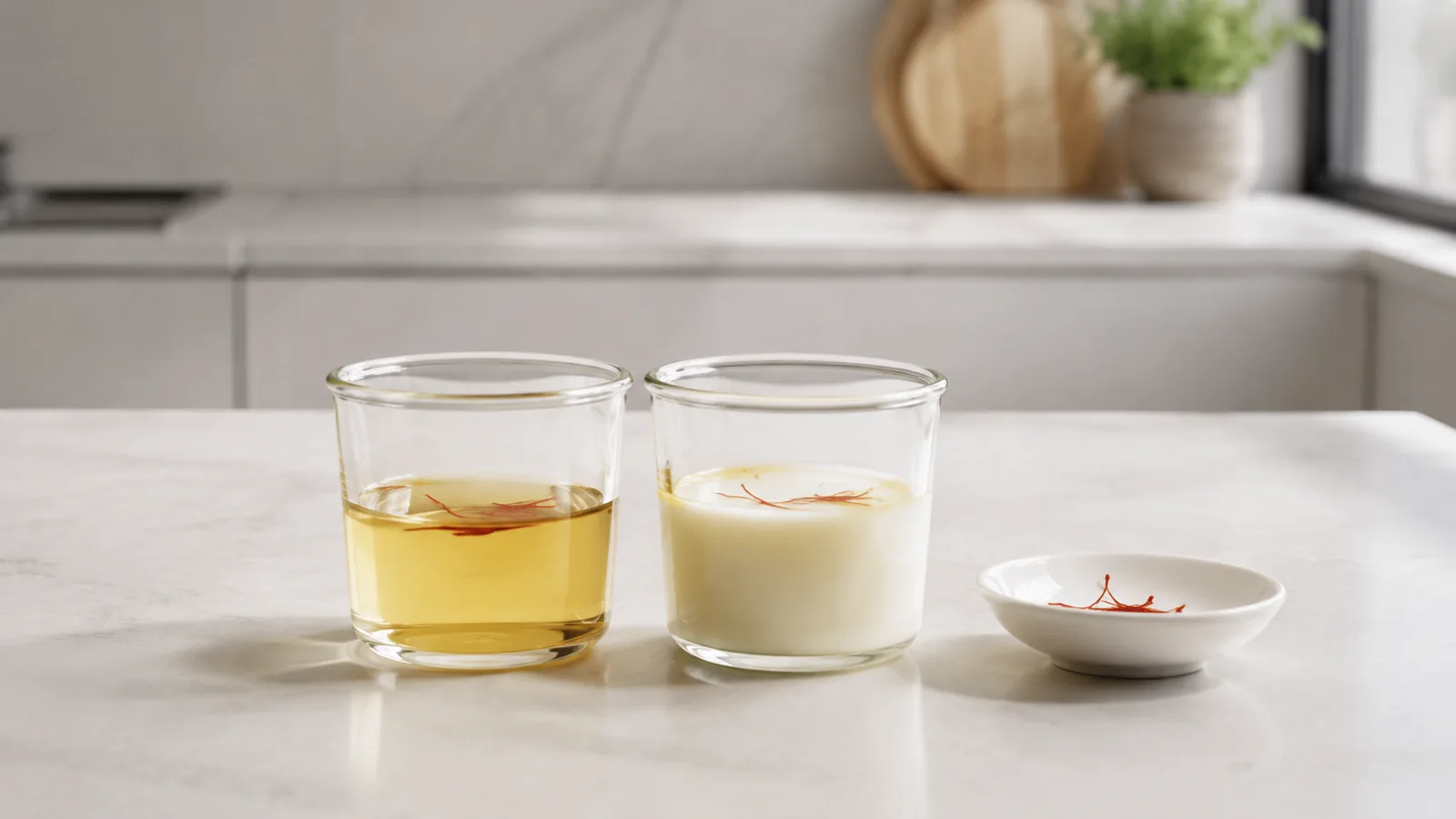
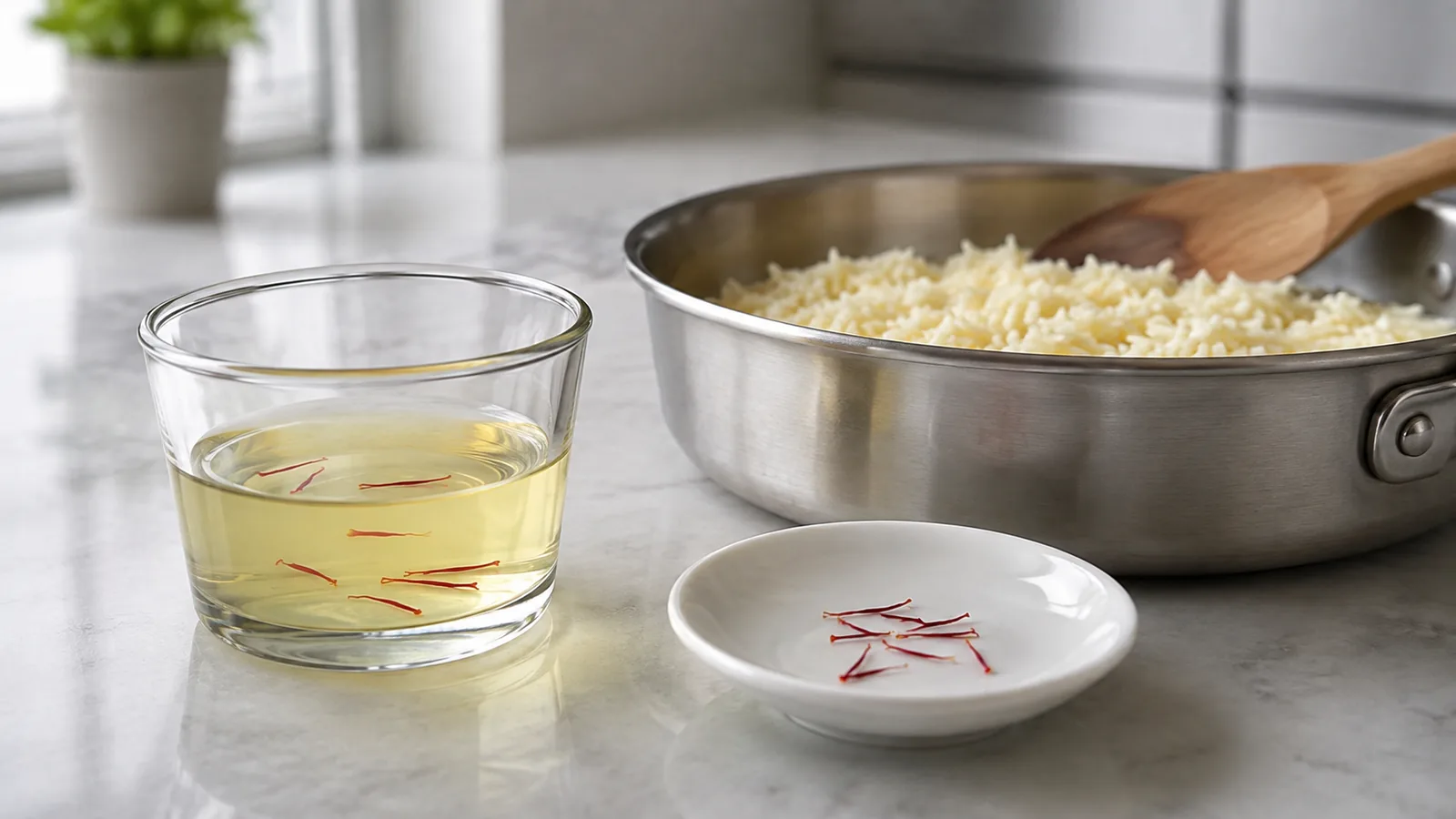
Mix the rosewater with the saffron infusion. Use a concentrated infusion so the fragrance is clear without making the halva wet. Our guide to brewing saffron explains the method.
Sift and roast the flour
Sift the flour twice into a dry, heavy frying pan. Set it over low heat and stir continuously with a wooden spoon or silicone spatula for 10 to 15 minutes.
The flour is ready when it smells toasted and changes from white to a light hazelnut colour. Do not wait for dark brown flour; it continues to deepen after the oil is added, and burnt flour will make the whole batch bitter.
Add the oil
Reduce the heat to its lowest setting. Pour in about three-quarters of the oil and stir until the flour is smooth. Add the remaining oil gradually, stopping if the mixture already looks glossy and flows slowly from the spoon.
Cook for another 2 to 3 minutes, stirring into the corners of the pan. There should be no pale dry flour, oily pools or lumps.
Mix the date halva
Take the pan off the heat. Add the date paste in several portions and press each one through the warm flour mixture before adding the next. The mixture will be stiff at first, then become cohesive as the dates warm.
Pour in the saffron and rosewater mixture a teaspoon at a time, folding firmly after each addition. Stop once the halva is evenly coloured, soft enough to shape and no longer sticks heavily to the pan.
If the dates remain lumpy, return the pan to very low heat for 1 minute while pressing and turning the mixture. Avoid prolonged cooking, which makes date halva greasy and tough as it cools.
Shape and decorate
Let the halva stand until it is warm rather than hot. Spoon it into a shallow serving dish and smooth it with the back of an oiled spoon, or roll small portions into balls or short logs.
Finish with the pistachios and almonds. Press the nuts lightly into the surface so they stay in place when the halva is cut or lifted.
Using butter instead of oil
The original recipe offers 200 g butter as an alternative to the 120 g oil. Butter contains water and milk solids, so it does not behave as a direct gram-for-gram swap.
For the richer version, melt the butter gently, let the foam settle and add it to the roasted flour gradually. You may not need the entire 200 g; stop when the flour is smooth and glossy rather than swimming in fat.
How to correct the texture
- Too crumbly: knead in 1 teaspoon warm oil or rosewater at a time.
- Too soft: let it cool for 10 minutes before adding anything; date paste firms as it rests.
- Oily surface: work the warm mixture firmly instead of adding more flour.
- Bitter flavour: roast the flour only to light hazelnut and keep the saffron infusion concentrated.
Serving and storage
Serve date halva in small portions with tea or coffee. Its flavour is fuller at room temperature than straight from the refrigerator.
Store it in a covered container in the refrigerator for up to 5 days. Let it stand at room temperature for 15 to 20 minutes before serving. The recipe contains wheat, pistachios and almonds.