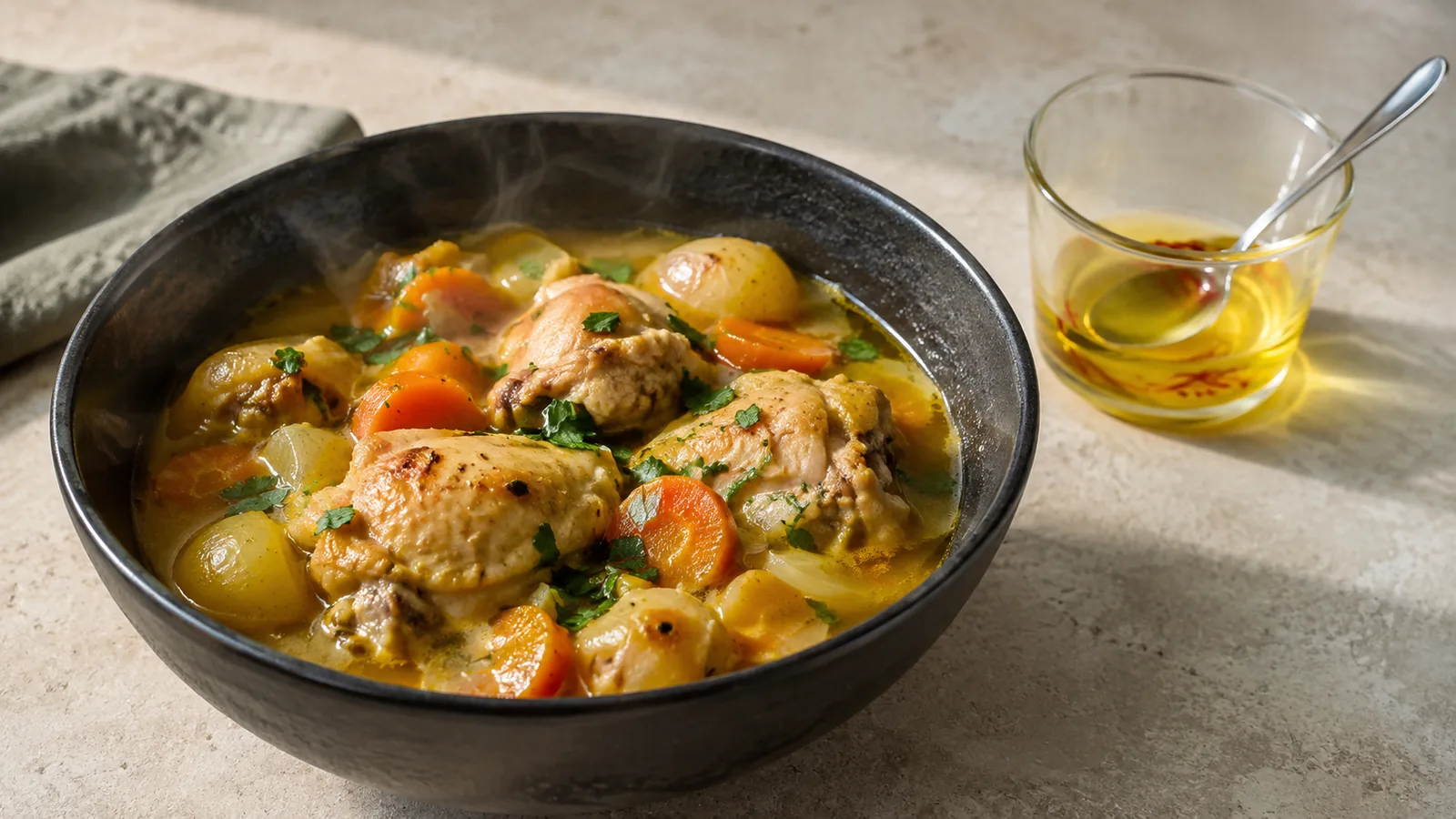
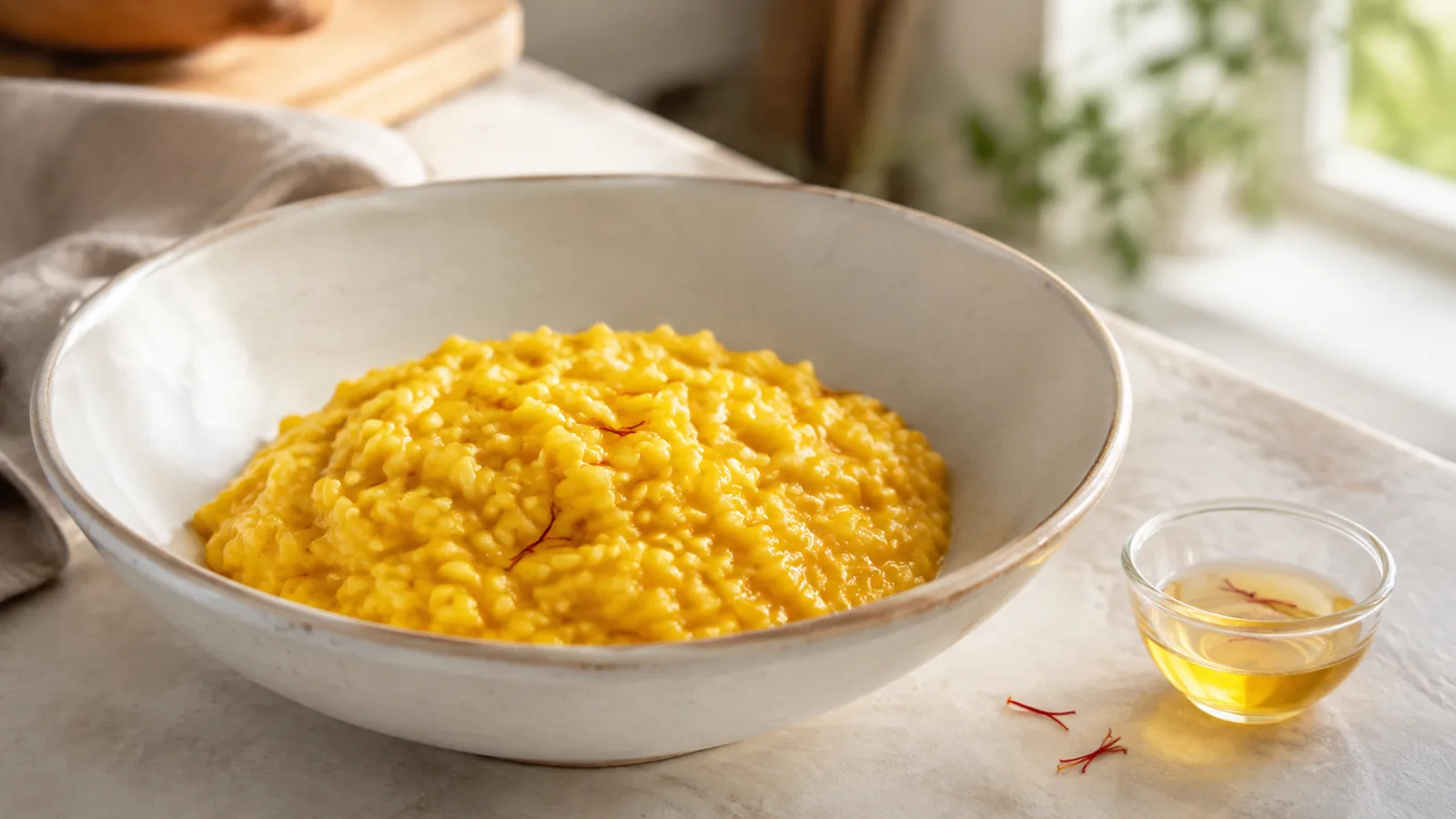
This Bowl halva Saffron Recipe is a soft Shiraz-style rice-flour halva scented with saffron and rosewater. It is cooked slowly until glossy and spoonable, then served in shallow bowls instead of being cut into firm pieces.
Ingredients
- 1 cup rice flour
- 2 cups sugar
- 1 1/2 cups rosewater
- 1/2 cup concentrated saffron infusion
- 1/2 cup neutral oil
- 2 cups water
- Finely chopped pistachios, optional, for serving
The old notation gives the rosewater as “1/5 cup.” Here it is written as 1 1/2 cups, using the decimal convention found in the source recipe. Measure everything before starting because the halva needs continuous attention once the flour meets the syrup.
Toast the rice flour without colouring it
Sift the rice flour into a wide, heavy saucepan. Set it over the lowest heat and stir continuously for 8 to 12 minutes.
The aim is to remove the raw flour smell while keeping the colour pale. When the flour smells lightly toasted but has not turned brown, transfer it to a cool bowl. Let it cool completely before adding rosewater.
Make a smooth rosewater paste
Add the rosewater to the cooled flour gradually, whisking after each addition. At first it will form a thick paste; continue until it is smooth and creamy, with no dry pockets.
Do not pour cold rosewater into hot flour. The sudden steam and starch thickening can create lumps that are difficult to remove later.
Prepare the saffron syrup
Put the water and sugar in a separate heavy pot. Warm over medium-low heat, stirring gently, just until the sugar dissolves and the liquid becomes clear.
Do not reduce or thicken this syrup. The two cups of water are needed to cook the rice flour during the long final stage. Stir in the saffron infusion, then lower the heat.
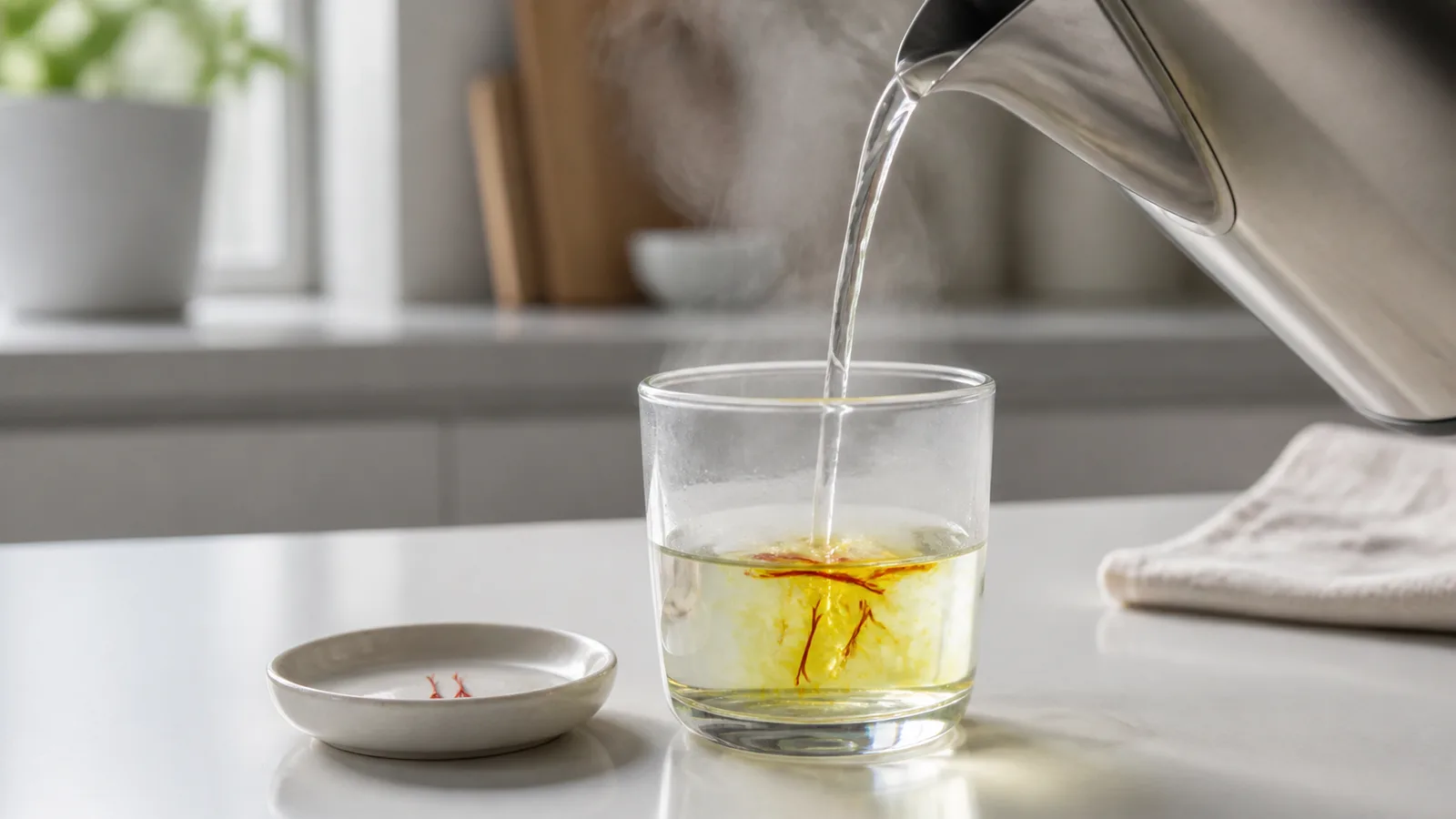
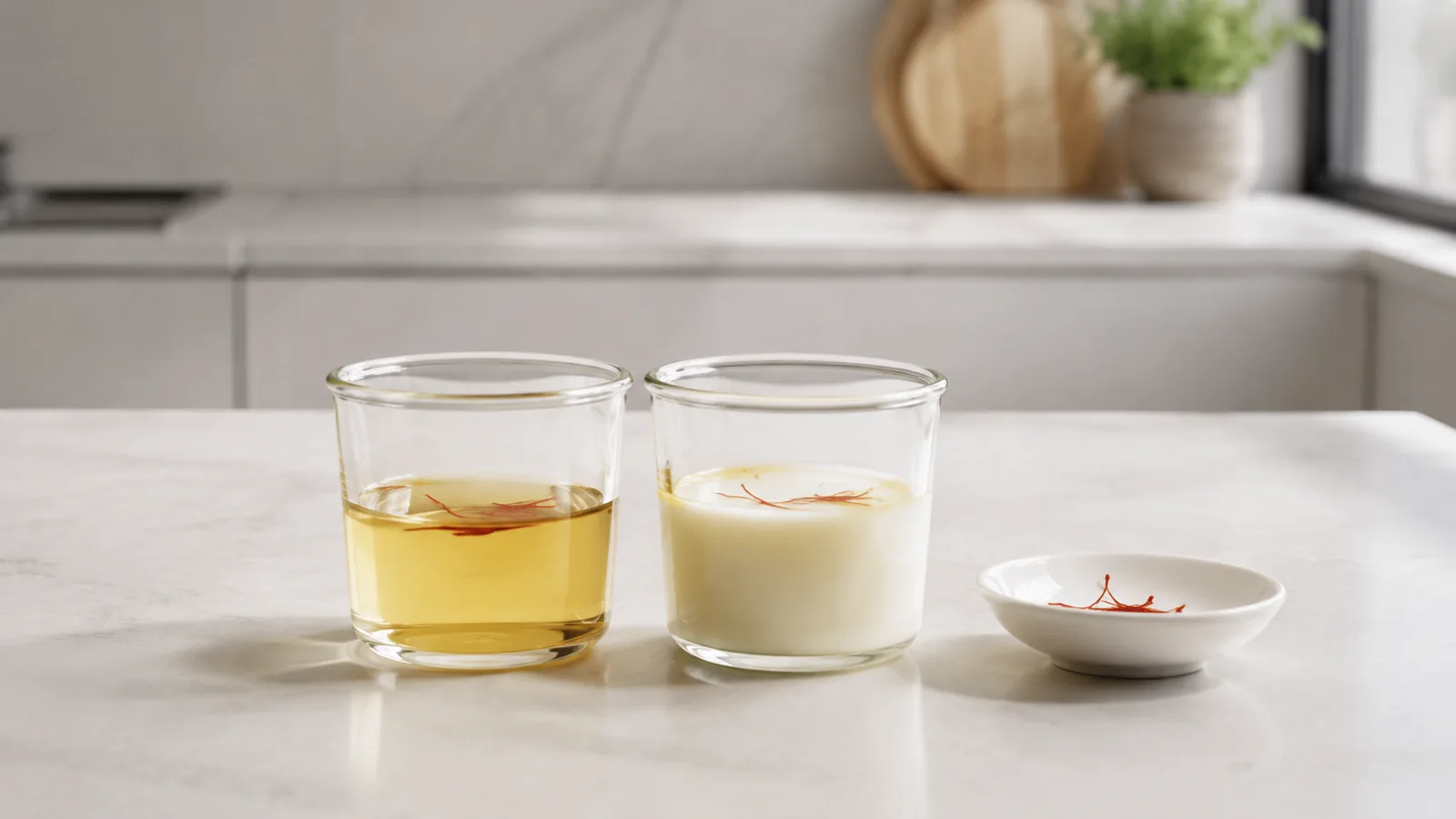
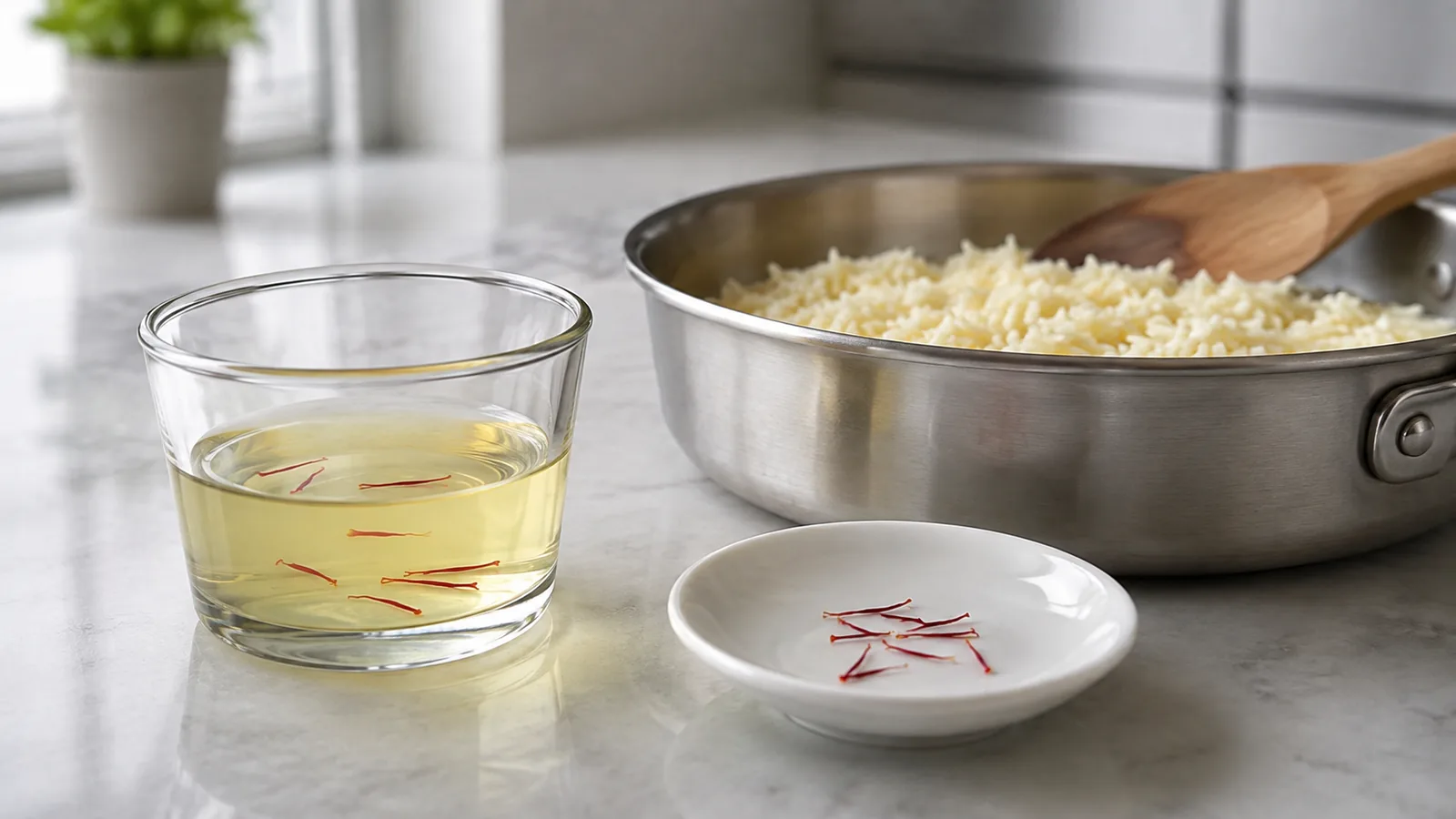
For a clear colour and aroma, use a concentrated infusion. Our guide to brewing saffron explains how to prepare it.
Combine the flour and syrup
Whisk the rosewater-flour mixture once more. Add it to the warm saffron syrup in a thin stream while stirring continuously.
Keep the heat very low. Work around the base and corners of the pot with a flat-edged spoon so no starch settles and catches. The mixture will look loose at first and thicken gradually.
Cook the bowl halva slowly
Continue stirring over very low heat for 45 to 60 minutes. A broad pot may finish sooner; a narrow one takes longer. Follow the texture rather than the clock.
It is ready for the oil when a spoon drawn across the base leaves a track that stays visible for a moment. The mixture should fall from the spoon in a thick ribbon but still spread.
Add the oil
Pour in the oil in three additions, stirring each one in before adding the next. The oil may sit on the surface at first. Keep the heat low and continue folding until it is absorbed and the halva becomes glossy.
Small bubbles will rise as the last water cooks out. Stop while the halva is still soft enough to settle in a bowl; it firms further as it cools.
How to serve halva in bowls
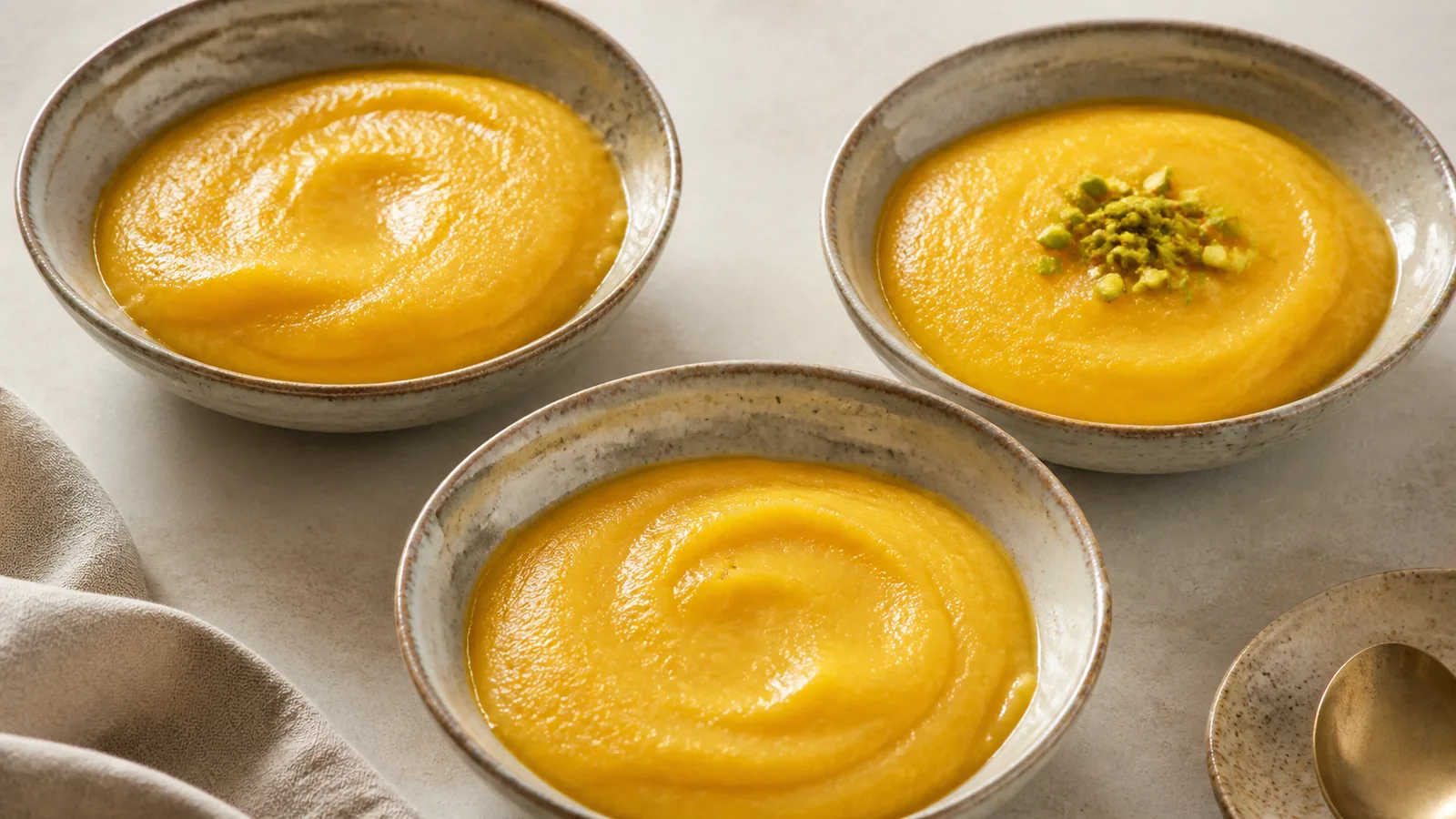
Spoon the warm halva into small shallow bowls and smooth the surface with the back of an oiled spoon. Decorate sparingly with chopped pistachios if you like.
Let it cool at room temperature. A properly cooked bowl halva holds a spoon mark but remains tender rather than becoming a sliceable block.
Troubleshooting
- Lumps appear: take the pot off the heat briefly and whisk firmly before continuing over low heat.
- Oil will not absorb: keep folding over the lowest heat; do not add more flour.
- Halva turns rubbery: stop cooking sooner next time, while it still falls in a thick ribbon.
- Rice flour tastes raw: toast it patiently before cooling, without allowing it to change colour.
Storage
Cover the bowls once the halva is cool and refrigerate for up to 3 days. Bring each serving toward room temperature before eating so the texture softens and the rosewater is easier to notice.