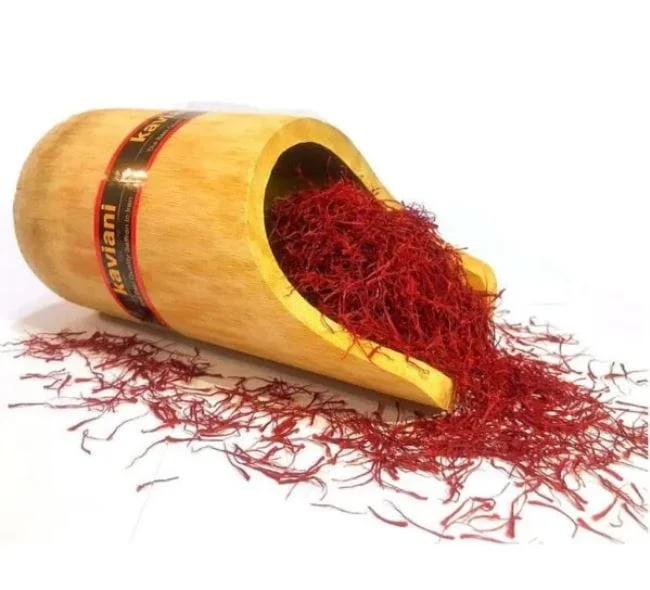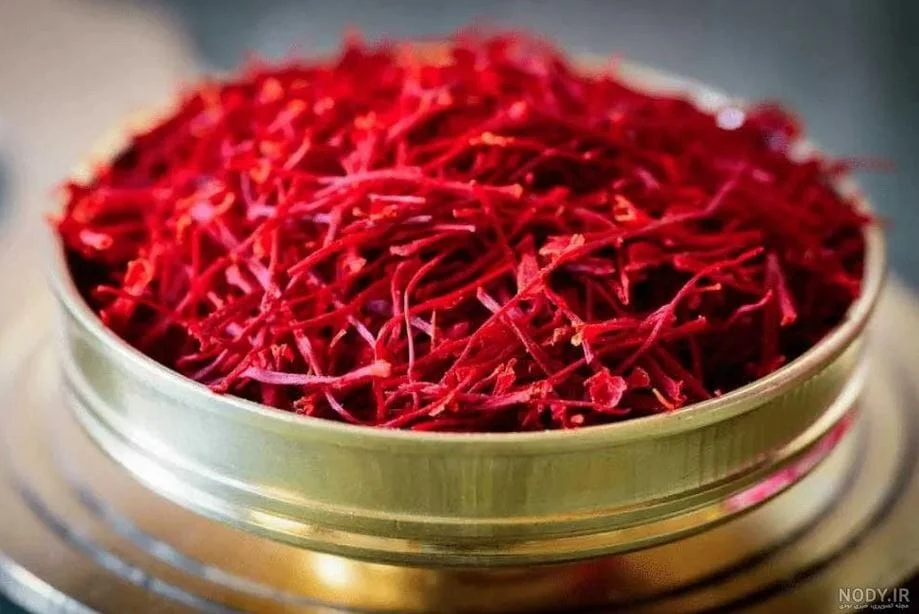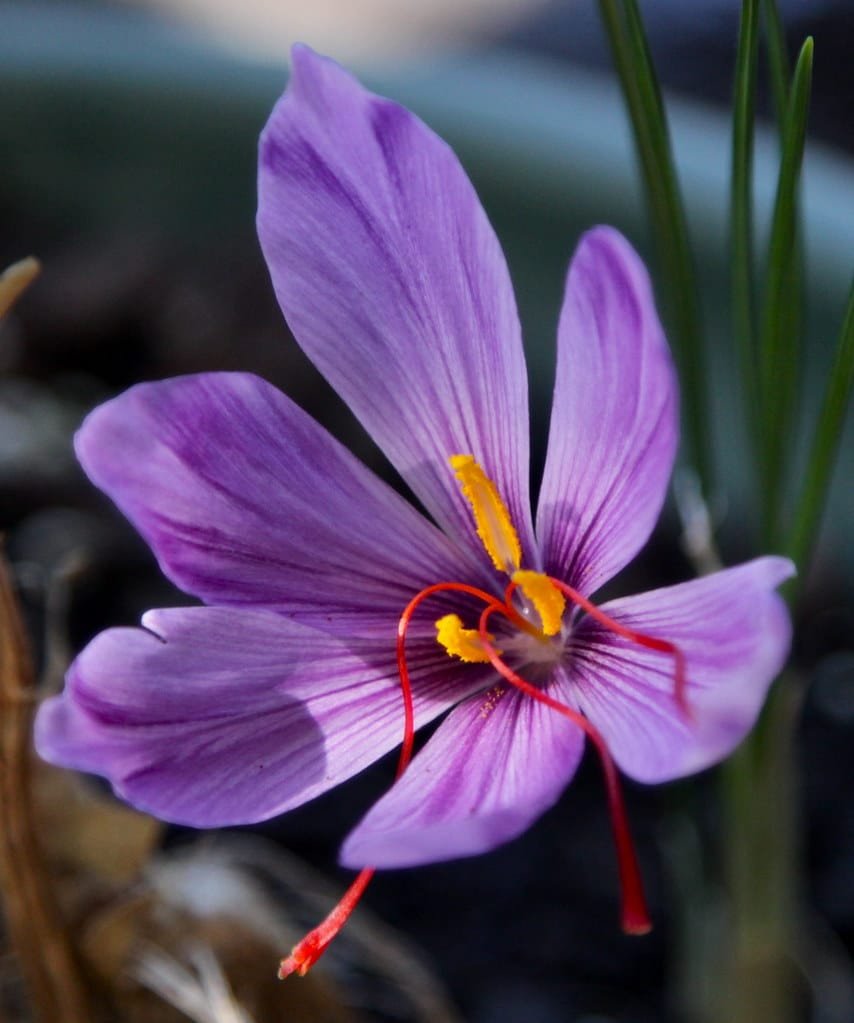
Saffron production efficiency in Iran improves when a farm produces more usable, high-quality saffron from the land, water, corms and labour it already has. It is not simply a call to plant more hectares. That distinction was at the centre of an interview with Gholamreza Miri, then head of the Mashhad Saffron Sellers Union, and it remains relevant to growers and buyers.
Miri compared a reported average yield of about 3.5 kilograms per hectare with an aspiration of 7 kilograms. The figures came from an earlier season. Seven kilograms should not be presented as a guaranteed result or a universal target: soils, climate, field age, corm density and management differ. The useful question is how each field can close a measured yield and quality gap without wasting scarce resources.
What saffron production efficiency means
Yield is the kilograms of dried saffron produced per hectare. Technical efficiency is broader. It asks whether a farm could obtain a better result from its present mix of land, water, labour and other inputs. A field can have a modest yield because conditions are inherently difficult, because management can improve, or because both are true.
A peer-reviewed study of Iranian saffron farms found wide differences in technical efficiency and traced the national average yield from about 6.15 kg/ha in 1971 to 3.42 kg/ha in 2017. The authors concluded that average farms had meaningful room to improve without simply expanding inputs. Their stochastic-frontier analysis of Iranian saffron production also shows why an isolated national average cannot diagnose an individual field.
Measure the field before prescribing a fix
A practical efficiency review begins with records. Note the field’s planted area, corm age and density, irrigation dates, labour hours, fresh-flower weight, dried-stigma weight and quality results. Compare them by field and by harvest year. This reveals whether the constraint is establishment, flowering, picking capacity, separation, drying or storage.
Common improvement areas include:
- selecting healthy corms and matching planting depth and density to local conditions;
- testing soil and managing salinity, drainage and nutrition rather than applying inputs by habit;
- scheduling irrigation around climate, soil and crop stage;
- controlling weeds, rodents and disease early;
- organising labour so flowers are picked promptly;
- separating and drying stigmas quickly and consistently; and
- tracking both kilograms and saleable grade, because more weight with weaker quality is not full efficiency.
Our saffron planting guide covers field establishment, and the processing guide explains the post-harvest steps that protect colour, aroma and cleanliness.
Why expanding area is not enough
The archived interview placed Iran’s saffron area at about 90,000 hectares, up from 83,000, with 63,000 hectares in Khorasan Razavi. It said governors in 22 provinces were encouraging saffron partly because it is suited to relatively dry regions. These are historical figures, not the current planted-area total.
Expansion can spread risk and create rural income, but it can also reproduce weak practices. A new hectare needs suitable winter temperatures, soil, water quality, corm supply, trained labour and a route to market. Saffron uses less irrigation than many crops, yet “low-water” does not mean “no-water,” and it does not make every dry site suitable.
FAO’s 2025 work with Iran describes climate pressure, water scarcity and global competition as current sector challenges. It also identifies Khorasan Razavi and South Khorasan as the traditional core of production. That experience matters: expansion should transfer field knowledge and quality controls, not only corms.
Quality changes the value of each kilogram
Miri said saffron purchase prices ranged from 5 to 7 million tomans per kilogram according to quality in the period he described. That price band is archival and must not be used for a current quotation. It does, however, illustrate a durable point: buyers do not value every kilogram equally.
Clean separation, controlled drying, sensible moisture, protection from light and contamination, reliable batch identity and authentic product all affect the commercial result. In 2024, the FAO and Iran’s Ministry of Agriculture Jahad began a saffron authenticity and traceability project. Follow-on work announced in 2025 combines laboratory methods with post-harvest guidance. Efficiency therefore continues beyond the field gate.
Packaging choice should follow the customer and distribution channel. The old interview noted that Iranian suppliers already offered several package types for common weights. More formats are not automatically better. A useful pack protects the saffron, carries compliant information, can be traced to its batch and reaches the buyer at a viable cost.
The October stock cycle behind export figures
A second archived interview with Miri reported 35% export growth in the first six months compared with the same period a year earlier. He also explained a seasonal detail that is easy to miss: as the new harvest approached in October, farmer supply tended to fall, so exporters relied on stocks held by traders and exporters.
This means a rising export figure does not prove that the current crop is already larger or more efficient. Shipments can come from inventory produced in an earlier season. Conversely, quiet domestic purchasing immediately before harvest does not necessarily mean export demand has disappeared.
Miri expected production to increase because planted area had expanded and farmers were trying to improve efficiency, but he said it was too early for a definitive forecast. That caution is still the correct method. Area, flower emergence, harvested kilograms, inventory and exports belong to different stages of the supply chain and should be reported separately.
Price stability and farmer return
The export interview hoped sharp post-harvest price swings would not recur, because sudden falls can harm growers precisely when their crop reaches the market. A resilient chain needs transparent grading, credible volume data and purchasing arrangements that do not reward hurried selling of poorly handled saffron.
For today’s market, use current grade, origin, laboratory evidence, volume and delivery terms rather than the old toman figures. Our saffron price page explains how to request a comparable quotation.
Plans and funding must produce measurable field results
The source interview said a comprehensive saffron plan existed but did not yet have the dedicated credit supporters wanted. Miri hoped a presidential visit to Khorasan Razavi would help unlock funding. That was a contemporary policy statement, not a description of the present budget.
The broader lesson is to judge a programme by outcomes. Did participating fields improve saleable yield? Did training reduce handling time or contamination? Did testing make batches easier to verify? Did growers receive a stronger return after costs? Spending, workshop counts and expanded area are inputs; they are not proof of efficiency.
A better efficiency target
Doubling a national average from 3.5 to 7 kg/ha is an attractive headline, but a responsible target is field-specific. Establish a verified baseline, identify the limiting stage, make one or two evidence-led changes, and compare the next harvest on yield, grade, resource use and net return.
Iran’s advantage comes from accumulated knowledge as much as cultivated area. Protecting that advantage means producing each kilogram with care, preserving its quality after picking and interpreting export numbers in the context of stocks and seasons. That is what higher saffron production efficiency should deliver.
![Exporting Saffron to Turkey + Price Guide [Complete 0 to 100]](https://img.rowhanisaffron.com/20260827003933/saffron-export-turkey-quality-inspection.webp)