This Saffron Dessert Recipe makes a softly set, creamy pudding inspired by panna cotta. Saffron and rosewater keep it fragrant rather than heavy, while pistachios or almonds add a little contrast at the table.
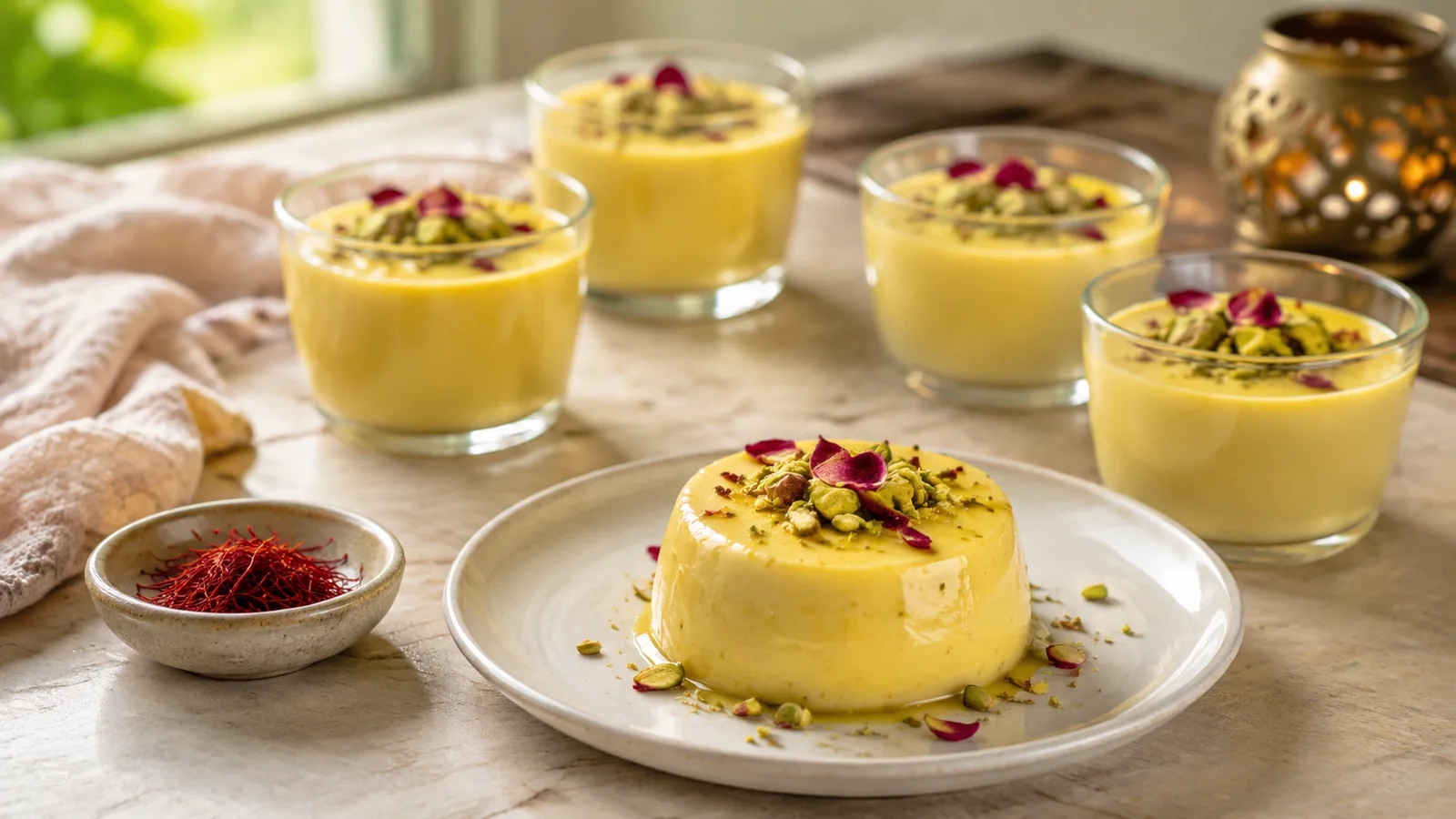
Saffron dessert recipe at a glance
- Makes: 6 small servings
- Active time: about 20 minutes
- Chilling time: 4 to 5 hours
- Total time: about 4 hours 30 minutes
- Texture: smooth, creamy and gently set
The work itself is quick, but the dessert needs time in the refrigerator. Make it in the morning for an evening meal, or prepare it the day before a party.
Ingredients for six saffron desserts
- 3 cups (720 ml) whole milk, divided
- 3/4 cup (150 g) granulated sugar, or a little less to taste
- 2 tablespoons powdered unflavoured gelatin (about 18 g)
- 100 g heavy or whipping cream
- 1/4 to 1/2 teaspoon saffron threads, depending on the strength you prefer
- 2 tablespoons hot water, for the saffron infusion
- 1 tablespoon food-grade rosewater
- Chopped unsalted pistachios or almonds, for serving
- Whipped cream, optional
Use saffron threads if possible so you can judge the quantity and aroma before grinding. If your rosewater is especially strong, begin with two teaspoons and taste the warm mixture before adding more.
How to make saffron dessert
1. Brew the saffron
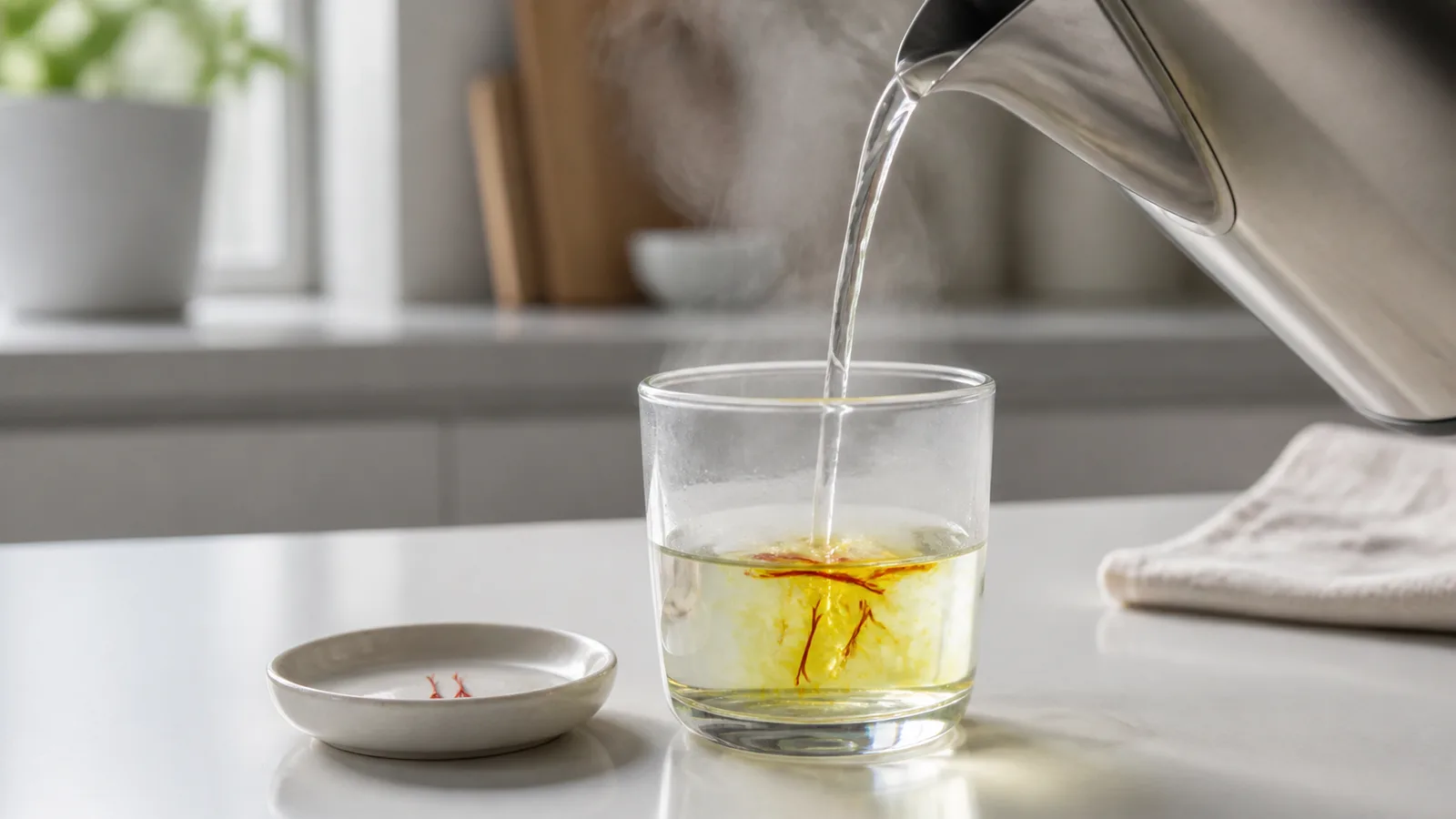
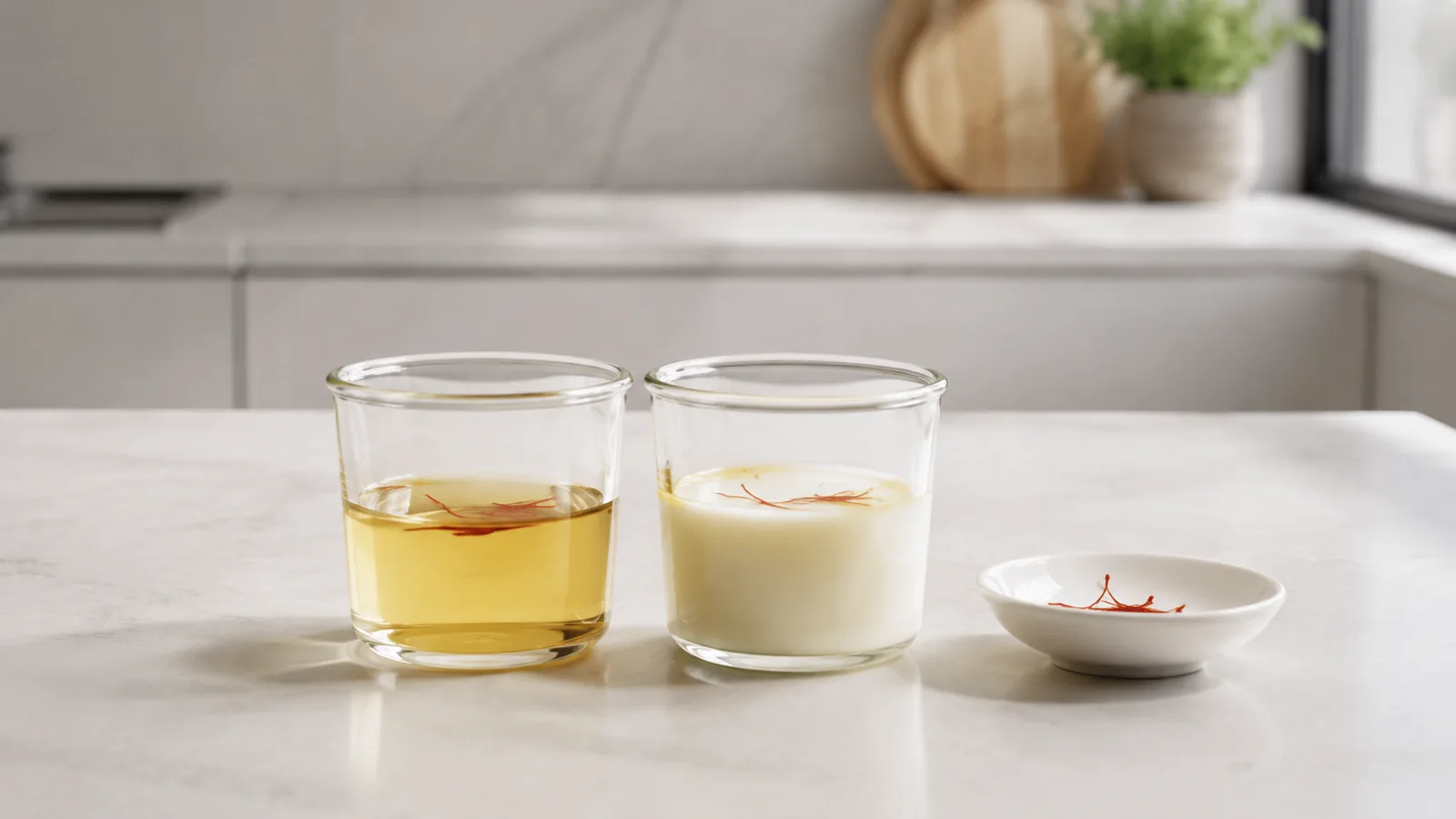
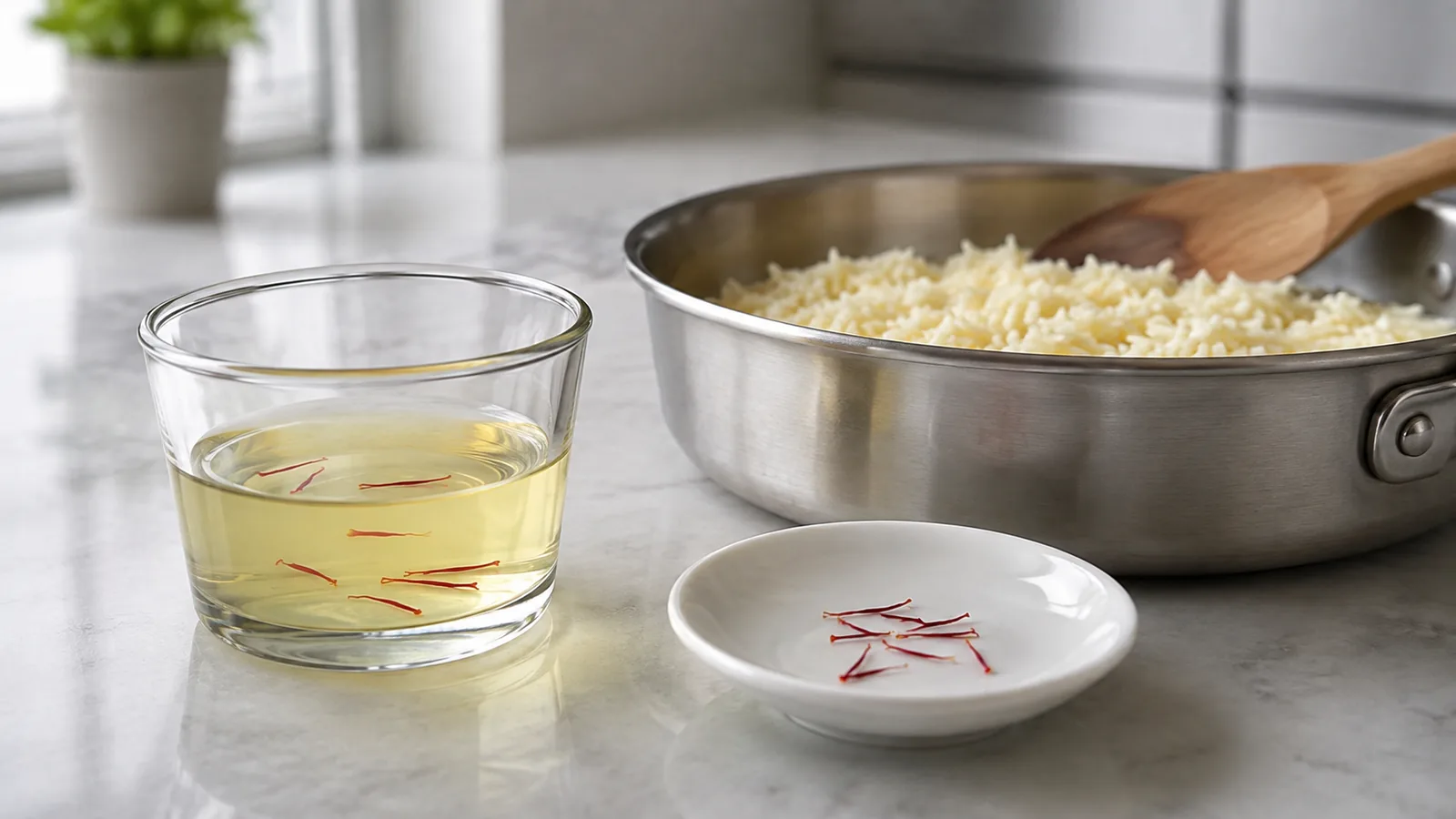
Lightly crush the saffron threads, place them in a small cup and add the hot water. Cover the cup and leave it for 10 to 15 minutes. The liquid should become deeply golden and aromatic. If this is your first time working with the spice, our guide to brewing saffron for cooking explains the process in more detail.
2. Bloom the gelatin in cold milk
Pour 1/2 cup of the cold milk into a small bowl. Sprinkle the gelatin evenly over the surface rather than dropping it in one pile. Let it stand for 5 to 10 minutes, until the granules have absorbed the milk and the mixture looks thick. This step prevents stubborn gelatin lumps later.
3. Warm the milk and dissolve the sugar
Pour the remaining milk into a saucepan and add the sugar. Warm it over low to medium-low heat, stirring until the sugar dissolves. The milk should be steaming but not boiling. A hard boil can change the dairy’s texture and drives away some of saffron’s delicate aroma.
4. Dissolve the bloomed gelatin
Take the saucepan off the heat. Add the bloomed gelatin and stir steadily until it has dissolved completely. Rub a small drop between two clean fingers; if you still feel granules, continue stirring while the mixture is warm.
5. Add cream, saffron and rosewater
Stir in the cream, followed by the saffron infusion and rosewater. There is no need for a hand mixer, which can fill the mixture with bubbles. A whisk used gently or a silicone spatula will combine everything without making foam.
Taste a cooled spoonful. Add a little more brewed saffron if you want a stronger colour and flavour, but remember that saffron should taste fragrant and slightly earthy, not harsh.
6. Strain and fill the moulds
Pass the mixture through a fine sieve into a jug if you can see undissolved gelatin or want an especially smooth finish. Divide it among six ramekins, glasses or silicone moulds. Small serving glasses are the easiest choice because they do not need to be unmoulded.
7. Chill until set
Cover the portions and refrigerate them for 4 to 5 hours. They are ready when the centres wobble gently but no longer look liquid. Do not freeze the moulds to hurry this step; partial freezing can spoil the creamy texture.
8. Unmould and garnish
To unmould a silicone portion, loosen the edge gently and invert it onto a plate. For a metal mould or ramekin, dip only the outside in warm water for 5 to 10 seconds, dry it, then invert. Hot water or a long soak will melt the dessert’s outer layer.
Finish with chopped pistachios or almonds just before serving. A small spoonful of whipped cream is optional. Nuts are a common allergen, so leave them off or offer them separately when serving guests whose requirements you do not know.
Why the temperature of the milk matters
Most problems in this saffron dessert come from heat used at the wrong moment. Gelatin first needs cold liquid so every granule can hydrate. It then dissolves in the warm milk, but the finished mixture does not need to boil.
The cream also blends more smoothly when the milk is warm rather than fiercely hot. If your cream is very cold, stir a few spoonfuls of warm milk into it first, then return that mixture to the saucepan. This gradual change in temperature helps keep the base even.
A cornstarch saffron dessert without gelatin
Cornstarch can make a good saffron pudding, but it is not a direct one-for-one replacement for gelatin. It must be cooked long enough to thicken, and the result will be creamy rather than springy.
Omit the gelatin and use 3 tablespoons of cornstarch. Whisk the cornstarch with 1/2 cup of the cold milk until completely smooth. Heat the remaining milk and sugar, then slowly whisk in the slurry. Bring the mixture to a gentle simmer and cook for 2 to 4 minutes, stirring continuously, until it coats the back of a spoon.
Remove the pan from the heat before stirring in the cream, saffron infusion and rosewater. A small splash of vanilla is optional, but keep it restrained so it does not cover the saffron. Pour the pudding into serving glasses and chill for at least 3 hours. Serve it in the glasses instead of expecting it to release from a decorative mould as cleanly as the gelatin version.
How to prevent lumps
For the gelatin version, sprinkle rather than pour the powder into cold milk, give it time to bloom, and dissolve it away from direct heat. For the cornstarch version, make a smooth cold slurry before it goes into the warm milk. These are two different thickening methods, and swapping their steps is the usual reason a batch becomes grainy.
If a few lumps remain, strain the warm mixture before filling the moulds. Straining fixes small clumps; it cannot fix gelatin that was never dissolved or starch that was not cooked.
Serving ideas for a festive saffron dessert
The golden colour already gives the dessert a festive look, so it does not need elaborate decoration. Use one or two garnishes that bring flavour as well as colour: pistachios, slivered almonds, a few crushed dried rose petals sold for culinary use, or a small spoonful of softly whipped cream.
For individual parties, pour the mixture into clear glasses and cover each one before chilling. For a shared table, small ceramic ramekins are sturdy and easy to carry. If you want clean unmoulded portions, silicone moulds are more forgiving than rigid metal ones.
Make-ahead and storage
Keep the finished dessert covered in the refrigerator and serve it within three days for the best texture and aroma. Add nuts and whipped cream shortly before serving so they stay fresh. Do not leave a milk-based dessert at room temperature for more than two hours; the FDA’s refrigerator and food-storage guidance recommends keeping the refrigerator at or below 4°C (40°F).
This dessert is not a good candidate for freezing. Gelatin and dairy can separate as they thaw, leaving a watery or grainy texture. If you need to work ahead, make the covered portions the previous day instead.
Common saffron dessert questions
Why is saffron used in desserts?
Saffron contributes a golden colour and an aroma that works especially well with milk, cream, rice and nuts. It is potent, so a measured infusion gives better control than adding a large pinch directly to the pan.
Can I use different nuts for the garnish?
Yes. Pistachios and almonds are traditional partners for saffron, but walnuts or cashews also work. Use unsalted nuts and chop them shortly before serving. The garnish is optional, so the dessert can be served without nuts when allergies are a concern.
Can I reduce the sugar?
You can reduce it to 1/2 cup (100 g) for a less sweet dessert without changing the setting method. Taste preferences vary, and rosewater can make sweetness seem more pronounced. Do not reduce the milk or gelatin at the same time unless you are intentionally testing a different texture.
The finished dessert should hold its shape while remaining tender enough for a spoon. Careful blooming, gentle heat and enough chilling time matter far more than decorative moulds—and they make this one of the easier desserts with saffron to prepare for a gathering.