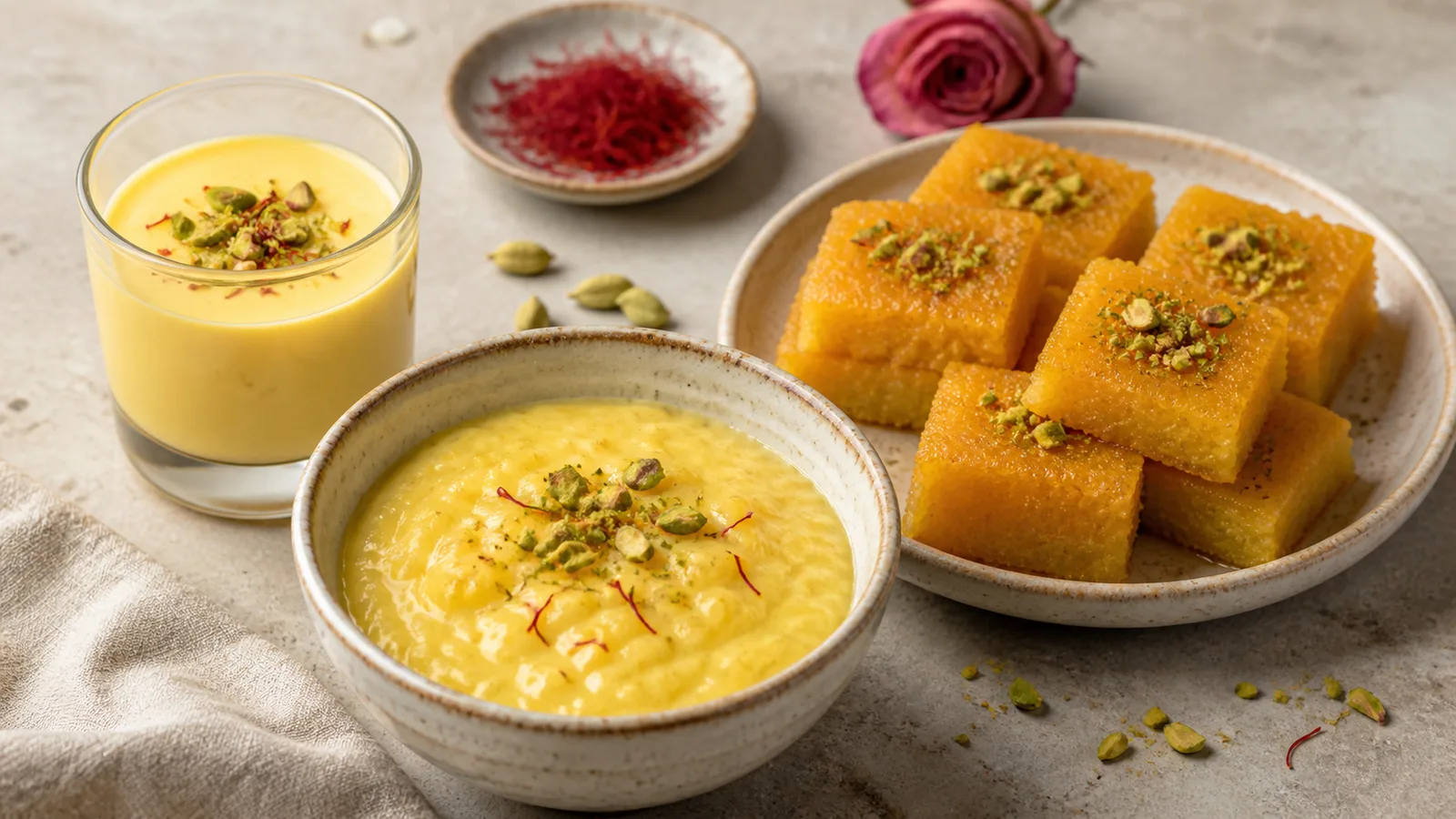
This saffron dessert recipe gives you three dependable ways to turn saffron, milk or water, and a few pantry ingredients into a fragrant dessert. Choose the gelatin version for a smooth molded panna cotta, the cornstarch pudding when you want something soft and gelatin-free, or saffron masghati for a traditional Persian sweet that can be cut into pieces.
Each method handles thickening differently, so the ingredients are listed separately. Read the method you plan to make before starting; swapping gelatin and cornstarch measure for measure will not produce the same result.
Making a dessert with saffron is mainly a matter of controlling heat and texture. These desserts with saffron all begin with a small infusion, but each needs its own thickening method and stopping point.
Before you start: make a small saffron infusion
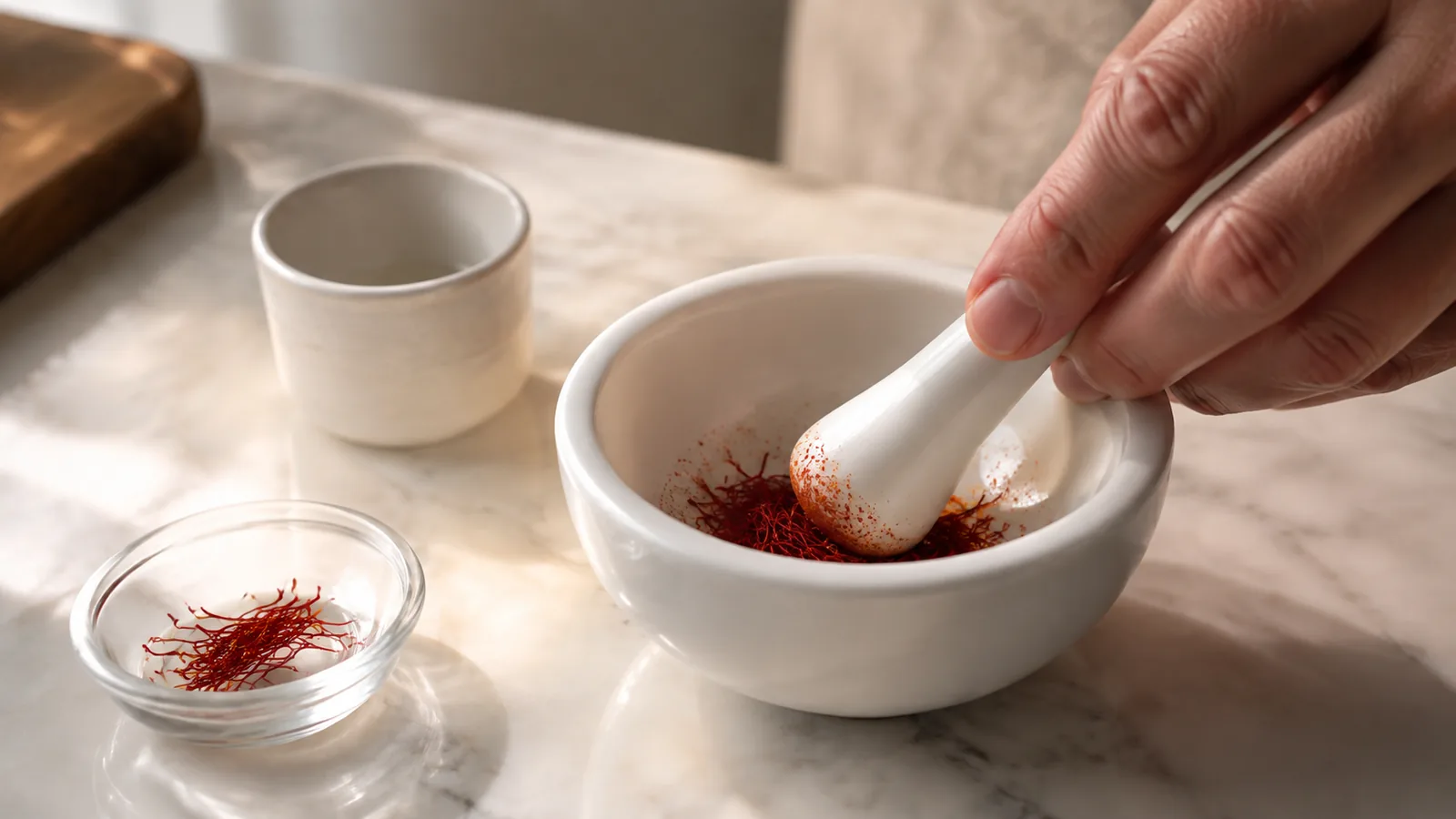
For all three desserts, lightly crush the saffron threads between your fingers or with a mortar. Add 2 tablespoons of just-boiled water and leave the infusion covered for 10 to 15 minutes. This gives the threads time to release their color and aroma before they meet the dairy or starch mixture.
You can also bloom saffron slowly over ice, but it takes longer and offers no advantage when a recipe is going straight onto the stove. For a closer look at both methods, see our guide to brewing saffron with hot water or ice.
Three quick saffron dessert recipes
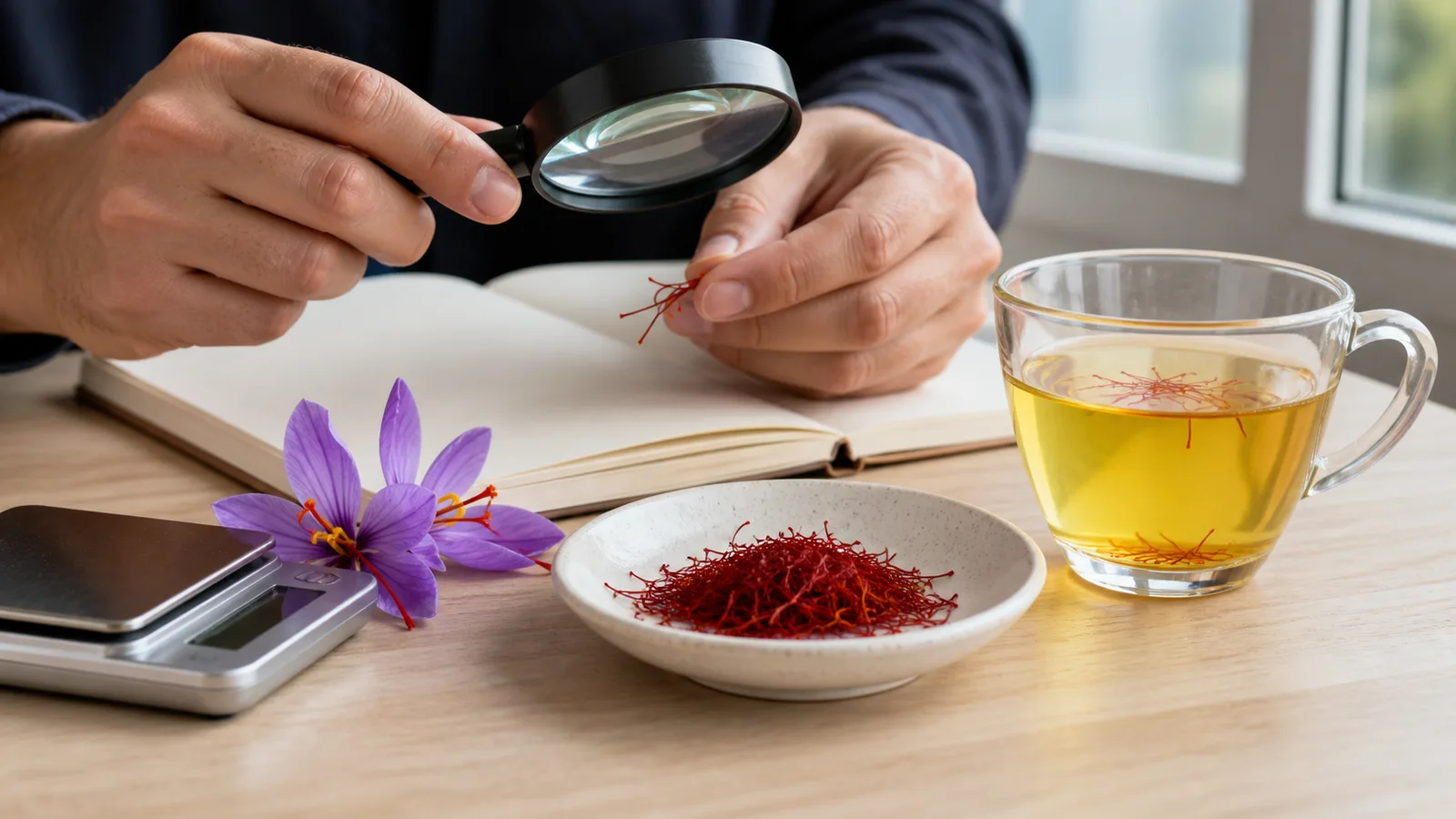
These are small home-kitchen batches. Use genuine saffron threads rather than an artificial yellow coloring; saffron should add a warm floral aroma as well as color.
1. Creamy saffron panna cotta with gelatin
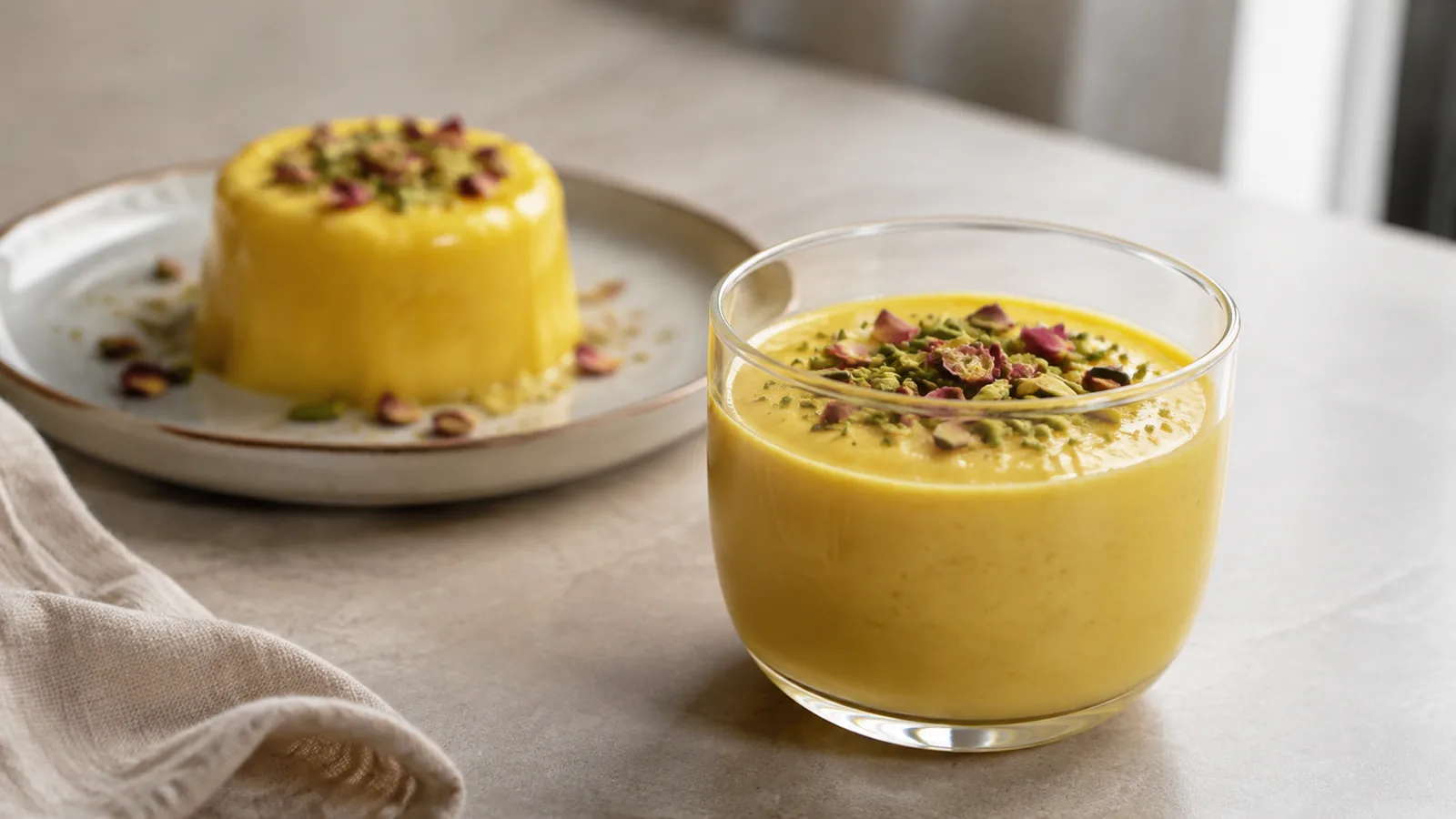
This is the best choice when you want a saffron cream dessert that will set neatly in glasses or turn out of small molds. It makes six modest servings.
Ingredients
- 2 cups (480 ml) whole milk
- 1 cup (240 ml) heavy cream
- 1/3 cup (65 g) sugar
- 2 teaspoons powdered unflavored gelatin
- 3 tablespoons cold water, for blooming the gelatin
- 1 small saffron infusion, prepared as above
- 1 tablespoon rose water, or less to taste
- 1/4 teaspoon freshly ground cardamom, optional
- Chopped pistachios or almonds, for serving
Method
- Bloom the gelatin. Put the cold water in a small bowl, sprinkle the gelatin evenly over it, and leave it for 5 to 10 minutes. It should absorb the water and become spongy.
- Warm the dairy. Combine the milk, cream, and sugar in a saucepan. Heat gently, stirring until the sugar dissolves and the mixture is steaming. Do not let it boil.
- Add the flavors. Take the pan off the heat. Whisk in the bloomed gelatin until no granules remain, then stir in the saffron infusion, rose water, and cardamom.
- Strain and chill. Strain the mixture into six glasses or lightly oiled molds. Cool briefly, cover, and refrigerate for at least 4 hours, or until fully set.
- Serve. If using molds, dip the outside in warm water for 5 to 8 seconds and loosen one edge before inverting. Finish with pistachios, almonds, or a few saffron threads.
The mixture should never boil after the gelatin goes in. High heat can weaken the set, while prolonged boiling also flattens the rose-water aroma.
2. Saffron cornstarch pudding without gelatin
This version is softer and more comforting than panna cotta. It is naturally gelatin-free and can be served warm, at room temperature, or chilled. It makes about six small bowls.
Ingredients
- 4 cups (960 ml) whole milk
- 1/3 cup (40 g) cornstarch
- 1/2 cup (100 g) sugar
- 1 small saffron infusion
- 1 tablespoon butter
- 1 tablespoon rose water
- 1/2 teaspoon vanilla extract, optional
- Pistachios, almonds, cinnamon, or fresh fruit, for serving
Method
- Whisk the cornstarch with 1 cup of the cold milk until completely smooth. Cold liquid matters here; starch added to hot milk tends to form stubborn lumps.
- Put the remaining milk and sugar in a saucepan over medium-low heat. Stir until the sugar dissolves, then whisk in the cornstarch mixture.
- Cook, stirring across the bottom and into the corners of the pan, until the pudding thickens and begins to bubble gently. Continue for another minute so the starch loses its raw taste.
- Take the pan off the heat and stir in the saffron infusion, butter, rose water, and vanilla. Divide among bowls.
- Serve warm, or press reusable wrap or parchment against the surface to prevent a skin and refrigerate for at least 2 hours.
If the pudding seems thin while hot, remember that it will thicken further as it cools. If it has already formed lumps, pass it through a fine sieve while it is still warm.
3. Persian saffron masghati
Masghati, also written as meskouti, is a glossy Persian starch sweet scented with saffron, rose water, and cardamom. Unlike the milk pudding, it is cooked in water and reduced until it can hold a sliceable shape. This batch fills an 8-inch (20 cm) square dish.
Ingredients
- 1 cup (120 g) cornstarch
- 4 cups (960 ml) cold water
- 1 1/2 cups (300 g) sugar
- 1/4 cup (55 g) unsalted butter or 1/4 cup neutral oil
- 1 small saffron infusion
- 1/4 cup (60 ml) rose water
- 1/2 teaspoon ground cardamom
- 1/3 cup chopped pistachios or almonds, plus more for the top
Method
- Line or lightly oil the dish. Whisk the cornstarch and cold water in a heavy saucepan until smooth, then add the sugar.
- Set the pan over medium heat and stir continuously as the mixture changes from cloudy to translucent and noticeably thick.
- Lower the heat. Add the butter a little at a time and keep stirring until each addition is absorbed. Continue cooking for 35 to 50 minutes. The mixture is ready when it is glossy, pulls cleanly from the pan, and a spoon drawn across the bottom leaves a path for a moment.
- Stir in the saffron infusion, rose water, cardamom, and nuts. Cook for 2 more minutes, then spread the mixture evenly in the prepared dish.
- Cool completely, then refrigerate for at least 3 hours. Cut with a lightly oiled knife and garnish with nuts.
Masghati asks for patience rather than high heat. Turning up the burner can scorch the starch before enough water evaporates. A wide, heavy pan and steady stirring shorten the work more safely.
Which method should you choose?
- For a clean molded shape: use the gelatin panna cotta. It is creamy but firm enough to unmold.
- For the quickest spoon dessert: use the cornstarch milk pudding. It needs only a short stove-top cook and can be eaten warm.
- For a Persian sweet that travels well: choose masghati. It takes longer to stir but sets into neat portions.
- For a vegetarian or halal requirement: use either cornstarch recipe, or check that any gelatin you buy matches the dietary standard you need.
If you would like more combinations of milk, rice, saffron, and nuts, browse these additional saffron dessert ideas.
Common problems and simple fixes
The gelatin dessert did not set
Check that the gelatin was bloomed in cold water and fully dissolved in the hot dairy. Do not boil it after adding. Give the cups a full 4 hours in the coldest part of the refrigerator before deciding the set has failed.
The cornstarch dessert is lumpy
Starch needs to be dispersed in cold liquid first. Once the pan heats, stir continuously and scrape the corners. Small lumps can be whisked out or strained while the pudding is warm; a scorched flavor cannot be repaired.
The saffron flavor is weak or bitter
Crush and infuse the threads before use, and add the infusion near the end of cooking. More saffron is not always better. A very large amount can taste bitter, while old or poorly stored threads may give color without much aroma.
Rose water dominates everything
Brands vary greatly in strength. Start with half the listed amount if yours is concentrated, taste the warm mixture, and add more only if needed. The saffron should still be noticeable.
Make-ahead and storage
Cover dairy-based saffron desserts and keep them refrigerated. For the best texture, make panna cotta and milk pudding no more than two days ahead. Masghati can also be chilled in a covered container, with parchment between stacked pieces.
As a general food-safety rule, do not leave a perishable dairy dessert at room temperature for more than two hours, and use refrigerated leftovers within three to four days. Those limits follow USDA food-safety guidance.
A dessert worth making slowly enough
All three desserts are straightforward once the thickener is handled correctly. Bloom gelatin before it meets warm dairy; dissolve cornstarch while the liquid is cold; and give masghati enough low, steady heat to become glossy. Saffron, rose water, and cardamom can then do what they do best: add fragrance without covering the dessert’s texture.