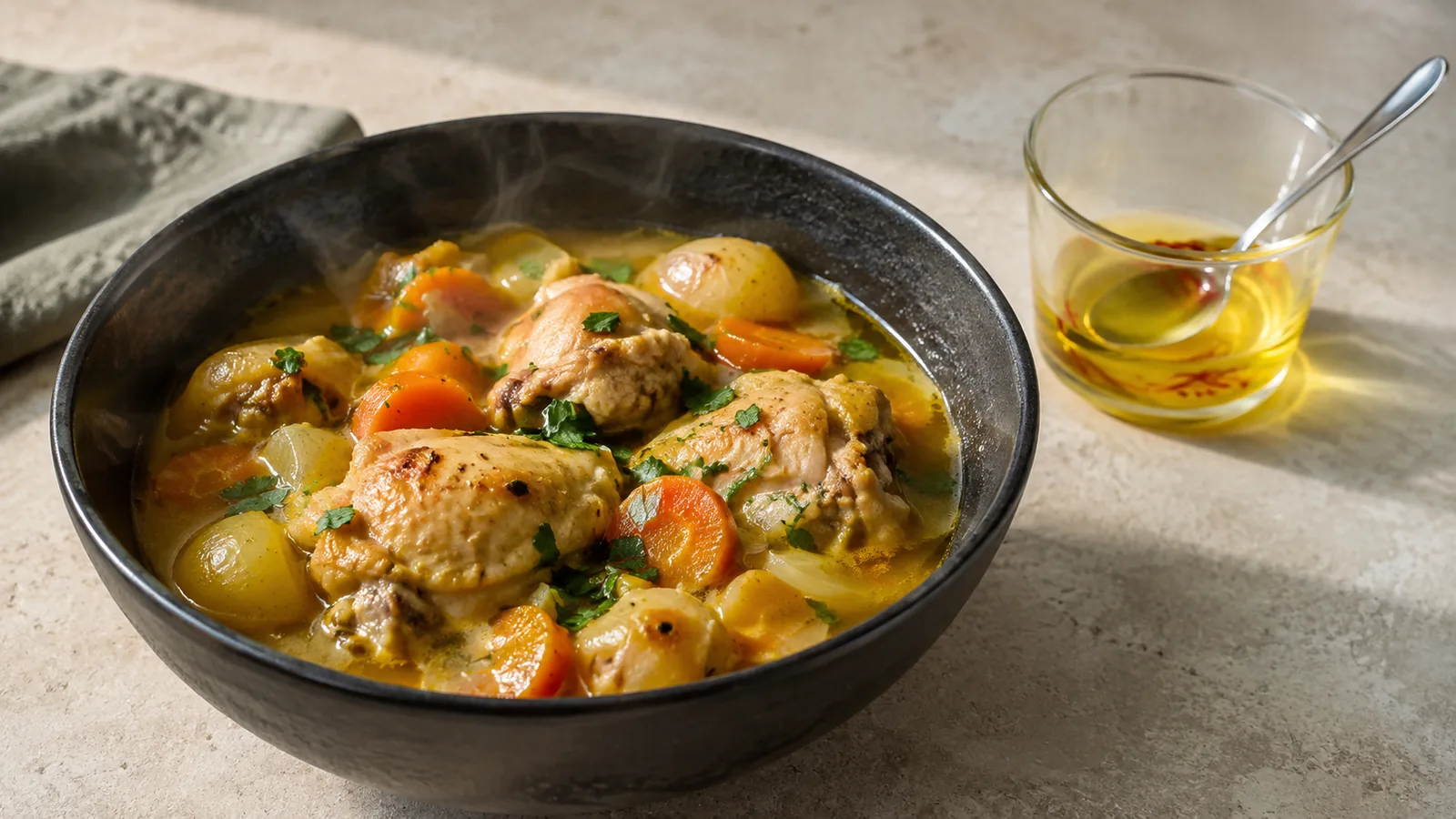
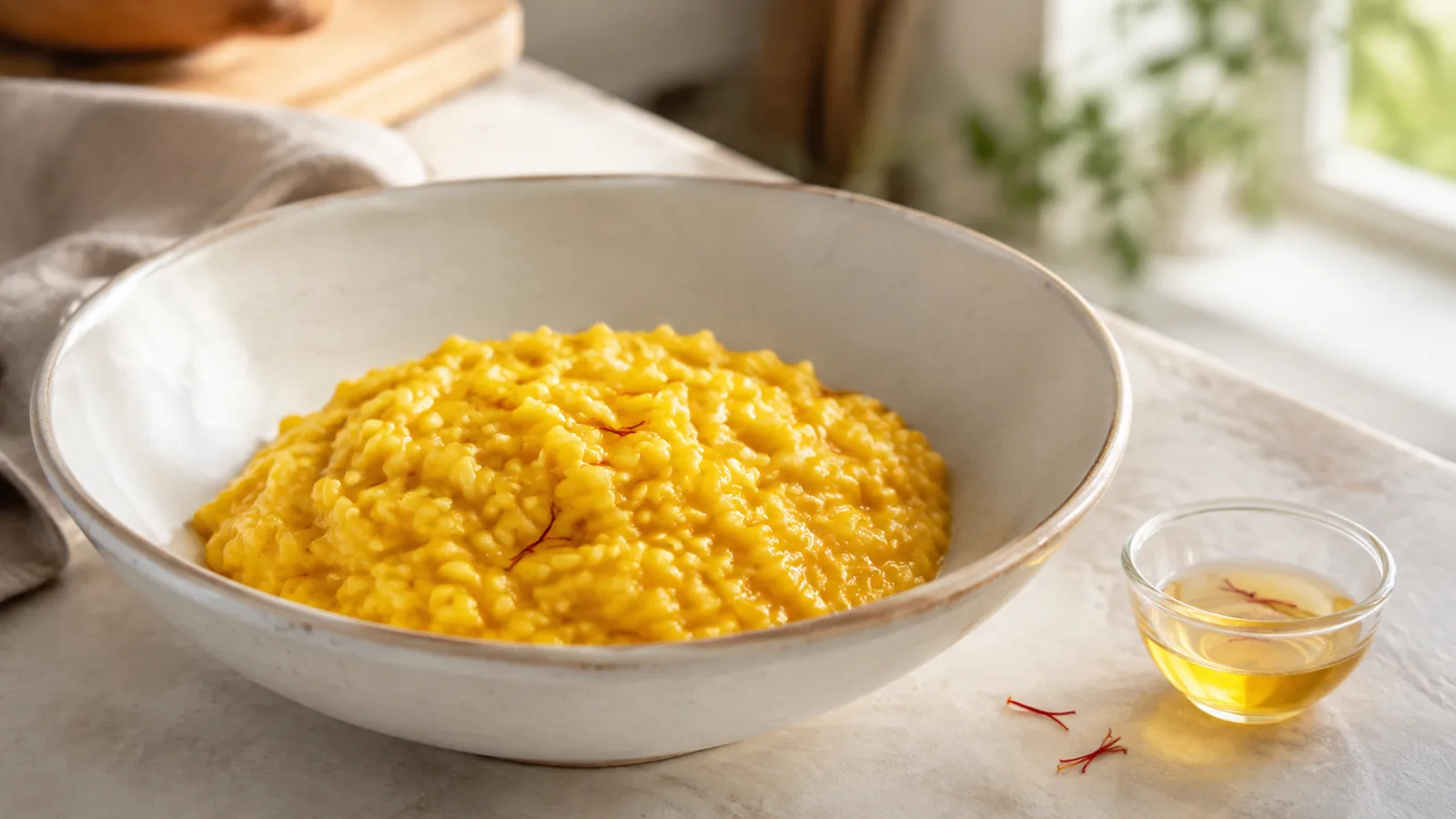
Chicken koobideh is a tender, seasoned kebab made from minced chicken rather than the minced lamb or beef used in the better-known version. This Saffron Chicken Koobideh Kebab Recipe in a Pan keeps the fragrant saffron, grated onion and familiar long shape, but cooks on the hob without skewers or a grill.
What is chicken koobideh?
Koobideh refers to the minced, mixed texture of the kebab. In this home-style chicken version, breast and thigh are processed with onion and seasoning until the mixture becomes cohesive enough to hold together in the pan. Saffron gives it a warm aroma and golden colour; finely chopped pepper adds a little sweetness and freshness.
The original mixture includes lamb fat, so it is not strictly free of red meat. That small amount makes the kebab richer and more forgiving in the pan. If you want a poultry-only version, use chicken skin or chicken fat instead. Butter can add flavour, but it does not bind or behave exactly like animal fat, so a butter-only mixture needs especially thorough chilling before it is shaped.
Ingredients for saffron chicken koobideh
- 500 g boneless chicken breast and thigh, in roughly equal amounts
- 100 g lamb fat, or the same amount of chicken skin or chicken fat
- 1 large onion
- 3 tablespoons very finely chopped red and yellow bell pepper
- 1 tablespoon concentrated brewed saffron, cooled
- Salt and freshly ground black pepper, to taste
- 1 small garlic clove, finely grated, if you like
- A little neutral oil for the pan
Using both breast and thigh gives a better balance than breast alone: the breast keeps the mixture light, while the thigh supplies moisture and flavour. Keep the chicken and fat cold while you work. A warm mixture becomes loose and is harder to shape.
Prepare the saffron and vegetables
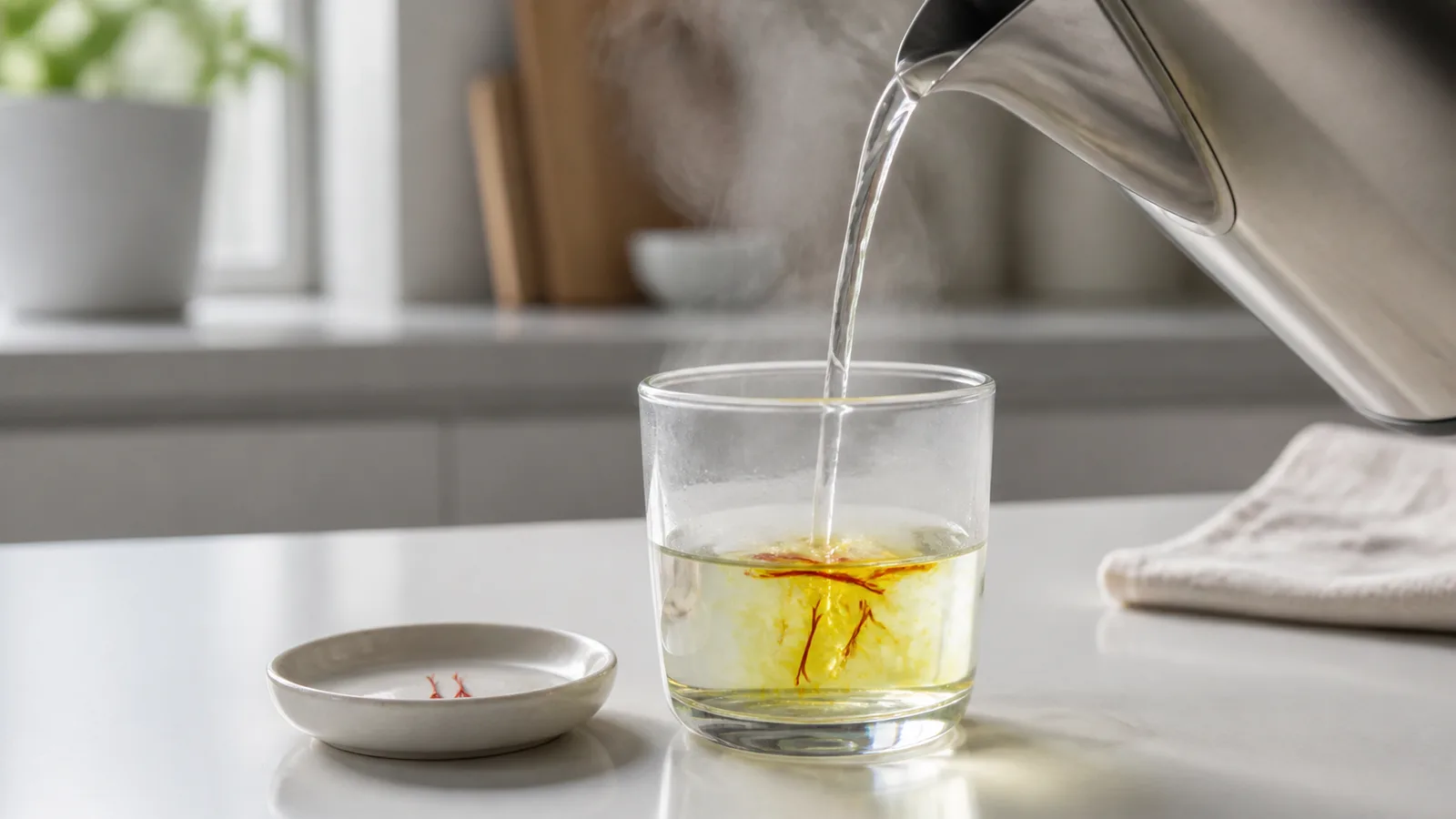
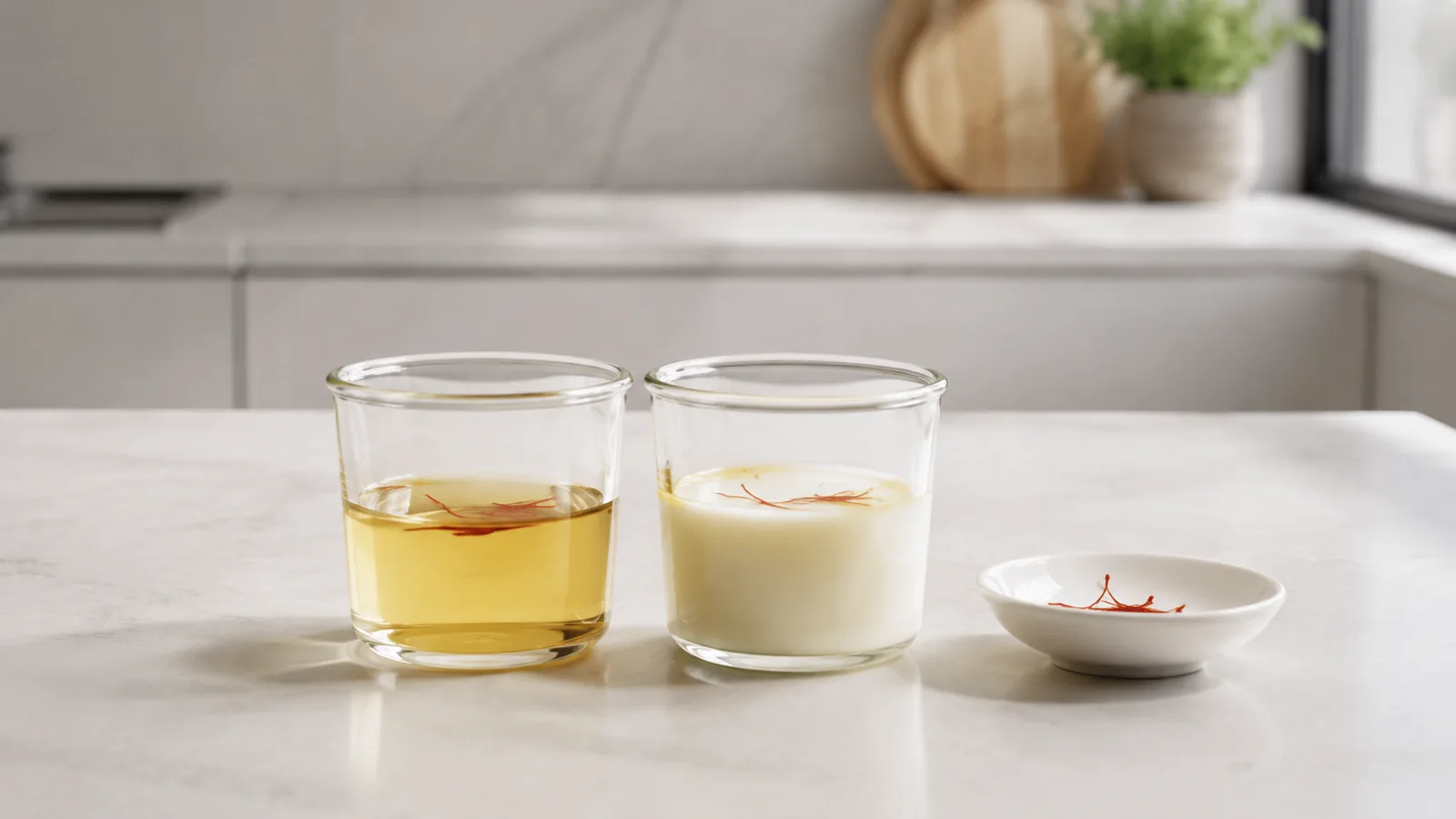
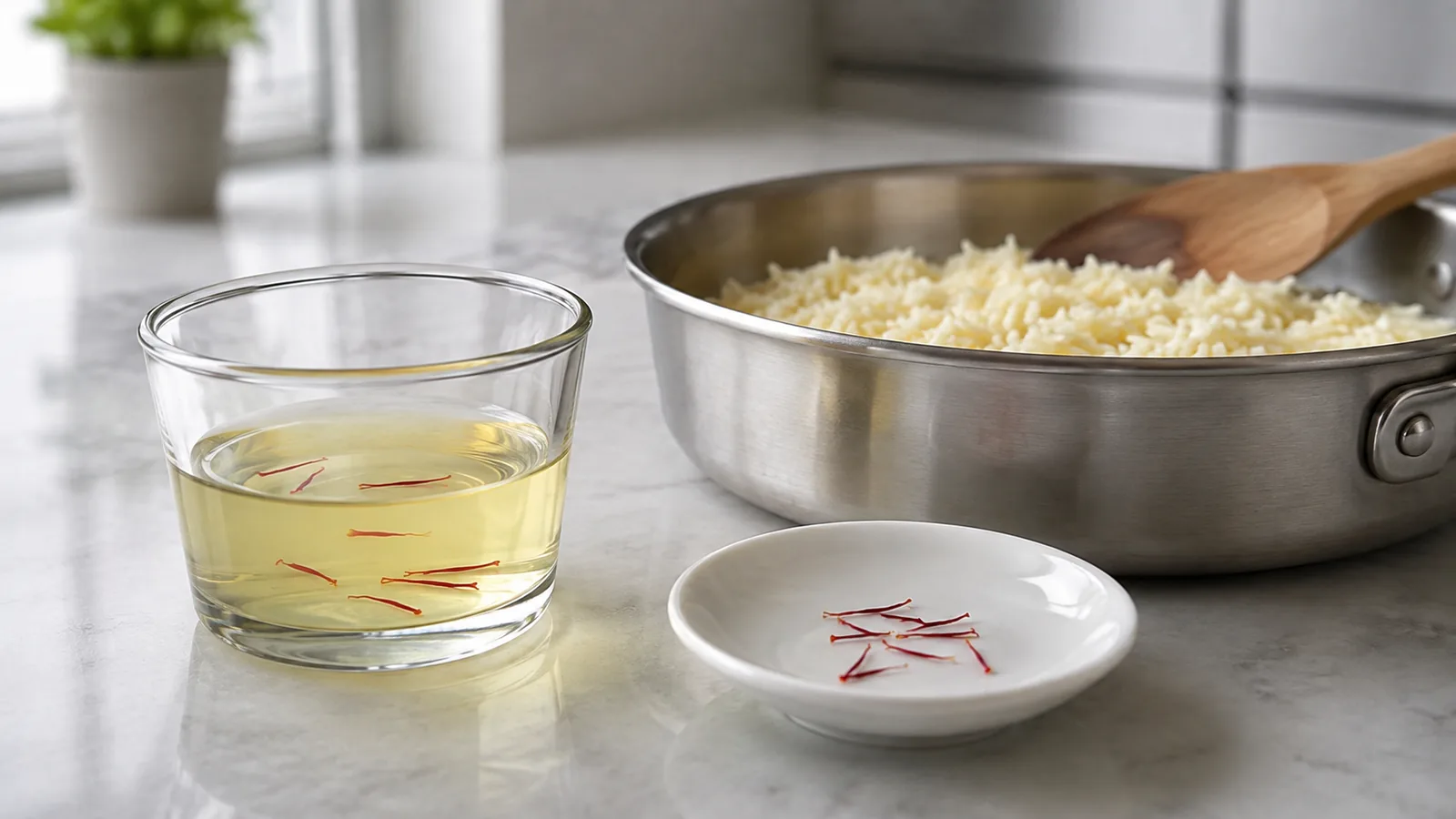
Crush the saffron threads to a fine powder, pour over a small amount of hot water and leave it covered for several minutes. You need a concentrated infusion, not a large cup of saffron water; excess liquid can make the kebab break. Let it cool before it touches the raw chicken.
Grate the onion finely, then squeeze it firmly in a clean cloth or fine sieve. Removing the juice is one of the most important steps in a pan-cooked chicken koobideh recipe. Finely chop the bell pepper and blot away obvious moisture. Large or wet pieces interrupt the texture and encourage cracks.
Make the chicken koobideh mixture
- Cut the cold boneless chicken and fat into small pieces.
- Pulse them in a food processor until evenly minced, stopping before they turn into a completely smooth paste.
- Add the squeezed onion, chopped peppers, cooled saffron, salt, pepper and optional garlic.
- Mix or knead for two to three minutes, until the mixture feels tacky and holds together when pressed.
- Cover and refrigerate it for at least 30 minutes. This rest firms the fat and makes shaping easier.
If the mixture still feels wet after chilling, first check that the onion was properly drained. Avoid adding a large amount of breadcrumbs simply to rescue it; that changes the soft koobideh texture. A further short chill will often do more good.
How to cook chicken koobideh in a pan
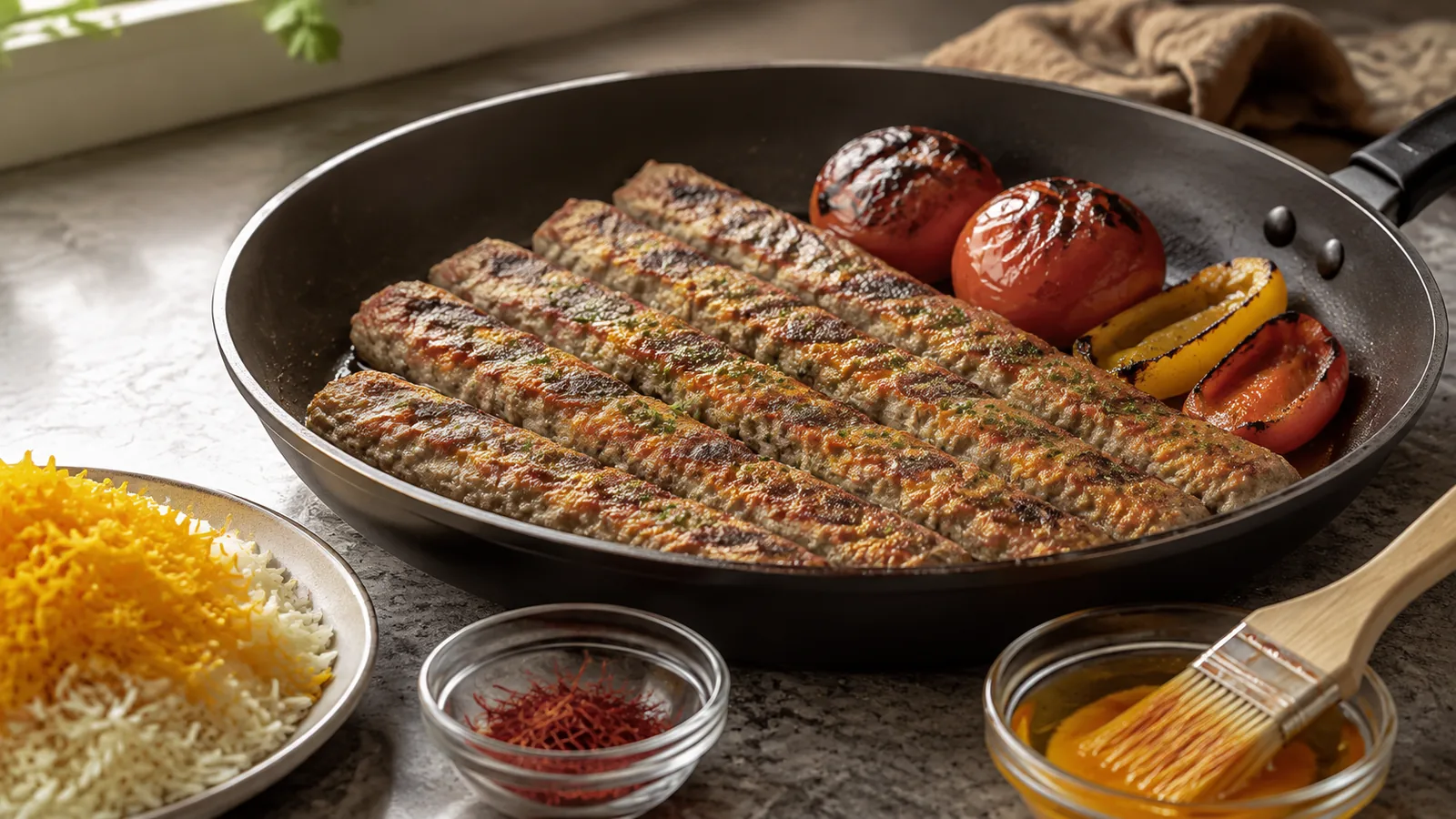
Lightly oil a cold, wide frying pan. Press the chilled mixture into an even layer about 1.5 cm thick. Use a spatula to divide it into long strips while it is still raw, leaving a narrow line between them. This gives the appearance of kebabs without requiring skewers.
Set the pan over medium heat. Let the underside firm before trying to move the strips. Once the edges look set and the bottom has browned, turn each piece carefully and cook the other side. If the surface is colouring too quickly, lower the heat and cover the pan briefly so the centre can catch up.
Colour alone cannot tell you whether minced chicken is safe. Check the thickest kebab with a food thermometer and cook it to 165°F (74°C), the temperature specified for ground poultry in the FDA’s poultry safety guidance. A thermometer also helps you avoid cooking well beyond that point and drying out the chicken.
A simple saffron-butter finish
For a glossy finish, mix a small spoonful of melted butter with a few drops of concentrated saffron infusion. Brush it over the cooked kebabs after they leave the pan. This is optional; the saffron already mixed through the chicken supplies the main aroma.
Can the kebabs be frozen?
Yes. Flatten the freshly mixed chicken between sheets of food-safe parchment or in a freezer bag, mark portions with the blunt side of a knife, and freeze it on a level tray. Once firm, the portions can be separated and packed airtight. Label the package with the date.
The FDA’s refrigerator and freezer storage chart gives ground poultry and ground-meat mixtures a freezer period of three to four months for best quality at 0°F (-18°C). Thaw portions in the refrigerator, not on the counter. If you cook a portion from frozen, use moderate heat, allow extra time and still confirm 165°F (74°C) in the centre.
Serving saffron chicken koobideh
Serve the kebabs straight from the pan with saffron rice, grilled tomatoes, roasted peppers, herbs or a crisp salad. A squeeze of lemon works well if you prefer a brighter finish. For another stovetop option combining chicken and red meat, see our Bakhtiari kebab recipe with Iranian saffron.
This method is designed for an ordinary frying pan: keep the ingredients cold, squeeze the onion thoroughly, shape before heating and judge doneness with a thermometer. Those small details produce a saffron kebab that stays together, remains juicy and is practical enough for a weeknight meal.