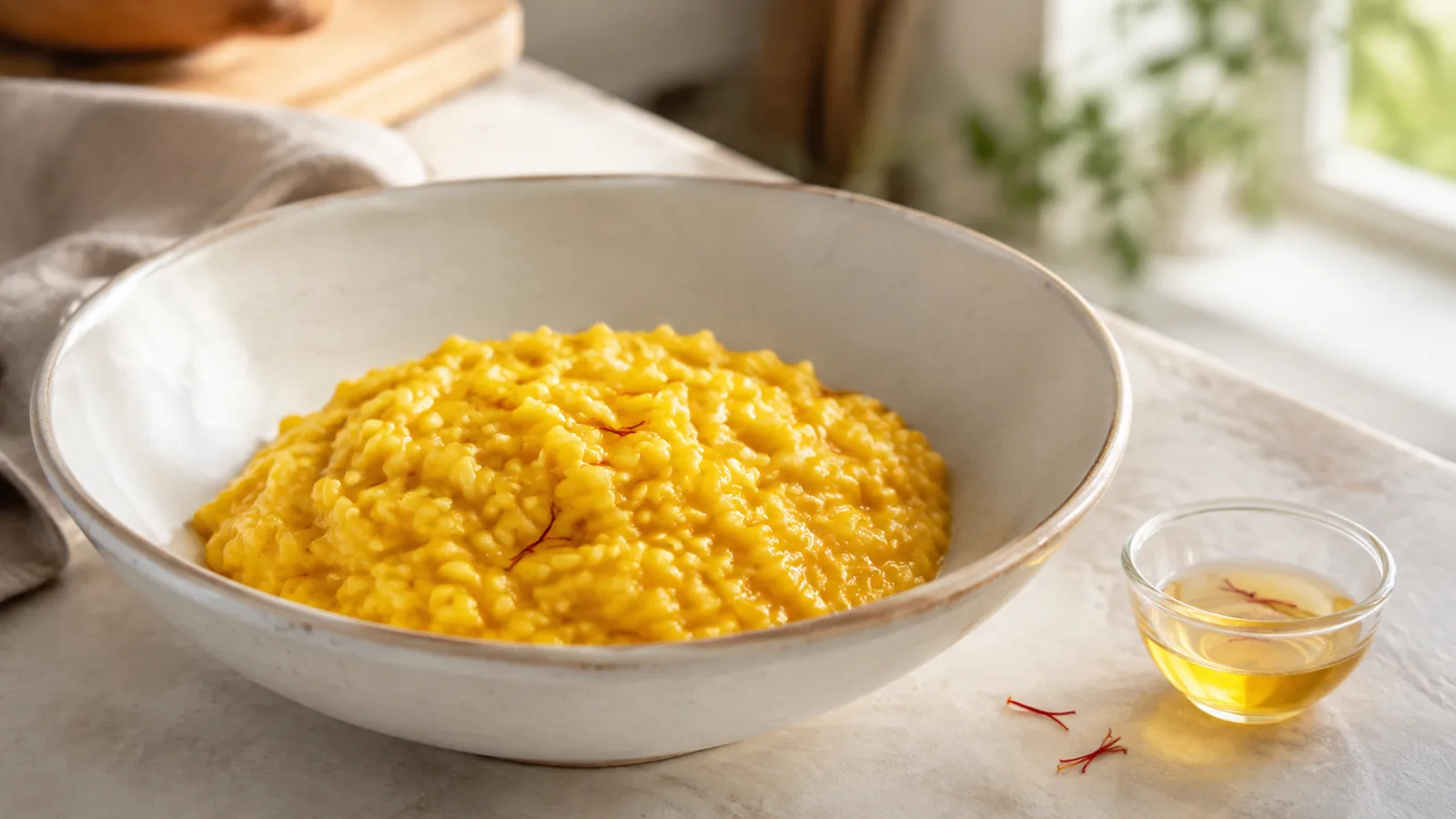
The role of saffron in cooking is larger than its colour. A small infusion can perfume rice, soften the richness of a stew, give a dessert its identity or make a simple drink feel complete. The skill lies in extracting that character gently and using enough to be noticed without allowing bitterness to take over.
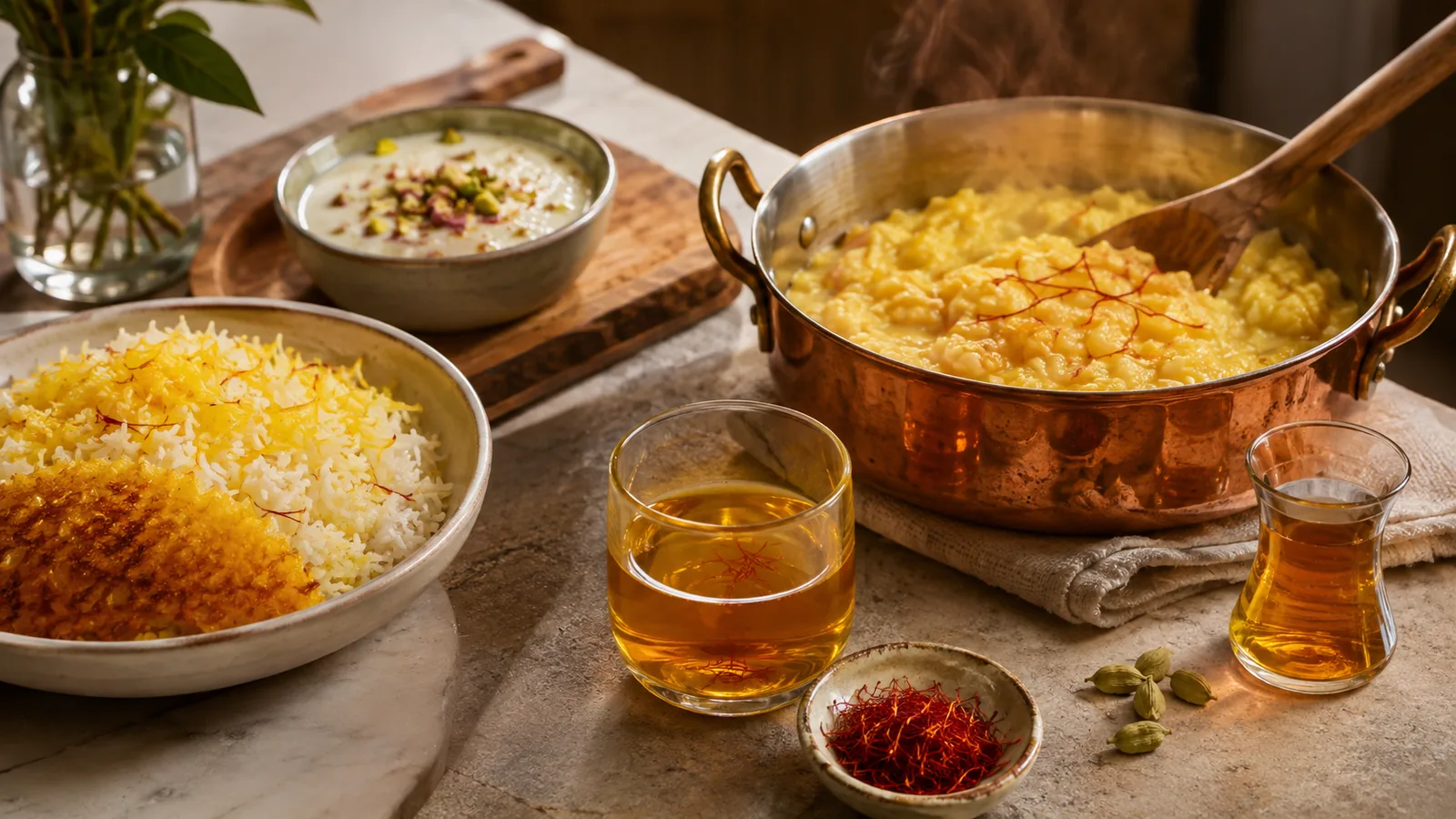
What is saffron used for in cooking?
Saffron contributes three closely connected qualities: a golden colour, a dry floral aroma and a faintly bitter taste. Research on Crocus sativus identifies crocin with colour, picrocrocin with taste and safranal with aroma. A scientific review of saffron’s characteristic compounds explains that distinction in more detail.
Those qualities make saffron useful in foods that contain water or fat, especially rice, broths, milk-based desserts and butter sauces. The spice should support the dish rather than make everything taste the same. In a delicate rice, its aroma can lead; in a strongly spiced stew, it may work better as a quiet finishing note.
How to prepare saffron before adding it
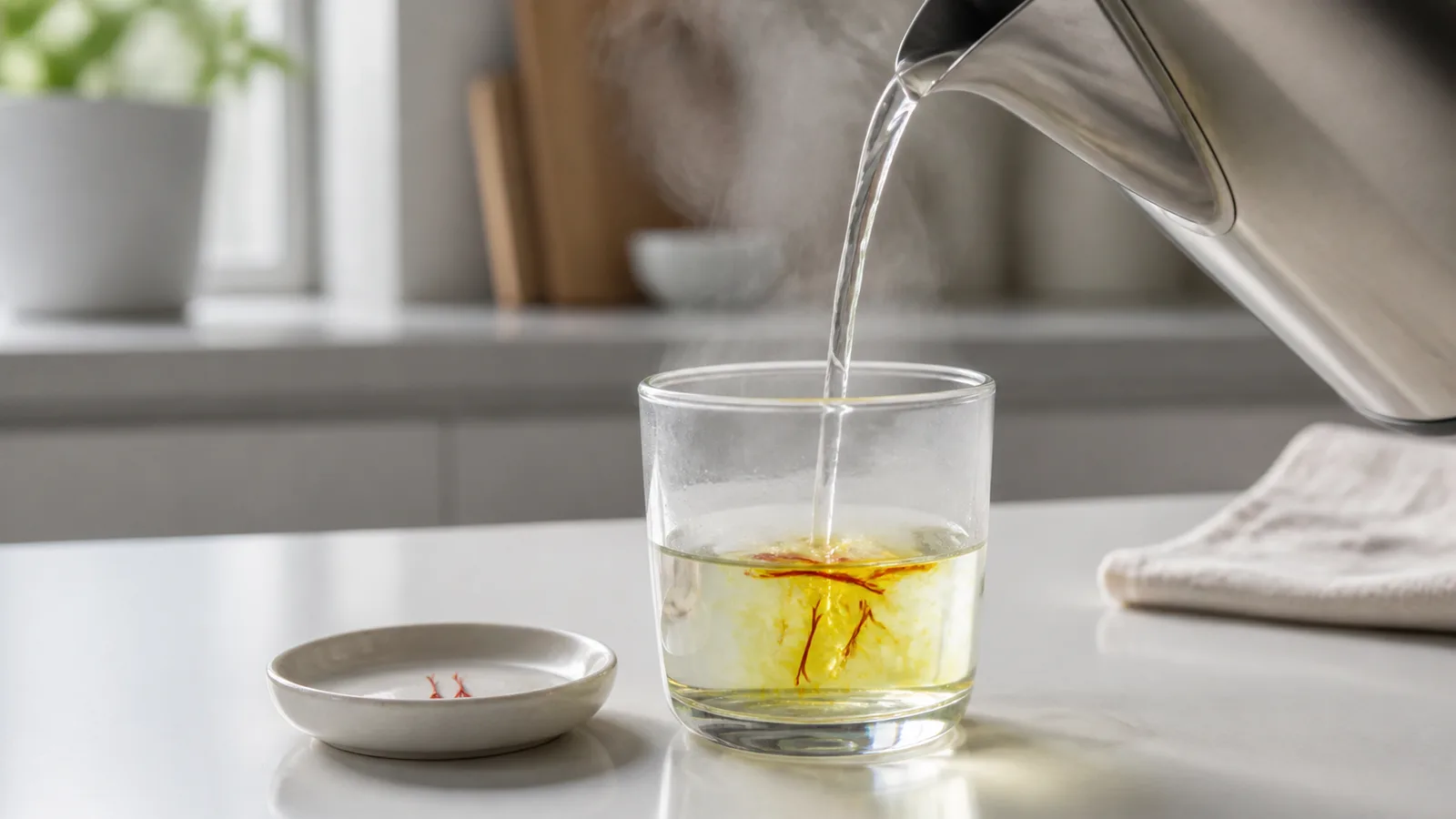
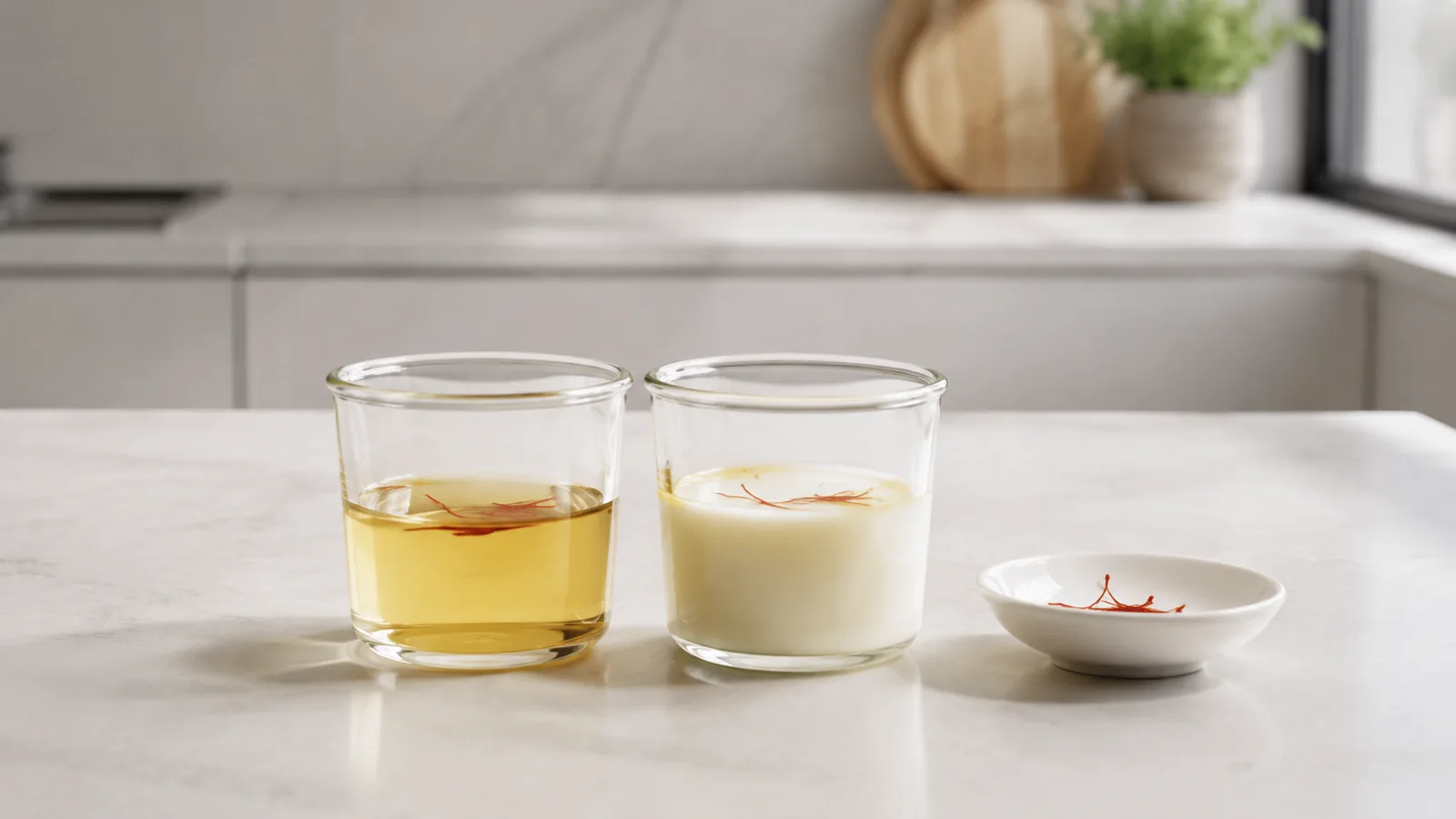
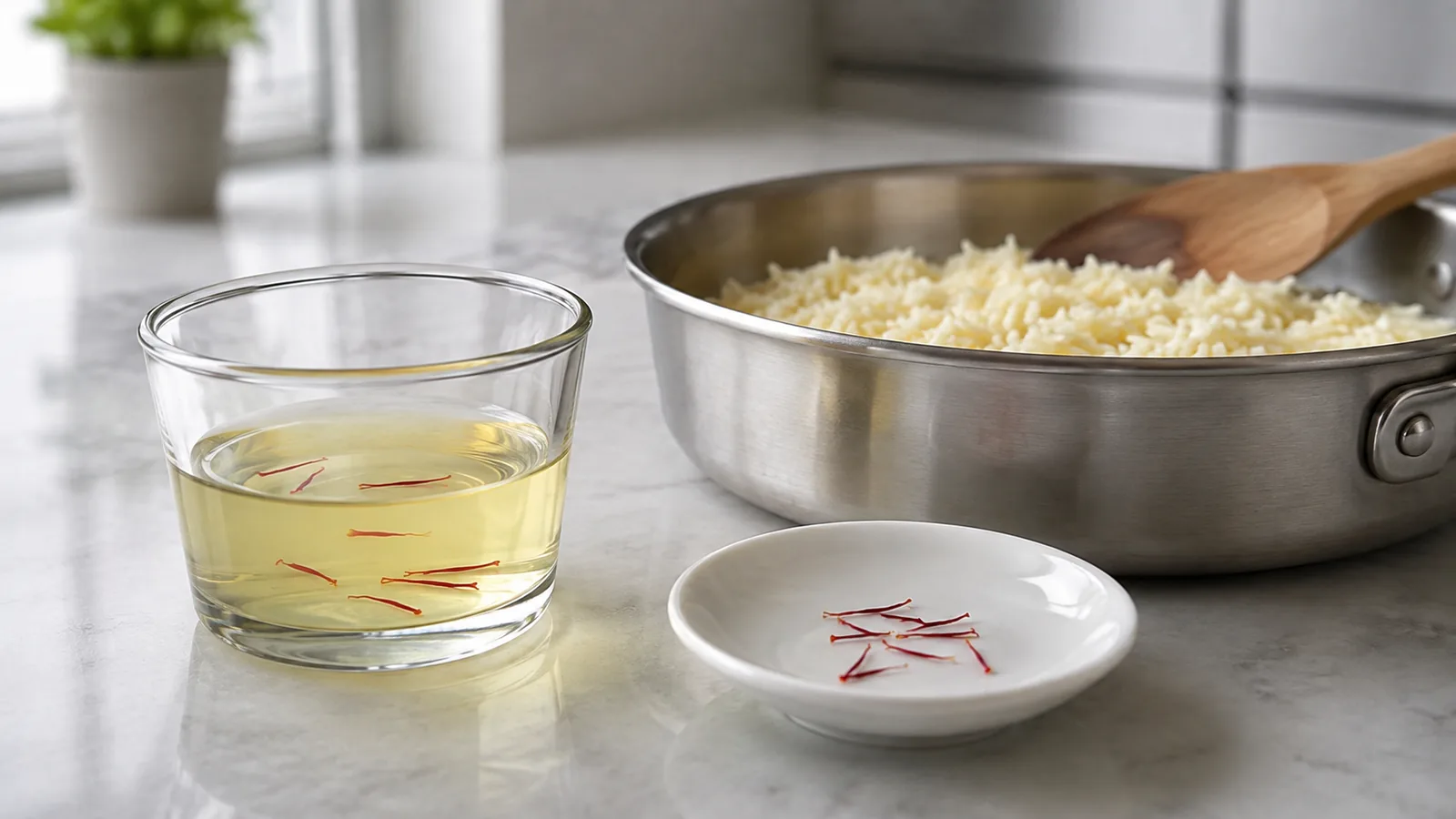
For most recipes, begin with threads rather than adding a spoonful of dry powder directly to the pot. Crush the threads gently, place them in a small heatproof cup and add a little hot water. Cover the cup and leave it for about 10 minutes. The liquid should turn a deep golden-orange and smell distinctly of saffron.
Use only as much water as the recipe can comfortably absorb. A concentrated infusion is easier to control than a pale one. Add some early if you want the colour to spread through rice or a sauce, then keep a little for the final stage when you want the aroma to remain clear.
Direct, prolonged heat can flatten saffron’s fragrance. Do not toast the threads in a dry pan until dark, and do not leave them frying in hot oil. If a recipe calls for saffron butter, first make the infusion and then stir a small amount into warm melted butter.
Saffron in Persian cuisine
Saffron is woven through Persian cuisine, where it appears in savoury food, sweets and drinks. It colours the crisp tahdig beneath rice, perfumes selected portions of chelow and polo, and gives dishes such as zereshk polo their bright contrast with barberries. Chicken tahchin, joojeh kebab and chicken koobideh also use saffron to connect the meat, rice and accompaniments.
In meat and chicken dishes, cooks commonly use a saffron infusion in a marinade, cooking liquid or finishing glaze. In fish, a modest amount works well with lemon or herbs. Soups and slow-cooked dishes require more restraint because a long cooking time and stronger seasonings can hide the aroma.
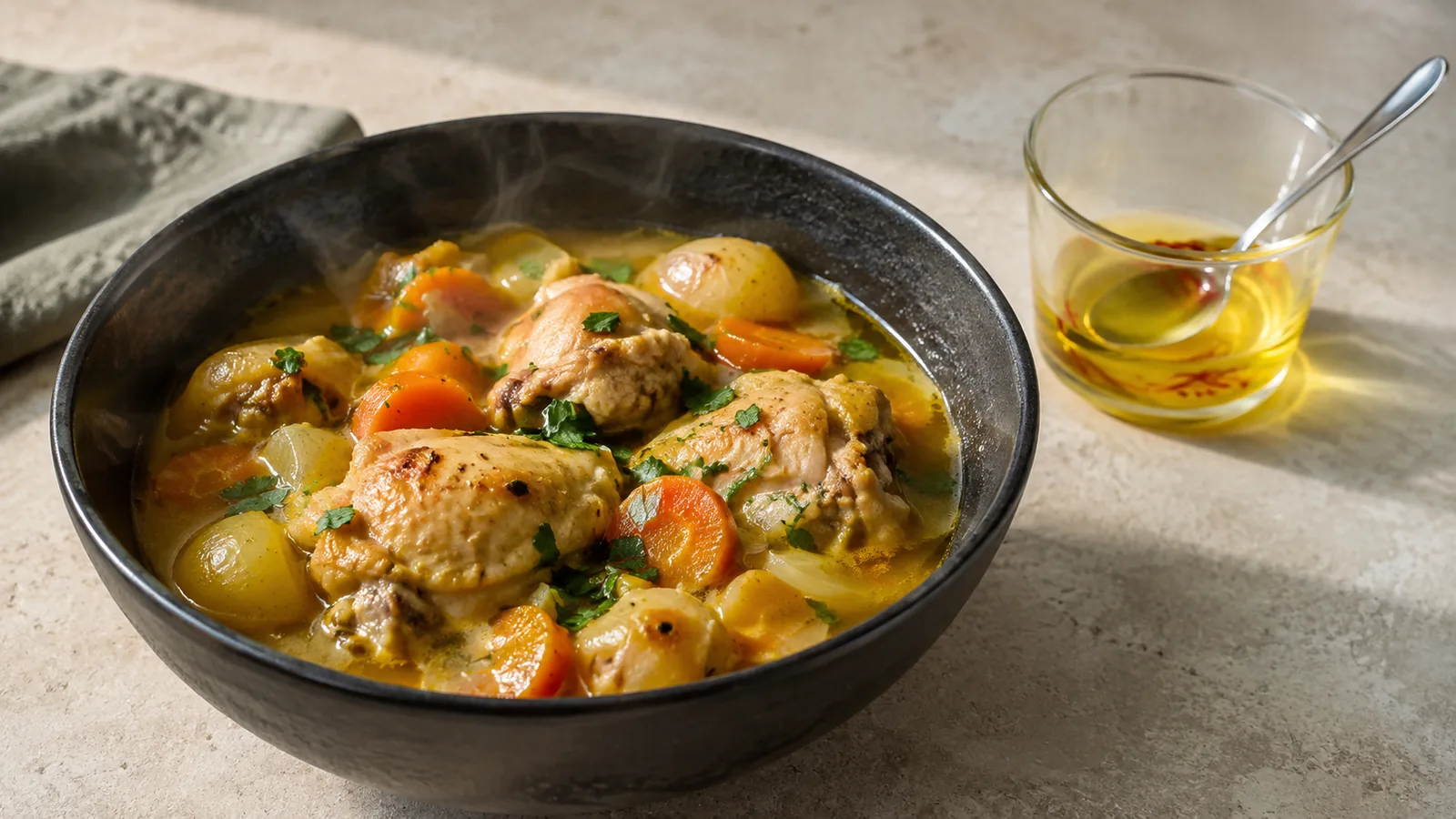
For a practical example, our Majlisi chicken recipe with Iranian saffron shows how the spice can be used in a complete main dish. This corrects the old link label, which called the same page a Bakhtiari kebab recipe even though its destination was Majlisi chicken.
Persian desserts, sweets and drinks
Sholeh zard, halva, kachi and ferni each use saffron differently. In sholeh zard, it colours and perfumes the rice pudding; in halva and kachi, it balances flour, fat, sugar and rosewater; in ferni, it can turn a mild milk pudding into a more aromatic dessert. Saffron ice cream and traditional sherbets rely on the same contrast between floral fragrance and sweetness.
Regional sweets broaden the list: Yazdi halva, Qom sohan, Shirazi masghati, Khuzestani ranginak, baslogh, maqout and qottab may include saffron according to the local recipe and maker. Maqout, sometimes transliterated in more than one way, is a starch-thickened sweet whose flavour can be built with saffron and rosewater. Not every version of every named sweet contains saffron, so the recipe matters more than the label.
The role of saffron in global cuisines
Saffron travelled widely because a small weight could provide a striking sensory effect. Its culinary role changes with the ingredients around it:
- Indian cooking: saffron, often called kesar, perfumes rice dishes and milk-based sweets. It may appear in biryani, kheer and festive drinks. Gulab jamun can be served in saffron-scented syrup, although saffron is not essential to every version.
- Arabic cooking: it is used in rice, meat dishes, sweets and drinks. Saffron and cardamom can be paired in coffee, where a few threads are enough to scent a pot.
- Spanish cooking: saffron is closely associated with paella and related rice dishes. It should season the cooking liquid evenly rather than sit in isolated red threads.
- Italian cooking: risotto alla Milanese is the clearest example. The saffron is dispersed through the creamy rice, giving it a warm colour and a distinct but controlled aroma.
- Moroccan cooking: saffron can appear in tagines, tea and festive meat dishes such as mrouzia. Chermoula recipes vary; some use saffron, while others rely on herbs, garlic, citrus and different spices.
Older English-language descriptions sometimes connect saffron with a ceremonial Mongolian lamb pie marinated for three days. That precise story is difficult to verify and should not be treated as a rule of Mongolian cooking. The useful lesson is simpler: saffron can season rich lamb and pastry, but a three-day saffron marinade is neither necessary nor automatically better.
How much saffron should you use?
There is no single measure for every dish. A few threads may be enough for a cup of tea, while a family-sized rice dish needs a more visible infusion. Start conservatively, taste after the saffron has had time to disperse, and add more only if the dish needs it. Excess saffron can produce an assertive bitterness and wastes an expensive ingredient.
The strength also depends on thread quality, age and storage. Keep saffron airtight, dry and away from light and heat. If an old jar produces little aroma even after careful infusion, adding more may increase colour without restoring the fragrance it once had.
Common mistakes when cooking with saffron
- Adding whole dry threads to a large dish and expecting even colour.
- Using too much water for the infusion and weakening the recipe.
- Burning the threads in hot oil or a dry pan.
- Cooking every drop for a long time instead of reserving some aroma for the end.
- Adding so many competing spices that the saffron disappears.
- Assuming every yellow dish contains saffron; turmeric and artificial colour create a different result.
Making saffron feel natural in a dish
Good saffron cooking is not about forcing the spice into every course. Choose dishes where its colour, aroma or gentle bitterness has a purpose. Bloom it in a small amount of liquid, add it at the stage that suits the recipe, and pair it with ingredients that leave room for its fragrance. That approach explains why saffron belongs equally comfortably in Persian rice, Indian sweets, Spanish paella, Italian risotto and a warm cup of cardamom coffee.