Saffron has not been shown to cause meaningful weight loss on its own. A few trials have tested saffron or standardized extracts for appetite, snacking and body measurements, but the best pooled evidence found no significant reduction in body weight, BMI or waist circumference. If saffron has a place in a weight-management plan, it is as a food or a carefully assessed supplement—not a replacement for nutrition, activity, sleep or medical care.
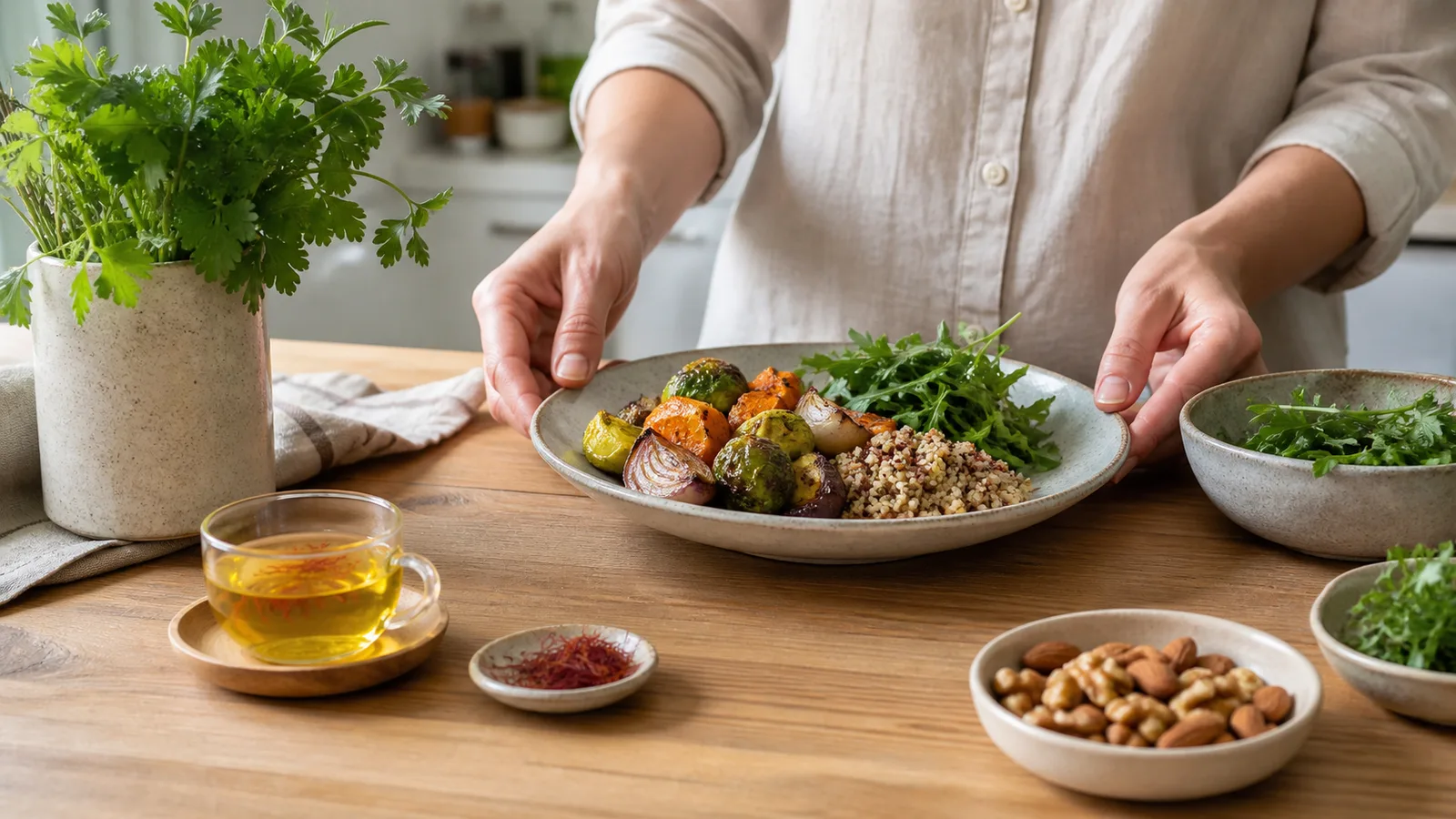
Does saffron help with weight loss?
The most useful answer comes from looking beyond one promising study. A 2022 systematic review and meta-analysis pooled 25 randomized controlled trials in people with overweight or obesity. Compared with controls, saffron supplementation did not produce statistically significant changes in weight, BMI, waist circumference or hip circumference. The analysis found a change in waist-to-hip ratio, but the authors stressed the limitations and called for stronger evidence.
That makes claims such as “saffron melts fat” or “saffron tea makes you lose weight” unjustified. Results from a standardized extract also cannot be assumed to apply to culinary threads, tea, a different extract or a mixed supplement.
Why saffron and weight loss became linked
A small double-blind trial published in 2010 enrolled 60 mildly overweight women. Participants received either a proprietary saffron extract called Satiereal or placebo for eight weeks, without a prescribed calorie restriction. The extract group reported fewer snacks and had a greater reduction in body weight than the placebo group.
This is the study most often used to support saffron as an appetite suppressant. It is interesting, but it has important limits: one small population, a short follow-up and one specific standardized product. Later pooled evidence did not confirm a meaningful average reduction in body weight.
Appetite, mood and emotional eating
Researchers have proposed that saffron compounds may affect pathways involved in mood and eating behaviour, sometimes described in terms of serotonin activity. That remains a hypothesis, not proof that saffron controls appetite in everyday use. Stress, sleep, medication, food access, routine and mental health can all influence snacking. Someone experiencing persistent binge eating, depression or anxiety needs appropriate professional support, not a spice presented as a cure.
Saffron also contains compounds studied for antioxidant activity, but “rich in antioxidants” does not translate into a measured weight-loss effect. In traditional Persian medicine it has been described as “warm and dry” and associated with blood circulation, skin, bladder, spasm and stomach uses. Those historical categories and uses are not clinical evidence that saffron benefits weight loss or treats any of those systems.
Fat absorption
Laboratory and animal research has explored whether saffron compounds interact with pancreatic lipase, an enzyme involved in fat digestion. This has not established a clinically useful reduction in fat absorption in people. Saffron should not be described as a fat blocker.
How to use saffron extract to lose weight
There is no evidence-based, universally approved saffron-extract regimen for weight loss. The 2010 trial used 176.5 mg per day of its proprietary extract, split into two capsules, for eight weeks. That is a description of the experiment—not a dose recommendation. Extracts differ in concentration, composition and quality, so milligrams on two labels may not represent equivalent products.
Kesar is another name commonly used for saffron; “kesar for weight loss” refers to the same evidence base, not a different slimming ingredient. Whether a label says saffron, kesar or Crocus sativus, check what part of the plant and what type of extract the product actually contains.
Before using a concentrated extract, show the exact product and ingredient list to a doctor or pharmacist, especially if you take prescription medicine, have a health condition, are preparing for surgery, or are pregnant or breastfeeding. In the United States, the FDA does not approve dietary supplements for safety and effectiveness before sale. Weight-loss products deserve particular care because FDA has repeatedly found hidden ingredients in products sold in that category.
Can saffron tea support a weight-management routine?
Saffron tea is not equivalent to the standardized extracts used in trials. It may still fit a balanced routine as an unsweetened, low-calorie drink. Its practical value comes from what it replaces: choosing an unsweetened infusion instead of a sugary beverage can reduce calorie intake, whereas adding sugar, syrup or a large amount of honey can reverse that advantage.
A normal culinary infusion uses a small amount for flavour and colour. More is not better, and a stronger brew has not been shown to produce greater weight loss. Our guide to saffron herbal tea covers preparation without turning the drink into a treatment claim.
What about saffron with basil seeds?
Soaked basil seeds add texture and fibre to a drink, which some people find filling. There is no good clinical evidence that combining them with saffron amplifies saffron’s effect on weight. They also add energy, however modest, and should be counted as part of the overall eating pattern. Calling the combination “highly recommended” for appetite suppression goes beyond the evidence.
What actually produces sustainable weight loss?
The U.S. National Institute of Diabetes and Digestive and Kidney Diseases recommends programmes built around a healthy reduced-calorie eating plan, appropriate physical activity, behavioural support and a plan for maintaining the change. The best approach is one a person can follow safely over time and adapt to their health, preferences and culture.
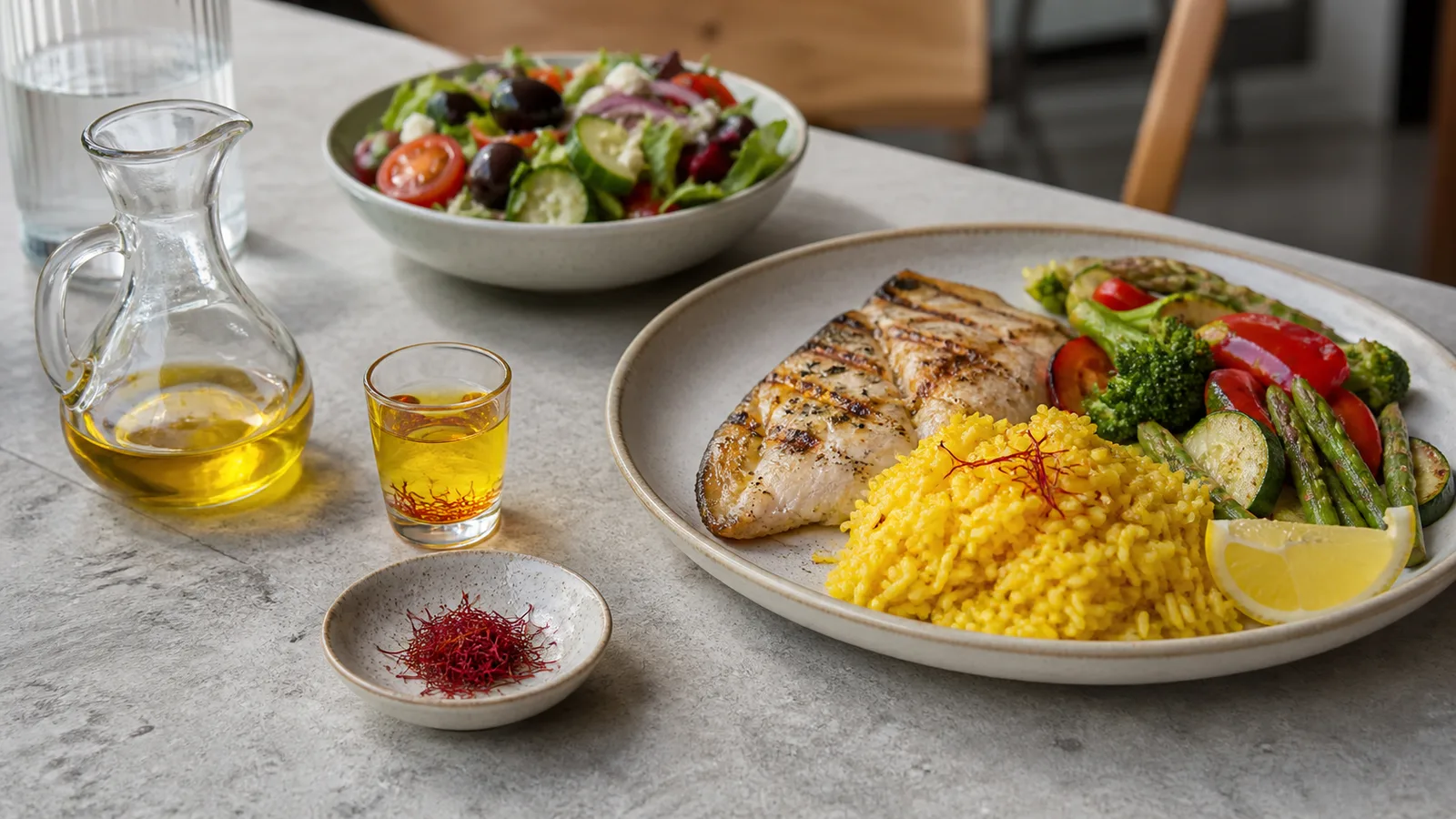
Saffron can make vegetables, rice, soups, yogurt-based dishes and unsweetened drinks more aromatic without requiring a heavy sauce. That culinary role may help enjoyable meals fit a broader plan. It does not create the calorie deficit responsible for weight loss, and it does not counterbalance an eating pattern that consistently supplies more energy than the body uses.
Safety and precautions
Typical culinary use is different from concentrated supplementation. A review of saffron meta-analyses reported common adverse effects including nausea, dry mouth, poor appetite and headache. Safety findings from short clinical trials do not establish that every product or long-term dose is safe.
- Do not use saffron to treat or prevent postpartum bleeding or any other urgent medical condition.
- Pregnant people should avoid self-prescribing concentrated saffron. Evidence about use in pregnancy is limited, and higher exposures have been associated with uterine stimulation.
- Ask a clinician or pharmacist to check for medication, bleeding, blood-pressure or other individual concerns before using an extract.
- Stop using a supplement and seek advice if an adverse reaction occurs.
Claims that ordinary saffron tea “strains the kidneys” were not adequately supported in the previous article and have not been repeated. Anyone with kidney disease, however, should discuss supplements and major dietary changes with their own clinical team.
The bottom line
Saffron and weight loss are connected by early research into snacking and standardized extracts, not by proof of a reliable slimming effect. The larger evidence review found no significant reduction in weight or BMI. Enjoy saffron as food if it suits you; treat an extract as a supplement that needs product-specific and personal safety review; and build weight management around methods with stronger long-term evidence.
Sources
- PubMed: 2022 systematic review and meta-analysis of saffron and anthropometric outcomes
- PubMed: 2010 randomized trial of a proprietary saffron extract, snacking and satiety
- PubMed: review of saffron meta-analyses and safety reporting
- NIDDK: choosing a safe and successful weight-loss programme
- FDA: information for consumers using dietary supplements