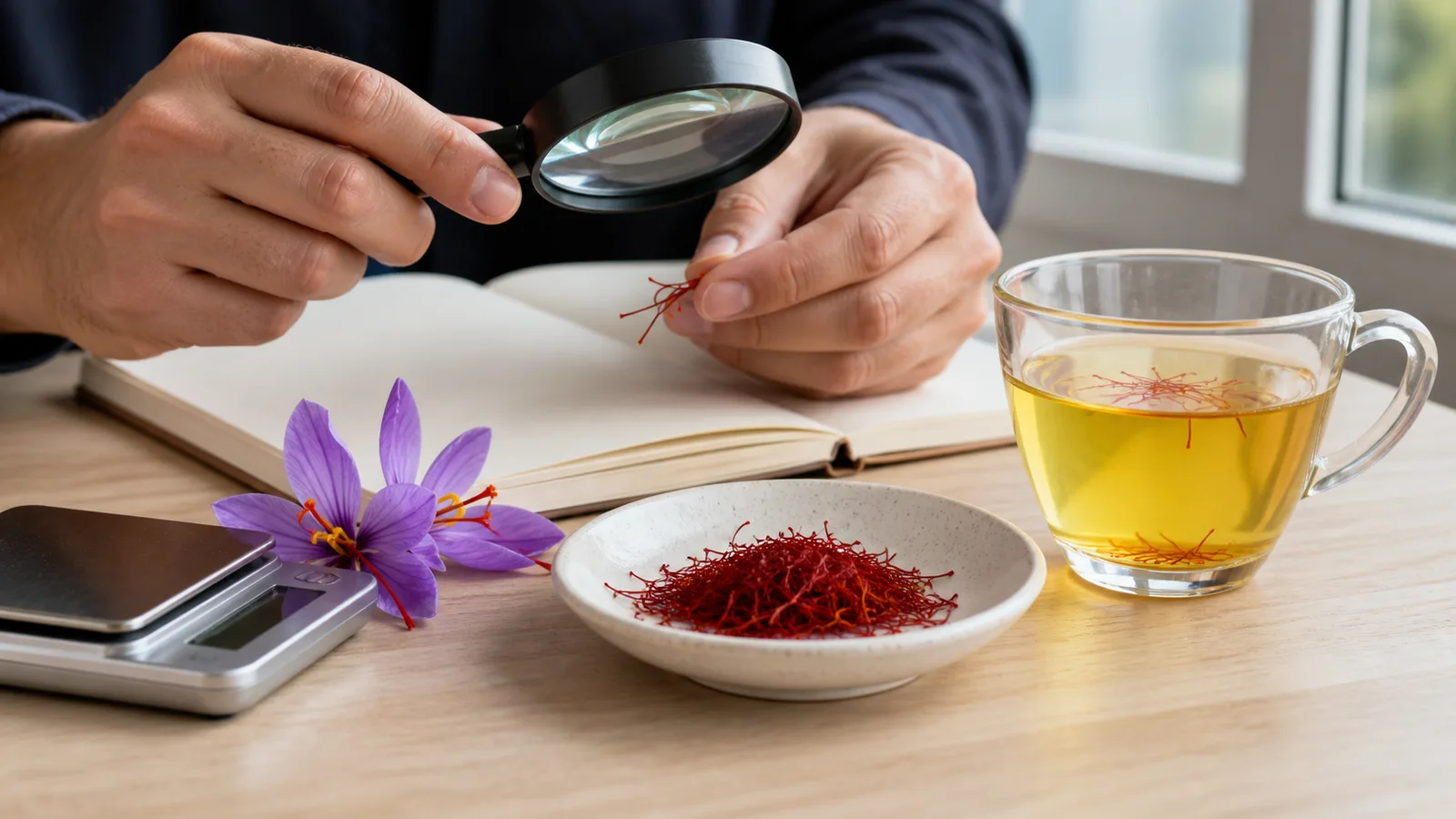
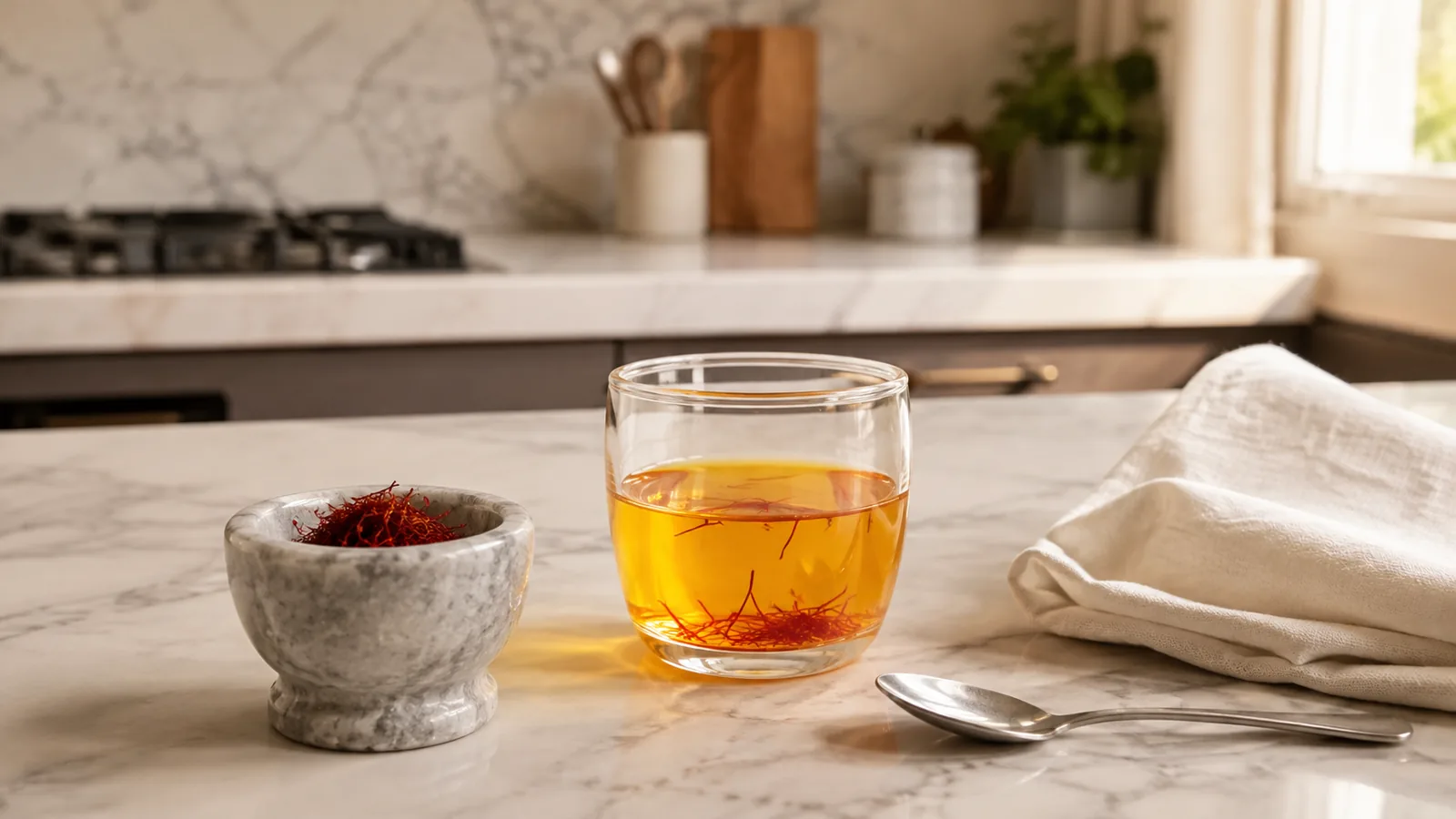
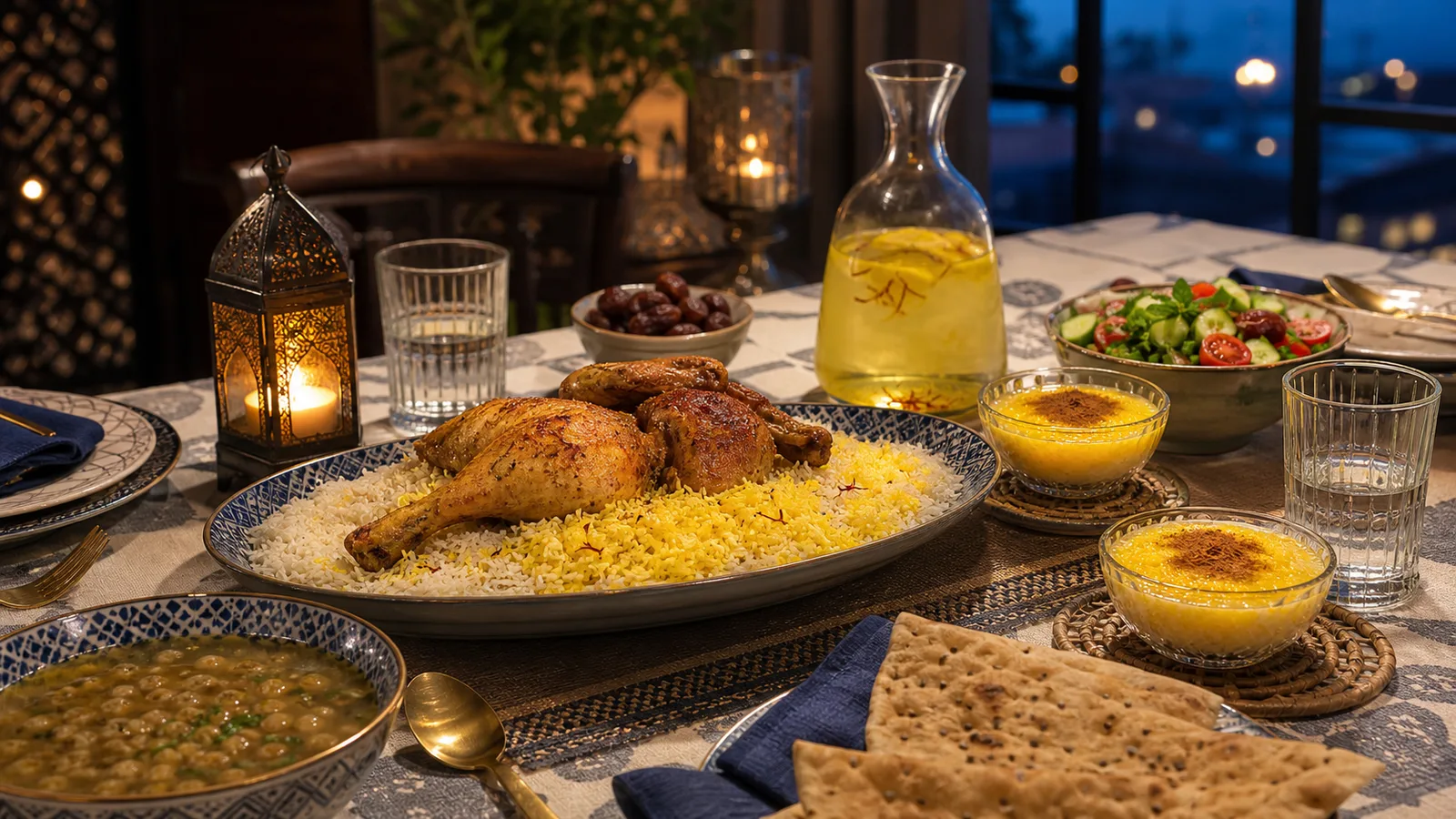
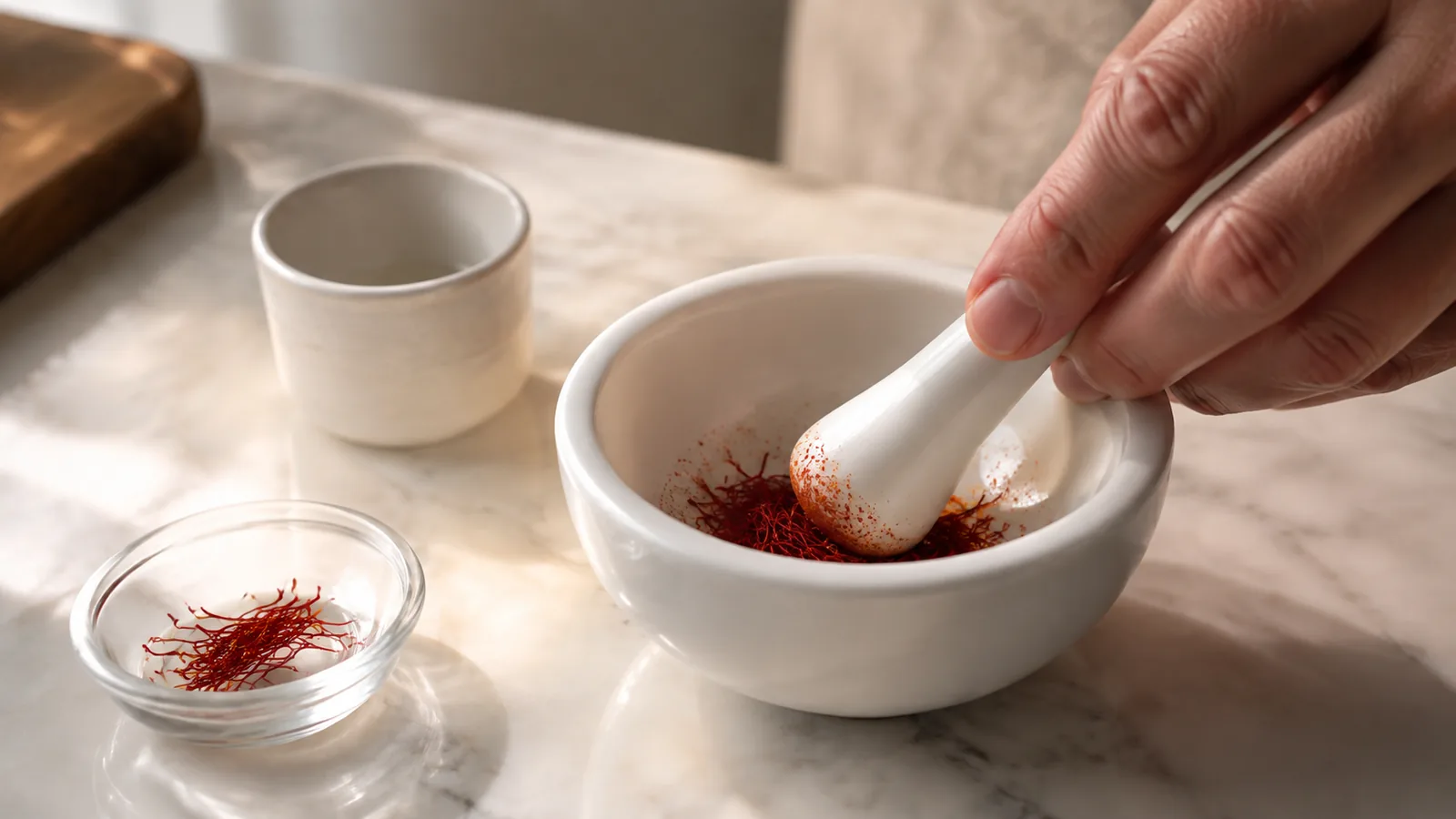
To make saffron herbal tea, lightly crush a small pinch of genuine saffron, cover it with two cups of hot water and steep for 10–15 minutes. This recipe for saffron tea makes a fragrant, naturally caffeine-free golden infusion that can be served hot or cold. Cardamom and rosewater are optional. Start with 12–20 threads for two cups; the former recipe’s 2 grams was far beyond a normal culinary tea amount.
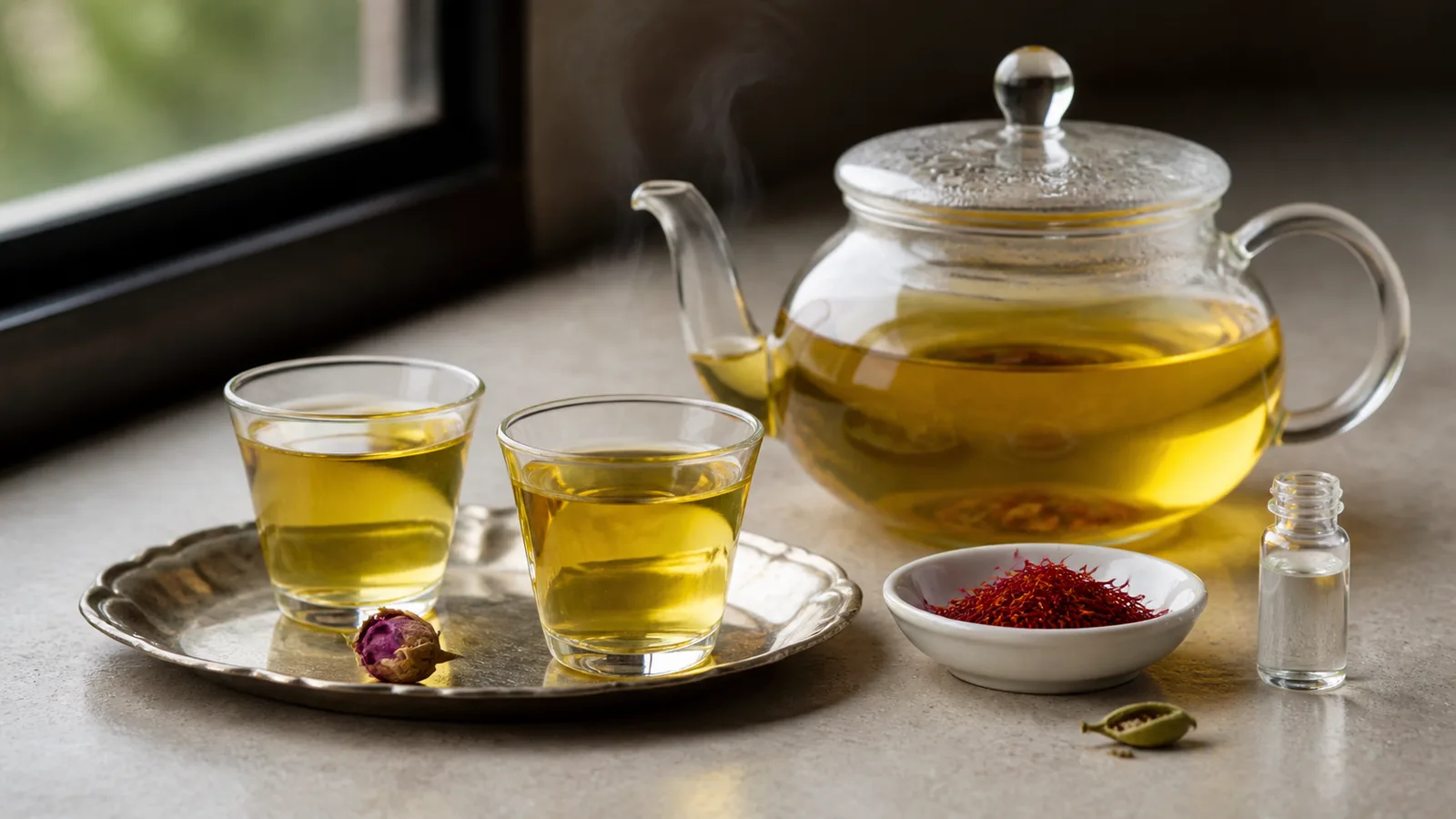
Saffron tea recipe
Ingredients for two cups
- 12–20 genuine saffron threads, about one small pinch
- 2 cups (480 ml) fresh water
- 1 green cardamom pod, lightly crushed (optional)
- 1 teaspoon food-grade rosewater (optional)
- A small amount of sugar, rock candy or honey, added after tasting (optional)
This is a flexible beverage, not a pharmaceutical formula. Thread size and strength vary, so begin at the lower end and adjust the next batch for aroma. More saffron does not guarantee better flavour; too much can become harsh or bitter.
How to make saffron tea step by step
1. Crush the threads lightly
Making saffron tea begins with the threads. Put them in a clean mortar and break them into short pieces. A fine powder colours quickly, but it is not essential for tea. If grinding finely, add a tiny pinch of the measured sweetener to give the pestle traction.
2. Heat the water
Bring fresh water to a boil, then let the bubbling settle briefly. Pour it over the saffron in a heat-safe teapot or covered jug. Add the crushed cardamom now if using it.
3. Steep covered
Cover and leave for 10–15 minutes. Keeping the lid on helps retain aroma. A 30-minute simmer over low heat is unnecessary and can flatten the delicate scent. Stir in rosewater near the end so it remains noticeable.
4. Taste before sweetening
Strain if you prefer a clear cup, although the threads are edible. Taste it plain first. Add only enough sugar, rock candy or honey to suit you. Honey changes sweetness and flavour; it does not automatically “enhance the health benefits” of the tea.
5. Serve hot or cold
Drink it warm immediately, or cool it promptly and refrigerate it in a covered container for a cold saffron drink. Serve the chilled infusion over ice and use it within a day for the freshest aroma. Do not leave a sweetened drink at room temperature for long periods.
How much saffron to use in tea
For two cups, 12–20 threads provide a sensible culinary starting point. Using whole thread count avoids false precision when a home scale cannot measure a few hundredths of a gram. If the first cup is too pale, increase the next batch modestly rather than pouring a large quantity into the pot.
The previous ingredient list specified 2 grams for two cups. That is hundreds of threads and should not be treated as an ordinary saffron tea recipe. High-dose research preparations and food-seasoning amounts are different exposures.
Can saffron be used in black or green tea?
Yes. Brew the black or green tea according to its own temperature and time, then add a separately bloomed pinch of saffron or place the threads in the pot for the final few minutes. This makes tea with saffron rather than a pure saffron infusion. It will contain caffeine if the base tea contains caffeine.
Strong black tea can cover saffron’s aroma, so use a lighter infusion first. Mint, a strip of lemon peel, a thin slice of ginger or a small cinnamon piece can work, but choose one accent instead of turning the cup into a confused spice blend.
Iranian saffron tea with cardamom and rosewater
Cardamom and rosewater are familiar partners for Iranian saffron tea. Use them for flavour, not as digestive or calming treatments: the earlier recipe’s medical-sounding claims for these additions were not supported. Start with one crushed cardamom pod and one teaspoon of rosewater for the two-cup recipe, then adjust to taste.
For a simple saffron drink without cardamom, use only threads and water. That cleaner version also makes it easier to assess the saffron’s aroma and detect stale or poor-quality material.
What colour should saffron tea be?
A normal saffron infusion is clear golden yellow to yellow-orange, not opaque red. Search phrases such as yellow saffron tea describe that expected colour. A sudden fluorescent colour, strong sweetness before anything is added or colour that releases instantly while the threads lose all red appearance can be a reason to examine the product more carefully, although no single home test proves authenticity.
When choosing saffron for tea, buy whole threads from a traceable seller, store them airtight away from light and moisture, and grind only what you need. “Saffran tea” and “safrron tea” are common misspellings in searches; the botanical spice is saffron, Crocus sativus.
How to drink saffron tea
There is no clinically established best time to drink saffron tea. Enjoy a small cup when its flavour suits the meal or moment. Pure saffron infusion is caffeine-free, so it can replace a caffeinated beverage for someone who wants less caffeine, but it is not proven to boost energy.
If sugar intake matters, keep it unsweetened or count the sweetener. The tea itself should not be used to replace water throughout the day or consumed repeatedly in pursuit of stronger effects.
How much saffron tea should you drink?
There is no universal evidence-based number of cups for a health outcome. One small cup of this culinary-strength recipe is a reasonable serving for enjoyment, not a treatment dose. Moderation is still personal: safety can differ with pregnancy, breastfeeding, medication, allergies and medical conditions.
Anyone considering a concentrated saffron extract or frequent medicinal use should discuss the specific product and amount with a doctor or pharmacist. Stop and seek advice if an adverse reaction occurs. A 2026 safety review of clinical preparations found that gastrointestinal effects were the most commonly reported events and recommended clinical monitoring for higher-dose or prolonged medicinal use.
What research does—and does not—say about benefits
Saffron compounds have been studied in randomized trials and reviews for mood, cognition, sleep and premenstrual symptoms. That research mostly used measured saffron powders or standardized extracts over weeks. It does not show that one homemade cup relieves stress, treats depression, prevents heart disease, improves memory or supplies dependable energy.
Likewise, antioxidant activity in a laboratory does not make saffron tea a treatment for cancer or Alzheimer’s disease. People receiving care for those conditions should not replace or delay medical treatment with a beverage. The most defensible benefits of this recipe are immediate and culinary: aroma, colour, a caffeine-free option and the ability to serve it without added sugar.
Research into saffron and PMS is developing, including a 2026 meta-analysis of randomized trials, but a general tea recipe cannot prescribe the preparations or doses used in those studies. Symptoms that disrupt daily life deserve clinical assessment.
The best way to make saffron tea
Use fresh whole threads, a small amount, hot water and a covered 10–15-minute steep. Add cardamom or rosewater only if you enjoy them, and sweeten after tasting. That method protects the spice’s aroma, answers the practical question of how to prepare saffron tea, and avoids turning a pleasant drink into an exaggerated health claim.