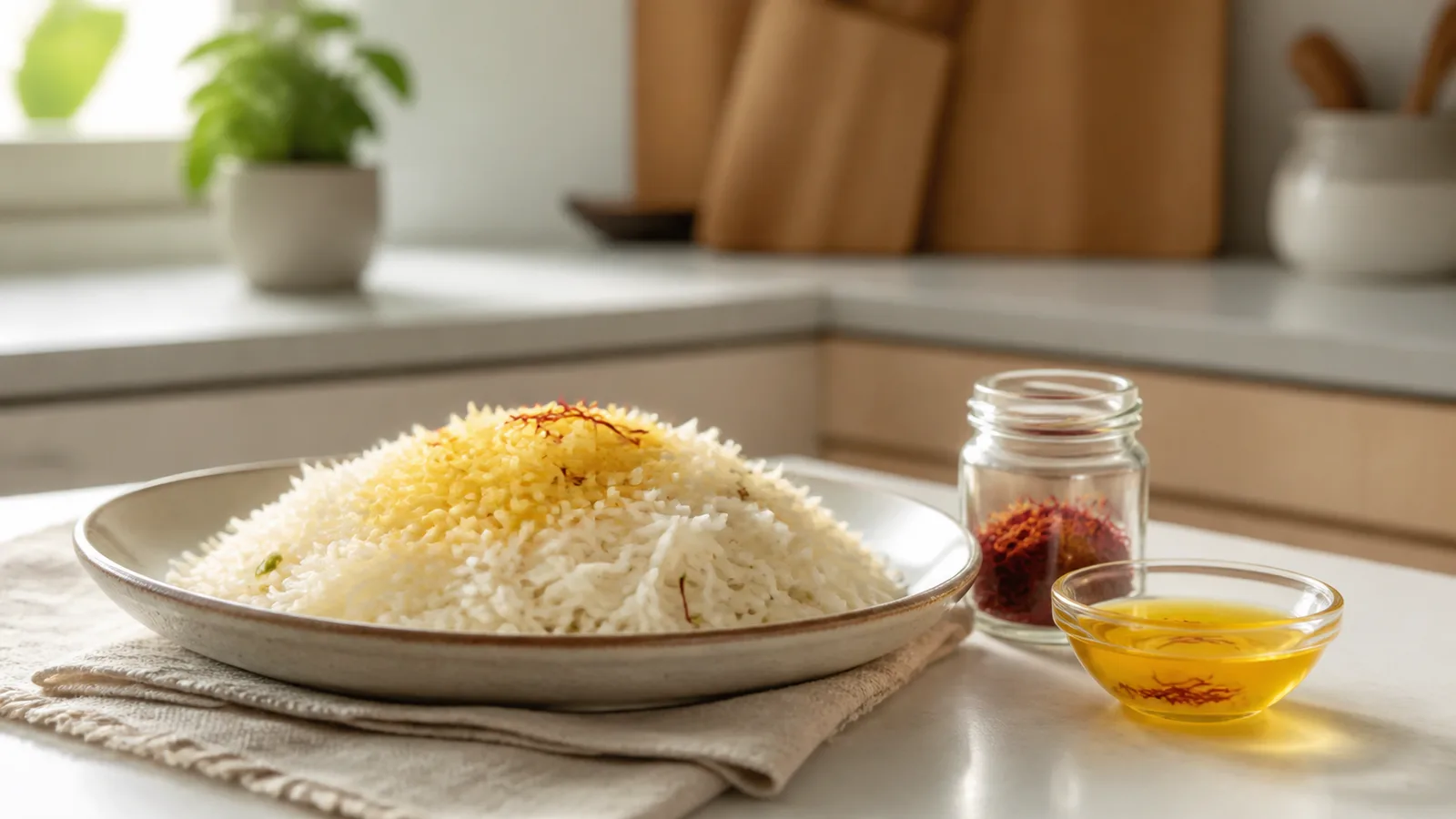
Pure saffron threads contain carbohydrate by weight, but the amount in a normal culinary pinch is too small to make a meaningful contribution to a meal’s carbohydrate total. What often changes blood glucose is not the saffron: it is the sugar, honey, sweetened milk, dessert or packaged drink served with it. Saffron is not a diabetes treatment, and concentrated saffron supplements should not replace medication, insulin, meal planning or monitoring.

Does saffron contain sugar?
The USDA FoodData Central entry for saffron lists about 65.4 g of carbohydrate per 100 g of spice. It does not provide a separate total-sugars value for that entry. That sounds high until serving size is considered: 0.1 g of saffron—the order of magnitude of a small culinary pinch—contains about 0.065 g of carbohydrate by the same calculation. Even 1 g would provide about 0.65 g.
So “saffron has no sugar” is too absolute, but “a culinary pinch contributes negligible carbohydrate” is a fair practical description. The exact amount depends on how much is used. People who count carbohydrates should count the complete recipe, not assume every product labelled saffron is the plain spice.
Does saffron raise blood sugar?
Pure threads used for colour and aroma are unlikely to raise blood glucose meaningfully on their own because the portion is tiny. The same is not automatically true of saffron foods and drinks.
- Saffron tea: unsweetened tea adds little carbohydrate; sugar, honey or syrup changes the calculation.
- Saffron milk: milk contains naturally occurring lactose, and sweetened versions contain more carbohydrate.
- Rice, halva, cake and ice cream: calculate the rice, flour, sugar, dairy and serving size. Saffron does not cancel their carbohydrates.
- Powders and mixes: read the total-carbohydrate and added-sugars lines and check the serving size.
The American Diabetes Association emphasizes total carbohydrate when assessing how foods may affect blood glucose. That makes the complete plate or cup more useful than asking about one trace seasoning in isolation.
Saffron and diabetes: what clinical research shows
Studies of saffron and diabetes generally test capsules, powders, hydroalcoholic extracts or isolated crocin—not the small amount used to season dinner. Their results therefore cannot be transferred directly to saffron tea or food.
The 2018 triple-blind trial
A randomized triple-blind trial included 54 adults with type 2 diabetes who continued their routine diabetes treatment while receiving saffron extract or placebo for eight weeks. Fasting blood glucose decreased in the saffron group relative to placebo, but the study did not find a significant difference in HbA1c, blood lipids, blood pressure or the other reported metabolic measures. Its small sample and short duration limit the conclusion.
What later meta-analyses found
A 2024 meta-analysis pooled ten randomized trials with 562 participants. It estimated modest average reductions in fasting glucose and HbA1c, but the doses ranged from 5 mg to 1 g per day and the authors described the methodological quality as heterogeneous. A 2025 review of metabolic-syndrome and related-disorder trials also found small average changes while calling for larger, higher-quality studies in more diverse populations.
This is a signal worth researching, not proof that saffron lowers blood sugar reliably for an individual. The American Diabetes Association’s consumer guidance says supplements have not been proven as an effective option for lowering blood glucose or supporting diabetes management and does not recommend herbal supplementation without a diagnosed need.
Is saffron good for diabetes?
Saffron can be a useful flavouring for a person with diabetes when it helps make an appropriate meal enjoyable without adding substantial carbohydrate. That culinary answer is different from calling saffron “good for diabetes” as a treatment. Kesar is another common name for the same spice, so searches for is kesar good for diabetes or kesar benefits for diabetes lead to the same cautious conclusion.
The wording is saffron good for diabetics should therefore be answered in two parts: ordinary culinary use may fit the person’s food plan, while concentrated supplementation needs clinical review. Marketing phrases such as saffron benefits for diabetes or saffron for diabetes must not be used to imply prevention, treatment or a guaranteed glucose effect.
Saffron also contains plant compounds such as crocin and safranal and trace micronutrients including manganese, potassium, iron, vitamin C and vitamin B6. The amount of those nutrients in a pinch is far too small to manage blood glucose. An antioxidant or nutrient label is not evidence of a clinical diabetes benefit.
Is saffron milk good for diabetes?
That depends on the milk, sweetener, serving and the person’s meal plan. Plain dairy milk contains lactose. Plant drinks vary widely: some are unsweetened, while others contain added sugar. Condensed milk, syrups and large amounts of honey can make a saffron drink high in carbohydrate.
Check the label and count the portion that will actually be consumed. If a clinician or dietitian has set a carbohydrate target, fit the drink into that plan rather than relying on the word “saffron” to make it diabetes-friendly.
Does saffron lower blood sugar?
Clinical trials and pooled analyses suggest that standardized saffron interventions may produce small average changes in some groups. They do not establish culinary saffron as a glucose-lowering therapy, a safe supplement dose for every person, or a substitute for established care.
Someone taking insulin or a medicine that can cause hypoglycemia should not add a concentrated saffron product in an attempt to lower glucose without discussing it with the healthcare team. Combining an active supplement with treatment may change monitoring needs, and commercial products differ in identity, concentration and quality.
Stress, mood and glucose management
Stress can make diabetes self-management and blood glucose patterns harder for some people. Saffron has been studied separately for mood-related outcomes, but that evidence does not show that using saffron will control diabetes through stress reduction. Follow the stress, sleep and mental-health plan recommended by the care team; seek help when distress makes eating, medication or monitoring difficult.
How to use saffron safely when you have diabetes
- Use genuine threads in normal culinary amounts for flavour and colour.
- Count the carbohydrates in the full dish or drink, especially sweeteners and milk.
- Do not use saffron to replace prescribed medication, insulin or medical follow-up.
- Discuss any extract, capsule or high-dose routine with a doctor or pharmacist and show them the exact label.
- Continue the glucose monitoring plan given by the care team; do not change medicine from a supplement result without clinical advice.
- Seek prompt care for severe high or low blood-glucose symptoms rather than trying to correct them with saffron.
Moderation matters, but “more is not better” is not a complete dose instruction. Culinary use and a concentrated extract are different exposures. Pregnancy, breastfeeding, surgery, medication interactions and other medical conditions can all change the safety decision.
The bottom line
Saffron contains carbohydrate, yet a normal pinch contributes only a tiny amount. Unsweetened saffron can fit many diabetes meal plans; a sweet saffron drink or dessert must be counted for what it contains. Research on extracts is promising enough to continue, but not strong or standardized enough to make saffron a proven diabetes treatment.
Sources
- USDA FoodData Central: spices, saffron (FDC 170934)
- PubMed: 2018 triple-blind randomized saffron-extract trial in type 2 diabetes
- PubMed: 2024 systematic review and meta-analysis of glycaemic outcomes
- PubMed: 2025 meta-analysis of glycolipid metabolism and blood pressure
- American Diabetes Association: vitamins, minerals and supplements
- American Diabetes Association: food and blood glucose