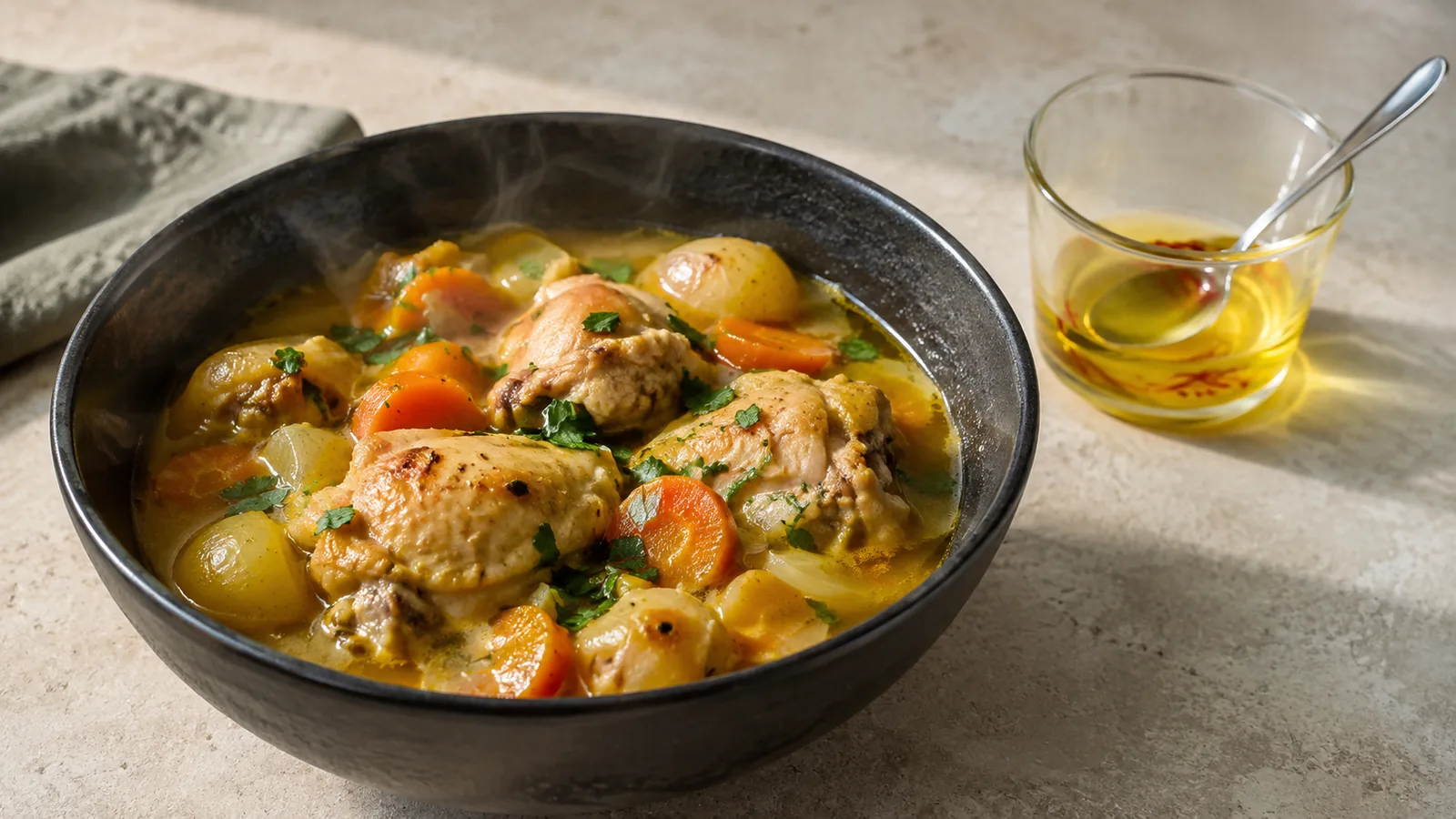
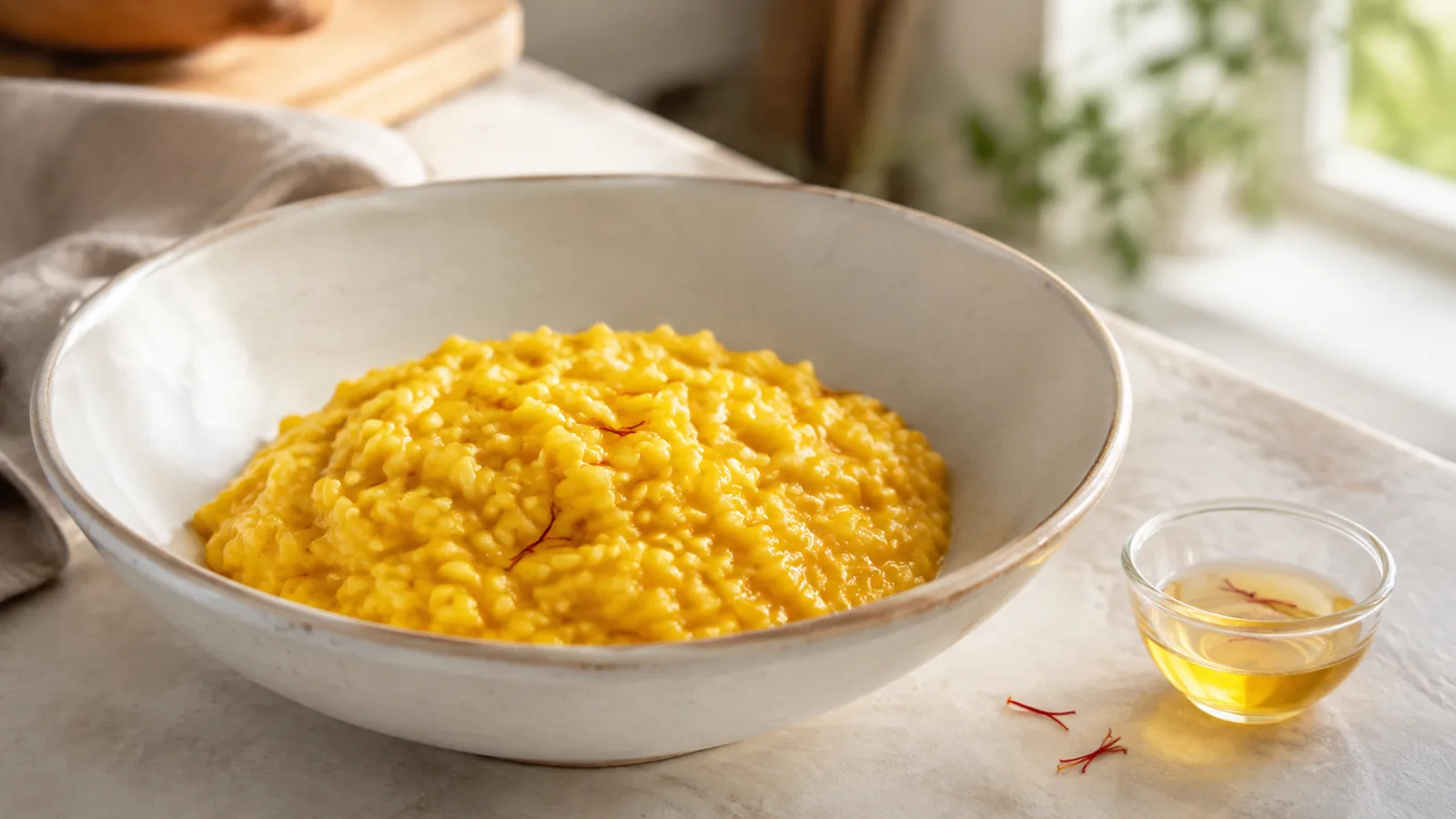
Iranian saffron halva is made by patiently toasting flour, blending it with butter and oil, then working in a warm syrup scented with rosewater, cardamom and brewed saffron. The important part is not speed: even toasting gives the Persian halva its nutty flavour, while gradual mixing creates a smooth mixture that holds its shape without becoming greasy or dry.
Iranian saffron halva at a glance
- Makes: about 10–12 small servings
- Preparation: 10 minutes
- Cooking: about 35–50 minutes, depending on the pan and heat
- Flavour: toasted flour, saffron, rosewater and cardamom
- Texture: soft and cohesive when warm; firmer after cooling
Ingredients for the saffron halva recipe
- 2 cups (about 240 g) plain wheat flour
- 1 cup (200 g) granulated sugar
- 1 cup (240 ml) water
- 1/2 cup (120 ml) rosewater
- 1/2 teaspoon ground cardamom
- 1/2 cup (120 ml) neutral liquid oil
- 100 g unsalted butter
- 1/2 teaspoon saffron threads, finely ground
- 2 tablespoons hot water, for blooming the saffron
The original recipe said to use steeped saffron “as needed.” Giving a starting amount makes the result repeatable, but saffron strength varies. Use enough to create a clear aroma and warm golden colour without burying the toasted flour and rosewater.
How to prepare authentic Iranian saffron halva
1. Bloom the saffron
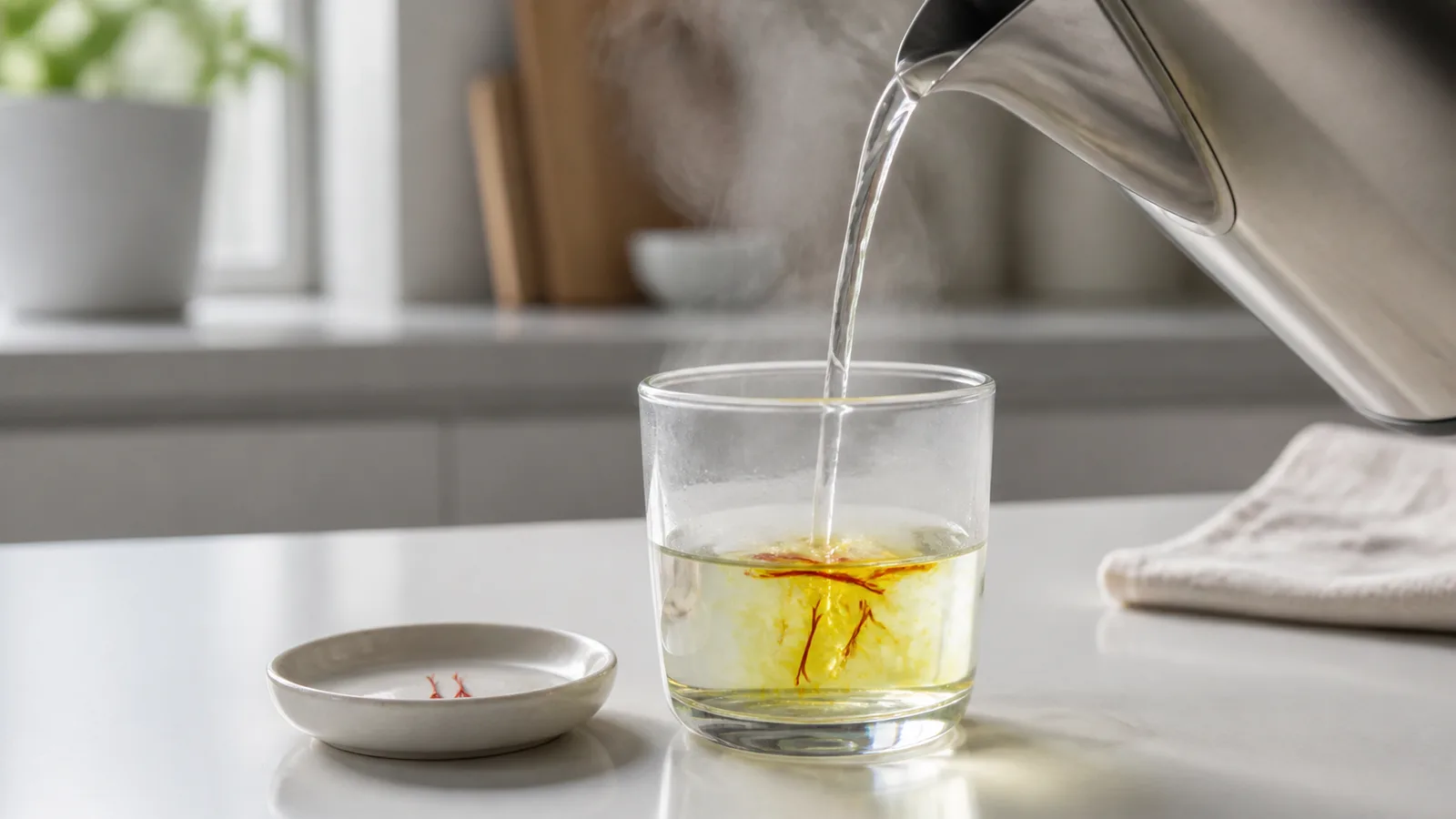
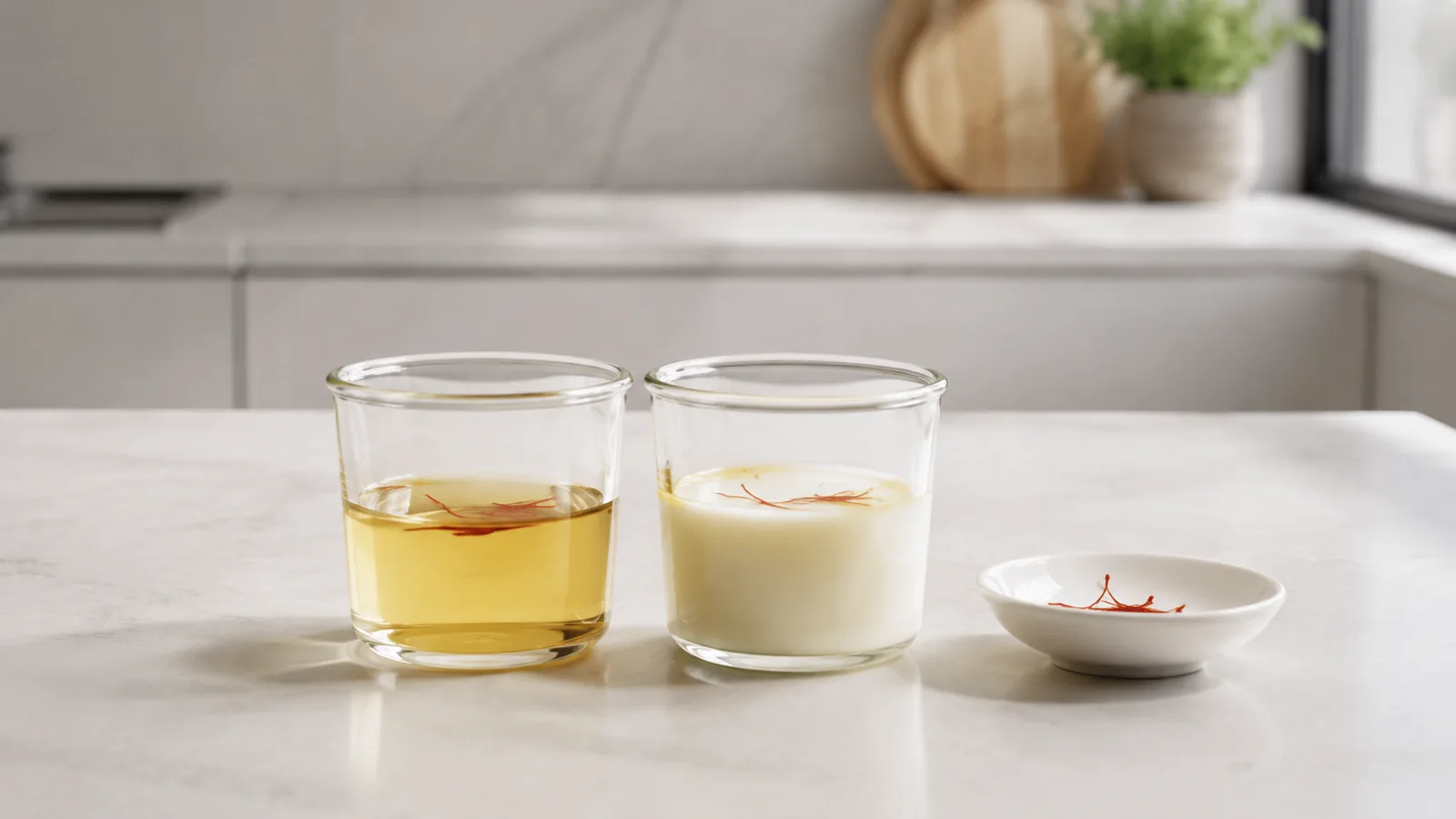
Grind the threads with a pinch of the measured sugar. Pour over 2 tablespoons of hot—not vigorously boiling—water, cover and leave for 10–15 minutes. This distributes the saffron more evenly through the syrup.
2. Make the rosewater syrup
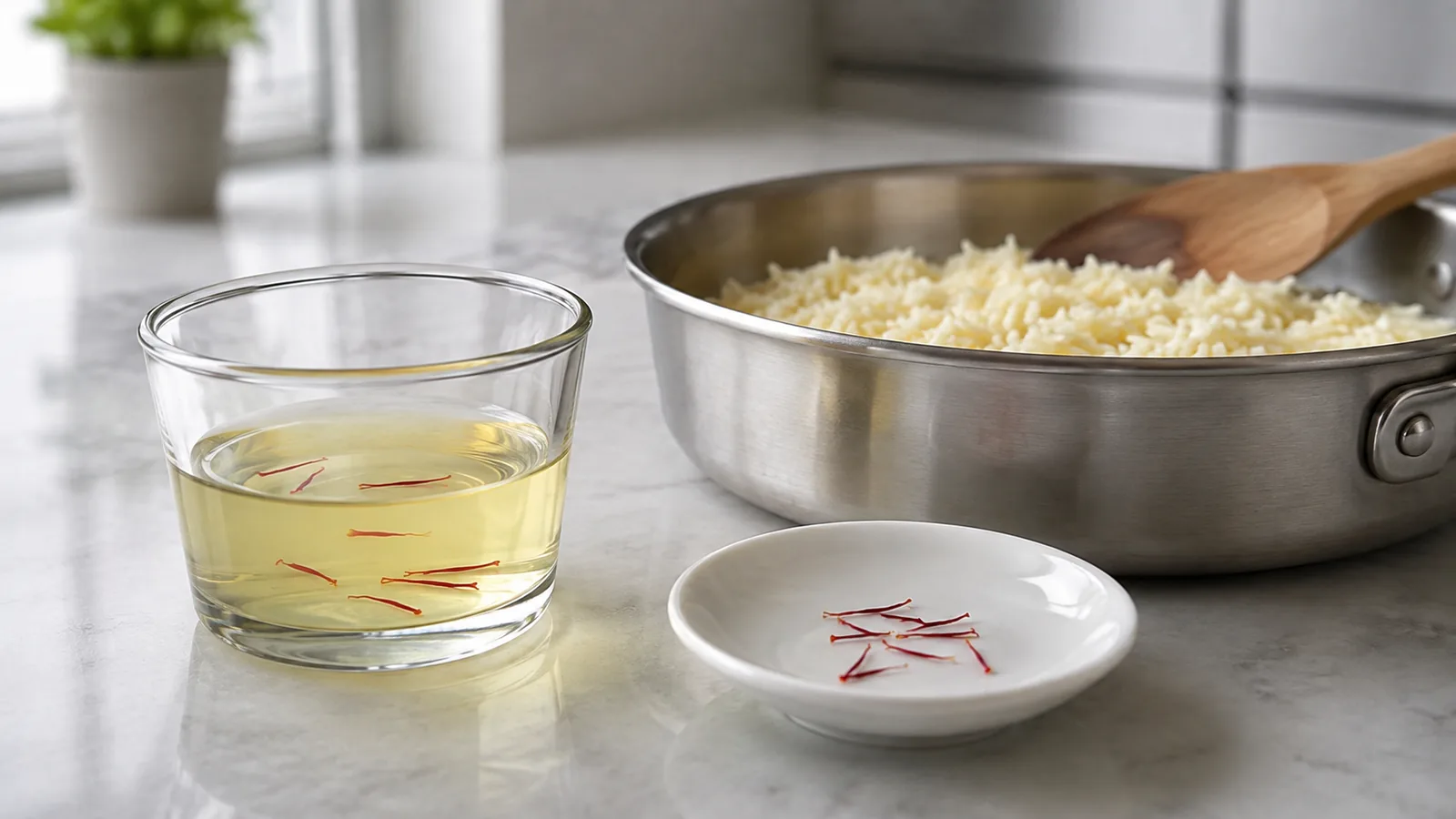
Put the remaining sugar, 1 cup water and cardamom in a saucepan. Warm gently, stirring only until the sugar dissolves. Remove from the heat, then add the rosewater and brewed saffron. Keep the syrup warm; it does not need a long boil.
Boiling for too long can drive off the most delicate aromas and concentrate the syrup more than the recipe expects. Warm syrup also blends into the flour mixture more smoothly than cold liquid.
3. Sift and toast the flour
Sift the flour into a wide, heavy pan. Toast it dry over low to medium-low heat, stirring and scraping the base continuously. After roughly 20–30 minutes it should smell nutty and change from raw white to a light biscuit colour. Time varies with the pan and flame, so use aroma and colour as the guide.
Do not rush this stage with high heat. Dark spots make the finished halva bitter, while under-toasted flour leaves a raw taste. For a pale saffron colour, stop before the flour becomes brown.
4. Add the butter and oil
Lower the heat. Add the butter and oil to the toasted flour and stir until the mixture is completely smooth. Cook for another 3–5 minutes, keeping the bottom moving. It should look glossy but not have a pool of separate fat.
5. Work in the syrup gradually
Take the pan off the heat for the first addition because the mixture can bubble and spit. Add a ladle of warm syrup and stir firmly until absorbed. Continue in several additions. Return the pan to low heat only if needed, stirring until the halva gathers into one soft mass and leaves the sides of the pan.
You may not need the final spoonful of syrup if the flour absorbed less than expected. If the mixture is crumbly, add a little more warm syrup. If it is loose, stir over low heat briefly; do not add raw flour at the end.
6. Shape while warm
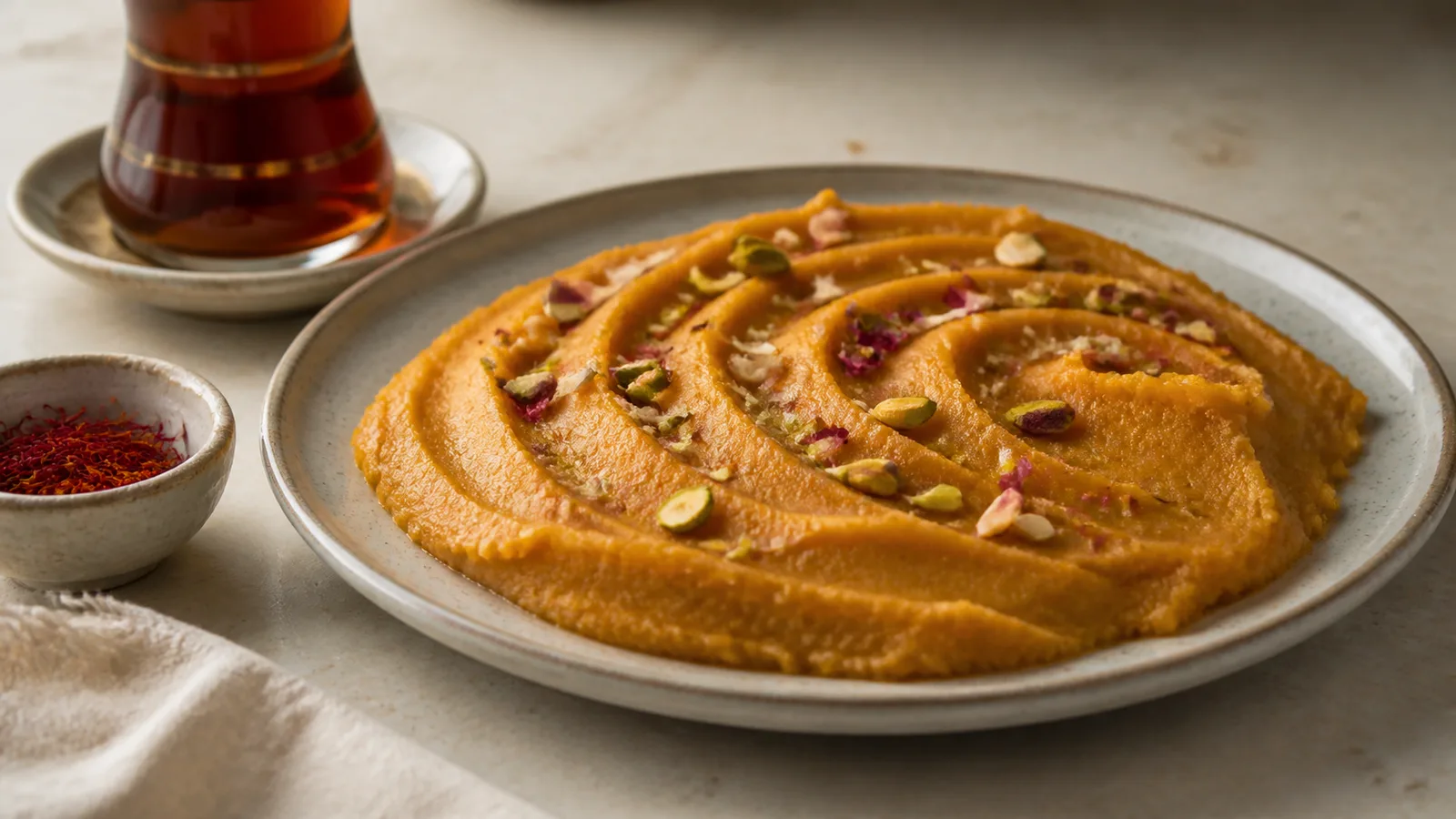
Spoon the halva onto a serving plate or into small dishes while it is still pliable. Smooth it with the back of a spoon, make simple ridges, or press it into a lightly greased mould. Let it settle before adding a restrained garnish.
Serving and decoration
Pistachios, almonds, coconut flakes, edible dried rose petals or a light dusting of cinnamon all work. A drizzle of honey or whipped cream makes an already rich, sweet dessert heavier and can mask its saffron aroma, so serve those separately if you offer them at all.
Halva is associated with family gatherings, religious observances and memorial occasions in Iran, but it is also made on an ordinary day simply because people enjoy it. A search for a Persian halva recipe or Irani halva commonly refers to this Iranian flour-based style. Oman, Turkey and Greece have their own halva or helva traditions; they are related by name and broad technique, not interchangeable versions of one recipe. The phrase zafran helva usually points to a saffron-flavoured halva tradition, while this page specifically teaches the Iranian wheat-flour style.
How to fix common halva problems
The halva tastes like raw flour
The flour was not toasted long enough or the pan had cool areas. Use a wide pan, moderate heat and continuous stirring. Toast by aroma and even colour, not by the clock alone.
The mixture is oily
The flour may not have absorbed the fat evenly, or the syrup may have been added too quickly. Keep mixing before adding more syrup. As the emulsion forms and the halva cools slightly, some visible fat often reincorporates.
The halva is dry or cracks
It needs a small amount of warm syrup, or it was cooked too long after combining. Add liquid a spoonful at a time; a large correction can make it pasty.
The saffron flavour is weak
Use fresh, genuine threads, grind them immediately before blooming and avoid prolonged boiling. Adding more yellow colour is not a substitute for saffron aroma.
Wheat flour or rice flour?
This Iranian halva recipe uses wheat flour, which produces a supple, cohesive texture. Rice-flour halva is a different preparation with a finer, more delicate structure and needs its own liquid and fat balance. Do not exchange the flours cup for cup and expect the same result. For that variation, use our dedicated rice-flour halva with Iranian saffron.
Storage
Cool the halva, cover it and refrigerate it in a shallow airtight container. For a conservative household food-safety rule, use cooked leftovers within 3–4 days or freeze portions for longer storage. Bring refrigerated halva towards room temperature before serving so the butter softens and the aroma opens.
The former one-week room-temperature advice was too broad because kitchen temperature, handling and added toppings vary. Discard the dessert if it develops an off odour, visible mould or other signs of spoilage.
A note on nutrition and saffron claims
Saffron contains compounds studied for antioxidant and mood-related effects, but that research does not turn a sugary, fat-rich dessert into a treatment or a general wellness food. Enjoy saffron halva for its flavour and cultural place. Portion it as a sweet, and do not promise health benefits from the small culinary amount in one serving.