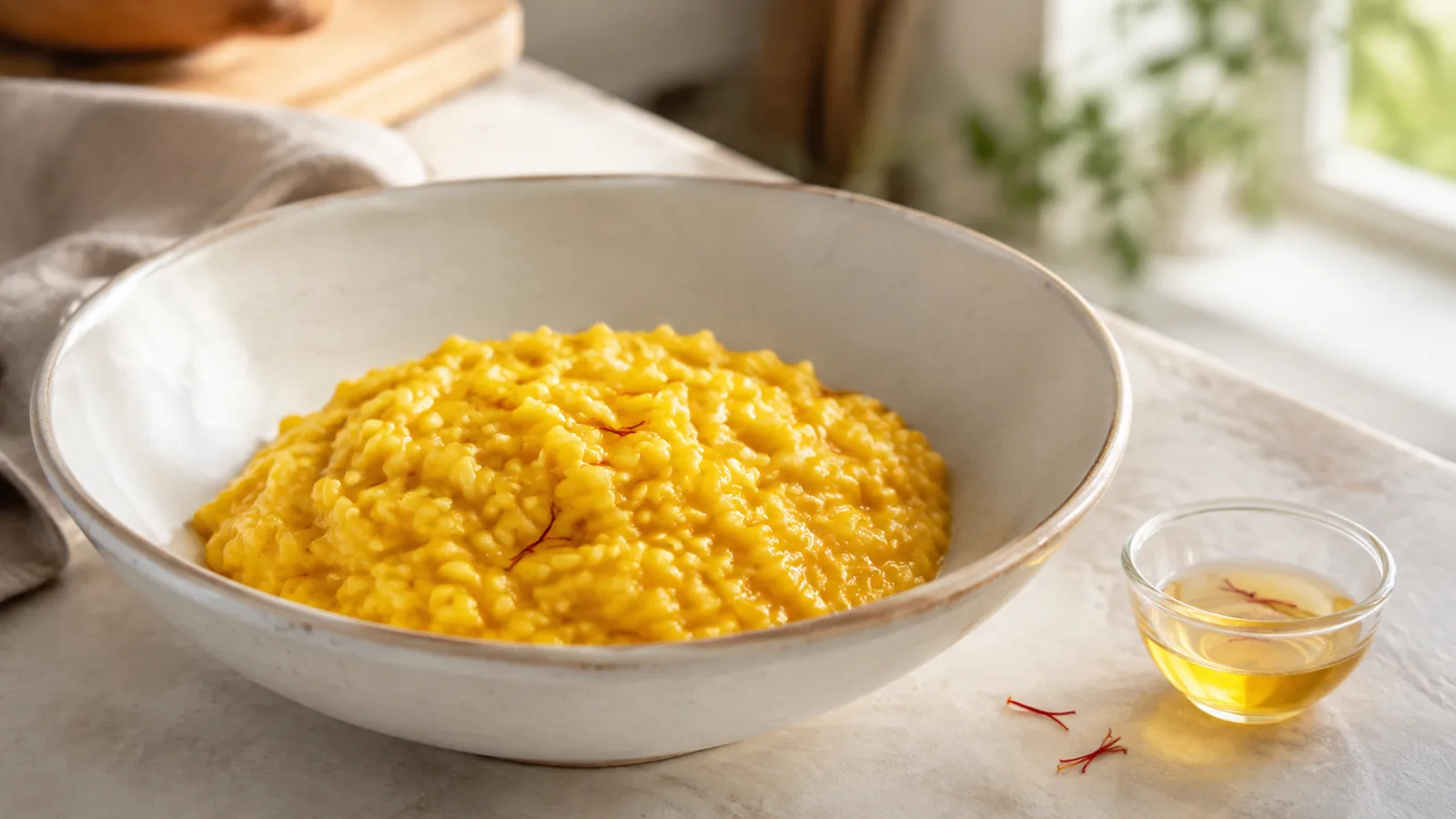
Rice flour halva is a softly textured Persian halva made with saffron and rosewater. Rice flour gives it a finer, more delicate finish than wheat-flour halva, while gentle toasting keeps the colour golden rather than dark brown.
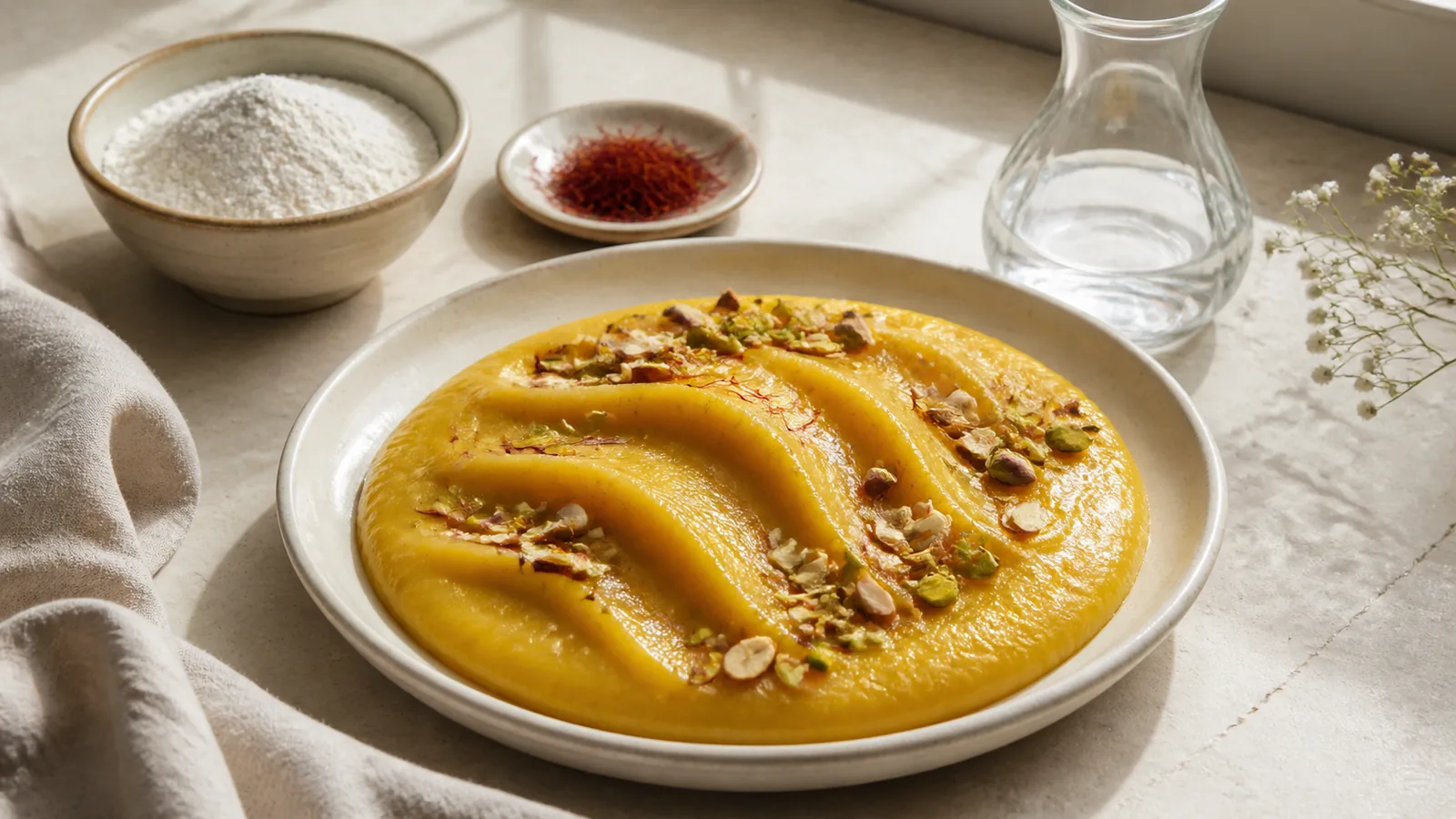
Rice flour halva ingredients
- 2 cups fine rice flour
- 2 cups sugar
- 2 cups water
- 1 cup rosewater
- ½ cup neutral liquid oil
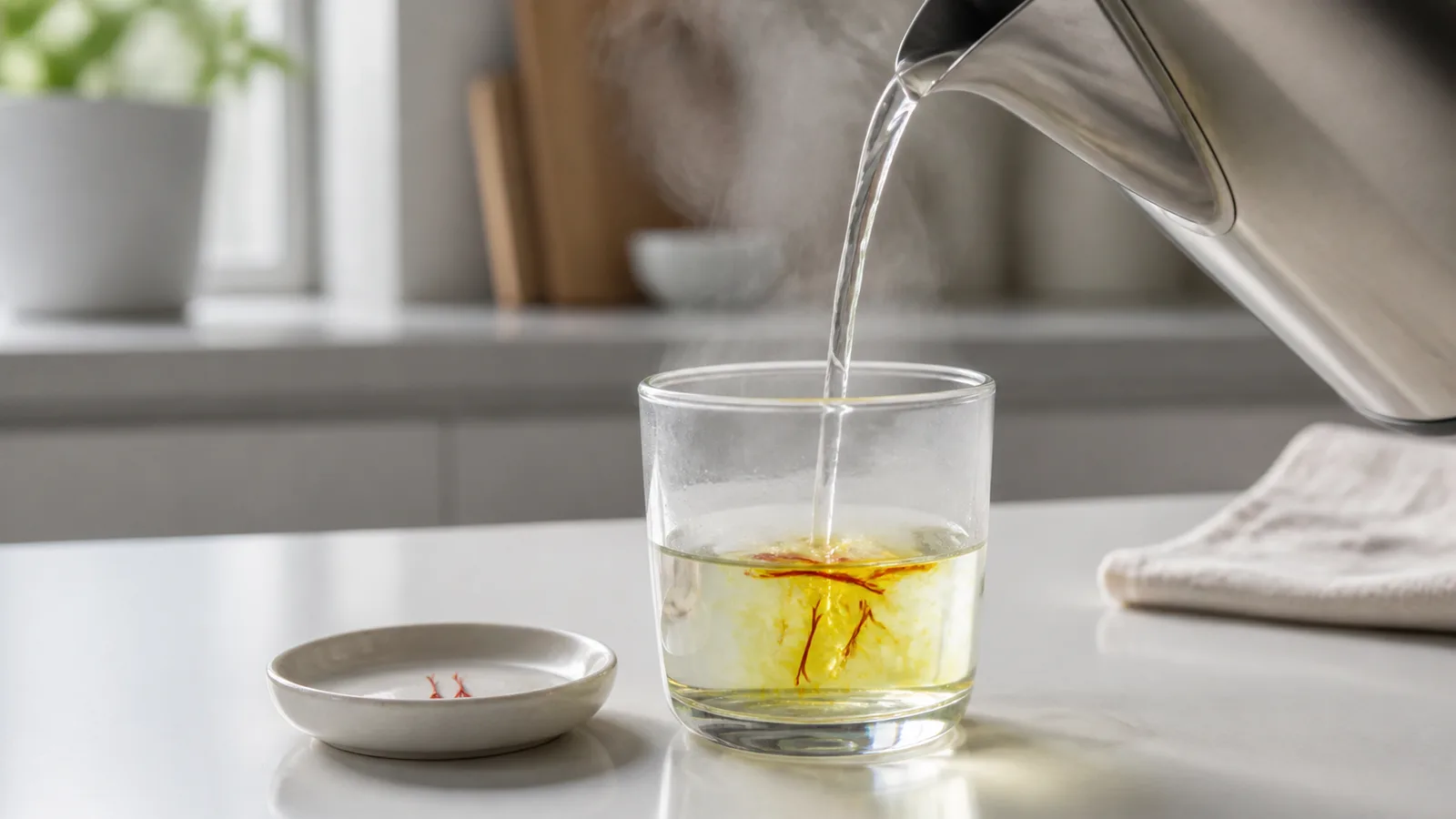
- 5 tablespoons brewed saffron
- Ground pistachios or almonds, optional, for serving
Use rice flour milled for baking, not coarser ground rice or instant rice cereal. A fine flour is what gives this Iranian halva its smooth, cohesive texture.
Prepare the saffron syrup
Put the sugar and water in a saucepan over low to medium heat. Stir until the sugar dissolves, then let the mixture come to a brief, gentle boil. It does not need to become a thick candy syrup.
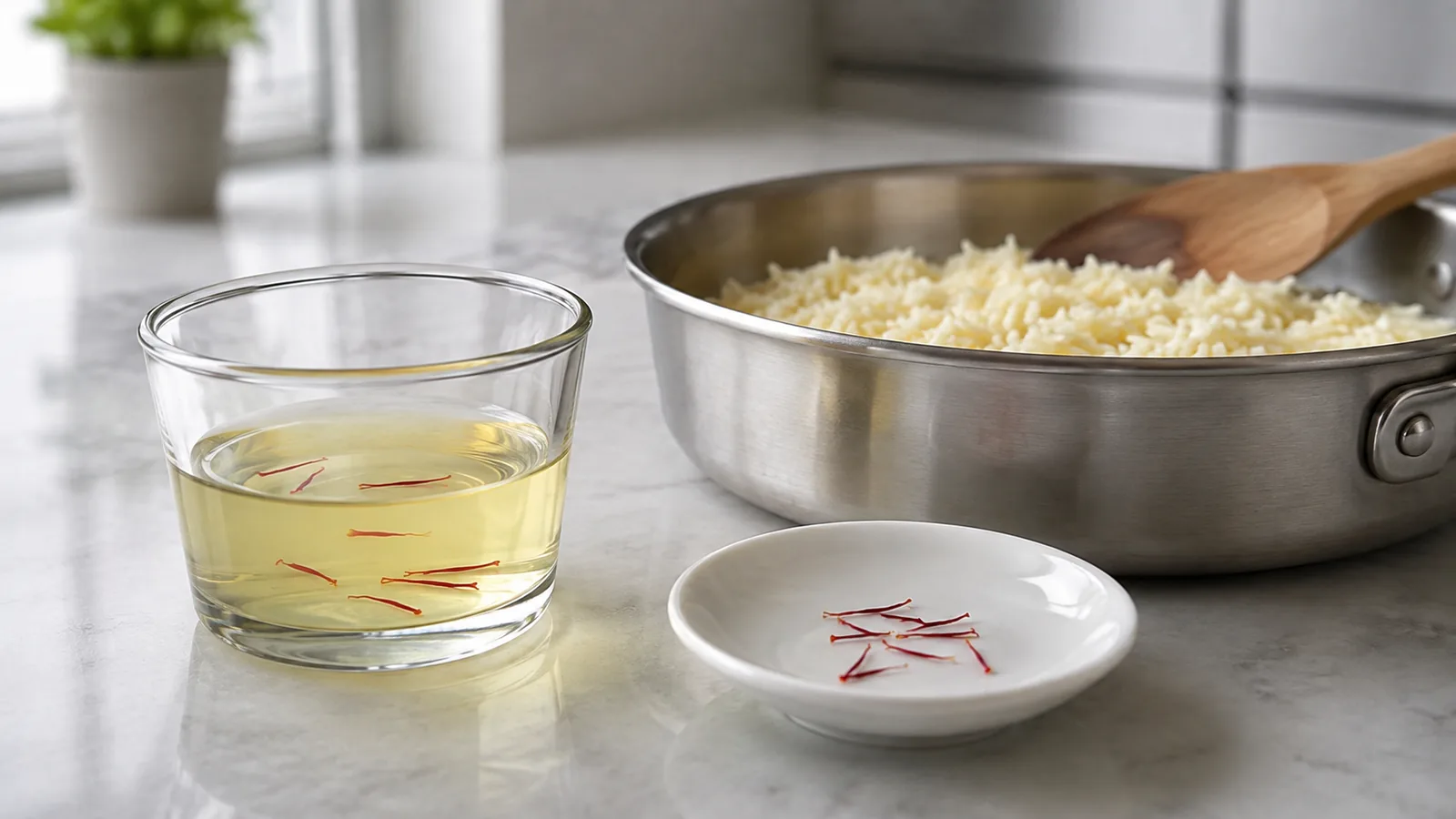
Add the brewed saffron and rosewater, stir once and remove the pan from the heat. Keep the syrup hot while you toast the rice flour. Adding the aromatics at the end protects more of their fragrance.
Toast the rice flour
Warm the oil in a broad, heavy pan over low heat. Add the rice flour and stir continuously, scraping the full base of the pan. At first the mixture may look loose; as the flour cooks, it becomes more uniform and develops a warm, nutty aroma.
Stop when the rice flour is lightly golden. It should gain a little colour, but it burns quickly and does not need the deep toast used for some wheat-flour halvas. If you see brown flecks or smell bitterness, the heat is too high.
Combine the halva
- Take the pan of toasted rice flour off the heat.
- Add the hot saffron syrup a ladle at a time. Stand back from the initial steam and stir thoroughly after every addition.
- Once the bubbling settles, return the pan to the lowest heat.
- Fold and stir until all the syrup is absorbed and the halva gathers into a soft mass that pulls away from the sides.
- Remove it from the heat before it becomes dry. It will firm further as it cools.
The final consistency should be smooth enough to shape with a spoon yet firm enough to hold a shallow groove. If it remains loose, continue stirring on low heat. If it becomes stiff, work in a tablespoon of hot water before it cools completely.
What to use instead of rosewater
The inherited recipe suggests cardamom or vanilla if rosewater is unavailable. Because rosewater supplies a full cup of liquid here, do not simply omit it. Replace it with one cup of water, then add a small amount of ground cardamom or vanilla to taste. Start cautiously; neither flavour should mask the saffron.
Serving Persian rice flour halva
Spoon the warm halva onto a serving plate and shape the surface with the back of a spoon, a fork or a small piping bag while it is still pliable. Pistachios, almonds or a few saffron threads are enough decoration.
Serve it in modest portions with tea. Keep leftovers covered in the refrigerator, then let them come toward room temperature before serving so the oil softens and the saffron aroma is easier to notice.
Three details that make the recipe work
- Toast over low heat so the rice flour cooks evenly without darkening too far.
- Add hot syrup gradually and off the heat to control splashing and prevent lumps.
- Stop cooking while the halva is still a little softer than the texture you want on the plate.
Those controls are simple, but they matter. A good rice flour halva should taste of saffron and rosewater, not scorched flour, and should settle into a delicate spoonable sweet rather than a dry block.