


Iranian saffron benefits have been studied most seriously in mood, cognition and several cardiometabolic risk markers, while anticancer claims remain largely preclinical. That distinction matters: promising research is not the same as an approved treatment, and culinary saffron is not interchangeable with a standardised trial extract.
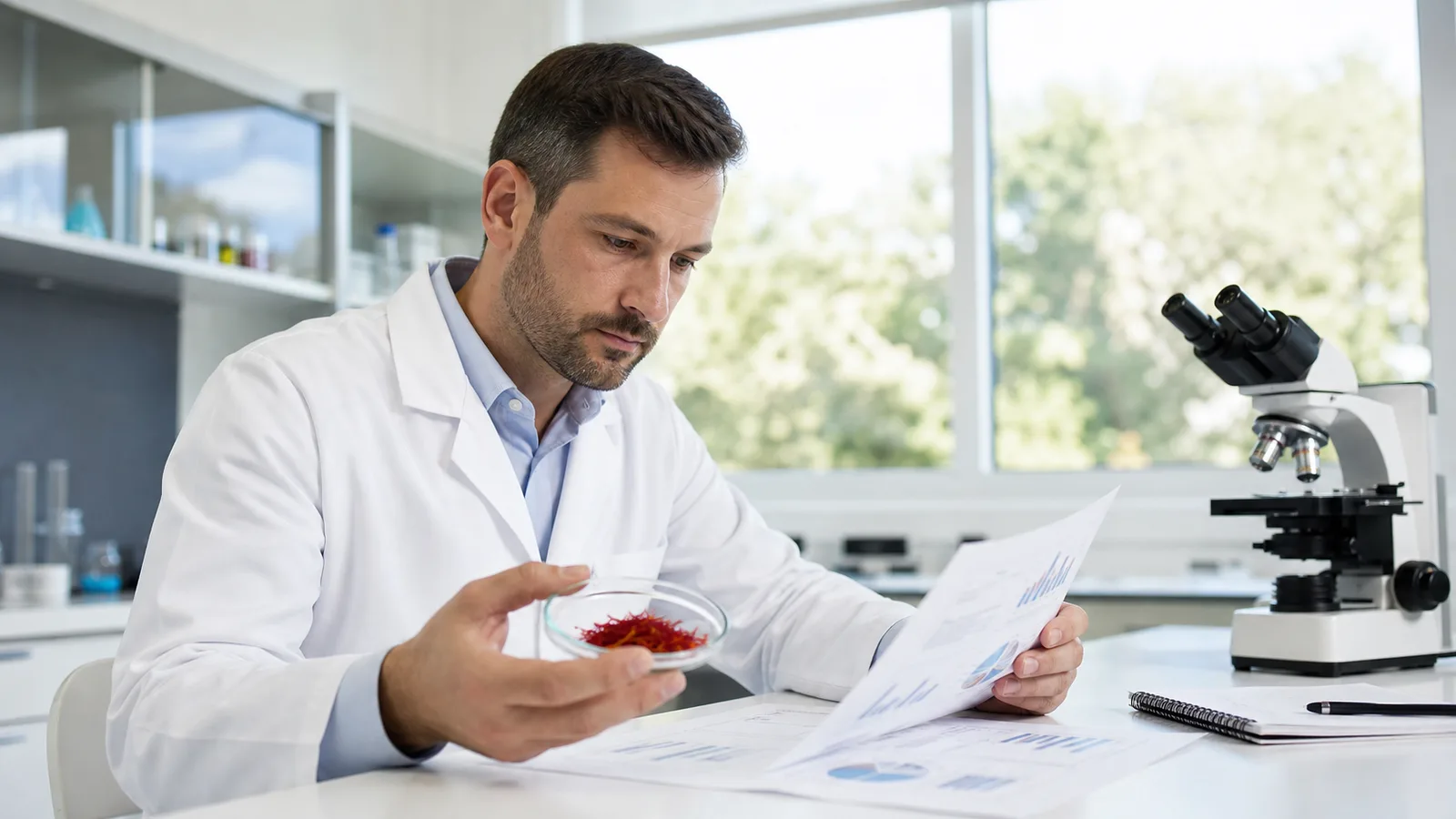
This article began as a report from a ceremony where two physicians argued that the therapeutic benefits of saffron could ultimately matter more than the crop’s material value. Their names, institutions and viewpoints are retained below, then checked against current clinical reviews.
What Dr Jalil Tavakol Afshar said
Dr Jalil Tavakol Afshar, identified in the archived report as Dean of the Faculty of Traditional Medicine at Mashhad University of Medical Sciences, described research at “Bu Ali College” on saffron and different cancers beginning in 2001. He also said the institute was preparing its first saffron medicinal product as an antidepressant and pursuing anti-inflammatory and anticancer products.
The surviving copy does not name the ceremony, product, trial registration or regulatory status, and “Bu Ali College” may be an imprecise translation of the institution. Those statements can be preserved as an attributed historical account, but they cannot establish that a product was subsequently approved or that saffron treats cancer.
Tavakol Afshar connected anticancer research with programmed cell death and protection against damaging radical reactions. Those are plausible laboratory research themes. They describe mechanisms studied in cells and animals, not proof of a clinical effect in a person with cancer.
What Dr Saqebi said about traditional medicine
Dr Saqebi, described as an internal-medicine specialist, used the traditional temperament system. He called saffron “hot and dry” and argued that a practitioner should consider a person’s temperament, the season and the climate before prescribing it. In that framework, he warned that adding a dry substance during hot, dry conditions could be harmful, whereas a hot-and-dry substance might be viewed differently in a cold region.
He also named depression, Alzheimer’s disease, cardiovascular disease and cancers as areas of therapeutic interest. On daily consumption, he said use would differ between people and linked saffron’s stimulating or enlivening effect—translated in the old copy as “vitality”—with a “bile nature.” These are records of a traditional-medical viewpoint, not a biomedical diagnosis or a personal dosing rule.
Current evidence for the therapeutic benefits of saffron
The strength of evidence is different for each condition. Human randomised trials can support a cautious clinical hypothesis; animal or cell studies cannot establish treatment in people. The sections below keep those levels separate.
Depression, anxiety and mood
Mood is the most developed part of the clinical evidence. A 2026 GRADE-assessed review of 34 randomised trials found improvements on some self-reported depression and anxiety scales. Several clinician-rated outcomes did not show a significant effect, the studies were heterogeneous, and the authors rated the evidence moderate rather than definitive.
This supports further study and carefully supervised use; it does not justify stopping an antidepressant or replacing professional care with saffron. The archived claim that an antidepressant product was being launched also needs its own product-specific evidence and regulatory record.
Alzheimer’s disease and cognition
A systematic review of randomised cognition trials found encouraging results in mild cognitive impairment or Alzheimer’s disease, including comparisons with placebo and symptomatic drugs. Only a small set of trials was available, and the reviewers warned that potentially high risk of bias and limited sample sizes required cautious interpretation.
Saffron is therefore not an established replacement for an Alzheimer’s assessment or prescribed medicine. Memory change can have many causes and needs clinical evaluation.
Cardiovascular and metabolic risk markers
A meta-analysis of 32 adult trials reported small average changes in several risk markers, including triglycerides, total and LDL cholesterol, fasting glucose, HbA1c, systolic blood pressure and some inflammatory or oxidative-stress markers. Trial populations, doses and durations varied.
Changes in risk markers are not the same as proof that saffron prevents heart attack, stroke or cardiovascular disease. The old statement that saffron is “used in the treatment” of cardiovascular disease was broader than the evidence supports.
Inflammation
Some clinical reviews report changes in individual inflammatory markers, while laboratory studies explore several pathways. A biomarker change does not by itself prove that a saffron preparation treats an inflammatory disease. Any proposed anti-inflammatory medicine still needs a defined formulation, dose, target condition, safety programme and appropriate clinical trials.
Cancer
Saffron, crocin and related compounds can affect cell-survival pathways in experimental models, including pathways associated with oxidative stress and programmed cell death. Current reviews continue to describe major parts of this field as preclinical. A 2025 systematic review of saffron and breast cancer explicitly focused on preclinical studies because human studies were lacking.
That means saffron should not be promoted as a cancer treatment or used instead of oncology care. Our detailed review of saffron and breast-cancer research explains what animal and cell findings can—and cannot—show.
Food use, supplements and medicines are different
A pinch of saffron dispersed through a meal is not the same exposure as a capsule, concentrated extract or experimental drug. Studies may use specified stigma extracts, isolated compounds or standardised products for a fixed period. Results from one preparation cannot automatically be transferred to every powder, tea or supplement sold as saffron.
Personal dose depends on the actual product, the purpose, other medicines, pregnancy status and health conditions. The archived article correctly implied that one amount does not suit everyone, but traditional temperament labels are not enough to determine safety. Anyone considering a concentrated saffron product for a health condition should discuss the exact product with a qualified clinician or pharmacist.
Can health value outweigh material value?
Dr Saqebi’s final comparison was a policy argument: if research produced useful therapies, the public-health value could exceed income from selling the spice as a commodity. That idea cannot be settled by a general claim. It requires successful products, reproducible clinical outcomes, safety monitoring, affordable access and a fair return to growers and researchers.
The responsible conclusion is more modest than the original headline. Iranian saffron has genuine research value and some encouraging human evidence, especially around mood. Its therapeutic potential should be developed with the same care as any other intervention: condition by condition, preparation by preparation and trial by trial.

![Exporting Saffron to Turkey + Price Guide [Complete 0 to 100]](https://img.rowhanisaffron.com/20260827003933/saffron-export-turkey-quality-inspection.webp)



