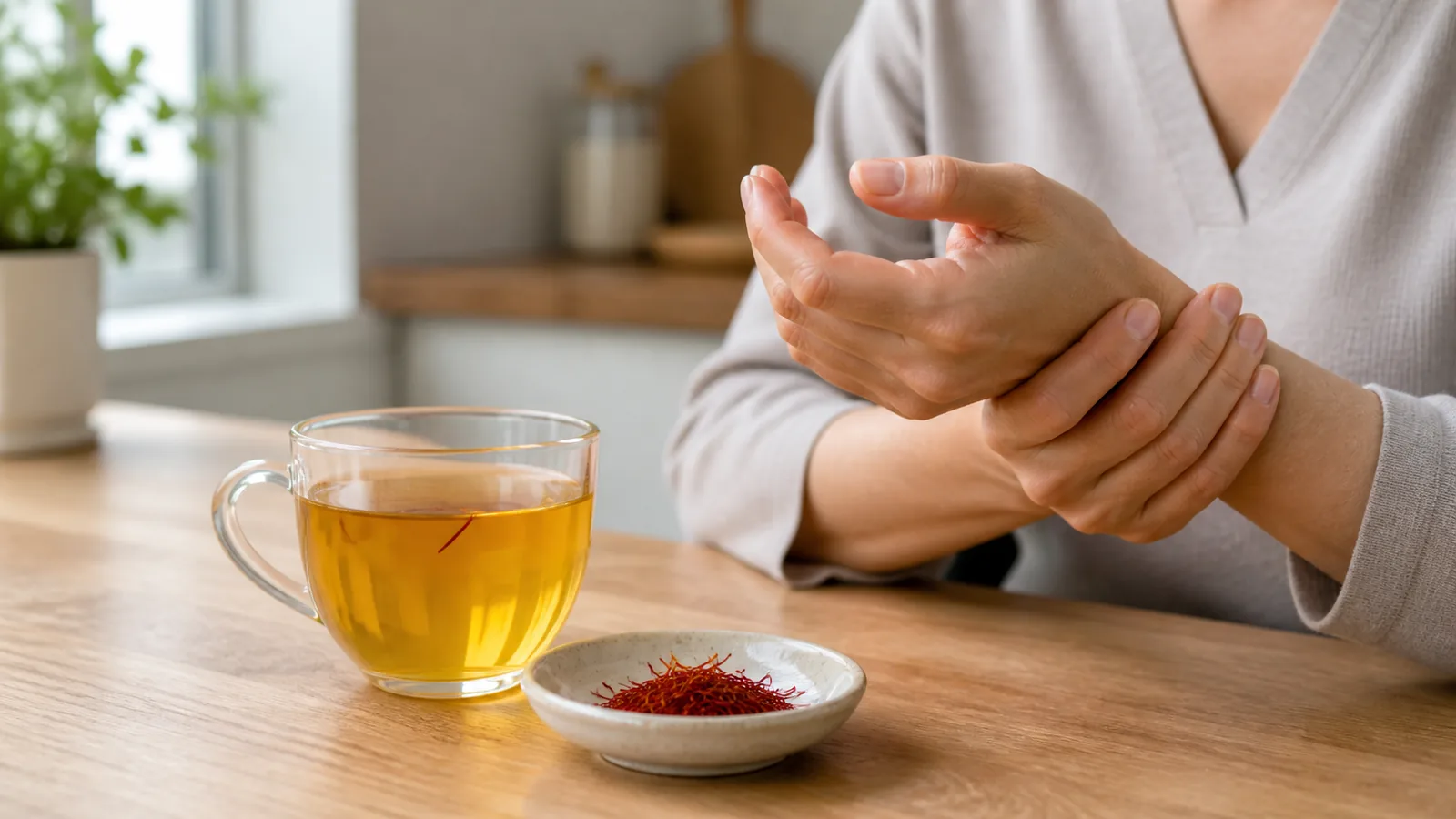
Saffron and breast cancer research remains preclinical. Scientists have tested saffron compounds—especially crocin—in breast-cancer cells and animal models. No human trial has shown that eating saffron, drinking saffron tea or taking a saffron supplement treats or prevents breast cancer.
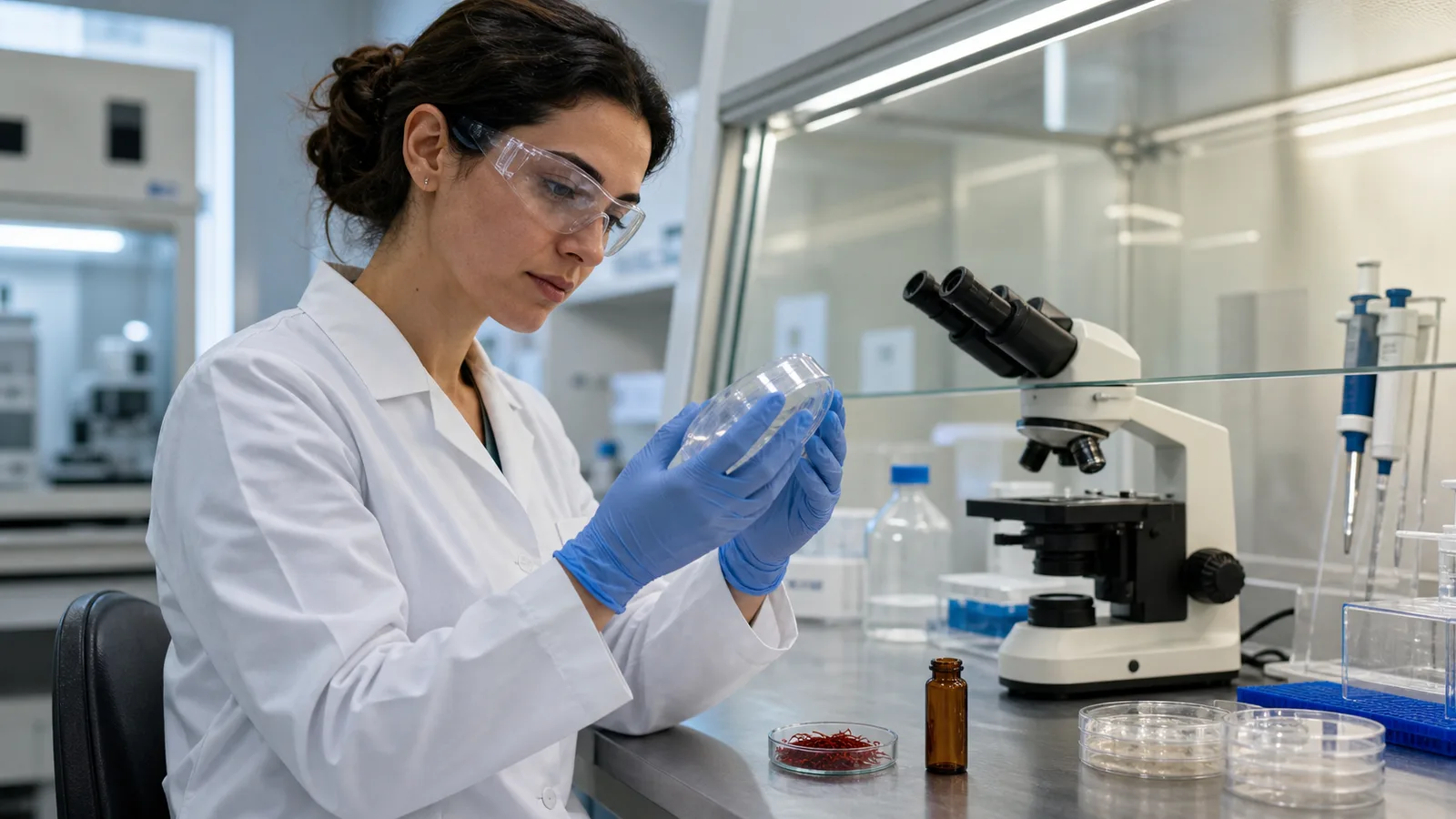
The earlier version of this article correctly warned readers not to replace medical care, but its description of the underlying rat study mixed up compounds, genes and results. This update follows the traceable publication and a newer systematic review.
What “preclinical” means
Preclinical research takes place before a treatment has been shown to work in people. It commonly includes:
- cell-culture studies, where a compound is placed directly onto cancer cells in a dish;
- animal studies, where researchers use a defined tumour model and a controlled dose;
- mechanism studies, which measure genes, proteins, cell-cycle changes or programmed cell death.
These designs help decide whether an idea deserves further testing. They do not establish the dose, safety, interactions or clinical benefit needed for patient care.
The Tarbiat Modares University rat study
The identifiable paper from researchers at Tarbiat Modares University is “Effect of Crocin on Cell Cycle Regulators in N-Nitroso-N-Methylurea-Induced Breast Cancer in Rats”. It examined crocin—not crocetin and crocin together—in female Wistar albino rats.
Researchers used N-nitroso-N-methylurea, abbreviated NMU, to induce mammary adenocarcinomas. After tumours formed, animals received crocin or vehicle for five weeks. The team then assessed tumour volume, pathology, gene expression with reverse transcription polymerase chain reaction (RT-PCR), and proteins with Western blot analysis.
What the experiment found
Before treatment, average tumour volumes were similar: 13.27 ± 3.77 in the control group and 12.37 ± 1.88 in the crocin group. At the end, the reported volumes were 23.66 ± 8.82 for controls and 11.91 ± 2.27 for crocin-treated animals.
The NMU-induced tumours overexpressed cyclin D1 and p21Cip1. Crocin treatment suppressed both. The authors interpreted the results as tumour-growth suppression and cell-cycle arrest involving downregulation of cyclin D1, with p21 suppression occurring in a p53-dependent manner.
That is not the same as the old summary, which said crocetin increased p53, crocin decreased p53 and both reduced p27. We could not match that combination of compound and outcomes to the cited Tarbiat Modares paper. Keeping a detailed but untraceable result would be less useful than correcting it from the publication record.
Why cyclin D1, p21 and p53 matter
Cells rely on checkpoints to decide when to divide, pause or die. Cyclin D1 helps drive progression through part of the cell cycle. p21 can slow cell-cycle progression, but its role in cancer depends on context and location within the cell. p53 regulates responses to DNA damage and can influence p21.
A change in one marker is not automatically good or bad, and genes do not “cause apoptosis” in isolation. Researchers interpret the pattern alongside tumour growth, pathology and other molecular results. That complexity is another reason a short animal experiment cannot be converted into a consumer treatment claim.
What the wider saffron evidence shows
A 2025 systematic review identified 44 preclinical studies of saffron or its constituents in breast-cancer models. Crocin had the largest body of preclinical evidence; crocetin and safranal also appeared in laboratory research. Common reported mechanisms included apoptosis and cell-cycle modulation.
The most important sentence in that review is its scope: because human studies were lacking, it focused on cell and animal work through the end of 2024. A large number of laboratory papers can make a research direction interesting, but they do not substitute for even one well-designed clinical trial with patient outcomes.
A cell dish does not reproduce a human dose
Researchers can expose cells directly to a concentration of isolated crocin. Eating the spice introduces digestion, metabolism and much lower, changing concentrations. The tumour also interacts with immune cells, hormones, blood vessels and other organs that a dish cannot reproduce.
A chemically induced rat tumour is not a patient’s breast cancer
Breast cancer includes several molecular subtypes with different treatment responses. An NMU-induced mammary tumour offers a controlled model, but species, tumour biology, dose and timing differ from human disease.
Saffron is not a breast cancer treatment
The National Cancer Institute’s breast cancer treatment information explains that care depends on stage, tumour biology, menopausal status and other patient factors. Options can include surgery, radiation, chemotherapy, hormone therapy, targeted therapy and immunotherapy. Saffron is not an approved replacement for any of them.
- Do not delay a breast examination, imaging or biopsy while trying saffron.
- Do not stop treatment because a laboratory paper reports apoptosis or slower tumour growth.
- Tell the oncology team about every concentrated extract, capsule or herbal product.
- Do not copy an animal or cell-culture dose into a supplement routine.
- Ask the cancer dietitian about food choices when treatment affects appetite or digestion.
Can saffron still be used in food?
A small culinary quantity added to rice, soup or another meal is a different exposure from a concentrated product. Food use may be acceptable for many people, but treatment can change bleeding risk, digestion and medicine handling. A patient with questions should ask the oncology team rather than infer safety from a recipe.
A 2026 review of saffron adverse events found medicinal preparations generally tolerated in trials, with gastrointestinal complaints among the more frequent events. Those trials were not evidence that high-dose saffron is safe during breast-cancer treatment or that it can be combined with every medicine.
The responsible conclusion
Saffron and breast cancer research has produced plausible preclinical mechanisms and an interesting crocin signal. The traceable rat study reported slower tumour growth and changes in cyclin D1 and p21, not a human cure. The systematic review found no human evidence through 2024. Until clinical trials establish safety and benefit, saffron belongs in the research pipeline and the kitchen—not in place of oncology care.