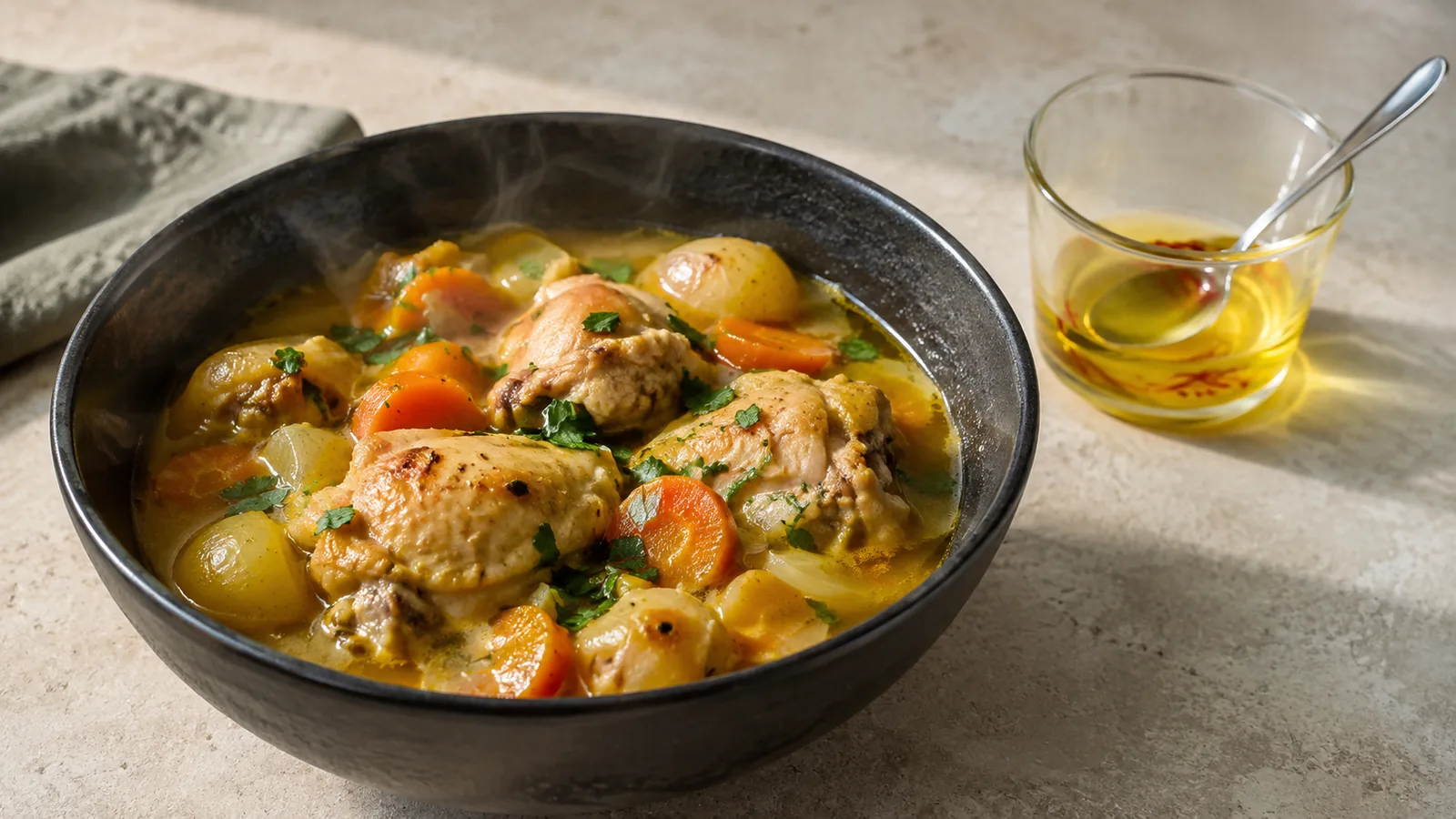
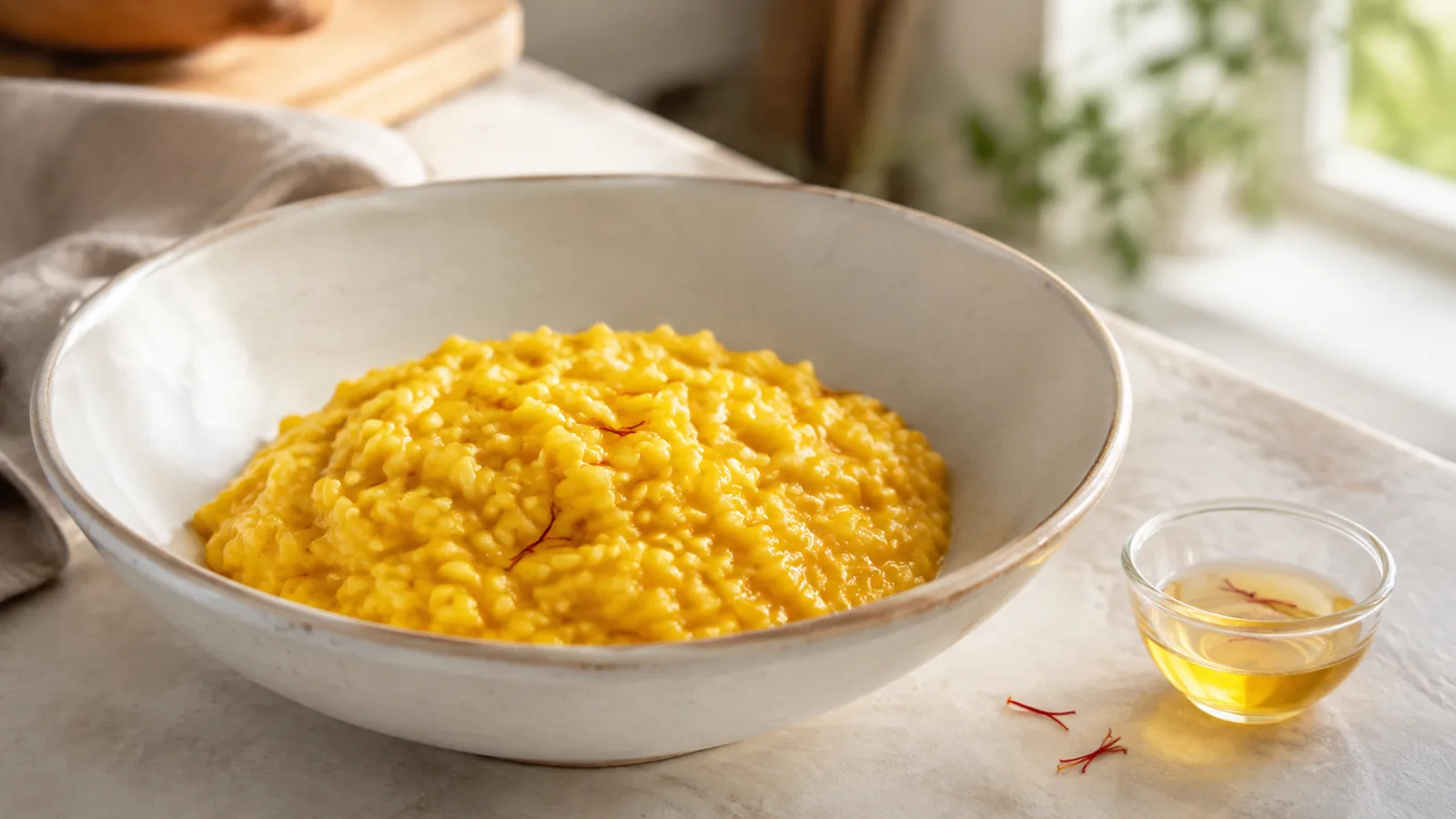
Nesar halva is a compact Iranian flour halva flavoured with saffron and rosewater, then pressed into a dish and cut into small pieces. You may also see the name written as Nisar halva. Unlike syrup-based halva, this version uses powdered sugar, so careful sifting and quick mixing are what give it an even texture.
Nesar halva ingredients
- 4 cups plain flour
- 4 cups powdered sugar, sifted
- 1 cup butter
- ½ cup rosewater
- 1 teaspoon saffron threads, finely ground
- Sliced pistachios or desiccated coconut, optional, for decoration
This is a large, rich batch. The cup measure used for the flour and powdered sugar should be the same, and both ingredients should be measured without packing them down. For more repeatable results, weigh the quantities from your own measured cups before scaling the recipe.
Brew the saffron
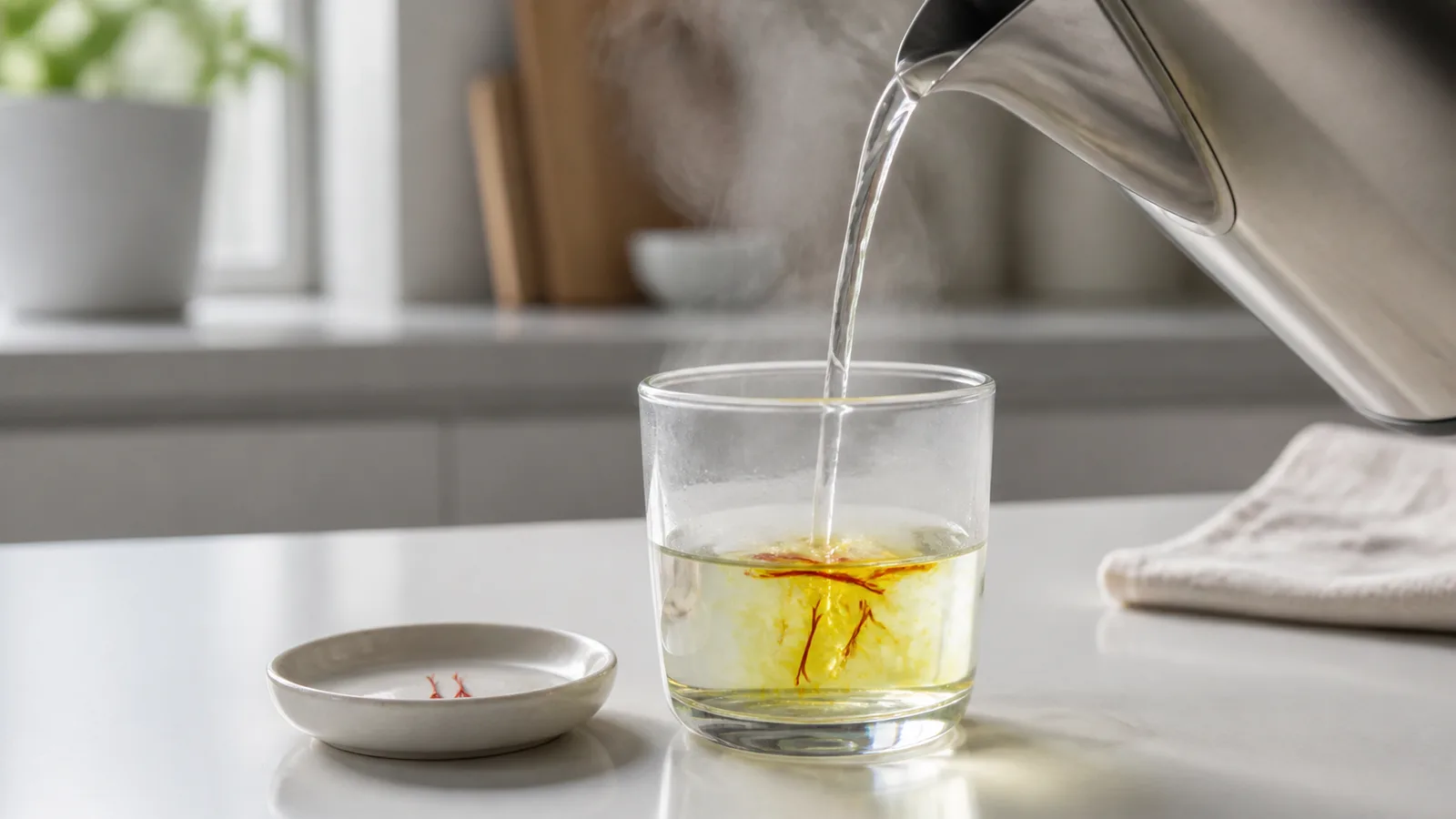
Put the ground saffron in a small heatproof bowl and add just enough boiling water to wet it thoroughly, about two tablespoons. Cover and set the bowl over gentle steam for 10 minutes; the base of the bowl should not touch the water.
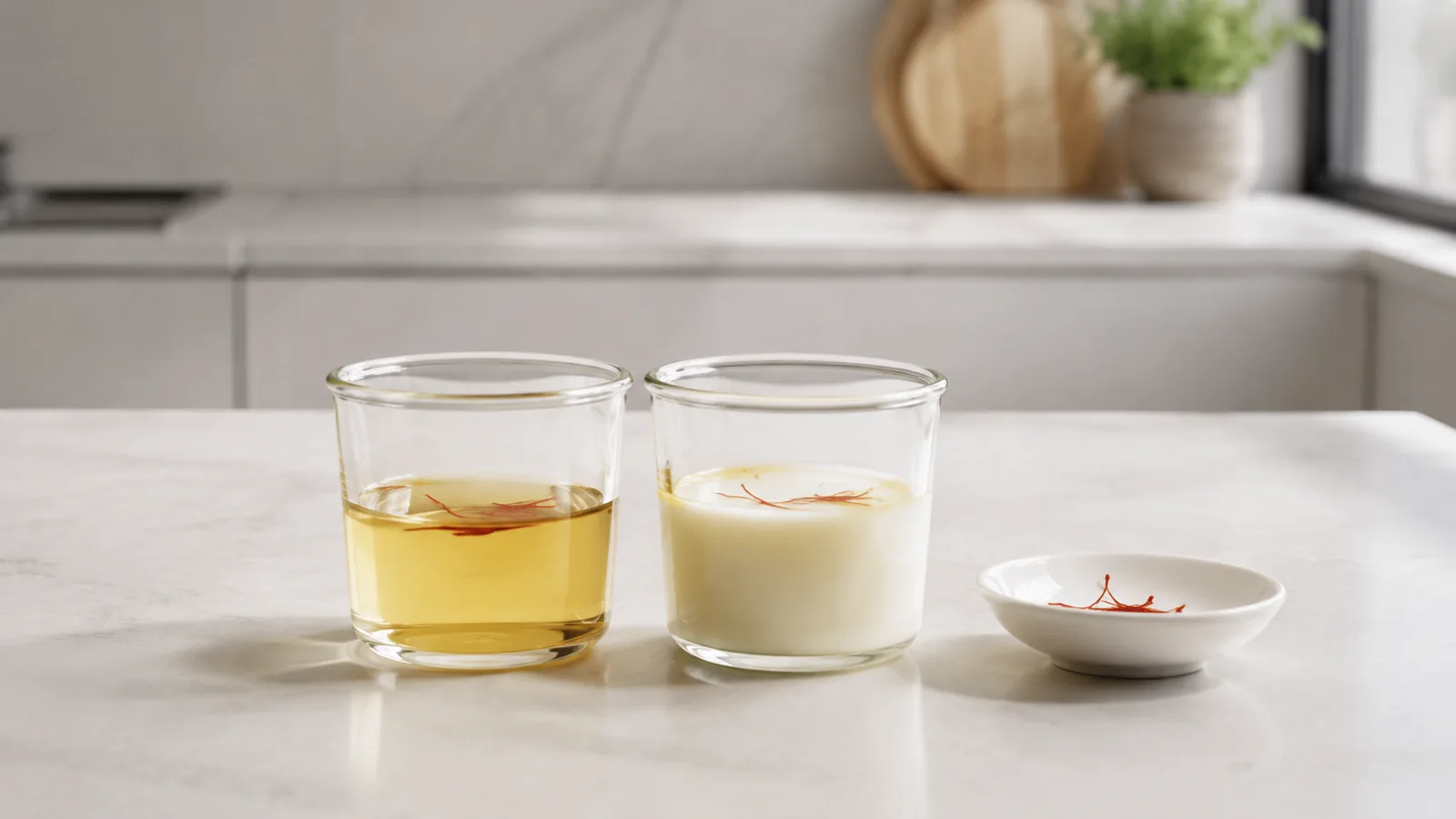
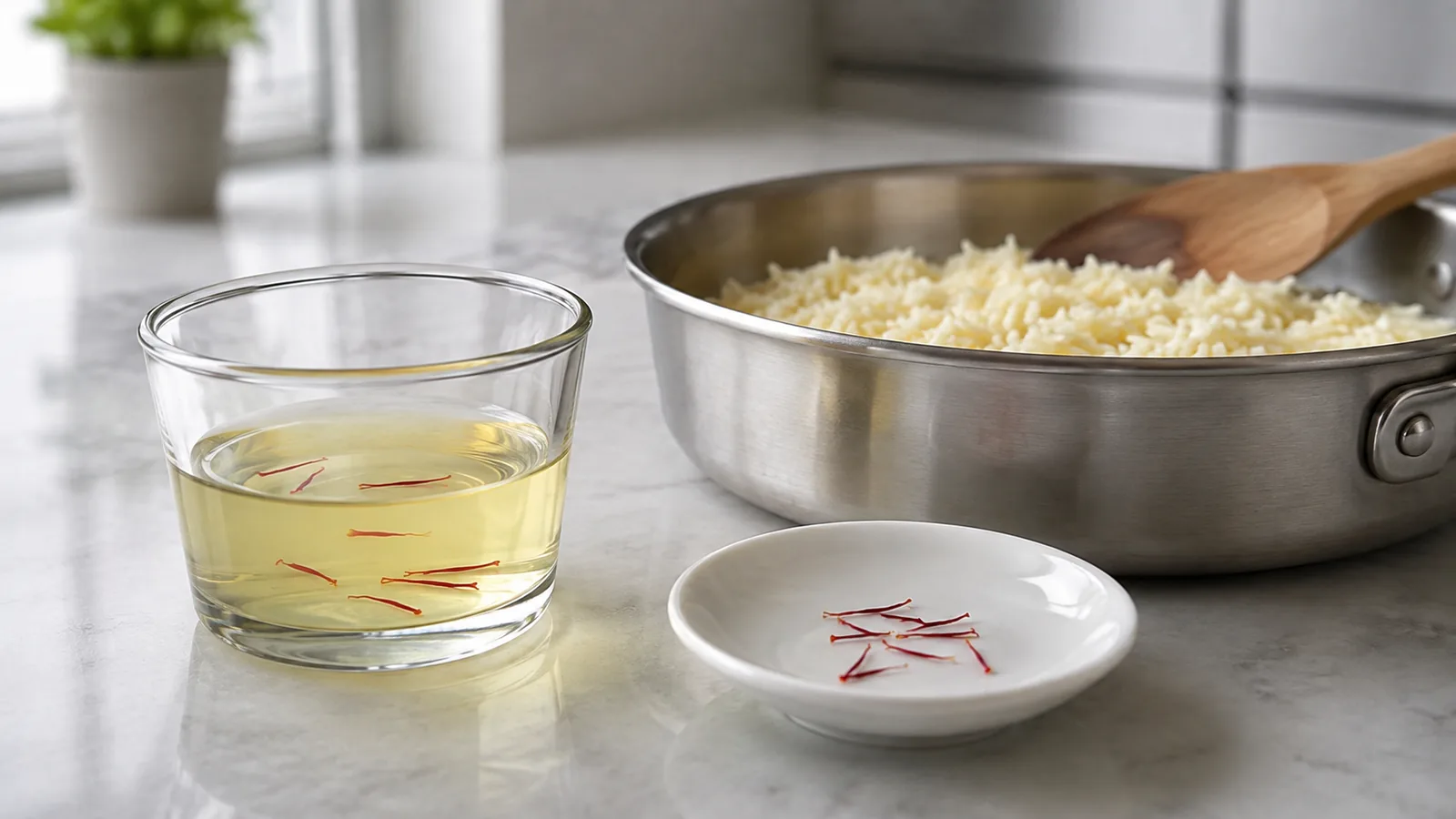
Let the brewed saffron cool slightly, then mix it with the rosewater. Stir this fragrant liquid into the sifted powdered sugar to form a smooth, thick mixture. Break up every visible lump now, because there is little time to correct it after it meets the warm flour.
Toast the flour
Place the flour in a broad, heavy pan over low to medium-low heat. Stir continuously, reaching into the corners and drawing flour from the outer edge toward the centre. It should lose its raw smell and turn evenly pale gold, which usually takes 30–40 minutes.
Do not hurry this stage with high heat. Burnt specks cannot be hidden by saffron, and flour that remains raw will give the finished Nesar halva a chalky taste. If the colour looks patchy, lower the heat and keep stirring.
Bring the halva together
- Melt the butter separately or in a clear area of the pan, then add it to the toasted flour.
- Stir over low heat until the flour has absorbed the butter and the mixture is evenly moistened.
- Remove the pan from the heat. Add the saffron, rosewater and powdered-sugar mixture in several additions, stirring firmly after each one.
- Work quickly while the flour mixture is warm, folding and pressing until the halva looks uniform and holds together.
Powdered sugar behaves differently from cooked sugar syrup. If the pan is extremely hot when it is added, the mixture can become greasy or seize in patches; if everything is allowed to cool, it may remain crumbly. Taking the pan off the heat, then mixing promptly, provides the useful middle ground.
Shape and decorate
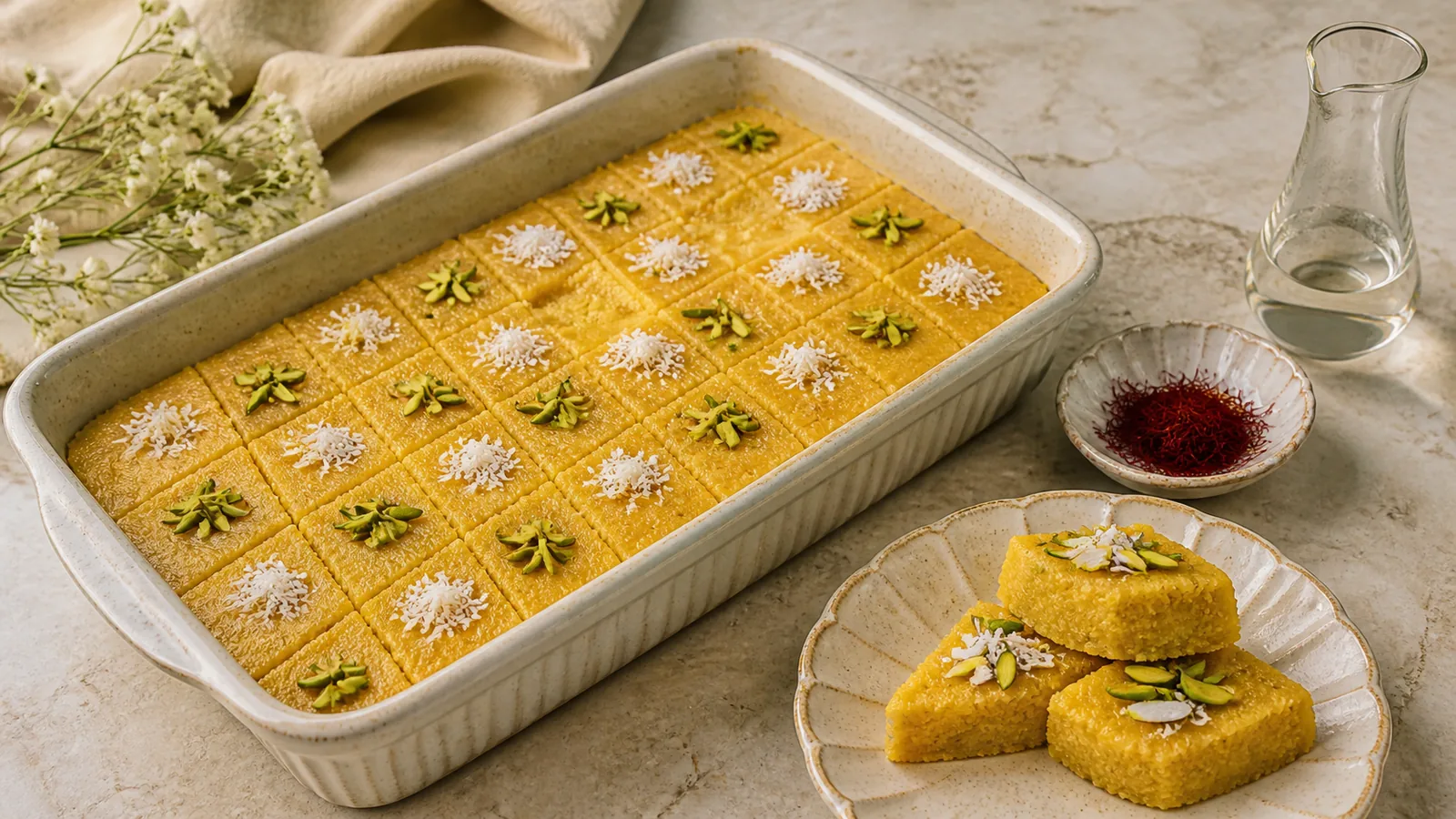
Transfer the warm halva to a shallow serving dish or parchment-lined tray. Press it into an even layer with the back of a spoon or a small spatula. Smooth the surface while it is still flexible, then mark diamonds, squares or narrow rectangles before it fully sets.
Scatter sliced pistachios or coconut over the top and press them very lightly so they stay in place. Let the halva cool completely before following the guide marks with a sharp knife. Small pieces suit its rich texture better than large portions.
Troubleshooting Nisar halva
- It tastes floury: the flour needed a longer, gentler toast before the butter was added.
- It has dark flecks: the pan was too hot or the flour was not stirred across the whole base.
- It is lumpy: sift the powdered sugar and smooth the saffron-rosewater mixture before combining.
- It crumbles: it may have cooled during mixing. Press it firmly while still warm; do not pour in unmeasured water, which changes the texture.
- It looks greasy: keep folding off the heat until the butter is reabsorbed, rather than adding more flour immediately.
Keep Nesar halva covered so its surface does not dry out or absorb refrigerator odours. Its defining flavours are simple—gently toasted flour, butter, rosewater and saffron—so accuracy at each stage matters more than elaborate decoration.