


Saffron harvest began from the fields of Torbat-e-Jam city with 5,100 hectares under the crop in the historical season covered here. Alireza Erfani, then director of Torbat-e-Jam Agricultural Jihad, said 85 percent of the expected harvest had already been collected.
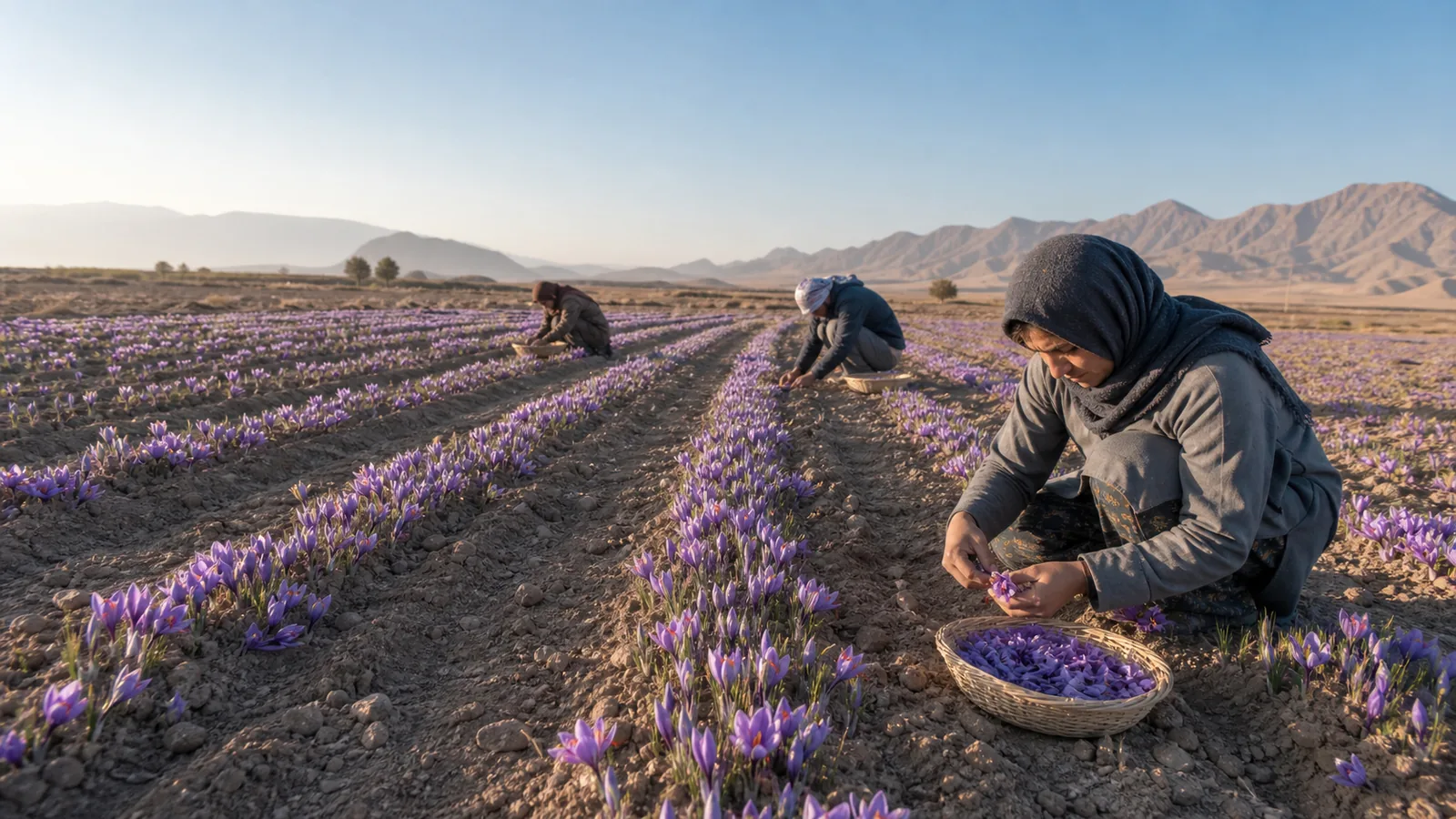
Torbat-e-Jam had 5,100 hectares of saffron
The cultivated area had decreased by 150 hectares from the previous year’s 5,250 hectares. That was a reduction of about 2.9 percent, leaving saffron spread across a large part of the county’s agricultural landscape.
The 85 percent figure described progress through the harvest, not the share of land planted. It means most of the projected crop had been picked by the time the local report was issued.
Fifteen tonnes were forecast after a 22-tonne harvest
Erfani forecast a total of 15 tonnes of dried saffron for the season. At 85 percent of that projection, the amount gathered by the reporting date would have been roughly 12.75 tonnes, provided the forecast and progress estimate used the same basis.
The previous crop was reported as 22 tonnes. A fall from 22 to 15 tonnes is about 32 percent, while the article also described the harvest at that stage as 40 percent lower than the year before. The two comparisons may use different dates or rounded estimates; neither should be silently replaced with false precision.
The 300–400-kilogram figure referred to saffron flowers
The old English translation said the yield was 300–400 kilograms of “saffron” per hectare. That amount cannot describe dried spice. In the original agricultural context it is a flower-yield figure: the fresh crocuses collected before their stigmas are separated and dried.
Across 5,100 hectares, a dried crop of 15 tonnes would average about 2.9 kilograms per hectare. Keeping flower weight separate from dried saffron prevents a hundredfold error in the harvest record.
Harvesting ran from early November to early December
The local calendar placed saffron harvesting from the beginning of November until the first days of December. Flowers open over a short period and need prompt picking, separation and drying, which concentrates labour within a few weeks.
Erfani said saffron cultivation generated about 150 person-days of work per hectare from planting through harvest. “Person-days” is the important unit: it does not mean 150 permanent workers were employed on every hectare each day.
Water needs helped saffron appeal to farmers
Saffron had attracted Torbat-e-Jam farmers partly because of its relatively low seasonal water demand. The agricultural office’s support work included supplying chemical fertilisers and required micronutrients, encouraging modern irrigation, controlling weeds, preventing livestock from grazing in the fields and providing technical guidance.
Those were reported management measures, not a universal prescription. Fertiliser and micronutrient decisions should be based on field conditions, while saffron still needs correctly timed water and suitable drainage despite being less water-demanding than some crops.
Most Torbat-e-Jam saffron left for neighbouring cities
The article said 98 percent of the saffron produced in Torbat-e-Jam was sent to neighbouring cities. It did not identify the destinations, processors, buyers, prices or the amount retained locally.
That movement points to a limited local processing or marketing share at the time, but the report did not measure how much value was added after the crop left the county.
Agriculture extended far beyond saffron
The broader Torbat-e-Jam agriculture figures matter because the page also appears in searches about crops grown in Torbat-e-Jam, Iran. The report said 65 percent of the county’s population worked in agriculture and animal husbandry, including 10,000 farmers active in crop production.
It also recorded 30 types of field crops and 25 types of horticultural or orchard products produced annually. The source did not name all 55, so a reliable list cannot be reconstructed from this report alone. Saffron was one important crop within that more diverse farming economy.
Reading the Torbat-e-Jam harvest accurately
The central record is clear: harvesting was under way across 5,100 hectares; officials expected 15 tonnes of dried saffron after a 22-tonne prior crop; and 85 percent of the projected harvest had been collected. Flower yield was reported at 300–400 kilograms per hectare, while the implied dried yield was about 2.9 kilograms.
These are figures for one historical season. They do not establish today’s acreage, crop mix, production, water use or market route. Preserving the distinctions between flowers and dried saffron, forecasts and completed totals, and person-days and permanent jobs keeps the agricultural account useful.

![Exporting Saffron to Turkey + Price Guide [Complete 0 to 100]](https://img.rowhanisaffron.com/20260827003933/saffron-export-turkey-quality-inspection.webp)



