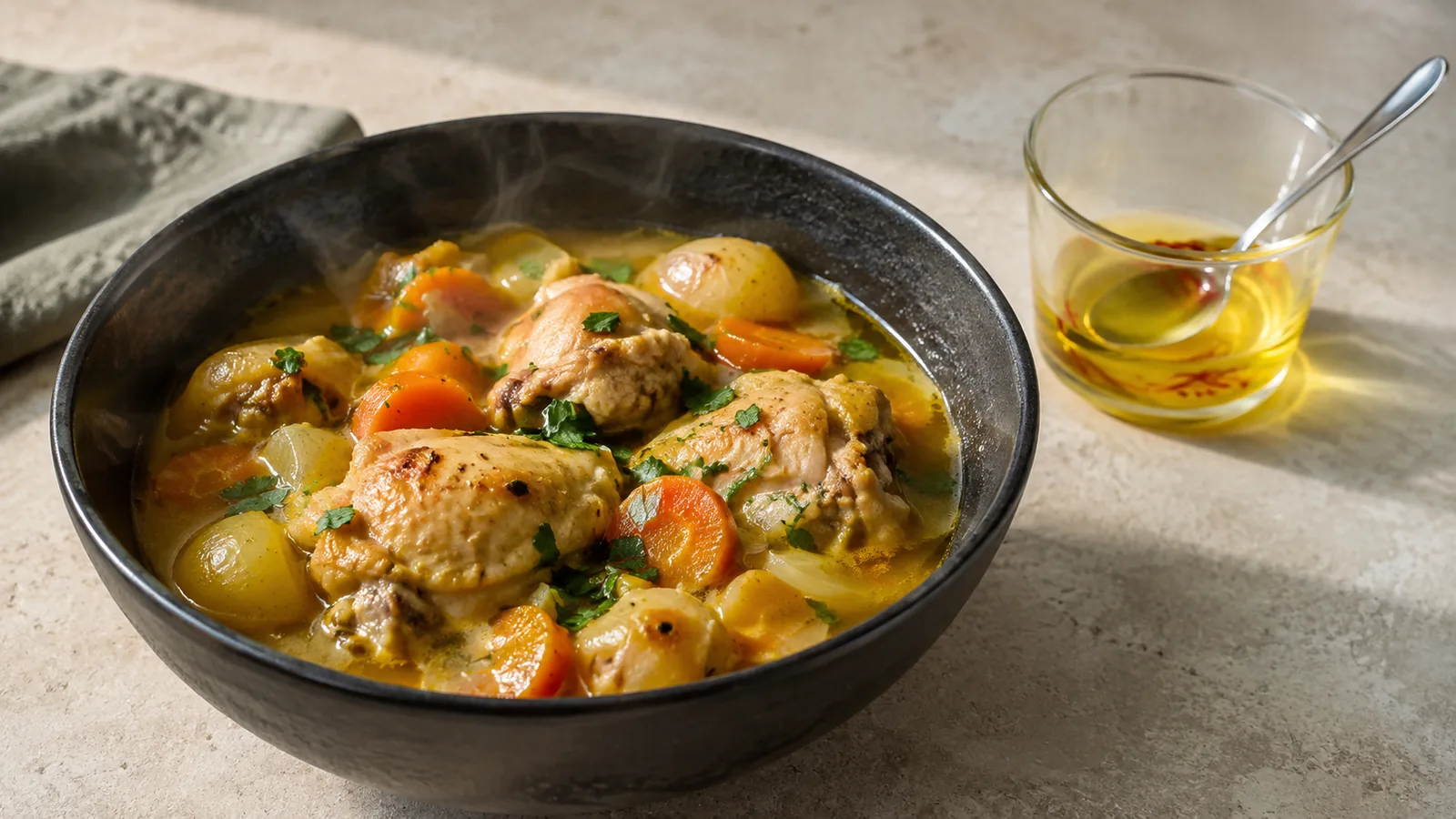
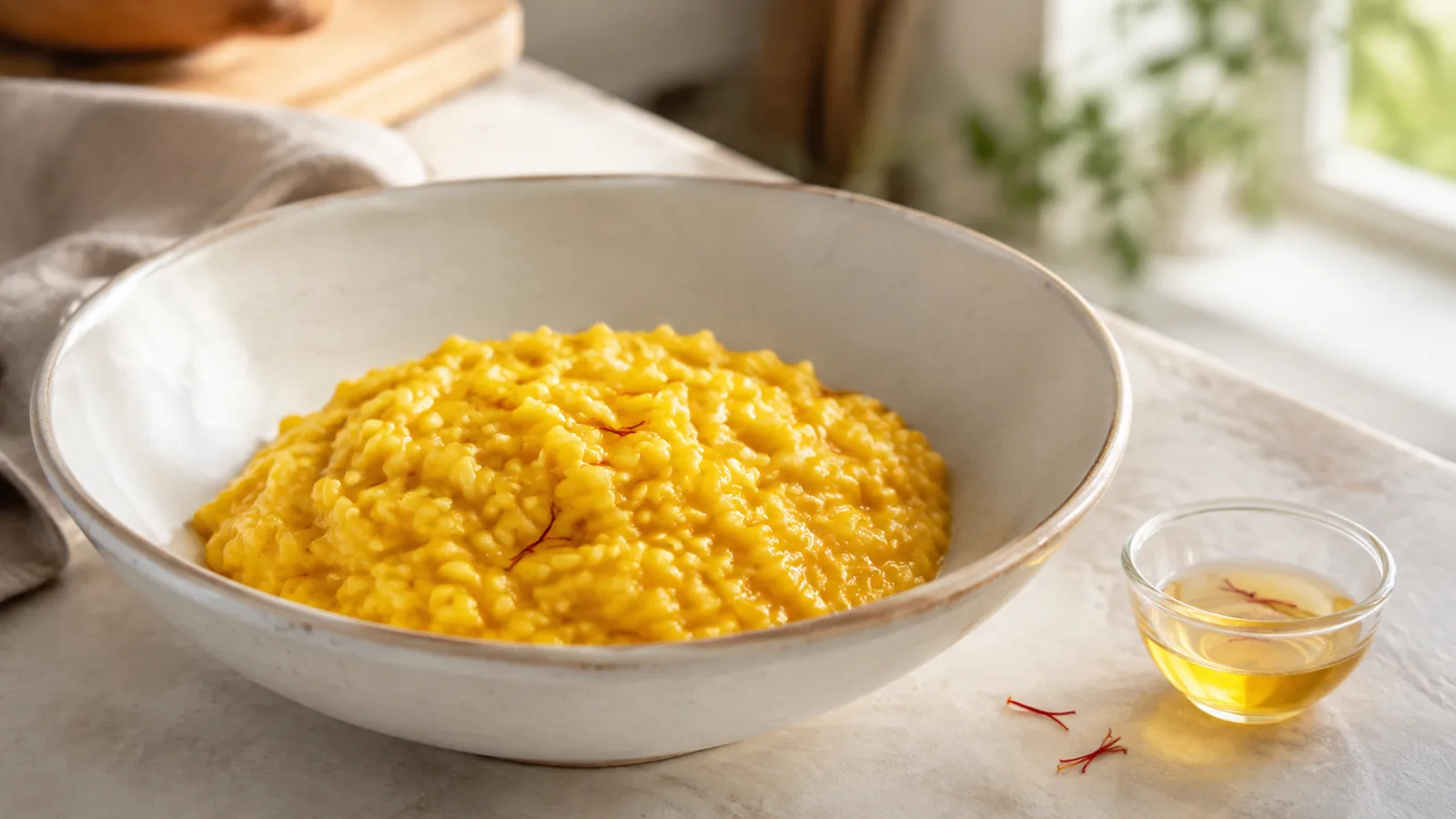
This rice artichokes with strings and meat Saffron Recipes page describes a Persian layered rice with tender artichoke hearts, short rice noodles and saffron-braised lamb or beef. The vegetables and meat are cooked separately, then steamed through the rice so each keeps its own texture.
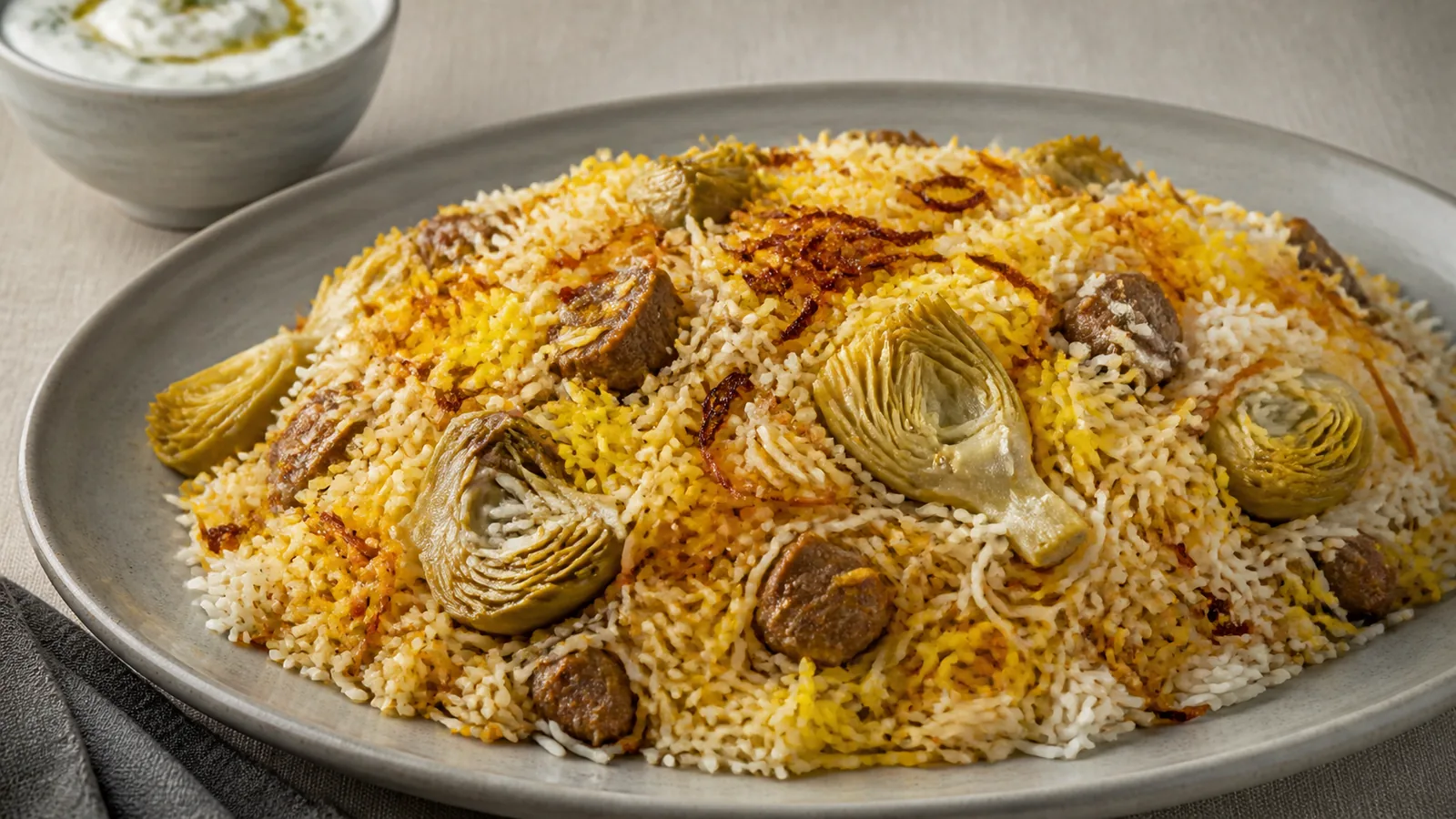
“Strings” means Persian rice noodles in this recipe. They are added near the end of parboiling and should remain slightly firm before the final steam.
Ingredients
- 500 g cleaned artichoke hearts
- 300 g boneless lamb or beef, cut into 2 cm pieces
- 2 medium onions
- 200 g Persian rice noodles, broken into 5 cm lengths
- 6 cups basmati rice
- 1 teaspoon tomato paste
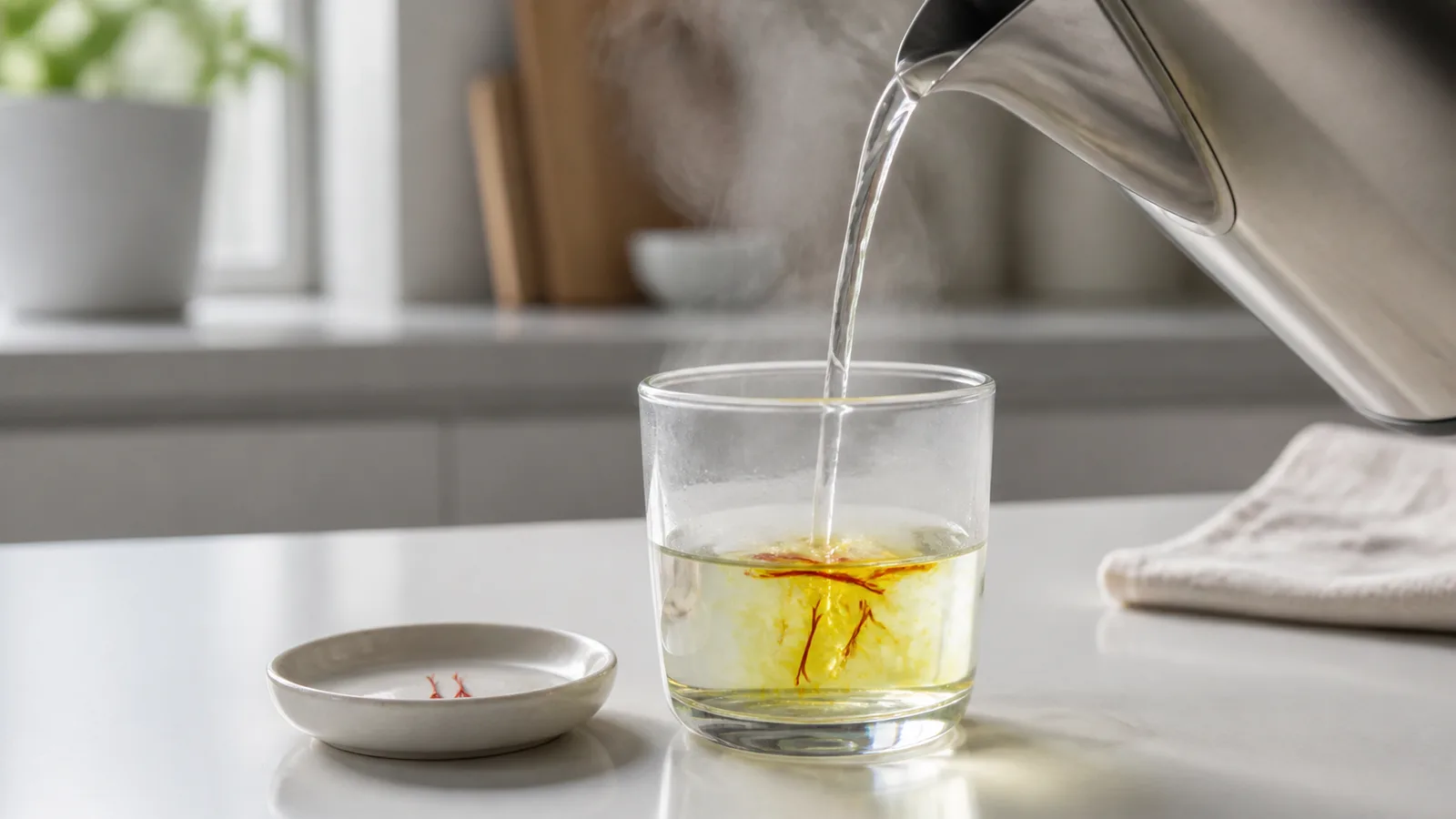
- 1/4 teaspoon ground saffron, infused in 2 tablespoons hot water
- 1 teaspoon ground turmeric
- Salt and black pepper, to taste
- 5 tablespoons neutral oil or butter, divided
- 250 ml hot water
- Thin bread or potato slices for tahdig, optional
Fresh or frozen artichoke hearts both work. If using jarred hearts, choose ones packed in water rather than vinegar and drain them thoroughly before cooking.
Trim and cut the artichokes
Rinse the cleaned artichoke hearts and pat them dry. Cut small hearts into quarters and larger ones into slices about 1 cm thick. Keep the pieces broad enough to survive stirring and steaming.
If you are preparing whole fresh artichokes, remove the tough outer leaves, fuzzy choke and fibrous stem skin first. Rub the cut surfaces with a little lemon while you work to limit browning, then rinse and dry before they reach the pan.
Cook the saffron artichokes
Thinly slice one onion. Heat 1 tablespoon oil in a wide pan and cook the onion over medium heat until soft and lightly golden.
Add the artichokes and a pinch of salt. Cook for 5 minutes, turning gently, then add half the saffron infusion and 60 ml water. Cover and cook over low heat for 8 to 12 minutes, until just tender. Uncover and let excess moisture evaporate.
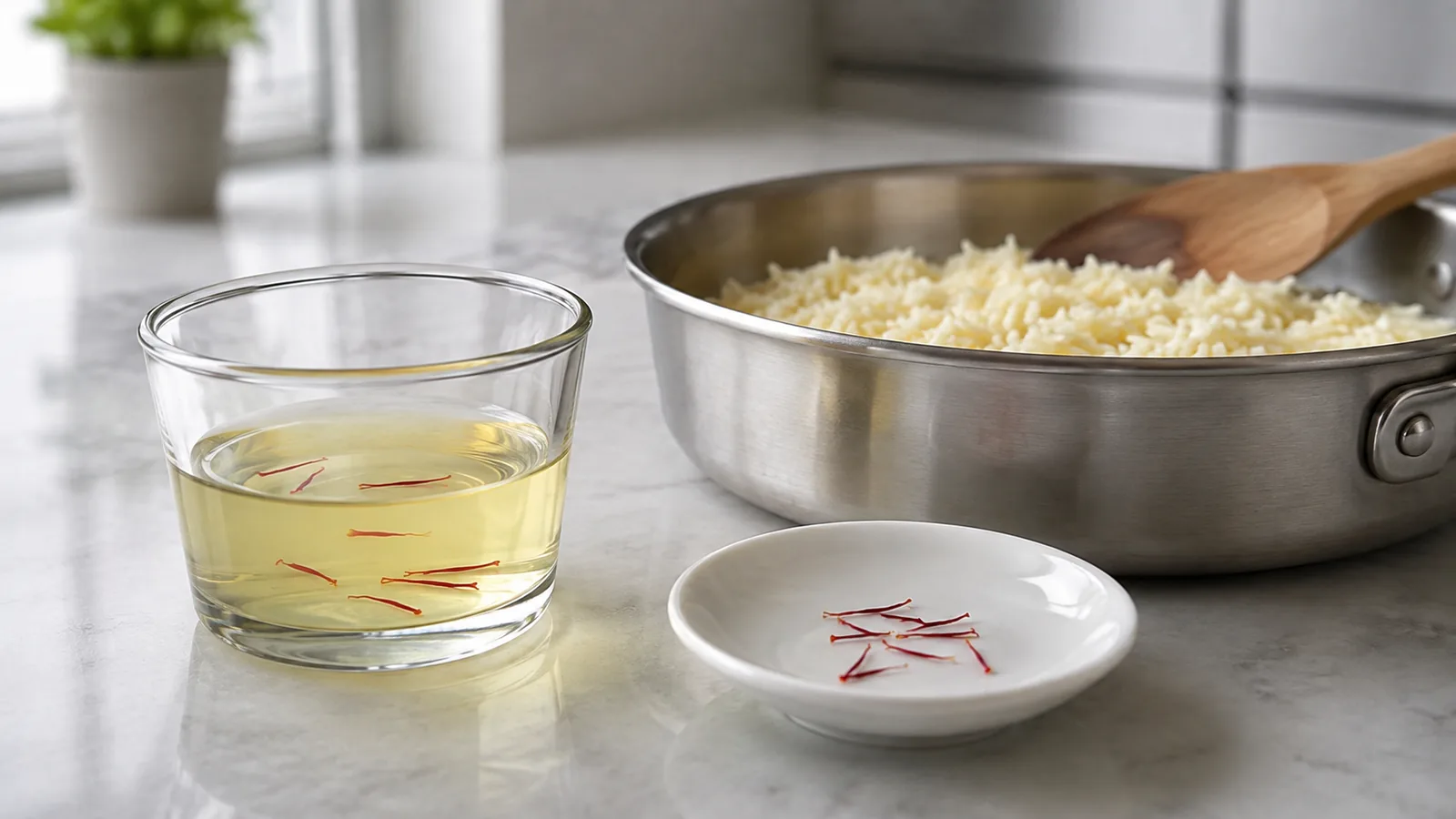
A concentrated infusion colours the vegetable without making it watery. Our saffron-brewing guide gives the method.
Braise the meat with tomato and turmeric
Chop the second onion. Heat 1 tablespoon oil in a saucepan and cook the onion for 8 minutes. Add the turmeric, stir for 30 seconds, then add the meat.
Brown the pieces on all sides. Stir in the tomato paste and black pepper and cook for 1 minute. Add the hot water, cover and simmer until the meat is tender, about 45 to 75 minutes depending on the cut.
Remove the lid at the end and reduce the liquid until only a few spoonfuls remain. Season with salt. Whole cuts of lamb or beef should reach at least 63°C (145°F) followed by a 3-minute rest; see the official temperature chart.
Parboil the rice and noodles
Rinse the basmati rice until the water is almost clear. Soak it in salted water for 30 minutes, then drain.
Bring a large pot of salted water to a rolling boil. Add the rice and cook for about 4 minutes. Add the broken rice noodles and continue for 2 to 3 minutes.
Check both before draining. The rice should be soft outside with a firm centre, and the noodles should bend without becoming limp. Drain immediately and rinse briefly with lukewarm water.
Build the layered pot
Add 2 tablespoons oil or butter to a clean heavy pot. Lay bread or potato slices over the base if you want tahdig.
Spoon in one-third of the rice-and-noodle mixture. Add half the meat and half the artichokes, keeping large wet clumps away from the sides. Repeat, then finish with rice and noodles.
Make several steam channels with the handle of a wooden spoon. Mix the remaining saffron infusion with the last tablespoon oil or melted butter and drizzle it over the top.
Steam the artichoke rice
Cover the pot and cook over medium-high heat for 5 to 8 minutes, until a strong cloud of steam appears. Wrap the lid in a clean kitchen towel, keeping the corners away from the heat, and turn the heat to low.
Steam for 35 to 45 minutes. Turn off the heat and leave the covered pot undisturbed for 5 minutes before opening.
Serve without crushing the vegetables
Lift the rice onto a platter with a wide spoon, loosening the layers rather than stirring in circles. Arrange the artichoke pieces and meat that rise from the pot across the top.
Serve the tahdig separately so it stays crisp. Plain yogurt, pickled vegetables or a lemony herb salad balances the soft artichokes and mild saffron.
Useful adjustments
- Frozen artichokes: thaw and blot dry; they usually need less covered cooking.
- Jarred artichokes: rinse water-packed hearts and add them for only the final 5 minutes in the pan.
- No Persian rice noodles: use a very thin, plain wheat vermicelli and shorten the boil if it softens quickly.
- Leftovers: refrigerate within 2 hours and reheat until steaming throughout.
This recipe contains wheat unless the noodles and tahdig bread are certified gluten-free.