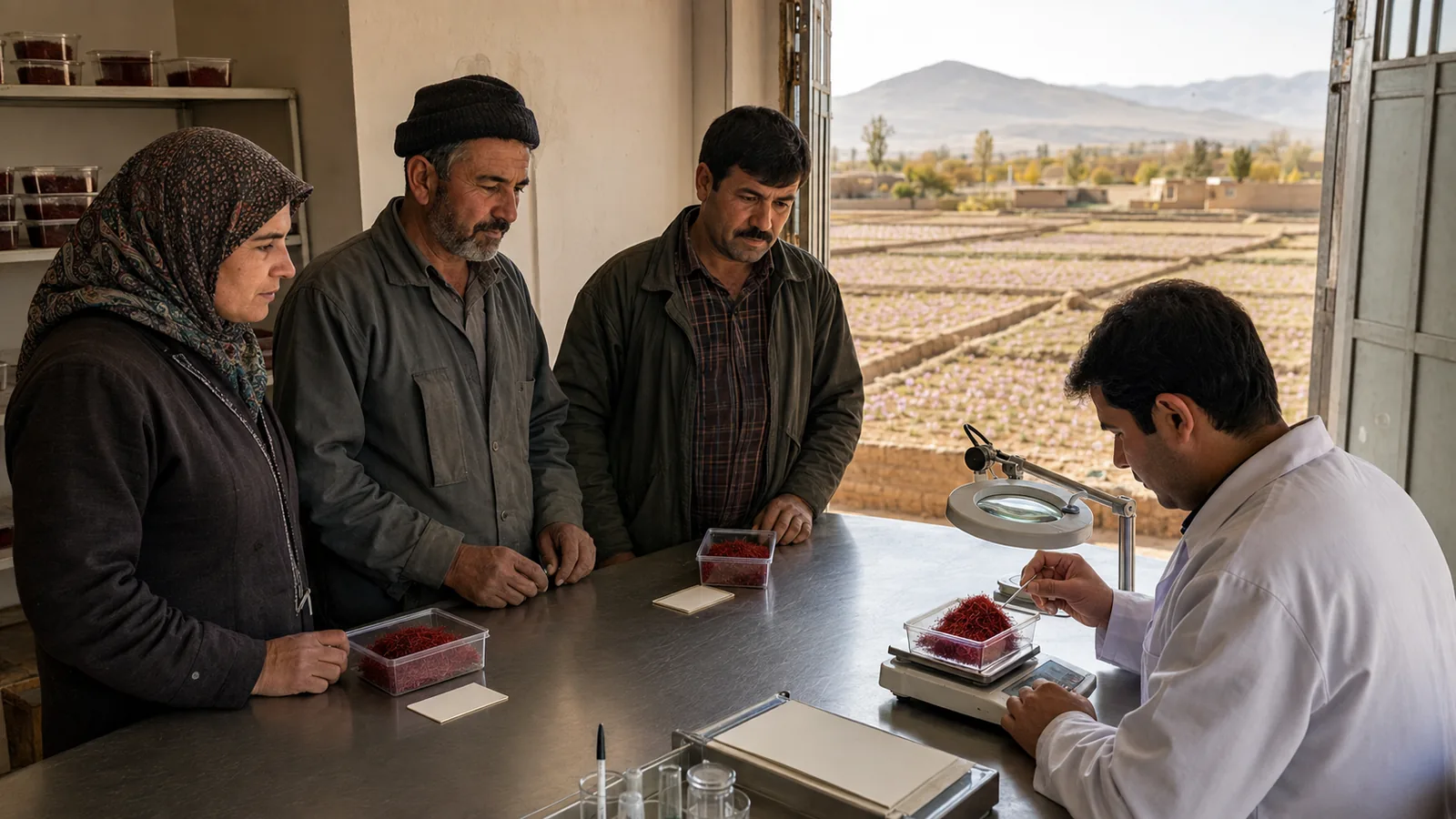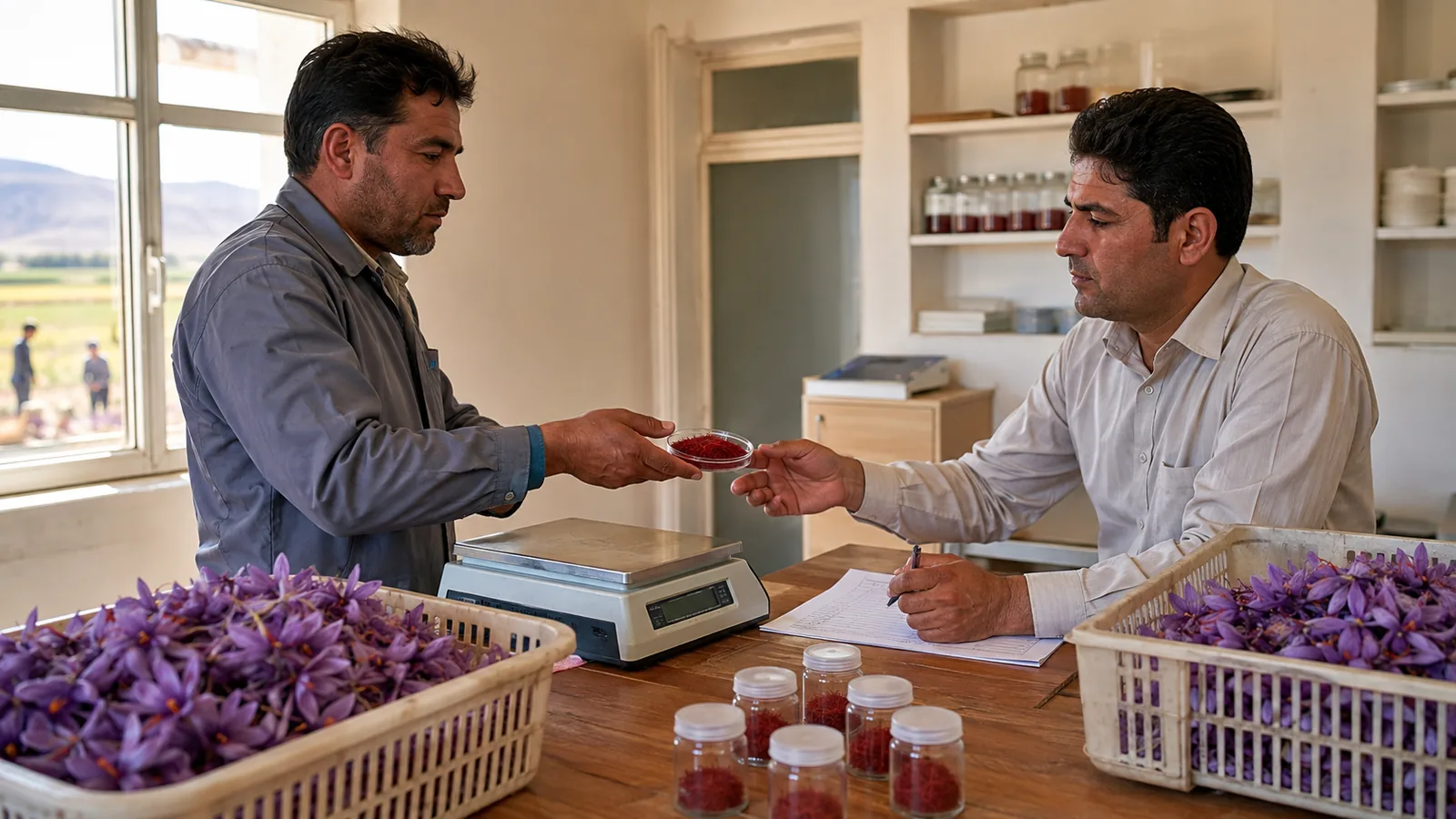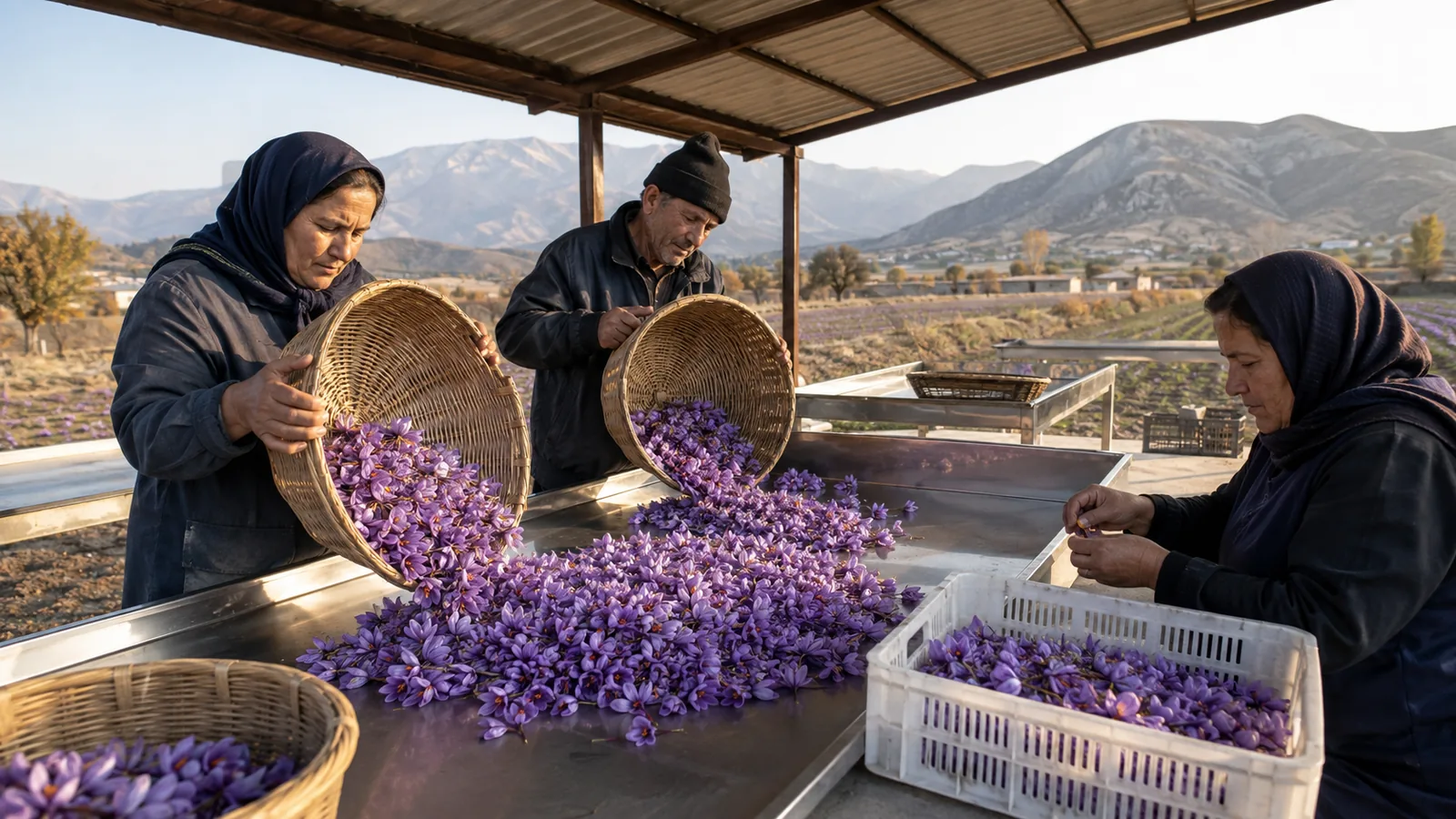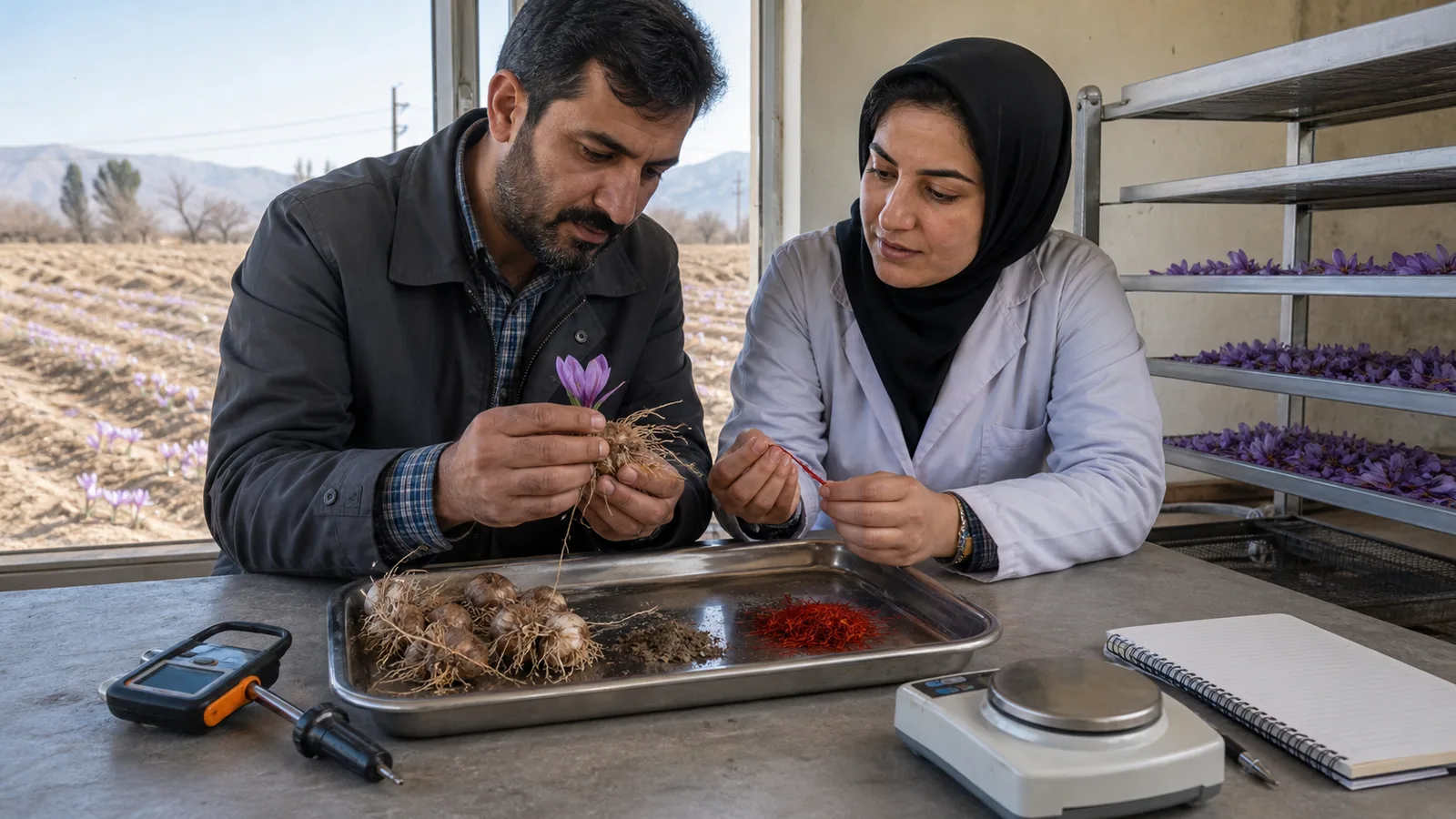


Harvesting saffron in the villages of Ravar was reported from a small but developing production area in northern Kerman Province. Ghanbari, then director of Ravar’s Agricultural Jihad office, said the county had 28 hectares of saffron and forecast an average of four kilograms of dry saffron per productive hectare.
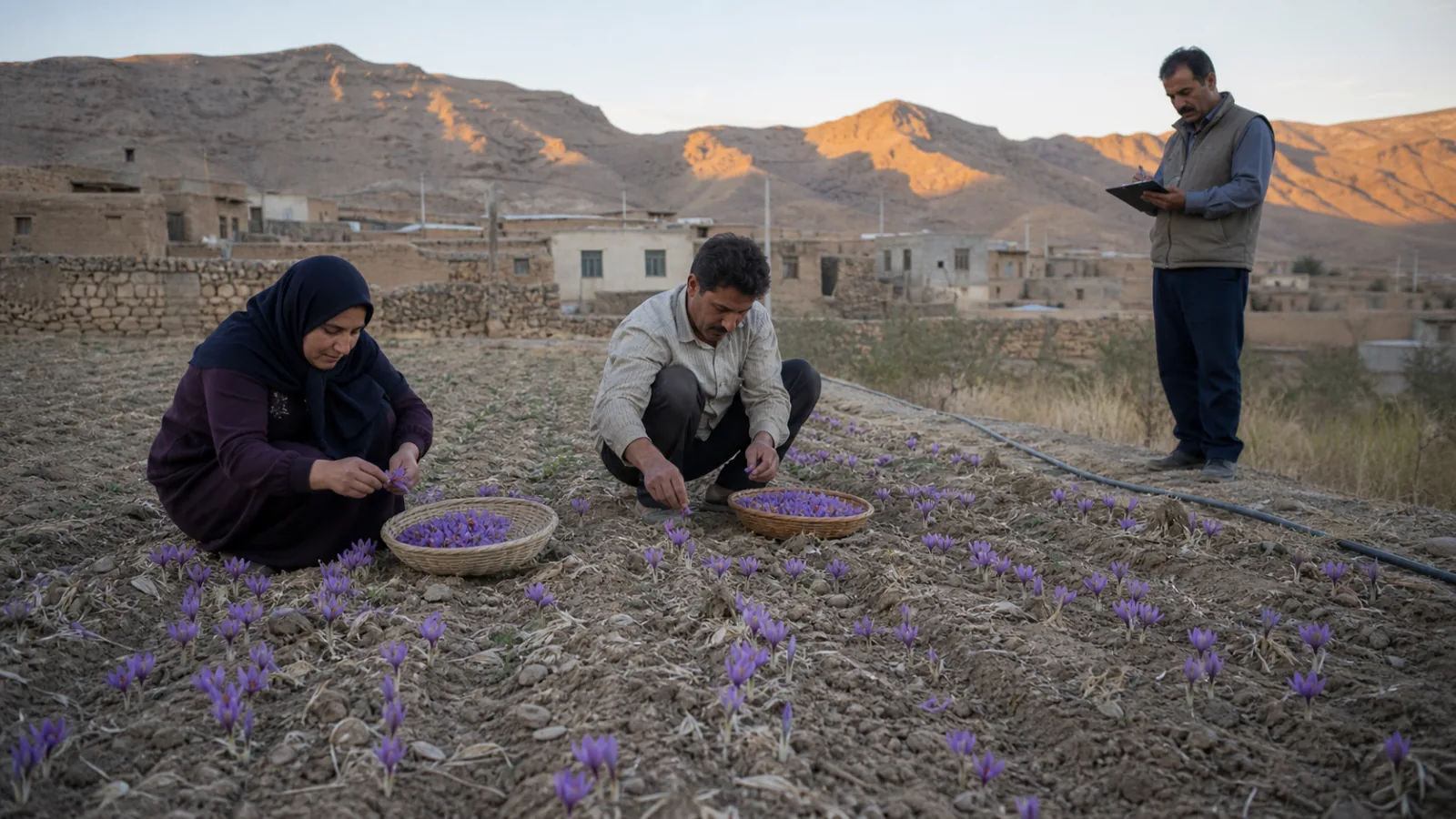
The harvest began in rural fields associated with Ravar’s Central and Kuhsaran districts, including the village of Tarz. The old English version scrambled those place names, but its central point is clear: saffron was being tested as a lower-water alternative during prolonged drought.
Where Ravar’s saffron was grown
The report referred to villages in both the central part of Ravar County and the Kuhsaran area. “Central Taraz” appears to mean Tarz village in the Central District, while “Koharsar” appears to refer to Kuhsaran District rather than one village by that English name.
Keeping the administrative level straight matters. A county total cannot be assigned to one village, and activity in two districts does not mean every village had saffron fields.
What the 28 hectares and four-kilogram yield mean
Ghanbari’s statement put the saffron area at 28 hectares and expected about four kilograms of dry saffron per hectare from productive fields. It did not provide a final county weight.
The phrase “fertilized gardens” in the old translation is misleading. The agricultural distinction is more likely between bearing and non-bearing saffron fields. Newly planted corms and mature stands should not be treated as if they contribute the same harvest.
A later official IANA report on Ravar’s saffron harvest recorded 35 hectares in total and 28 hectares bearing in that later season. That does not rewrite Ghanbari’s earlier figure, but it shows why total and harvestable area must be labelled separately.
Ravar’s climate is not described by one slogan
The original article called saffron a semi-tropical plant suited to mild winters and hot summers. That description is too broad. Saffron needs a dry dormant period and cool autumn conditions for flowering, while severe heat, water stress or poorly timed frost can reduce performance.
Ravar also contains meaningful differences in elevation and local climate. A field that works in one village does not establish suitability across the county. Soil depth, drainage, salinity, corm health, irrigation water and frost exposure all need to be checked at field level.
Why saffron was promoted during drought
Ghanbari described drought across much of Iran and argued for a revised crop pattern that used limited water more efficiently while offering farmers a better return. Saffron had therefore been introduced as an alternative crop and its area was expanding.
“Lower water use” is a comparison, not an exemption from water accounting. Saffron still needs irrigation at important points in its cycle. Expansion is only defensible when water delivered per field, groundwater condition and saleable dry yield are measured against the crop being replaced.
A high price per kilogram also says little about net return. Growers face corm, field preparation, irrigation, weeding, harvest labour, stigma separation, drying, testing, packaging and sales costs. A small district needs enough trained labour and drying capacity to protect quality during the brief flowering peak.
Harvest timing in Ravar
The historical report placed the harvest from mid-November to the end of the month. A later Ravar account used an early-to-late November window and noted that local weather affects the dates. Both describe seasonal observations, not a fixed calendar for every field and year.
Once flowering starts, crews should inspect fields daily, pick in the cool hours, use shallow clean containers and move flowers quickly to separation and controlled drying. Our guide to saffron cultivation covers the corm, irrigation and harvest decisions around that short window.
How to assess expansion safely
A useful Ravar production record would separate total, newly planted and bearing hectares by village. It would then report dry yield, water delivered, corm losses, labour hours, drying conditions, quality results and the price farmers actually received.
The four-kilogram figure should remain attached to its reporting season and productive-area basis. Multiplying it by every hectare without a final weight would turn an average forecast into a claim the source did not make.
Ravar’s experience supports cautious diversification: saffron may fit selected dry-climate fields and offer farmers another source of income. The case for expanding it is strongest when each village’s water, field performance and market result are documented, not when “red gold” is treated as a guarantee.