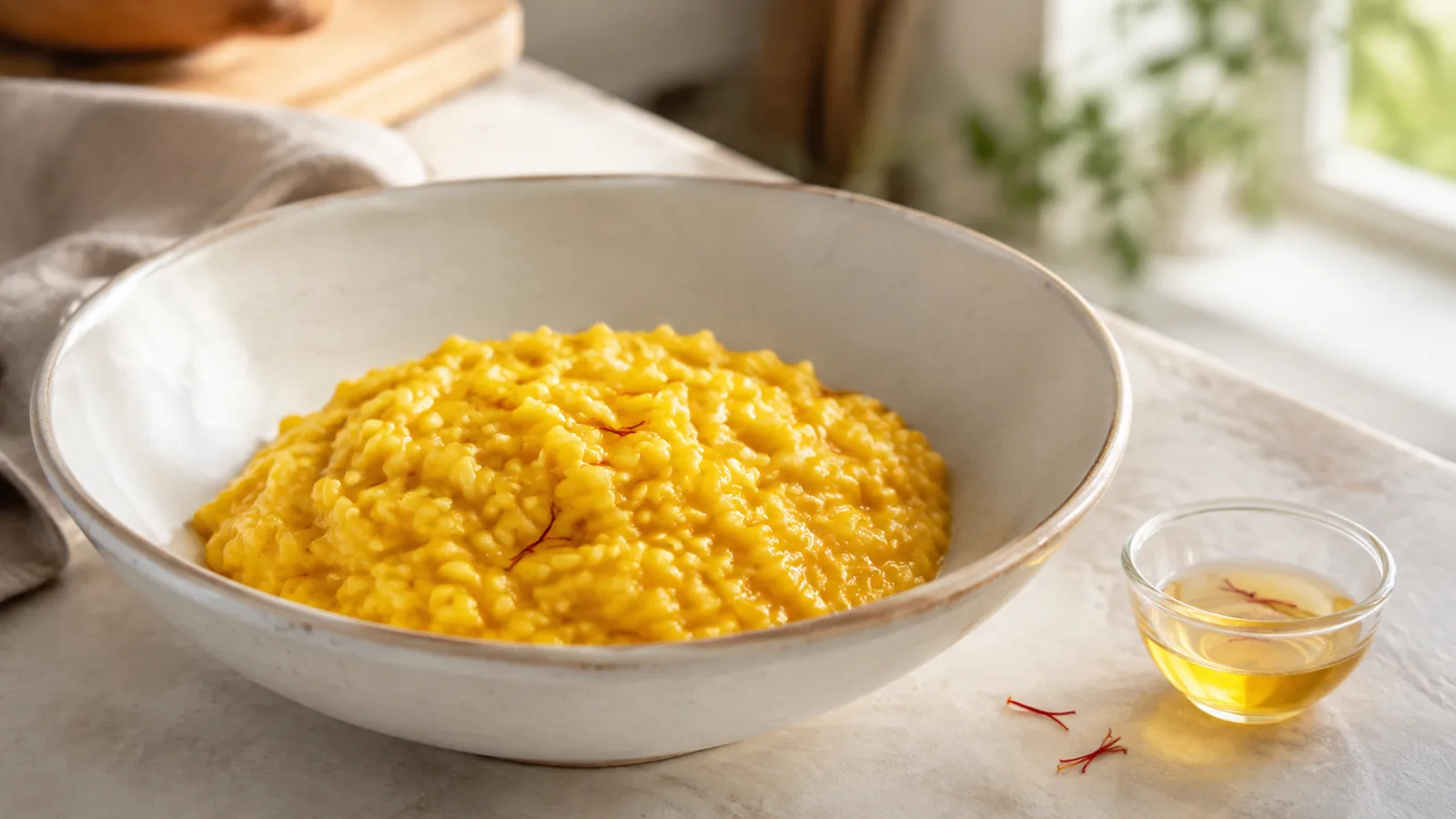
Halva Majlisi is a smooth Iranian halva dessert made with toasted flour, saffron, rosewater and cardamom. Its flavour depends less on decoration than on two careful steps: browning the flour evenly and adding the syrup without letting the mixture clump.
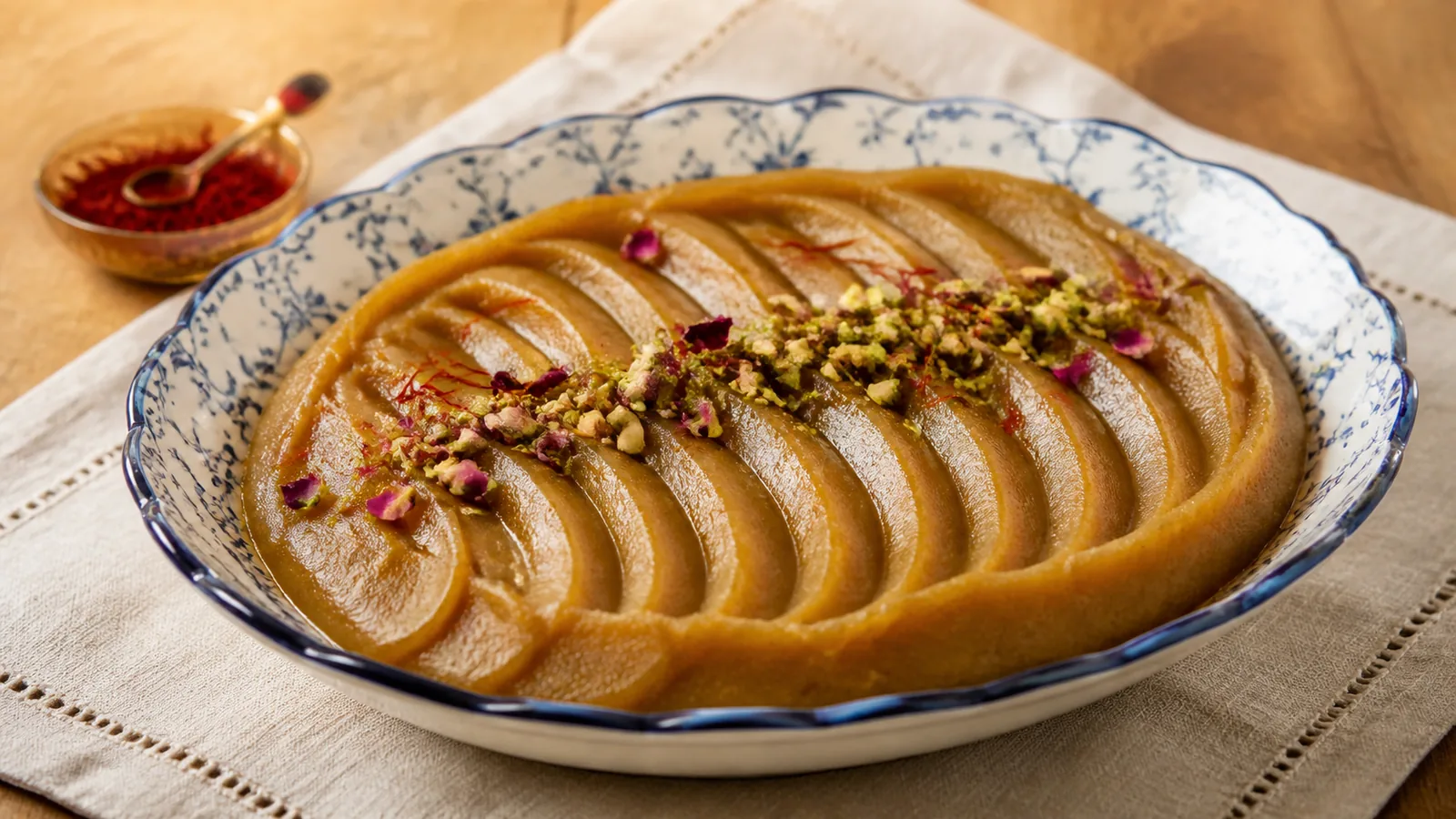
“Majlisi” describes a polished, presentable style suited to gatherings. The halva can be served in one dish, piped into patterns or shaped into individual portions once it is cool enough to handle.
Search wording varies: “halva iranian dessert” and “halva iranian recipe” both usually refer to this flour-based family, although ingredients and finishing styles differ from one household to another.
Halva Majlisi ingredients
- 2 cups plain flour
- 2 cups sugar
- 2 1/2 cups water
- 1/2 cup neutral oil
- 50 g butter
- 1/2 teaspoon finely ground, or levigated, saffron
- 2 tablespoons rosewater
- 1 teaspoon finely ground, or levigated, cardamom
The word levigated simply means ground to a very fine powder. Crush the saffron gently rather than grinding it with force until it becomes hot.
Make the saffron syrup
Combine the sugar and water in a saucepan. Warm over medium heat, stirring only until the sugar dissolves, then let the syrup come just to a boil.
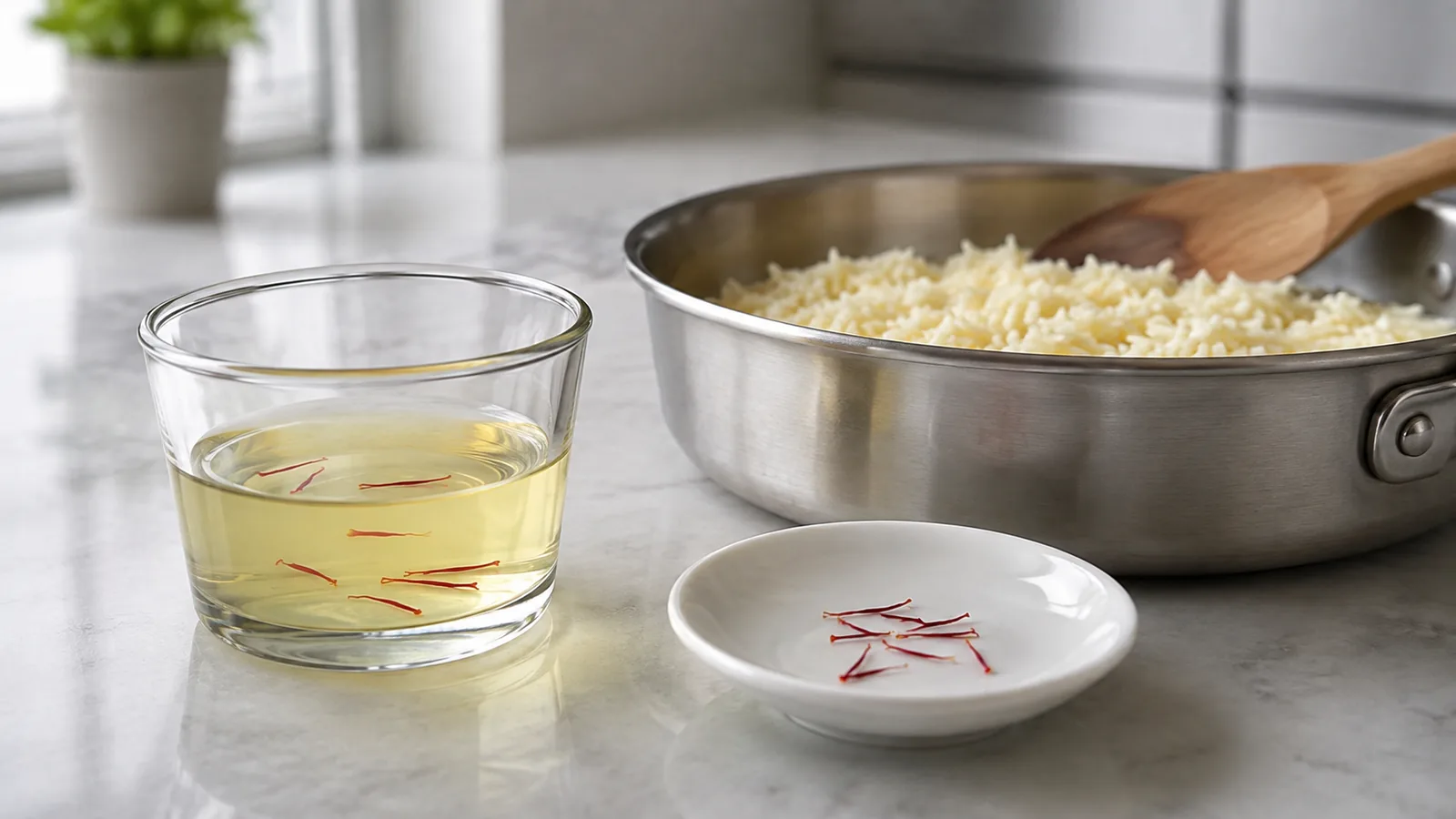
Take the pan off the heat. Stir in the ground cardamom, rosewater and prepared saffron. Rosewater varies in strength, so smell it before adding; the measured amount should support the saffron rather than dominate it.
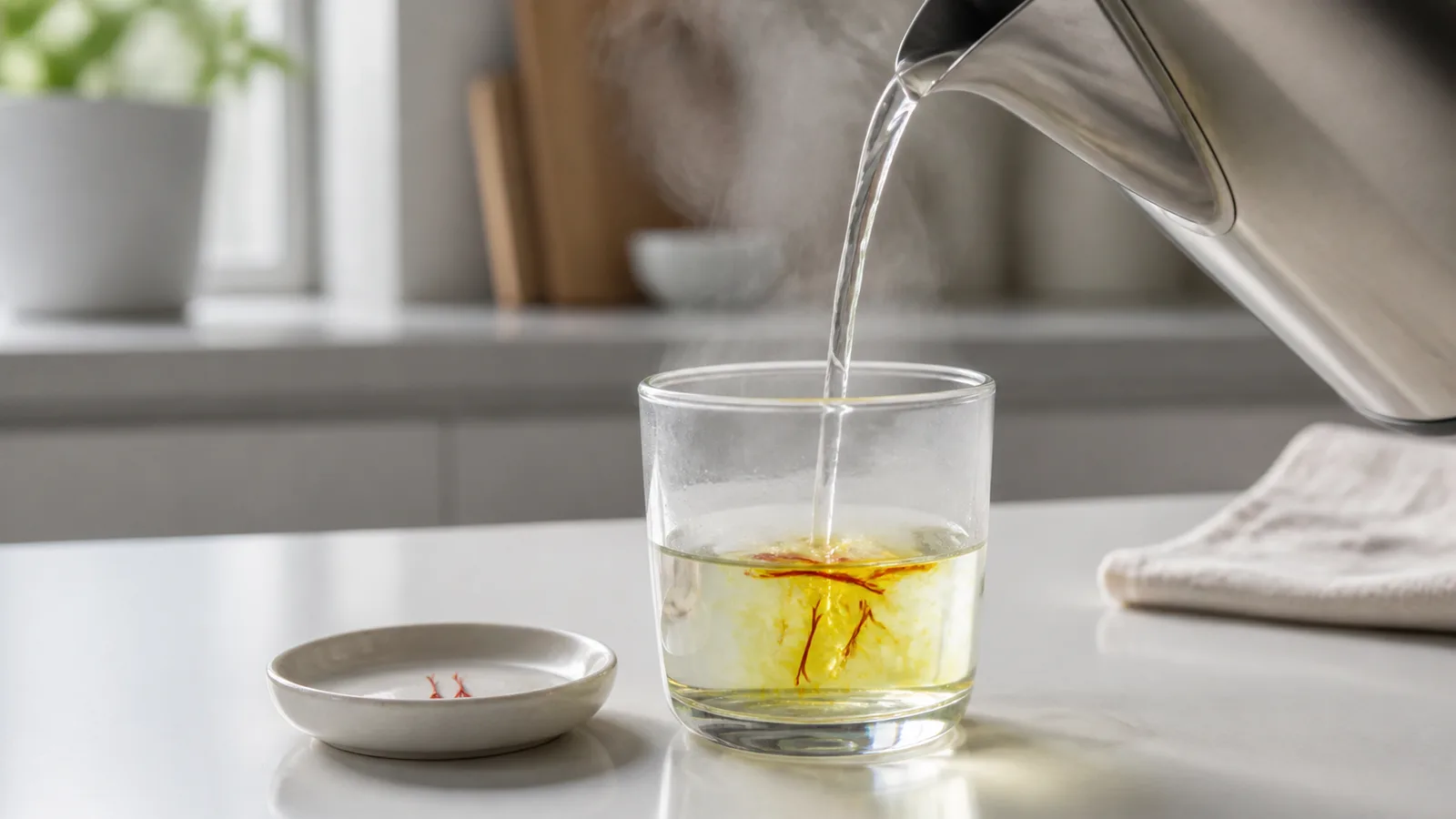
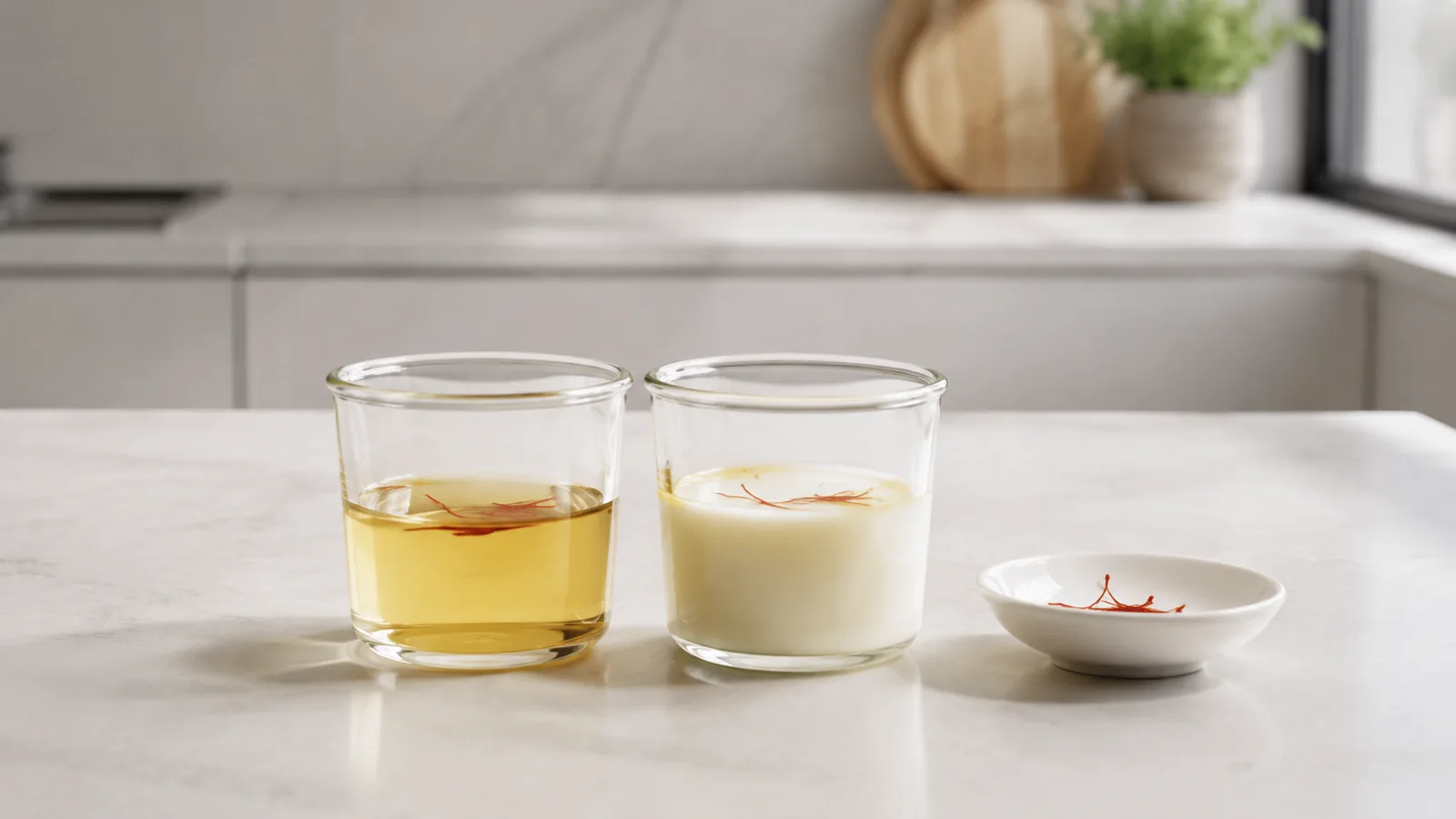
If you want to prepare the spice separately for a clearer colour, follow our guide to brewing saffron and count that small amount of liquid as part of the 2 1/2 cups water.
Toast the flour without burning it
Sift the flour into a wide, heavy pan. Cook over medium-low heat for 15 to 20 minutes, stirring continuously and scraping the bottom and corners.
The flour will lose its raw smell, become nutty and deepen gradually in colour. A pale-gold flour makes a lighter halva; a longer toast creates a darker, stronger flavour. Reduce the heat if you see dark specks, because burnt flour cannot be corrected with extra syrup or saffron.
Add the oil and butter
Warm the oil and butter together until the butter melts. Add them gradually to the toasted flour while stirring.
Continue cooking over low heat until the paste is smooth, glossy and evenly coloured. If small flour lumps remain, press them against the side of the pan before adding any liquid.
Bring the halva together
Remove the flour mixture from the heat. Add the warm saffron syrup in several portions, stirring thoroughly after each addition. It may bubble and spit at first, so use a long-handled spoon and keep your face away from the pan.
Return the pan to very low heat. Fold and stir until the halva gathers into one soft mass and no longer sticks heavily to the sides.
The exact amount of syrup the flour absorbs can vary. If the mixture becomes smooth before every drop is used, stop adding syrup. If it is very stiff, work in another spoonful while it is still warm.
How to make Halva Majlisi glossy
For the traditional finishing motion, hold both sides of the pan securely and rock the warm halva from side to side so it rolls over itself. Continue for a minute or two, until the surface looks smoother and any separated oil is drawn back into the mixture.
If the pan is too heavy to move safely, fold the halva firmly with a spatula instead. The aim is a cohesive, supple paste, not a dry ball.
Shape and decorate
Spoon the halva into a shallow serving dish and smooth it while warm. Draw simple lines with the back of a spoon, or let it cool until it holds its form and pipe it with a sturdy nozzle.
Pistachios, almonds, dried rose petals or a small pinch of saffron can be used as garnish. Keep the decoration light enough that the saffron, rosewater and cardamom remain the main aromas.
Troubleshooting Iranian halva
- Raw flour taste: the flour needs more time over medium-low heat before the fat is added.
- Bitter or burnt flavour: the pan was too hot or the flour was not stirred continuously.
- Lumpy texture: add the syrup in stages and smooth the flour-and-fat paste first.
- Oily surface: keep folding or rocking the warm halva until the fat is absorbed again.
- Halva too soft: cook briefly over low heat; it will also firm as it cools.
Storage
Cover the serving dish once the halva has cooled. It will keep for up to 3 days in the refrigerator, though the texture is softest when served at room temperature. Let chilled halva stand out of the refrigerator briefly before eating.