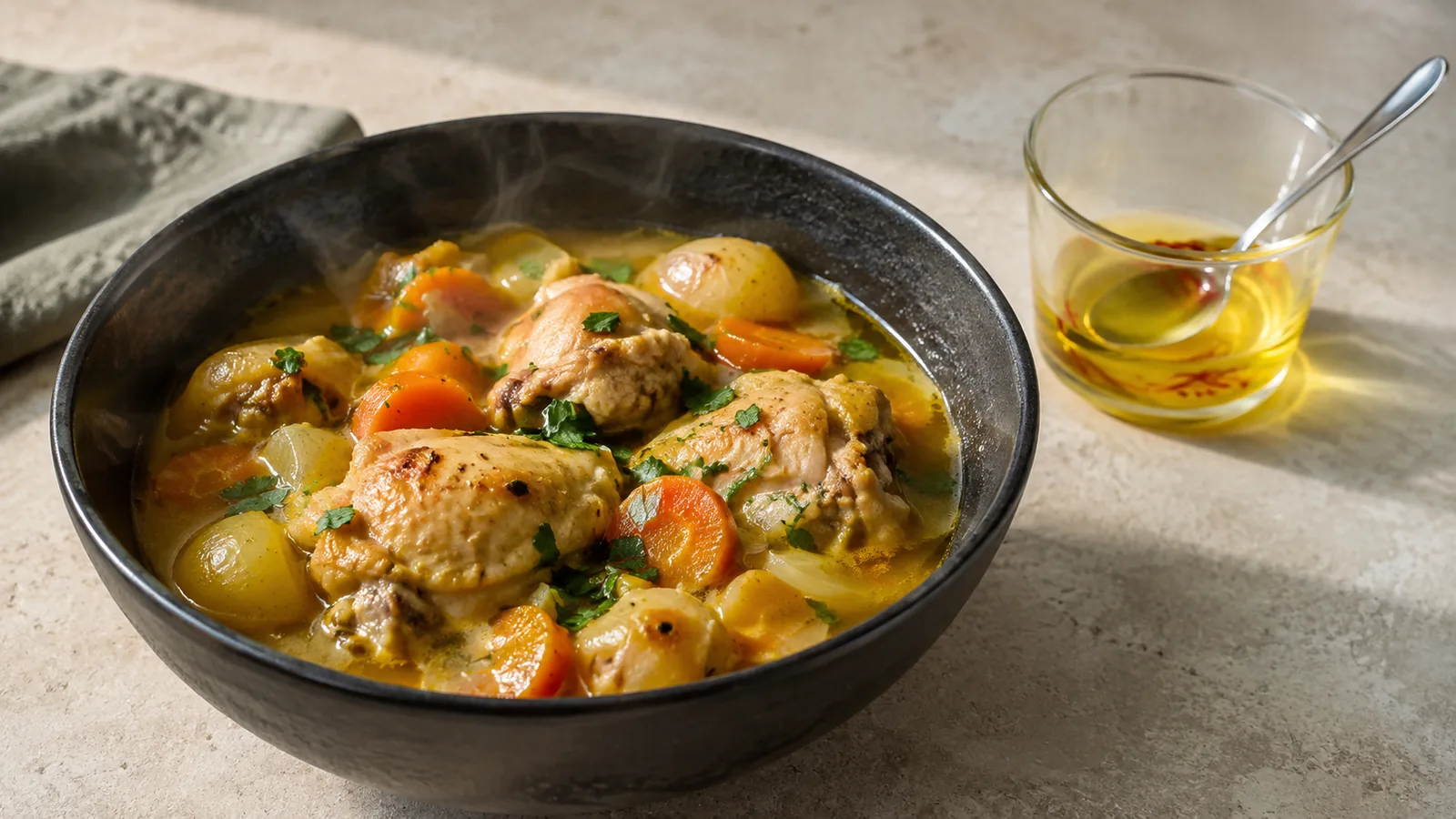
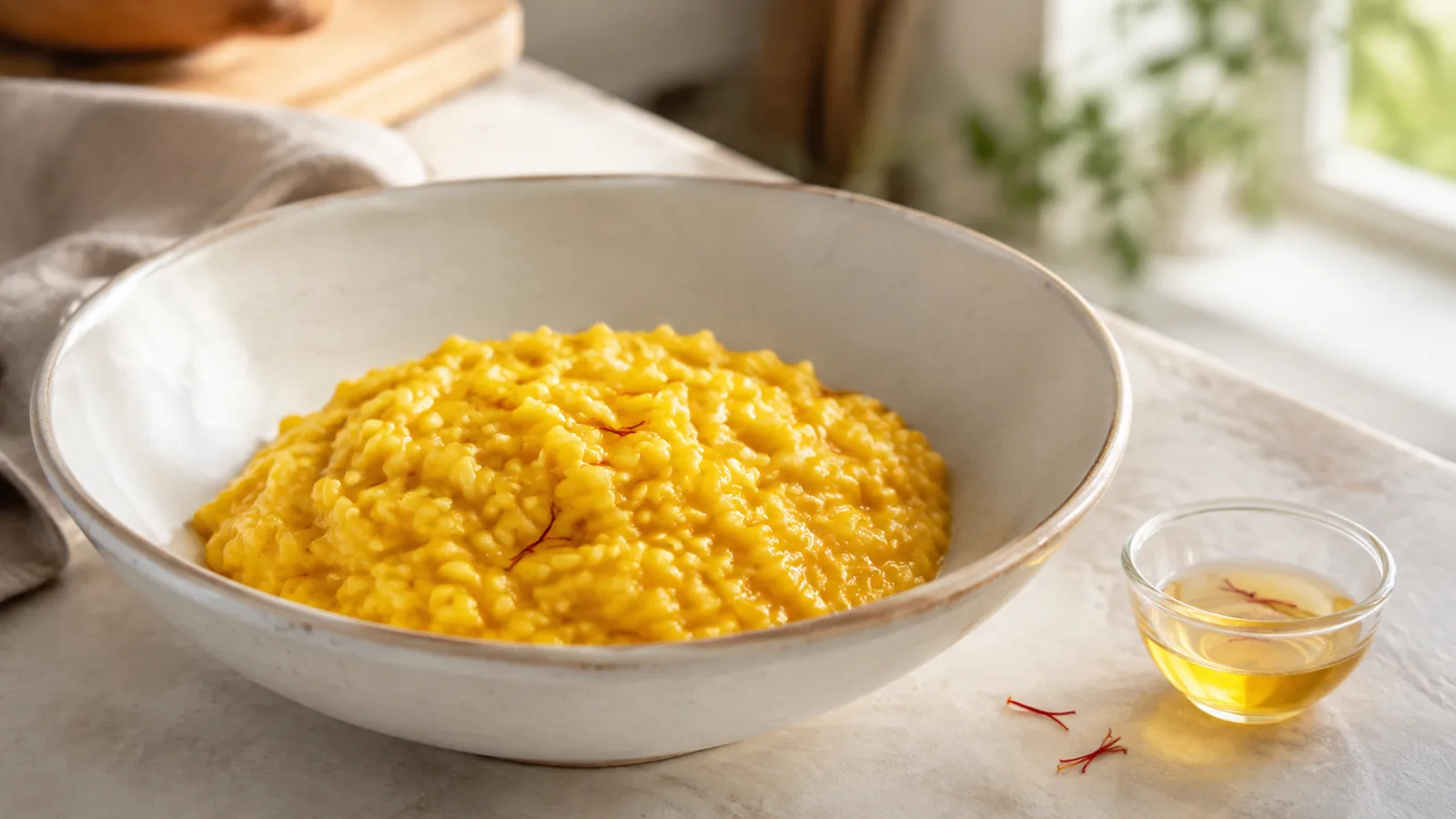
This recipe for cooking starch and milk halva with Iranian saffron produces a soft, spoonable dessert scented with rosewater and cardamom, then finished with chopped nuts.
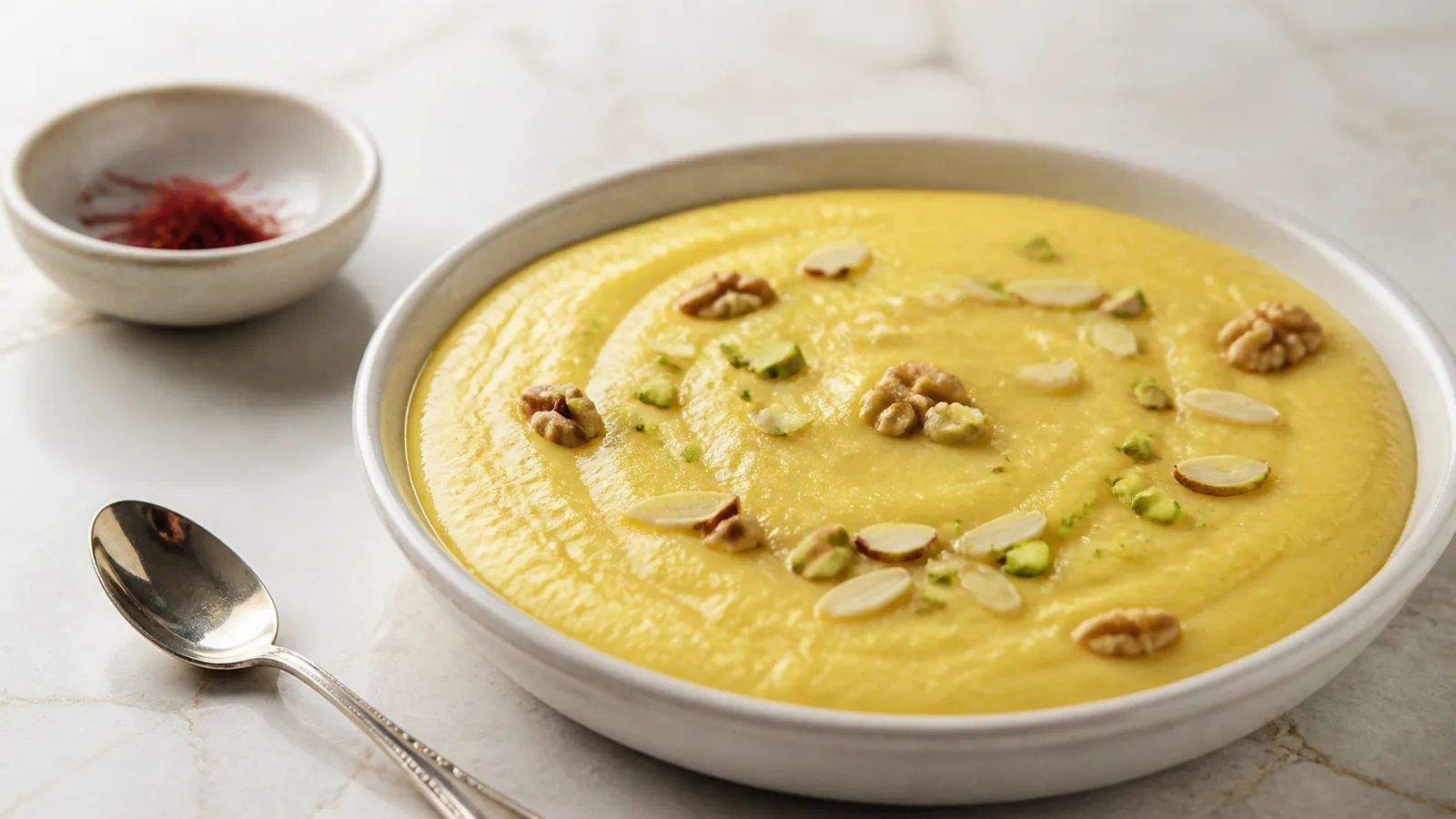
Unlike flour halva, this version is thickened with cornstarch and poured into its serving dish while hot. It needs steady, gentle stirring so the starch cooks evenly without forming lumps or catching on the bottom.
Starch and milk halva ingredients
- Granulated sugar: 3 cups
- Cold water: 2 cups to start; see the measurement note below
- Milk: 2 cups
- Cornstarch: 1 cup
- Rosewater: as needed
- Brewed saffron: as needed
- Ground cardamom: as needed
- Chopped almonds, pistachios and walnuts: as needed
A necessary note about the water
The earlier ingredient list omitted water even though its first instruction said to mix the starch and sugar with water. That omission makes the recipe impossible to follow precisely. Begin with 2 cups of cold water for the 1 cup of cornstarch; it dissolves the starch and gives the mixture the same initial volume as the 2 cups of milk.
This is a practical starting quantity, not a recovered measurement from the old list. Keep a little extra cold water nearby. If the mixture becomes too firm before the milk can be incorporated, add it one tablespoon at a time rather than guessing another full cup.
Dissolve the cornstarch before heating
Put the cornstarch in a heavy, preferably non-stick saucepan. Add the 2 cups of cold water gradually while whisking until no dry pockets remain. Stir in the 3 cups of sugar.
Do this while the pan is cold. Cornstarch added directly to hot liquid forms stubborn lumps, whereas a cold slurry gives the Iranian halva a much smoother texture.
Thicken the starch and sugar mixture
Place the pan over medium-low heat and stir continuously with a flexible spatula, reaching into the corners and across the base. The mixture will first look cloudy, then become more translucent and noticeably thicker.
Add ground cardamom in a small amount once the starch begins to thicken. Cardamom strengthens as it sits, so begin modestly and adjust near the end rather than adding an unmeasured large spoonful.
Add the milk gradually
When the starch mixture is cohesive, pour in the 2 cups of milk a little at a time. Stir each addition smooth before adding more. The halva will loosen at first, then thicken again as it returns to temperature.
Keep the heat low enough that the milk does not scorch. Scrape the bottom with every pass of the spatula. A pan with a pale interior makes it easier to spot any area that is beginning to colour.
Finish with saffron and rosewater
As the milk halva firms again, add brewed saffron and rosewater a little at a time. For a batch this size, start with a spoonful of each, stir thoroughly, then judge the colour and aroma before adding more.
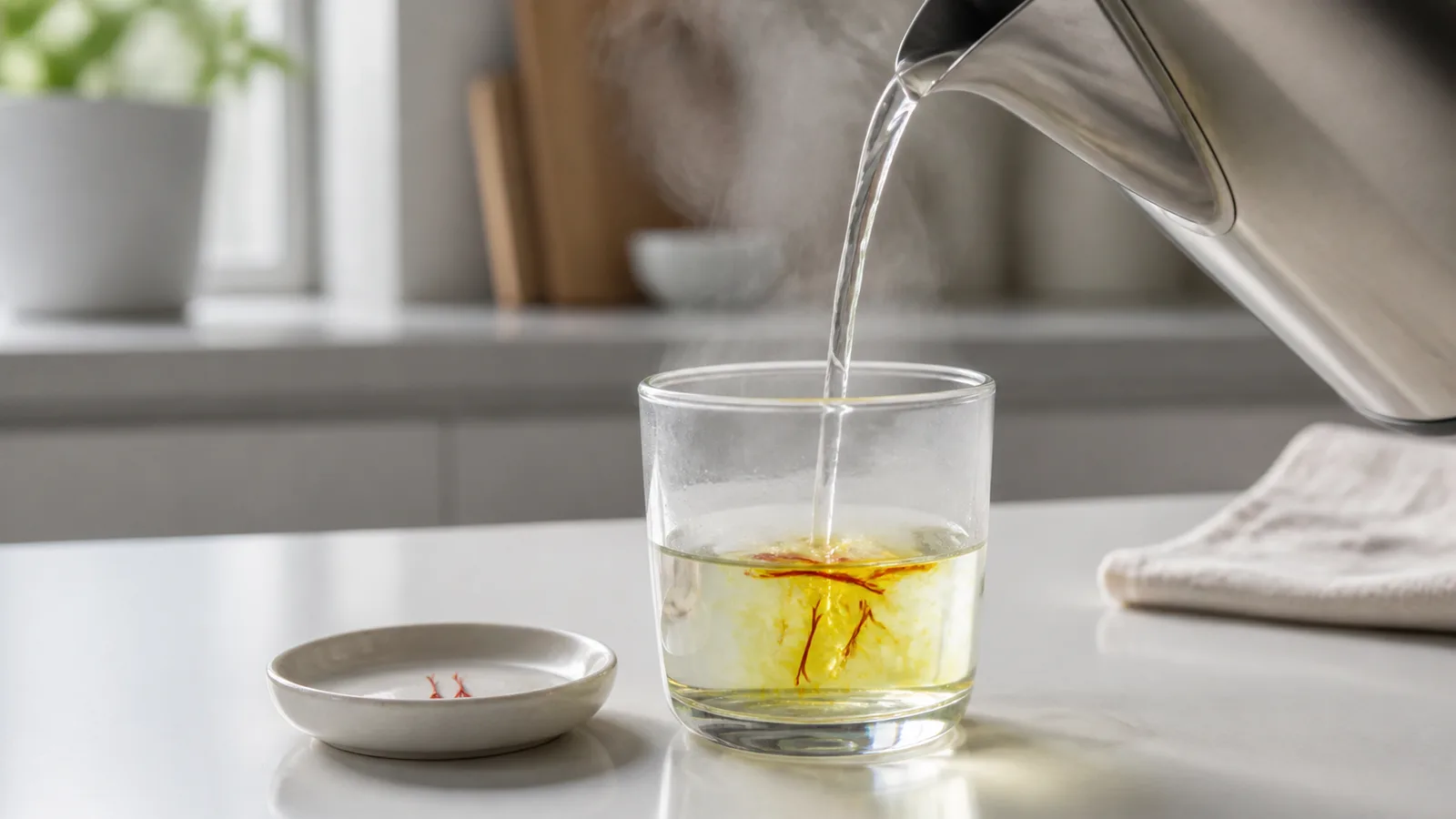
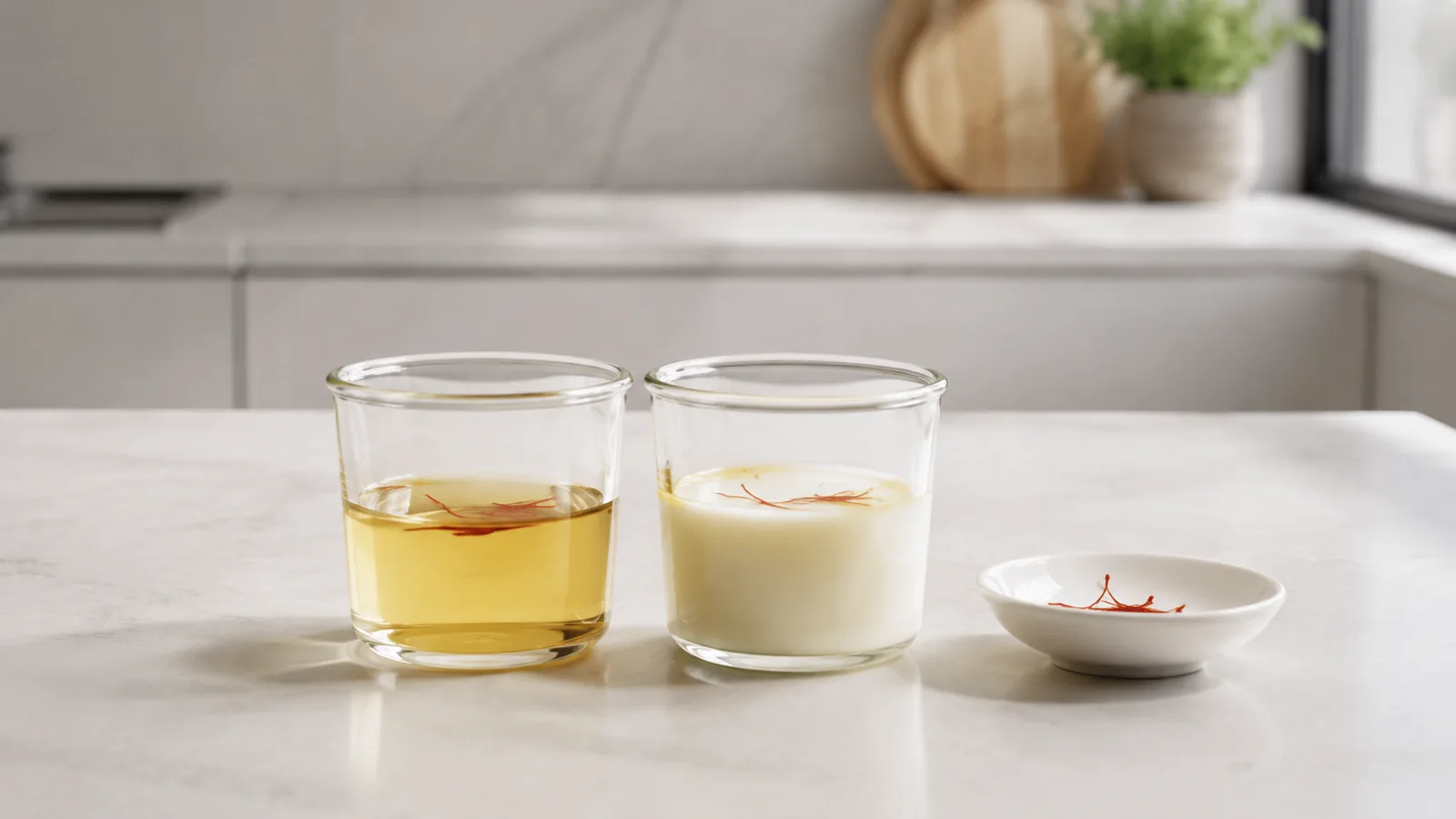
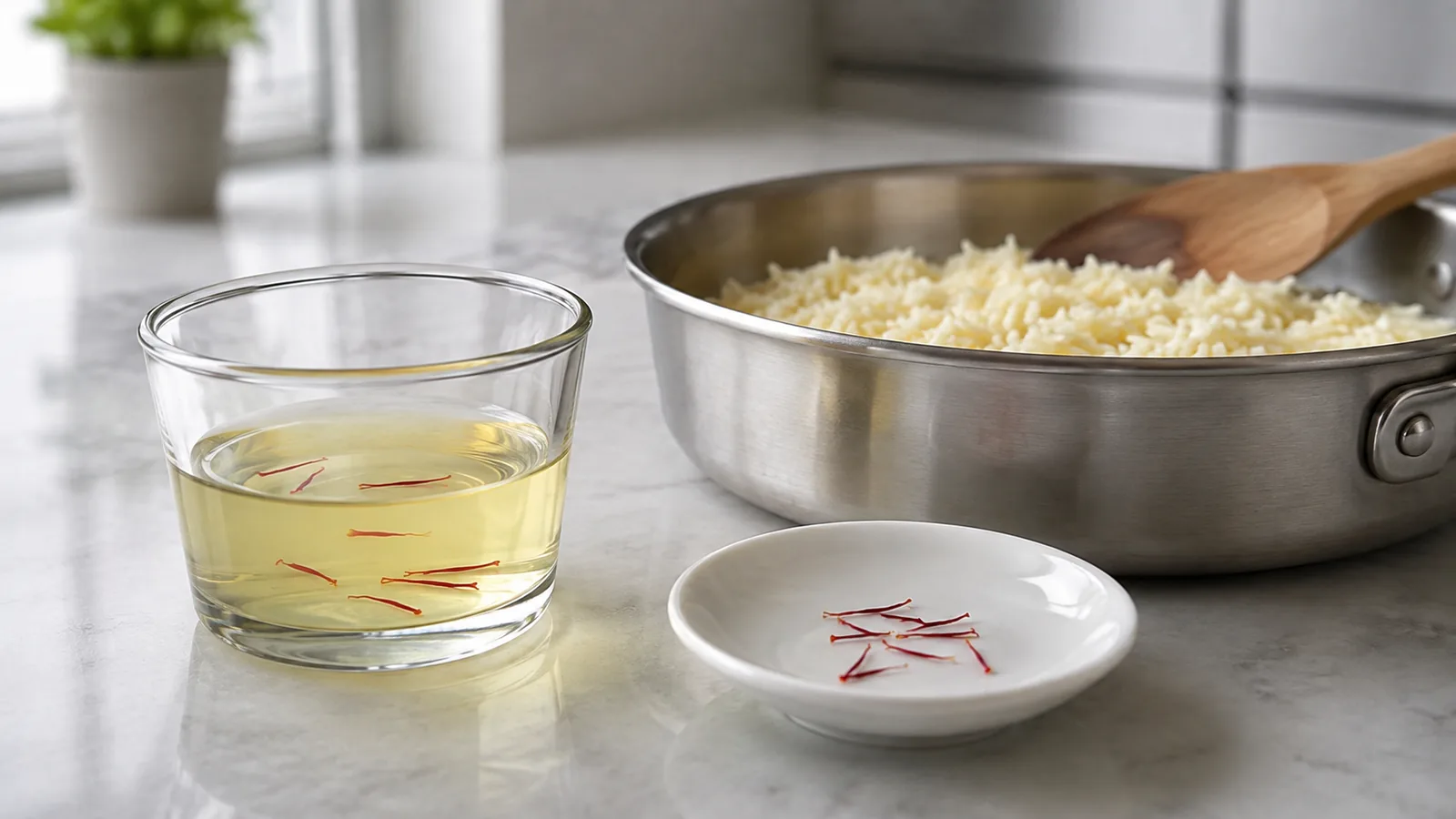
If you are working from saffron threads, prepare a concentrated infusion rather than adding a large volume of coloured water. Our guide to the best way to brew saffron explains the hot-water method.
Continue stirring until the halva is glossy, holds a furrow from the spatula for a moment and begins to release cleanly from the sides and base of the pan. It should be thick enough to mound softly, but not dry or rubbery.
Add nuts or reserve them for decoration
Fold some chopped almonds, pistachios and walnuts through the hot halva if you want texture throughout. Keep the pieces small so the soft dessert can still be spooned neatly.
You can also leave the base smooth and use all the nuts on top. This gives each person a clearer choice and keeps the saffron-coloured surface visible.
Pour, decorate and cool
Transfer the halva to the serving dish while it is still hot and spread it promptly; it becomes harder to shape as it cools. Smooth the surface with the back of a damp spoon or draw a simple pattern with a small spatula.
Decorate with the reserved chopped almonds, pistachios and walnuts. Let the dish cool until no longer steaming, then cover and refrigerate if you prefer a firmer set. Serve it soft with a spoon rather than expecting the crumbly texture of toasted-flour halva.
How to make this Iranian halva smoothly
- Use cold water to dissolve the cornstarch completely before the pan reaches the heat.
- Stir continuously and scrape the base, especially after the milk is added.
- Add saffron, rosewater and cardamom gradually because the old recipe gives them as “as needed.”
- If the mixture tightens too early, correct it with tablespoons of cold water rather than a large unmeasured pour.
- Stop when it is thick and glossy but still spreads; overcooking can leave starch halva rubbery.
This starch and milk halva keeps the earlier recipe’s defining balance: a milk-and-cornstarch base, Iranian saffron, rosewater, cardamom and a mixed-nut finish. The clarified water step makes that sequence usable without pretending the missing original quantity was known.