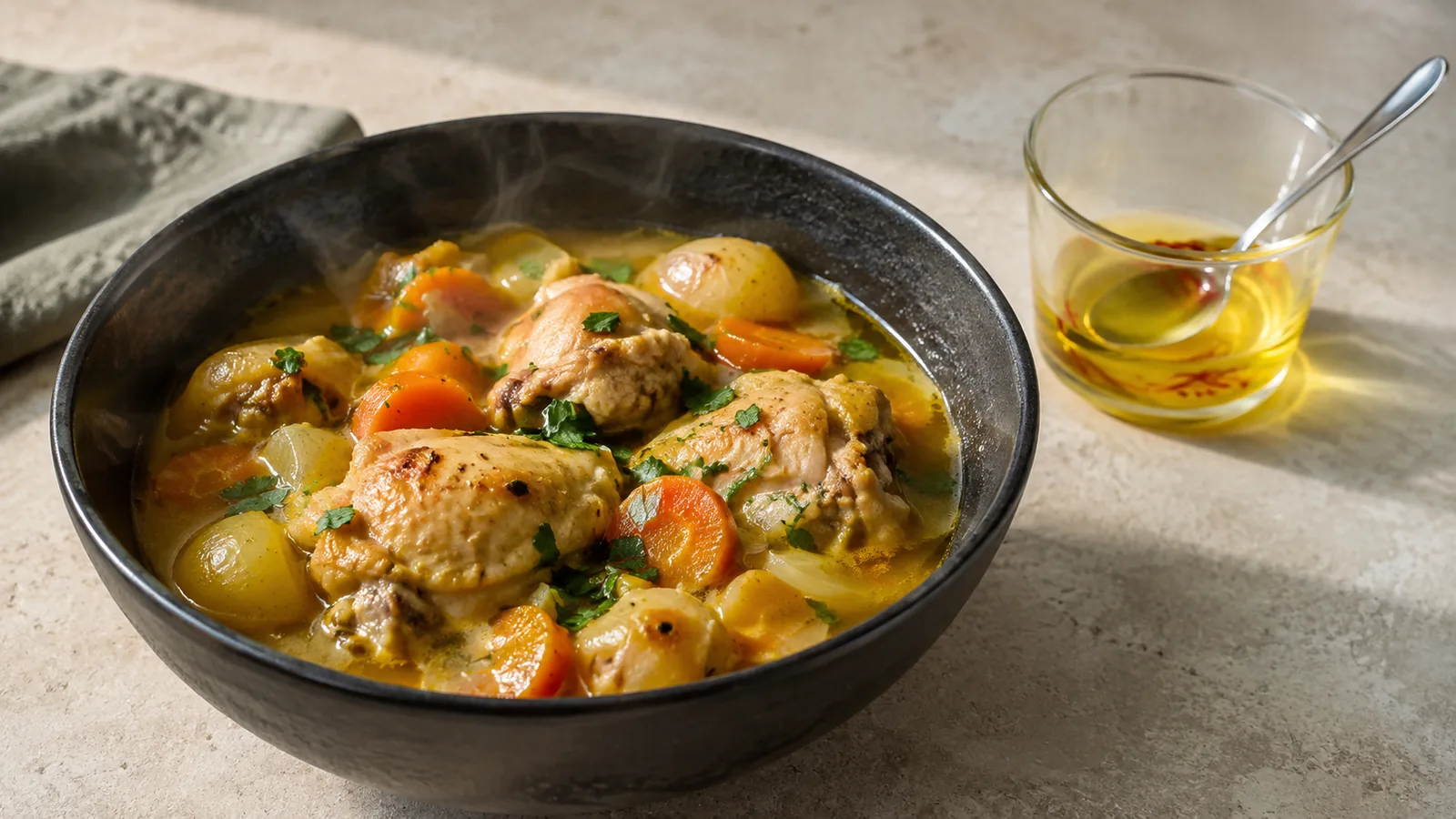
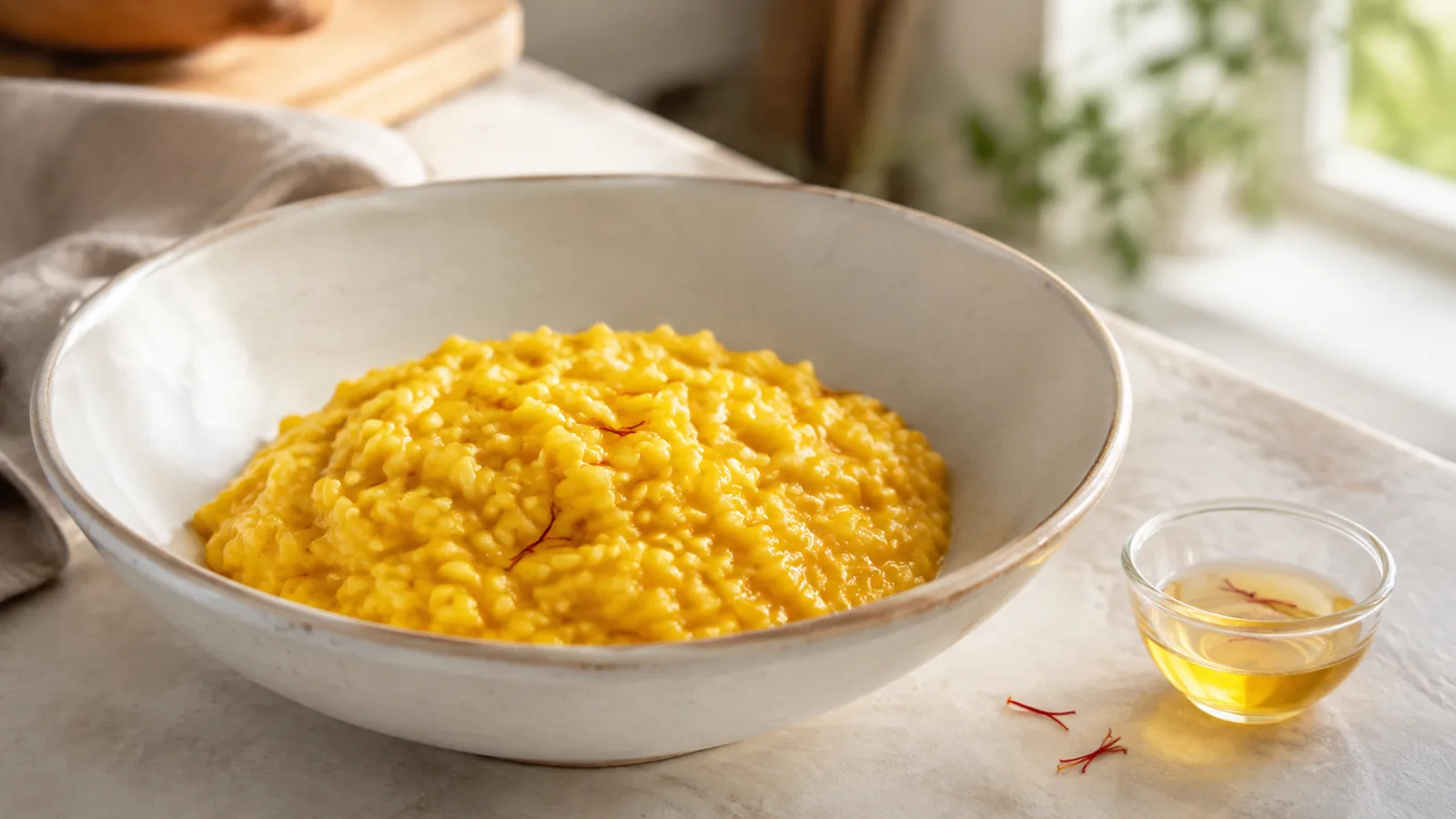
This recipe for cooking layered halva with Iranian saffron makes two contrasting flavors from one flour-halva base: fragrant golden saffron and rosewater halva layered with a coffee-colored portion.
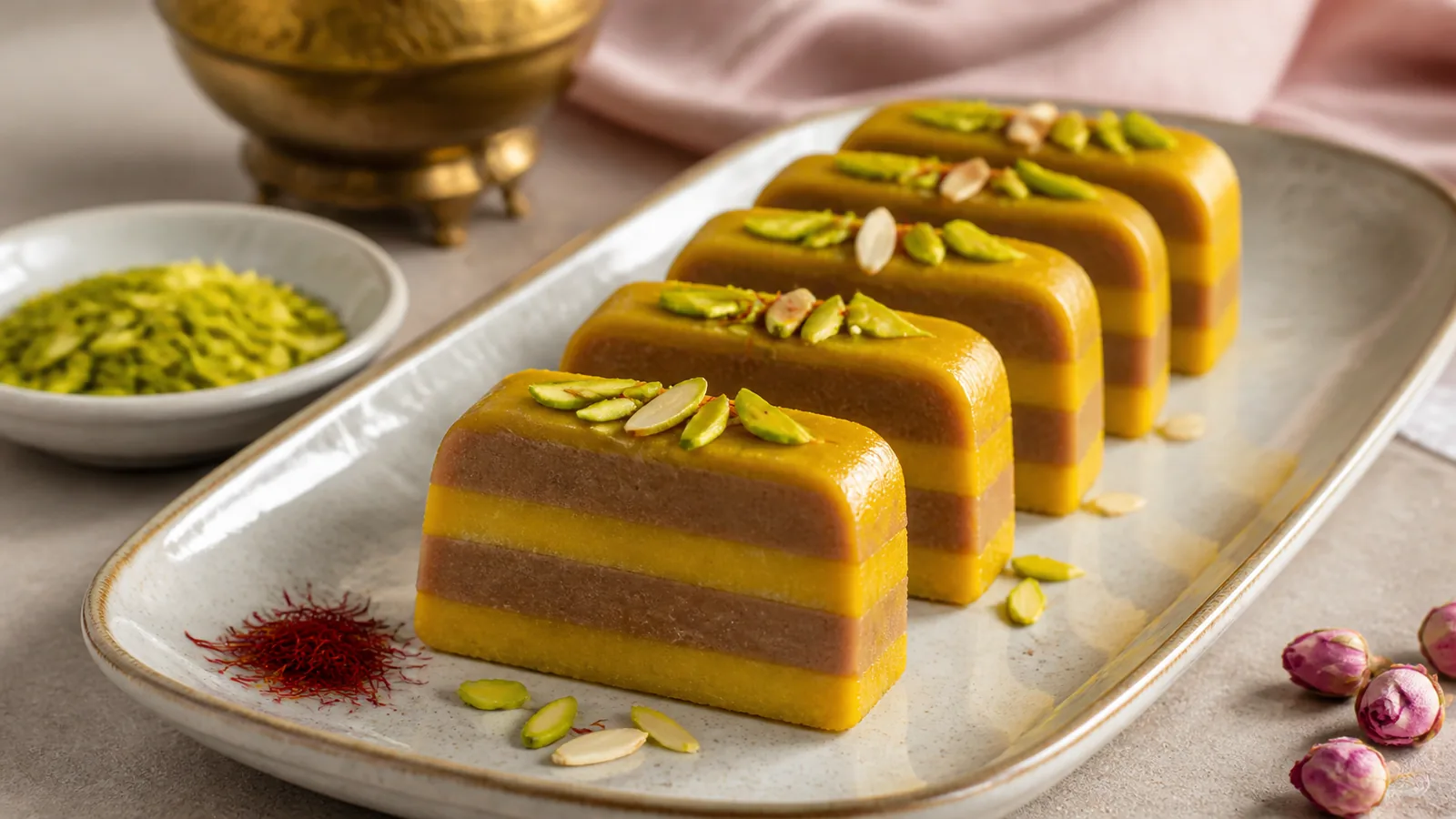
It is an Iranian halva recipe in the smooth, spoonable-to-moldable style, not sesame tahini halva. Searches for Persian halva, halva Irani and “how to make Iranian halva” often refer to this flour, sugar and oil method. The layered finish is the distinctive part of this version.
Ingredients for layered Iranian halva
- 500 g whole-wheat flour
- 400 g sugar
- 200 g neutral liquid oil
- 175 g solid cooking fat, ghee or clarified butter
- 1/2 cup concentrated bloomed Iranian saffron
- 2 cups water
- 1/4 cup rosewater
- 2 teaspoons instant coffee, such as Nescafé
- 1 tablespoon boiling water
Optional decoration
- Sliced pistachios
- Slivered or peeled almonds
- Desiccated coconut
- Grated chocolate
- Hulled sesame seeds
Measure everything before heating the flour. Once the syrup begins to go in, halva thickens quickly and needs steady stirring.
Make the sugar syrup in advance
Combine the sugar and two cups of water in a saucepan. Warm over medium heat, stirring just until the sugar dissolves. Bring it to a brief gentle boil, then lower the heat and simmer for a few minutes; the aim is a light syrup, not a thick candy syrup.
Remove the pan from the heat and let the syrup cool completely. The original recipe recommends making this nectar three or four hours before the halva, which is convenient and reduces the violent bubbling that can happen when very hot syrup meets hot fat.
Do not cook the syrup until it becomes stringy. An over-concentrated syrup can make Persian halva stiff, grainy or difficult to press into clean layers.
Prepare the saffron and coffee
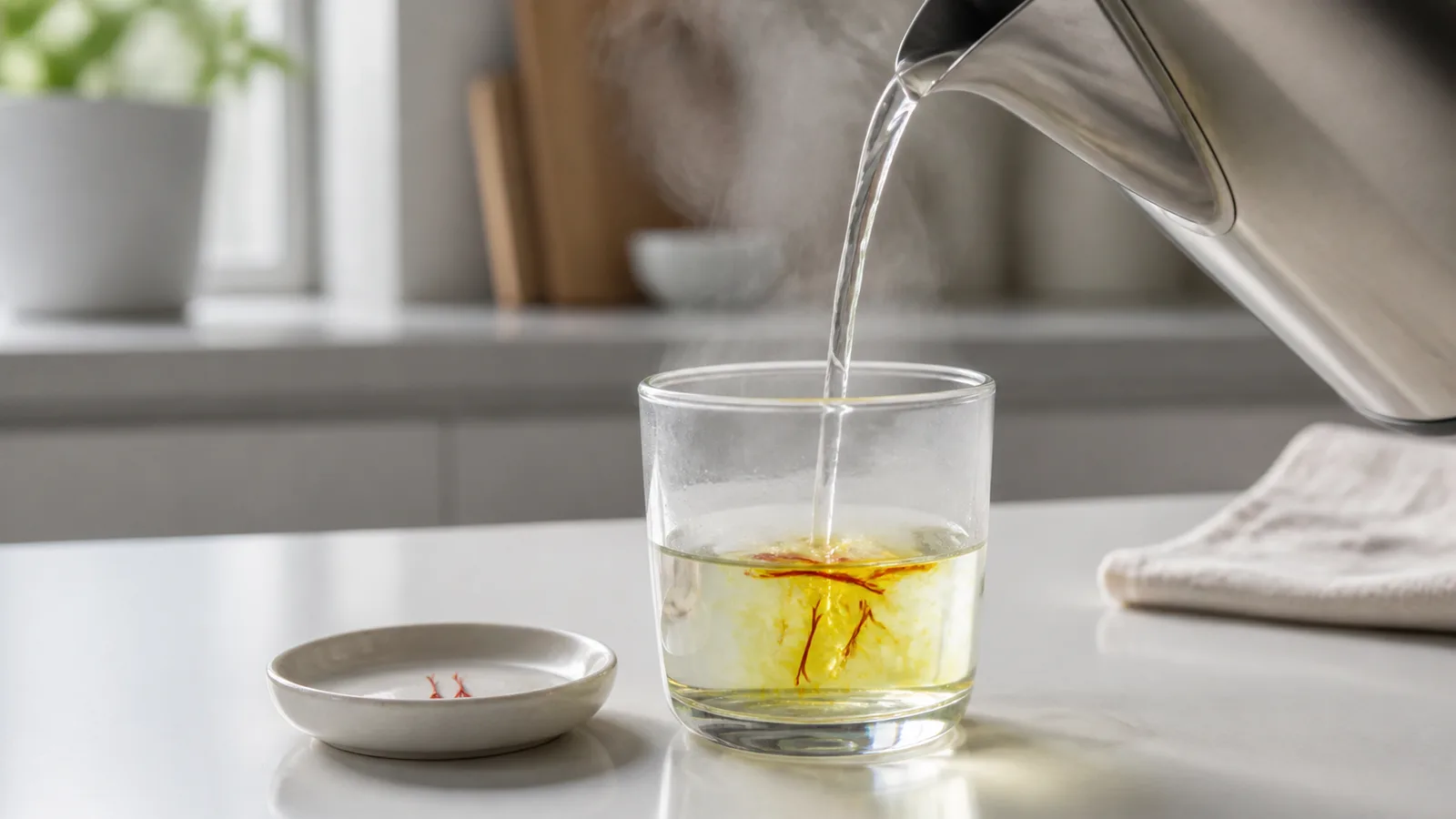
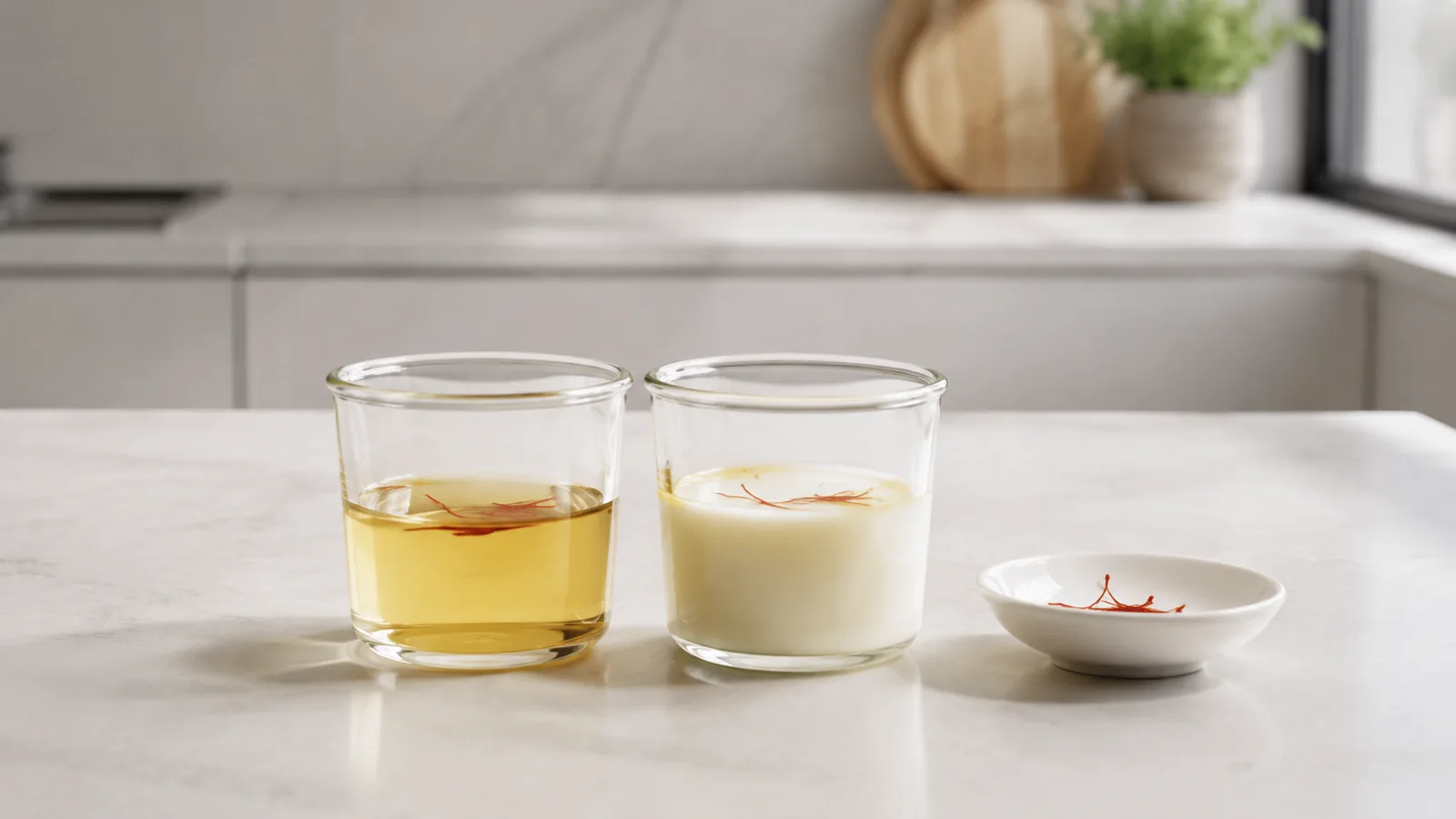
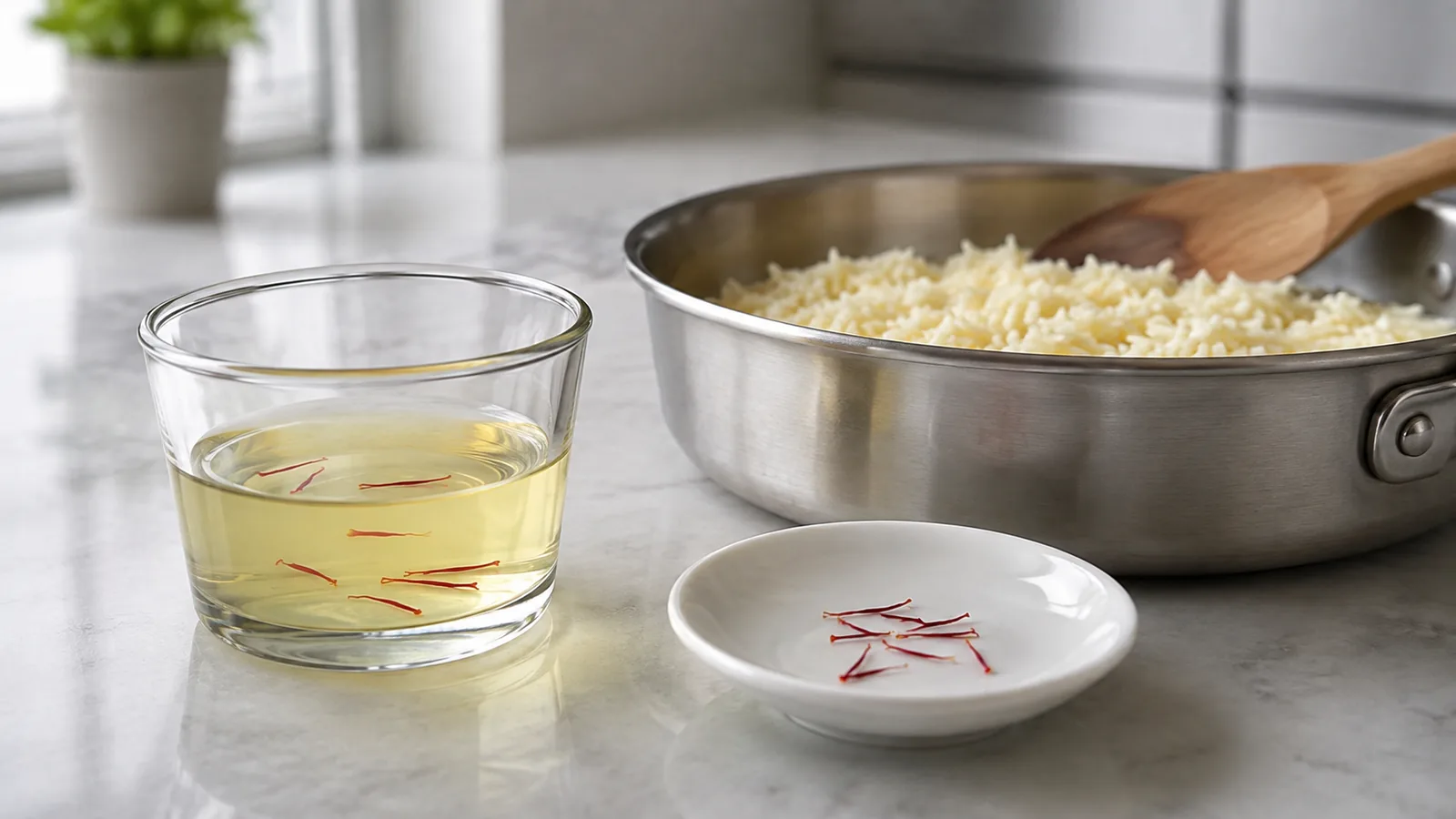
Bloom the ground saffron in hot water until you have 1/2 cup of concentrated liquid. It should be deeply colored and aromatic rather than watery. The checked guide to brewing Iranian saffron covers the method.
In a separate cup, dissolve two teaspoons of instant coffee in one tablespoon of boiling water. Stir until smooth and leave it within reach of the stove.
Rosewater is added later, after the cooked flour comes off the heat. Keeping these flavorings out of the long flour-roasting stage protects their aroma.
Toast the whole-wheat flour
Sift the 500 g of flour into a bowl. Sifting breaks up compacted lumps, which are much harder to remove after oil is added.
Put a wide, heavy pan over medium-low heat. Add the flour and toast it dry for 15–25 minutes, stirring and turning it continuously with a wooden spoon or heat-safe spatula. The flour should lose its raw smell and develop a warm, nutty aroma.
Whole-wheat flour darkens unevenly if the heat is too high. Scrape the corners of the pan and lift flour from the bottom with every pass. Stop at a light brown color; the coffee layer will become darker later, so there is no need to roast the entire base deeply.
For a general comparison with the classic method, see the guide to authentic Iranian saffron halva. This page keeps the original whole-wheat, two-flavor layered formula.
Add the liquid and solid oils
Lower the heat. Add the 200 g liquid oil and 175 g solid fat or ghee to the toasted flour. Stir carefully until the fat melts and every patch of flour is moistened.
Continue cooking over medium-low heat until the mixture is smooth, fragrant and light brown. A raw flour taste means it needs longer; a smoky smell or very dark flecks mean the pan is too hot.
The quantity of fat is generous because the halva must remain flexible enough to press into a mold. If a small pool appears at first, keep stirring before changing the formula. The flour absorbs more as it cooks.
Turn the roasted flour into saffron halva
Remove the pan from the heat. Continue stirring for one or two minutes, exactly as the original method directs. Place the pan on a stable heatproof surface and keep your face and hands away from the rim.
Add the cooled syrup gradually, one ladle at a time, stirring quickly with a long-handled spoon. The mixture may hiss and steam. Wait until each addition is absorbed before adding the next.
Reserve several tablespoons of syrup for the final consistency adjustment. Stir in the bloomed saffron and 1/4 cup rosewater. The halva should become glossy and begin gathering into one mass.
Divide the halva into two flavors
Divide the warm saffron halva into two equal portions. Keep one portion golden. Stir the dissolved coffee into the other until the color and flavor are even.
Return each portion to gentle heat separately for a short time, stirring until it pulls cleanly from the sides and bottom of its pan. If either portion is dry or crumbly, work in a spoonful of the reserved syrup. If it is too loose to hold a shape, cook it for another minute.
The coffee portion may need slightly less extra syrup because the coffee solution adds moisture. Judge the two portions by texture rather than forcing them to take the same quantity.
How to form clean halva layers
Use a flexible silicone loaf mold, individual silicone molds or a shallow lined tray. Lightly grease rigid tools, but silicone usually needs no additional oil.
While the halva is still hot and pliable, press a saffron layer into the mold with the back of a lightly oiled spoon. Compact it enough to remove gaps and level the surface. Add a coffee layer and press again. Continue alternating in the order and thickness you prefer.
Work promptly, because cooled halva can crack instead of bonding to the layer beneath it. It should be hot enough to shape but not so hot that it burns your hands; use a spoon or spatula rather than pressing directly with bare fingers.
Leave the filled mold at room temperature until fully cool. Unmold onto a serving plate. For a tray, score diamonds or squares while the halva is still slightly warm, then let it set before lifting the pieces.
Decorating layered Persian halva
Use sliced pistachios, almonds, coconut, grated chocolate or hulled sesame sparingly so the two colors remain visible. Press the garnish onto the top before the surface cools completely.
Pistachio and almond suit both saffron and coffee. Coconut makes the contrast brighter, while chocolate strengthens the coffee side. A mixed border is often cleaner than covering the entire patterned top.
Troubleshooting texture
- Lumpy halva: sift the flour and add syrup in small amounts while stirring briskly.
- Raw flour flavor: toast longer at medium-low heat before adding the fats.
- Greasy surface: keep stirring over low heat so the flour can absorb the fat.
- Crumbly layers: work in a spoonful of reserved syrup and mold while warm.
- Halva too soft to unmold: return it to low heat briefly and stir until it leaves the pan cleanly.
- Saffron aroma is faint: use a concentrated bloom and add it after the flour is roasted.
The finished layered halva should hold a neat slice without becoming dry. Its golden layer carries saffron and rosewater; the brown layer adds a gentle coffee bitterness. Together they give this Iranian halva its clean visual contrast and balanced flavor.