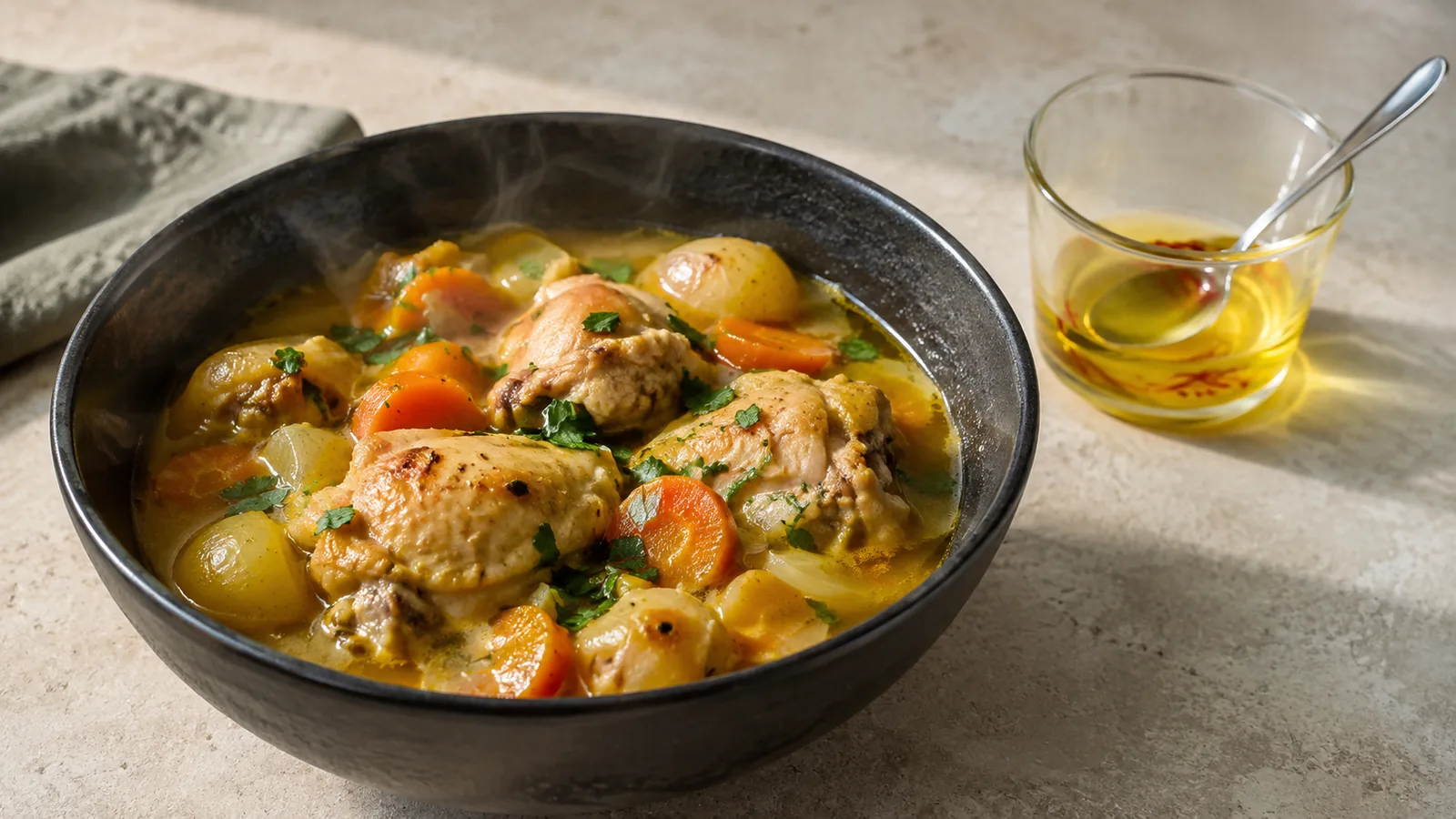
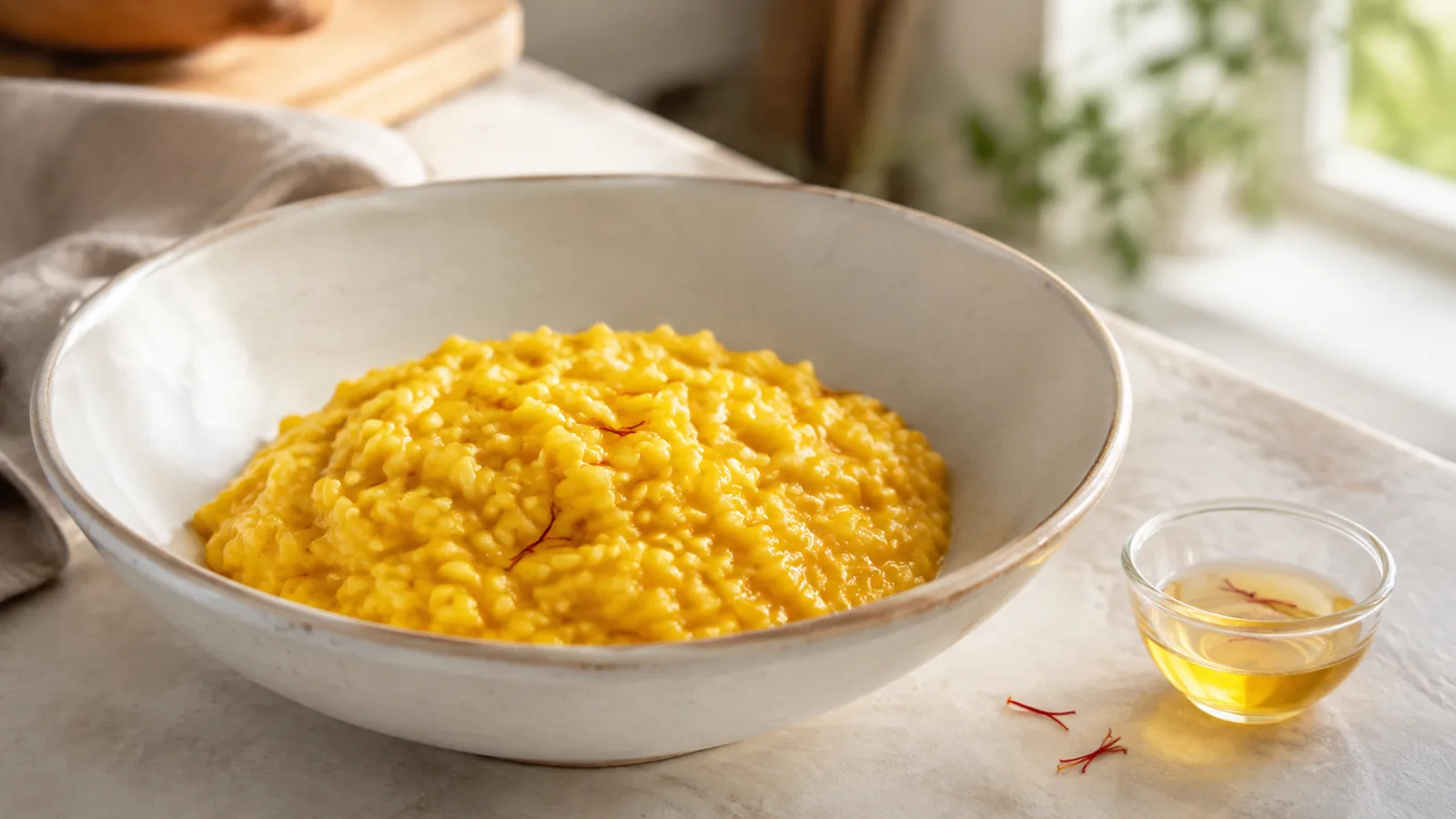
This recipe for cooking mushroom stuffing with Iranian saffron is a meatless Persian-style stew of mushrooms, yellow split peas, dried lime and tomato, finished with crisp fried potatoes.
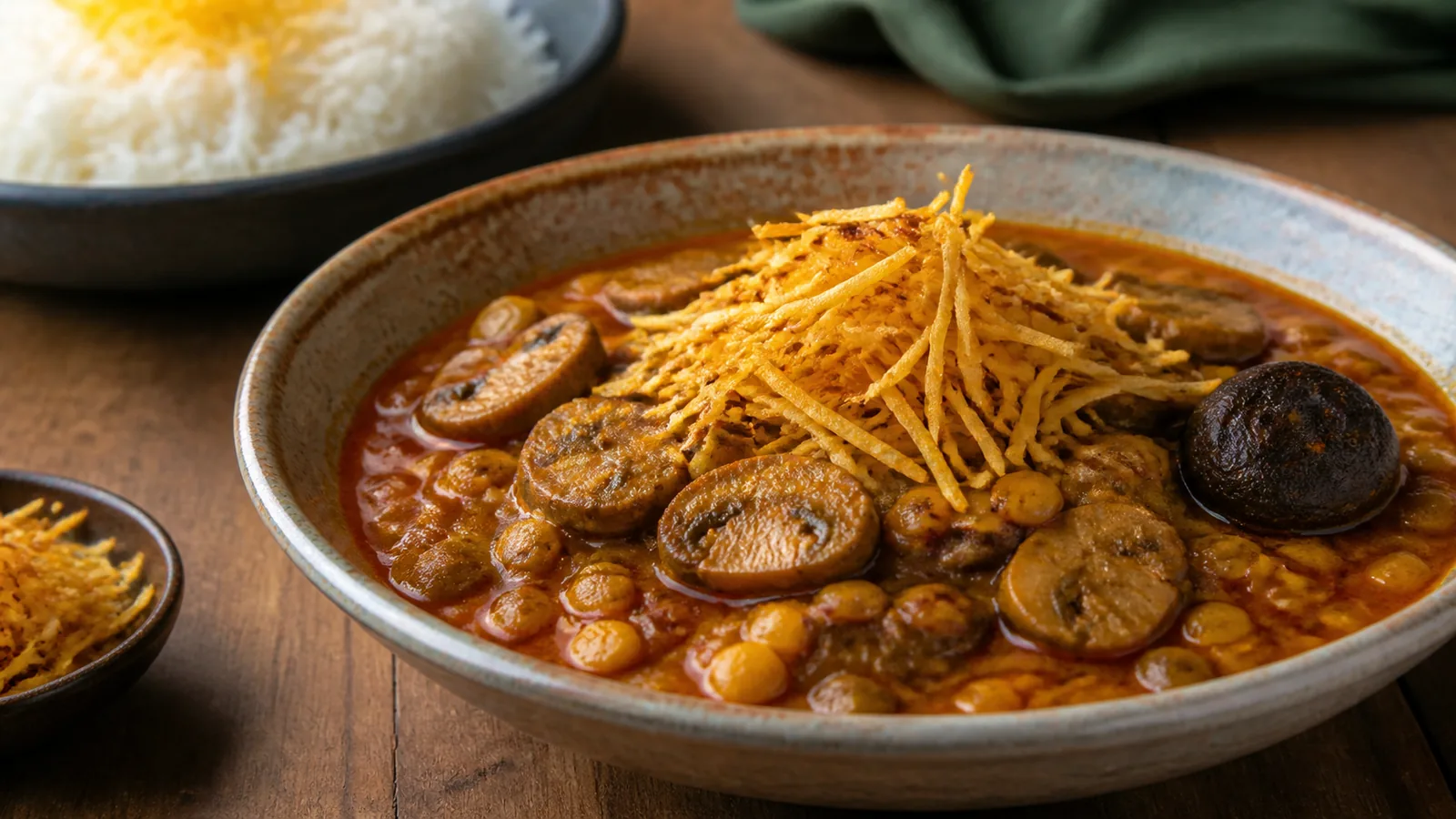
The old translation calls it “mushroom stuffing,” but nothing is filled or stuffed. It is closer to a Persian mushroom stew, and that distinction makes the method much easier to follow while preserving the dish people are looking for.
Ingredients for Persian mushroom stew
- 1 1/2 cups yellow split peas
- 1 kg mushrooms
- 1 medium onion
- 3 tablespoons tomato paste
- 3 dried Persian limes, also called limoo amani or Omani limes
- 4 medium potatoes
- 1/2 tablespoon bloomed Iranian saffron
- Salt and black pepper, as needed
- Neutral cooking oil, as needed
- Boiling water, as needed
This amount serves four. Allow about 15 minutes for basic preparation and roughly 1 hour 30 minutes for cooking and resting, not including an optional soak for the split peas.
Before you start
Rinse the split peas until the water runs mostly clear. If time allows, soak them for one or two hours, then drain. Soaking is not essential, but it helps the peas cook more evenly and can shorten their time in the pot.
Rinse the dried limes, pierce each one two or three times with a fork or skewer and soak them in warm water for 20 minutes. This lets the stew reach their aromatic interior while reducing harsh bitterness.
Brush or wipe the mushrooms clean and trim their dry stem ends. Cut large mushrooms into quarters and small ones in half. Keeping the pieces substantial prevents them from disappearing into the stew.
Bloom the Iranian saffron
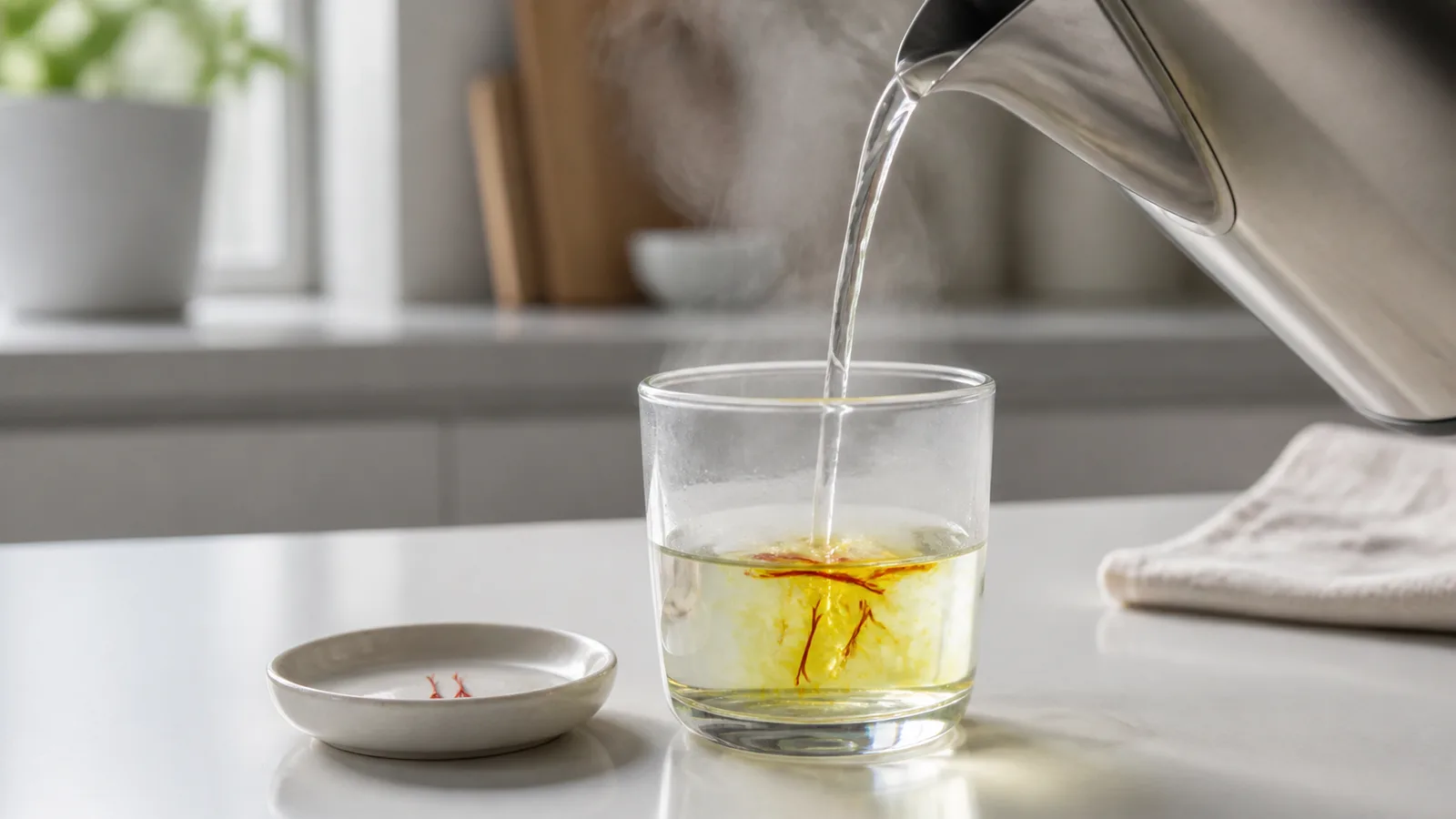
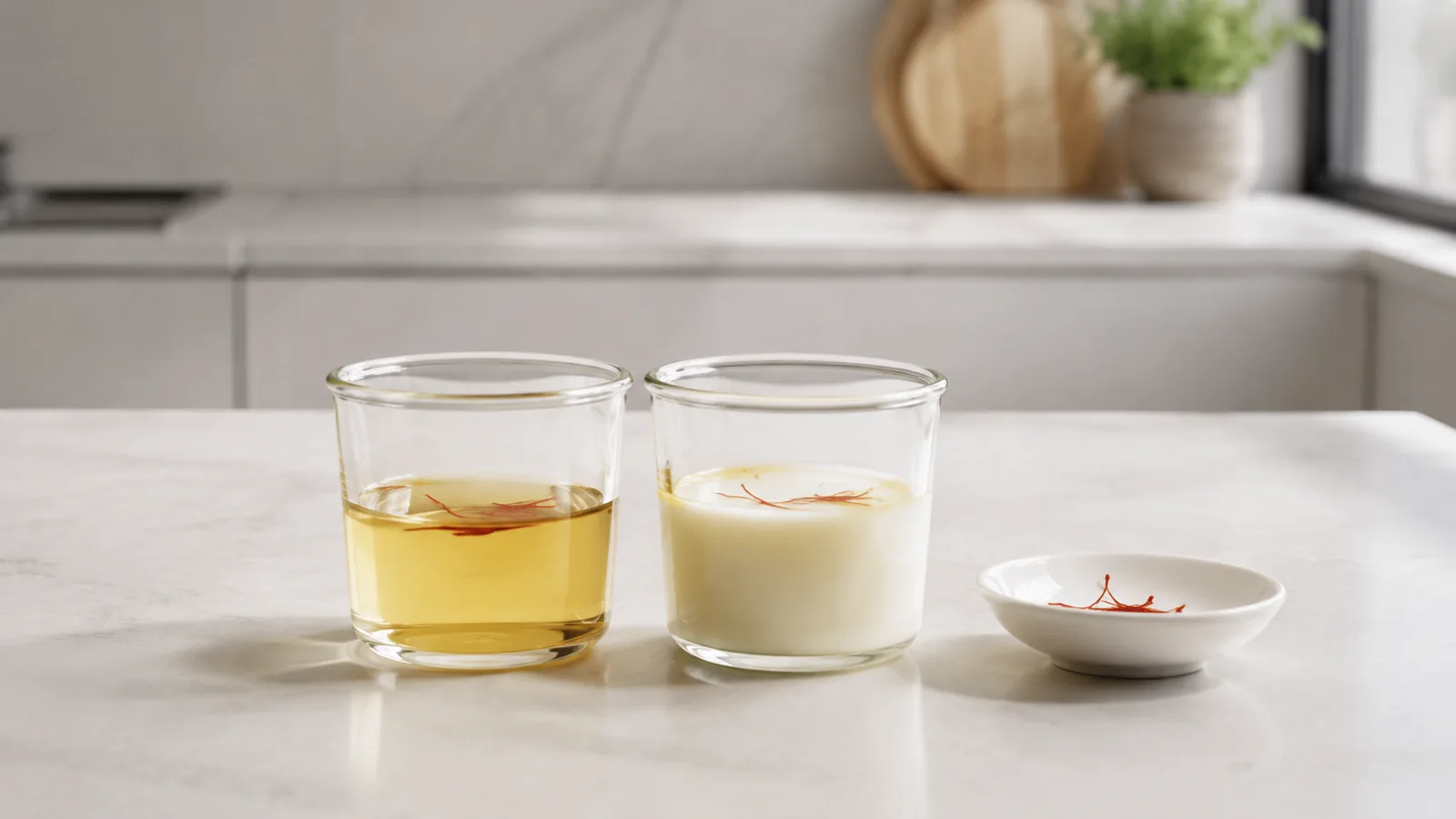
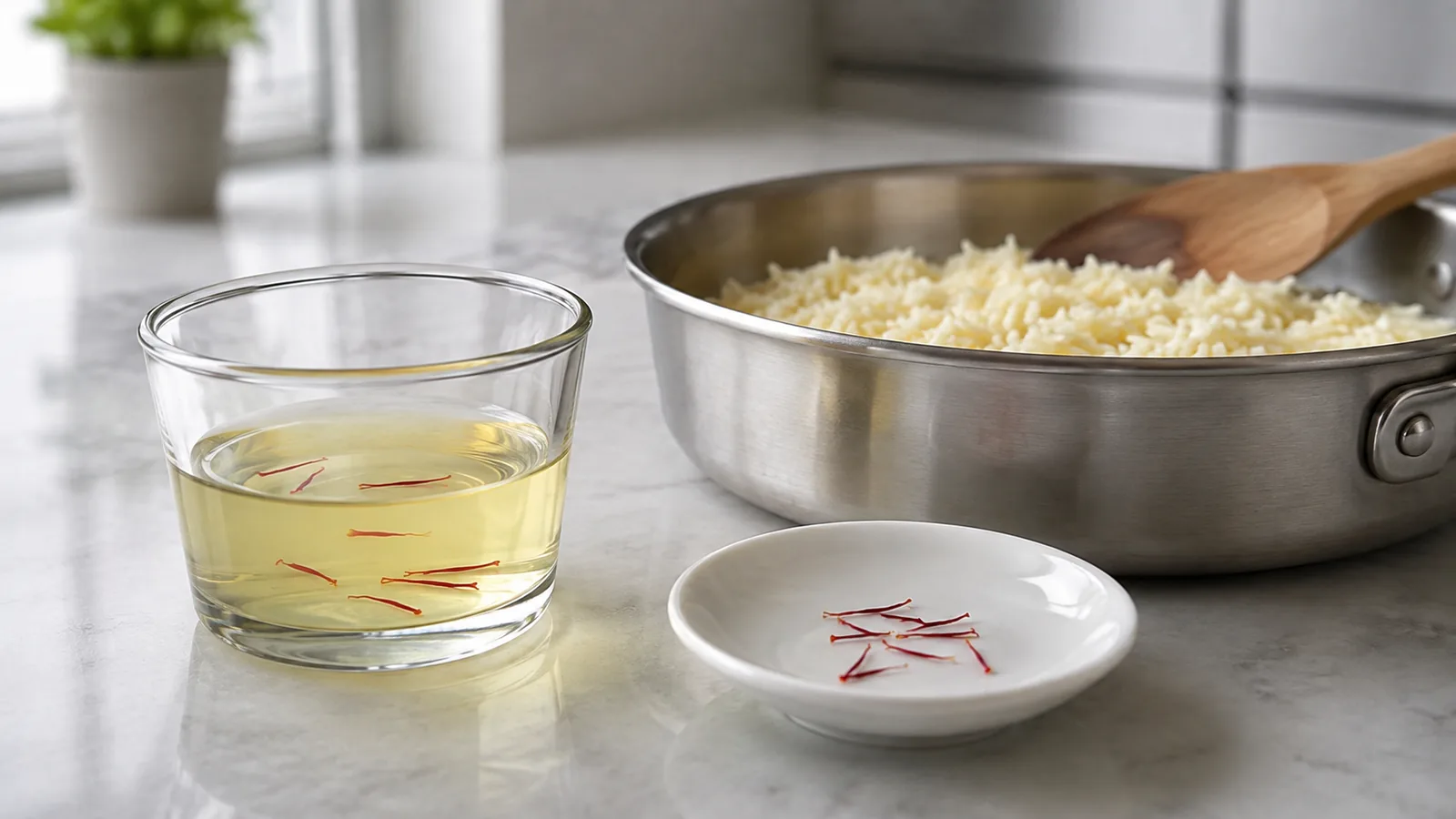
Grind a small pinch of saffron and bloom it with a little hot water for 10–15 minutes. Measure 1/2 tablespoon of the concentrated liquid for the stew. The checked guide to brewing Iranian saffron explains how to draw out the color and aroma without flooding the dish.
Build the onion and split-pea base
Finely chop the onion. Heat two tablespoons of oil in a heavy pot over medium heat and cook the onion until soft and golden, stirring so the edges do not burn.
Add the drained split peas and fry them with the onion for two or three minutes. This brief step coats the peas in the flavored oil and helps them hold their shape during the long simmer.
Stir in the tomato paste and cook for another minute or two, until its raw smell fades and the color becomes deeper. Add black pepper, but wait to add most of the salt until the peas have begun to soften.
Simmer the stew with dried lime and saffron
Add the soaked dried limes and enough boiling water to cover the split peas by about 3 cm. Stir in the bloomed saffron, bring the pot to a gentle boil and then reduce the heat.
Cover with the lid slightly ajar and simmer until the split peas are tender but still intact. Depending on their age and whether they were soaked, this usually takes 45–70 minutes. Check the water from time to time and add more boiling water only when needed.
Do not crush the dried limes against the pot. Their peel and seeds can make the sauce aggressively bitter. If one splits on its own, lift it out once the stew has the tartness you want.
Cook the mushrooms separately
Mushrooms release a surprising amount of liquid. Adding all 1 kg raw to the split peas can dilute the saffron-tomato sauce and make the final texture watery.
Heat a wide frying pan over medium-high heat with a tablespoon of oil. Add the mushrooms in two or three batches so they sear rather than steam. Cook each batch until the surfaces are lightly browned and the released moisture has mostly evaporated.
Add the browned mushrooms to the pot during the final 15–20 minutes of cooking. This preserves the original instruction to add them near the end while giving them better flavor and a firmer texture.
Let the mushroom stuffing settle
Once the peas and mushrooms are tender, season with salt and pepper. Simmer uncovered until the sauce is thick enough to coat a spoon, then turn off the heat and leave the stew covered for 10 minutes.
This resting period is what the old instruction means by letting the stew “settle.” The split peas absorb a little more liquid, and the saffron, dried lime and tomato become less separate on the palate.
If using fresh lemon juice instead of dried lime, do not add it at the beginning. Stir it in gradually near the end, tasting after each addition. Lemon juice is brighter and less earthy than limoo amani, so the result will be different even when the acidity feels similar.
Make the fried potato topping
Peel the four potatoes and cut them into thin matchsticks or small batons. Rinse them in cold water to remove surface starch, then dry them very thoroughly with a clean towel.
Heat a shallow layer of oil in a wide pan. Fry the potatoes in batches until golden and crisp, turning them carefully. Transfer to a rack or paper towel and salt while hot.
The original line about peeling and grating “a squash” refers to these potatoes. Grating works if you prefer a fine crisp garnish, but matchsticks stay crunchy for longer after they meet the stew.
How to serve mushroom stuffing with saffron
Spoon the stew into a warm serving dish and add the fried potatoes at the last moment. Leaving some potatoes on the side lets each person add more without the whole topping softening.
Serve with steamed basmati rice, flatbread or a simple herb salad. The stew works for lunch or dinner and can also be part of an iftar meal during Ramadan. The old wording “in the morning during Ramadan” is better understood as a reference to the meal that breaks the fast, not a required serving time.
Getting the texture right
- Soak older split peas and simmer gently so they become tender without turning to puree.
- Pierce, rather than crush, dried limes and remove them if the sauce becomes bitter.
- Brown mushrooms in batches before adding them near the end.
- Keep the saffron liquid concentrated so it adds aroma without thinning the stew.
- Reduce the sauce before resting, then add crisp potatoes only when serving.
The finished mushroom stuffing should be thick but spoonable, with whole split peas and generous mushroom pieces. Dried lime supplies the deep sour note, saffron softens its edges, and the potato garnish adds the crisp contrast that completes this Persian mushroom dish.