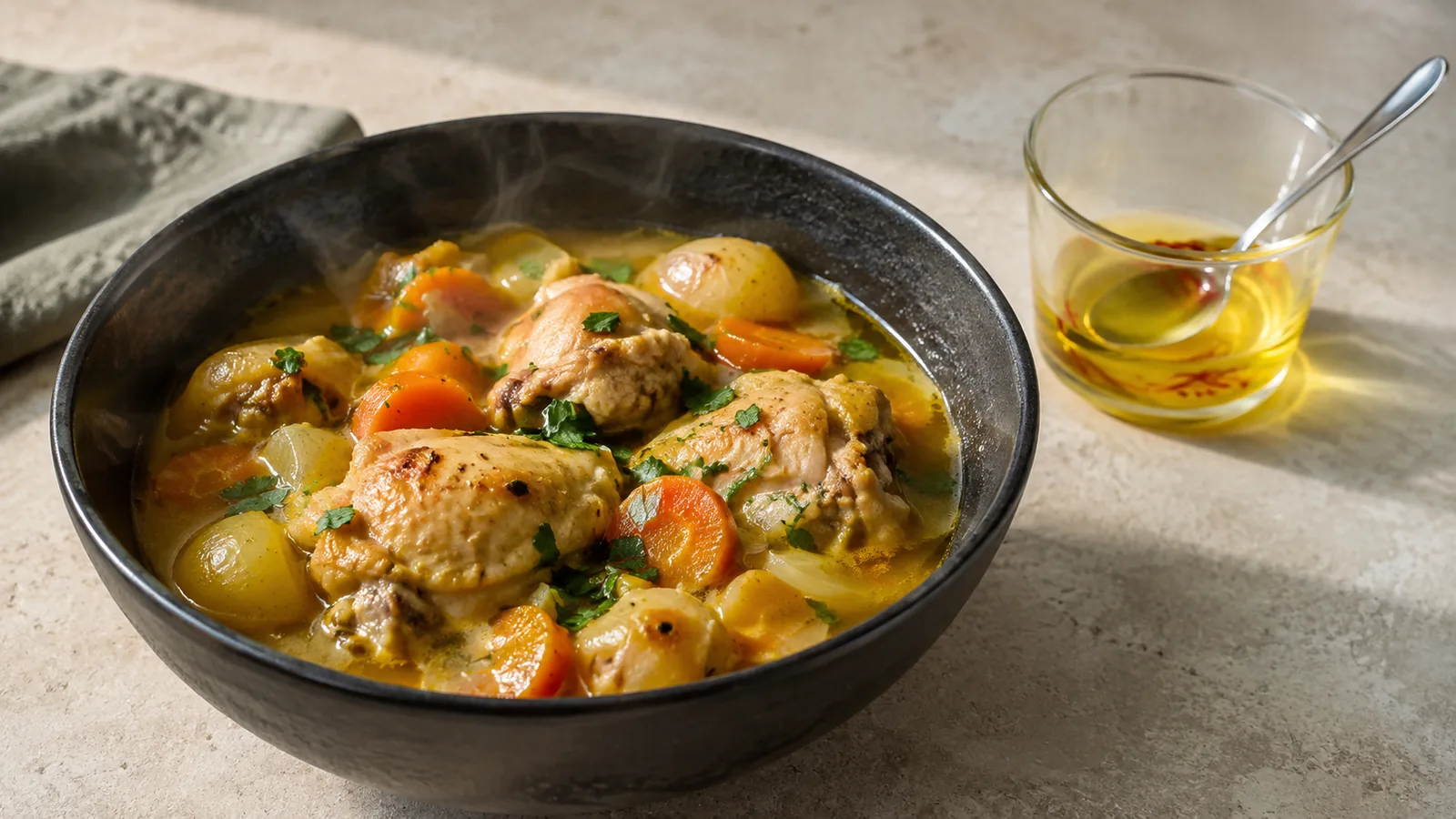
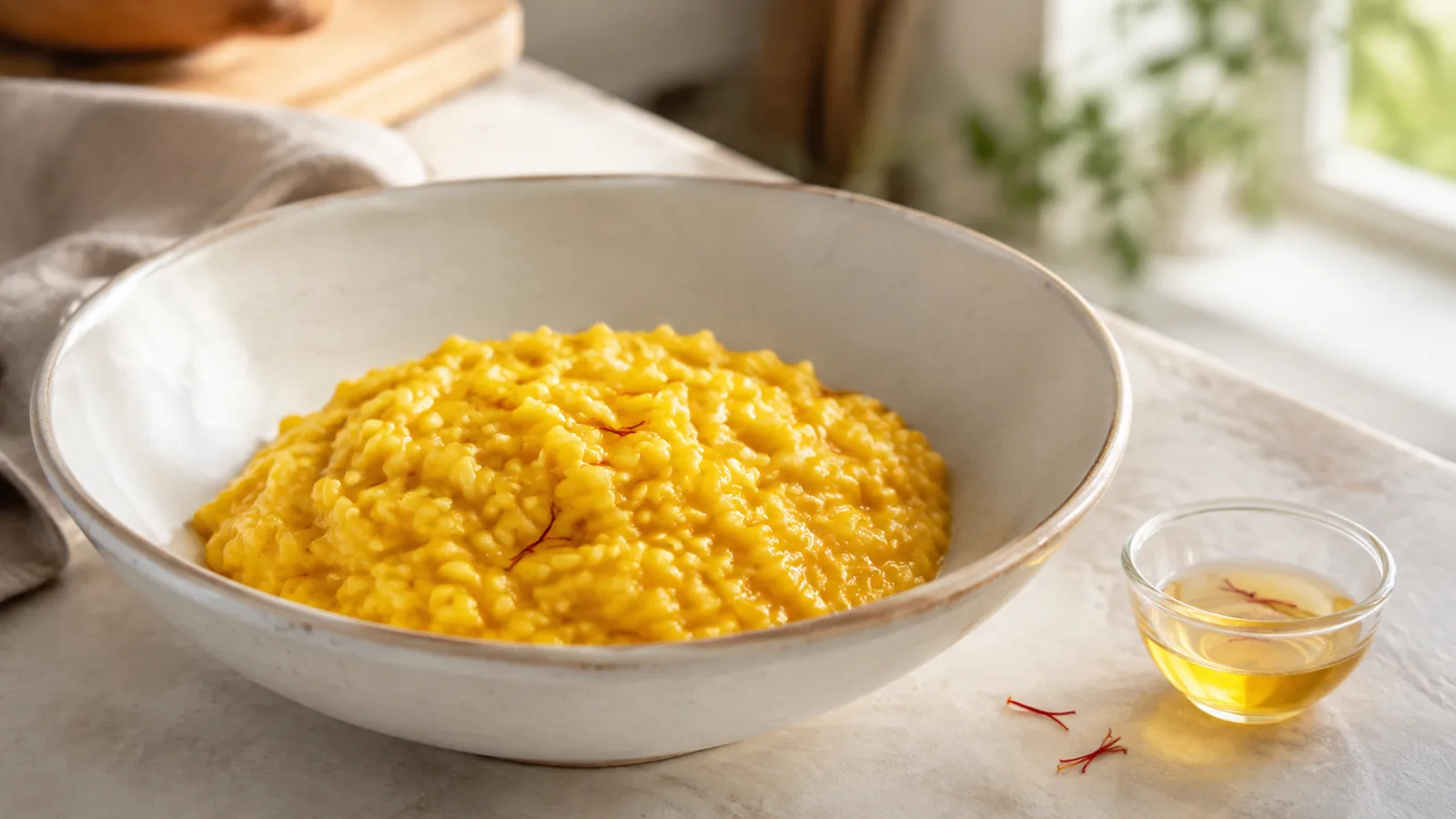
This recipe for cooking kuku percussion with Iranian saffron makes a thick, tender chicken kuku finished with a saffron, tomato and lemon broth so the center stays moist.
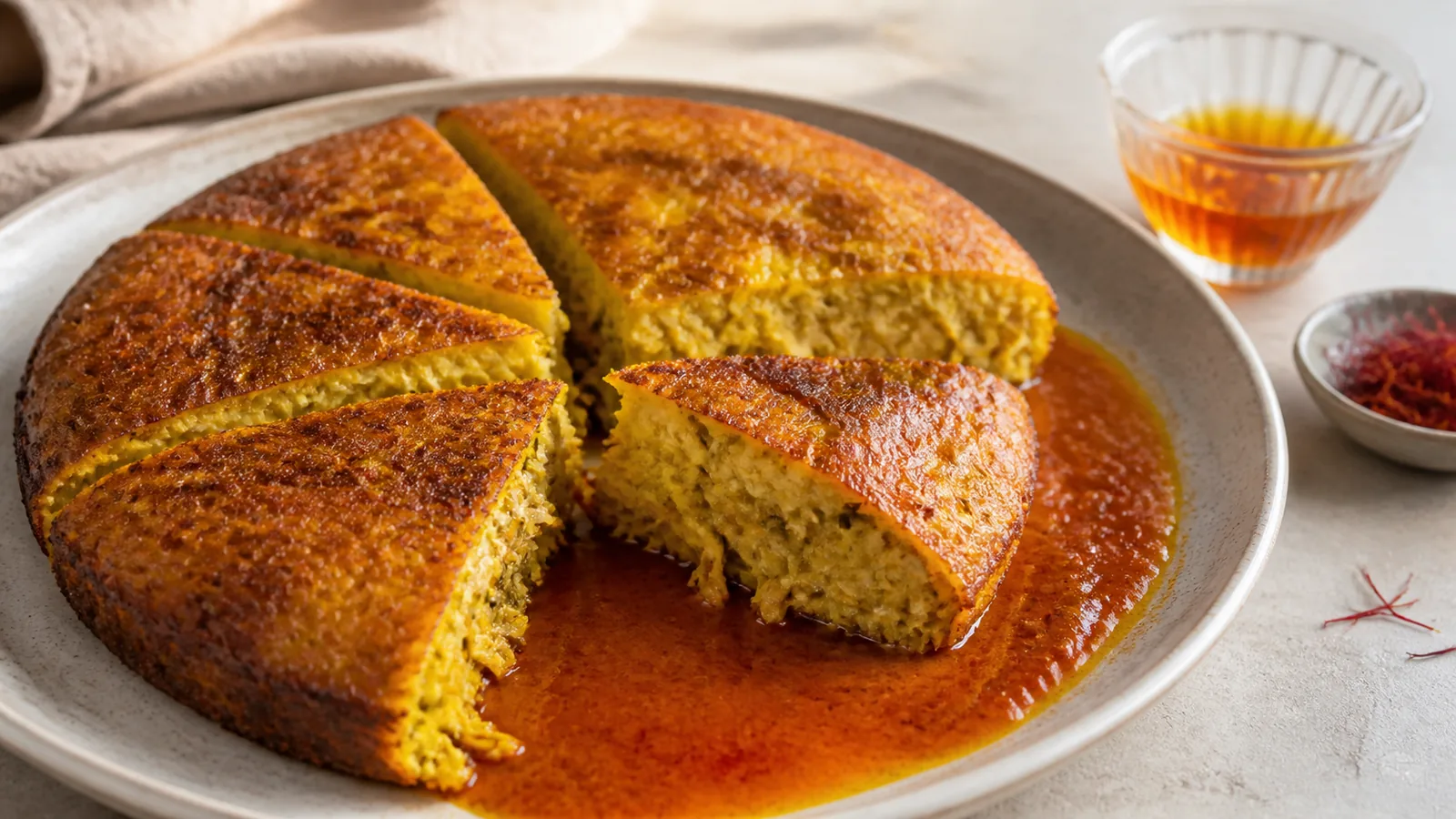
“Kuku percussion” is the legacy English name attached to this recipe. The cooking method is easier to understand as chicken kuku: cooked shredded chicken is bound with eggs, onion, garlic and spices, browned slowly in a deep pan, then given a small amount of seasoned broth before the second side is cooked.
Ingredients for kuku percussion
- 1 whole chicken, about 1.5 kg
- 10 eggs
- 1 medium onion
- 1 garlic clove
- 1 level dessertspoon baking soda, about 2 teaspoons
- 1/2 teaspoon concentrated bloomed saffron
- Turmeric, salt, black pepper and cinnamon, as needed
- 1 to 2 tablespoons lemon juice
- 2 tablespoons tomato paste
- 1 cup reserved chicken broth
- 2 tablespoons neutral cooking oil
- 1 tablespoon cold water
The quantities make a generous kuku. A small-diameter pan with high sides is important: it keeps the mixture thick enough to stay tender instead of spreading into a thin, dry omelet.
Cook and shred the chicken
Place the whole chicken in a pot and add enough water to cook it, along with a little salt and turmeric. Bring it to a gentle simmer and cook until the meat is tender and the thickest parts reach 165°F (74°C).
Lift the chicken from the pot and reserve at least one cup of its broth. When the meat is cool enough to handle, remove the skin and bones and shred it finely. Check carefully for small bones before the chicken goes into the egg mixture.
If the broth tastes strongly salted, dilute it with a little water. It will reduce later, so its seasoning should be light at this stage.
Mix the chicken kuku batter
Grate the onion on the coarse side of a box grater. Squeeze out the excess liquid so it does not loosen the kuku. Grate or crush the garlic clove.
Crack the 10 eggs into a large bowl, add one tablespoon of cold water, and beat until the yolks and whites are evenly blended. Add the shredded chicken, onion and garlic.
Season with black pepper, cinnamon and a small amount of salt. Add the baking soda and mix thoroughly so no concentrated pockets remain. Remember that the chicken was already cooked with salt and that the reserved broth will season the kuku again.
The mixture should be thick with chicken but still held together by the eggs. Let it stand for two or three minutes while the pan heats.
Start the kuku in a small deep pan
Choose a nonstick or well-seasoned pan that is smaller in diameter and has reasonably high sides. Add two tablespoons of oil and heat it over medium heat.
Pour in the chicken-and-egg mixture. Gently shake the pan once so it settles into an even layer, then cover it. Raise the heat only briefly to encourage the kuku to puff; as soon as the edges begin to set, lower the flame.
Cook slowly until the underside is golden and the top is mostly set rather than liquid. A thick kuku needs gentle heat. If the base browns too quickly, move the pan to the smallest burner and reduce the heat further.
Make the saffron tomato broth
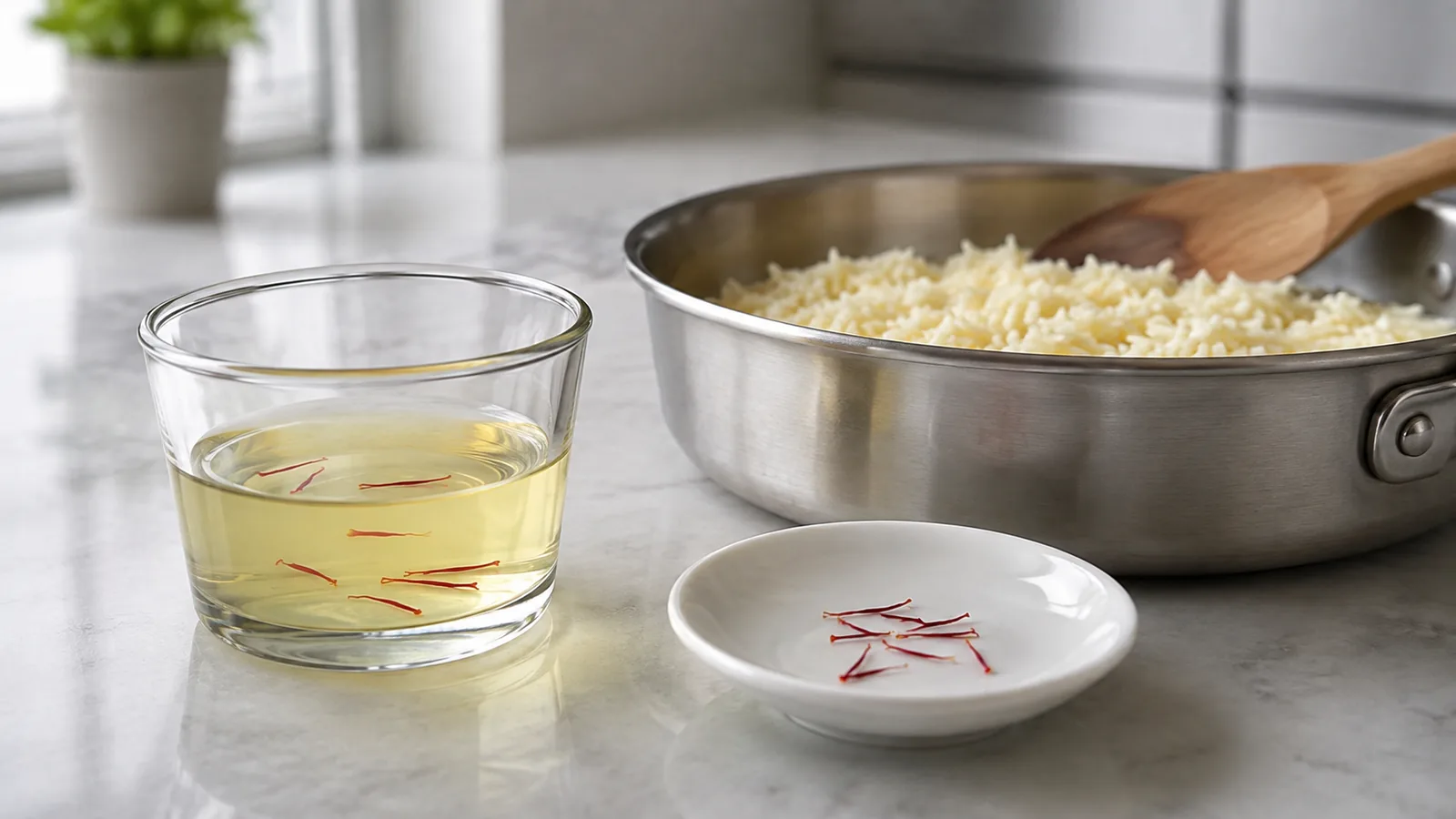
In a bowl, whisk the two tablespoons of tomato paste into one cup of reserved chicken broth. Add the 1/2 teaspoon concentrated bloomed saffron and one tablespoon lemon juice.
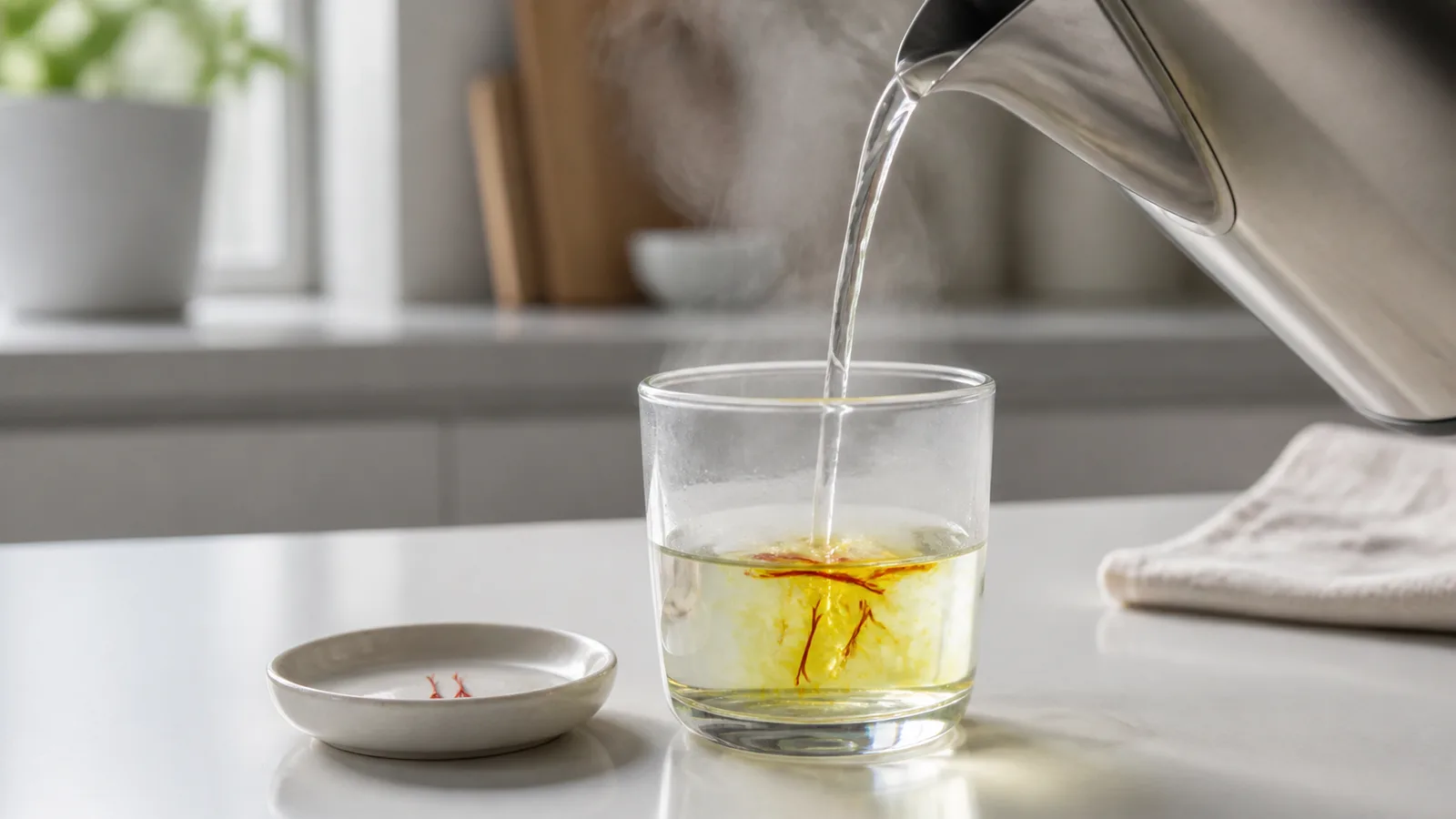
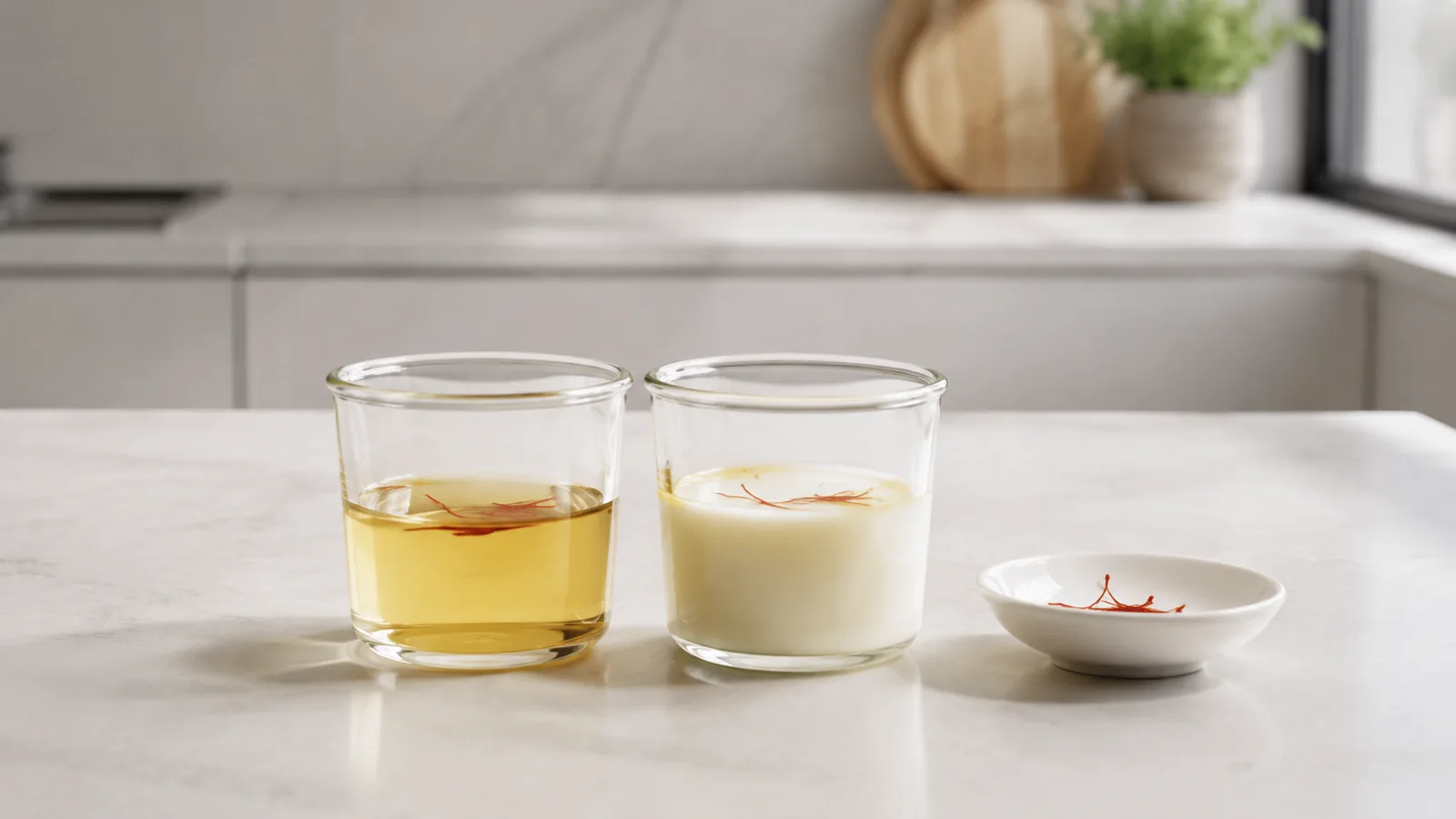
Taste the mixture before using it. Add the second tablespoon of lemon juice only if you want a sharper finish. If you need to prepare the infusion from threads, this guide to brewing Iranian saffron explains how to develop the color without leaving dry threads in the sauce.
Add the broth without making the kuku soggy
Make several shallow cuts across the partly cooked kuku. Pour the saffron tomato broth over it slowly, aiming some liquid into the cuts and around the edges rather than flooding one spot.
Return the lid and let the kuku simmer gently until most of the broth has been absorbed or reduced. It should remain moist, but there should not be a pool of thin liquid in the pan.
Turn and finish the second side
When the first side is firm and golden, loosen the kuku around the edge. Slide it onto a large plate, invert the pan over the plate, then turn both together. If that feels awkward, cut the kuku into four wedges and turn each piece separately.
Cook the second side over low to medium-low heat until golden and fully set. Do not continue until all moisture disappears. The original dish is meant to stay tender; overcooking makes the chicken and eggs firm and dry.
Rest the kuku for five minutes before cutting. Serve it warm with bread or rice, spooning any thick saffron tomato juices from the pan over the portions.
Texture and flavor checks
- If the kuku breaks: the top may not have set before turning, or the pan may be too wide for the amount of mixture.
- If it tastes dry: use lower heat and stop while a little of the saffron broth still clings to the kuku.
- If the mixture is watery: squeeze the grated onion and simmer the added broth longer before turning.
- If it tastes too salty: use unsalted cooking liquid; both the cooked chicken and reduced broth contribute seasoning.
The finished kuku percussion with saffron should have two golden surfaces, a soft chicken-rich center and enough tomato-lemon moisture to keep each slice tender without making it wet.