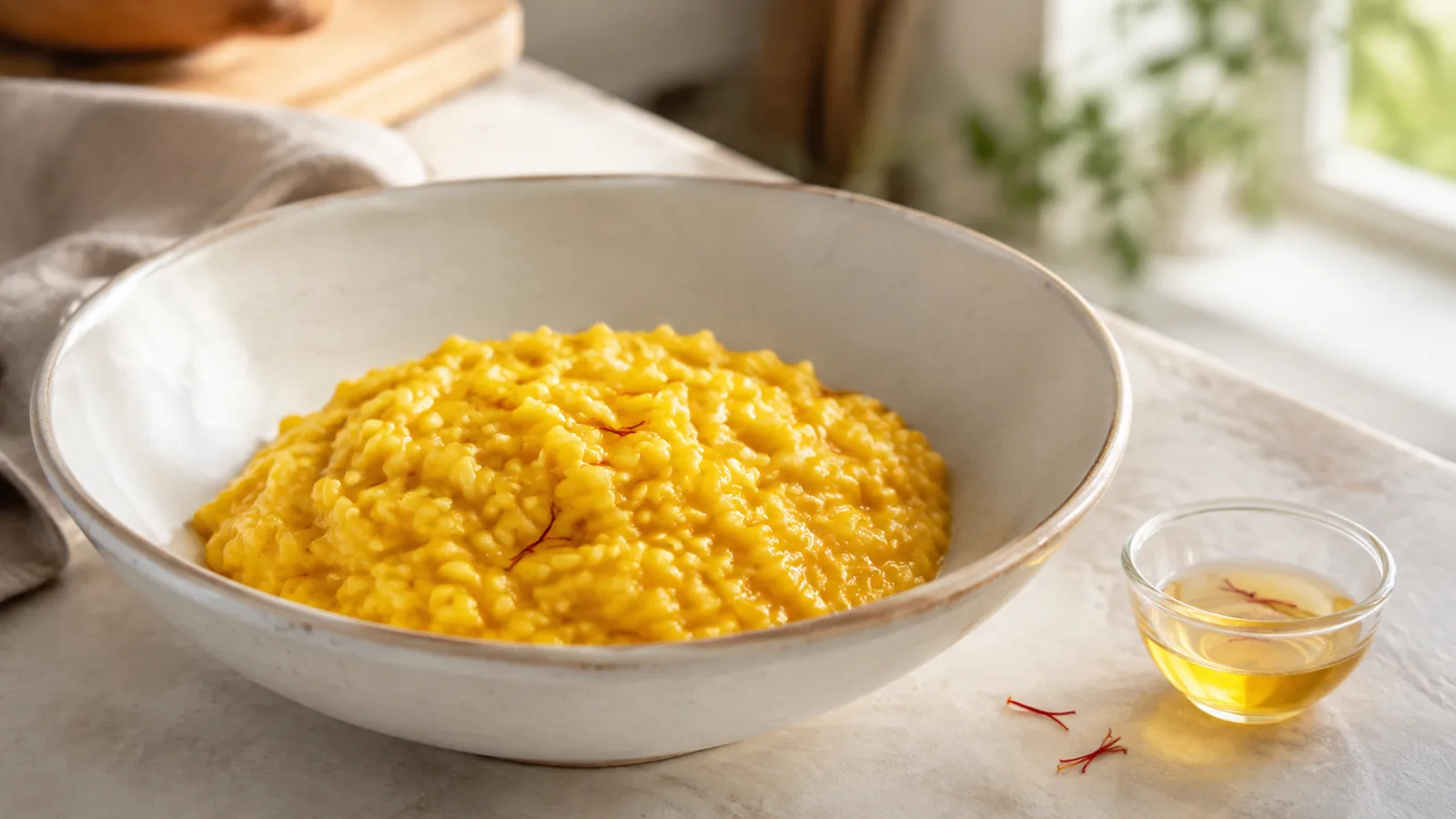
Kachi is a warm Iranian flour dessert scented with saffron and rosewater. This version uses rice flour, which gives it a smooth, delicate body and a clean finish; the texture should sit between a pourable pudding and a soft spoon dessert.
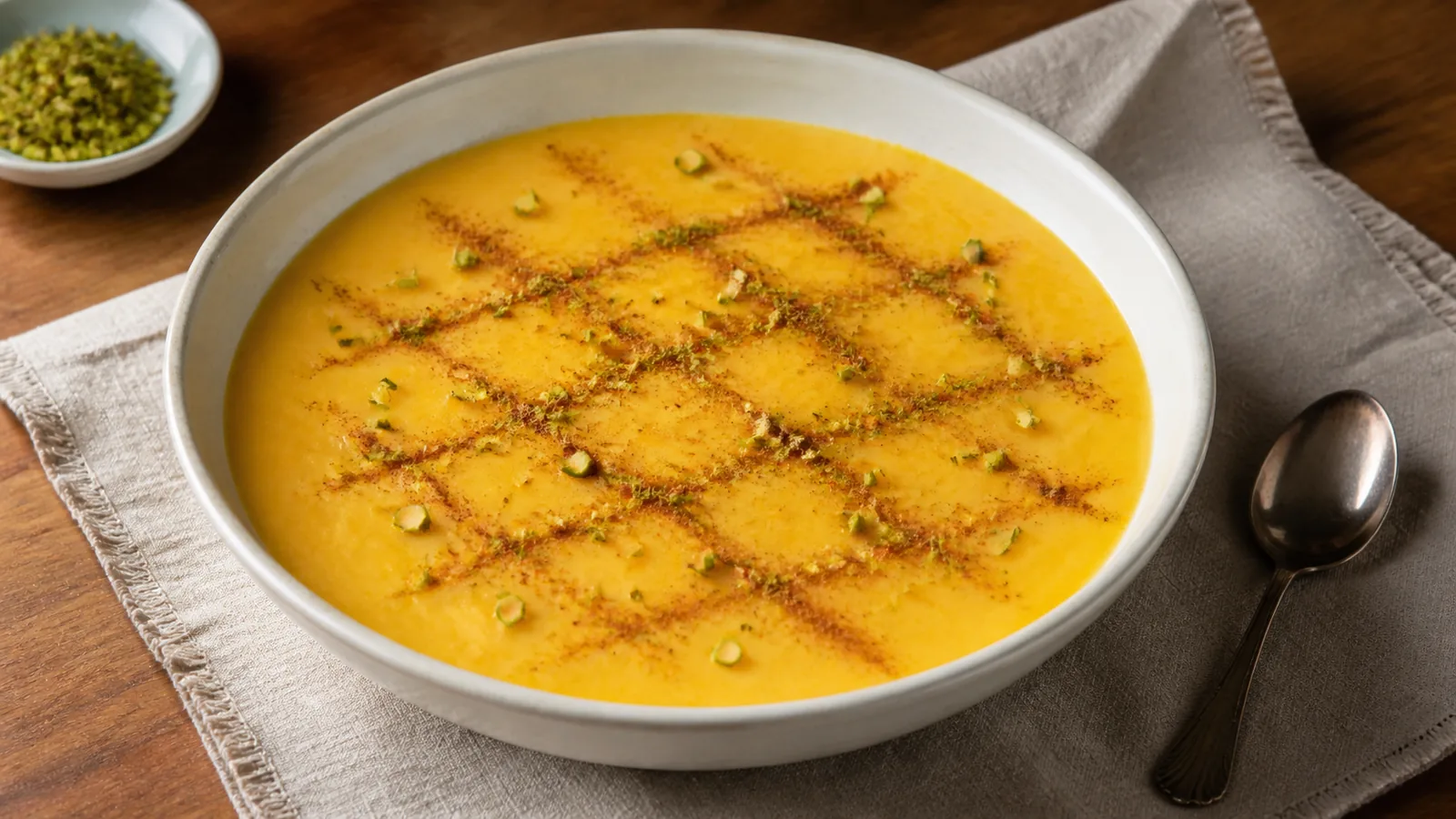
Traditional Kachi recipes often begin with wheat flour, while rice-flour Kachi is a familiar household variation. It is not the same as sholeh zard, the Persian saffron rice pudding made with whole rice grains.
Ingredients for rice-flour Kachi
- 5 tablespoons rice flour
- 3 tablespoons butter or neutral oil
- 3 cups water
- 5 tablespoons sugar, adjusted to taste
- 3 tablespoons rosewater
- 2 tablespoons brewed saffron
- ½ teaspoon ground ginger, optional
Use plain finely milled rice flour, not a sweetened rice-pudding mix. Butter gives the dessert a fuller aroma; neutral oil produces a lighter result and keeps the saffron more prominent.
Mix the liquid before you begin
Combine two and a half cups of the water with the sugar in a jug and stir until the sugar begins to dissolve. Keep the remaining half-cup nearby for adjusting the consistency later.
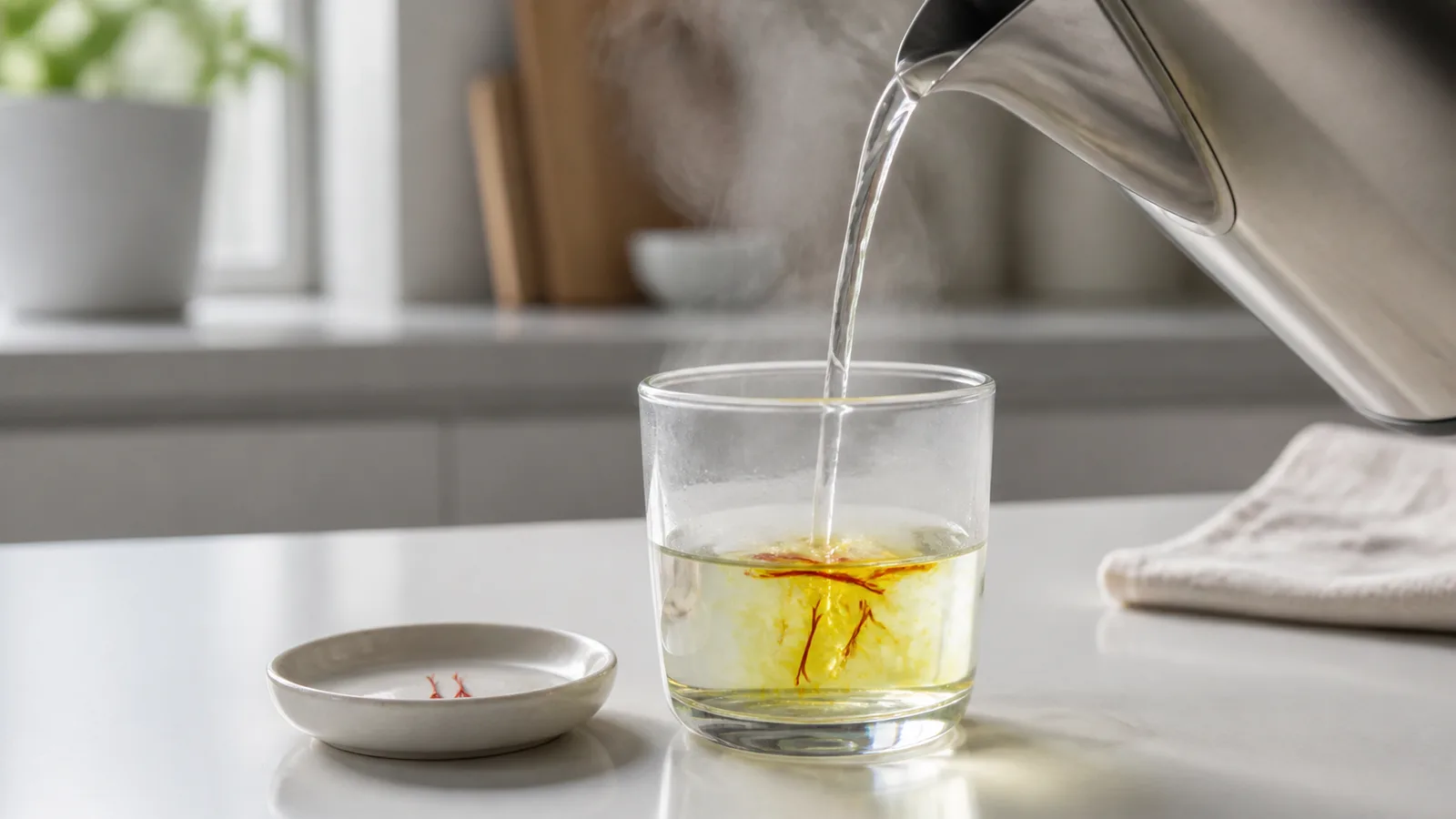
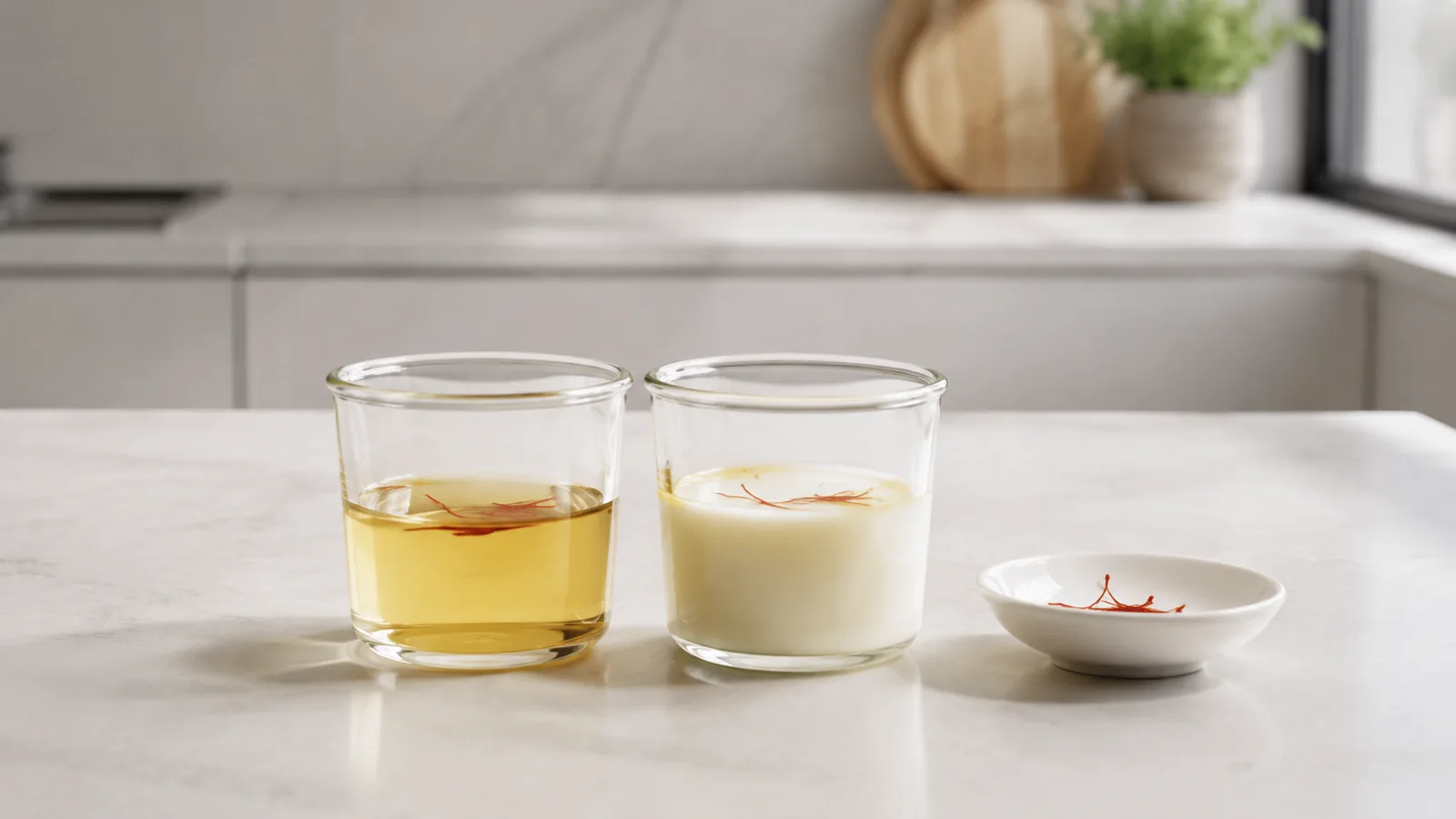
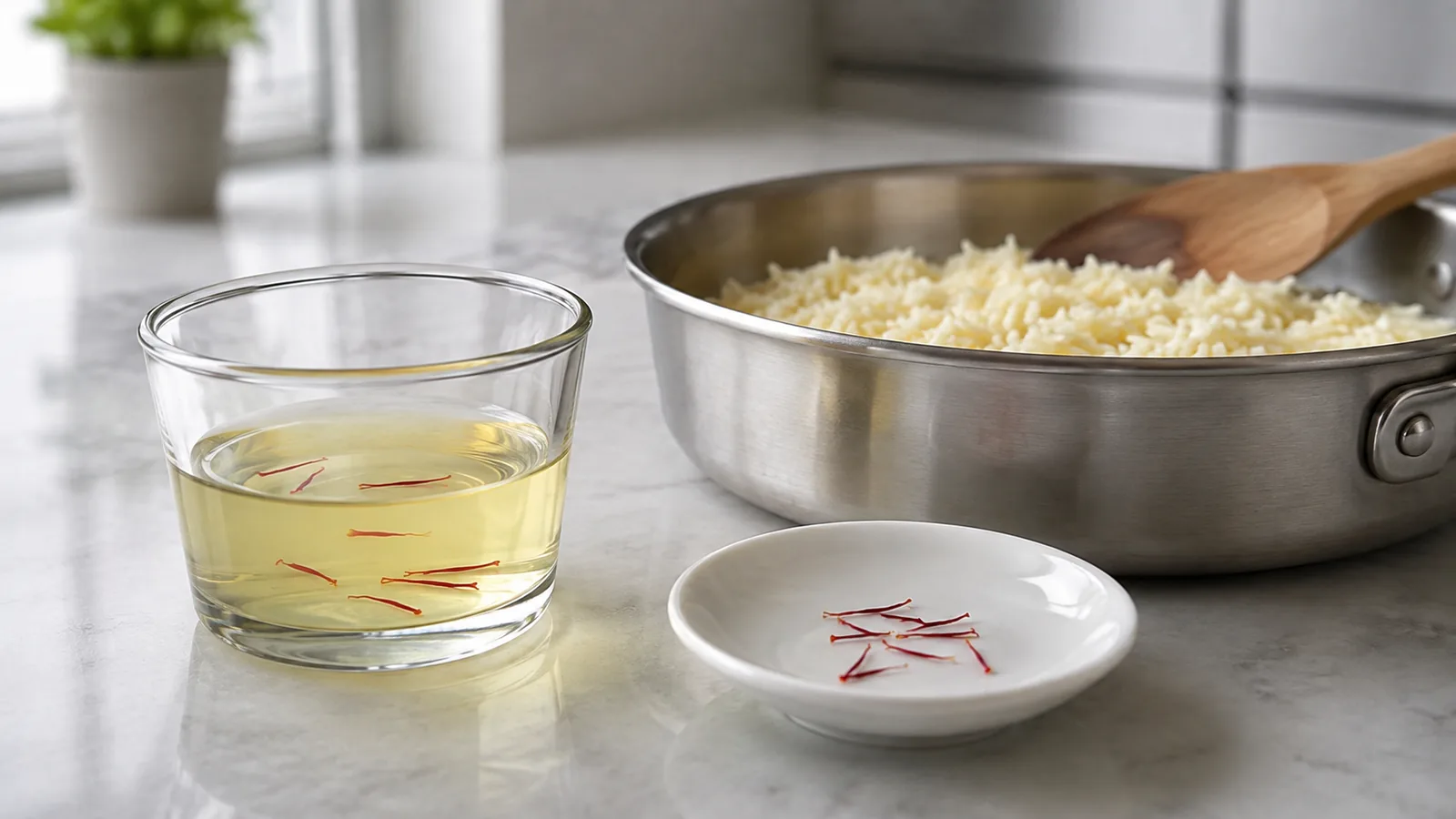
Brew the saffron separately in a small amount of hot water and measure two tablespoons. Keeping saffron and rosewater for the later stage protects their aroma from a long cooking time.
Toast the rice flour gently
Melt the butter in a heavy saucepan over low heat. Add the rice flour and stir continuously with a wooden spoon or flexible spatula. Work around the edges of the pan so no dry flour or dark patches remain.
Rice flour does not brown in exactly the same way as wheat flour. Stop when it smells lightly nutty and turns pale cream to light gold, usually after 5 to 8 minutes. Dark browning can make the Kachi taste bitter and hide the saffron colour.
Add the water without making lumps
Lower the heat and add the sweetened water a little at a time, whisking after each addition. The first splash will thicken quickly; keep whisking until it is completely smooth before adding more.
Once all two and a half cups are incorporated, switch back to a spoon and scrape the base of the pan. If small lumps remain, press them against the side while the mixture is still loose. Avoid pouring all three cups in at once.
Cook the Kachi to the right texture
Cook over low heat for 12 to 18 minutes, stirring frequently. Rice flour needs time to hydrate and lose its raw taste. The mixture will first look thin, then become glossy and begin to leave a soft trail behind the spoon.
Add some or all of the reserved half-cup water if the Kachi thickens before the flour tastes cooked. The finished dessert should fall from the spoon in a broad ribbon; it will firm a little as it cools.
Finish with saffron and rosewater
Stir in the brewed saffron, rosewater and optional ginger. Cook for only 2 to 3 more minutes over low heat. Taste carefully and add a little more sugar only if needed.
Remove the pan from the heat before the mixture becomes stiff. If a skin begins to form while you prepare the bowls, stir gently rather than beating air into the dessert.
How to serve Kachi
Pour the warm Kachi into shallow bowls. Leave it plain or add a light decoration of cinnamon, chopped pistachios or almonds. A restrained garnish suits the smooth rice-flour texture better than a heavy layer of nuts.
Kachi can be eaten warm or at room temperature. If refrigerated, cover the surface and reheat gently with a splash of water, because rice flour becomes firmer when cold.
Using honey instead of sugar
Honey can replace some or all of the sugar, but it changes both flavour and sweetness. Make the dessert with plain water, remove it from direct heat, then stir in honey gradually while the Kachi is still hot enough to dissolve it.
Start with less honey than the five tablespoons of sugar and taste. Strong honey can cover rosewater and saffron, so a mild variety works best.
Common Kachi problems
- Lumpy: the liquid was added too quickly. Whisk in small portions while the mixture is loose.
- Raw flour taste: continue cooking gently and add a splash of the reserved water if needed.
- Too thin: simmer for a few more minutes; do not add dry rice flour directly to the pan.
- Too thick: whisk in hot water one tablespoon at a time.
- Dull saffron aroma: add the brewed saffron late and avoid a hard boil.
A reliable rice-flour Kachi depends on gentle heat and patient mixing. Toast the flour without darkening it, add the water gradually, and stop while the saffron dessert is still soft enough to settle smoothly into the bowl.