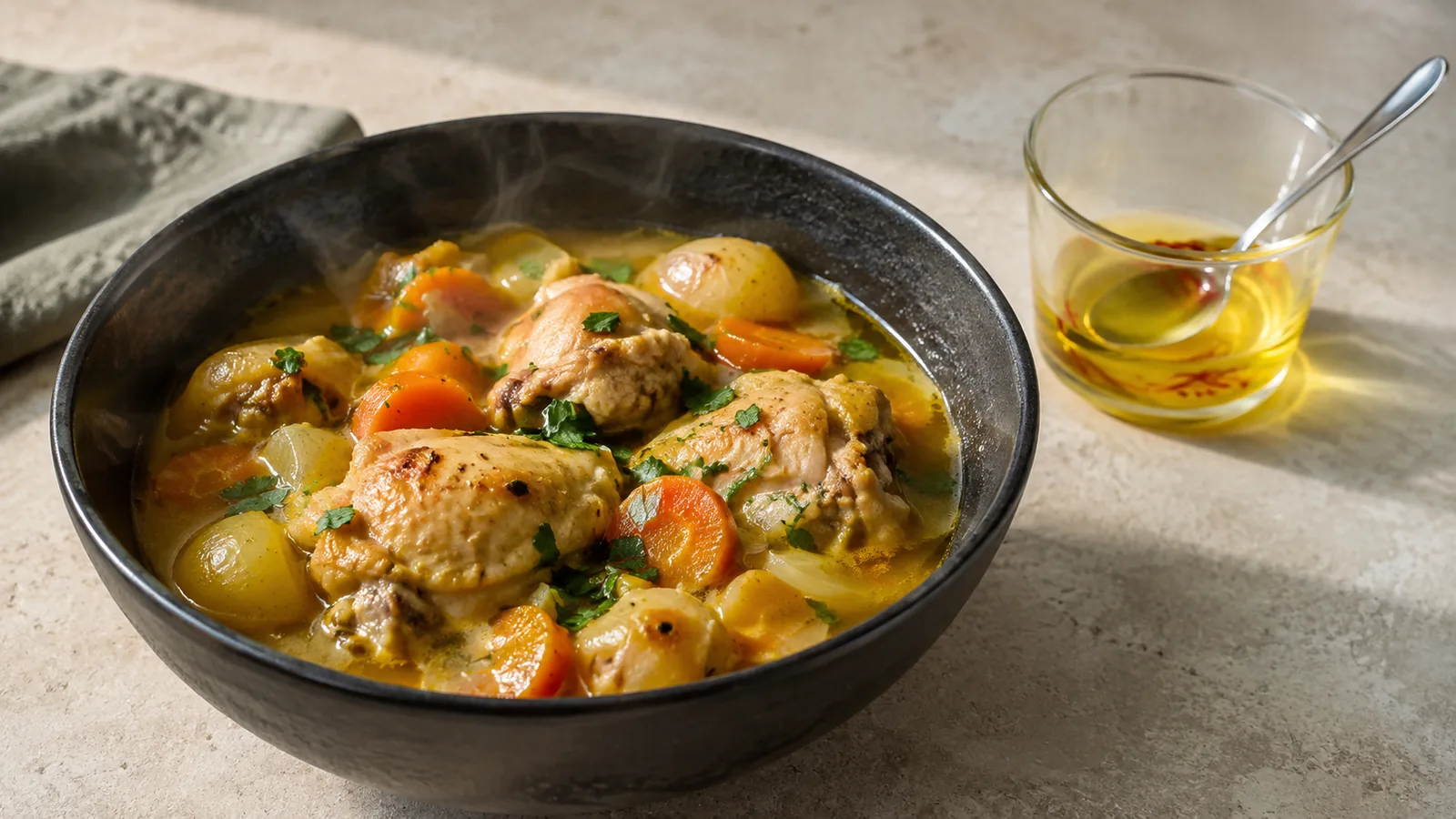
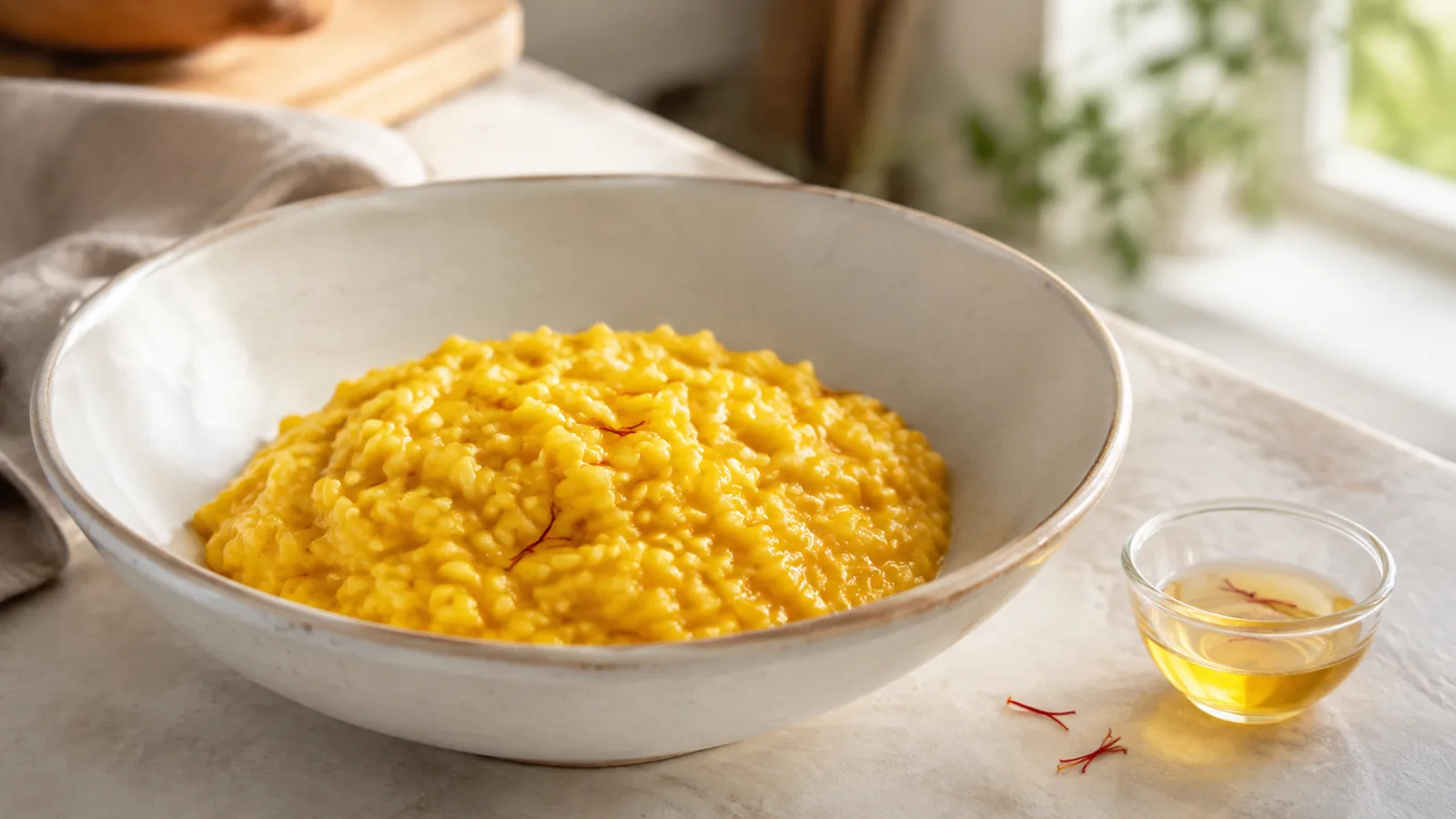
This recipe for cooking fried tongue food with Iranian saffron slowly simmers calf tongue until tender, then coats the slices in saffron egg and breadcrumbs for a crisp pan-fried finish.

The old page also calls the dish “roasting tongue food,” but the final method is frying, not roasting. Although the egg-and-crumb coating can resemble a fritter, this is a breaded tongue slice rather than a separate saffron fritter food type. Those distinctions preserve the existing search meanings without sending a cook toward the wrong technique.
What the recipe involves
Tongue is a firm muscle surrounded by a tough outer skin. It cannot go straight into the frying pan. A long, gentle simmer with onion, garlic and celery softens the meat and loosens the skin; only then can it be peeled, sliced and breaded.
Iranian saffron is whisked into the egg rather than the cooking broth. This keeps its color and aroma close to the crisp exterior, where it is noticeable after frying.
Ingredients
- 1 whole calf tongue
- 1 tablespoon salt, divided and adjusted to taste
- 1 celery stalk, cut into large pieces
- 1 medium onion, quartered
- 3 fresh garlic cloves, lightly crushed
- 1 teaspoon turmeric
- 3 large eggs
- 1 tablespoon bloomed Iranian saffron
- 100 g fine dry breadcrumbs or rusk crumbs
- About 200 ml neutral frying oil, or enough for shallow frying
- Black pepper, optional
The earlier ingredient list repeats garlic and turmeric. They are needed once, in the simmering pot. Begin with less than the full tablespoon of salt because the liquid reduces over four hours and additional seasoning can be added to the crumb coating.
Clean and prepare the calf tongue
Trim away loose glands, excess fat and any obviously damaged tissue at the base. There is no need to scrub or splash raw juices around the sink. Put the tongue directly into a clean pot and wash hands, knife, board and nearby surfaces after handling it.
Add enough cold water to cover the tongue by 3–5 cm. Bring the pot to a boil. Foam and small particles will rise during the first few minutes; skim them away with a spoon.
Simmer the tongue for about four hours
Add the quartered onion, crushed garlic, celery, turmeric and about two teaspoons of the salt. Reduce the heat so the water barely simmers, then cover the pot with the lid slightly ajar.
Cook for approximately four hours, as the original recipe directs. Check the water level from time to time and add more hot water if the tongue is no longer mostly submerged. A smaller calf tongue may become tender sooner, while a larger one may need the full time.
The thickest section should feel tender when pierced and reach at least 160°F (71°C). USDA guidance specifically lists 160°F for tongue and other red-meat organs. The long simmer generally takes it beyond that minimum because tenderness, not merely safety, is the goal.
Peel while warm, then slice
Lift the cooked tongue onto a clean board with tongs. Let it stand only until it can be handled safely. Make a shallow cut through the skin near the base, then pull the thick covering away. It releases much more easily while the tongue is still warm.
Do not try to peel it over high heat, as the garbled old wording appears to suggest. Keep the broth off the burner while you work, and use a towel or gloves if the surface is still very hot.
Trim any remaining tough material from the base. Cut the peeled tongue crosswise, “like a sausage,” into slices about 8–10 mm thick. Even slices bread and reheat more predictably than a mixture of thin and thick pieces.
Make the saffron breading
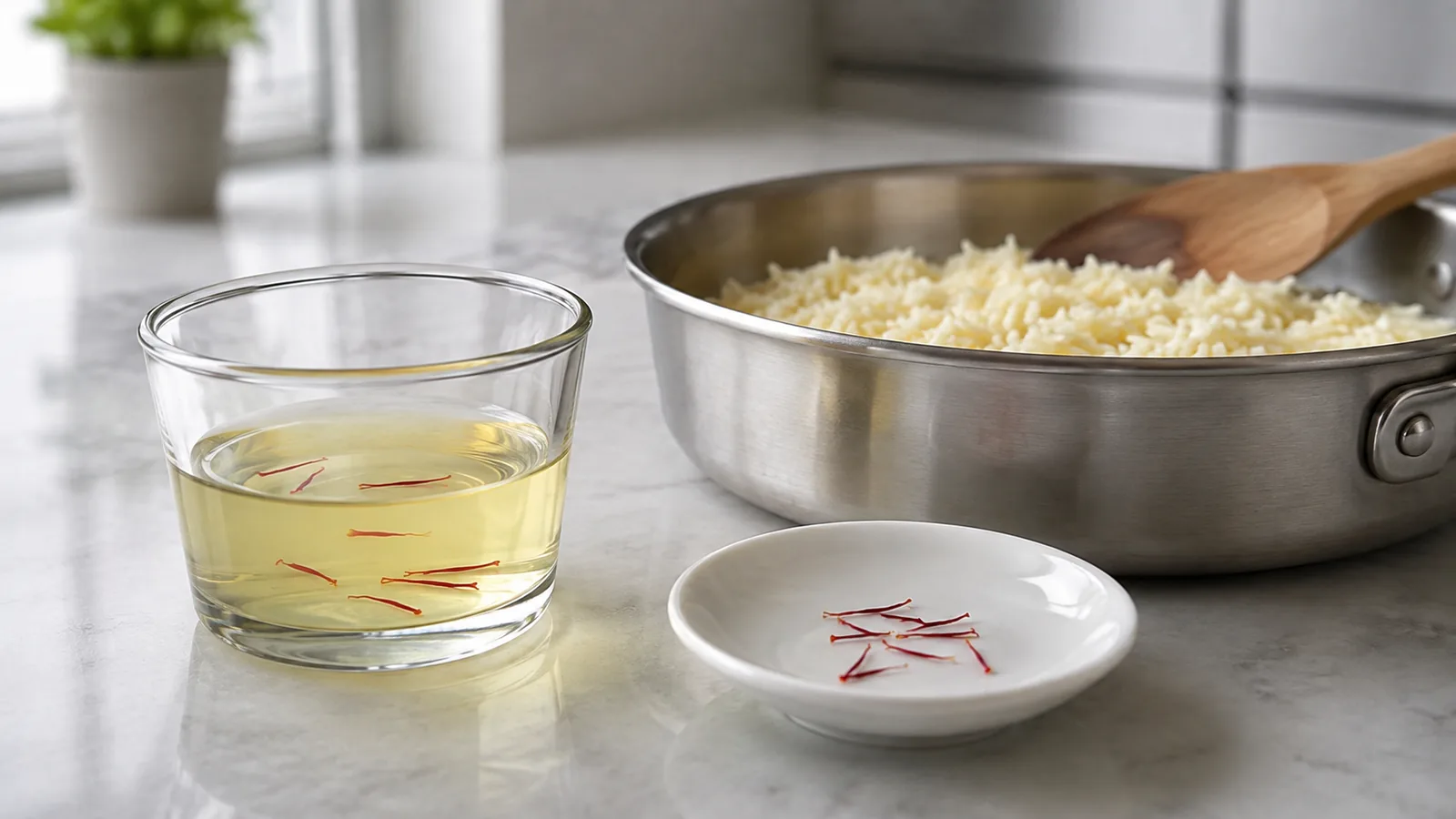
Finely grind saffron threads, bloom them in a little hot water for 10–15 minutes and measure one tablespoon. Our checked guide to brewing Iranian saffron explains the process.
Break the three eggs into a shallow bowl and beat them with the saffron, a small pinch of salt and black pepper if using. Put the breadcrumbs in a second shallow dish.
Pat each tongue slice dry. Dip it completely in the saffron egg, allow the excess to run off, then press both sides into the breadcrumbs. Set the breaded slices in one layer on a clean tray for 10 minutes so the coating can settle.
Fry the tongue slices
- Pour oil into a wide frying pan to a depth of roughly 5 mm.
- Heat over medium heat to about 340–350°F (170–175°C). The oil should shimmer but not smoke.
- Add several slices without crowding the pan.
- Fry for about 2–3 minutes per side, until the crumbs are crisp and golden.
- Transfer to a wire rack over a tray and let excess oil drain.
The tongue is already cooked; the frying stage browns the crust, reheats the center and sets the egg coating. If the crumbs darken immediately, lower the heat. If they remain pale and greasy, let the oil recover before the next batch.
Keep water away from the hot oil, and lower each dry-coated slice with a utensil rather than dropping it from above.
How to keep the coating attached
- Dry the tongue slices before dipping so the egg is not diluted by surface broth.
- Let excess egg drip away before pressing into the crumbs.
- Rest the breaded slices briefly before frying.
- Turn once, after the first side has formed a firm crust.
- Use a rack rather than stacking hot slices, which traps steam and softens the breading.
Serving fried tongue with saffron
Serve the slices hot with lemon, fresh herbs, pickles or a crisp salad. They can also be placed in warm bread with sliced tomato and a light yogurt sauce.
The aromatic cooking broth need not be discarded. Strain it while hot, cool it promptly in shallow containers and remove the hardened fat after refrigeration. It can then be used in a soup or sauce.
Refrigerate leftover fried tongue within two hours. Reheat in a moderate oven or dry skillet until hot throughout so the crumb stays firmer than it would in a microwave.
The finished dish should have three clear textures: tender peeled tongue, a thin saffron-egg layer and crisp breadcrumbs. The four-hour simmer and warm peeling are what make that final quick fry possible.