This recipe for cooking fish steak with dill and Iranian saffron pairs gently grilled fillets with a warm, lemony white sauce and plenty of fresh dill.
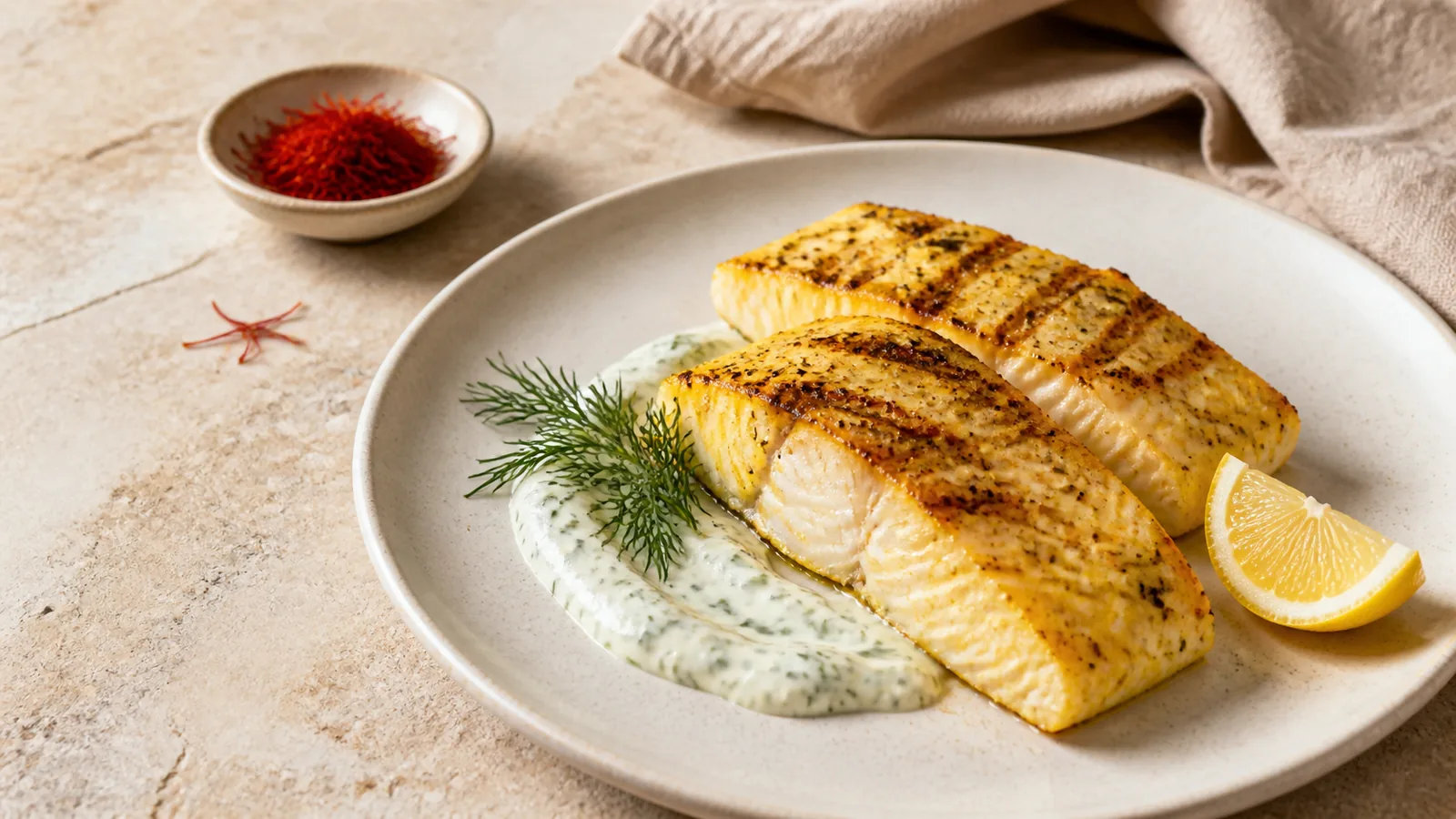
The fish is first seasoned with saffron, onion and lemon, then cooked over a grill or barbecue until just done. A simple butter-and-milk sauce softens the citrus edge and gives the dill somewhere to bloom without covering the flavor of the fish.
Ingredients for the saffron fish steak
- 500 g fish fillets
- 1 cup medium-thick white sauce
- 3 tablespoons fresh dill, finely chopped
- 5 tablespoons lemon juice, divided
- 1 large onion, grated or thinly sliced
- Bloomed Iranian saffron, as needed
- Salt and black pepper, as needed
- A little oil or butter for the grill rack
Choose fillets that are thick enough to grill without tearing. Firm white fish works especially well, but the method can be used with another boneless fillet if you adjust the cooking time to its thickness.
Ingredients for one cup of white sauce
- 1 heaped tablespoon plain flour
- 25 g butter
- 1 glass milk, about 1 cup
- Salt and black pepper, as needed
- Mustard, thyme or another mild seasoning, to taste
- Lemon juice from the amount listed above
The original all-purpose sauce note suggests one to two tablespoons of lemon for other dishes. Here, the main recipe already provides five tablespoons: use two for the marinade and stir the remaining three into the dill sauce gradually.
Marinate the fish with saffron and lemon
Pat the fish fillets dry and check carefully for pin bones. Arrange them in a shallow nonreactive dish.
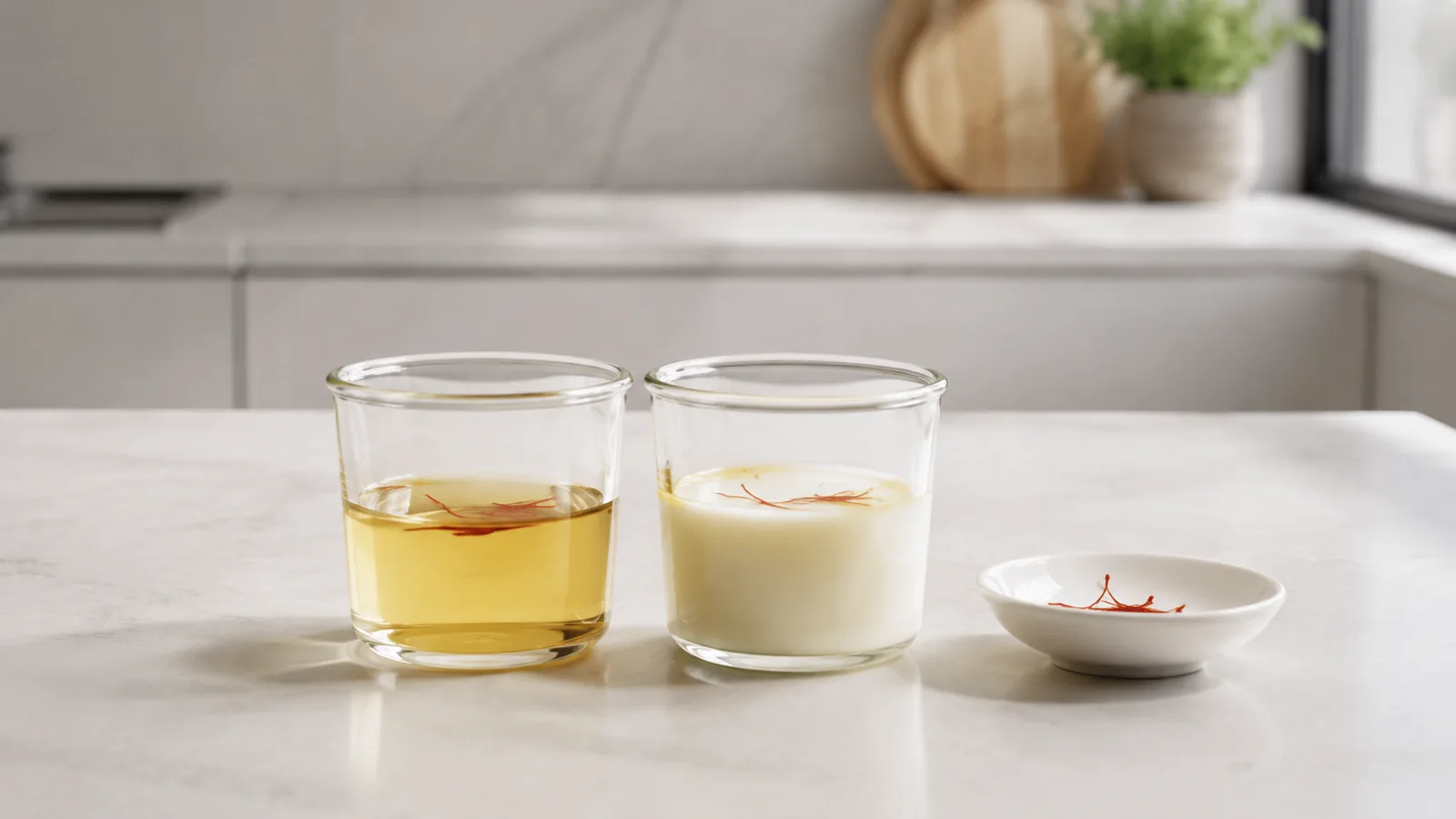
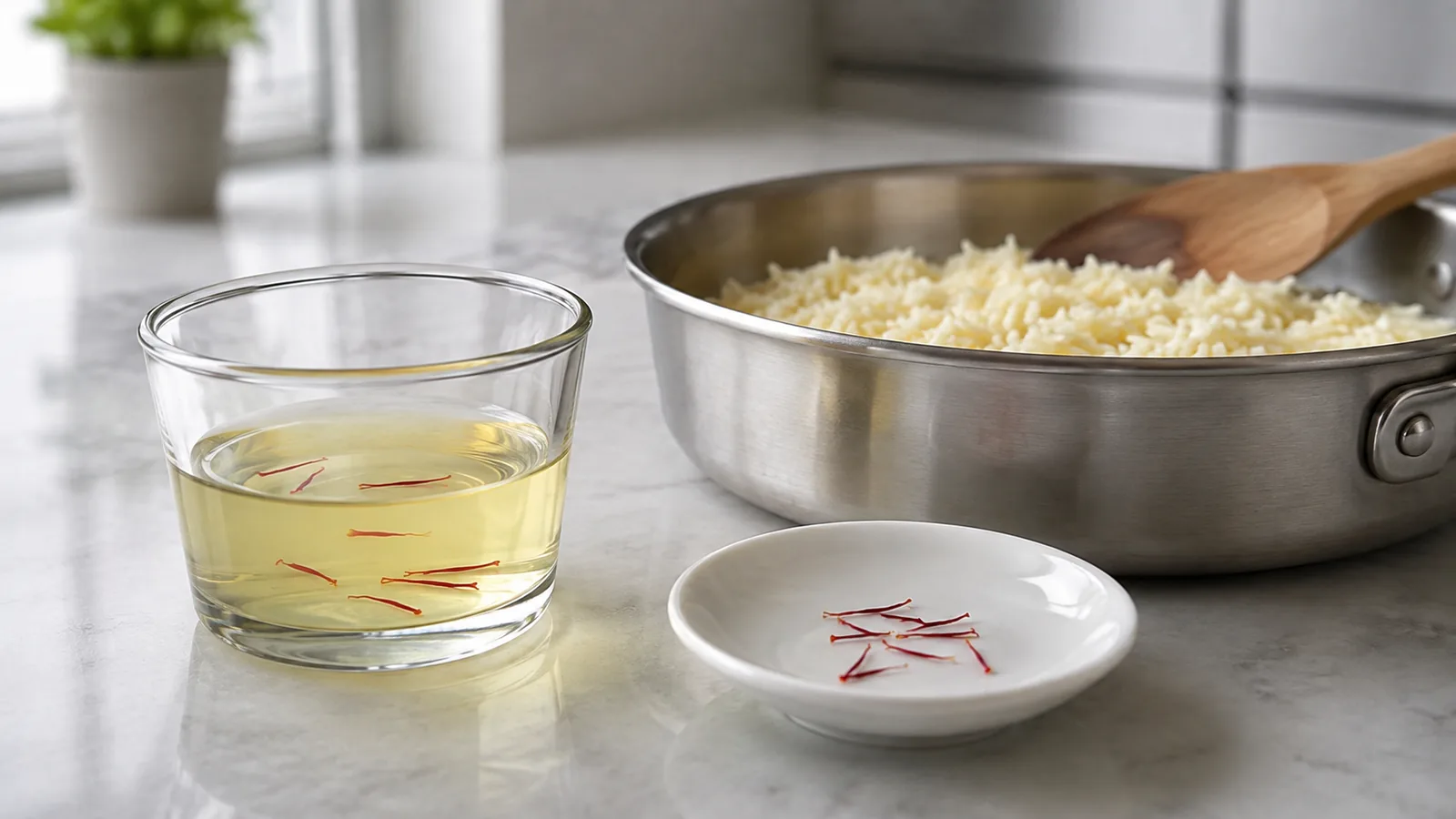
Mix the bloomed saffron with two tablespoons of lemon juice, a little salt and black pepper. Spoon it over both sides of the fillets, then scatter the grated or sliced onion around them. If you need to prepare the infusion first, follow this method for brewing Iranian saffron.
Cover the dish and refrigerate it for one to two hours. Do not leave the fish on the counter while it marinates. Before grilling, lift away the onion and let the excess liquid drip off so the surface can color instead of steaming.
Make the white sauce over gentle heat
Melt the 25 g butter in a small heavy saucepan over low heat. Add the heaped tablespoon of flour and stir for about a minute, just long enough to remove its raw flour smell without browning it.
Pour in the milk a little at a time, whisking after every addition. The first splash will form a thick paste; keep whisking as the rest goes in and it will become smooth.
Cook gently until the sauce coats the back of a spoon but still pours easily. That is the medium consistency called for in the original recipe. If it becomes too thick while standing, loosen it with a spoonful of milk.
Season with salt, pepper and, if you like, a small amount of mustard or thyme. Take the pan off the heat before adding the lemon juice so the milk is less likely to split.
Turn it into lemon and dill sauce
Stir the three tablespoons of chopped fresh dill into the warm sauce. Add the remaining lemon juice in stages, tasting as you go rather than pouring it in all at once.
Fresh dill loses its bright character when boiled for long, so keep the finished sauce warm over very low heat or cover it and reheat briefly just before serving. It should taste fresh and tangy, with enough creaminess to complement the saffron steak.
How to prepare fish steak on the grill
Heat a barbecue or grill pan to medium-high. Clean the grate and brush it lightly with oil or softened butter before the fish goes on; this was an important detail in the original method and helps delicate fillets release cleanly.
Lay the fish across the hot bars and leave it undisturbed until the underside has set. Turn it once with a wide spatula, supporting the whole fillet rather than lifting it from one corner.
Cooking time varies with the fish and thickness. The safest check is at the thickest point: the official temperature chart lists 145°F (63°C) for fish. The flesh should also be opaque and separate easily with a fork.
If you are using a barbecue basket or wire grilling net, grease both sides before closing it around the fish. Keep it a little above aggressive flames; saffron and onion residue can darken quickly over direct fire.
Serve the fish steak with dill sauce
Move the grilled fish to a warm serving plate. Spoon a little lemon and dill sauce alongside or beneath each fillet, leaving some of the saffron-colored surface visible.
Finish with fresh dill, parsley or lemon wedges, as the original recipe suggests. Serve the remaining sauce separately so each person can add as much as they prefer.
A well-cooked fish steak should be moist in the center and lightly marked outside. The sauce should be smooth enough to pour, with clear dill and lemon flavors rather than the heaviness of a very thick béchamel.
Useful fixes if the sauce or fish goes wrong
If the sauce has lumps, take it off the heat and whisk firmly before returning it to a low flame. If it splits after the lemon goes in, whisk in a small splash of warm milk; avoid boiling it again.
If a fillet sticks, give it another minute before trying to turn it. Fish usually releases more easily once a light crust has formed. For the next batch, dry the surface more thoroughly and oil the rack immediately before cooking.